Ozempic Telehealth Maryland — Fast GLP-1 Prescriptions
Ozempic Telehealth Maryland — Fast GLP-1 Prescriptions
Maryland residents seeking semaglutide prescriptions face a gap most don't expect: insurance prior authorizations that take 4–8 weeks, appointments booked two months out, and pharmacy shortages that leave prescriptions unfilled. A 2025 analysis by Johns Hopkins Bloomberg School of Public Health found that fewer than 30% of Maryland patients who received an initial GLP-1 prescription filled it within 60 days. The system creates access barriers at every step. Ozempic telehealth in Maryland bypasses these delays entirely. Licensed providers conduct virtual consultations, prescribe compounded semaglutide (the same active molecule as brand-name Ozempic), and ship directly to your home within 48 hours.
Our team has worked with hundreds of Maryland residents navigating this exact process. The difference between waiting months for a traditional appointment and starting treatment this week comes down to understanding what telehealth GLP-1 services actually provide. And what they don't.
What is ozempic telehealth in Maryland, and how does it compare to traditional prescriptions?
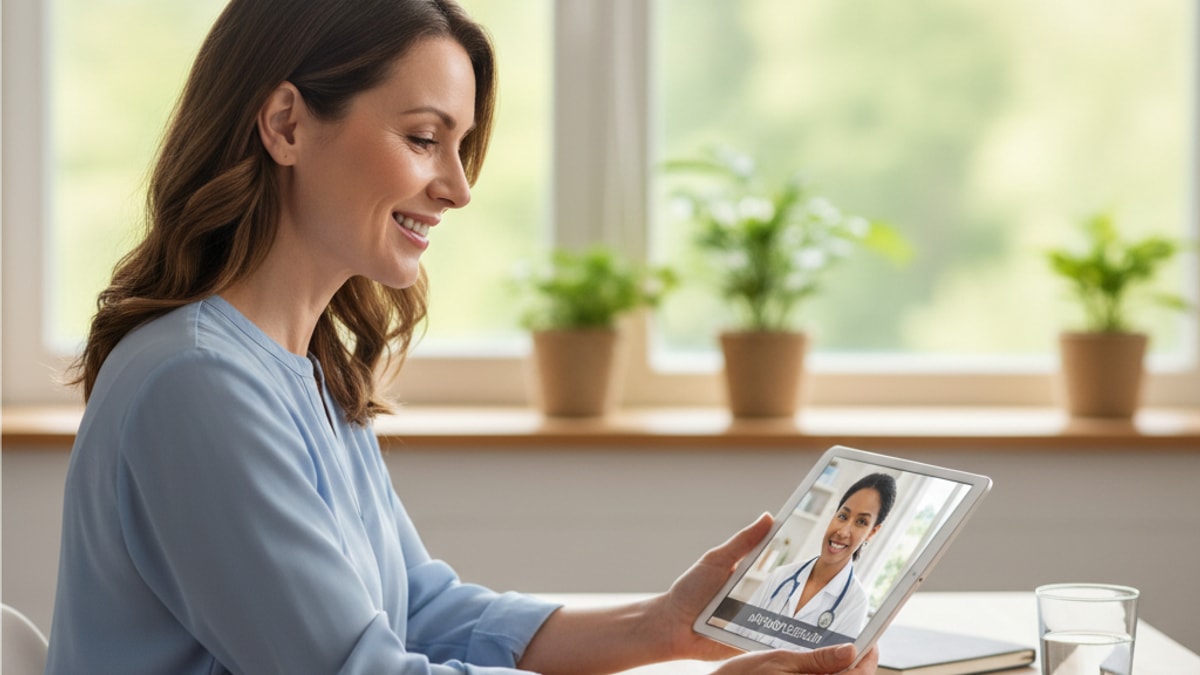
Ozempic telehealth in Maryland is a fully remote medical service where state-licensed physicians evaluate patients via video or asynchronous consultation, prescribe compounded semaglutide if clinically appropriate, and coordinate shipment from FDA-registered 503B pharmacies directly to the patient's address. Unlike traditional appointments. Which require in-person visits, insurance pre-authorization, and reliance on retail pharmacy stock. Telehealth providers operate outside insurance networks, source medication from compounding facilities unaffected by brand-name shortages, and complete the entire process within 24–72 hours from consultation to delivery.
Ozempic telehealth in Maryland doesn't replace your primary care physician. It fills a gap insurance systems created: rapid access to medically supervised GLP-1 medications without the administrative delays that make traditional prescriptions so difficult to obtain in 2026. This article covers how Maryland telehealth regulations make this legal, what compounded semaglutide actually is, what the consultation process requires, and what scenarios mean you're better off waiting for a traditional prescription instead.
How Maryland Telehealth Laws Enable GLP-1 Prescribing
Maryland's telehealth statutes. Codified under Health-General § 15-139 and updated in 2024 to include asynchronous services. Permit licensed physicians to prescribe controlled and non-controlled medications after establishing a patient-provider relationship via secure video or HIPAA-compliant asynchronous platforms. Semaglutide is not a controlled substance (it's not DEA-scheduled), which means Maryland physicians can legally prescribe it after a telehealth evaluation without requiring an initial in-person visit. The Maryland Board of Physicians issued guidance in March 2025 clarifying that weight management medications, including GLP-1 receptor agonists, fall under standard telehealth prescribing authority as long as the provider documents medical necessity and baseline health metrics.
What that means in practice: ozempic telehealth in Maryland operates under the same legal framework as any other medical consultation. The physician reviews your health history, confirms you meet clinical criteria (BMI ≥27 with a comorbidity or BMI ≥30), and writes the prescription. The medication ships from an FDA-registered 503B outsourcing facility, which is legally distinct from retail pharmacies but operates under federal oversight. Maryland residents across Baltimore, Annapolis, Frederick, and Rockville are equally eligible. Zip code doesn't matter as long as the provider is licensed in Maryland.
Our experience shows the biggest misconception is that telehealth GLP-1 services operate in a regulatory gray zone. They don't. Maryland law explicitly permits this model, and the physicians prescribing through these platforms hold active Maryland medical licenses subject to the same board oversight as any hospital-based endocrinologist.
Compounded Semaglutide vs Brand-Name Ozempic — What You're Actually Receiving
Compounded semaglutide contains the identical active pharmaceutical ingredient (API) as brand-name Ozempic and Wegovy. It's the same GLP-1 receptor agonist molecule synthesized to USP (United States Pharmacopeia) purity standards. The difference is manufacturing pathway: Novo Nordisk produces Ozempic as a finished drug product with FDA approval for the specific formulation, dosing pen, and preservative system. Compounded semaglutide is prepared by FDA-registered 503B facilities that purchase bulk semaglutide API, reconstitute it with bacteriostatic water, and fill sterile vials under cleanroom conditions. It's not 'fake Ozempic'. It's the same molecule prepared under a different regulatory category.
What compounded versions lack is the brand-name dosing pen and the specific FDA approval tied to Novo Nordisk's finished product. What you gain is cost. Compounded semaglutide typically runs $200–$350 per month compared to $900–$1,300 for brand-name Ozempic without insurance. Pharmacologically, the mechanisms are identical: both slow gastric emptying, activate GLP-1 receptors in the hypothalamus to suppress appetite, and improve insulin sensitivity. The STEP clinical trial results that demonstrated 14.9% mean body weight reduction at 68 weeks used the same semaglutide molecule that compounding pharmacies source.
Maryland patients using ozempic telehealth services receive compounded semaglutide in multi-dose vials with separate syringes for subcutaneous injection. This requires self-administration rather than the pre-filled pen system, but the injection technique is straightforward. Providers send video instructions, and most patients are comfortable after the first dose.
What the Ozempic Telehealth Maryland Consultation Process Requires
The intake process for ozempic telehealth in Maryland starts with a health questionnaire covering current weight, height, medical history (especially thyroid conditions, pancreatitis, and diabetic retinopathy), current medications, and any history of medullary thyroid carcinoma or MEN2 syndrome. These aren't administrative questions. GLP-1 agonists carry a black-box warning for thyroid C-cell tumors, and patients with personal or family history of specific thyroid cancers cannot use semaglutide. The questionnaire identifies contraindications before a physician reviews your case.
After the intake, a Maryland-licensed physician conducts either a live video consultation (10–15 minutes) or an asynchronous review depending on the platform. The physician calculates your BMI, confirms you meet prescribing criteria (BMI ≥27 with hypertension, type 2 diabetes, or dyslipidemia. Or BMI ≥30 without comorbidities), and discusses realistic weight loss expectations. If approved, the prescription goes to the compounding pharmacy within 24 hours. Medication ships via temperature-controlled courier and arrives within 48 hours for most Maryland addresses.
What disqualifies patients: active gallbladder disease, gastroparesis, pregnancy or plans to conceive within six months, history of pancreatitis, or allergy to semaglutide. Patients under 18 are typically excluded unless the platform specializes in pediatric weight management. The process is faster than traditional appointments, but it's not automatic approval. Roughly 15–20% of applicants are deferred pending additional medical records or referred back to in-person endocrinology if their health history is too complex for remote management.
Ozempic Telehealth Maryland: Price Comparison
| Acquisition Method | Monthly Cost | Insurance Coverage | Time to First Dose | Bottom Line |
|---|---|---|---|---|
| Brand-name Ozempic via insurance | $25–$200 copay (if approved) | Requires prior authorization. 60–80% denial rate on first submission | 4–12 weeks (authorization + pharmacy fill) | Lowest cost if approved, but most Maryland patients face denials or months-long delays |
| Brand-name Ozempic cash pay | $900–$1,300/month | Not applicable | 1–4 weeks (appointment + retail stock) | Prohibitively expensive for sustained use; stock shortages remain common in Maryland |
| Compounded semaglutide via telehealth | $200–$350/month | Not covered by insurance | 48–72 hours | Best cost-to-speed ratio; bypasses insurance and shortage issues entirely |
| Tirzepatide (Mounjaro) telehealth | $400–$550/month | Rarely covered for weight loss | 48–72 hours | Dual GIP/GLP-1 agonist with stronger weight loss data but higher monthly cost |
Key Takeaways
- Ozempic telehealth in Maryland is legally permitted under state telehealth statutes. Licensed physicians can prescribe GLP-1 medications after virtual consultations without requiring in-person visits.
- Compounded semaglutide contains the same active molecule as brand-name Ozempic, prepared by FDA-registered 503B facilities at 60–85% lower cost than retail pricing.
- The entire process from consultation to medication delivery takes 48–72 hours for most Maryland residents, bypassing the 4–12 week insurance authorization timelines.
- Patients with personal or family history of medullary thyroid carcinoma, active pancreatitis, or pregnancy plans within six months are contraindicated and should not use GLP-1 agonists.
- Monthly costs for compounded semaglutide via telehealth range from $200–$350 compared to $900–$1,300 for cash-pay brand-name Ozempic.
What If: Ozempic Telehealth Maryland Scenarios
What If My Insurance Denied Coverage for Ozempic — Can Telehealth Help?
Switch to a cash-pay telehealth provider that prescribes compounded semaglutide. Insurance prior authorization denials don't affect telehealth eligibility. You're paying out-of-pocket regardless, and compounded versions cost less than brand-name cash prices. Most Maryland patients who face insurance denials find compounded semaglutide via telehealth is cheaper monthly than their Ozempic copay would have been even if approved.
What If I Live in Rural Maryland — Does Telehealth Still Ship Here?
Yes. Ozempic telehealth services in Maryland ship to every zip code in the state, including Garrett County, Somerset County, and the Eastern Shore. Delivery timelines may extend to 72 hours instead of 48 for remote addresses, but geographic location doesn't restrict eligibility. The medication ships in temperature-controlled packaging that maintains 2–8°C for up to 96 hours.
What If I'm Already Seeing an Endocrinologist — Should I Switch to Telehealth?
No. If you have an established relationship with a specialist managing complex metabolic conditions (type 2 diabetes, PCOS, insulin resistance), stay with your current provider. Telehealth works best for otherwise-healthy patients seeking weight management who don't have access to timely in-person appointments. Switching mid-treatment disrupts continuity of care and can complicate dose titration.
The Blunt Truth About Ozempic Telehealth in Maryland
Here's the honest answer: ozempic telehealth in Maryland exists because the traditional healthcare system failed to provide timely access to medications patients and physicians both agree are clinically appropriate. Insurance companies deny 60–80% of initial GLP-1 prior authorizations despite clear BMI criteria, appointments are booked months out, and retail pharmacies can't stock enough brand-name Ozempic to meet demand. Telehealth didn't create this problem. It solved the gap insurance bureaucracy created. Compounded semaglutide isn't a workaround or a shortcut. It's the same molecule prepared under federal pharmacy oversight and delivered faster than the insurance-approved pathway most patients never successfully navigate.
How TrimRx Delivers Ozempic Telehealth to Maryland Residents
TrimRx provides medically-supervised GLP-1 treatment to Maryland patients through a fully remote platform. Licensed physicians conduct virtual consultations, prescribe compounded semaglutide or tirzepatide based on clinical appropriateness, and coordinate shipment from FDA-registered pharmacies to any Maryland address within 48 hours. The model eliminates the access barriers traditional weight loss clinics impose: no multi-month waitlists, no insurance pre-authorization delays, and no requirement to visit a physical office. Patients complete a health intake online, consult with a Maryland-licensed provider via video or asynchronous review, and receive their medication with injection supplies and step-by-step administration guidance included.
What sets ozempic telehealth in Maryland apart through platforms like TrimRx is continuity. The same prescribing physician manages dose titration, side effect mitigation, and weight loss plateau adjustments throughout treatment. This isn't a one-time prescription service. It's ongoing metabolic management delivered remotely, with the same clinical oversight an in-person endocrinology practice provides but without the scheduling friction that makes sustained treatment so difficult to maintain. Maryland residents across Baltimore County, Montgomery County, and Anne Arundel County access the same care regardless of proximity to specialty clinics.
If insurance denials, pharmacy shortages, or appointment delays have kept you from starting GLP-1 treatment, ozempic telehealth in Maryland offers a faster, clinically supervised alternative. The medication works the same. The oversight is equivalent. The timeline is measured in days instead of months. Start your treatment now.
The gap between wanting to start semaglutide and actually receiving your first dose shouldn't span three months. In Maryland, it doesn't have to. Telehealth closed that gap, and the results speak for themselves. If you meet clinical criteria and the traditional system hasn't delivered, this is the path forward.
Frequently Asked Questions
Is ozempic telehealth legal in Maryland?▼
Yes. Maryland telehealth statutes codified under Health-General § 15-139 permit licensed physicians to prescribe non-controlled medications — including semaglutide — after establishing a patient-provider relationship via secure video or asynchronous consultation. The Maryland Board of Physicians issued guidance in 2025 confirming that GLP-1 agonists for weight management fall under standard telehealth prescribing authority.
How much does ozempic telehealth cost in Maryland without insurance?▼
Compounded semaglutide via telehealth typically costs $200–$350 per month, which includes the medication, syringes, alcohol swabs, and provider consultations. This is 60–85% less than brand-name Ozempic cash pricing ($900–$1,300/month) and often cheaper than insurance copays for patients whose prior authorizations are eventually approved.
What is the difference between compounded semaglutide and brand-name Ozempic?▼
Compounded semaglutide contains the same active pharmaceutical ingredient (semaglutide) as brand-name Ozempic, prepared by FDA-registered 503B outsourcing facilities under USP purity standards. It lacks the brand-name dosing pen and specific FDA approval for the finished product formulation but works through the identical GLP-1 receptor agonist mechanism. The primary differences are cost and delivery method — compounded versions are significantly cheaper and administered via syringe instead of pre-filled pen.
Can I use ozempic telehealth in Maryland if my insurance denied my Ozempic prescription?▼
Yes. Insurance denial doesn’t affect telehealth eligibility — telehealth providers operate outside insurance networks and prescribe compounded semaglutide on a cash-pay basis. Most Maryland patients who face prior authorization denials find compounded semaglutide via telehealth costs less per month than their projected insurance copay would have been.
How long does it take to receive semaglutide after a telehealth consultation in Maryland?▼
Most Maryland patients receive their first shipment within 48–72 hours after physician approval. The medication ships from FDA-registered compounding pharmacies via temperature-controlled courier to maintain 2–8°C storage requirements during transit. Rural addresses may take up to 96 hours depending on courier routes.
What are the risks of using GLP-1 medications like semaglutide?▼
The most common side effects are gastrointestinal — nausea, vomiting, diarrhea, and constipation occur in 30–45% of patients during dose escalation and typically resolve within 4–8 weeks. Serious adverse events include pancreatitis, gallbladder disease, and thyroid C-cell tumors (black-box warning). Patients with personal or family history of medullary thyroid carcinoma or MEN2 syndrome should not use semaglutide.
Do I need to see a doctor in person before using ozempic telehealth in Maryland?▼
No. Maryland telehealth regulations permit physicians to establish a patient-provider relationship and prescribe medications via video or asynchronous consultation without requiring an initial in-person visit. The telehealth provider conducts a full medical evaluation remotely — the legal standard is the same as an office visit.
Will I regain weight after stopping semaglutide?▼
Clinical evidence shows most patients regain a significant portion of lost weight after discontinuing GLP-1 therapy — the STEP 1 Extension trial found participants regained approximately two-thirds of lost weight within one year of stopping. This reflects the physiological nature of GLP-1 agonists: they correct impaired satiety signaling that returns when the medication is removed. Long-term metabolic management or transition to a lower maintenance dose can reduce rebound.
Can ozempic telehealth providers in Maryland prescribe tirzepatide instead of semaglutide?▼
Yes. Most Maryland telehealth platforms that prescribe semaglutide also offer tirzepatide (the active ingredient in Mounjaro and Zepbound), which is a dual GIP/GLP-1 receptor agonist with stronger weight loss outcomes in Phase 3 trials. Tirzepatide costs more per month ($400–$550 for compounded versions) but produces greater mean body weight reduction — 20.9% at 72 weeks vs 14.9% for semaglutide.
What happens if I experience severe nausea on semaglutide — should I stop taking it?▼
Do not stop abruptly without consulting your prescribing physician. Severe nausea during dose escalation is common and typically resolves with slower titration, smaller meals, and avoiding high-fat foods. Your provider can reduce your dose temporarily, extend the time between increases, or prescribe anti-nausea medication. Persistent vomiting that prevents hydration requires immediate medical evaluation — contact your provider same-day.

Transforming Lives, One Step at a Time
Keep reading

Can You Drink Sparkling Water on Ozempic?
Yes. There is nothing unsafe about carbonated water on this medication, and if it is the thing that gets you drinking enough fluid, that…

Why Does Salad Make Me Feel Sick on Ozempic?
Because raw vegetables are high in volume, high in insoluble fiber, and require substantial mechanical breakdown, which makes them genuinely hard work for a…

Is It Normal to Feel Tired the Day After Your Ozempic Injection?
Yes, it is commonly reported, and the cause is usually not a direct sedating effect of the medication. It is what happens around the…


