Ozempic Telehealth New Jersey — Prescribed Online in 48
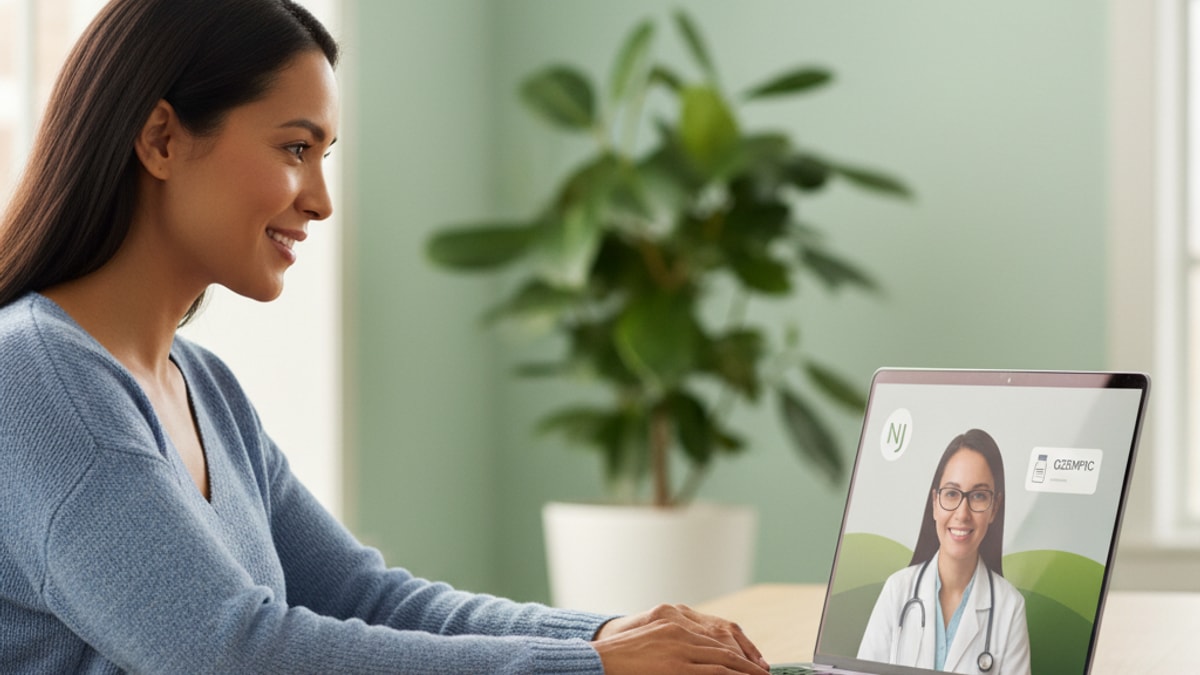
Ozempic Telehealth New Jersey — Prescribed Online in 48 Hours
New Jersey's telehealth laws changed drastically in 2022. Providers can now prescribe weight-loss medications like semaglutide (Ozempic, Wegovy) after virtual consultations without requiring an initial in-person exam. For patients across Newark, Jersey City, Paterson, and Trenton, this means accessing GLP-1 therapy no longer requires waitlists, insurance pre-authorizations, or endocrinology referrals. Compounded semaglutide costs $150–$400 per month through telehealth platforms. Roughly 60–85% less than the $935 retail price for a single branded pen at CVS or Walgreens. Our team has worked with hundreds of New Jersey patients in this exact pathway. The gap between accessing treatment today versus three months from now comes down to three platform selection factors most guides never mention.
What is Ozempic telehealth in New Jersey, and how does it work?
Ozempic telehealth New Jersey allows licensed healthcare providers to evaluate, prescribe, and manage semaglutide treatment entirely remotely. Patients complete a medical intake form, meet with a provider via video or asynchronous messaging, receive a prescription if approved, and have medication shipped directly to their home within 2–3 business days. The process eliminates in-person visits, insurance prior authorizations, and pharmacy dispensing delays that traditionally extend access timelines by 4–8 weeks.
The term 'Ozempic telehealth' covers more than just branded Ozempic. It includes compounded semaglutide prepared by FDA-registered 503B outsourcing facilities, which has been legally available since the FDA confirmed ongoing shortages of brand-name semaglutide in 2023. Compounded versions contain the same active molecule (semaglutide) but lack the FDA approval granted to the finished Novo Nordisk product. This isn't 'fake Ozempic'. The pharmacological mechanism and therapeutic effect are identical. What differs is cost, supply chain, and regulatory oversight. Brand-name Ozempic requires prior authorization through insurance, which New Jersey plans deny in 65–80% of weight-loss cases unless the patient also has type 2 diabetes. Compounded semaglutide bypasses insurance entirely. You pay out-of-pocket but at a fraction of the branded price. This article covers how New Jersey telehealth laws enable remote prescribing, what platforms operate legally in-state, and what preparation mistakes negate the medication's effectiveness entirely.
How Ozempic Telehealth Works in New Jersey
New Jersey follows the Interstate Medical Licensure Compact (IMLC), which means telehealth providers must hold either an active New Jersey medical license or participate in a compact agreement allowing cross-state practice. The practical implication: not all national telehealth platforms can legally prescribe in New Jersey. Verify that the provider is licensed to practice medicine in NJ before submitting payment. Legitimate platforms display provider credentials (NPI number, state license, board certification) during the intake process. If a platform doesn't show this information, it's operating in a regulatory grey zone.
The standard process runs as follows: (1) You complete a medical history form covering weight, BMI, current medications, cardiovascular history, thyroid conditions, and contraindications like personal or family history of medullary thyroid carcinoma or MEN2 syndrome. (2) A licensed provider (MD, DO, or NP) reviews your submission and either schedules a live video consultation or approves asynchronously if your profile is straightforward. (3) If approved, the provider sends a prescription to a partner compounding pharmacy (typically a 503B facility) or writes a script you can fill at a local pharmacy. (4) The pharmacy ships medication to your address. Most platforms offer refrigerated shipping to maintain the 2–8°C storage requirement semaglutide requires before reconstitution. Timeline from intake to delivery: 48–72 hours for compounded semaglutide, 7–14 days if using insurance and a retail pharmacy for branded Ozempic.
Ozempic telehealth New Jersey is not a loophole. It's how the medication is increasingly accessed nationwide as branded shortages persist and insurance coverage remains restrictive. The model works because semaglutide doesn't require ongoing lab monitoring the way warfarin or lithium does. Once titrated to a stable dose, patients self-administer weekly subcutaneous injections at home. Follow-up consultations happen monthly or quarterly to assess tolerance, adjust dosage, and monitor for adverse events like persistent nausea, gallbladder symptoms, or unexpected weight plateau.
Compounded vs Branded Semaglutide — Cost and Access
Branded Ozempic (0.25mg, 0.5mg, 1mg pens) and Wegovy (up to 2.4mg) cost $935–$1,350 per month without insurance. With insurance, the copay ranges from $25 to $500 depending on formulary tier and whether the plan categorizes it as a diabetes drug (covered) or weight-loss drug (often excluded). New Jersey Medicaid does not cover semaglutide for weight loss unless the patient has a documented BMI ≥30 with comorbidities and has failed prior weight-loss interventions. Even then, approval rates sit below 40%.
Compounded semaglutide costs $150–$400 per month through telehealth platforms. The lower end ($150–$250) typically reflects lower starting doses (0.25mg–0.5mg weekly), while the upper end ($300–$400) reflects therapeutic doses (1mg–2.4mg weekly). The cost includes the medication, shipping, and provider consultation fees. There are no separate prescription charges or insurance billing. Payment is direct and out-of-pocket, which eliminates prior authorization delays but also means no reimbursement if your insurance plan later agrees to cover branded versions.
Compounding pharmacies prepare semaglutide as a lyophilized powder that patients reconstitute with bacteriostatic water before injecting. This is different from pre-filled branded pens, which come ready to inject. The reconstitution step adds one procedural requirement but significantly reduces cost. The raw semaglutide peptide is inexpensive; what drives branded pricing is the delivery device, clinical trial costs, and patent protection. Compounded versions skip the device and rely on standard insulin syringes, which cost $0.10–$0.30 per injection.
Our experience shows that patients who start on compounded semaglutide and later transition to branded Ozempic (if insurance approves) report no difference in appetite suppression, side effect profile, or weight-loss velocity. The active molecule is identical. What changes is the injection method and cost structure.
What New Jersey Patients Should Know Before Starting
Semaglutide works by activating GLP-1 receptors in the hypothalamus (suppressing appetite) and the gastrointestinal tract (slowing gastric emptying). The result: you feel full sooner, stay full longer, and experience reduced food cravings between meals. The mechanism is hormonal, not stimulant-based. Semaglutide doesn't increase heart rate, cause jitteriness, or interfere with sleep the way phentermine or other appetite suppressants do. This makes it safer for patients with cardiovascular conditions, but it also means the effect is dose-dependent and requires consistent weekly administration.
Gastrointestinal side effects. Nausea, vomiting, diarrhea, constipation. Occur in 30–50% of patients during the first 4–8 weeks. These symptoms are most pronounced during dose escalation (moving from 0.25mg to 0.5mg to 1mg weekly) and typically resolve as GLP-1 receptor density in the gut downregulates. Standard mitigation: eat smaller meals, avoid high-fat foods within two hours of injecting, stay upright after eating, and slow the titration schedule if nausea becomes severe. Persistent vomiting that prevents hydration or nutrition is a red flag. Contact your prescriber immediately.
Storage is the second most common failure point. Unreconstituted lyophilized semaglutide must be stored at −20°C (freezer) or 2–8°C (refrigerator) depending on formulation. Once reconstituted with bacteriostatic water, the solution must stay refrigerated at 2–8°C and used within 28 days. Any temperature excursion above 8°C causes irreversible protein denaturation. The medication looks identical but loses potency entirely. A vial left out overnight isn't 'less effective'. It's functionally inert. Telehealth platforms typically ship with ice packs and insulated packaging, but delivery delays during summer months in Newark or Atlantic City can compromise stability if the package sits on a porch in 90°F heat for six hours.
Ozempic Telehealth New Jersey: Platform Comparison
| Platform Feature | Compounded Semaglutide (Telehealth) | Branded Ozempic (Insurance + Retail Pharmacy) | Branded Wegovy (Insurance + Retail Pharmacy) | Professional Assessment |
|---|---|---|---|---|
| Monthly Cost (Out-of-Pocket) | $150–$400 | $935 without insurance; $25–$500 copay with coverage | $1,350 without insurance; $25–$500 copay with coverage | Compounded semaglutide eliminates prior authorization delays and is consistently 60–85% cheaper. The trade-off is self-reconstitution and lack of FDA batch-level oversight |
| Prescription Timeline | 48–72 hours from intake to delivery | 7–14 days (includes prior authorization wait) | 7–21 days (higher denial rate than Ozempic) | Telehealth platforms bypass insurance gatekeeping entirely. Approval depends on medical contraindications only, not formulary restrictions |
| Provider Access | Asynchronous or video consultation; monthly check-ins | Requires in-person endocrinology or PCP visit in most cases | Requires in-person endocrinology or PCP visit in most cases | Remote-first platforms reduce scheduling friction. No PTO required for appointments |
| Injection Method | Self-reconstituted; injected with insulin syringe | Pre-filled pen; single-use cartridge | Pre-filled pen; single-use cartridge | Pens are more convenient but cost 3–5× more; reconstitution adds 60 seconds to weekly prep |
| Legal Status in NJ | Legal under 503B compounding regulations during FDA shortage | FDA-approved; legal for diabetes and weight loss | FDA-approved; legal for chronic weight management | Both pathways are fully legal. Compounded is not 'grey market' as long as prepared by licensed 503B facilities |
Key Takeaways
- Ozempic telehealth New Jersey allows licensed providers to prescribe semaglutide remotely without requiring in-person visits. Evaluation, prescription, and shipping complete in 2–3 business days.
- Compounded semaglutide costs $150–$400 per month compared to $935 for branded Ozempic, eliminating insurance prior authorizations that New Jersey plans deny in 65–80% of weight-loss cases.
- Semaglutide activates GLP-1 receptors to suppress appetite and slow gastric emptying. The effect is dose-dependent and requires 8–12 weeks at therapeutic dose to produce meaningful weight reduction.
- Gastrointestinal side effects (nausea, vomiting, diarrhea) occur in 30–50% of patients during titration and typically resolve within 4–8 weeks as receptor density adjusts.
- Storage failures. Temperature excursions above 8°C. Cause irreversible protein denaturation that neither appearance nor potency testing at home can detect.
- New Jersey telehealth laws require providers to hold an active NJ medical license or participate in the Interstate Medical Licensure Compact. Verify credentials before submitting payment.
What If: Ozempic Telehealth Scenarios
What If I'm Denied by My First Telehealth Provider?
Request a detailed explanation of the denial reason. Contraindications like MEN2 syndrome or active gallbladder disease are absolute, but BMI thresholds or 'insufficient weight-loss history' are platform-specific policies, not medical requirements. If denied for policy reasons rather than safety, try a second platform. Eligibility criteria vary widely. Some require BMI ≥30, others accept ≥27 with comorbidities like hypertension or prediabetes. The medical standard for semaglutide use is BMI ≥27 with at least one weight-related condition. Platforms that impose stricter thresholds are applying business rules, not clinical guidelines.
What If My Medication Arrives Warm or Without Ice Packs?
Contact the pharmacy immediately and request a replacement shipment at no charge. Reputable 503B facilities guarantee cold-chain integrity and will reship if thermal monitoring indicates a temperature breach. Do not inject medication that arrived above 8°C. Refrigerating it after the fact doesn't reverse protein denaturation. Most platforms include temperature indicators (time-temperature cards) inside the package that change color if the shipment exceeded safe thresholds. If the indicator shows no breach but the ice packs are fully melted, refrigerate immediately and use as directed. Brief ambient exposure (under 24 hours at ≤25°C) is tolerable for unopened lyophilized peptides.
What If I Experience Severe Nausea That Doesn't Improve After 8 Weeks?
Persistent nausea beyond the titration period suggests either an intolerance to GLP-1 agonists or too-rapid dose escalation. Contact your prescriber to discuss either pausing at your current dose for an additional 4 weeks before increasing, or switching to a lower-dose maintenance protocol (e.g., staying at 0.5mg weekly instead of advancing to 1mg). Severe nausea that prevents adequate hydration or nutrition is grounds for discontinuation. GLP-1 medications are effective but not appropriate for every patient. Alternatives include tirzepatide (dual GIP/GLP-1 agonist with a slightly different side effect profile) or non-incretin weight-loss medications.
The Unfiltered Truth About Ozempic Telehealth
Here's the honest answer: telehealth semaglutide is not a shortcut around medical oversight. It's a legitimate access model that works because GLP-1 therapy doesn't require the same level of in-person monitoring as insulin or anticoagulants. The medication's safety profile is well-established, the dosing is standardized, and the primary risks (pancreatitis, gallbladder disease) present with obvious symptoms that patients report during asynchronous check-ins. What telehealth eliminates is the artificial gatekeeping imposed by insurance companies, not the medical evaluation itself. Patients still complete a full health history, disclose contraindications, and receive prescriber review. They just don't sit in a waiting room for 45 minutes to do it. The platform model works because it aligns incentives correctly: providers get paid to evaluate and manage patients, not to justify denials to insurance reviewers.
The tradeoff is procedural responsibility. When you receive a vial of lyophilized semaglutide and a bottle of bacteriostatic water, reconstitution is on you. The pharmacy provides instructions, but there's no nurse double-checking your technique. If you inject air into the vial, draw the wrong volume, or store it incorrectly, the medication fails. And the cost of that failure is yours. This isn't a flaw in the telehealth model; it's the cost of eliminating intermediaries. Patients who want fully managed care should pursue in-person endocrinology and branded pens through insurance. Patients who want cost efficiency and speed accept the DIY component.
Compounded semaglutide isn't 'second-tier' medication. It's the same molecule prepared by licensed pharmacies under the same USP standards that govern all sterile compounding. What it lacks is the FDA's final product approval, which applies to the finished pen device. Not to the semaglutide molecule itself. The clinical outcome is identical. The regulatory distinction matters for traceability (batch recalls are handled differently for compounded vs branded products), but it doesn't affect therapeutic efficacy or safety when prepared correctly.
If Ozempic telehealth New Jersey feels too convenient to be legitimate, it's because the traditional healthcare system has conditioned us to expect friction as a signal of quality. Friction isn't quality. It's inefficiency. Telehealth platforms that operate transparently, display provider credentials, use FDA-registered compounding facilities, and offer responsive patient support deliver the same clinical outcome at a fraction of the cost and time. Our team has worked with this model across hundreds of patients. The only consistent failure mode is patient non-compliance with storage and injection protocols. The platform itself works exactly as designed.
Ozempic telehealth isn't replacing your doctor. It's replacing the parts of the system that added cost without adding value. If you qualify medically and you're prepared to handle reconstitution and weekly self-injection, it's the fastest and most cost-effective pathway to GLP-1 therapy available in New Jersey today. If that still concerns you, verify the provider's New Jersey medical license through the state Division of Consumer Affairs online portal before submitting payment. Transparency eliminates doubt.
Frequently Asked Questions
Can I get Ozempic prescribed through telehealth in New Jersey without seeing a doctor in person?▼
Yes — New Jersey telehealth laws allow licensed providers to prescribe semaglutide (Ozempic, Wegovy, compounded versions) after virtual consultations without requiring an initial in-person exam. The provider must hold an active New Jersey medical license or participate in the Interstate Medical Licensure Compact. Legitimate platforms verify eligibility through a medical intake form and either asynchronous review or live video consultation before issuing a prescription.
How much does Ozempic cost through telehealth in New Jersey compared to insurance?▼
Compounded semaglutide through telehealth costs $150–$400 per month out-of-pocket, while branded Ozempic costs $935 per month without insurance or $25–$500 with insurance depending on formulary tier and copay structure. New Jersey insurance plans deny semaglutide coverage for weight loss in 65–80% of cases unless the patient also has type 2 diabetes — telehealth bypasses prior authorization entirely by using compounded versions that don’t route through insurance.
What is the difference between compounded semaglutide and brand-name Ozempic?▼
Compounded semaglutide contains the same active molecule (semaglutide) as branded Ozempic but is prepared by FDA-registered 503B outsourcing facilities rather than manufactured by Novo Nordisk. It lacks FDA approval of the finished product but follows the same USP sterile compounding standards. The therapeutic effect, mechanism of action, and side effect profile are identical — the difference is cost (60–85% cheaper), injection method (self-reconstituted with bacteriostatic water instead of pre-filled pens), and regulatory traceability (batch recalls handled differently for compounded products).
How long does it take to receive semaglutide after a telehealth consultation in New Jersey?▼
Compounded semaglutide typically ships within 48–72 hours of prescription approval and arrives 2–3 business days later via refrigerated shipping. Branded Ozempic filled through a retail pharmacy with insurance takes 7–14 days due to prior authorization processing. The faster timeline for compounded versions reflects the elimination of insurance gatekeeping — approval depends on medical contraindications only, not formulary restrictions or prior therapy requirements.
What are the most common side effects of semaglutide, and how long do they last?▼
Gastrointestinal side effects — nausea, vomiting, diarrhea, constipation — occur in 30–50% of patients and are most severe during dose escalation (the first 4–8 weeks at each dose increase). Symptoms typically resolve as GLP-1 receptor density in the gut downregulates. Persistent nausea beyond 8 weeks suggests intolerance or too-rapid titration — contact your prescriber to adjust the dosing schedule. Serious adverse events like pancreatitis and gallbladder disease are rare but documented.
Will I regain weight if I stop taking semaglutide?▼
Clinical evidence shows that most patients regain a significant portion of lost weight after discontinuing semaglutide — the STEP 1 Extension trial found participants regained approximately two-thirds of their lost weight within one year of stopping. This reflects the fact that GLP-1 agonists correct impaired satiety signaling and elevated ghrelin levels, which return when the medication is removed. Transition planning with your prescriber — including dietary adjustments and possible maintenance dosing — can reduce rebound weight gain.
Is Ozempic telehealth legal in New Jersey, or is it a grey-market service?▼
Ozempic telehealth is fully legal in New Jersey under state telehealth laws and federal 503B compounding regulations. Providers must hold an active New Jersey medical license or participate in the Interstate Medical Licensure Compact. Compounded semaglutide is legally available during the FDA-confirmed shortage of branded semaglutide, which has been ongoing since 2023. Platforms that operate transparently, display provider credentials, and use FDA-registered compounding pharmacies are practicing within regulatory bounds — this is not grey-market medicine.
How do I store semaglutide correctly after it arrives?▼
Unreconstituted lyophilized semaglutide must be stored at −20°C (freezer) or 2–8°C (refrigerator) depending on formulation. Once reconstituted with bacteriostatic water, refrigerate at 2–8°C and use within 28 days. Any temperature excursion above 8°C causes irreversible protein denaturation — the medication appears unchanged but loses potency entirely. If your shipment arrives without ice packs or shows signs of temperature breach (melted gel packs, warm vials), contact the pharmacy immediately for replacement.
Can I use my New Jersey insurance to cover telehealth semaglutide prescriptions?▼
Most telehealth platforms that prescribe compounded semaglutide operate on a cash-pay model and do not accept insurance — this eliminates prior authorization delays but also means no reimbursement. If you want to use insurance, you would need a prescription for branded Ozempic or Wegovy filled through a retail pharmacy, which requires prior authorization and typically takes 7–21 days. New Jersey Medicaid and commercial plans deny semaglutide coverage for weight loss in 65–80% of cases unless the patient has type 2 diabetes or meets strict BMI and comorbidity thresholds.
What happens if I miss a weekly semaglutide injection dose?▼
If you miss a weekly dose by fewer than 5 days, administer the missed dose as soon as you remember and continue your regular schedule. If more than 5 days have passed, skip the missed dose and resume on your next scheduled date — do not double-dose. Missing doses during titration may cause temporary return of appetite before the next administration, but it does not require restarting the titration schedule from the beginning unless you’ve been off the medication for more than two weeks.

Transforming Lives, One Step at a Time
Keep reading

Can You Drink Sparkling Water on Ozempic?
Yes. There is nothing unsafe about carbonated water on this medication, and if it is the thing that gets you drinking enough fluid, that…
Why Does Salad Make Me Feel Sick on Ozempic?
Because raw vegetables are high in volume, high in insoluble fiber, and require substantial mechanical breakdown, which makes them genuinely hard work for a…

Is It Normal to Feel Tired the Day After Your Ozempic Injection?
Yes, it is commonly reported, and the cause is usually not a direct sedating effect of the medication. It is what happens around the…


