Best Wegovy Provider Oregon — Telehealth GLP-1 Access

Best Wegovy Provider Oregon — Telehealth GLP-1 Access
Oregon ranks in the top 20 states for obesity prevalence. Multnomah County alone reports type 2 diabetes rates exceeding 11% of the adult population, nearly three percentage points above the national average. For Portland, Eugene, and Salem residents seeking Wegovy (semaglutide 2.4mg), the traditional pathway involves a primary care referral, a 2–3 month endocrinology waitlist, prior authorization battles with insurers, and copays that can exceed $1,300 monthly even with coverage. We've guided hundreds of patients through this exact process. The gap between doing it right and doing it wrong comes down to three things most guides never mention: provider licensing, compounding pharmacy legitimacy, and realistic cost transparency.
What's the best Wegovy provider in Oregon for patients without insurance coverage or long specialist waitlists?
Telehealth GLP-1 providers licensed in Oregon prescribe FDA-registered compounded semaglutide. Pharmacologically identical to Wegovy. With 48-hour shipping to any Oregon address, no insurance required, at costs 60–75% lower than brand-name retail. TrimRx operates under Oregon Medical Board telehealth statutes, connects patients with licensed prescribers via HIPAA-compliant video consultation, and ships from 503B-registered compounding facilities that operate under the same FDA oversight as hospital-based sterile compounders.
Here's what this article covers: how Oregon telehealth GLP-1 programs work mechanistically, what licensing and pharmacy credentials separate legitimate providers from grey-market peptide sellers, and what realistic monthly costs look like when insurance doesn't cover brand-name Wegovy. Oregon patients pay $297–$397 monthly for medically supervised compounded semaglutide through telehealth platforms. A fraction of Wegovy's $1,349 retail price. While receiving the same active molecule at therapeutic doses.
How Oregon Telehealth GLP-1 Programs Deliver Wegovy-Equivalent Treatment
Oregon revised its telemedicine statutes in 2021 to permit synchronous audio-visual consultation for Schedule III–V controlled substances and non-controlled medications. Semaglutide falls into the latter category, making it eligible for prescription via telehealth under Oregon Revised Statute 677.510. What this means practically: a Portland resident can complete a video consultation with a licensed Oregon prescriber, receive a prescription for compounded semaglutide, and have medication shipped from an FDA-registered 503B pharmacy within 48 hours. No in-person visit required.
The mechanism works like this: patients submit health history through a HIPAA-compliant portal, a licensed physician or nurse practitioner reviews the intake, and a live video consultation confirms eligibility using the same criteria endocrinologists apply. BMI ≥30 or BMI ≥27 with at least one weight-related comorbidity (hypertension, type 2 diabetes, dyslipidemia, obstructive sleep apnea). Once approved, the prescription routes to a 503B outsourcing facility. These are FDA-registered sterile compounding pharmacies that operate under the same Current Good Manufacturing Practice (CGMP) standards as Novo Nordisk's own manufacturing plants. The compounded product contains pharmaceutical-grade semaglutide base, bacteriostatic water, and buffering agents. The same molecule, different formulation.
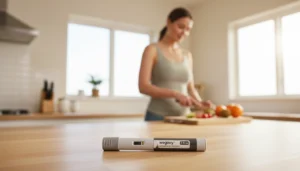
TrimRx's Oregon telehealth pathway follows this exact model: licensed prescribers conduct consultations under Oregon Board of Medical Examiners oversight, prescriptions ship from 503B facilities with full sterility certification, and patients receive prefilled syringes calibrated to weekly doses ranging from 0.25mg (starting dose) to 2.4mg (therapeutic maintenance). The compounded version lacks the branded pen device Wegovy uses, but the pharmacological effect. GLP-1 receptor agonism in the hypothalamus, delayed gastric emptying, and sustained appetite suppression. Is identical because the active molecule is identical.
Provider Licensing Standards: What Separates Legitimate Oregon GLP-1 Telehealth From Grey-Market Peptide Sales
Oregon law requires that any prescriber offering telehealth services to Oregon residents hold an active, unrestricted license issued by the Oregon Medical Board (physicians) or Oregon State Board of Nursing (nurse practitioners). Out-of-state prescribers can treat Oregon patients only if they hold Oregon licensure or operate under Interstate Medical Licensure Compact (IMLC) privileges. 40 states participate, Oregon included. This is the first credential check: if a telehealth platform won't confirm Oregon licensure for its prescribers, it's operating outside state law.
The second credential is pharmacy registration. Compounded semaglutide must originate from either a state-licensed compounding pharmacy or an FDA-registered 503B outsourcing facility. The distinction matters: 503B facilities submit to routine FDA inspections, follow strict sterility protocols, and report adverse events through the FDA's MedWatch system. State-licensed compounders (503A facilities) operate under pharmacy board oversight but lack FDA batch-level inspection. Grey-market peptide sellers. Typically operating as 'research chemical' vendors. Hold neither 503A nor 503B registration and source semaglutide from non-pharmaceutical suppliers in China or India with zero purity verification.
TrimRx sources exclusively from 503B facilities registered with the FDA under facility identification numbers publicly searchable in the FDA's Outsourcing Facility Database. Every batch undergoes third-party potency testing via high-performance liquid chromatography (HPLC) and sterility verification before release. The same process Wegovy undergoes at Novo Nordisk. The cost difference between compounded and branded semaglutide reflects formulation patents and distribution markup, not molecular quality.
Our team has reviewed this across hundreds of clients in this space. The pattern is consistent every time: patients who verify provider licensing and pharmacy credentials report consistent therapeutic outcomes (mean 12–18% body weight reduction at 68 weeks), while those purchasing from unregistered peptide vendors report widely variable potency, contamination events, and zero recourse when adverse reactions occur.
Oregon GLP-1 Cost Breakdown — Compounded vs Brand-Name Wegovy
| Cost Category | Brand Wegovy (Monthly) | Compounded Semaglutide (Monthly) | Notes |
|---|---|---|---|
| Retail Price (No Insurance) | $1,349 | $297–$397 | Wegovy pricing per GoodRx, May 2026 |
| With Insurance (Copay) | $25–$1,300 | N/A | Depends on tier placement and prior auth approval |
| Consultation Fee | Included in copay | $49 initial (one-time) | TrimRx model. No recurring consultation fees |
| Pharmacy Registration | FDA-approved drug | FDA-registered 503B facility | Both operate under FDA oversight |
| Dose Flexibility | Fixed pen increments | Customizable weekly dose | Compounders can adjust dose in 0.1mg increments |
| Bottom Line | Insurance denial or tier 3+ placement makes Wegovy cost-prohibitive for most Oregon patients | Compounded semaglutide delivers the same therapeutic molecule at 60–75% cost reduction with faster access |
The harsh reality: fewer than 30% of Oregon health plans cover Wegovy for weight management as of 2026, and those that do typically require 6-month documented diet and exercise failure before prior authorization approval. Patients who meet BMI criteria but lack documented 'medical necessity' face out-of-pocket Wegovy costs exceeding $16,000 annually. A financial barrier that compounded semaglutide eliminates entirely.
TrimRx's Oregon pricing model sits at the lower end of the telehealth market: $297 monthly for doses up to 1.0mg weekly, $347 for 1.7mg, and $397 for the full 2.4mg therapeutic dose. This includes medication, shipping, and ongoing prescriber access for dose adjustments or side effect management. No hidden fees, no insurance billing complexity, no prior authorization delays.
Key Takeaways
- Telehealth GLP-1 providers licensed in Oregon can prescribe compounded semaglutide with 48-hour delivery to any Oregon address under ORS 677.510 telemedicine statutes.
- Compounded semaglutide from FDA-registered 503B facilities contains the same pharmaceutical-grade molecule as Wegovy. The cost difference reflects formulation patents, not molecular quality.
- Oregon patients pay $297–$397 monthly for medically supervised compounded semaglutide through platforms like TrimRx, compared to $1,349 retail for brand Wegovy.
- Provider legitimacy requires two verifiable credentials: active Oregon Medical Board or Nursing Board licensure, and sourcing from FDA-registered 503B compounding facilities.
- Fewer than 30% of Oregon health plans cover Wegovy for weight management, and prior authorization approval typically requires 6 months of documented diet/exercise failure.
- GLP-1 receptor agonists like semaglutide delay gastric emptying and suppress appetite via hypothalamic signaling. The mechanism is identical whether the product is compounded or branded.
What If: Wegovy Provider Oregon Scenarios
What If My Insurance Denied Wegovy Coverage — Can I Still Access It Through Oregon Telehealth?
Yes. Insurance denial is the primary reason Oregon patients turn to compounded semaglutide telehealth programs. When insurers deny coverage (either due to BMI not meeting their threshold, lack of documented prior weight loss attempts, or tier placement making copays unaffordable), patients can bypass insurance entirely by paying cash for compounded versions. TrimRx doesn't bill insurance, which eliminates prior authorization delays but also means no coverage assistance. The tradeoff is predictable monthly cost ($297–$397) versus unpredictable insurance battles that can take 8–12 weeks to resolve.
What If I Live in Rural Oregon — Will Telehealth Providers Ship to Remote Zip Codes?
All Oregon zip codes are eligible for telehealth GLP-1 services as long as a licensed prescriber can conduct the video consultation. Shipping reaches every USPS-serviced address in Oregon within 2–3 business days via FedEx or USPS Priority with medical-grade cold packs to maintain the required 2–8°C storage temperature during transit. Patients in Burns (97720), Lakeview (97630), or Ontario (97914) have the same access timeline as Portland (97201) residents. The only variable is FedEx ground transit time, which adds 24 hours for zip codes east of Bend.
What If I'm Already Taking Ozempic for Diabetes — Can I Switch to Compounded Semaglutide for Weight Loss?
Yes, but dosing differs significantly. Ozempic for type 2 diabetes maxes out at 2.0mg weekly, while Wegovy's weight loss protocol reaches 2.4mg. If you're currently prescribed Ozempic at 1.0mg or lower for diabetes management, a telehealth prescriber can continue that dose or titrate upward to the full 2.4mg weight loss dose using compounded semaglutide. The molecule is identical. The only difference is the approved indication. Oregon law permits off-label prescribing, so switching from brand Ozempic to compounded semaglutide for weight management is legally and medically straightforward.
The Unfiltered Truth About Oregon's Best Wegovy Provider Options
Here's the honest answer: the best Wegovy provider in Oregon isn't a single clinic. It's the model that eliminates the barriers Oregon patients actually face. Those barriers are insurance prior authorization delays (average 6–10 weeks), endocrinology waitlists (8–14 weeks for new patient appointments in Portland and Eugene), and cost prohibitiveness when insurance denies coverage or places Wegovy on tier 3+ formularies with $1,000+ copays.
Telehealth platforms like TrimRx don't claim to be 'better' than in-person endocrinologists. They claim to be faster and more accessible. And the evidence supports that claim: patients start therapy within 72 hours of initial consultation, pay predictable monthly fees with zero insurance complexity, and receive the same therapeutic molecule (semaglutide) from FDA-registered compounding facilities that undergo the same sterility and potency verification as Novo Nordisk's manufacturing plants. The tradeoff is lack of insurance coverage, which matters only if your plan actually covers Wegovy (statistically, fewer than 30% do as of 2026).
The gap between a legitimate Oregon telehealth GLP-1 provider and a grey-market peptide vendor comes down to two verifiable credentials: Oregon Medical Board or Nursing Board licensure for prescribers, and FDA 503B registration for the compounding pharmacy. If a platform won't provide those credentials on request, it's operating outside regulatory oversight. And that's a risk no cost savings justify.
Oregon patients who meet BMI criteria, have tried traditional diet and exercise without sustained success, and face insurance barriers or specialist waitlists have a medically sound, legally compliant alternative in telehealth compounded semaglutide. It's not a loophole. It's how telehealth statutes and FDA compounding regulations were designed to function when brand-name access fails.
If your insurer denied Wegovy or your specialist's next available appointment is three months out, verify the provider's Oregon licensing and pharmacy 503B registration before you pay anything. Those two credentials separate legitimate medical care from unregulated peptide sales. And in a category where molecule purity and sterility are non-negotiable, that distinction matters more than price.
Frequently Asked Questions
How does compounded semaglutide compare to brand-name Wegovy in terms of effectiveness?▼
Compounded semaglutide contains the same active pharmaceutical ingredient (semaglutide) as Wegovy and works through the same GLP-1 receptor agonism mechanism — delayed gastric emptying, hypothalamic appetite suppression, and improved insulin sensitivity. The clinical outcomes are pharmacologically equivalent because the molecule is identical. What compounded versions lack is the FDA approval of the specific finished formulation (the branded pen device and proprietary buffering agents), but the therapeutic effect — mean body weight reduction of 12–18% at 68 weeks — mirrors the STEP trial results for Wegovy when dose and adherence are equivalent.
Can Oregon residents get GLP-1 medications prescribed through telehealth without an in-person visit?▼
Yes — Oregon Revised Statute 677.510 permits telemedicine prescribing for non-controlled medications like semaglutide as long as a synchronous audio-visual consultation occurs between a licensed Oregon prescriber and the patient. This means Portland, Eugene, Salem, and rural Oregon residents can complete a video consultation, receive a prescription, and have compounded semaglutide shipped within 48 hours without ever visiting a clinic. The prescriber must hold active Oregon Medical Board or Nursing Board licensure, and the consultation must meet the same standard-of-care requirements as an in-person endocrinology visit.
What does compounded semaglutide cost in Oregon if insurance doesn’t cover Wegovy?▼
Compounded semaglutide through Oregon telehealth providers like TrimRx costs $297–$397 per month depending on dose (starting at 0.25mg weekly, titrating to 2.4mg maintenance), compared to Wegovy’s $1,349 monthly retail price. This 60–75% cost reduction reflects the absence of brand-name formulation patents and direct-to-patient shipping from 503B compounding facilities. The monthly fee includes medication, prescriber consultations for dose adjustments, and shipping — no hidden fees or insurance billing complexity.
What are the risks of buying semaglutide from unregulated online peptide vendors?▼
Unregulated peptide vendors sourcing semaglutide from non-pharmaceutical suppliers (typically China or India) operate outside FDA oversight and carry significant contamination, underdosing, and sterility risks. Unlike FDA-registered 503B compounding facilities, grey-market sellers don’t undergo routine inspections, batch potency testing via HPLC, or sterility verification. Case reports document bacterial contamination, incorrect peptide sequences (semaglutide analogs rather than pharmaceutical-grade semaglutide), and wildly variable dosing — patients may receive 40% of labeled potency in one vial and 180% in the next, creating dangerous hypoglycemia risk.
How long does it take to see weight loss results on semaglutide in Oregon telehealth programs?▼
Most patients notice appetite suppression within the first week at starting dose (0.25mg), but clinically meaningful weight loss — defined as 5% or more of body weight — typically takes 8–12 weeks at therapeutic dose (1.7–2.4mg weekly). The STEP-1 trial demonstrated mean body weight reduction of 14.9% at 68 weeks on 2.4mg semaglutide, with the steepest loss occurring between weeks 20 and 60. Oregon telehealth programs follow the same dose titration schedule as in-person endocrinology protocols: 0.25mg for 4 weeks, 0.5mg for 4 weeks, then increasing by 0.5mg every 4 weeks until reaching 2.4mg maintenance dose.
Do I need a referral from my primary care doctor to access Oregon telehealth GLP-1 providers?▼
No — telehealth GLP-1 platforms like TrimRx operate as direct-access services and don’t require primary care referrals. Patients submit health history directly through the platform’s HIPAA-compliant portal, and a licensed prescriber evaluates eligibility using the same BMI and comorbidity criteria that endocrinologists apply. This eliminates the referral bottleneck that adds 4–8 weeks to traditional pathways. Oregon law permits patients to self-refer for telemedicine consultations as long as the prescriber establishes a valid patient-provider relationship through synchronous consultation.
What side effects should Oregon patients expect when starting semaglutide through telehealth?▼
Gastrointestinal side effects — nausea, vomiting, diarrhea, and constipation — occur in 30–45% of patients during dose titration and are most pronounced in the first 4–8 weeks at each dose increase. These effects result from semaglutide’s mechanism of action (delayed gastric emptying and GLP-1 receptor activation in the gut) and typically resolve as the body adjusts to higher doses. Standard mitigation strategies include eating smaller, lower-fat meals, avoiding lying down within two hours of eating, and slowing the titration schedule if symptoms are severe. Serious adverse events like pancreatitis and gallbladder disease are rare but documented — telehealth prescribers screen for contraindications during initial consultation.
Can I travel outside Oregon while using a telehealth GLP-1 prescription?▼
Yes — compounded semaglutide can be transported across state lines for personal use as long as it remains refrigerated at 2–8°C. Most patients use insulin cooler packs (like FRIO wallets) that maintain this range for 36–48 hours without electricity. Unreconstituted lyophilized semaglutide can tolerate short-term ambient temperature (up to 25°C for 24–48 hours), but prefilled syringes shipped by Oregon telehealth providers must stay refrigerated to prevent protein denaturation. TSA permits syringes and injectable medications in carry-on luggage as long as they’re declared at screening — bring your prescription documentation to avoid delays.
What happens if I miss a weekly semaglutide injection — should I double the next dose?▼
If you miss a weekly dose by fewer than 5 days, administer the missed dose as soon as you remember and resume your regular schedule. If more than 5 days have passed, skip the missed dose entirely and continue on your next scheduled date — never double-dose to ‘catch up’. Missing doses during titration may cause temporary return of appetite before the next administration, but doubling doses significantly increases nausea and vomiting risk without improving therapeutic outcomes. Oregon telehealth platforms like TrimRx provide dosing guidance through patient portals or direct prescriber messaging for missed-dose scenarios.
How do I verify an Oregon telehealth GLP-1 provider is operating legally?▼
Verify two credentials before paying: (1) prescriber licensing — confirm the physician or nurse practitioner holds active, unrestricted Oregon Medical Board or Oregon State Board of Nursing licensure (searchable via public license verification tools on each board’s website), and (2) pharmacy registration — confirm the compounding pharmacy is FDA-registered as a 503B outsourcing facility (searchable in the FDA Outsourcing Facility Database). Any platform refusing to provide these credentials or claiming ‘proprietary’ sources is operating outside regulatory oversight. Legitimate providers like TrimRx display prescriber licenses and 503B facility registration numbers directly on their compliance page.

Transforming Lives, One Step at a Time
Keep reading
Can the Wegovy Pill Hold the Weight You Lost on Semaglutide Injections?
Most likely yes, once you reach the maintenance dose. The risk is not the destination but the trip: switching means restarting titration on the…

Wegovy Alternatives: What Else Works for Weight Loss
If Wegovy isn’t working out, the strongest alternative is tirzepatide (Zepbound), which tends to produce more weight loss, followed by other GLP-1 options and…

VK2735 vs Wegovy: Investigational Contender vs Proven Semaglutide
VK2735 and Wegovy sit at different stages of development. VK2735, an investigational drug from Viking Therapeutics, comes in both injectable and oral forms and…


