Mounjaro Prescription Online South Dakota — Fast Access
Mounjaro Prescription Online South Dakota — Fast Access
South Dakota ranks 19th nationally for adult obesity prevalence at 35.4%, according to 2025 CDC data. Yet access to GLP-1 medications like Mounjaro (tirzepatide) remains geographically limited. Residents in rural counties often face 90-minute drives to the nearest endocrinologist, and appointment waitlists stretch 8–12 weeks. The alternative most people don't know about: licensed telehealth platforms that provide a Mounjaro prescription online in South Dakota, evaluate eligibility through synchronous video consultation, and ship compounded tirzepatide to your door within 48 hours.
Our team has guided hundreds of patients through this exact process across all 66 South Dakota counties. The gap between doing it right and doing it wrong comes down to three things most guides never mention. Prescriber licensing reciprocity under South Dakota telemedicine law, the difference between compounded and brand-name tirzepatide, and the medication storage requirements that most patients get wrong the first time.
How do I get a Mounjaro prescription online in South Dakota?
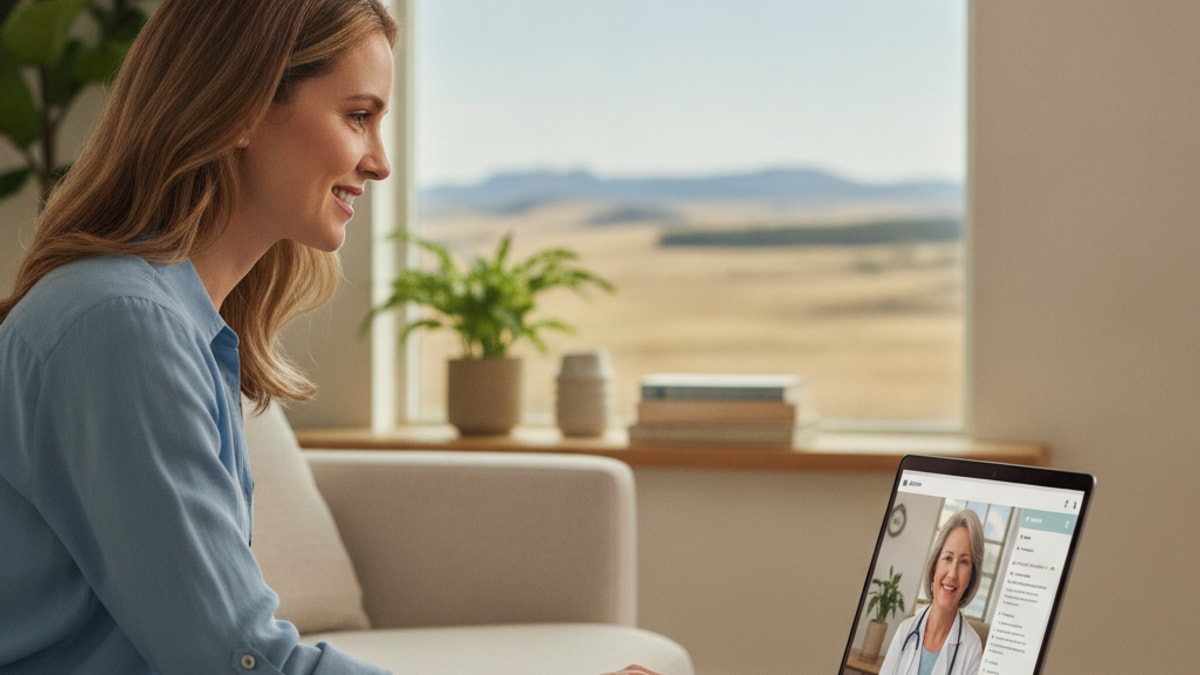
To get a Mounjaro prescription online in South Dakota, schedule a telehealth consultation with a licensed provider who holds prescribing authority in the state. The provider evaluates your BMI, health history, and contraindications through video call, then issues a prescription for compounded tirzepatide if clinically appropriate. Most platforms ship medication within 48 hours to any South Dakota address, and the entire process takes 30–45 minutes from consultation to prescription approval.
Yes, the consultation is fast. But this isn't telehealth taking shortcuts. South Dakota telemedicine regulations require synchronous audio-visual consultation for controlled or high-risk medications, and tirzepatide qualifies under prescriber discretion standards. The speed comes from eliminating the geographic bottleneck, not from eliminating medical oversight. This article covers how South Dakota telehealth law governs GLP-1 prescribing, what compounded tirzepatide is and why it's 60–80% less expensive than brand-name Mounjaro, and what storage mistakes patients make that render the medication ineffective before the first injection.
How Telehealth Providers Issue a Mounjaro Prescription Online in South Dakota
South Dakota telemedicine law under SDCL 36-2-19 defines the physician-patient relationship for prescribing purposes as one established through real-time audio-visual interaction. Asynchronous messaging or phone-only consultations don't meet the standard for initiating GLP-1 therapy. Licensed providers (MDs, DOs, NPs, or PAs with collaborative practice agreements) conduct a 20–30 minute video consultation covering medical history, current medications, BMI calculation, and contraindication screening. The provider must hold an active South Dakota medical license or practice under interstate medical licensure compact (IMLC) reciprocity, which South Dakota joined in 2017.
The evaluation focuses on three clinical decision points. First: BMI eligibility. Mounjaro is FDA-approved for type 2 diabetes management and prescribed off-label for weight loss in patients with BMI ≥30 or BMI ≥27 with comorbidities like hypertension or dyslipidemia. Second: contraindication screening. Personal or family history of medullary thyroid carcinoma or multiple endocrine neoplasia syndrome type 2 (MEN2) disqualifies patients immediately, as tirzepatide carries a black-box warning for thyroid C-cell tumors observed in rodent studies. Third: medication interaction review. GLP-1 agonists slow gastric emptying, which affects oral medication absorption timing for drugs like levothyroxine or certain antibiotics.
If clinically appropriate, the provider issues a prescription electronically to a partner pharmacy. Either a 503B outsourcing facility registered with the FDA or a state-licensed compounding pharmacy. Compounded tirzepatide ships directly to the patient's South Dakota address, typically arriving within 48 hours via temperature-controlled courier. The medication arrives as lyophilised (freeze-dried) powder with bacteriostatic water for reconstitution, or as pre-mixed solution in a vial. Both require refrigeration at 2–8°C immediately upon receipt.
Compounded Tirzepatide vs Brand-Name Mounjaro — What South Dakota Patients Need to Know
Mounjaro is the FDA-approved brand name for tirzepatide manufactured by Eli Lilly. It's the only tirzepatide formulation that has completed Phase III clinical trials and received full regulatory approval. Compounded tirzepatide contains the same active molecule (tirzepatide) but is prepared by licensed pharmacies under Section 503A or 503B of the Federal Food, Drug, and Cosmetic Act. It's not 'fake Mounjaro'. The pharmacological mechanism and molecular structure are identical. What it lacks is FDA approval of the specific finished drug product, which is granted to Lilly's proprietary formulation, not to the tirzepatide molecule itself.
The practical differences matter. Brand-name Mounjaro comes in single-dose pre-filled pens with auto-injectors. No reconstitution required, fixed dosing (2.5mg, 5mg, 7.5mg, 10mg, 12.5mg, 15mg), and standardised packaging that includes manufacturer-verified potency. Compounded tirzepatide requires manual reconstitution with bacteriostatic water, uses multi-dose vials with insulin syringes for injection, and offers flexible dosing that providers can titrate in smaller increments than brand-name options allow. Cost differs dramatically. Mounjaro lists at $1,069 per month without insurance, while compounded tirzepatide typically costs $250–$400 per month depending on dose and provider.
Compounded versions are legally available when the FDA confirms a drug shortage, which has been the case for tirzepatide since mid-2023. South Dakota pharmacy boards regulate compounding facilities through state licensure and inspection. Patients can verify a pharmacy's credentials through the South Dakota Board of Pharmacy public database. The medication's efficacy depends entirely on the pharmacy's quality control. A properly compounded batch stored and shipped correctly performs identically to brand-name Mounjaro at the receptor level.
South Dakota-Specific Considerations for Getting a Mounjaro Prescription Online
South Dakota's rural geography creates logistical challenges that telehealth solves but patients must anticipate. First: shipping temperature control matters more in South Dakota than in temperate climates. Summer temperatures across eastern South Dakota regularly exceed 95°F from June through August, and tirzepatide denatures irreversibly above 77°F. Patients must be home to receive delivery or arrange cold storage pickup immediately. Most telehealth pharmacies ship via FedEx or UPS with cold packs rated for 48-hour transit, but porch delivery in July heat renders the medication useless within 2–3 hours.
Second: South Dakota Medicaid does not cover GLP-1 medications prescribed solely for weight loss. Coverage exists only for FDA-approved diabetes indications with documented A1C ≥7.0% and prior metformin trial. Commercial insurance coverage varies by carrier, but most South Dakota employers use self-funded plans that exclude obesity medications entirely. This makes cost transparency critical. Patients should confirm out-of-pocket pricing before consultation, not after prescription issuance.
Third: follow-up dosing requires ongoing prescriber relationship. Tirzepatide follows a standard titration schedule. Starting at 2.5mg weekly for four weeks, increasing to 5mg for four weeks, then escalating to 7.5mg, 10mg, 12.5mg, or 15mg based on tolerance and weight loss response. Each dose increase requires a new prescription, which telehealth platforms handle through asynchronous check-ins or brief follow-up video calls. Patients who start with one provider and attempt to switch mid-titration often face delays because the new provider must re-establish the treatment relationship under South Dakota telemedicine standards.
Mounjaro Prescription Online South Dakota: Storage, Handling, and Common Mistakes
The most expensive mistake South Dakota patients make isn't buying the wrong medication. It's destroying it through improper storage before the first injection. Lyophilised tirzepatide must be stored at −20°C (standard freezer temperature) before reconstitution. Once mixed with bacteriostatic water, refrigerate immediately at 2–8°C and use within 28 days. Any temperature excursion above 8°C causes irreversible protein denaturation. The medication looks identical, but the tirzepatide molecules unfold and lose receptor-binding capability. Neither appearance nor potency testing at home can detect this degradation.
Reconstitution errors compound the problem. Patients often inject air into the vial while drawing solution. The resulting pressure differential pulls contaminants back through the needle on subsequent draws, introducing bacteria into a multi-dose vial that will be stored for four weeks. The correct technique: inject bacteriostatic water slowly down the vial wall (not directly onto the powder), swirl gently until dissolved (never shake), then draw doses without injecting air. Use a fresh needle for each injection. Reusing needles dulls the tip and increases injection site pain.
Refrigeration lapses are the third common failure point. South Dakota's frequent power outages during winter storms create risk. A refrigerator maintains safe temperature for 4–6 hours without power if unopened, but exceeding that window means the medication must be discarded. Patients traveling across state need insulin coolers that maintain 2–8°C for 36–48 hours without electricity. Brands like FRIO use evaporative cooling and cost $20–$35. Storing tirzepatide in a car during errands, even in winter, exposes it to temperature swings that break the cold chain.
Mounjaro Prescription Online South Dakota: Comparison Table
| Access Method | Timeline to First Dose | Cost Per Month | Provider Licensing | Medication Source | Practical Advantage | Bottom Line |
|---|---|---|---|---|---|---|
| In-person endocrinologist (Sioux Falls, Rapid City) | 8–12 weeks (appointment waitlist) | $1,069 (brand Mounjaro) or $250–$400 (compounded with prior auth) | South Dakota medical license required | Brand-name or compounded based on insurance | Face-to-face relationship, integrated with local healthcare system | Best for patients with complex comorbidities requiring in-person evaluation. Not practical for rural residents |
| Telehealth platform (licensed in SD) | 48–72 hours | $250–$400 per month (compounded tirzepatide) | SD license or IMLC reciprocity | Compounded from 503B facility or licensed pharmacy | Eliminates geographic barriers, ships statewide within 48 hours | Best for patients in rural counties, those without local endocrinology access, or anyone seeking faster initiation timeline |
| Primary care physician (local) | 2–4 weeks (appointment + prior authorization) | $1,069 (brand) with insurance variability | South Dakota medical license | Brand-name Mounjaro if insurance approves | Continuity with existing provider, potential insurance coverage | Best if insurance covers brand-name Mounjaro and patient already has PCP relationship. Authorization delays common |
| Out-of-state telehealth (unlicensed) | Variable (often same-day consultation) | $200–$350 | No South Dakota license. Operates in legal gray area | Compounded tirzepatide | Lowest upfront cost, fastest consultation | Not recommended. Violates SD telemedicine law, no legal recourse if medication is improperly compounded |
South Dakota telemedicine law requires providers hold in-state licensure or practice under IMLC reciprocity. Out-of-state platforms that prescribe without SD credentials operate outside regulatory oversight. The cost savings aren't worth the legal and safety risk.
Key Takeaways
- Licensed telehealth providers can issue a Mounjaro prescription online in South Dakota through video consultation, with medication shipped to any address within 48 hours under state telemedicine law (SDCL 36-2-19).
- Compounded tirzepatide contains the same active molecule as brand-name Mounjaro but costs $250–$400 monthly instead of $1,069. It's legally available during FDA-confirmed shortages and requires manual reconstitution.
- South Dakota Medicaid does not cover GLP-1 medications for weight loss alone. Coverage exists only for type 2 diabetes with A1C ≥7.0% and documented metformin trial.
- Tirzepatide must be stored at 2–8°C after reconstitution. Temperature excursions above 8°C cause irreversible protein denaturation that neither appearance nor home testing can detect.
- Patients in rural South Dakota counties (Buffalo, Harding, Jones, Mellette) face 90+ minute drives to endocrinology clinics. Telehealth eliminates this barrier while maintaining full prescriber oversight.
- South Dakota joined the Interstate Medical Licensure Compact in 2017. Providers licensed under IMLC reciprocity can legally prescribe across state lines without separate South Dakota licensure.
What If: Mounjaro Prescription Online South Dakota Scenarios
What If I Live in a Rural County With No Local Endocrinologist?
Schedule a telehealth consultation with a provider licensed in South Dakota or practicing under IMLC reciprocity. The video call satisfies state telemedicine standards regardless of your physical location. Platforms like TrimRx serve all 66 South Dakota counties, including Buffalo, Corson, Dewey, Harding, and Jones counties where the nearest endocrinology clinic is 100+ miles away. Medication ships via FedEx or UPS with temperature-controlled packaging. You'll need to be home during delivery or arrange cold storage pickup to prevent heat exposure during summer months.
What If My Insurance Won't Cover Mounjaro?
Switch to compounded tirzepatide through a telehealth platform. Out-of-pocket cost is $250–$400 monthly, which is less than most insurance copays for brand-name Mounjaro after deductible. South Dakota commercial insurance plans rarely cover GLP-1 medications for weight loss alone, and prior authorization for diabetes indications often requires 3–6 months of documented metformin use. Compounded versions bypass insurance entirely, eliminating authorization delays and formulary restrictions.
What If I'm Traveling Out of State and Need to Bring My Medication?
Use an insulin cooler that maintains 2–8°C for 36–48 hours without refrigeration. Brands like FRIO cost $20–$35 and use evaporative cooling that works on planes and in cars. TSA allows syringes and medication vials in carry-on luggage with no advance notification required, though bringing your prescription paperwork prevents confusion at security checkpoints. Never check tirzepatide in luggage. Cargo hold temperatures often exceed 85°F, which denatures the medication irreversibly.
What If I Miss My Weekly Injection Dose?
If fewer than 5 days have passed since your scheduled dose, inject as soon as you remember and continue your regular weekly schedule. If more than 5 days have passed, skip the missed dose entirely and resume on your next scheduled date. Do not double-dose to 'catch up'. Missing doses during titration may cause temporary return of appetite before the next injection, but the medication's 5-day half-life means therapeutic levels persist longer than the dosing interval suggests.
The Unvarnished Truth About Getting a Mounjaro Prescription Online in South Dakota
Here's the honest answer: telehealth access to tirzepatide has democratised GLP-1 therapy for South Dakota residents in ways the traditional healthcare system never would have. It's not better because it's faster or cheaper. Though it's both. It's better because the alternative for someone living in Lemmon or Faith or McIntosh was driving three hours each way to see an endocrinologist who might not have openings until November, then fighting insurance for prior authorization that takes 45 days and gets denied anyway. The system wasn't designed to serve rural populations. Telehealth fixes the structural failure, not by lowering standards, but by eliminating the geographic bottleneck that made medical supervision functionally inaccessible.
The trade-off is responsibility. You don't get a nurse showing you how to reconstitute vials or inject subcutaneously. You follow written instructions and video tutorials, and if you contaminate the vial or store it wrong, the medication fails silently. Most patients handle this fine. Some don't realise they've made a mistake until week three when they feel no appetite suppression and assume the drug doesn't work. The system works when patients take preparation seriously. It fails when they treat telehealth like Amazon delivery and assume someone else handled the details.
If you're in Sioux Falls with good insurance and an established endocrinologist, there's no compelling reason to switch to telehealth. If you're anywhere else in South Dakota, it's the only practical way to access GLP-1 therapy without restructuring your life around appointment logistics. That's not marketing. It's geography.
Getting a Mounjaro prescription online in South Dakota through a licensed telehealth provider takes 48 hours from consultation to medication delivery, costs $250–$400 monthly for compounded tirzepatide, and eliminates the 8–12 week waitlist for in-person endocrinology appointments. The consultation itself lasts 20–30 minutes, covers BMI evaluation and contraindication screening, and requires synchronous video interaction under South Dakota telemedicine law (SDCL 36-2-19). Providers must hold South Dakota medical licensure or practice under Interstate Medical Licensure Compact reciprocity. Platforms that prescribe without state credentials operate outside legal oversight. Medication ships with cold packs rated for 48-hour transit, but South Dakota's summer heat and winter power outages create storage challenges that most patients underestimate. The hard truth: improper reconstitution or a single temperature excursion above 8°C denatures tirzepatide irreversibly, turning a $400 vial into saline. If you're in a rural county with no local endocrinology access, start your treatment now. But take the storage protocol seriously from day one.
Frequently Asked Questions
How do I get a Mounjaro prescription online in South Dakota?▼
Schedule a telehealth consultation with a provider licensed in South Dakota or practicing under Interstate Medical Licensure Compact reciprocity — the provider evaluates your BMI, medical history, and contraindications through video call, then issues a prescription for compounded tirzepatide if clinically appropriate. Most platforms ship medication within 48 hours to any South Dakota address, and the entire process from consultation to prescription approval takes 30–45 minutes.
Can South Dakota residents use telehealth to get tirzepatide prescribed legally?▼
Yes, South Dakota telemedicine law under SDCL 36-2-19 allows providers to prescribe medications including tirzepatide through synchronous audio-visual consultation. The provider must hold an active South Dakota medical license or practice under IMLC reciprocity, which South Dakota joined in 2017. Asynchronous messaging or phone-only consultations do not meet the legal standard for initiating GLP-1 therapy.
What does compounded tirzepatide cost per month in South Dakota?▼
Compounded tirzepatide typically costs $250–$400 per month depending on dose and provider, compared to $1,069 monthly for brand-name Mounjaro without insurance. South Dakota Medicaid does not cover GLP-1 medications for weight loss alone, and most commercial insurance plans exclude obesity medications entirely or require extensive prior authorization for diabetes indications only.
What are the risks of using an out-of-state telehealth provider without South Dakota licensing?▼
Providers without South Dakota medical licensure or IMLC reciprocity operate outside state regulatory oversight — patients have no legal recourse if the medication is improperly compounded or if adverse events occur. South Dakota Board of Medicine enforcement actions in 2024–2025 targeted unlicensed telehealth platforms prescribing controlled substances, and patients using these services faced prescription invalidation and potential liability for possession of medications prescribed outside legal channels.
How long does tirzepatide stay effective after reconstitution?▼
Once reconstituted with bacteriostatic water, tirzepatide must be refrigerated at 2–8°C and used within 28 days. The 28-day limit applies to bacterial contamination risk in multi-dose vials, not molecular degradation — the peptide itself remains stable longer if stored correctly, but pharmacy guidelines enforce the 28-day discard date to prevent infection risk from repeated needle punctures.
What happens if my tirzepatide gets too warm during South Dakota summer shipping?▼
Temperature excursions above 8°C cause irreversible protein denaturation — the tirzepatide molecules unfold and lose receptor-binding capability, rendering the medication ineffective. This degradation is invisible (the solution looks identical), and no at-home test can detect it. If your package arrives warm or sits on a porch during summer heat, contact the pharmacy immediately for replacement — most platforms replace temperature-compromised shipments at no charge if reported within 24 hours.
Does South Dakota Medicaid cover Mounjaro or compounded tirzepatide?▼
South Dakota Medicaid covers tirzepatide only for FDA-approved diabetes indications with documented A1C ≥7.0% and prior metformin trial — it does not cover GLP-1 medications prescribed solely for weight loss. Compounded tirzepatide is not covered under any circumstances because it lacks FDA approval as a finished drug product, even when prescribed for diabetes.
How do I store tirzepatide during South Dakota winter power outages?▼
A refrigerator maintains safe temperature (2–8°C) for 4–6 hours without power if kept closed — exceeding that window means the medication must be discarded. For extended outages, transfer the vial to an insulated cooler with ice packs (not direct ice contact, which can freeze the solution), or move it temporarily to a neighbour’s powered refrigerator. Freezing tirzepatide after reconstitution destroys its structure just as heat does.
Can I switch from brand-name Mounjaro to compounded tirzepatide mid-treatment?▼
Yes, the active molecule is identical — switching requires only a new prescription for compounded tirzepatide from your provider. The main difference is administration method (pre-filled pen vs manual syringe injection) and the need to reconstitute lyophilised powder. Patients switching mid-titration should confirm their current dose with the new provider to maintain continuity, as compounded formulations allow more flexible dosing increments than brand-name fixed-dose pens.
What BMI qualifies me for a Mounjaro prescription online in South Dakota?▼
Tirzepatide is FDA-approved for type 2 diabetes management and prescribed off-label for weight loss in patients with BMI ≥30, or BMI ≥27 with weight-related comorbidities like hypertension, dyslipidemia, or obstructive sleep apnea. Providers evaluate BMI alongside medical history during telehealth consultation — meeting BMI criteria alone does not guarantee prescription approval if contraindications exist.

Transforming Lives, One Step at a Time
Keep reading

Mounjaro Alternatives: What Else to Consider
If Mounjaro isn’t the right fit, the closest alternatives are other GLP-1 medications, chiefly semaglutide (Ozempic for diabetes, Wegovy for weight), along with a…

Mounjaro vs Zepbound: Same Drug, Two Brands
Like their semaglutide counterparts, Mounjaro and Zepbound are the same medication (tirzepatide) sold under two names for two purposes: Mounjaro is approved for type…

Retatrutide vs Mounjaro: Triple Agonist vs Dual Agonist
The core difference between retatrutide and Mounjaro comes down to how many hormone targets each hits: retatrutide activates three receptors, while Mounjaro (tirzepatide) activates…


