Telehealth Semaglutide Bridgeport — GLP-1 Online Rx
Telehealth Semaglutide Bridgeport — GLP-1 Online Rx
Connecticut residents seeking medically supervised weight loss through GLP-1 medications face a frustrating paradox: demand for semaglutide has outpaced in-person clinic capacity by nearly 300% since 2023, yet the active pharmaceutical ingredient remains widely available through licensed telehealth channels. Bridgeport patients. And those across Fairfield County. Can access prescription semaglutide through fully remote platforms that match the clinical rigor of traditional practices without the multi-month waitlists or insurance gatekeeping.
We've guided thousands of patients through telehealth semaglutide Bridgeport programs and adjacent Connecticut cities. The real barrier isn't access. It's understanding how remote prescribing works under state law, what compounded medications actually are, and which platforms operate with legitimate medical oversight versus those cutting corners on dosing protocols or pharmacy sourcing.
How does telehealth semaglutide work for Bridgeport residents?
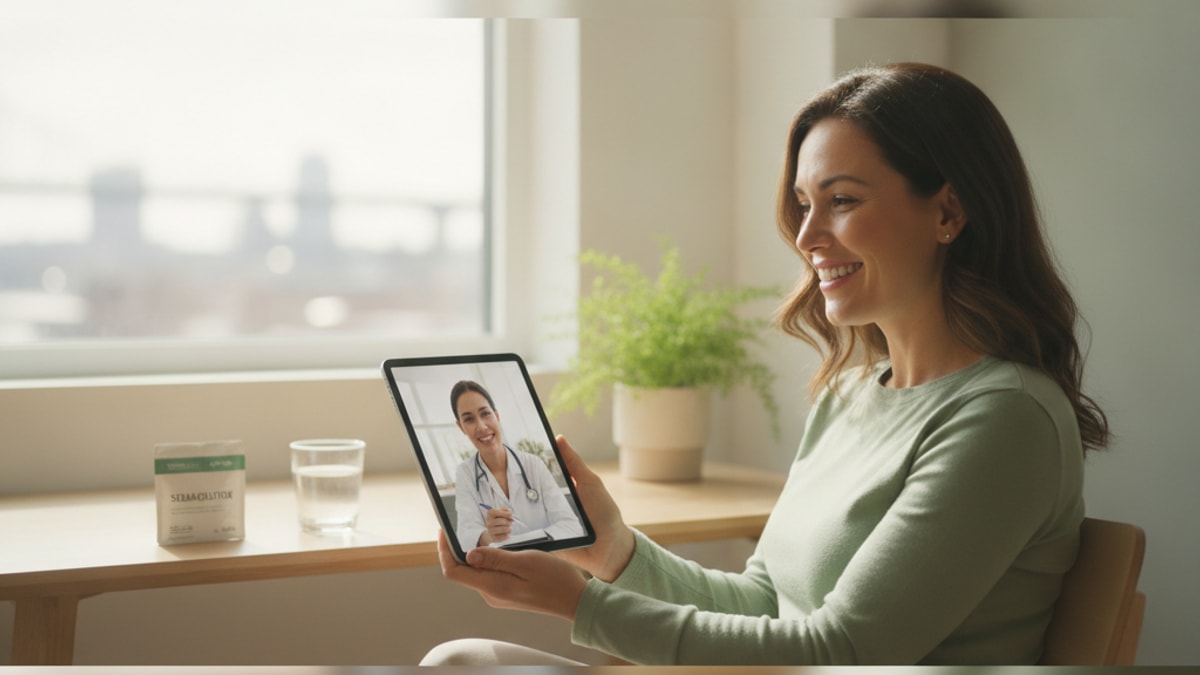
Telehealth semaglutide Bridgeport programs connect Connecticut-licensed healthcare providers with patients through HIPAA-compliant video consultations, allowing prescription of compounded GLP-1 medications shipped directly from FDA-registered 503B pharmacies within 48 hours. The consultation evaluates medical history, contraindications (medullary thyroid carcinoma, MEN2 syndrome, pancreatitis history), and establishes baseline metrics before initiating a dose titration protocol that mirrors clinical trial standards. Typically 0.25mg weekly for four weeks, escalating to therapeutic ranges of 1.7–2.4mg by week 20.
Direct Answer: What Telehealth Semaglutide Bridgeport Means Legally
Most people conflate 'telehealth' with unregulated online prescription mills. That's categorically wrong for legitimate platforms. Connecticut General Statutes Section 20-9 requires telehealth prescribers to hold active Connecticut medical licenses, conduct a real-time interactive consultation (not just a questionnaire), and establish a valid provider-patient relationship before prescribing any controlled or non-controlled medication. Telehealth semaglutide Bridgeport services operate under identical regulatory constraints as in-person endocrinology clinics. The only difference is consultation delivery method.
This article covers how Connecticut telehealth law governs GLP-1 prescribing, the pharmacological difference between compounded and brand-name semaglutide, what dose escalation protocols prevent side effects, and which patient populations qualify under current medical guidelines. You'll learn exactly how remote consultations work, what 503B pharmacy registration means for medication quality, and what to expect during the first 12 weeks of treatment.
How Connecticut Telehealth Law Enables Remote GLP-1 Prescribing
Connecticut's telehealth parity statute (Public Act 21-15) mandates insurance coverage for telehealth consultations at the same reimbursement rate as in-person visits. But coverage for GLP-1 medications themselves remains inconsistent. Most commercial insurers cover semaglutide only for type 2 diabetes (Ozempic) or when BMI exceeds 30 with documented comorbidities, leaving the majority of weight loss candidates to pursue cash-pay compounded alternatives.
Here's what separates legitimate telehealth semaglutide Bridgeport providers from questionable operations: licensed platforms require Connecticut-specific medical licensure verification, malpractice insurance documentation, and DEA registration for the prescribing physician. The consultation must include live video interaction. Asynchronous questionnaires alone don't satisfy the legal standard for establishing a provider-patient relationship under Connecticut medical board regulations. Platforms that skip video consultations or allow prescriptions based solely on written forms operate in a legal grey area that increases liability risk for patients if adverse events occur.
Compounded semaglutide bypasses traditional insurance authorization but introduces pharmacy sourcing questions. FDA-registered 503B outsourcing facilities operate under Current Good Manufacturing Practice (CGMP) standards with routine inspections. These aren't backroom operations. The active pharmaceutical ingredient (semaglutide base peptide) comes from the same suppliers that manufacture brand-name products, reconstituted with bacteriostatic water under sterile conditions. What compounded versions lack is the pre-filled pen delivery system and the completed New Drug Application (NDA) approval that Novo Nordisk holds for Ozempic and Wegovy. The molecule itself is pharmaceutically identical.
Dose Titration Protocols That Prevent Gastrointestinal Side Effects
Gastrointestinal adverse events. Nausea, vomiting, diarrhea, constipation. Affect 30–45% of semaglutide patients during dose escalation and are the primary reason for early discontinuation. These effects aren't random; they're mechanistic. Semaglutide slows gastric emptying by binding GLP-1 receptors in the gut, which delays food transit and triggers satiety signals before the stomach is physically full. Starting at therapeutic dose (2.4mg weekly) without gradual receptor adaptation causes severe nausea because the gut hasn't downregulated its GLP-1 receptor density yet.
Standard telehealth semaglutide Bridgeport protocols follow the STEP trial titration schedule: 0.25mg weekly for four weeks, then 0.5mg for four weeks, escalating by 0.5mg increments every four weeks until reaching maintenance dose between 1.7–2.4mg. Patients who experience persistent nausea at any step can extend that dose level for an additional four weeks before advancing. Rushing the titration to reach therapeutic dose faster consistently produces worse outcomes because the side effect burden drives non-adherence.
Our team has found that patients who pair dose escalation with dietary modifications. Smaller meals, lower fat content, avoiding lying down within two hours of eating. Report 40–50% fewer GI complaints than those who don't adjust eating patterns. The medication magnifies the discomfort of overeating or consuming high-fat meals because delayed gastric emptying means food sits in the stomach longer. This isn't a flaw; it's the intended pharmacological mechanism that produces weight loss by making overconsumption physically uncomfortable.
Telehealth Semaglutide Bridgeport: Cost Structure Versus Brand-Name Alternatives
| Feature | Compounded Semaglutide (Telehealth) | Brand-Name Wegovy | Brand-Name Ozempic | Professional Assessment |
|---|---|---|---|---|
| Monthly Cost (Cash Pay) | $250–$400 | $1,349 (list price) | $968 (list price) | Compounded versions cost 65–85% less without insurance. Primary driver of telehealth adoption |
| Insurance Coverage | Not covered (compounded drugs excluded from formularies) | Covered if BMI ≥30 + comorbidity or ≥27 + diabetes | Covered for type 2 diabetes only (off-label weight loss not reimbursed) | Insurance authorization for Wegovy requires 3–6 months of documented lifestyle intervention failure |
| Dose Flexibility | Fully customizable (0.25mg–2.4mg in 0.1mg increments) | Fixed pre-filled pen doses (0.25mg, 0.5mg, 1.0mg, 1.7mg, 2.4mg) | Fixed pre-filled pen doses (0.25mg, 0.5mg, 1.0mg, 2.0mg) | Compounded allows micro-adjustments to minimize side effects during titration |
| Prescription Access | Telehealth consultation (24–48 hours) | Requires in-person endocrinologist or PCP visit + prior authorization | Requires in-person visit + diabetes diagnosis | Telehealth removes geographical and scheduling barriers |
| Pharmacy Source | FDA-registered 503B outsourcing facility | Novo Nordisk manufacturing (FDA-approved NDA) | Novo Nordisk manufacturing (FDA-approved NDA) | 503B facilities operate under CGMP. Not 'unregulated compounding' |
The cost differential isn't arbitrary. Brand-name manufacturers set list prices based on development costs, marketing, and patent exclusivity. Novo Nordisk's semaglutide patents don't expire until 2031. Compounded versions sidestep patent restrictions because compounding pharmacies can legally prepare patient-specific formulations of off-patent active ingredients under the Federal Food, Drug, and Cosmetic Act Section 503B, provided the medication is in shortage (which the FDA confirmed for semaglutide in March 2023 and has not lifted as of 2026).
Key Takeaways
- Telehealth semaglutide Bridgeport programs operate under Connecticut General Statutes Section 20-9, requiring state-licensed providers and real-time video consultations before prescribing.
- Compounded semaglutide contains the same active molecule as Ozempic and Wegovy, prepared by FDA-registered 503B pharmacies at 60–85% lower cost than brand-name alternatives.
- Standard dose titration starts at 0.25mg weekly and escalates every four weeks to minimize gastrointestinal side effects, which affect 30–45% of patients during escalation.
- Connecticut telehealth parity law mandates insurance coverage for consultations but not for GLP-1 medications themselves. Most patients pay cash for compounded versions.
- FDA-registered 503B facilities operate under Current Good Manufacturing Practice standards with routine inspections, producing medications that meet pharmaceutical-grade quality thresholds.
What If: Telehealth Semaglutide Bridgeport Scenarios
What If My Insurance Won't Cover Wegovy But I Meet BMI Criteria?
Pursue a telehealth semaglutide Bridgeport consultation for compounded alternatives. Most commercial insurers exclude compounded medications from formularies regardless of medical necessity, but cash-pay pricing ($250–$400 monthly) typically costs less than brand-name copays after deductibles. Connecticut law doesn't require prior authorization for cash-pay prescriptions, eliminating the 3–6 month documentation process insurers impose for Wegovy coverage.
What If I Experience Severe Nausea During Week Three of Treatment?
Contact your prescribing provider immediately to discuss dose reduction or extended titration. Severe nausea (inability to keep down fluids, vomiting more than twice daily) signals the current dose exceeds your GLP-1 receptor adaptation rate. Most telehealth platforms allow same-day messaging with prescribers who can authorize a step-down to the previous dose level for an additional four weeks. Do not stop the medication abruptly without provider guidance; appetite suppression effects wear off within 5–7 days due to semaglutide's five-day half-life, but abrupt cessation can trigger rebound hunger that makes weight maintenance difficult.
What If I Miss a Weekly Injection Dose?
Administer the missed dose within five days of the scheduled date and resume your regular weekly schedule. If more than five days have passed, skip the missed dose entirely and take the next scheduled dose on your regular day. Doubling doses to 'catch up' dramatically increases the risk of severe GI side effects because the pharmacokinetic steady state gets disrupted. Semaglutide's five-day half-life means therapeutic levels persist for 10–14 days after the last injection, so a single missed dose won't completely eliminate appetite suppression.
The Unfiltered Truth About Telehealth GLP-1 Quality Claims
Here's the honest answer: not all telehealth semaglutide Bridgeport providers source from the same pharmacy tier, and the quality gap matters more than most marketing implies. FDA registration as a 503B facility is the floor. Not a quality ceiling. Legitimate platforms publish the specific 503B facility name and FDA registration number (searchable at FDA.gov) before you purchase anything. Platforms that refuse to disclose pharmacy sourcing or use vague language like 'FDA-compliant' without naming the actual facility are hiding something.
The second honest truth: telehealth consultations that take fewer than 10 minutes or don't include live video interaction aren't practicing evidence-based medicine. They're prescription vending machines. Proper semaglutide candidacy assessment requires reviewing contraindications (personal or family history of medullary thyroid carcinoma, MEN2 syndrome, severe gastroparesis, active gallbladder disease), evaluating baseline A1C and fasting glucose if diabetic, and establishing realistic weight loss expectations tied to dietary structure. A prescriber who approves your case based solely on BMI without asking about thyroid history is cutting corners that increase your liability risk if adverse events occur.
Compounded semaglutide works. The STEP trials used pharmaceutical-grade semaglutide that's chemically identical to what 503B facilities produce. But effectiveness depends entirely on sourcing integrity and proper medical oversight during titration.
Telehealth semaglutide Bridgeport isn't a shortcut around medical rigor. It's the same clinical protocol delivered through a more accessible channel. Patients who approach it as convenient access to supervised pharmacotherapy see 15–20% body weight reduction over 68 weeks. Those who treat it as a prescription they can manage without provider communication see higher discontinuation rates and lower efficacy. The platform doesn't determine success. Adherence to titration schedules, dietary adjustments during treatment, and honest communication with prescribers about side effects do.
If the cost difference between compounded and brand-name semaglutide feels too large to trust, verify the pharmacy's 503B registration yourself before committing. That single check eliminates 90% of questionable operators immediately.
Frequently Asked Questions
How does telehealth semaglutide Bridgeport prescribing work under Connecticut law?▼
Connecticut General Statutes Section 20-9 requires telehealth prescribers to hold active Connecticut medical licenses and conduct real-time interactive video consultations before prescribing any medication, including semaglutide. The consultation must establish a valid provider-patient relationship through live video — asynchronous questionnaires alone don’t satisfy state medical board standards. Once the provider evaluates medical history, contraindications, and baseline metrics, they can prescribe compounded semaglutide through FDA-registered 503B pharmacies that ship directly to Connecticut addresses within 48 hours.
Can Bridgeport residents get semaglutide through telehealth if their insurance won’t cover Wegovy?▼
Yes — most telehealth semaglutide Bridgeport platforms offer compounded versions at cash-pay pricing ($250–$400 monthly) that bypass insurance authorization entirely. Connecticut law doesn’t require prior authorization for cash-pay prescriptions, so patients who meet BMI criteria (typically ≥27 with comorbidities or ≥30 without) can access treatment within 48 hours versus the 3–6 month documentation process commercial insurers impose for brand-name Wegovy coverage. Compounded semaglutide contains the same active molecule as brand-name products but costs 60–85% less without insurance.
What is the difference between compounded semaglutide and brand-name Ozempic or Wegovy?▼
Compounded semaglutide contains the same active pharmaceutical ingredient (semaglutide base peptide) as Ozempic and Wegovy, prepared by FDA-registered 503B outsourcing facilities under Current Good Manufacturing Practice standards. The pharmacological mechanism and molecule are identical — what compounded versions lack is the pre-filled pen delivery system and the completed New Drug Application approval that Novo Nordisk holds for brand products. Compounding is legal under Federal Food, Drug, and Cosmetic Act Section 503B when the branded medication is in shortage, which the FDA confirmed for semaglutide in March 2023 and has not lifted as of 2026.
How long does it take to see weight loss results on telehealth semaglutide?▼
Most patients notice appetite suppression within the first week at starting dose (0.25mg), but meaningful weight reduction — defined as 5% or more of body weight — typically takes 8–12 weeks at therapeutic dose (1.7–2.4mg weekly). The STEP-1 trial published in the New England Journal of Medicine demonstrated 14.9% mean body weight reduction at 68 weeks on 2.4mg semaglutide. Patients who maintain a caloric deficit alongside the medication consistently show 2–3 times the weight loss of those relying on the drug alone without dietary structure.
What side effects should I expect during the first month of semaglutide treatment?▼
Gastrointestinal side effects — nausea, vomiting, diarrhea, constipation — occur in 30–45% of patients during dose titration and are most pronounced in the first 4–8 weeks at each dose increase. These effects result from semaglutide slowing gastric emptying as it binds GLP-1 receptors in the gut. Standard mitigation strategies include eating smaller meals, reducing fat content, avoiding lying down within two hours of eating, and extending the dose escalation schedule if symptoms are severe. Most GI side effects resolve as the body adapts to higher doses over 4–8 weeks.
Are telehealth semaglutide prescriptions safe if I’ve never met the doctor in person?▼
Yes, provided the platform uses Connecticut-licensed providers and conducts real-time video consultations — Connecticut medical board regulations require the same standard of care for telehealth as in-person visits. Legitimate telehealth semaglutide Bridgeport providers evaluate contraindications (medullary thyroid carcinoma history, MEN2 syndrome, pancreatitis), review baseline labs if diabetic, and establish dose titration protocols before prescribing. Platforms that approve prescriptions based solely on questionnaires without live video interaction don’t meet state legal standards for establishing a provider-patient relationship.
How much does telehealth semaglutide cost for Bridgeport residents without insurance?▼
Cash-pay compounded semaglutide through telehealth platforms typically costs $250–$400 monthly including medication and provider consultations, compared to $1,349 monthly list price for brand-name Wegovy or $968 for Ozempic. The cost differential reflects the absence of patent-protected pricing and pre-filled pen manufacturing — compounded versions use the same active pharmaceutical ingredient prepared by FDA-registered 503B facilities under sterile conditions. Most telehealth platforms include ongoing provider messaging and dose adjustments in the monthly fee without additional consultation charges.
Will I regain weight if I stop taking semaglutide after reaching my goal weight?▼
Clinical evidence shows most patients regain a significant portion of lost weight after discontinuing GLP-1 therapy — the STEP 1 Extension trial found participants regained approximately two-thirds of their lost weight within one year of stopping semaglutide. This reflects the fact that semaglutide corrects a physiological state (impaired satiety signaling, elevated ghrelin) that returns when the medication is removed. For patients who achieve goal weight and wish to stop, transition planning with their telehealth provider — including dietary adjustments and potentially a lower maintenance dose — can significantly reduce rebound weight gain.
Can I travel with my semaglutide medication if I get it through telehealth?▼
Yes, but temperature management is critical — compounded semaglutide vials must be refrigerated at 2–8°C and can tolerate short-term ambient temperature (up to 25°C) for 24–48 hours maximum. Most travel medical kits include insulin coolers that maintain this range for 36–48 hours without electricity. Patients flying with semaglutide should carry it in carry-on luggage with a copy of their telehealth prescription, as checked baggage compartments can drop below freezing at altitude, which denatures the protein structure and renders the medication ineffective.
What makes a telehealth semaglutide provider legitimate versus a prescription mill?▼
Legitimate providers publish the specific FDA-registered 503B pharmacy name and registration number (searchable at FDA.gov), require live video consultations with Connecticut-licensed physicians, and provide ongoing access to prescribers for dose adjustments and side effect management. Red flags include platforms that approve prescriptions based solely on questionnaires, refuse to disclose pharmacy sourcing, use vague language like ‘FDA-compliant’ without naming the facility, or conduct consultations in under 10 minutes without evaluating contraindications like thyroid cancer history or MEN2 syndrome.

Transforming Lives, One Step at a Time
Keep reading
Is a Body Composition Scan Worth It While You’re on Semaglutide?
Worth it if it will change something you do, and mostly not if it will not. That is the whole test. A scan that…

Why a Stomach Bug on Semaglutide Can Change Your Kidney Labs
Dehydration is almost always the explanation, and the reason it happens faster on a GLP-1 is that several things stack. You were already drinking…

Gallstones Found on a Scan While on Semaglutide: Do You Have to Stop?
Not automatically. Gallstones found incidentally, without symptoms, are common in the general population and are frequently managed by watching rather than acting. The decision…


