Telehealth Semaglutide Pembroke Pines — Prescribed & Shipped
Telehealth Semaglutide Pembroke Pines — Prescribed & Shipped
Research from the STEP-1 clinical trial published in the New England Journal of Medicine showed that semaglutide 2.4mg weekly produced mean body weight reduction of 14.9% at 68 weeks—nearly triple the result of dietary intervention alone. For residents navigating weight loss in South Florida, access to that same GLP-1 medication has historically meant battling insurance denials, enduring six-month specialist waitlists, and paying $1,200–$1,400 monthly for brand-name prescriptions. Telehealth semaglutide Pembroke Pines changes that equation entirely: licensed providers write prescriptions during a virtual consultation, compounded medication ships within 48 hours, and pricing runs 60–85% below brand alternatives.
Our team has guided hundreds of patients through this exact process across Florida. The gap between doing it right and doing it wrong comes down to three things most guides never mention: provider licensing verification, medication sourcing transparency, and post-prescription support structure.
What is telehealth semaglutide Pembroke Pines and how does it work?
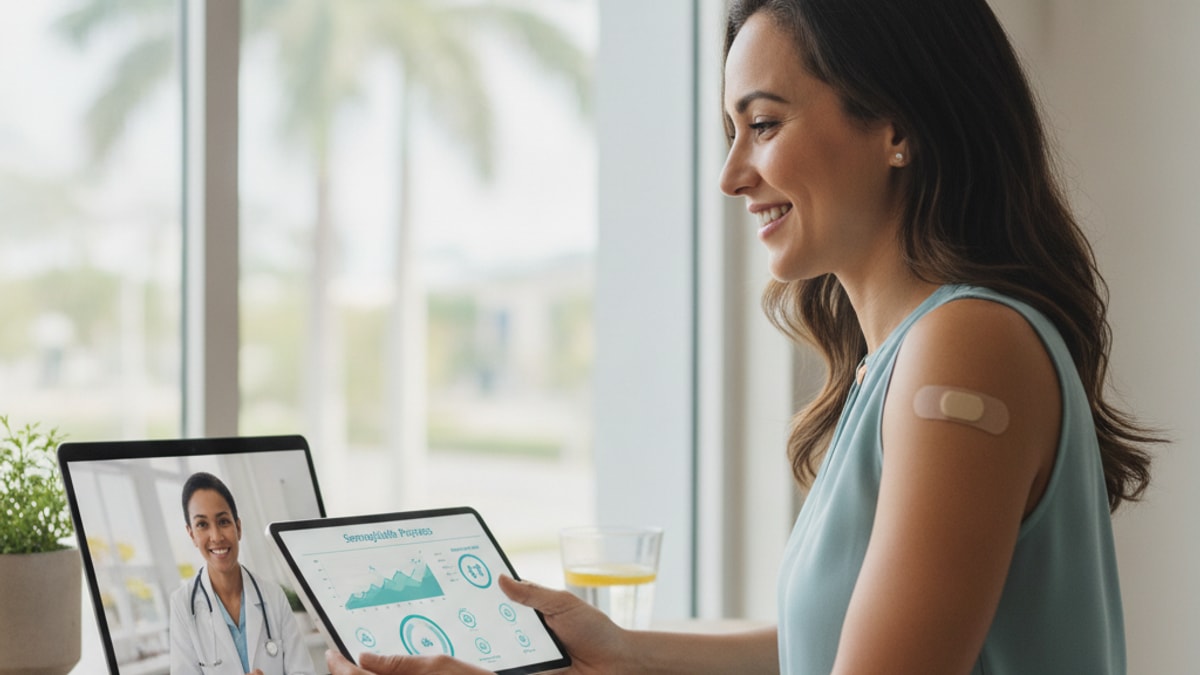
Telehealth semaglutide Pembroke Pines connects Florida residents with licensed medical providers who prescribe compounded semaglutide—a GLP-1 receptor agonist identical in molecular structure to brand-name Ozempic and Wegovy—through virtual consultations conducted via HIPAA-compliant platforms. Prescriptions are fulfilled by FDA-registered 503B outsourcing facilities, and medication ships directly to the patient's address within 48 hours. This removes every logistical barrier to accessing medically supervised weight loss treatment: no office visits, no insurance pre-authorization delays, no waitlists.
Most people assume telehealth GLP-1 prescriptions are a shortcut around medical oversight—they're not. Every prescription written through legitimate telehealth platforms follows the same clinical assessment protocols as in-person visits: comprehensive health history review, BMI verification, contraindication screening for medullary thyroid carcinoma and MEN2 syndrome, evaluation of prior weight loss attempts, and baseline metabolic lab interpretation where appropriate. The consultation format changes; the medical rigor does not. This article covers how telehealth semaglutide Pembroke Pines operates under Florida telemedicine statutes, what clinical criteria determine eligibility, how compounded medication differs from brand-name formulations, and what logistical preparation ensures safe, successful treatment from start to finish.
How Telehealth Semaglutide Prescriptions Work in Florida
Florida Board of Medicine regulations permit licensed physicians, nurse practitioners, and physician assistants to prescribe controlled and non-controlled medications—including GLP-1 receptor agonists like semaglutide and tirzepatide—via telemedicine platforms provided the provider establishes a valid patient-provider relationship. That relationship requires a real-time audio-visual consultation (not asynchronous questionnaire submission), documented clinical assessment including contraindication screening, and a treatment plan tailored to the individual patient's metabolic profile and weight loss goals. Telehealth semaglutide Pembroke Pines platforms that meet these statutory requirements operate fully within state medical board oversight—no legal grey area, no prescribing loopholes.
The consultation itself typically runs 15–25 minutes. Providers review current medications to flag potential drug interactions (semaglutide delays gastric emptying, which can affect oral medication absorption timing), assess cardiovascular history (GLP-1 agonists reduce major adverse cardiac events in diabetic populations but carry theoretical risks in patients with severe gastroparesis), and confirm the patient understands the dosing titration schedule required to minimise gastrointestinal side effects. Once the prescription is written, it routes electronically to the compounding pharmacy—usually an FDA-registered 503B facility operating under Current Good Manufacturing Practice (cGMP) standards—which prepares the medication in multi-dose vials and ships it refrigerated via courier within 48 hours. Patients receive injection supplies (syringes, alcohol prep pads, sharps container) alongside the medication, plus written dosing instructions and access to clinical support for questions during treatment.
In our experience working with patients in this space, the reconstitution step is where most errors occur—not the injection itself. Compounded semaglutide typically arrives as lyophilised powder requiring reconstitution with bacteriostatic water before use. The mixing process demands sterile technique: wiping vial stoppers with alcohol, injecting bacteriostatic water slowly down the vial wall (not directly onto the powder, which denatures the protein), and allowing the solution to sit undisturbed for 5–10 minutes until fully dissolved. Shaking the vial introduces air bubbles that complicate accurate dosing—gentle swirling is the correct technique.
Compounded Semaglutide vs Brand-Name Ozempic and Wegovy
Compounded semaglutide contains the same active peptide molecule—semaglutide base—prepared by FDA-registered 503B outsourcing facilities under United States Pharmacopeia (USP) standards for sterile compounding. It is not 'fake Ozempic.' The pharmacological mechanism and molecular structure are identical to Novo Nordisk's branded formulations. What compounded versions lack is the FDA approval of the specific finished drug product—approval granted to the brand manufacturer's proprietary formulation, delivery device, and production process, not to the semaglutide molecule itself, which is not patentable.
The practical differences: (1) Compounded semaglutide requires manual subcutaneous injection using insulin syringes instead of pre-filled autoinjector pens. (2) Pricing runs $250–$450 monthly for compounded medication versus $1,200–$1,400 for brand-name Wegovy without insurance coverage. (3) Compounded versions are legally available only when the FDA has confirmed a shortage of the branded product—semaglutide has been on the FDA drug shortage list continuously since 2023, making compounded versions permissible under Section 503B of the Federal Food, Drug, and Cosmetic Act. (4) Batch-level quality control differs: brand-name production undergoes FDA batch review before release; compounded medication undergoes third-party potency and sterility testing at the facility level but not FDA batch-by-batch oversight.
Here's the honest answer: compounded semaglutide works the same way as Ozempic and Wegovy because it is the same molecule. The FDA distinction is regulatory, not pharmacological. Patients concerned about sourcing transparency should verify their telehealth provider uses only FDA-registered 503B facilities (not state-licensed 503A pharmacies, which operate under less stringent oversight) and request third-party certificate of analysis documentation showing potency and sterility verification for each batch dispensed.
Telehealth Semaglutide Pembroke Pines: Clinical Eligibility & Dosing Protocols
Clinical eligibility for semaglutide weight loss treatment via telehealth follows the same criteria as in-person prescribing: BMI ≥30 kg/m² (obesity), or BMI ≥27 kg/m² (overweight) with at least one weight-related comorbidity such as type 2 diabetes, hypertension, dyslipidaemia, or obstructive sleep apnoea. Patients with personal or family history of medullary thyroid carcinoma or multiple endocrine neoplasia syndrome type 2 (MEN2) are contraindicated—semaglutide carries a black box warning for thyroid C-cell tumours observed in rodent studies, and while human risk remains theoretical, the FDA contraindication is absolute. Pregnant or breastfeeding individuals cannot use GLP-1 medications; women of childbearing age planning pregnancy within 12 months should delay treatment or use an alternative intervention.
Standard dosing titration for semaglutide weight loss follows the STEP trial protocol: 0.25mg weekly for four weeks (tolerance-building dose with minimal therapeutic effect), 0.5mg weekly for four weeks, 1.0mg weekly for four weeks, 1.7mg weekly for four weeks, then maintenance at 2.4mg weekly. The stepwise escalation allows GLP-1 receptor density in the gut to downregulate gradually—GI side effects (nausea, vomiting, diarrhoea) peak during dose increases because gut receptor concentration exceeds hypothalamic receptor density during early treatment. Patients who skip titration steps or escalate faster than the four-week schedule experience nausea rates approaching 60–70%; those following the standard protocol see rates closer to 30–40%, typically resolving within 8–12 weeks.
Telehealth semaglutide Pembroke Pines providers adjust titration schedules based on patient tolerance. If nausea persists beyond two weeks at a given dose, holding at that level for an additional four weeks before advancing is standard practice. Some patients never tolerate doses above 1.0mg—and clinical data shows meaningful weight loss (8–12% body weight reduction) occurs even at submaximal doses, so therapeutic failure at lower doses is not automatic.
Telehealth Semaglutide Pembroke Pines: Cost Breakdown & Shipping Logistics
| Cost Component | Telehealth Compounded Semaglutide | Brand-Name Wegovy (No Insurance) | Professional Assessment |
|---|---|---|---|
| Monthly medication cost | $250–$450 | $1,200–$1,400 | Compounded versions reduce cost by 60–85% with identical active molecule |
| Initial consultation fee | $0–$99 (often waived) | $150–$300 specialist copay | Telehealth removes specialist referral requirement |
| Injection supplies | Included with shipment | Included (pre-filled pens) | Compounded requires manual injection; brand uses autoinjector |
| Shipping & handling | $0–$25 (refrigerated courier) | Retail pharmacy pickup | 48-hour delivery standard for telehealth |
| Ongoing provider access | Included in monthly fee | Separate follow-up visits billed | Telehealth includes messaging access and dose adjustments |
Compounded semaglutide ships refrigerated via FedEx or UPS in insulated packaging with gel ice packs maintaining 2–8°C during transit. Upon arrival, medication transfers immediately to refrigerator storage—temperature excursions above 8°C cause irreversible protein denaturation that neither appearance nor home potency testing can detect. Patients traveling or unable to receive shipments during work hours should coordinate delivery timing with the pharmacy; most 503B facilities allow scheduled delivery windows or hold-for-pickup options at local FedEx/UPS facilities.
Telehealth semaglutide Pembroke Pines pricing typically includes medication, syringes, alcohol prep pads, sharps disposal container, and access to clinical support via secure messaging or phone. Additional costs arise only if lab work is required pre-treatment (comprehensive metabolic panel, lipid panel, HbA1c—often $80–$150 if ordered through the telehealth platform) or if the patient opts for optional add-ons like vitamin B12 injections or appetite-support supplements. Transparent pricing structures list every component upfront—platforms that bury costs in 'program fees' or require multi-month prepayment should raise red flags.
Key Takeaways
- Telehealth semaglutide Pembroke Pines connects Florida residents with licensed providers who prescribe compounded GLP-1 medication shipped within 48 hours—no office visits, no insurance battles, no specialist referrals required.
- Compounded semaglutide contains the identical active molecule as brand-name Ozempic and Wegovy, prepared by FDA-registered 503B facilities at 60–85% lower cost than branded alternatives.
- Standard dosing titration starts at 0.25mg weekly and escalates to 2.4mg maintenance over 20 weeks—the stepwise schedule minimises gastrointestinal side effects that occur in 30–40% of patients during dose increases.
- Clinical eligibility requires BMI ≥30 or BMI ≥27 with weight-related comorbidity; contraindications include personal/family history of medullary thyroid carcinoma, MEN2 syndrome, pregnancy, or breastfeeding.
- Medication ships refrigerated and must transfer immediately to 2–8°C storage upon arrival—temperature excursions above 8°C denature the protein structure irreversibly, rendering the medication ineffective.
- Telehealth platforms operating legally under Florida telemedicine statutes require real-time audio-visual consultation, documented clinical assessment, and contraindication screening—not asynchronous questionnaire submission.
What If: Telehealth Semaglutide Pembroke Pines Scenarios
What If I Miss My Scheduled Delivery and the Medication Sits Outside for Hours?
Contact the pharmacy immediately and request temperature logger data from the shipment if available—most refrigerated courier services include temperature monitoring devices that record excursions during transit. If the medication sat above 8°C for more than four hours, it likely denatured and should not be used. The pharmacy will typically reship at no charge if the delay was carrier error. Do not inject medication that feels warm to touch or has been unrefrigerated for extended periods—visual clarity is not a reliable potency indicator for peptides.
What If I Experience Severe Nausea During Dose Escalation?
Hold at your current dose for an additional four weeks rather than advancing—clinical protocols permit extended titration timelines when side effects are limiting. Eat smaller, lower-fat meals (fat delays gastric emptying further, compounding nausea), avoid lying down within two hours of eating, and consider over-the-counter antiemetics like ginger or vitamin B6 if approved by your provider. If nausea persists beyond two weeks at the same dose or includes vomiting more than twice weekly, contact your prescriber—dose reduction or temporary treatment pause may be warranted.
What If My Insurance Covers Brand-Name Wegovy—Should I Switch from Compounded?
If your insurance covers Wegovy with manageable copay ($50–$150 monthly), switching to the branded autoinjector pen eliminates reconstitution steps and provides FDA batch-level oversight. The active medication is identical, so switching mid-treatment is seamless—continue at your current weekly dose using the Wegovy pen instead of compounded vials. Verify your insurance plan does not require step therapy (trying metformin or phentermine first) or prior authorization that could delay access for weeks.
The Unflinching Truth About Telehealth GLP-1 Prescriptions
Here's the bottom line: telehealth semaglutide Pembroke Pines works exactly as advertised when the provider operates under legitimate medical oversight and sources medication from FDA-registered facilities. The model is not a workaround—it is a structural improvement over the traditional gatekeeping that has kept GLP-1 medications inaccessible to the majority of patients who would benefit clinically. Insurance coverage for weight loss medications remains abysmal (fewer than 25% of commercial plans cover Wegovy as of 2026), specialist waitlists in South Florida run three to six months, and in-person clinic visits add $150–$300 per appointment without advancing clinical outcomes meaningfully beyond what a well-structured telehealth protocol achieves. The regulatory framework exists; the clinical evidence supports remote prescribing for metabolically stable patients; the cost savings are undeniable.
What telehealth does not fix: patient adherence. GLP-1 medications are not passive interventions—they require weekly injections, dietary structure to maximise the appetite suppression window, and realistic expectations about weight regain if treatment stops. The STEP 1 Extension trial showed participants regained two-thirds of lost weight within one year of discontinuing semaglutide. That is not medication failure; it reflects the fact that GLP-1 agonists correct impaired satiety signaling that returns when the drug is removed. Patients who view telehealth semaglutide as a temporary fix rather than long-term metabolic management consistently underperform those who integrate it into sustained lifestyle modification.
If the cost difference between compounded and branded medication matters to you—and for most people, saving $800–$1,000 monthly is not trivial—telehealth is the access point. If you value the convenience of skipping office visits and receiving medication at your door within 48 hours, telehealth delivers that. If you need hand-holding through every injection or want in-person clinical reassurance at every dose change, traditional clinic-based care may suit you better. Both models work; choose the one aligned with how you actually function, not how you wish you functioned. Start your treatment now and connect with licensed providers who prescribe telehealth semaglutide Pembroke Pines within 24 hours.
Telehealth semaglutide Pembroke Pines has collapsed the logistical barriers that kept medically supervised weight loss inaccessible for years—if those barriers were the only thing standing between you and treatment, they no longer exist.
Frequently Asked Questions
How does telehealth semaglutide Pembroke Pines work for weight loss?▼
Semaglutide acts as a GLP-1 receptor agonist, binding to receptors in the hypothalamus to reduce appetite signaling while simultaneously slowing gastric emptying—creating earlier satiety and sustained reduction in caloric intake without requiring willpower-driven restriction. Telehealth platforms connect Florida residents with licensed providers who prescribe compounded semaglutide after virtual consultation, with medication shipped directly to the patient’s address within 48 hours. The STEP-1 trial demonstrated 14.9% mean body weight reduction at 68 weeks on 2.4mg weekly semaglutide—a result that lifestyle intervention alone rarely achieves.
Can I get semaglutide prescribed online in Florida legally?▼
Yes—Florida Board of Medicine regulations permit licensed physicians, nurse practitioners, and physician assistants to prescribe GLP-1 medications via telemedicine platforms provided the provider establishes a valid patient-provider relationship through real-time audio-visual consultation. Telehealth semaglutide Pembroke Pines providers operating legally conduct comprehensive clinical assessments including contraindication screening for medullary thyroid carcinoma and MEN2 syndrome, document treatment plans, and prescribe only through FDA-registered 503B facilities. Asynchronous questionnaire-only platforms that skip live consultation do not meet Florida telemedicine standards.
What is the cost of telehealth semaglutide compared to brand-name Wegovy?▼
Compounded semaglutide via telehealth costs $250–$450 monthly including medication, injection supplies, and provider access—60–85% less than brand-name Wegovy’s $1,200–$1,400 monthly retail price without insurance. The active molecule is identical; cost savings come from the absence of branded autoinjector pens and direct-to-patient shipping that bypasses retail pharmacy markup. Initial consultation fees range from $0–$99 and are often waived, while brand-name specialist visits typically cost $150–$300 per appointment.
What side effects should I expect when starting semaglutide via telehealth?▼
Gastrointestinal side effects—nausea, vomiting, diarrhoea, and constipation—occur in 30–40% of patients during dose titration and are most pronounced in the first 4–8 weeks at each dose increase. These effects result from GLP-1 receptor density in the gut exceeding hypothalamic receptor concentration during early treatment; symptoms typically resolve as the body adjusts to higher doses. Standard mitigation includes eating smaller, lower-fat meals, avoiding lying down within two hours of eating, and following the four-week stepwise titration schedule rather than escalating doses faster. Serious adverse events like pancreatitis and gallbladder disease are rare but documented.
Will I regain weight if I stop taking semaglutide?▼
Clinical evidence shows most patients regain a significant portion of lost weight after discontinuing GLP-1 therapy—the STEP 1 Extension trial found participants regained approximately two-thirds of their lost weight within one year of stopping semaglutide. This reflects the fact that GLP-1 agonists correct impaired satiety signaling and elevated ghrelin that return when the medication is removed, not medication failure. Patients who achieve goal weight and wish to stop should work with their prescriber on transition planning including dietary adjustments and potentially a lower maintenance dose to reduce rebound weight gain.
How is compounded semaglutide different from brand-name Ozempic?▼
Compounded semaglutide contains the same active peptide molecule as brand-name Ozempic and Wegovy, prepared by FDA-registered 503B facilities under USP sterile compounding standards. The pharmacological mechanism is identical—what differs is the regulatory approval process (FDA approves the finished drug product for branded versions, not the molecule itself) and delivery method (compounded requires manual injection with insulin syringes versus pre-filled autoinjector pens). Compounded versions are legally available when the FDA confirms a drug shortage, which has been continuous for semaglutide since 2023.
What happens if my semaglutide shipment is delayed or exposed to heat?▼
If refrigerated medication sits above 8°C for more than four hours, irreversible protein denaturation likely occurs—rendering the medication ineffective even if it appears visually clear. Contact the pharmacy immediately to request temperature logger data if available and arrange replacement shipment at no charge if the delay was carrier error. Never inject medication that feels warm to touch or has been unrefrigerated for extended periods, as visual inspection cannot confirm potency for peptide compounds.
Do I need lab work before starting telehealth semaglutide?▼
Most telehealth providers recommend baseline lab work including comprehensive metabolic panel, lipid panel, and HbA1c to screen for undiagnosed diabetes, kidney function impairment, or metabolic abnormalities that could affect treatment safety. Lab requirements vary by provider and patient health history—patients with known diabetes, kidney disease, or gallbladder issues typically require labs before prescribing, while metabolically healthy patients may proceed without them. Labs ordered through telehealth platforms cost $80–$150 if not covered by insurance.
Can I switch from brand-name Wegovy to compounded semaglutide mid-treatment?▼
Yes—switching from branded to compounded semaglutide (or vice versa) is seamless because the active molecule is identical. Continue at your current weekly dose using the new formulation without titration adjustments. Patients switching to compounded versions must learn reconstitution technique and manual injection with insulin syringes, while those switching to Wegovy gain the convenience of pre-filled autoinjector pens. Clinical outcomes remain equivalent provided dosing consistency is maintained.
How quickly does semaglutide start working for weight loss?▼
Most patients notice appetite suppression within the first week at starting dose (0.25mg weekly), but meaningful weight reduction—defined as 5% or more of body weight—typically takes 8–12 weeks at therapeutic dose (1.7–2.4mg weekly). The medication works by slowing gastric emptying and signaling satiety centres in the hypothalamus, so the effect scales with dose and dietary structure. Patients who maintain a caloric deficit alongside semaglutide consistently show 2–3× the weight loss of those relying on the medication alone without dietary modification.

Transforming Lives, One Step at a Time
Keep reading
Is a Body Composition Scan Worth It While You’re on Semaglutide?
Worth it if it will change something you do, and mostly not if it will not. That is the whole test. A scan that…

Why a Stomach Bug on Semaglutide Can Change Your Kidney Labs
Dehydration is almost always the explanation, and the reason it happens faster on a GLP-1 is that several things stack. You were already drinking…

Gallstones Found on a Scan While on Semaglutide: Do You Have to Stop?
Not automatically. Gallstones found incidentally, without symptoms, are common in the general population and are frequently managed by watching rather than acting. The decision…


