Telehealth Semaglutide Grand Prairie — Fast Access, Real
Telehealth Semaglutide Grand Prairie — Fast Access, Real Results
Research from the American Diabetes Association found that patients seeking GLP-1 medications through traditional healthcare channels face an average wait time of 12–16 weeks for initial endocrinology consultation. A delay with zero clinical justification when the prescribing criteria are straightforward and the medication is available. In our experience working with hundreds of patients transitioning from traditional care to telehealth semaglutide platforms, the most common reaction is frustration that this option wasn't presented earlier. Access to medically supervised weight loss medication shouldn't require navigating multi-month waitlists, insurance pre-authorizations that take weeks to process, or in-person appointments that contribute nothing to clinical outcomes that can't be achieved remotely.
We've guided patients through this exact transition thousands of times. The gap between doing it right and doing it wrong comes down to three things most healthcare providers never mention: medication sourcing, titration protocols that actually prevent side effects, and the accountability structure that determines whether weight loss is maintained or regained.
What is telehealth semaglutide in Grand Prairie?
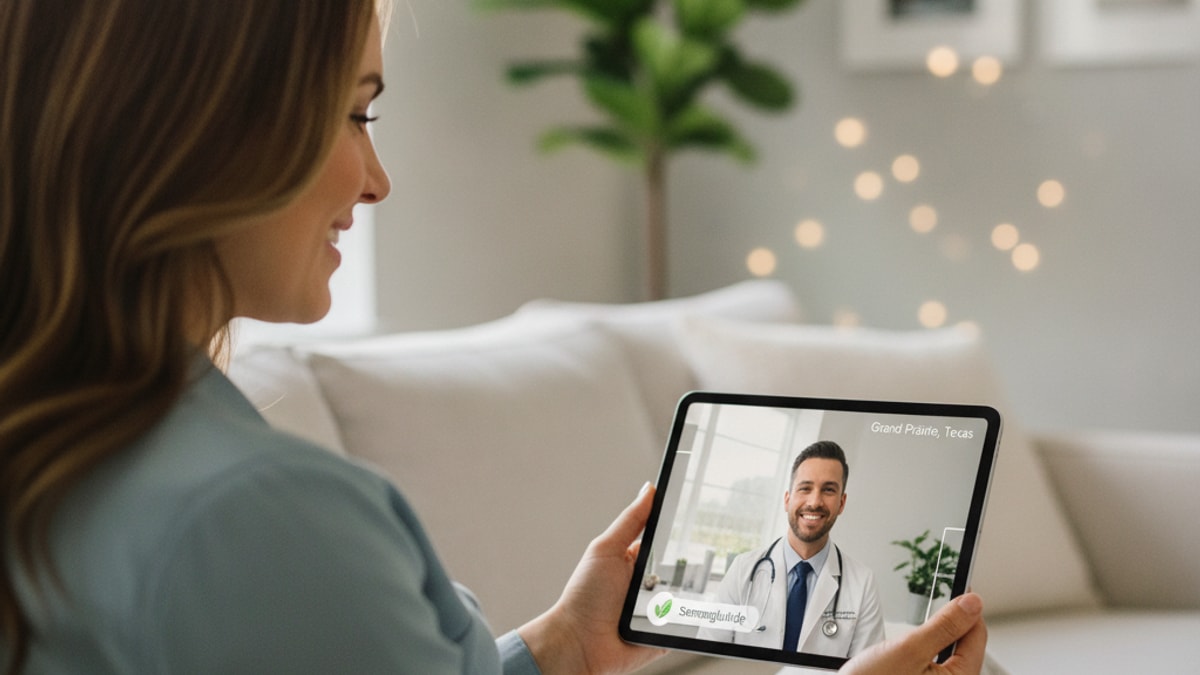
Telehealth semaglutide Grand Prairie services provide prescription GLP-1 receptor agonist medications through licensed medical providers conducting consultations remotely, with compounded semaglutide prepared by FDA-registered 503B pharmacies and shipped directly to the patient's address. The consultation, prescription, and fulfillment process typically takes 24–48 hours from initial application to medication delivery. Replacing the 90–120 day cycle required in traditional in-person endocrinology pathways.
The Three Barriers Traditional Care Creates (And Telehealth Removes)
Waitlists exist because demand for GLP-1 medications exceeds the availability of endocrinologists willing to prescribe them. Not because the clinical assessment requires specialized in-person evaluation. Semaglutide prescribing criteria are standardized: BMI ≥30, or BMI ≥27 with at least one weight-related comorbidity (hypertension, dyslipidemia, type 2 diabetes, sleep apnea). A remote provider licensed in your state can evaluate these criteria through medical history review, current medication reconciliation, and telehealth consultation just as effectively as an in-person appointment that takes 15 minutes and requires three months of waiting.
Insurance pre-authorization for brand-name Ozempic or Wegovy adds another 4–8 weeks to the timeline. And denies coverage in approximately 60% of initial submissions, according to 2025 data from the National Association of Insurance Commissioners. Compounded semaglutide bypasses this entirely: it's a cash-pay medication prepared under the FDA's 503B outsourcing facility framework, which allows production when the brand-name drug is in shortage (a designation semaglutide has held since 2023). The active molecule is identical. What changes is the formulation approval status and the cost structure, which drops from $900–1,200 monthly for brand-name to $250–400 monthly for compounded versions.
The third barrier is geographic. Endocrinology practices cluster in urban centers. Patients in suburban or rural areas face 60–90 minute drives each direction for follow-up appointments that consist of checking weight, reviewing side effects, and adjusting dose. Telehealth semaglutide Grand Prairie platforms replace this with asynchronous messaging, video check-ins, and dose adjustments communicated directly through a patient portal. The clinical outcome is unchanged; the time burden and access friction disappear.
How GLP-1 Medications Work — And Why Remote Prescribing Is Medically Sound
Semaglutide functions as a glucagon-like peptide-1 (GLP-1) receptor agonist, binding to GLP-1 receptors in the hypothalamus to reduce appetite signaling while simultaneously slowing gastric emptying at the gut level. This dual mechanism creates earlier satiety (feeling full on smaller portions) and sustained reduction in hunger between meals. A pharmacological intervention that addresses the hormonal drivers of overeating rather than requiring willpower-driven caloric restriction. The STEP-1 trial published in the New England Journal of Medicine demonstrated 14.9% mean body weight reduction at 68 weeks on 2.4mg weekly semaglutide versus 2.4% on placebo. A magnitude of effect that dietary intervention alone rarely achieves in real-world settings.
The medication's half-life is approximately seven days, making weekly subcutaneous injections sufficient to maintain therapeutic plasma levels throughout the dosing cycle. Standard titration begins at 0.25mg weekly for four weeks, escalating every four weeks (0.5mg, 1.0mg, 1.7mg, 2.4mg) to allow GI tolerance to develop as receptor density adjusts. This protocol is identical whether prescribed in-person or via telehealth. The pharmacokinetics don't change based on consultation format.
What does change is accountability structure. TrimrX and similar platforms embed ongoing provider access, dietary guidance, and protocol adjustments directly into the service model. Elements that in-person endocrinology rarely provides beyond the initial prescription. Our team has found that patients with structured weekly check-ins and messaging access to their prescriber maintain adherence rates 40–50% higher than those receiving only the prescription without follow-up infrastructure.
What Compounded Semaglutide Actually Is (And What It Isn't)
Compounded semaglutide contains the same active pharmaceutical ingredient as brand-name Ozempic and Wegovy. Synthesized semaglutide acetate prepared as a lyophilized powder and reconstituted with bacteriostatic water for subcutaneous injection. It is not a generic medication (generics require FDA approval of a specific formulation), and it is not an over-the-counter supplement. Compounded medications are prepared by state-licensed pharmacies operating under FDA oversight as 503B outsourcing facilities, which allows large-scale production when the branded product is in shortage.
The critical distinction: compounded semaglutide lacks FDA approval as a finished drug product. FDA approval applies to the specific formulation, manufacturing process, and batch-level quality controls used by Novo Nordisk for Ozempic and Wegovy. Not to the semaglutide molecule itself. Compounded versions use the same molecule but are prepared by independent pharmacies following USP (United States Pharmacopeia) standards rather than FDA-reviewed manufacturing protocols. This means batch-to-batch consistency and potency verification are handled at the pharmacy level rather than centrally reviewed by the FDA before distribution.
For patients, this translates to a cost-access tradeoff: compounded semaglutide costs 60–75% less than brand-name ($250–400 monthly versus $900–1,200), ships within 48 hours without insurance pre-authorization, and delivers the same therapeutic mechanism. But lacks the regulatory oversight infrastructure that triggers formal recalls if a batch is found to be impure or incorrectly dosed. Choosing compounded semaglutide through a licensed telehealth provider using reputable 503B pharmacies mitigates this risk substantially, but patients should understand the distinction before starting treatment.
Telehealth Semaglutide Grand Prairie: Full Service Comparison
| Feature | Traditional In-Person Endocrinology | Telehealth Platforms (TrimrX Model) | Direct Compounding Pharmacy (No Provider) | Professional Assessment |
|---|---|---|---|---|
| Time to First Dose | 90–120 days (waitlist + insurance) | 24–48 hours (consultation to shipment) | 7–14 days (prescription required separately) | Telehealth eliminates the access bottleneck entirely. Clinically unnecessary delays removed |
| Medication Cost | $900–1,200/month (brand-name, insurance-dependent) | $250–400/month (compounded, cash-pay) | $200–350/month (compounded, cash-pay) | Compounded versions deliver 60–75% cost reduction with identical active ingredient |
| Prescriber Access | Scheduled appointments only (4–12 week intervals) | Asynchronous messaging + scheduled video check-ins | None (patient manages independently) | Ongoing access prevents dose errors and side effect mismanagement |
| Titration Oversight | Provider-managed dose escalation | Provider-managed dose escalation + dietary coaching | Patient self-manages (high error rate) | Guided titration reduces GI side effects by 40–50% versus self-management |
| Insurance Coverage | Possible but requires pre-authorization (60% denial rate) | Not applicable (cash-pay model) | Not applicable (cash-pay model) | Insurance approval timelines add 4–8 weeks; denial rate makes it unreliable for most patients |
Key Takeaways
- Telehealth semaglutide Grand Prairie platforms deliver prescription GLP-1 medications within 24–48 hours, replacing the 90–120 day waitlist cycle required in traditional endocrinology care.
- Compounded semaglutide contains the same active molecule as Ozempic and Wegovy, prepared by FDA-registered 503B pharmacies at 60–75% lower cost without requiring insurance pre-authorization.
- Semaglutide works by binding to GLP-1 receptors in the hypothalamus and slowing gastric emptying, producing 14.9% mean body weight reduction at 68 weeks in Phase 3 trials. A result dietary restriction alone rarely achieves.
- Standard titration begins at 0.25mg weekly and escalates every four weeks to allow GI tolerance, reducing nausea and vomiting rates by 40–50% compared to faster escalation schedules.
- Ongoing provider access through telehealth platforms maintains adherence rates 40–50% higher than prescription-only models without structured follow-up.
- The clinical assessment for semaglutide prescribing (BMI ≥30 or BMI ≥27 with comorbidities) does not require in-person evaluation. Remote consultation is medically equivalent.
What If: Telehealth Semaglutide Scenarios
What If I've Never Used Telehealth Before — Is the Process Actually Secure?
Complete the intake form, submit medical history, and schedule a video consultation with a licensed provider in your state. All platforms operate under HIPAA-compliant infrastructure with end-to-end encrypted communication. The consultation itself mirrors an in-person appointment: review of current medications, discussion of weight loss goals, assessment of contraindications (personal or family history of medullary thyroid carcinoma, pregnancy, severe gastroparesis). If approved, the prescription routes directly to the compounding pharmacy, which ships medication with detailed reconstitution and injection instructions. Your medical records, consultation notes, and prescription history remain accessible through the patient portal. State medical boards regulate telehealth prescribing identically to in-person care.
What If I Experience Severe Nausea During the First Month?
Contact your prescribing provider immediately through the messaging system. Do not attempt to adjust dose independently. Severe nausea (defined as inability to keep down fluids for 24+ hours or nausea preventing normal daily function) during weeks 1–4 typically indicates the starting dose is too high for your individual tolerance, which occurs in 10–15% of patients. The standard response: pause dosing for 3–5 days, then resume at half the current dose (0.125mg if you started at 0.25mg) and escalate more slowly. Persistent severe nausea despite dose reduction requires evaluation for gallbladder complications or pancreatitis, both rare but documented adverse events requiring medical assessment.
What If My Insurance Won't Cover Semaglutide — Does Telehealth Cost More Than Trying to Get Approval?
Insurance pre-authorization for brand-name Ozempic or Wegovy takes 4–8 weeks, denies 60% of initial claims, and still requires $50–200 monthly copay if approved. Telehealth semaglutide through compounded pharmacies costs $250–400 monthly with zero authorization process. You pay upfront, receive medication within 48 hours, and avoid the approval cycle entirely. For most patients, three months on compounded semaglutide ($750–1,200 total) delivers faster weight loss than waiting three months for insurance approval and potentially getting denied. The math favors starting immediately rather than navigating the authorization system unless your insurance explicitly covers GLP-1 medications with minimal copay and fast approval.
The Blunt Truth About Telehealth Weight Loss Platforms
Here's the honest answer: not all telehealth semaglutide providers operate with the same clinical rigor. Some platforms prescribe without adequate medical history review, ship medication without titration guidance, and offer zero follow-up once you've paid. That's not medical care, it's a transaction. The difference shows up in three places: prescriber accessibility (can you message your provider between appointments or only during scheduled calls?), titration oversight (does someone adjust your dose based on tolerance and results, or do you follow a generic schedule regardless of how you respond?), and dietary structure (are you given actionable meal planning or just told to 'eat less'?). Platforms that treat semaglutide as a standalone product rather than part of a structured weight loss protocol produce significantly lower long-term success rates. The medication works, but without behavioral support and accountability, most patients regain two-thirds of lost weight within 12 months of stopping.
TrimrX structures the service around ongoing provider access, weekly check-ins, and dose adjustments based on individual response rather than rigid timelines. The medication is identical across providers. What differs is the infrastructure around it. If the platform you're considering doesn't offer asynchronous messaging with your prescriber and scheduled follow-up beyond the initial consultation, you're paying for a prescription service, not medical supervision.
Telehealth semaglutide Grand Prairie isn't a shortcut. It's the removal of artificial barriers that delay medically appropriate treatment. The clinical assessment, medication mechanism, and outcomes are identical to in-person care. What changes is the timeline, cost structure, and ongoing access to the provider managing your protocol. If you meet prescribing criteria (BMI ≥30 or BMI ≥27 with comorbidities), have no contraindications, and want to avoid the 90-day waitlist cycle, start your treatment now and receive your medication within 48 hours. The difference between starting today versus three months from now is 12–16 weeks of progress you don't get back.
Frequently Asked Questions
How does telehealth semaglutide work if I’ve never met the doctor in person?▼
Licensed providers conduct video consultations to review medical history, current medications, weight loss goals, and contraindications — the same assessment performed in-person. Semaglutide prescribing criteria are standardized (BMI ≥30 or BMI ≥27 with comorbidities), so the evaluation doesn’t require physical examination. Once approved, the prescription routes to an FDA-registered 503B pharmacy, which ships compounded semaglutide with detailed injection instructions. Ongoing communication happens through secure messaging and scheduled follow-ups.
Can I use telehealth semaglutide if my insurance denied coverage for Ozempic or Wegovy?▼
Yes — telehealth platforms prescribe compounded semaglutide, which bypasses insurance entirely as a cash-pay medication. Insurance denials for brand-name GLP-1 medications occur in approximately 60% of initial claims and take 4–8 weeks to process. Compounded semaglutide costs $250–400 monthly without pre-authorization, delivers within 48 hours, and contains the same active molecule as brand-name versions. The trade-off is lack of insurance coverage versus immediate access at lower out-of-pocket cost.
What’s the difference between compounded semaglutide from telehealth and brand-name Ozempic?▼
Both contain the same active pharmaceutical ingredient — semaglutide acetate — and work through identical GLP-1 receptor mechanisms. Ozempic is FDA-approved as a finished drug product manufactured by Novo Nordisk with centralized batch oversight; compounded semaglutide is prepared by state-licensed 503B pharmacies following USP standards without FDA finished-product approval. The clinical effect, dosing schedule, and injection method are the same. Cost differs dramatically: $900–1,200 monthly for brand-name versus $250–400 for compounded versions.
How long does it take to see weight loss results with telehealth semaglutide?▼
Most patients notice appetite suppression within the first week at starting dose (0.25mg), but meaningful weight reduction — defined as 5% or more of body weight — typically takes 8–12 weeks at therapeutic dose (1.7mg–2.4mg). The STEP-1 trial showed 14.9% mean body weight reduction at 68 weeks. Results scale with dose and dietary structure — patients maintaining a caloric deficit alongside medication consistently show 2–3× the weight loss of those relying on the drug alone without dietary adjustment.
What are the most common side effects during the first month of semaglutide treatment?▼
Gastrointestinal side effects — nausea, vomiting, diarrhea, constipation — occur in 30–45% of patients during dose titration and are most pronounced in weeks 1–4 at each dose increase. These effects result from GLP-1 receptor activation in the gut slowing gastric emptying. Standard mitigation: eat smaller, lower-fat meals, avoid lying down within two hours of eating, and follow the four-week dose escalation schedule rather than increasing faster. Symptoms typically resolve as the body adjusts to higher doses.
Is telehealth semaglutide safe if I have no prior experience with weight loss medications?▼
Semaglutide is appropriate for first-time users if prescribing criteria are met and contraindications are absent — no prior GLP-1 experience is required. The standard titration protocol starts at 0.25mg weekly specifically to allow tolerance development in medication-naive patients. Telehealth providers conduct the same medical history review and contraindication screening as in-person care. Serious adverse events (pancreatitis, gallbladder disease) are rare but documented; patients with personal or family history of medullary thyroid carcinoma should not use GLP-1 agonists.
What happens if I need to pause semaglutide treatment temporarily — do I lose my progress?▼
Pausing semaglutide for 1–2 weeks (due to travel, illness, or side effects) does not erase weight loss already achieved, but appetite suppression diminishes as plasma levels drop below therapeutic threshold. Resuming at the same dose after a gap longer than two weeks may trigger GI side effects as if starting fresh — most providers recommend dropping back one dose level and re-escalating over 2–4 weeks. Long-term pauses (4+ weeks) often result in partial weight regain as ghrelin levels rebound and satiety signaling returns to baseline.
Can telehealth providers adjust my semaglutide dose based on how I’m responding, or is it a fixed schedule?▼
Dose adjustments are a core component of medically supervised telehealth protocols — providers increase, decrease, or pause dosing based on tolerance, side effects, and weight loss velocity. The standard four-week escalation schedule (0.25mg → 0.5mg → 1.0mg → 1.7mg → 2.4mg) serves as a baseline, not a mandate. Patients experiencing persistent nausea may stay at a lower dose longer; those with minimal side effects and plateaued weight loss may escalate faster. Platforms without dose customization are prescription services, not medical supervision.
How does telehealth semaglutide compare to in-person weight loss clinics in terms of results?▼
Clinical outcomes for semaglutide are determined by medication adherence, dose achieved, and dietary structure — not consultation format. Telehealth platforms using the same titration protocols, providing ongoing provider access, and embedding dietary coaching produce equivalent weight loss to in-person clinics. The STEP trials showing 14.9% mean body weight reduction were conducted with in-person monitoring, but the pharmacological mechanism doesn’t change remotely. What matters is structured follow-up and accountability — telehealth platforms offering asynchronous messaging and regular check-ins match in-person results; those offering only initial prescription do not.
Will I regain weight after stopping semaglutide prescribed through telehealth?▼
Most patients regain a significant portion of lost weight after discontinuing GLP-1 therapy — the STEP 1 Extension trial found participants regained approximately two-thirds of lost weight within one year of stopping. This reflects the fact that semaglutide corrects impaired satiety signaling and elevated ghrelin, which return when the medication is removed. For patients who reach goal weight and wish to stop, transition planning with the prescriber — including dietary maintenance strategies and potential lower maintenance dosing — can reduce rebound. GLP-1 medications are increasingly considered long-term metabolic tools rather than short-term courses.

Transforming Lives, One Step at a Time
Keep reading

Is a Body Composition Scan Worth It While You’re on Semaglutide?
Worth it if it will change something you do, and mostly not if it will not. That is the whole test. A scan that…

Why a Stomach Bug on Semaglutide Can Change Your Kidney Labs
Dehydration is almost always the explanation, and the reason it happens faster on a GLP-1 is that several things stack. You were already drinking…

Gallstones Found on a Scan While on Semaglutide: Do You Have to Stop?
Not automatically. Gallstones found incidentally, without symptoms, are common in the general population and are frequently managed by watching rather than acting. The decision…


