Telehealth Semaglutide San Bernardino — Fast, Licensed GLP-1
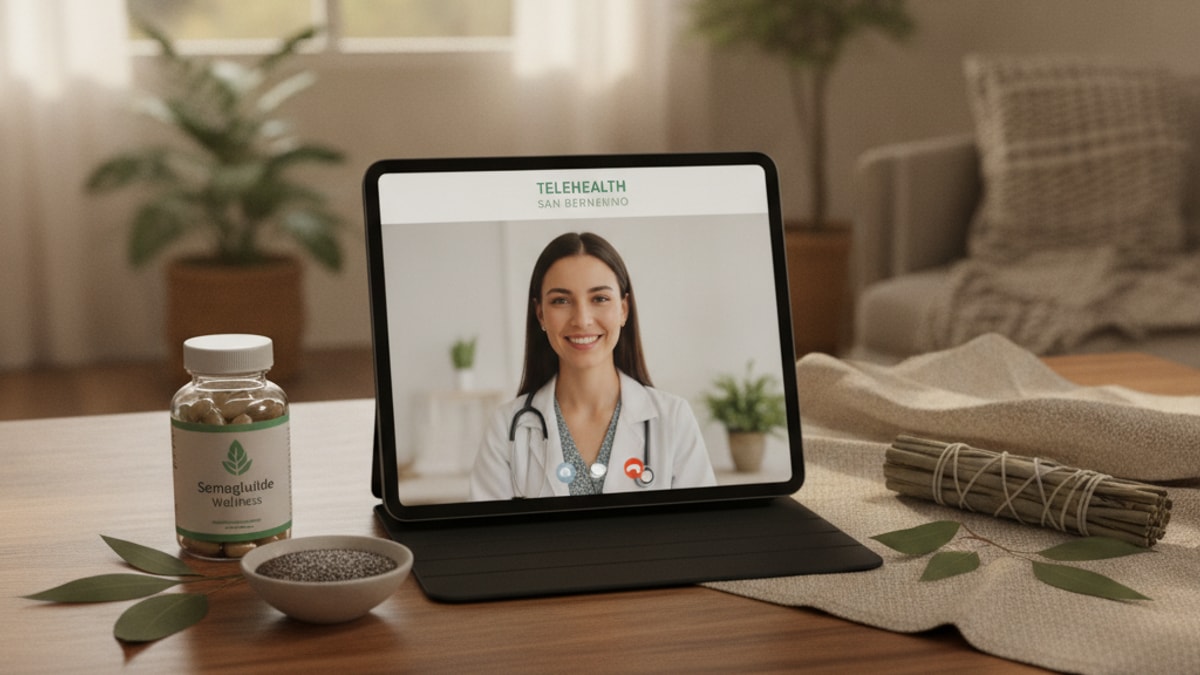
Telehealth Semaglutide San Bernardino — Fast, Licensed GLP-1
Telehealth semaglutide in San Bernardino isn't a workaround. It's the standard pathway to medically-supervised GLP-1 treatment in 2026. Licensed California providers prescribe compounded semaglutide remotely, FDA-registered 503B pharmacies prepare it under USP sterility standards, and patients receive weekly subcutaneous injections without the insurance denials, month-long waitlists, or $1,300/month Wegovy price tag that defined earlier GLP-1 access.
Our team has guided hundreds of California patients through this exact process. The gap between effective telehealth semaglutide and poorly structured alternatives comes down to three things most guides never mention: prescriber medical board licensure in your state, pharmacy registration status, and whether the platform treats dose titration as a clinical process or a cost-cutting step.
How does telehealth semaglutide work in San Bernardino. And is it the same medication as Ozempic or Wegovy?
Telehealth semaglutide provides the same active molecule as brand-name Ozempic and Wegovy. Prepared by FDA-registered compounding pharmacies and prescribed by California-licensed medical providers through remote consultations. Patients complete a medical intake, receive a prescription within 24–48 hours, and have compounded semaglutide shipped directly to their address in San Bernardino. The medication requires refrigeration at 2–8°C and is self-administered weekly via subcutaneous injection, typically in the abdomen or thigh.
Direct Answer: What You're Actually Getting
Telehealth semaglutide is not 'diet pills delivered online.' It's prescription GLP-1 receptor agonist therapy delivered through state-licensed telemedicine infrastructure. The medication itself is compounded semaglutide. Chemically identical to the active ingredient in Ozempic and Wegovy but prepared by FDA-registered 503B facilities rather than manufactured by Novo Nordisk. This isn't a legal loophole or alternative formulation. Compounded semaglutide has been legally available since the FDA confirmed a national shortage of branded GLP-1 medications in 2023, allowing licensed pharmacies to compound the drug under Section 503B of the Federal Food, Drug, and Cosmetic Act.
This article covers how telehealth semaglutide San Bernardino works from prescription to injection, what compounded semaglutide actually is and how it differs from brand-name versions, the dose titration schedule that determines results, what side effects to expect during the first eight weeks, and the three regulatory distinctions that separate legitimate platforms from questionable operators.
How Telehealth Semaglutide Prescriptions Work in California
California state telehealth statutes permit licensed medical providers. Physicians, nurse practitioners, and physician assistants. To prescribe controlled and non-controlled medications after establishing a valid patient-provider relationship through synchronous or asynchronous telemedicine. Semaglutide is not a controlled substance, which simplifies the prescribing pathway compared to stimulant weight-loss medications that require DEA registration and in-person evaluation.
The process starts with a medical intake questionnaire covering weight history, current medications, medical conditions, and contraindications specific to GLP-1 therapy. Key contraindications include personal or family history of medullary thyroid carcinoma, multiple endocrine neoplasia syndrome type 2 (MEN2), and a history of pancreatitis. Patients with type 1 diabetes or diabetic ketoacidosis are not candidates for semaglutide therapy. The provider reviews lab work if available. Though not universally required for weight-loss-only prescribing. And issues a prescription to a partnered 503B compounding pharmacy.
Shipment typically occurs within 48 hours of prescription approval. Compounded semaglutide arrives as either a pre-filled syringe or a multi-dose vial with separate insulin syringes. The medication must be refrigerated immediately upon receipt and stored between 2–8°C. Any temperature excursion above 8°C for more than 24 hours risks protein denaturation that renders the peptide inactive. We've seen patients receive medication that sat on a porch in San Bernardino summer heat for six hours. The vial looked fine, but efficacy was compromised. If the cold pack is warm on arrival, contact the pharmacy before using the medication.
Compounded Semaglutide vs Brand-Name Ozempic: The Three Real Differences
Compounded semaglutide contains the same active pharmaceutical ingredient as Ozempic and Wegovy. It's not a generic substitute or derivative compound. The differences lie in manufacturing oversight, final formulation, and cost structure.
First, regulatory pathway: Ozempic and Wegovy are FDA-approved drug products manufactured by Novo Nordisk under New Drug Application (NDA) oversight, meaning every batch undergoes potency verification, sterility testing, and endotoxin screening before release. Compounded semaglutide is prepared by FDA-registered 503B outsourcing facilities that follow Current Good Manufacturing Practice (CGMP) standards but are not subject to the same batch-level FDA review as branded medications. This doesn't mean compounded versions are unsafe. It means traceability and recalls follow state pharmacy board channels rather than federal FDA enforcement.
Second, formulation specifics: branded semaglutide uses a proprietary buffer system and preservative blend designed for multi-dose pen stability across 56 days at room temperature after first use. Compounded versions typically use bacteriostatic water as a diluent and require stricter refrigeration. The 28-day use window for compounded semaglutide reflects the shorter stability profile of non-proprietary formulations. Clinically, this doesn't change efficacy if storage guidelines are followed, but it does mean compounded semaglutide cannot sit at room temperature the way an Ozempic pen can.
Third, cost: brand-name Wegovy costs $1,300–$1,600 per month without insurance. Compounded semaglutide from a licensed 503B facility typically costs $250–$400 per month depending on dose tier. The price difference is substantial enough that most telehealth semaglutide platforms exist specifically because of the cost barrier to branded GLP-1 therapy.
Telehealth Semaglutide San Bernardino: Dose Titration and Expected Timeline
Semaglutide therapy follows a structured dose escalation schedule designed to minimize gastrointestinal side effects while building therapeutic plasma levels. The standard titration protocol published in the STEP clinical trial series starts at 0.25mg weekly for four weeks, increasing to 0.5mg for four weeks, then 1.0mg, 1.7mg, and finally 2.4mg. The therapeutic dose for weight loss.
The low starting dose is not subtherapeutic by choice. It's a calculated strategy to allow GLP-1 receptor density in the gastrointestinal tract to downregulate gradually. Semaglutide works by binding to GLP-1 receptors in the hypothalamus (suppressing appetite) and the stomach (slowing gastric emptying). The problem is that receptor density is higher in the gut than in the brain, which is why nausea, vomiting, and diarrhea are the most common adverse events during dose escalation. Patients who start at 1.0mg or higher without titration experience significantly higher discontinuation rates due to intolerable GI symptoms.
Most patients notice appetite suppression within the first week at 0.25mg, but meaningful weight reduction. Defined as 5% or more of baseline body weight. Typically occurs between weeks 12 and 20, once the dose reaches 1.7–2.4mg. The STEP-1 trial, published in the New England Journal of Medicine in 2021, found that patients on 2.4mg semaglutide lost a mean of 14.9% of body weight over 68 weeks, compared to 2.4% in the placebo group. That result was achieved with weekly injections plus lifestyle modification. Not the medication alone.
Patients who plateau at lower doses or experience persistent side effects may remain at 1.0mg or 1.7mg indefinitely rather than pushing to the 2.4mg ceiling. There's no clinical requirement to reach maximum dose if weight-loss goals are met at a lower tier.
Telehealth Semaglutide San Bernardino: Comparison Table
The table below compares telehealth semaglutide against in-person GLP-1 prescribing and over-the-counter alternatives marketed for weight loss.
| Method | Cost per Month | Prescription Required | Medication Type | Typical Wait Time | Medical Oversight |
|---|---|---|---|---|---|
| Telehealth Semaglutide (503B Compounded) | $250–$400 | Yes. Remote licensed provider | FDA-registered compounded GLP-1 agonist | 24–48 hours | Ongoing via telemedicine check-ins |
| In-Person Endocrinologist + Brand Ozempic/Wegovy | $1,300–$1,600 (without insurance) | Yes. In-person visit | FDA-approved GLP-1 agonist (Novo Nordisk) | 2–6 weeks for new patient appointment | In-person follow-ups every 3–6 months |
| OTC 'GLP-1 Support' Supplements | $40–$80 | No | Berberine, chromium, fiber blends (not GLP-1 agonists) | Same-day (Amazon/retail) | None. No prescriber involvement |
| Medical Weight Loss Clinic (Phentermine-Based) | $150–$300 | Yes. In-person or telehealth | Stimulant appetite suppressant (Schedule IV controlled substance) | 1–2 weeks | Monthly check-ins required by DEA |
Key Takeaways
- Telehealth semaglutide San Bernardino provides the same active molecule as Ozempic and Wegovy, compounded by FDA-registered 503B pharmacies and prescribed by California-licensed providers.
- The standard dose titration schedule starts at 0.25mg weekly and escalates over 16–20 weeks to the therapeutic 2.4mg dose, minimizing GI side effects.
- Compounded semaglutide costs $250–$400 per month compared to $1,300+ for brand-name Wegovy, with efficacy depending on proper storage at 2–8°C.
- Gastrointestinal side effects. Nausea, vomiting, diarrhea. Occur in 30–45% of patients during dose escalation and typically resolve within 4–8 weeks.
- Patients who discontinue GLP-1 therapy regain approximately two-thirds of lost weight within one year unless dietary habits are restructured during treatment.
What If: Telehealth Semaglutide Scenarios
What If My Semaglutide Arrives Warm or the Cold Pack Is Melted?
Contact the compounding pharmacy immediately before using the medication. Semaglutide is a peptide hormone that denatures irreversibly above 25°C. If the vial was exposed to heat for more than a few hours, protein structure breaks down and the medication becomes inactive. Most 503B pharmacies will replace a compromised shipment at no cost if you report it within 24 hours of delivery. Refrigerate the vial immediately and request a replacement rather than gambling on potency.
What If I Feel No Appetite Suppression After My First Injection?
The 0.25mg starting dose is intentionally low to minimize side effects, not to produce maximum appetite suppression. Most patients notice mild appetite reduction within the first week, but the effect scales with dose. Meaningful satiety changes typically emerge at 0.5mg or 1.0mg. If you feel nothing at all after the second or third injection, confirm that you're injecting subcutaneously (into fat, not muscle) and that the medication was stored correctly. A small percentage of patients are non-responders to GLP-1 therapy, but that's rare enough that storage or injection technique is the more likely culprit.
What If I Miss a Weekly Dose — Should I Double Up the Next One?
If you miss a dose by fewer than five days, administer it as soon as you remember and resume your regular schedule. If more than five days have passed, skip the missed dose entirely and continue with your next scheduled injection. Do not double-dose. Doubling creates a spike in GLP-1 receptor activation that significantly increases the risk of severe nausea and vomiting. Missing one dose during titration may cause temporary return of appetite, but it doesn't reset the titration schedule.
The Clinical Truth About Telehealth Semaglutide Efficacy
Here's the honest answer: telehealth semaglutide works as well as in-person prescribed semaglutide if the patient follows the titration schedule, stores the medication correctly, and maintains a structured eating pattern. The mechanism is identical. GLP-1 receptor activation in the hypothalamus and gut doesn't care whether the prescription came from a video consultation or an endocrinologist's office.
What telehealth semaglutide doesn't do is compensate for poor adherence. Patients who skip injections, store vials at room temperature, or expect the medication to override a 3,500-calorie daily intake see minimal results. Not because the platform is flawed, but because GLP-1 agonists are appetite modulators, not metabolic overrides. The STEP trials that produced 15–20% weight loss outcomes all included dietary counseling and structured caloric targets. Semaglutide makes it easier to eat less by extending satiety and reducing cravings, but it doesn't block calorie absorption or burn fat directly.
The other blunt reality: most patients regain weight after stopping GLP-1 therapy. The STEP 1 Extension trial found that participants regained approximately two-thirds of their lost weight within 12 months of discontinuation. This isn't a medication failure. It's a reflection of the fact that semaglutide corrects impaired satiety signaling, and that correction disappears when the drug is removed. Patients who achieve goal weight and wish to stop should work with their prescriber on a transition plan, which often includes a lower maintenance dose rather than full discontinuation.
Telehealth platforms that frame semaglutide as a 'three-month weight-loss course' are setting patients up for rebound. GLP-1 therapy is increasingly considered long-term metabolic management, not a short-term intervention.
Our experience working with patients across California shows that the most successful outcomes come from those who use the medication as a tool to restructure eating habits during the first six months. Not as a substitute for dietary awareness. Semaglutide buys you time to build sustainable patterns by removing the constant hunger signal that derails most caloric restriction attempts.
Telehealth semaglutide San Bernardino is a legitimate, clinically sound pathway to GLP-1 therapy when prescribed by California-licensed providers and compounded by FDA-registered pharmacies. If the platform can't verify both credentials, you're not getting telehealth. You're getting a regulatory gray area that puts efficacy and safety at risk.
Frequently Asked Questions
How does telehealth semaglutide work for weight loss in San Bernardino?▼
Telehealth semaglutide works by allowing California-licensed medical providers to prescribe compounded semaglutide remotely after a medical intake evaluation. The medication is a GLP-1 receptor agonist that binds to receptors in the hypothalamus to reduce appetite signaling while slowing gastric emptying, creating earlier satiety and sustained reduction in caloric intake. Patients receive weekly subcutaneous injections shipped from FDA-registered 503B compounding pharmacies, with typical weight loss of 10–15% of body weight over 6–12 months when combined with dietary structure.
Can anyone in San Bernardino get a telehealth semaglutide prescription?▼
Not everyone qualifies for telehealth semaglutide — contraindications include personal or family history of medullary thyroid carcinoma, MEN2 syndrome, history of pancreatitis, type 1 diabetes, and pregnancy or active plans to conceive. Most platforms require a BMI of 27 or higher with at least one weight-related comorbidity (hypertension, prediabetes, sleep apnea) or a BMI of 30 or higher without comorbidities. Patients under 18 or over 75 may face additional prescriber evaluation depending on the platform’s clinical protocols.
How much does telehealth semaglutide cost in San Bernardino without insurance?▼
Telehealth semaglutide from FDA-registered 503B compounding pharmacies typically costs $250–$400 per month depending on dose tier, compared to $1,300–$1,600 per month for brand-name Wegovy without insurance. Some platforms include the provider consultation fee in the monthly cost, while others charge a separate $50–$150 intake fee for the initial prescription. Insurance rarely covers compounded semaglutide because it’s not an FDA-approved drug product — coverage applies only to branded Ozempic or Wegovy, which require prior authorization and step therapy documentation in most plans.
What are the most common side effects of telehealth semaglutide?▼
Gastrointestinal side effects — nausea, vomiting, diarrhea, and constipation — occur in 30–45% of patients during dose escalation and are the primary reason for discontinuation. These effects peak during the first 4–8 weeks at each new dose level and typically resolve as GLP-1 receptor density adjusts. Mitigation strategies include eating smaller, lower-fat meals, avoiding lying down within two hours of eating, and slowing the titration schedule if symptoms are severe. Serious adverse events like pancreatitis and gallbladder disease are rare but documented — patients experiencing severe abdominal pain should contact their prescriber immediately.
How is compounded semaglutide different from Ozempic or Wegovy?▼
Compounded semaglutide contains the same active molecule as Ozempic and Wegovy but is prepared by FDA-registered 503B compounding pharmacies rather than manufactured by Novo Nordisk. The key differences are regulatory oversight (compounded versions follow state pharmacy board regulations and CGMP standards but lack batch-level FDA approval), formulation (compounded semaglutide uses bacteriostatic water and requires stricter refrigeration with a 28-day use window), and cost (60–85% less expensive than branded versions). The pharmacological mechanism and clinical efficacy are equivalent when storage and administration guidelines are followed.
Will I regain weight after stopping telehealth semaglutide?▼
Clinical evidence shows that most patients regain a significant portion of lost weight after discontinuing GLP-1 therapy — the STEP 1 Extension trial found participants regained approximately two-thirds of their lost weight within one year of stopping semaglutide. This occurs because semaglutide corrects impaired satiety signaling and elevated ghrelin levels, both of which return when the medication is removed. Patients who achieve goal weight and wish to stop should work with their prescriber on a transition plan, which often includes a lower maintenance dose (0.5–1.0mg weekly) rather than full discontinuation, combined with structured dietary habits built during treatment.
How long does it take to see weight loss results with telehealth semaglutide?▼
Most patients notice appetite suppression within the first week at the 0.25mg starting dose, but meaningful weight reduction — defined as 5% or more of baseline body weight — typically occurs between weeks 12 and 20 once the dose reaches 1.7–2.4mg. The STEP-1 clinical trial found mean body weight reduction of 14.9% at 68 weeks on 2.4mg semaglutide, but individual timelines vary based on adherence to the titration schedule, dietary structure, and baseline metabolic rate. Patients who maintain a consistent caloric deficit alongside the medication show 2–3 times the weight loss of those relying on appetite suppression alone.
Is telehealth semaglutide legal and safe in California?▼
Yes — telehealth semaglutide is legal in California when prescribed by state-licensed medical providers and compounded by FDA-registered 503B pharmacies. California telehealth statutes permit remote prescribing of non-controlled medications after establishing a valid patient-provider relationship, and semaglutide is not a controlled substance. The FDA confirmed a national shortage of branded GLP-1 medications in 2023, which allows licensed compounding pharmacies to prepare semaglutide under Section 503B of the Federal Food, Drug, and Cosmetic Act. Safety depends on proper storage (2–8°C refrigeration), adherence to titration schedules, and prescriber oversight for side effect management.
Can I travel with telehealth semaglutide from San Bernardino?▼
Yes, but temperature management is critical — semaglutide must be kept between 2–8°C during transport to prevent protein denaturation. Pre-filled syringes and multi-dose vials can tolerate short-term ambient temperature (up to 25°C for 24 hours), but extended heat exposure renders the medication inactive. Most patients use medical-grade coolers like FRIO wallets, which maintain refrigeration range for 36–48 hours without electricity via evaporative cooling. For air travel, carry semaglutide in hand luggage with a physician’s prescription or pharmacy label — TSA permits medically necessary liquids and syringes through security.
What happens if I miss a dose of telehealth semaglutide?▼
If you miss a weekly semaglutide injection by fewer than five days, administer the missed dose as soon as you remember and continue your regular schedule. If more than five days have passed, skip the missed dose entirely and resume on your next scheduled date — do not double-dose to ‘catch up,’ as this significantly increases the risk of severe nausea and vomiting. Missing one dose during titration may cause temporary return of appetite before the next administration, but it doesn’t reset the dose escalation timeline. Patients who miss multiple consecutive doses should consult their prescriber before resuming.
Does insurance cover telehealth semaglutide prescriptions?▼
Insurance rarely covers compounded semaglutide because it’s not an FDA-approved drug product — coverage applies only to branded Ozempic (approved for type 2 diabetes) or Wegovy (approved for weight management). Even for branded versions, most insurance plans require prior authorization, documented failure of other weight-loss interventions (step therapy), and a BMI threshold of 30 or higher (or 27+ with comorbidities). Patients using telehealth platforms for compounded semaglutide typically pay out-of-pocket at $250–$400 per month, which is still 60–85% less than the $1,300+ monthly cost of Wegovy without insurance.
What is the proper way to store telehealth semaglutide at home?▼
Semaglutide must be stored in a refrigerator at 2–8°C immediately upon receipt and kept at that temperature throughout the 28-day use window for compounded formulations. Do not freeze — freezing denatures the protein structure and renders the medication inactive. Store vials or pre-filled syringes in the main refrigerator compartment, not the door (where temperature fluctuates), and away from the freezer section. Any temperature excursion above 8°C for more than 24 hours compromises potency — if the medication was left at room temperature overnight, contact the compounding pharmacy before continuing use.

Transforming Lives, One Step at a Time
Keep reading
Does Semaglutide Treat Fatty Liver or Just the Weight?
Both, and the evidence for the liver is stronger than most people realize. Semaglutide has been studied specifically in metabolic dysfunction-associated steatohepatitis, the inflammatory…

Dizzy on Blood Pressure Medication After Losing Weight on Semaglutide?
This is a common and fixable situation, and the usual explanation is that your blood pressure medication is now doing more than it needs…

Does Semaglutide Affect How Levothyroxine Is Absorbed?
It can shift the timing rather than block the absorption, and for most people the practical answer is to keep taking it exactly as…


