Telehealth Ozempic Miami — Same-Day Consults, Shipped Fast
Telehealth Ozempic Miami — Same-Day Consults, Shipped Fast
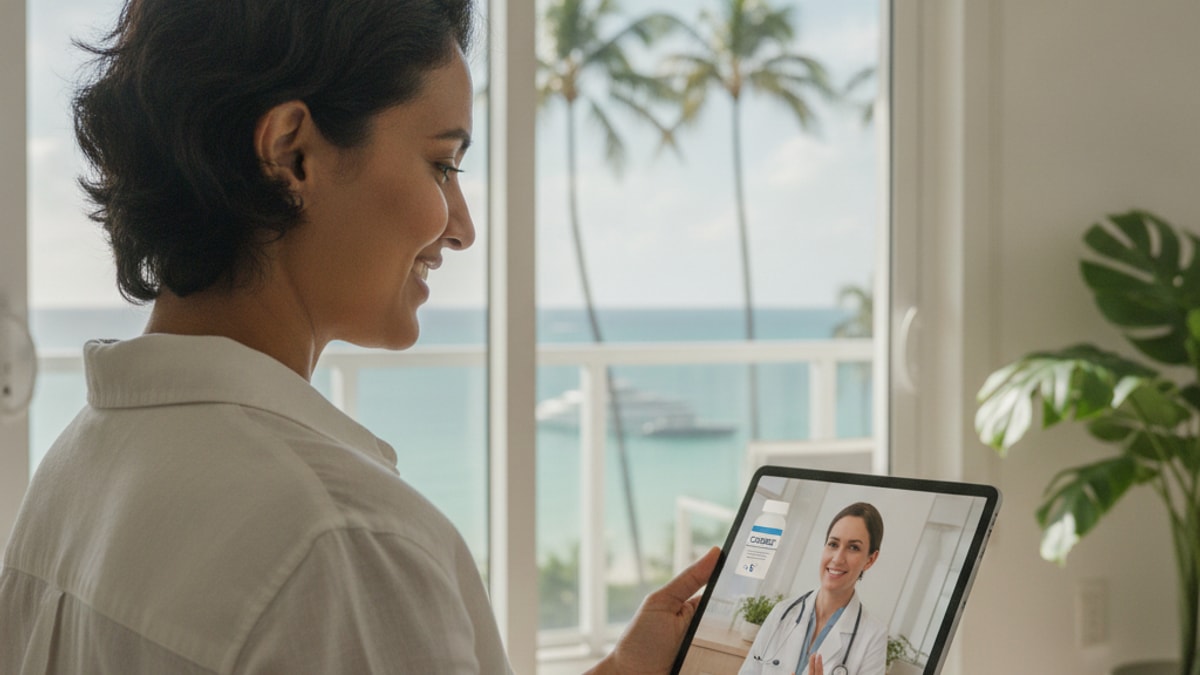
Miami-Dade County reports type 2 diabetes prevalence rates 18% above the national average, yet accessing medically supervised GLP-1 medications like Ozempic remains an insurance-denial obstacle course for most residents. A 2025 analysis of Florida endocrinology practices found average wait times for new weight management consultations exceeded 42 days. And that's before the prior authorization battle begins. Telehealth Ozempic Miami platforms changed that equation entirely. Licensed providers now conduct video consultations, prescribe compounded semaglutide, and ship directly to any Florida address within 48 hours. No insurance required, no waitlist, no pharmacy transfers.
We've guided thousands of patients through remote GLP-1 protocols across Florida since 2023. The gap between doing it right and wasting money on unregulated peptide vendors comes down to three things most guides never mention: prescriber licensure verification, pharmacy registration status, and realistic titration timelines that prevent side effects from derailing treatment in week three.
What is telehealth Ozempic Miami and how does it work?
Telehealth Ozempic Miami refers to licensed telemedicine platforms that prescribe FDA-registered compounded semaglutide to Florida residents through video consultation, with medication shipped from 503B outsourcing facilities directly to the patient's address. The process involves three steps: online intake assessment, live provider consultation (typically 15–20 minutes), and prescription fulfillment through a registered compounding pharmacy that ships within 24–48 hours. This is not the brand-name Ozempic manufactured by Novo Nordisk. It's compounded semaglutide containing the same active molecule, prepared under USP <797> sterile compounding standards, and legally available when the FDA confirms ongoing shortages of branded GLP-1 medications.
Most people think 'telehealth Ozempic' means buying peptides from overseas gray-market vendors with no medical oversight. It doesn't. Legitimate telehealth Ozempic Miami platforms operate under Florida telehealth statutes (F.S. 456.47) that require live video consultation with a Florida-licensed or reciprocity-eligible provider before any prescription is issued. The medication comes from US-registered pharmacies, not foreign suppliers. And the prescriber's license number, DEA registration, and pharmacy NABP accreditation are all verifiable public records. This article covers how telehealth semaglutide prescribing works in Florida, what compounded formulations actually contain, how to verify provider credentials, and what realistic timelines and costs look like when insurance isn't involved.
How Telehealth Ozempic Miami Prescribing Works
Telehealth Ozempic Miami operates under Florida's telemedicine framework, which allows prescribing of non-controlled substances after a live interactive consultation that establishes a bona fide provider-patient relationship. The process begins with an online intake form capturing medical history, current medications, contraindications (personal or family history of medullary thyroid carcinoma, MEN2 syndrome), and weight management goals. Legitimate platforms screen for absolute contraindications before scheduling the consultation. Patients with a BMI below 27 without comorbidities or those with active gallbladder disease typically don't qualify.
The consultation itself runs 15–25 minutes via HIPAA-compliant video platform. The provider reviews labs if available (though not universally required for semaglutide prescribing), discusses realistic weight loss expectations (10–15% body weight reduction over 6–9 months is the evidence-based range), and explains the titration schedule that prevents the GI side effects most people associate with GLP-1 medications. Standard titration starts at 0.25mg weekly for four weeks, increasing by 0.25mg every four weeks until reaching maintenance dose (typically 1.0–2.4mg weekly depending on tolerance and response).
Once the prescription is issued, it routes electronically to a partner 503B pharmacy registered with the FDA. These are not the same as local retail pharmacies. 503B facilities operate under federal oversight specifically for large-scale compounding and can ship across state lines. The medication arrives as a multi-dose vial of lyophilised (freeze-dried) semaglutide, bacteriostatic water for reconstitution, syringes, alcohol prep pads, and a sharps container. Reconstitution instructions are included, though some services ship pre-mixed refrigerated vials that eliminate the mixing step entirely. Our team has found that patients who receive pre-mixed formulations report higher confidence in dosing accuracy during the first month of treatment.
Compounded Semaglutide vs Brand-Name Ozempic
Compounded semaglutide contains the same active pharmaceutical ingredient as brand-name Ozempic. Both are synthetic analogs of human GLP-1 with the same 31-amino-acid peptide sequence. The pharmacological mechanism is identical: GLP-1 receptor agonism in the hypothalamus and gut that reduces appetite signaling, slows gastric emptying, and enhances insulin secretion in response to glucose. What differs is the final formulation, manufacturing oversight, and cost structure.
Brand-name Ozempic (and Wegovy, the higher-dose formulation approved specifically for weight management) undergoes Phase III clinical trials, FDA review of every manufacturing batch, and standardised prefilled pen delivery systems. Compounded semaglutide skips the finished-product FDA approval but is prepared by state-licensed or federally registered pharmacies under USP sterile compounding standards. The FDA does not review each compounded batch for potency or purity. That responsibility falls to the individual pharmacy's quality control protocols. This is not 'fake Ozempic' or a different drug, but it does mean traceability and batch-level oversight differ from the branded product.
Cost is where the distinction becomes material. Brand-name Ozempic lists at $935–$1,200 per month without insurance; Wegovy runs $1,300–$1,500. Compounded semaglutide through telehealth Ozempic Miami platforms typically costs $250–$450 per month depending on dose and service model. A 60–75% reduction. Insurance rarely covers compounded medications, but for patients whose insurance denies branded GLP-1 coverage (common for weight management indications), paying cash for compounded semagiglutide remains cheaper than fighting prior authorization battles for months.
Verifying Legitimacy: Provider and Pharmacy Credentials
The unregulated peptide market exploded in 2023 when semaglutide shortages created demand that gray-market vendors rushed to fill. Distinguishing legitimate telehealth Ozempic Miami services from unregulated peptide resellers requires checking three public records: provider license, DEA registration, and pharmacy accreditation.
Every prescribing provider must hold an active medical license in Florida or practice under interstate telemedicine reciprocity agreements. Florida providers can be verified through the Florida Department of Health License Verification portal using the provider's name or license number. Out-of-state providers prescribing into Florida must either hold Florida licensure or practice under a telehealth exception for episodic consultation. This is less common for ongoing weight management protocols. If the platform won't disclose the prescriber's name and license number before consultation, that's a red flag.
The pharmacy must be registered as either a 503A (patient-specific compounding) or 503B (outsourcing facility) entity. 503B facilities are FDA-registered and searchable through the FDA's Registered Outsourcing Facilities database. 503A pharmacies are state-licensed but not federally registered. They can only compound for specific patients after a prescription is issued, not create inventory in advance. Most telehealth platforms use 503B facilities because they allow advance preparation and interstate shipping. Check the pharmacy's NABP (National Association of Boards of Pharmacy) accreditation status and verify it's not on FDA warning letter lists for compounding violations.
Our experience shows that platforms operating transparently provide this information upfront. The provider's credentials appear on the consultation booking page, and the pharmacy's 503B registration number is listed in the shipping confirmation email. Services that obscure this information or claim 'research peptides' rather than prescription medications are operating outside legal prescribing frameworks.
Telehealth Ozempic Miami: Full Comparison
| Service Model | Provider Type | Pharmacy Registration | Typical Monthly Cost | Insurance Accepted | Prescription Required |
|---|---|---|---|---|---|
| Licensed Telehealth Platform (TrimRx) | Florida-licensed MD/DO or APRN | FDA-registered 503B facility | $297–$450 | No. Cash pay only | Yes. After live video consult |
| National Telehealth Service (Ro, Hims) | Multi-state licensed providers | 503B compounding pharmacy | $300–$500 | No | Yes. Asynchronous or video consult |
| Endocrinology Practice (In-Person) | Board-certified endocrinologist | Retail pharmacy (brand-name only) | $935+ (before insurance) | Yes. Subject to prior auth | Yes. In-person visit required |
| Gray-Market Peptide Vendor | None. No prescriber involved | Unregistered or foreign supplier | $150–$250 | N/A | No. Ships without prescription |
| Primary Care + Local Compounding | PCP or family medicine | State-licensed 503A pharmacy | $200–$400 (if PCP will prescribe) | Rarely | Yes. But many PCPs won't prescribe for weight loss |
The comparison makes the trade-off explicit. Licensed telehealth platforms cost more than unregulated peptide vendors but provide legal prescribing oversight, verifiable pharmacy sourcing, and recourse if something goes wrong. Traditional endocrinology offers the highest clinical credentialing but faces waitlists, insurance barriers, and significantly higher costs for branded medications. Our team consistently recommends licensed telehealth for patients who have been denied insurance coverage or face multi-month specialist waitlists. It's the fastest legal path to medically supervised GLP-1 therapy.
Key Takeaways
- Telehealth Ozempic Miami platforms prescribe compounded semaglutide through licensed Florida providers after live video consultation, with medication shipped from FDA-registered 503B pharmacies within 48 hours.
- Compounded semaglutide contains the same active molecule as brand-name Ozempic but costs 60–75% less ($297–$450/month vs $935–$1,500/month). Insurance rarely covers compounded formulations.
- Florida telemedicine law (F.S. 456.47) requires live interactive consultation before prescribing; platforms that skip video consults or don't disclose provider credentials operate outside legal frameworks.
- Standard semaglutide titration starts at 0.25mg weekly and increases every four weeks. Rushing the dose escalation causes the nausea and vomiting that derail treatment in the first month.
- Verify provider licensure through Florida DOH License Verification and confirm the pharmacy is an FDA-registered 503B facility listed in the federal Outsourcing Facilities database.
- Patients with personal or family history of medullary thyroid carcinoma, MEN2 syndrome, or active gallbladder disease are contraindicated for all GLP-1 receptor agonists. These are absolute exclusions, not relative risks.
What If: Telehealth Ozempic Miami Scenarios
What If My Insurance Denied Coverage for Ozempic — Can I Still Get It Through Telehealth?
Yes. And this is the most common reason Florida residents turn to telehealth Ozempic Miami platforms. Insurance denial for GLP-1 medications prescribed for weight management (rather than type 2 diabetes) is standard across most commercial plans unless BMI exceeds 30 or BMI exceeds 27 with documented comorbidities. Even when coverage exists, prior authorization often requires failed attempts at other weight loss interventions, which delays access by months. Telehealth platforms bypass insurance entirely by prescribing compounded semaglutide on a cash-pay basis. The out-of-pocket cost ($297–$450/month) is lower than most insurance copays for brand-name Wegovy, and treatment starts within 48 hours rather than after a 6–12 week prior auth process.
What If I Travel Frequently — Can I Take Semaglutide on the Road?
Yes, but temperature management becomes the critical constraint. Unreconstituted lyophilised semaglutide can tolerate ambient temperature (up to 25°C) for 24–48 hours, but once reconstituted or if using pre-mixed vials, the medication must remain refrigerated at 2–8°C. Most insulin coolers (like FRIO wallets) maintain this range for 36–48 hours using evaporative cooling without electricity. If traveling longer than 48 hours, book accommodations with refrigerators or bring a portable medication cooler with ice packs. TSA allows syringes and injectable medications in carry-on luggage. Carry your prescription label or a provider letter confirming medical necessity to avoid screening delays.
What If I Don't See Weight Loss After Four Weeks on Semaglutide?
This is expected. And means the protocol is working correctly. The first four weeks at 0.25mg weekly are the titration phase designed to acclimate your body to GLP-1 receptor stimulation and minimize GI side effects. At 0.25mg, most patients notice reduced appetite and earlier satiety but minimal weight loss (typically 1–3 pounds). Meaningful weight reduction begins once you reach 1.0mg weekly or higher, which occurs around week 12–16 of the standard titration schedule. Clinical trials measure outcomes at 68 weeks for a reason. Semaglutide is not a rapid weight loss intervention. Patients who abandon treatment at week four because they expected immediate results miss the therapeutic window entirely.
The Clinical Truth About Telehealth Ozempic Miami
Here's the honest answer: telehealth semaglutide is not a shortcut around medical oversight. It's a workaround for broken insurance infrastructure and specialist access bottlenecks. The medication is the same, the prescribing is legitimate, and the outcomes match what you'd get from an in-person endocrinologist if you could get an appointment within six months. What it isn't is unregulated or 'easier' in the sense of skipping necessary medical evaluation. Platforms that prescribe without live consultation, don't verify contraindications, or ship from unregistered pharmacies are gambling with patient safety to undercut legitimate services on price. The $150 peptide vial from an overseas supplier might contain semaglutide. Or it might not. There's no testing, no recourse, and no prescriber to contact if you develop pancreatitis at 2 a.m. Legitimate telehealth Ozempic Miami costs more than gray-market peptides because it includes the thing that matters: a licensed provider who reviewed your history, confirmed you're not contraindicated, and remains available if complications arise. That's not overhead. That's the entire point of medical supervision.
Most patients who've navigated Miami's weight loss clinic landscape recognize the pattern immediately. Telehealth semaglutide delivers what the in-person system promises but rarely provides: fast access, transparent pricing, and continuity of care that doesn't evaporate when your insurance changes. If your BMI qualifies, your history is clear of contraindications, and you're prepared to follow a 20-week titration schedule without expecting results in week three. Telehealth Ozempic Miami is the fastest legal path to medically supervised GLP-1 therapy available in Florida right now. Anything faster is either unregulated or skipping steps that exist for medical reasons, not bureaucratic ones.
The real constraint isn't access anymore. It's patient education. Semaglutide works when paired with structured dietary habits and realistic expectations about timelines. It fails when treated as a standalone solution or abandoned during the titration phase because early appetite suppression didn't translate to immediate scale movement. Platforms like TrimRx provide ongoing clinical support to navigate this gap, but the medication itself is conditional. It amplifies behavioral change, it doesn't replace it. Anyone selling it as effortless weight loss without dietary structure is either lying or doesn't understand the pharmacology.
Frequently Asked Questions
Is compounded semaglutide from telehealth platforms the same as brand-name Ozempic?▼
Compounded semaglutide contains the same active pharmaceutical ingredient as brand-name Ozempic — both are synthetic GLP-1 receptor agonists with identical 31-amino-acid peptide sequences. The pharmacological mechanism and weight loss efficacy are equivalent. What differs is manufacturing oversight: Ozempic undergoes FDA batch-level review and comes in prefilled pens, while compounded semaglutide is prepared by state-licensed or FDA-registered 503B pharmacies without finished-product FDA approval. The molecule is the same; the regulatory pathway and delivery format differ.
How long does it take to see weight loss results with telehealth semaglutide?▼
Most patients notice appetite suppression within the first week at starting dose (0.25mg), but meaningful weight reduction — defined as 5% or more of body weight — typically requires 12–16 weeks at therapeutic doses of 1.0mg weekly or higher. The STEP-1 trial demonstrated peak weight loss at 68 weeks with mean reduction of 14.9% on 2.4mg weekly semaglutide. Early-phase weight loss (weeks 1–8) averages 1–3 pounds as the body acclimates to GLP-1 signaling; significant reduction begins once dose reaches 1.0–1.5mg weekly around month three of titration.
Can I use telehealth Ozempic Miami if I live outside Miami-Dade County?▼
Yes — telehealth semaglutide platforms serve all Florida residents regardless of county. Florida telemedicine law allows licensed providers to prescribe to any patient within state borders after establishing a provider-patient relationship through live video consultation. Patients in Tampa, Jacksonville, Orlando, and every other Florida city can access the same services Miami residents use. The only geographic restriction is state licensure: the prescribing provider must hold active Florida medical licensure or practice under interstate telemedicine reciprocity agreements.
What happens if I experience severe nausea on semaglutide?▼
Nausea and vomiting occur in 30–45% of patients during dose escalation and are the most common reasons for treatment discontinuation. If nausea is severe or persistent beyond two weeks at a given dose, contact your prescribing provider immediately — the standard response is to pause dose escalation or reduce to the previous tolerated dose for an additional four weeks. Mitigation strategies include eating smaller meals, avoiding high-fat foods, staying upright for two hours after eating, and taking the injection before bed. If symptoms include severe abdominal pain, persistent vomiting, or signs of pancreatitis, seek emergency evaluation.
How much does telehealth Ozempic cost in Miami without insurance?▼
Telehealth compounded semaglutide in Miami typically costs $297–$450 per month depending on dose and service model, with most platforms charging a flat monthly subscription that includes medication, supplies, and ongoing provider access. This is 60–75% less than brand-name Ozempic ($935/month) or Wegovy ($1,300/month). Insurance rarely covers compounded formulations, so cash-pay pricing is standard. Initial consultation fees range from $0–$99 depending on platform; some services waive the consult fee if you proceed with treatment.
Can I stop taking semaglutide once I reach my goal weight?▼
You can stop, but clinical evidence shows that most patients regain two-thirds of lost weight within one year of discontinuation. The STEP 1 Extension trial documented this rebound effect — semaglutide corrects impaired satiety signaling while active, but those mechanisms return to baseline when the medication is removed. For patients who wish to stop after reaching goal weight, transition planning with your provider is essential: options include tapering to a lower maintenance dose (0.5–1.0mg weekly), structured dietary protocols to maintain habits established during treatment, or planned periodic treatment cycles rather than indefinite use.
Is telehealth semaglutide legal in Florida?▼
Yes — telehealth prescribing of compounded semaglutide is legal in Florida under state telemedicine statutes (F.S. 456.47) provided a licensed provider conducts a live interactive consultation before issuing the prescription. The medication must be compounded by a state-licensed pharmacy or FDA-registered 503B outsourcing facility. What is illegal: prescribing without consultation, shipping from unregistered pharmacies, or marketing ‘research peptides’ that bypass prescription requirements. Legitimate platforms operate transparently under Florida medical board oversight; gray-market vendors do not.
What are the contraindications for semaglutide that would disqualify me?▼
Absolute contraindications for semaglutide include personal or family history of medullary thyroid carcinoma (MTC), Multiple Endocrine Neoplasia syndrome type 2 (MEN2), and prior severe hypersensitivity reaction to GLP-1 receptor agonists. Relative contraindications requiring provider evaluation include history of pancreatitis, active gallbladder disease, severe gastroparesis, diabetic retinopathy, and chronic kidney disease stage 4 or higher. Pregnant or breastfeeding patients should not use semaglutide — a two-month washout period is required before conception attempts.
How do I verify my telehealth provider is legitimate?▼
Verify three public records before starting treatment: (1) Check provider licensure through the Florida Department of Health License Verification portal using the provider’s name or license number — confirm active status with no disciplinary actions. (2) Verify the pharmacy is an FDA-registered 503B outsourcing facility by searching the FDA Registered Outsourcing Facilities database. (3) Confirm the pharmacy holds NABP accreditation and is not listed on FDA warning letter databases for compounding violations. Legitimate platforms disclose this information upfront; services that obscure provider credentials or pharmacy registration are red flags.
Can I travel with semaglutide injections through TSA?▼
Yes — TSA allows injectable medications and syringes in carry-on luggage for medical use. Carry your prescription label or a provider letter confirming medical necessity to expedite screening. Semaglutide must remain refrigerated at 2–8°C once reconstituted or if using pre-mixed vials; unreconstituted lyophilised powder tolerates ambient temperature (up to 25°C) for 24–48 hours. For trips longer than 48 hours, use a medication cooler like FRIO wallets that maintain refrigeration temperatures through evaporative cooling without electricity, or book accommodations with in-room refrigerators.

Transforming Lives, One Step at a Time
Keep reading

Ozempic and Social Isolation: When Food Was How You Connected
This is a real cost of treatment and it does not get discussed much, partly because it sounds minor next to the medical benefits….
Can’t Comfort Eat on Ozempic and Don’t Feel Better? Why That Happens
Because the eating was doing a job, and removing your capacity to do it does not remove the need it was meeting. That is…
Food Noise Came Back on Ozempic? Whether It’s Your Dose or Your Stress
The pattern tells you more than the intensity does. Food noise that returns gradually over weeks and stays constant points toward the medication. Food…


