How to Get Wegovy for $50 a Month Through the Medicare GLP-1 Bridge
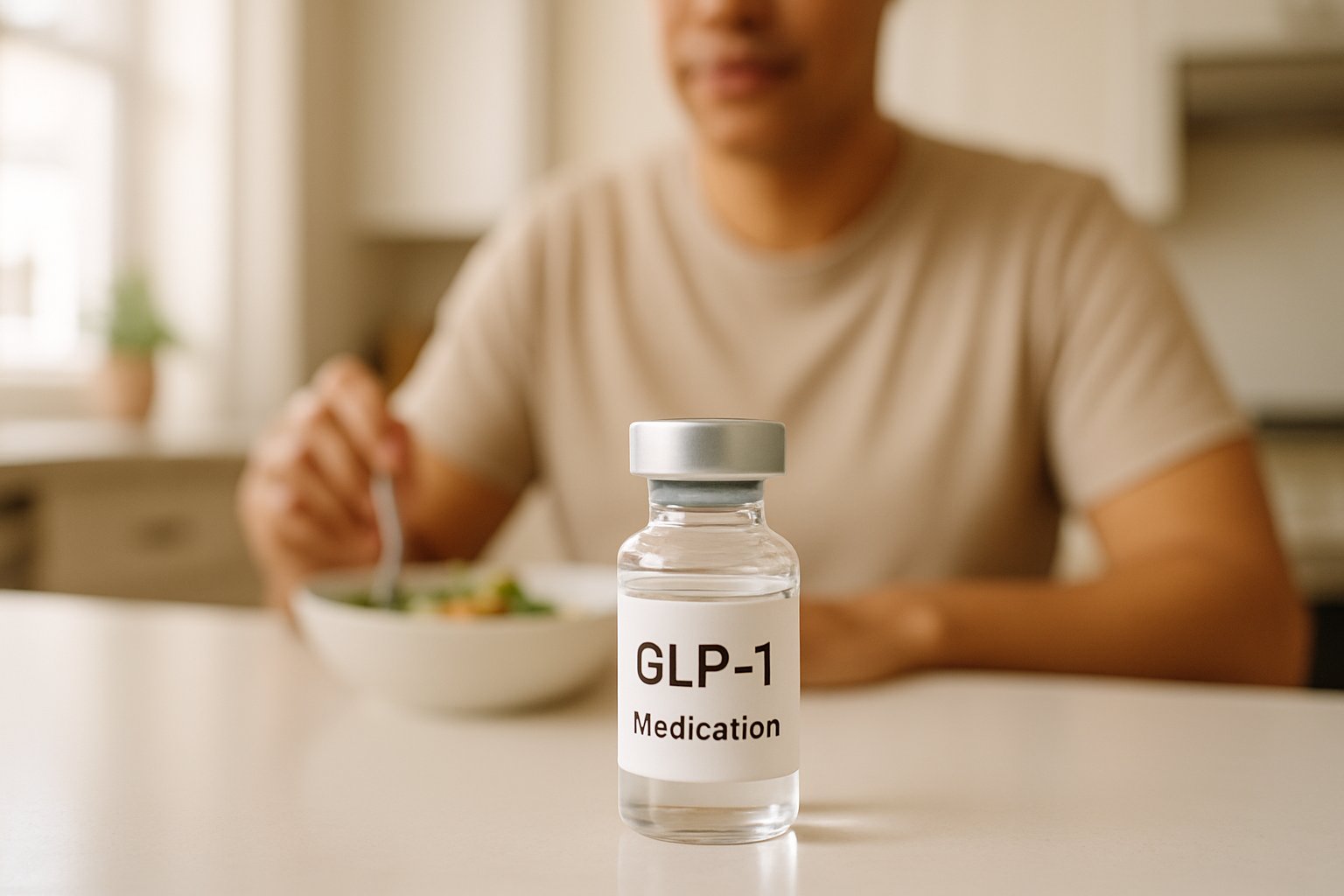
If you have Medicare Part D, you can get any dose of the Wegovy pen or the Wegovy pill for a flat $50 a month starting July 1, 2026, through a new program called the Medicare GLP-1 Bridge. It’s a temporary federal demonstration run by the Centers for Medicare & Medicaid Services (CMS), and it covers Wegovy for weight management, something Medicare has never paid for before. To get the $50 price, your prescriber submits a prior authorization and confirms you meet the clinical criteria. The program is nationwide, runs through December 31, 2027, and your copay stays $50 regardless of which dose you’re on.
That last point matters, because for years the only Medicare route to Wegovy ran through the cardiovascular indication. Here’s how the Bridge changes things, who qualifies, and what to weigh before you count on it.
What the Medicare GLP-1 Bridge is
The Bridge is a short-term payment demonstration CMS authorized to give Part D beneficiaries access to GLP-1 medications for obesity. Three drugs are included: Wegovy (semaglutide) from Novo Nordisk, plus Zepbound (tirzepatide) and Foundayo (orforglipron) from Eli Lilly. All are covered for weight management at the same $50 monthly copay. For Wegovy specifically, every dose strength of both the pen and the daily pill is included.
The reason a $50 price is possible: the manufacturers agreed to supply these medicines to the government at a net price of about $245 per 30-day fill, well under the roughly $1,349 list price Novo Nordisk publishes for Wegovy. You pay $50, and the program covers the gap. CMS uses a single central processor (Humana) to handle prior authorizations, claims, and pharmacy payment, so the Bridge runs alongside your plan rather than through it.
Wegovy isn’t a small commitment, and the clinical case for it is well established. In the STEP 3 trial (Wadden et al., JAMA 2021), adults taking semaglutide 2.4 mg alongside intensive behavioral therapy lost markedly more weight over 68 weeks than those getting behavioral therapy alone. Access at $50 a month puts that within reach for a population that has mostly been paying full freight.
Who qualifies, and the catch worth understanding
Two things have to be true. First, you need to be enrolled in a Medicare drug plan in 2026, either a standalone Part D plan or a Medicare Advantage plan that includes drug coverage. Second, you have to meet clinical criteria set by CMS, which center on BMI and weight-related conditions, and your prescriber has to submit a prior authorization confirming it. CMS evaluates your BMI at the point you first started GLP-1 therapy, not at the moment of the request, so earlier treatment counts.
Now the catch. The Bridge operates outside your regular Part D benefit. In practice that means the $50 you pay does not count toward your Part D deductible or your annual out-of-pocket cap (which rises to $2,100 in 2026). It also means manufacturer savings coupons can’t be applied to Bridge claims, and the low-income subsidy known as Extra Help does not reduce the $50. For most people $50 a month is a large improvement over paying cash, but if you’re a low-income beneficiary who expected Extra Help to lower it further, that protection doesn’t reach the Bridge.
One more distinction: if you already get a GLP-1 through Part D for a covered medical reason, you stay on that benefit. Wegovy remains covered through standard Part D for cardiovascular risk reduction in adults with established heart disease who are overweight or obese, and that pathway counts toward your deductible and out-of-pocket cap the normal way. The Bridge is specifically the new route for the weight-management use that Part D otherwise excludes.
What $50 a month compares to
Consider a scenario where a 67-year-old on a Part D plan has been paying cash for brand Wegovy because her plan won’t cover it for weight loss. Here’s roughly how her options stack up in 2026.
| Pathway | Approximate monthly cost | Who it’s for |
|---|---|---|
| Medicare GLP-1 Bridge | $50 | Eligible Part D members, weight-management use, July 2026 to Dec 2027 |
| Wegovy list price (cash) | ~$1,349 | Anyone without coverage or a program |
| NovoCare self-pay (cash) | $349 to $399 | Self-pay patients not using Medicare |
| Commercial insurance + savings card | as little as $25 | Commercially insured patients only (excludes Medicare) |
For an eligible Medicare member, the Bridge is the cheapest brand-name route available, since the $25 manufacturer savings card is off-limits to anyone on Medicare. The tradeoff is that $50 a month doesn’t build toward your out-of-pocket cap, so it sits outside the rest of your drug-spending math.
The 2027 cliff to keep an eye on
The Bridge is temporary by design. It was meant to lead into a permanent Medicare obesity-coverage program called the BALANCE Model, but CMS shelved that model indefinitely in spring 2026. As things stand, the Bridge runs through December 31, 2027, and there’s real uncertainty about what follows. If a permanent pathway doesn’t materialize, Medicare coverage for weight-management GLP-1s could narrow again when the demonstration ends.
The practical read: the $50 price is a genuine opening, but treat it as a window rather than a settled benefit. During Medicare Open Enrollment each fall, confirm how your plan handles GLP-1 coverage for the next year, and watch for CMS announcements about what comes after the Bridge.
If you don’t qualify, or want an alternative
Not everyone will clear the eligibility criteria, and some people would rather not wait on prior authorization. If Medicare coverage isn’t an option for you, there are other routes to GLP-1 treatment, and our guide on how to get GLP-1 medications without insurance walks through them. For where Medicare coverage stands more broadly, including the diabetes and cardiovascular pathways, our overview of whether GLP-1 is covered by Medicare lays it out, and if you want the commercial side, does insurance cover Wegovy covers that ground.
TrimRx is a cash-pay telehealth program that connects you with licensed providers for physician-prescribed semaglutide and tirzepatide, with monthly pricing across the program’s medications running from $179 to $1,579 depending on the medication and plan. It’s a different model from Medicare coverage: no insurance, no prior authorization, a flat monthly structure. If you’d like to see whether it fits, the free assessment quiz takes a few minutes and routes your information to a licensed provider for review.
This article is for general educational purposes and isn’t medical advice. Coverage under the Medicare GLP-1 Bridge varies by individual eligibility and plan, requires prior authorization, and isn’t guaranteed. Program terms and pricing change, so verify current details with CMS, your plan, and your prescriber before making decisions.

Transforming Lives, One Step at a Time
Keep reading
Can the Wegovy Pill Hold the Weight You Lost on Semaglutide Injections?
Most likely yes, once you reach the maintenance dose. The risk is not the destination but the trip: switching means restarting titration on the…
Wegovy Alternatives: What Else Works for Weight Loss
If Wegovy isn’t working out, the strongest alternative is tirzepatide (Zepbound), which tends to produce more weight loss, followed by other GLP-1 options and…
VK2735 vs Wegovy: Investigational Contender vs Proven Semaglutide
VK2735 and Wegovy sit at different stages of development. VK2735, an investigational drug from Viking Therapeutics, comes in both injectable and oral forms and…


