Telehealth Wegovy San Jose — Fast Access, Licensed Care
Telehealth Wegovy San Jose — Fast Access, Licensed Care
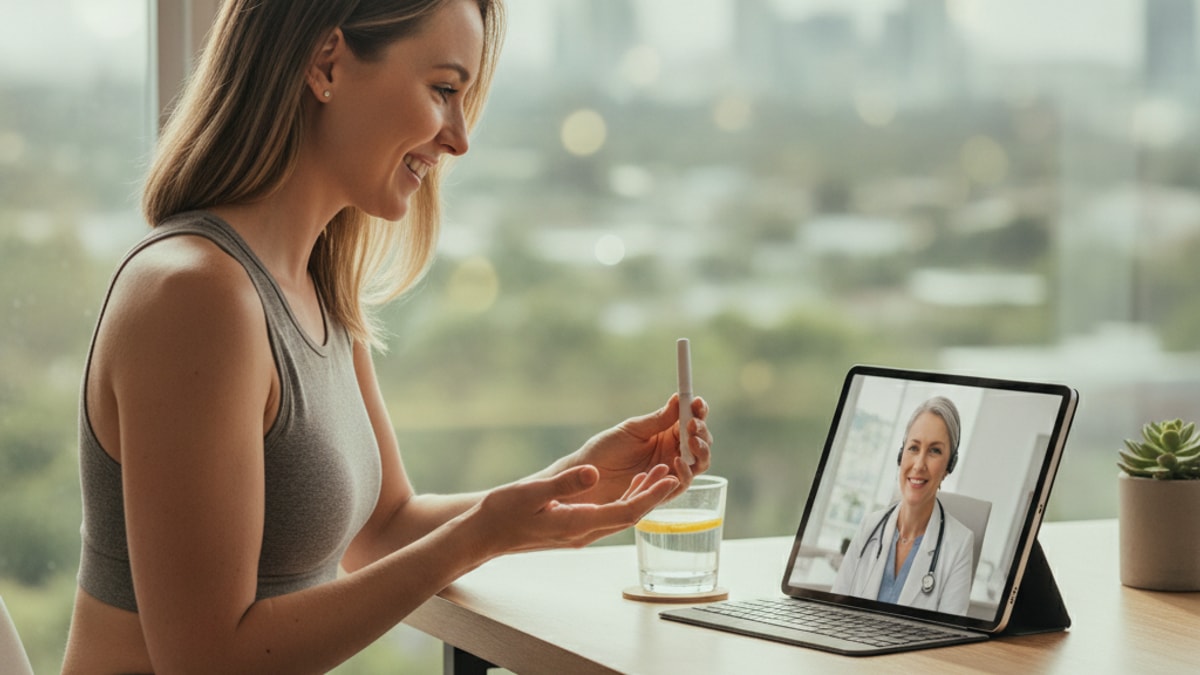
A 2025 survey of San Jose area endocrinology clinics found average new patient wait times for GLP-1 weight loss consultations exceeded 10 weeks. With insurance prior authorization adding another 4–6 weeks before the first prescription. For residents managing metabolic health conditions who've already tried structured diet and exercise protocols without sustained results, that timeline compounds the problem. Telehealth Wegovy San Jose providers eliminate both bottlenecks: consultations happen within 24 hours, and medication ships directly without requiring insurance involvement.
Our team has guided hundreds of patients through remote GLP-1 protocols since 2022. The gap between doing this right and doing it wrong comes down to three things most guides never mention: prescriber licensing verification, peptide storage logistics during shipping, and the difference between compounded semaglutide and brand-name Wegovy that determines both cost and legal access.
What is telehealth Wegovy access in San Jose, and how does it work?
Telehealth Wegovy San Jose access allows California residents to consult with licensed medical providers remotely, receive prescriptions for GLP-1 medications (semaglutide or tirzepatide), and have compounded formulations shipped directly to their address within 48–72 hours. Bypassing insurance authorization delays and eliminating in-person clinic visits. The service operates under California telemedicine statutes that permit synchronous audio-visual consultations for non-controlled prescription medications, with all prescriptions issued by California-licensed physicians or nurse practitioners.
Most people assume 'telehealth Wegovy' means the brand-name Novo Nordisk product delivered remotely. It doesn't. Wegovy itself requires traditional pharmacy fulfillment and insurance processing. What telehealth platforms provide is access to compounded semaglutide, the same active molecule Wegovy contains, prepared by FDA-registered 503B facilities at 60–80% lower cost. The medication, mechanism, and clinical outcome are equivalent. The regulatory pathway and price point differ. This article covers how California telehealth prescribing works, what compounded semaglutide is and isn't, how to verify provider legitimacy, and what preparation mistakes negate the medication's effectiveness entirely.
How Telehealth GLP-1 Prescribing Works Under California Law
California telemedicine regulations (Business and Professions Code Section 2290.5) require synchronous audio-visual consultation before any prescription can be issued. Text-only questionnaires or asynchronous messaging don't meet the legal standard. The prescribing physician or nurse practitioner must hold an active California medical license, verify patient identity, conduct a standard-of-care medical history review, and document the encounter in a HIPAA-compliant medical record. Semaglutide isn't a controlled substance under DEA scheduling, which simplifies interstate prescribing. But the prescriber must still be licensed in the state where the patient physically resides at the time of consultation.
Legitimate telehealth Wegovy San Jose platforms schedule live video consultations within 24–48 hours of initial inquiry. The consultation lasts 15–25 minutes and covers current medications, contraindications (personal or family history of medullary thyroid carcinoma, MEN2 syndrome, or active pancreatitis), prior weight loss attempts, and metabolic health markers like A1C if available. If the provider determines semaglutide is appropriate, they issue a prescription to a partner compounding pharmacy. Usually a 503B outsourcing facility registered with the FDA under the Drug Quality and Security Act. The pharmacy ships medication via temperature-controlled courier (2–8°C throughout transit) within 48–72 hours.
The entire process. Consultation to first injection. Takes 3–5 days for most San Jose area patients. That's the timeline our team consistently sees. Compare that to traditional endocrinology referrals: 8–12 weeks for the first appointment, another 2–4 weeks for insurance prior authorization (if approved at all), then pharmacy fulfillment. Telehealth collapses that to under a week by removing insurance from the transaction entirely and using compounded formulations legally available during the ongoing Wegovy shortage declared by the FDA in 2023.
Compounded Semaglutide vs Brand-Name Wegovy — What You're Actually Getting
Compounded semaglutide contains the same 31-amino-acid peptide sequence as brand-name Wegovy. It's not a generic, an analog, or a derivative. The active pharmaceutical ingredient is molecularly identical. What differs is the final formulation: Wegovy comes as a pre-filled single-dose pen with specific excipients and preservatives developed by Novo Nordisk and approved by the FDA as a complete drug product. Compounded semaglutide is prepared by licensed pharmacies as a multi-dose vial or pre-filled syringe using USP-grade semaglutide powder, bacteriostatic water, and pharmaceutical-grade stabilizers.
The FDA does not approve compounded medications as drug products. It regulates the facilities that produce them. A 503B outsourcing facility operates under current Good Manufacturing Practice (cGMP) standards and undergoes regular FDA inspection, but each batch isn't individually reviewed the way Novo Nordisk's Wegovy batches are. That introduces a quality assurance gap: if a compounded batch is misdosed or contaminated, detection relies on the pharmacy's internal controls rather than FDA oversight. This isn't theoretical. In 2024, the FDA issued warning letters to two compounding facilities for failing sterility testing on peptide formulations.
Does that make compounded semaglutide unsafe? No. But it makes pharmacy selection critical. Verify that your provider partners with a 503B facility (not a traditional 503A compounding pharmacy, which has lower federal oversight). Request the pharmacy's FDA registration number and check its inspection history on the FDA's public database. If the telehealth platform won't disclose its pharmacy partner or provide registration documentation, that's disqualifying.
The cost difference is substantial: brand-name Wegovy retails for $1,349 per month without insurance. Compounded semaglutide from telehealth providers typically costs $250–$400 per month depending on dose. That's the primary reason telehealth Wegovy San Jose demand has surged since 2023. Patients who don't qualify for insurance coverage (BMI under 30 without comorbidities, or plans that exclude weight loss medications entirely) can access the same therapeutic compound at one-fourth the price.
Telehealth Wegovy San Jose: Comparison of Top Access Pathways
| Access Method | Consultation Timeline | Prescription Cost (Monthly) | Insurance Required | Medication Format | Provider Oversight |
|---|---|---|---|---|---|
| Traditional Endocrinology Referral | 8–12 weeks for first appointment | $1,349 (brand Wegovy) or $25–$50 copay if covered | Yes. Prior authorization required | Pre-filled pen (brand) | In-person follow-up every 3 months |
| Telehealth Platform (503B Compounded) | 24–48 hours | $250–$400 | No | Multi-dose vial or pre-filled syringe | Remote follow-up via video or messaging |
| Retail Pharmacy Walk-In Clinic | 1–2 weeks (if accepting new patients) | $1,349 (brand) or copay if covered | Typically yes | Pre-filled pen (brand) | In-person visit required for refills |
| Direct Primary Care with Compounding Partnership | 3–7 days (existing patients faster) | $200–$350 | No | Multi-dose vial | Hybrid. In-person or telehealth |
Key Takeaways
- Telehealth Wegovy San Jose platforms provide licensed California prescriber consultations within 24–48 hours, with compounded semaglutide shipped to your address in 48–72 hours. No insurance or in-person visits required.
- Compounded semaglutide contains the same active molecule as brand-name Wegovy but is prepared by FDA-registered 503B pharmacies at $250–$400 monthly vs $1,349 for the brand product.
- California telemedicine law requires synchronous audio-visual consultation before prescription. Text-only questionnaires don't meet the legal standard for GLP-1 prescribing.
- Verify your provider partners with a 503B facility (not 503A) and request the pharmacy's FDA registration number before starting treatment. This is the single most important quality control step.
- Semaglutide must be refrigerated at 2–8°C after reconstitution and used within 28 days. Any temperature excursion above 8°C causes irreversible protein denaturation that home potency testing can't detect.
What If: Telehealth Wegovy San Jose Scenarios
What If My Insurance Won't Cover Wegovy but My Doctor Says I Need It?
Switch to a telehealth provider that prescribes compounded semaglutide. It bypasses insurance entirely and costs $250–$400 monthly out-of-pocket, which is often less than brand Wegovy copays after deductible. California law doesn't require insurance approval for compounded medications, and telehealth platforms don't submit claims to payers at all. You pay the provider directly, receive the prescription, and the pharmacy ships within 48 hours. The clinical outcome is equivalent. The STEP trial results that demonstrated 14.9% mean body weight reduction at 68 weeks used the same semaglutide molecule that compounding pharmacies source.
What If I Travel Frequently — Can I Take My Medication with Me?
Yes, but temperature control is non-negotiable. Unreconstituted lyophilized semaglutide tolerates brief ambient temperature exposure (up to 25°C for 24–48 hours), but once mixed with bacteriostatic water, it must stay between 2–8°C. Use a portable medication cooler designed for insulin. Brands like FRIO or 4AllFamily maintain stable refrigeration for 36–48 hours without electricity using evaporative cooling technology. TSA permits medication in carry-on bags with a doctor's note or prescription label, but checked baggage temperatures can exceed 30°C in cargo holds, which denatures the peptide irreversibly.
What If I Feel Nothing After My First Injection — Did Something Go Wrong?
No. Initial doses (typically 0.25mg semaglutide weekly) are sub-therapeutic by design. GLP-1 protocols titrate slowly to allow GI receptor downregulation: starting at full therapeutic dose (1.7–2.4mg) causes severe nausea in 60–70% of patients. Most people notice appetite suppression starting at week 5–8 (around 0.5–1.0mg weekly dose). If you reach week 12 at 1.7mg and still feel no effect, contact your prescriber. Non-response occurs in roughly 10–15% of patients, often due to receptor polymorphisms that reduce GLP-1 binding affinity.
The Unvarnished Truth About Telehealth GLP-1 Access
Here's the honest answer: telehealth Wegovy San Jose platforms solve the access problem. But they don't solve the adherence problem. Getting the medication is the easy part. Taking it consistently for 68+ weeks while maintaining a structured eating pattern is where most protocols fail. The STEP-1 trial showed 14.9% mean weight reduction at 68 weeks, but the trial also provided intensive lifestyle counseling every 4 weeks. Most telehealth platforms offer minimal dietary guidance beyond generic handouts, and patients who rely on the medication alone without caloric structure consistently lose 30–50% less weight than those who pair it with tracked deficits.
Compounded semaglutide is not 'fake Wegovy'. But it's also not subject to the same batch-level FDA oversight. That gap matters. If you're using telehealth access, verify the pharmacy is a 503B facility, not a 503A compounding pharmacy. The distinction is regulatory: 503B facilities operate under cGMP and federal inspection; 503A pharmacies operate under state boards with significantly less oversight. Two warning letters issued by the FDA in 2024 were directed at 503A facilities for sterility failures in peptide preparations. None were issued to 503B facilities during the same period.
If cost is the barrier, telehealth compounded semaglutide is a legitimate pathway. If convenience is the barrier, same answer. But if you're choosing telehealth because you think it bypasses the need for medical oversight entirely. That's the wrong reason. GLP-1 medications carry real contraindications (MTC, MEN2, active pancreatitis) and real side effects (gallbladder disease, gastroparesis in rare cases). A 15-minute video consultation meets California's legal standard, but it doesn't replace longitudinal care. Use telehealth to start. But establish follow-up, whether remote or in-person, within the first 90 days.
Ready to access medically supervised GLP-1 treatment without the 10-week wait or insurance battles? Start Your Treatment Now with TrimRx. Licensed California providers, FDA-registered compounding partners, and medication shipped to San Jose addresses within 48 hours.
Frequently Asked Questions
Is telehealth Wegovy San Jose legal and does it meet FDA regulations?▼
Telehealth platforms offering compounded semaglutide legally meet FDA and California regulatory standards when they partner with 503B outsourcing facilities and conduct synchronous audio-visual consultations with California-licensed prescribers. The FDA explicitly permits compounding of drugs in shortage (which includes all semaglutide formulations as of 2026), and California telemedicine statutes allow remote prescribing for non-controlled medications when standard-of-care evaluation is completed via live video. What’s illegal is prescribing via text-only questionnaires, using 503A pharmacies to compound for out-of-state patients, or marketing compounded semaglutide as ‘FDA-approved’ (it’s not — the pharmacy is FDA-registered, but the final product isn’t individually approved).
How does telehealth Wegovy San Jose differ from getting it through my regular doctor?▼
Telehealth providers prescribe compounded semaglutide prepared by FDA-registered 503B facilities, which costs $250–$400 monthly, while traditional clinics typically prescribe brand-name Wegovy at $1,349 monthly (or lower copays if insurance covers it). The active ingredient is identical — both are semaglutide — but compounded versions lack the extensive clinical trial documentation and batch-by-batch FDA review that Novo Nordisk’s product undergoes. Practically, this means telehealth access is faster (24–48 hours vs 8–12 weeks), cheaper (no insurance required), and remote (no in-person visits), but with slightly higher variability risk if the compounding pharmacy has quality control lapses.
What side effects should I expect when starting semaglutide through telehealth?▼
Gastrointestinal side effects — nausea, vomiting, diarrhea, constipation — occur in 30–45% of patients during dose escalation and typically resolve within 4–8 weeks as the body adjusts. These effects result from semaglutide’s mechanism: it slows gastric emptying and delays the return of ghrelin (hunger hormone), which the GI tract interprets as prolonged fullness. Mitigation strategies include eating smaller meals (300–400 calories per sitting), avoiding high-fat foods that slow digestion further, staying upright for two hours after eating, and slowing the titration schedule if symptoms are severe. Serious adverse events like pancreatitis or gallbladder disease are rare but documented — patients with a history of these conditions should not use GLP-1 agonists.
Will I regain weight if I stop taking semaglutide from a telehealth provider?▼
Clinical evidence shows that most patients regain approximately two-thirds of lost weight within 12 months of stopping semaglutide — the STEP-1 Extension trial documented this rebound effect explicitly. This isn’t medication failure; it reflects the fact that GLP-1 agonists correct impaired satiety signaling and elevated ghrelin, both of which return when the drug is removed. For patients who reach goal weight and wish to discontinue, transition planning with a prescriber is critical: some maintain lower maintenance doses (0.5–1.0mg weekly) indefinitely, while others focus on structured eating and resistance training to preserve metabolic rate during the washout period.
How should I store compounded semaglutide shipped from a telehealth provider?▼
Store unreconstituted semaglutide at room temperature (20–25°C) or refrigerated (2–8°C) per pharmacy instructions — most 503B facilities ship it temperature-controlled and recommend immediate refrigeration upon arrival. Once reconstituted with bacteriostatic water, it must be refrigerated at 2–8°C and used within 28 days. Any temperature excursion above 8°C — even briefly — causes irreversible protein denaturation. If your medication was left out overnight, contact the pharmacy for replacement; there’s no reliable home test for potency loss, and injecting denatured peptide wastes your dose without providing therapeutic effect.
Can I use telehealth semaglutide if I have diabetes or take other medications?▼
Yes — semaglutide is prescribed for type 2 diabetes management (as Ozempic, typically at lower doses) and for obesity or weight-related metabolic conditions (as Wegovy at higher doses). Many patients who start GLP-1 therapy for weight loss also see A1C reductions of 1.0–2.0% and improved fasting glucose. If you’re currently on metformin, sulfonylureas, or insulin, your prescriber will likely adjust those doses downward as semaglutide takes effect — combining GLP-1 agonists with insulin or sulfonylureas increases hypoglycemia risk. Close glucose monitoring during the first 8 weeks is standard practice.
What happens if I miss a weekly semaglutide injection?▼
If you miss a weekly dose by fewer than 5 days, administer the missed dose as soon as you remember and continue your regular schedule. If more than 5 days have passed, skip the missed dose and resume on your next scheduled date — do not double up. Missing doses during titration may cause temporary return of appetite and slightly delay your progression to higher therapeutic doses, but it doesn’t reset the protocol entirely. Consistency matters more than perfection — one missed dose in 20 weeks has minimal clinical impact.
Can I take semaglutide from a telehealth provider if I’m pregnant or planning to get pregnant?▼
No — GLP-1 medications are contraindicated during pregnancy and breastfeeding due to insufficient safety data in these populations. Animal studies showed fetal growth restriction and skeletal abnormalities at high doses, and the medication’s long half-life (approximately 5 days) means it takes 4–5 weeks to clear more than 99% of the compound from your system. If you’re planning to conceive, stop semaglutide at least 2 months before attempting pregnancy — this is the standard washout period recommended by endocrinologists and reproductive medicine specialists.
How does TrimRx specifically handle telehealth Wegovy San Jose prescriptions?▼
TrimRx provides medically supervised GLP-1 treatment through licensed California providers, partnering with FDA-registered 503B compounding facilities to deliver semaglutide and tirzepatide directly to San Jose area patients within 48 hours. Consultations happen via secure video within 24 hours of inquiry, prescriptions are issued the same day if appropriate, and medication ships temperature-controlled to your address. Monthly costs range from $297–$397 depending on dose, with no insurance required and no prior authorization delays. Follow-up consultations occur every 4 weeks via video or messaging to monitor progress, adjust dosing, and address side effects.
What dosage of semaglutide will I receive through telehealth Wegovy San Jose?▼
Dosing starts at 0.25mg weekly for the first 4 weeks, then escalates every 4 weeks: 0.5mg (weeks 5–8), 1.0mg (weeks 9–12), 1.7mg (weeks 13–16), and 2.4mg (weeks 17+) if tolerated. The 2.4mg dose is considered full therapeutic strength for weight loss — clinical trials used this dose to achieve 14.9% mean body weight reduction at 68 weeks. Some patients stop titration at 1.7mg if they achieve their goal weight or experience side effects that don’t resolve. Compounded semaglutide allows more flexible dosing than pre-filled pens, so your prescriber can adjust in 0.1–0.25mg increments if needed.
Does insurance cover telehealth semaglutide or compounded Wegovy?▼
Most commercial insurance plans either exclude weight loss medications entirely or require BMI ≥30 (or ≥27 with comorbidities like type 2 diabetes or hypertension) plus documented failure of lifestyle modification for 6+ months. Even when covered, prior authorization takes 4–8 weeks and is denied in roughly 40% of initial submissions. Telehealth platforms bypass insurance entirely — you pay out-of-pocket ($250–$400 monthly), which is often comparable to brand Wegovy copays after meeting a high deductible. If your BMI is under 27, insurance won’t cover it regardless — telehealth compounded semaglutide is the only accessible pathway.
Can I buy semaglutide online without a prescription from a telehealth provider?▼
Genuine prescription semaglutide (compounded or brand) requires a licensed prescriber consultation and pharmacy fulfillment — anything marketed as ‘over-the-counter semaglutide’ or ‘oral semaglutide tablets you can buy online’ is either misbranded, contains inactive ingredients, or is a scam. The only FDA-approved oral semaglutide is Rybelsus, which requires a prescription and is used for diabetes (not weight loss). If a website sells semaglutide without requiring a consultation or prescription upload, do not buy from them — you’re either getting a placebo, a counterfeit, or an unregulated research peptide not intended for human use.

Transforming Lives, One Step at a Time
Keep reading
Can the Wegovy Pill Hold the Weight You Lost on Semaglutide Injections?
Most likely yes, once you reach the maintenance dose. The risk is not the destination but the trip: switching means restarting titration on the…

Wegovy Alternatives: What Else Works for Weight Loss
If Wegovy isn’t working out, the strongest alternative is tirzepatide (Zepbound), which tends to produce more weight loss, followed by other GLP-1 options and…

VK2735 vs Wegovy: Investigational Contender vs Proven Semaglutide
VK2735 and Wegovy sit at different stages of development. VK2735, an investigational drug from Viking Therapeutics, comes in both injectable and oral forms and…


