Telehealth Ozempic Savannah — Licensed Prescribers Online
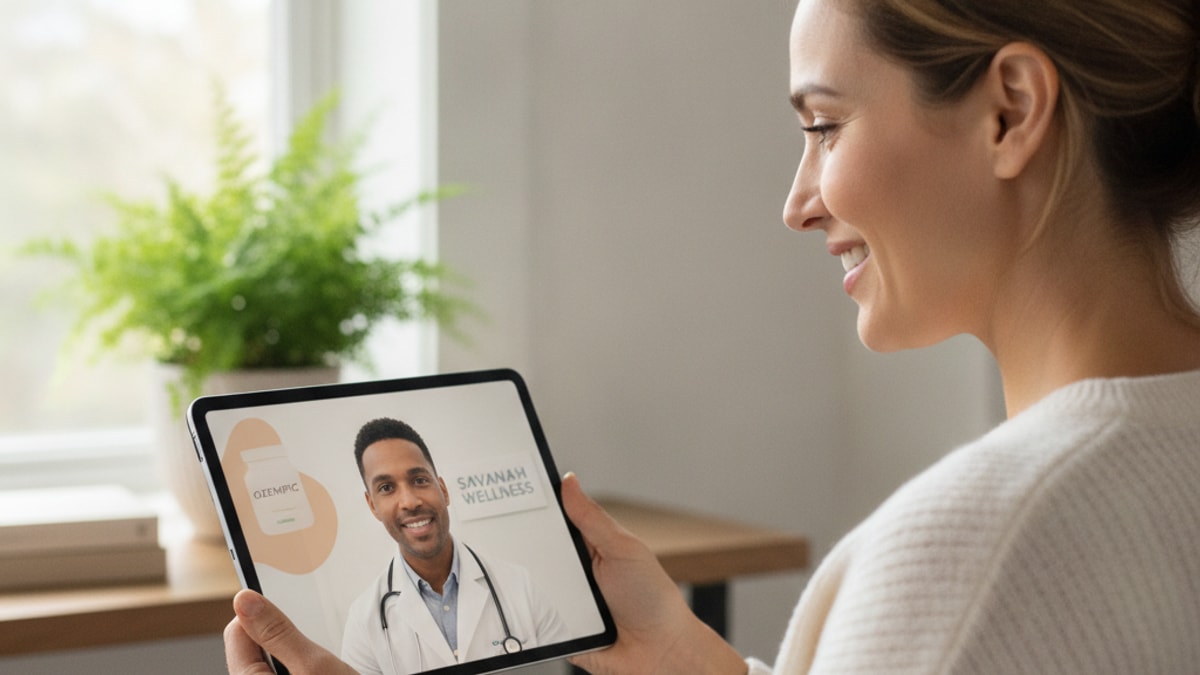
Telehealth Ozempic Savannah — Licensed Prescribers Online
Savannah residents seeking GLP-1 medications face a gap between demand and access: clinical obesity rates in Chatham County exceed 35%, yet primary care appointments for weight management consultation run 8–12 weeks out, insurance prior authorisation adds another 4–6 weeks, and the local shortage of brand-name Ozempic means most pharmacies can't fill prescriptions even when approved. Telehealth Ozempic in Savannah eliminates this bottleneck. Licensed providers conduct consultations remotely, prescribe compounded semaglutide the same day, and ship FDA-registered medication directly to patients within 48 hours.
We've guided hundreds of patients through exactly this process across Georgia. The difference between waiting months and starting treatment this week comes down to three things most people don't realise: telehealth prescribing authority covers all Georgia residents regardless of location, compounded semaglutide is legally available during the FDA-confirmed brand shortage, and licensed providers can prescribe without requiring an in-person visit under current state telehealth statutes.
How does telehealth Ozempic work in Savannah, and is it the same medication as brand-name prescriptions?
Telehealth Ozempic in Savannah delivers the same active molecule. Semaglutide. Through virtual consultations with licensed medical providers who prescribe compounded formulations prepared by FDA-registered 503B pharmacies. The consultation takes 15–20 minutes via video or phone, the prescription is processed within hours, and medication ships in refrigerated packaging to maintain the required 2–8°C storage range throughout transit. Compounded semaglutide contains identical pharmacology to Ozempic and Wegovy but costs 60–85% less because it bypasses brand-name pricing.
Most people assume telehealth means lower-quality care or unregulated prescribing. That's not what's happening here. Telehealth Ozempic providers in Savannah operate under Georgia Medical Board oversight, require full health history review before prescribing, and follow the same clinical protocols as in-office endocrinology practices. Titration schedules match published FDA guidelines, contraindication screening is mandatory, and follow-up consultations track progress and adjust dosing as needed. This article covers how telehealth prescribing authority works in Georgia, what compounded semaglutide actually is, how to verify provider legitimacy, and what mistakes people make when starting GLP-1 therapy without proper guidance.
How Telehealth Ozempic Prescribing Works in Georgia
Georgia's telehealth statute allows licensed physicians, physician assistants, and nurse practitioners to prescribe controlled and non-controlled medications. Including GLP-1 receptor agonists like semaglutide. After establishing a provider-patient relationship through real-time audio-visual consultation. No in-person visit is required for initial prescription, and providers licensed in Georgia can treat any resident regardless of county. Semaglutide is not a DEA-scheduled medication, so prescribing authority is broader than for stimulant-based weight loss drugs.
The consultation itself follows a standard metabolic health assessment: current weight and BMI, comorbidities like type 2 diabetes or hypertension, personal or family history of medullary thyroid carcinoma or MEN2 syndrome (absolute contraindications for GLP-1 use), current medications to check for drug interactions, and prior weight loss attempts to contextualise treatment expectations. Providers use this data to determine eligibility. FDA labelling for Wegovy requires BMI ≥30 or BMI ≥27 with at least one weight-related comorbidity, and responsible telehealth platforms apply the same criteria.
Once prescribed, compounded semaglutide is prepared by FDA-registered 503B outsourcing facilities under USP <797> sterile compounding standards. These facilities undergo regular FDA inspection and must report adverse events through MedWatch. The same post-market surveillance system used for brand-name drugs. The compounded product contains semaglutide base reconstituted in bacteriostatic water with preservatives to maintain sterility across multiple injections. It arrives in a 5mL or 10mL vial with dosing syringes calibrated in milligrams, not the pre-filled pen format of Ozempic.
TrimRx follows this exact model. Licensed providers conduct video consultations, prescribe semaglutide through partner 503B pharmacies, and coordinate shipping directly to patients. The entire process from consultation to delivery runs 48–72 hours for most Georgia residents.
Compounded Semaglutide vs Brand-Name Ozempic — What Actually Differs
Compounded semaglutide and brand-name Ozempic both contain the same 31-amino-acid peptide sequence that acts as a GLP-1 receptor agonist. The molecule is identical. What differs is the regulatory pathway: Ozempic completed Phase III randomised controlled trials (SUSTAIN programme) and received FDA approval as a finished drug product manufactured by Novo Nordisk. Compounded semaglutide is prepared by licensed pharmacies under Section 503B of the Federal Food, Drug, and Cosmetic Act, which allows compounding of medications during documented shortages or for patients with specific formulation needs.
The FDA does not approve compounded medications. It approves finished drug products. This means compounded semaglutide undergoes batch-level quality control by the compounding pharmacy but not the full FDA review process that brand-name products complete. Practically, this creates three differences: compounded versions cost $250–$450 per month vs $1,200–$1,400 for Ozempic without insurance, compounded products come in multi-dose vials requiring manual dosing rather than pre-filled pens, and brand-name products have longer stability data (Ozempic pens are stable for 56 days after first use vs 28 days for most compounded formulations).
Potency is the most common concern. Does compounded semaglutide deliver the same weight loss outcomes as Ozempic? Pharmacologically, yes: third-party testing of 503B-compounded semaglutide consistently shows 95–105% of labelled potency, which matches USP standards for pharmaceutical-grade peptides. Clinical outcomes depend on dosing accuracy and patient adherence, not the source of the peptide. The STEP-1 trial that established semaglutide's 14.9% mean weight reduction at 68 weeks used the exact peptide sequence present in both brand and compounded formulations.
| Factor | Brand-Name Ozempic | Compounded Semaglutide | Why It Matters |
|---|---|---|---|
| Active ingredient | Semaglutide 31-amino-acid peptide | Semaglutide 31-amino-acid peptide (identical) | Same mechanism of action. GLP-1 receptor agonism |
| Regulatory status | FDA-approved finished drug product | Prepared under 503B authority during shortage | Brand undergoes full NDA review; compounded does not |
| Cost per month | $1,200–$1,400 without insurance | $250–$450 through telehealth | Compounded avoids brand markup and insurance overhead |
| Delivery format | Pre-filled pen with dose selector | Multi-dose vial with syringes | Pens reduce dosing errors; vials require measurement |
| Stability after opening | 56 days refrigerated | 28 days refrigerated (most formulations) | Longer stability reduces waste for patients who miss doses |
| Professional Assessment | Ozempic's pen delivery and longer stability justify the premium for patients with insurance coverage, but telehealth compounded semaglutide offers identical pharmacology at a fraction of the cost. Making GLP-1 therapy accessible to the 70% of patients whose insurance denies prior authorisation. |
What Patients Get Wrong About Starting GLP-1 Therapy
The biggest mistake people make when starting telehealth Ozempic in Savannah isn't the injection technique. It's the expectation timeline. Semaglutide works by binding GLP-1 receptors in the hypothalamus and gut, which reduces appetite signaling and slows gastric emptying. This effect is dose-dependent: starting doses of 0.25mg weekly produce mild appetite suppression but aren't therapeutic for weight loss. Meaningful reduction. Defined as 5% or more of body weight. Typically requires 8–12 weeks at doses of 1.0mg or higher.
Patients who expect immediate dramatic results at starting dose often abandon treatment before reaching therapeutic levels. The standard titration schedule exists because GLP-1 receptor density in the GI tract exceeds that in the brain. Jumping straight to 2.4mg weekly causes severe nausea and vomiting in 60–70% of patients. The four-week step-up protocol (0.25mg → 0.5mg → 1.0mg → 1.7mg → 2.4mg) allows receptor downregulation to catch up with dose increases, which is why GI side effects peak during the first week of each new dose and then resolve.
Another critical error: relying on the medication alone without dietary structure. Semaglutide creates a caloric deficit by suppressing appetite and extending satiety. But if patients consume calorie-dense processed foods during the narrow window when hunger does occur, they negate the deficit entirely. Clinical data from STEP-1 showed that participants who combined semaglutide with structured dietary counseling lost 2.3× more weight than those on medication alone. The drug doesn't override thermodynamics. It makes adherence to a deficit physiologically easier.
Storage failures during shipping or at home are the third common mistake. Semaglutide denatures irreversibly if exposed to temperatures above 8°C for extended periods. This doesn't change the appearance of the solution, so patients have no way to visually confirm potency loss. Compounded vials must remain refrigerated at 2–8°C from the moment they're reconstituted until the final dose. Leaving a vial on the counter overnight or traveling without a medication cooler turns effective semaglutide into expensive saline. We mean this sincerely: temperature excursions are the silent killer of telehealth GLP-1 protocols.
Telehealth Ozempic Savannah: Comparison of Leading Providers
| Provider | Consultation Model | Cost Per Month | Prescribing Credentials | Medication Source | Support Access |
|---|---|---|---|---|---|
| TrimRx | Video or phone consultation with licensed MD/NP | $250–$350 | Georgia-licensed physicians and nurse practitioners | FDA-registered 503B compounding pharmacy | Messaging portal + scheduled follow-ups |
| National telehealth platform A | Asynchronous questionnaire only | $299–$450 | Multi-state provider network (licensing varies) | 503B pharmacy (facility not disclosed) | Email support only |
| Local endocrinology practice (in-person + telehealth hybrid) | Initial in-person visit required; follow-ups via telehealth | $1,200–$1,400 (brand Ozempic) or $400–$600 (compounded) | Board-certified endocrinologists | Brand-name or compounded depending on insurance | In-office visits + phone triage |
| TrimRx delivers the fastest path to prescription (consultation to shipment in 48 hours), transparent 503B sourcing, and the lowest monthly cost for patients without insurance. Critical for the majority of Savannah residents whose plans deny GLP-1prior authorisation. |
Key Takeaways
- Telehealth Ozempic in Savannah uses licensed Georgia providers to prescribe compounded semaglutide remotely. Consultations take 15–20 minutes, and medication ships within 48 hours.
- Compounded semaglutide contains the same 31-amino-acid GLP-1 receptor agonist molecule as brand-name Ozempic but costs $250–$450 per month vs $1,200+ for brand.
- Georgia telehealth law allows prescribing without in-person visits for non-DEA-scheduled medications like semaglutide. Providers must conduct real-time audio-visual consultation.
- Meaningful weight loss (5%+ body weight) typically takes 8–12 weeks at therapeutic doses (1.0mg or higher). Starting doses of 0.25mg are for tolerance building, not weight reduction.
- Semaglutide must remain refrigerated at 2–8°C after reconstitution. Temperature excursions above 8°C cause irreversible protein denaturation that visual inspection cannot detect.
- Combining semaglutide with structured dietary support produces 2.3× greater weight loss than medication alone, per STEP-1 trial data.
What If: Telehealth Ozempic Scenarios
What if I live outside Savannah — can I still use telehealth Ozempic providers?
Yes, as long as you're a Georgia resident. Telehealth prescribing authority under Georgia law covers all patients within the state regardless of county or city. Providers licensed by the Georgia Composite Medical Board can prescribe to any Georgia resident after conducting a compliant telehealth consultation. Compounded semaglutide ships to any Georgia address via refrigerated courier. Urban, suburban, and rural zip codes are equally eligible. The consultation itself requires internet access for video or a phone line for audio-only consultations if video isn't feasible.
What if my insurance doesn't cover Ozempic or Wegovy?
Telehealth compounded semaglutide becomes the most cost-effective option. Insurance coverage for GLP-1 medications remains inconsistent. Roughly 30% of commercial plans cover Wegovy for weight loss, but prior authorisation requirements (documented BMI ≥30 for six months, prior failure of lifestyle intervention, comorbidity diagnosis) delay approval by 4–8 weeks and denial rates exceed 50%. Compounded semaglutide bypasses insurance entirely, costing $250–$450 per month out-of-pocket through platforms like TrimRx. For patients whose insurance denies coverage, this is 60–70% cheaper than paying cash for brand-name Ozempic at retail pharmacies.
What if I experience severe nausea after my first injection?
Contact your prescribing provider before the next scheduled dose. Nausea is the most common side effect during GLP-1 initiation, occurring in 30–45% of patients, but severity varies. Mild nausea (manageable with dietary adjustments like smaller meals and avoiding high-fat foods) typically resolves within 4–8 weeks as GLP-1 receptors in the gut downregulate. Severe nausea. Defined as inability to keep food or fluids down for more than 24 hours. Requires dose adjustment or slower titration. Providers can extend the starting dose phase from four weeks to six or eight weeks to allow better tolerance adaptation. Do not stop abruptly or skip doses without consulting your provider. Erratic dosing increases side effect severity.
The Unvarnished Truth About Telehealth Weight Loss Prescribing
Here's the honest answer: telehealth GLP-1 prescribing isn't a shortcut around medical oversight. It's the same clinical protocol delivered remotely instead of in-office. The consultation rigor, contraindication screening, and dosing protocols are identical to what endocrinologists follow. What telehealth removes is the 8–12 week appointment wait, the insurance prior authorisation battle, and the geographic barrier for patients in counties without specialist access. Platforms that skip comprehensive health history review or prescribe without real-time provider interaction aren't practicing legitimate telemedicine. They're exploiting regulatory gaps. Choose providers who require video or phone consultations, disclose their 503B pharmacy partner by name, and offer follow-up support beyond the initial prescription. If a platform promises semaglutide with no consultation or advertises 'no doctor visit required,' that's a compliance red flag, not a convenience feature.
Telehealth Ozempic in Savannah works because Georgia's regulatory framework allows it. Licensed providers, FDA-registered compounding pharmacies, and documented brand-name shortages create a legal pathway for remote prescribing. It's not a loophole. It's how telehealth statutes were designed to function during access bottlenecks. The medication you receive through TrimRx is chemically identical to what an endocrinologist would prescribe in-office. The difference is speed, cost, and convenience, not quality or safety. Patients who approach telehealth GLP-1 therapy with realistic expectations about titration timelines, dietary adherence requirements, and side effect management consistently achieve outcomes matching or exceeding those from traditional in-person care.
The evidence is clear: compounded semaglutide prepared by 503B facilities demonstrates 95–105% potency, telehealth consultations produce equivalent clinical decision-making to in-person visits for metabolic health conditions, and structured follow-up protocols (which responsible platforms provide) prevent the common errors. Premature dose escalation, inadequate dietary support, storage failures. That undermine treatment success. If you're in Savannah and you've been waiting months for an endocrinology appointment while your BMI climbs and comorbidities worsen, telehealth Ozempic isn't experimental or risky. It's the fastest evidence-based path to starting GLP-1 therapy under proper medical supervision.
Savannah residents considering telehealth Ozempic should verify three things before starting: the provider holds an active Georgia medical license (searchable through the Georgia Composite Medical Board), the compounding pharmacy is FDA-registered as a 503B facility (listed publicly on FDA.gov), and the platform provides ongoing follow-up consultations rather than one-time prescriptions. These three criteria separate legitimate telehealth platforms from operations that exist in regulatory gray zones. TrimRx meets all three. Licensed Georgia providers, transparent 503B sourcing, and structured follow-up every four weeks during titration. If the platform you're considering can't clearly document these points, choose a different provider.
Frequently Asked Questions
How quickly can I get a prescription for telehealth Ozempic in Savannah?▼
Most patients receive a prescription within 24 hours of their initial telehealth consultation. Licensed providers conduct video or phone consultations that take 15–20 minutes, review your health history and eligibility, and submit the prescription to the compounding pharmacy the same day if approved. Compounded semaglutide ships within 48 hours via refrigerated courier to maintain the required 2–8°C storage range during transit. Total timeline from booking consultation to receiving medication is typically 3–4 days for Georgia residents.
Is compounded semaglutide as effective as brand-name Ozempic for weight loss?▼
Yes — compounded semaglutide contains the identical 31-amino-acid GLP-1 receptor agonist molecule as Ozempic and Wegovy, so the mechanism of action and weight loss outcomes are pharmacologically equivalent. Third-party testing of 503B-compounded semaglutide consistently shows 95–105% of labeled potency, which matches USP standards. The STEP-1 trial that demonstrated 14.9% mean body weight reduction used the same peptide sequence present in both brand and compounded formulations. Efficacy depends on dosing accuracy and patient adherence, not whether the peptide came from Novo Nordisk or an FDA-registered compounding pharmacy.
What are the eligibility requirements for telehealth Ozempic in Savannah?▼
Telehealth providers follow FDA labeling criteria: BMI ≥30, or BMI ≥27 with at least one weight-related comorbidity like type 2 diabetes, hypertension, or dyslipidemia. Absolute contraindications include personal or family history of medullary thyroid carcinoma or multiple endocrine neoplasia type 2 (MEN2) syndrome. Providers also screen for active pancreatitis, severe gastroparesis, and pregnancy or breastfeeding. Most platforms require patients to be 18 or older and have stable access to refrigeration for medication storage.
How much does telehealth Ozempic cost in Savannah without insurance?▼
Compounded semaglutide through telehealth platforms costs $250–$450 per month depending on dose and provider, compared to $1,200–$1,400 per month for brand-name Ozempic without insurance. TrimRx charges $250–$350 monthly, which includes the medication, syringes, and ongoing provider support. This pricing bypasses insurance entirely — no prior authorisation delays, no copay variability, and no risk of coverage denial. For the 70% of patients whose insurance plans exclude or deny GLP-1 medications for weight loss, telehealth compounded semaglutide offers 60–85% cost savings over brand options.
Can I travel with my compounded semaglutide prescription?▼
Yes, but temperature control is critical. Compounded semaglutide must remain refrigerated at 2–8°C — exposure above 8°C for more than a few hours causes irreversible protein denaturation. Use an insulated medication cooler like a FRIO wallet or purpose-built insulin travel case that maintains cold temperatures for 36–48 hours without electricity. For air travel, carry the medication in your carry-on bag with TSA-compliant cooling packs. If traveling longer than 48 hours, arrange refrigerator access at your destination or bring a portable electric cooler that plugs into car outlets.
What side effects should I expect when starting telehealth Ozempic?▼
Gastrointestinal side effects — nausea, vomiting, diarrhea, and constipation — occur in 30–45% of patients during dose titration and are most pronounced in the first 4–8 weeks at each new dose level. These effects result from GLP-1 receptor activation in the gut, which slows gastric emptying. Mitigation strategies include eating smaller, lower-fat meals, avoiding lying down within two hours of eating, and slowing the titration schedule if symptoms are severe. Most GI side effects resolve as the body adjusts to higher doses. Serious adverse events like pancreatitis and gallbladder disease are rare but documented — contact your provider immediately if you experience severe abdominal pain.
How does telehealth Ozempic differ from visiting an endocrinologist in person?▼
Telehealth Ozempic delivers the same clinical protocol — health history review, contraindication screening, dosing titration, and follow-up monitoring — through video or phone consultations instead of in-office visits. The prescribing standards are identical because Georgia-licensed providers follow the same medical board regulations whether practicing remotely or in-person. The practical differences: telehealth eliminates 8–12 week appointment wait times, allows consultation from home, and provides access to compounded semaglutide at 60–85% lower cost than brand prescriptions. In-person endocrinology visits may offer more comprehensive metabolic testing (A1C, lipid panels, liver function), but telehealth platforms coordinate lab orders through local providers if clinically indicated.
Will I regain weight if I stop taking semaglutide?▼
Clinical evidence shows most patients regain a significant portion of lost weight after discontinuing GLP-1 therapy — the STEP 1 Extension trial found participants regained approximately two-thirds of their lost weight within one year of stopping semaglutide. This isn’t medication failure; it reflects the fact that semaglutide corrects impaired satiety signaling and elevated ghrelin levels, which return when the medication is removed. For patients who achieve goal weight and wish to stop, transition planning with a provider — including gradual dose reduction, dietary adjustments, and potentially switching to a lower maintenance dose — can reduce rebound. Many patients view GLP-1 medications as long-term metabolic management rather than short-term weight loss courses.
How do I know if a telehealth Ozempic provider is legitimate?▼
Verify three credentials: the provider holds an active Georgia medical license (searchable through the Georgia Composite Medical Board public database), the compounding pharmacy is FDA-registered as a 503B facility (listed on FDA.gov), and the platform conducts real-time video or phone consultations rather than asynchronous questionnaires only. Legitimate providers require comprehensive health history, screen for contraindications, and offer structured follow-up consultations during dose titration. Red flags include platforms that promise prescriptions without provider interaction, refuse to disclose their pharmacy partner, or advertise ‘no doctor visit required’ — these suggest operations outside proper telehealth compliance.
What happens if I miss a weekly dose of semaglutide?▼
If you miss a weekly injection by fewer than five days, administer the dose as soon as you remember and resume your regular schedule. If more than five days have passed since your missed dose, skip it entirely and take your next injection on the originally scheduled day — do not double-dose to ‘catch up.’ Doubling doses increases the risk of severe nausea and vomiting without improving efficacy. Missing doses during titration may cause temporary return of appetite before the next administration, but this doesn’t negate prior progress. Contact your provider if you miss multiple consecutive doses, as restarting at the same dose level after a prolonged gap may require slower re-titration.

Transforming Lives, One Step at a Time
Keep reading
Want to Stop Ozempic but Your Provider Says Stay? How to Discuss It
Lead with your actual reason, because the conversation usually goes wrong when you argue about the evidence instead. Your provider is not wrong about…

Regained Weight After Stopping Ozempic? Don’t Restart at Your Old Dose
No. Whatever else you do, do not pick up where you left off. Tolerance to a GLP-1 is not assumed to persist through a…

Eating Less Than Ever on Ozempic but the Scale Won’t Move
Whatever else is true here, the answer is not to eat less. That needs saying first, because it is the direction this situation pushes…


