How Many Calories to Eat on Wegovy for Sustainable Results
Introduction
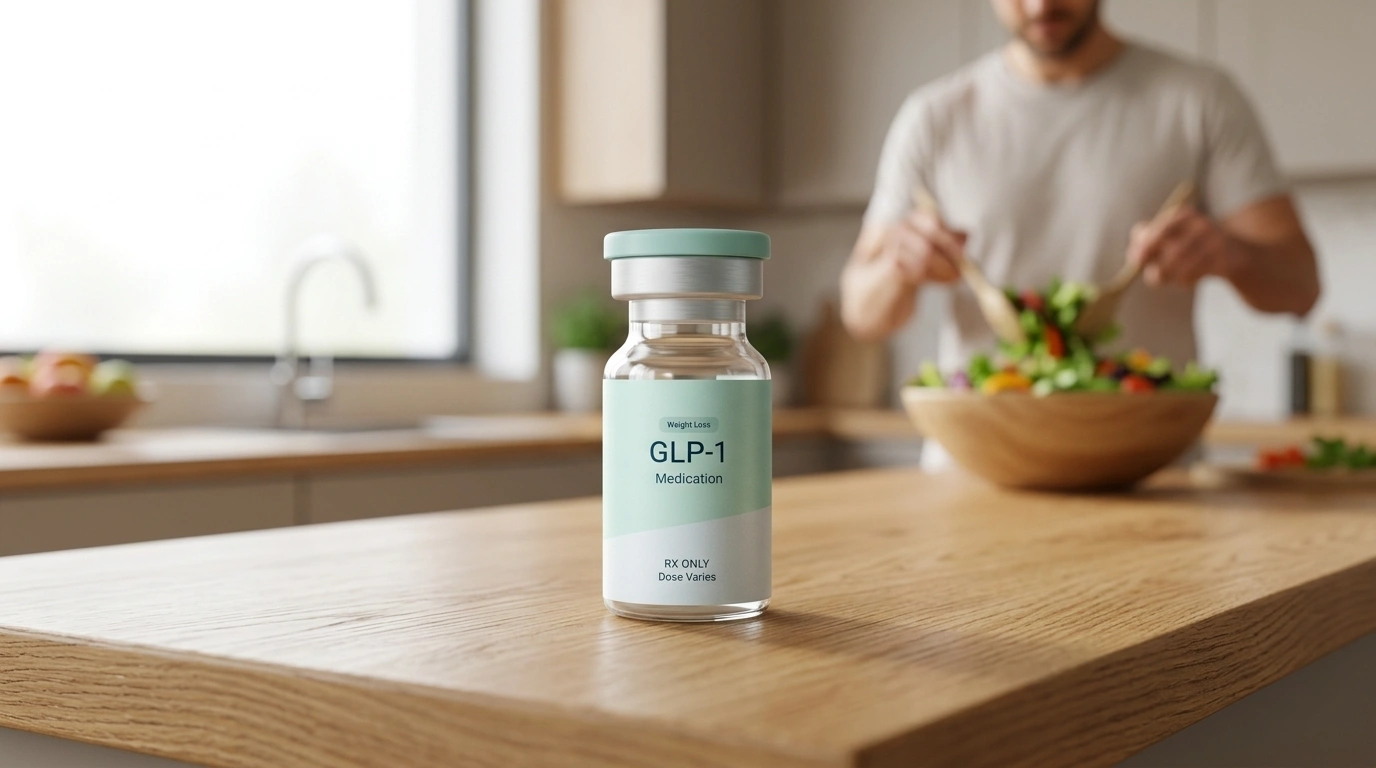
Starting a medication like Wegovy® often brings up a major question: do you still need to count calories? Many people feel a sense of relief when the constant “food noise” finally quiets down, but they also worry about whether they are eating enough—or too much—to see results. At TrimRx, we believe that medication is a powerful tool, but understanding the fuel your body needs is what makes the progress last. This article explores how to determine your ideal caloric intake while on a GLP-1, why the quality of those calories matters, and how to balance your nutrition to minimize side effects. Finding the right balance ensures you lose weight safely without sacrificing your energy or muscle mass. While the medication manages hunger, a sustainable calorie deficit remains the engine of weight loss.
If you are considering prescription weight loss treatment, you can complete a free eligibility assessment to see whether a personalized program may be appropriate for your health profile.
Quick Answer: Most individuals on Wegovy® find success consuming between 1,200 and 1,500 calories per day, though this varies based on your starting weight, sex, and activity level. The goal is to maintain a modest calorie deficit while prioritizing high-protein, nutrient-dense foods to preserve lean muscle mass.
The Relationship Between Wegovy® and Your Metabolism
To understand how many calories you should eat, it helps to understand how the medication changes your body’s relationship with food. Wegovy® is a brand name for semaglutide, a glucagon-like peptide-1 (GLP-1) receptor agonist. A GLP-1 receptor agonist is a type of medication that mimics a natural hormone in your body that regulates appetite and blood sugar.
When you take this medication, it performs two primary roles. First, it targets the areas of the brain that signal hunger and cravings. This is often described as “quieting the food noise,” making it much easier to stick to a reduced-calorie plan. Second, it slows down gastric emptying. This means food stays in your stomach longer, helping you feel satisfied with smaller portions for longer periods.
For a deeper explanation of how these medications affect appetite, digestion, and weight management, read this GLP-1 weight loss explainer.
However, the medication does not eliminate the laws of thermodynamics. To lose weight, your body still needs to be in a calorie deficit, which means you are burning more energy than you are consuming. Because the medication makes you feel full so quickly, the challenge often shifts from “how do I eat less?” to “how do I make sure the small amount I am eating is enough to support my health?”
Why Calorie Counting Still Matters
It is a common misconception that the medication does all the work and you can ignore what or how much you eat. While the drug significantly reduces appetite, it is still possible to overconsume calories through high-calorie liquids or ultra-processed foods that do not trigger the same fullness cues.
Conversely, some people find their appetite is suppressed so significantly that they struggle to eat even 1,000 calories a day. This can lead to issues like extreme fatigue, hair loss, and muscle wasting. Tracking your intake, at least in the beginning, provides data. This data helps you and your healthcare provider ensure you are hitting a “sweet spot” where weight loss occurs without compromising your metabolic health.
For additional guidance on protecting lean tissue during treatment, explore these strategies for preventing muscle loss on GLP-1 medications.
Key Takeaway: Wegovy® makes a calorie deficit easier to maintain by reducing hunger, but the deficit itself is what drives the loss of body fat.
How to Calculate Your Personal Calorie Goal
There is no single number that works for everyone. A 6-foot-tall man with a physically demanding job requires more calories than a 5-foot-tall woman with a sedentary office job, even if they are both taking the same dosage of medication. To find your number, you should look at two main factors: your BMR and your TDEE.
Basal Metabolic Rate (BMR)
Your Basal Metabolic Rate, or BMR, is the number of calories your body needs to perform basic life-sustaining functions. These functions include breathing, circulating blood, and cell production while you are at rest. You should generally avoid eating fewer calories than your BMR, as this can signal to your body that it is in a state of starvation, which may slow your metabolism.
Total Daily Energy Expenditure (TDEE)
Your Total Daily Energy Expenditure, or TDEE, is the total number of calories you burn in a day. It includes your BMR plus the energy used for physical activity and digesting food. Most people see sustainable weight loss by aiming for a calorie target that is roughly 500 calories below their TDEE.
General Guidelines by Weight
For many individuals starting a weight loss program with a GLP-1, a daily intake of 1,200 to 1,800 calories is common.
- 1,200–1,400 calories: Often suitable for smaller-framed individuals or those with lower activity levels.
- 1,500–1,800 calories: Often suitable for larger-framed individuals or those who exercise regularly.
You should consult with a licensed healthcare provider to determine the specific range that is safe for your health history and goals. If you are exploring whether prescription treatment may fit your needs, you can take the free assessment quiz.
The Importance of Protein Intake
When you lose weight rapidly, your body doesn’t just lose fat; it can also lose muscle. This is a concern with GLP-1 medications because the appetite suppression can lead to a significant drop in protein intake. Muscle is metabolically active tissue, meaning it burns more calories at rest than fat does. If you lose too much muscle, your metabolism slows down, making it harder to maintain your weight loss in the long run.
To prevent this, you should prioritize protein in every meal. A general recommendation for those on weight loss medication is to aim for 0.8 to 1.2 grams of protein per kilogram of body weight. For a person weighing 200 pounds (90.7 kg), this would be roughly 72 to 108 grams of protein per day.
For more guidance on protein targets while taking Wegovy®, review this guide to Wegovy protein intake.
Excellent protein sources include:
- Lean meats like chicken breast or turkey.
- Fish and shellfish.
- Greek yogurt and cottage cheese.
- Legumes like lentils and chickpeas.
- Tofu and tempeh.
Managing Macronutrients and Fiber
While calories are the primary driver of weight loss, macronutrients (protein, fats, and carbohydrates) dictate how you feel.
Carbohydrates and Fiber
Carbohydrates are your body’s preferred energy source. However, when taking Wegovy®, focusing on complex carbohydrates is vital. Complex carbs, like whole grains and vegetables, contain fiber. Fiber is essential because GLP-1 medications slow down the digestive tract, which can sometimes lead to constipation. Fiber helps keep the digestive system moving. Aim for 25 to 35 grams of fiber per day.
Healthy Fats
Fats are necessary for hormone production and nutrient absorption. However, high-fat meals can be difficult to digest while on this medication. Because the stomach empties more slowly, very greasy or fried foods may sit in the stomach too long, leading to increased nausea or reflux. Focus on small amounts of healthy fats like avocado, olive oil, and nuts.
How to Adjust Your Calories Based on Side Effects
Many people experience mild side effects like nausea, bloating, or fatigue when they first start the medication or increase their dose. Your caloric intake and food choices play a major role in managing these symptoms.
For a broader overview of nausea, constipation, and other digestive concerns, read about the most common side effects of semaglutide.
If you feel nauseated:
- Eat smaller, more frequent meals: Instead of three large meals, try five “mini-meals.” This prevents the stomach from becoming too full or too empty, both of which can trigger nausea.
- Avoid “empty” calories: If you can only eat a small amount, make sure those bites are packed with nutrients.
- Stay hydrated: Sometimes thirst is mistaken for nausea. Sip water throughout the day.
If appetite reduction makes it difficult to maintain balanced nutrition, GLP-1 Daily Support may provide nutritional support designed for people using GLP-1 medications.
If you feel fatigued:
- Check your total intake: If you are eating fewer than 1,000 calories, your body may not have enough energy to function. You may need to increase your intake slightly.
- Look at your iron and B12 levels: Consult your provider to see if you need supplements to support your energy levels while your intake is low.
For additional energy support during weight loss, consider the Weight Loss Boost supplement.
Bottom line: Your calorie count may need to fluctuate based on how your body is reacting to the medication dosage each week.
The Role of Personalized Support
Navigating calorie counts and macronutrient targets can be overwhelming, especially when managing a new medication. This is where a personalized approach becomes valuable. At TrimRx, we provide a platform where you can connect with healthcare professionals who understand these nuances. Our programs are designed to be comprehensive. This means we don’t just focus on the prescription; we focus on the person. Through the telehealth platform, you can receive guidance on how to adjust your eating habits as your dosage changes. We also offer quick-access supplements like GLP-1 Daily Support, which is designed to help fill nutritional gaps that might occur when your appetite is significantly reduced.
Signs You Are Not Eating Enough
It may seem counterintuitive, but eating too little can stall your weight loss. When the body enters a severe caloric deficit, it may adapt by lowering its energy expenditure—a process sometimes called adaptive thermogenesis.
Watch for these red flags:
- Extreme hair shedding: This is often a sign of protein or mineral deficiency.
- Brittle nails and dry skin: Lack of essential fatty acids and vitamins.
- Feeling cold all the time: A sign that your metabolism is slowing down to conserve heat.
- Brain fog: Your brain requires a steady supply of glucose and nutrients to function.
- Stalled weight loss: If the scale hasn’t moved in weeks despite a very low intake, your body may be over-stressing.
If you experience these symptoms, it is a sign to revisit your calorie target and ensure you are meeting your body’s basic requirements.
How to Track Without Stress
For many, the idea of tracking every calorie is a source of anxiety. You do not have to track forever. In the first few weeks of the program, tracking can serve as an “educational phase.” It helps you learn what 1,500 calories looks like when your appetite has changed.
Once you have a feel for your new portions and the types of food that make you feel best, you can often move to a more intuitive way of eating. This involves listening to your body’s fullness signals—which the medication makes much clearer—and focusing on “protein-first” eating.
A Typical Day of Eating on Wegovy®
- Breakfast: Greek yogurt with a handful of berries and a sprinkle of chia seeds.
- Lunch: A large green salad with grilled chicken, avocado, and a vinaigrette dressing.
- Snack: An apple with a tablespoon of almond butter or a protein shake.
- Dinner: Baked salmon with roasted broccoli and a small side of quinoa.
- Hydration: At least 80–100 ounces of water throughout the day.
The TrimRx Approach to Sustainable Health
We believe that sustainable weight loss is a journey, not a race. By combining the clinical efficacy of GLP-1 medications with a solid understanding of nutrition, you set yourself up for long-term success. Whether you are using compounded semaglutide—prepared in FDA-registered, inspected compounding pharmacies—or branded options, the foundation of your health remains your lifestyle.
Our mission is to help you bridge the gap between where you are and where you want to be. Through our telehealth-first model, you have access to the medical expertise needed to manage your dosage and the nutritional support to keep your body fueled.
If you are ready to discuss whether a personalized prescription program is appropriate for you, find out if GLP-1 medications may be right for you.
Key Takeaway: The best calorie goal is the one that allows you to lose weight consistently while still feeling energized enough to live your life.
Summary Checklist for Starting Your Program
Step 1: Complete your assessment. / Take the free assessment quiz to help a provider determine the best path for your health profile.
Step 2: Calculate your baseline. / Work with your provider to find your TDEE and set a realistic calorie range.
Step 3: Prioritize protein. / Ensure every meal has a source of lean protein to protect your muscles.
Step 4: Monitor and adjust. / Pay attention to how you feel and adjust your intake if you experience significant fatigue or nausea.
FAQ
Can I eat whatever I want on Wegovy as long as I stay under my calorie goal?
While weight loss is driven by calories, the quality of your food is crucial for managing side effects and maintaining health. High-sugar or very greasy foods are more likely to cause nausea and digestive upset when combined with the medication’s slowed stomach emptying. Prioritizing protein, fiber, and healthy fats will help you feel better and preserve muscle mass during your weight loss.
Is 1,000 calories a day enough while taking a GLP-1?
For most adults, 1,000 calories is generally too low and may lead to nutritional deficiencies and muscle loss. Eating too little can also cause your metabolism to slow down, potentially stalling your progress in the long run. It is important to find a balance that supports your energy levels and provides essential vitamins and minerals.
Do I have to count calories to see results?
Many people find that the medication reduces their appetite enough that they lose weight without strict tracking. However, tracking for the first few weeks can be a helpful tool to ensure you are not accidentally overeating or undereating. Once you become familiar with how your body responds to the medication and the appropriate portion sizes, you may find you can maintain your progress using intuitive eating.
What should I do if I am not hungry at all?
It is common for appetite to decrease significantly, but your body still requires essential nutrients to function safely. If you find it difficult to eat, focus on liquid nutrition like high-quality protein shakes or small, nutrient-dense snacks like nuts or yogurt. If your lack of appetite makes it impossible to consume a safe amount of food, you should consult your healthcare provider about adjusting your dosage. You can also explore daily nutritional support designed for GLP-1 users.
Disclaimer: This content is for informational purposes only and does not constitute medical advice. It is not intended to diagnose, treat, cure, or prevent any disease or condition. Individual results may vary. Always consult a qualified healthcare professional before starting any weight loss program or medication.

Transforming Lives, One Step at a Time
Keep reading
Can the Wegovy Pill Hold the Weight You Lost on Semaglutide Injections?
Most likely yes, once you reach the maintenance dose. The risk is not the destination but the trip: switching means restarting titration on the…

Wegovy Alternatives: What Else Works for Weight Loss
If Wegovy isn’t working out, the strongest alternative is tirzepatide (Zepbound), which tends to produce more weight loss, followed by other GLP-1 options and…

VK2735 vs Wegovy: Investigational Contender vs Proven Semaglutide
VK2735 and Wegovy sit at different stages of development. VK2735, an investigational drug from Viking Therapeutics, comes in both injectable and oral forms and…


