NAD+ Therapy Detroit — Local Clinics, Costs & What Works
NAD+ Therapy Detroit — Local Clinics, Costs & What Works
Detroit has seen a 30% year-over-year increase in functional medicine clinics offering intravenous NAD+ therapy since 2023, with most concentrated in Midtown, Corktown, and the suburbs surrounding Oakland County. The typical session costs $400–$750 for a 500mg infusion delivered over 2–4 hours. The promise: NAD+ (nicotinamide adenine dinucleotide) is a coenzyme present in every cell, critical to mitochondrial energy production and DNA repair. Supplementing it intravenously bypasses digestive breakdown and delivers it directly to tissues. The reality is more complicated.
Our team has reviewed clinical protocols from licensed Detroit-area providers. The gap between what IV NAD+ therapy can do and what it's marketed to do comes down to three things most patient handouts never mention: bioavailability variability, evidence quality, and cost-benefit thresholds.
What is NAD+ therapy, and why are Detroit residents seeking it out?
NAD+ therapy involves intravenous infusion of nicotinamide adenine dinucleotide, a coenzyme involved in cellular respiration and ATP production. Proponents claim it improves energy levels, cognitive function, and metabolic health by restoring declining NAD+ levels that occur with aging. Detroit residents are primarily seeking NAD+ therapy for fatigue, brain fog, addiction recovery support, and general anti-aging purposes. Typically paying $400–$750 per session at clinics in Midtown, Royal Oak, and Birmingham.
The Featured Snippet covers what NAD+ therapy is. But that definition doesn't address the mechanism or the evidence gap. NAD+ isn't a vitamin or a drug. It's an endogenous coenzyme your body produces naturally from niacin (vitamin B3) through the salvage pathway. Oral NAD+ precursors like nicotinamide riboside (NR) and nicotinamide mononucleotide (NMN) are absorbed in the gut and converted to NAD+ intracellularly. IV infusion skips that step and delivers NAD+ directly into circulation, where it's believed to cross into cells via tissue-specific transporters. This article covers the clinical evidence supporting IV NAD+ (which is limited), what Detroit providers actually offer, and what outcomes justify the $1,200–$3,000 multi-session protocols most clinics recommend.
What NAD+ Therapy Protocols Detroit Clinics Actually Provide
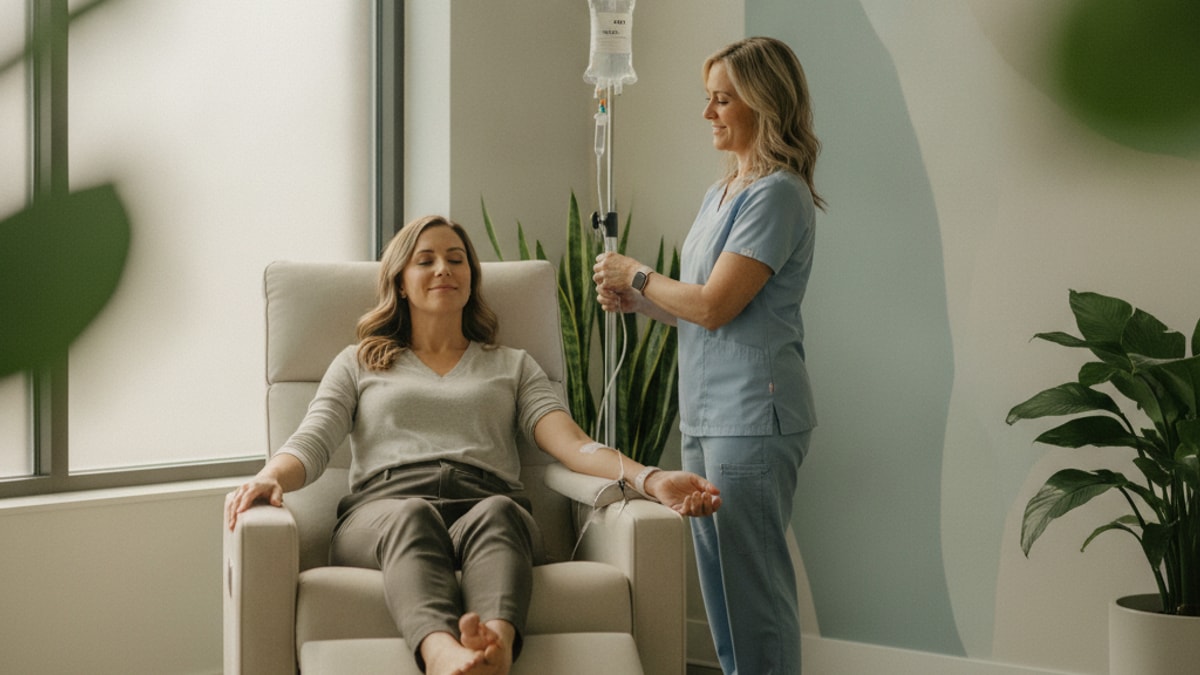
Most Detroit-area functional medicine clinics offering NAD+ therapy follow one of two protocols: single high-dose infusions (500mg–1000mg delivered over 2–4 hours) or multi-session loading phases (250mg–500mg twice weekly for 4–6 weeks). The infusion process itself requires intravenous access via a peripheral line, typically placed in the forearm or hand. Patients sit in a recliner during the session. NAD+ infusions administered too quickly cause flushing, chest tightness, and gastrointestinal discomfort, so the rate is titrated based on tolerance. We've found that clinics in Royal Oak and Birmingham tend to offer concierge-style IV lounges with private rooms, while Midtown clinics operate more clinical environments with shared infusion bays. The active ingredient is the same across providers. What differs is dosing protocol, infusion duration, and adjunct therapies bundled into the session (B-complex vitamins, glutathione, magnesium). Honestly, though: the evidence base for IV NAD+ as an anti-aging intervention is almost entirely observational and anecdotal. No large-scale randomised controlled trials have demonstrated that IV NAD+ infusions produce measurable improvements in objective biomarkers of aging, mitochondrial function, or metabolic health beyond what oral NAD+ precursors might achieve at a fraction of the cost.
The Clinical Evidence Gap: What Studies Show vs What Marketing Claims
NAD+ plays a documented role in cellular metabolism. It's required for glycolysis, the citric acid cycle, and oxidative phosphorylation in mitochondria. The theory behind IV NAD+ therapy is sound: NAD+ levels decline with age (by approximately 50% between ages 40 and 60 according to tissue biopsy studies), and restoring them should improve mitochondrial efficiency and cellular repair capacity. The problem is translating that biochemical logic into clinical outcomes. A 2021 pilot study published in Translational Medicine found that IV NAD+ infusions increased circulating NAD+ levels within hours, but tissue NAD+ concentrations. The metric that matters for cellular function. Showed minimal change. Another small trial in addiction medicine demonstrated reduced cravings and withdrawal symptoms in patients receiving IV NAD+ during opioid detox, but the study lacked a placebo control and included concurrent psychotherapy, making it impossible to isolate NAD+'s contribution. We mean this sincerely: NAD+ is not a placebo, and the subjective improvements patients report. Better energy, mental clarity, mood stability. Are consistent enough to suggest a real physiological effect. But the dose-response relationship, optimal infusion frequency, and comparison to oral NAD+ precursors remain poorly defined. Detroit providers are offering protocols based on clinical consensus and patient feedback, not Phase 3 trial data.
NAD+ Therapy Detroit: Cost Breakdown and What You're Paying For
| Provider Type | Single Session Cost | Multi-Session Package | Infusion Duration | Additional Services Included |
|---|---|---|---|---|
| Functional Medicine Clinic (Midtown, Corktown) | $400–$550 | $1,200–$1,800 (4 sessions) | 2–3 hours | Basic vitals monitoring, oral hydration |
| Concierge IV Lounge (Royal Oak, Birmingham) | $600–$750 | $2,200–$3,000 (6 sessions) | 3–4 hours | Private room, IV vitamin add-ons, post-infusion smoothie |
| Medical Spa with Physician Oversight | $500–$650 | $1,800–$2,400 (5 sessions) | 2.5–3.5 hours | Pre-treatment lab panel, follow-up consultation |
| Mobile IV Service (Oakland County) | $550–$700 | $2,000–$2,600 (5 sessions) | 2–3 hours | In-home administration, travel fee included |
The price reflects physician oversight, facility costs, liability insurance, and the cost of pharmaceutical-grade NAD+ itself. Which ranges from $150–$250 per 500mg vial when purchased in bulk by licensed providers. You're not paying for a scarce compound. NAD+ is commercially synthesised and widely available. You're paying for the clinical infrastructure required to administer an IV infusion safely. Detroit clinics at the higher end of the pricing spectrum ($600+) typically include comprehensive intake assessments, baseline lab work (CBC, CMP, liver enzymes), and physician-supervised protocols that adjust dosing based on tolerance and response. Lower-cost providers may offer NAD+ infusions without pre-treatment labs or detailed follow-up, which raises the question of whether the infusion is being tailored to your specific metabolic state or delivered as a one-size-fits-all protocol.
Key Takeaways
- NAD+ therapy in Detroit costs $400–$750 per single infusion, with most clinics recommending 4–6 session loading phases that total $1,200–$3,000.
- IV NAD+ infusions deliver the coenzyme directly into circulation, bypassing gut absorption. But tissue NAD+ levels (the metric that determines cellular benefit) show minimal increases in most studies.
- The strongest clinical evidence for NAD+ therapy exists in addiction recovery protocols, where it's used adjunctively during opioid and alcohol detox. Anti-aging and cognitive enhancement claims rely primarily on observational data and patient-reported outcomes.
- Oral NAD+ precursors like nicotinamide riboside (NR) cost $30–$60 per month and achieve similar circulating NAD+ increases as IV infusions in head-to-head comparisons, though subjective tolerance and onset differ.
- Detroit providers offering NAD+ therapy must be licensed physicians, nurse practitioners, or physician assistants operating under physician supervision. Unlicensed IV lounges cannot legally administer NAD+ in Michigan.
What If: NAD+ Therapy Detroit Scenarios
What If I Feel Nothing After My First Infusion?
Subjective response to NAD+ therapy varies widely. Some patients report immediate energy and mental clarity within hours, while others notice no perceptible change until the third or fourth session. If you feel nothing after your first infusion, the most likely explanation is that your baseline NAD+ status wasn't depleted enough to produce noticeable effects from a single dose, or the dose itself was too conservative to cross your personal response threshold. Loading protocols exist specifically because single infusions rarely produce sustained effects. NAD+ has a circulating half-life of approximately 30 minutes before it's metabolised or taken up by tissues, so benefits accumulate with repeated dosing rather than appearing immediately.
What If I Experience Chest Tightness or Nausea During the Infusion?
Chest tightness, flushing, nausea, and gastrointestinal cramping are common side effects when NAD+ is infused too quickly. These symptoms are dose-rate dependent, not allergic reactions. The mechanism involves rapid shifts in vascular tone and gut motility triggered by high circulating NAD+ concentrations. If you experience discomfort, alert the administering clinician immediately. They'll slow the infusion rate or pause it temporarily until symptoms resolve. Most Detroit providers start at conservative infusion rates (125mg–250mg per hour) and titrate upward based on tolerance. Patients who tolerate slow infusions well can complete the same 500mg dose over 2 hours instead of 4 hours in subsequent sessions.
What If My Insurance Won't Cover NAD+ Therapy?
NAD+ therapy is classified as an elective functional medicine intervention and is not covered by Medicare, Medicaid, or most commercial insurance plans in Michigan. Some providers accept Health Savings Account (HSA) or Flexible Spending Account (FSA) payments, which allow you to use pre-tax dollars for the cost, but reimbursement is not guaranteed. The rationale insurers use: NAD+ infusions lack FDA approval for specific medical indications, and the evidence base for efficacy doesn't meet the clinical trial standards required for coverage decisions. Addiction recovery programs sometimes include NAD+ therapy as part of residential detox protocols, where it may be covered under behavioral health benefits. But standalone anti-aging or wellness NAD+ infusions are out-of-pocket expenses.
The Unfiltered Truth About NAD+ Therapy in Detroit
Here's the honest answer: NAD+ therapy isn't a scam, but it's also not the metabolic miracle its most enthusiastic proponents claim. The biochemistry is real. NAD+ is essential for mitochondrial function, DNA repair, and cellular energy production, and supplementing it does increase circulating levels. What remains unclear is whether IV infusions produce clinically meaningful improvements in tissue NAD+ concentrations, mitochondrial efficiency, or functional outcomes that justify the $2,000–$3,000 multi-session protocols most Detroit clinics recommend. The best evidence exists for addiction recovery, where NAD+ appears to reduce withdrawal symptoms and cravings when used alongside standard detox protocols. For general wellness, cognitive enhancement, and anti-aging. The most common reasons Detroit patients seek NAD+ therapy. The evidence is almost entirely subjective. Oral NAD+ precursors like nicotinamide riboside and nicotinamide mononucleotide cost a fraction of the price, achieve similar circulating NAD+ increases, and avoid the time commitment and discomfort of IV infusions. If you have $3,000 to spend on metabolic optimisation, resistance training, a dietitian, and a sleep study will produce more measurable results than six NAD+ infusions.
The biggest mistake people make when considering NAD+ therapy isn't skepticism. It's assuming that because the molecule is biologically essential, supplementing it must be beneficial. That logic doesn't hold for most endogenous compounds. Your body regulates NAD+ synthesis tightly through salvage pathways, and flooding circulation with exogenous NAD+ doesn't necessarily overcome the rate-limiting steps that control tissue uptake and utilisation. Detroit providers offering NAD+ therapy are operating within legal and ethical bounds, but patients should approach it as an experimental intervention with promising anecdotal support, not a validated anti-aging therapy.
If the concept appeals to you, start with a single session at a licensed Detroit provider rather than committing to a multi-session package upfront. Assess your subjective response. Energy, sleep quality, mental clarity. Over the 7–10 days following the infusion. If you notice meaningful improvement, a loading protocol may be worth the investment. If you feel nothing, oral NAD+ precursors are a more cost-effective alternative that achieves similar biochemical outcomes without the time and expense of IV administration.
Frequently Asked Questions
How long does it take for NAD+ therapy to start working?▼
Most patients who respond to NAD+ therapy report subjective improvements — increased energy, mental clarity, improved mood — within 24–48 hours after the first infusion. However, sustained effects typically require multiple sessions delivered over 4–6 weeks. NAD+ has a circulating half-life of approximately 30 minutes, so benefits accumulate with repeated dosing rather than appearing after a single infusion. Some individuals feel no perceptible change until the third or fourth session.
Can I get NAD+ therapy in Detroit without a physician referral?▼
Yes, most Detroit-area functional medicine clinics offering NAD+ therapy accept self-referred patients without a physician referral. However, Michigan law requires that NAD+ infusions be administered by licensed physicians, nurse practitioners, or physician assistants operating under physician supervision. You’ll complete an intake assessment and medical history review before your first session to ensure there are no contraindications.
What is the difference between IV NAD+ therapy and oral NAD+ supplements?▼
IV NAD+ delivers the coenzyme directly into circulation, bypassing gut absorption and first-pass metabolism. Oral NAD+ precursors like nicotinamide riboside (NR) and nicotinamide mononucleotide (NMN) are absorbed in the intestine and converted to NAD+ intracellularly through salvage pathways. Both methods increase circulating NAD+ levels, but IV infusions produce higher peak concentrations and faster onset. Oral precursors cost $30–$60 per month compared to $1,200–$3,000 for multi-session IV protocols.
What side effects should I expect during NAD+ infusions?▼
The most common side effects are flushing, chest tightness, nausea, and gastrointestinal cramping — all of which are infusion-rate dependent and resolve when the infusion is slowed or paused. These symptoms occur in 30–50% of patients during their first session and typically improve with subsequent infusions as tolerance develops. Serious adverse events are rare but include vasovagal syncope (fainting) and vein irritation at the IV site.
How much does NAD+ therapy cost in Detroit without insurance?▼
Single NAD+ infusions in Detroit cost $400–$750 depending on the provider and dosage. Most clinics recommend 4–6 session loading protocols that total $1,200–$3,000. Concierge IV lounges in Royal Oak and Birmingham charge at the higher end ($600–$750 per session), while functional medicine clinics in Midtown and Corktown offer lower pricing ($400–$550 per session). NAD+ therapy is not covered by insurance and is paid out-of-pocket.
Is NAD+ therapy safe for people with liver or kidney disease?▼
NAD+ therapy is contraindicated in patients with severe liver disease or acute kidney injury because both conditions impair NAD+ metabolism and clearance. Patients with mild to moderate liver or kidney impairment should undergo pre-treatment lab work (liver enzymes, creatinine, eGFR) and receive NAD+ infusions only under physician supervision with adjusted dosing protocols. Detroit providers offering NAD+ therapy should require baseline labs before administering the first infusion.
Can NAD+ therapy help with addiction recovery in Detroit?▼
NAD+ therapy has been used adjunctively in addiction recovery programs to reduce withdrawal symptoms and cravings during opioid and alcohol detox. Small trials suggest it may shorten the acute withdrawal phase and improve patient retention in treatment programs. However, NAD+ is not a standalone addiction treatment — it must be combined with behavioral therapy, medical supervision, and ongoing support. Detroit-area addiction recovery centers occasionally include NAD+ infusions as part of residential detox protocols.
What happens if I miss a scheduled NAD+ infusion during a loading phase?▼
If you miss a scheduled NAD+ infusion during a multi-session loading phase, reschedule it as soon as possible and continue your protocol without doubling the dose. NAD+ levels return to baseline within 24–48 hours after each infusion, so missing a session won’t negate prior progress but may delay the cumulative benefits. Most Detroit clinics recommend completing loading phases within 6–8 weeks to maintain consistent NAD+ elevation.
Are there Detroit providers who offer at-home NAD+ therapy?▼
Yes, several mobile IV therapy services operating in Oakland County and greater Detroit offer at-home NAD+ infusions administered by licensed nurses or nurse practitioners. The cost is typically $550–$700 per session and includes a travel fee. At-home NAD+ therapy provides convenience but lacks the clinical oversight and emergency response capacity of a clinic-based setting, which may be a consideration for first-time patients.
Can NAD+ therapy interfere with prescription medications?▼
NAD+ is an endogenous coenzyme and does not have direct drug interactions with most prescription medications. However, patients taking medications metabolised through hepatic pathways — including statins, blood thinners, and certain antidepressants — should disclose their full medication list during intake assessment. NAD+ infusions may theoretically alter the clearance rate of drugs dependent on NAD-dependent enzymes, though clinically significant interactions are rare.

Transforming Lives, One Step at a Time
Keep reading

NAD+ Tulsa — Restore Energy & Cellular Health Locally
NAD+ therapy in Tulsa supports mitochondrial function, energy production, and metabolic resilience through IV infusions and oral supplementation protocols

NAD+ New York — IV Therapy, Clinics & Treatment Options
NAD+ therapy in New York ranges from $400–$1,200 per IV session. Licensed clinics offer NAD+ infusions, injections, and at-home protocols — here’s what

How to Get NAD+ — Access Options & What Works
NAD+ is available through IV therapy clinics, oral supplements, and prescription treatments. Each delivery method offers different absorption rates and


