How Long Can Compounded Tirzepatide Sit in a Hot Car?
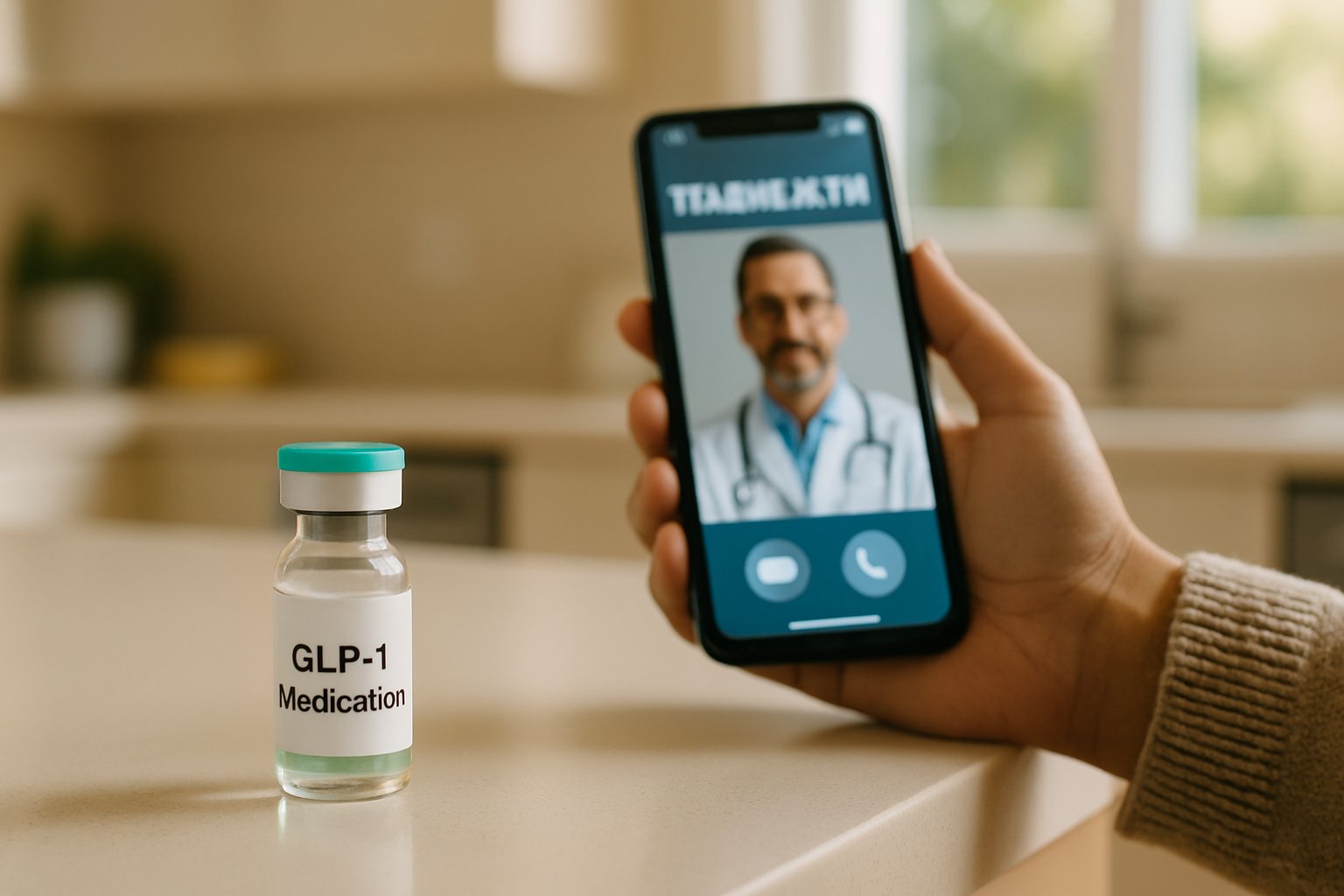
There is no safe published number, and anyone who gives you one is guessing. Compounded tirzepatide does not come with the kind of public heat-excursion data that would let anyone say “four hours at 95 degrees is fine.” The practical answer is to treat any period in a hot car as a break in the cold chain, inspect the product, and call the dispensing pharmacy before you use it.
The reason to take this seriously rather than shrug it off: a parked car is not the same as a warm room. On a moderately hot day, a car interior can climb thirty to forty degrees Fahrenheit above the outside temperature within an hour, which puts it far beyond any storage range printed on a label.
Why no one can give you a number
Four variables move the answer, and you would need all of them:
Outside temperature and sun exposure. A shaded car on an 80 degree day and a car parked in full sun on the same day are different environments by a wide margin.
Duration. Twenty minutes while you run into a store is a different event from four hours at a trailhead.
Whether it was insulated. A vial in a cooler with a gel pack experienced something entirely different from a vial loose in a tote bag on the passenger seat.
The specific preparation. This is the one people miss. Compounded products are prepared by individual pharmacies, and the stability data behind their beyond-use dating is not published the way a manufacturer’s stability program is. Your pharmacy knows what they know about their preparation. A general article cannot.
What the heat research actually shows
The best available evidence on peptide products and heat comes from insulin, which has been studied far longer. One study stored human insulin formulations at a range of temperatures and measured potency by high performance liquid chromatography over 28 days, finding a 14 to 18 percent decrease in potency at 32 and 37 degrees Celsius, roughly 90 to 99 degrees Fahrenheit. Rabbits given the heat-stored insulin did not show the expected drop in blood sugar.
Two honest caveats before you extrapolate. That study ran over 28 days of sustained exposure, not a single afternoon. And tirzepatide is not insulin. They are both peptides and both temperature sensitive, but you cannot transfer numbers from one to the other.
What the research supports is the direction, not a threshold: sustained heat measurably reduces potency, the loss can be invisible, and a product that looks fine can underperform.
How hot a car actually gets
The vehicle heating research is well established and consistent. Interiors rise fast, most of the increase happens in the first thirty minutes, cracking the windows makes little difference, and the dashboard and seats reach temperatures well above the cabin air.
Consider this scenario: a patient picks up a delivery, runs three errands over two hours on a 90 degree afternoon, and leaves the box on the back seat. The medication was never in direct sun and the box felt cool when they got home. The cabin still likely exceeded 120 degrees for part of that window. This is the case where instinct says fine and the physics says call the pharmacy.
The judgment framework
Not every incident is equal. Roughly:
Lower concern. Short duration, mild day, product still in an insulated shipper with a cold gel pack that was still cold when you found it.
Higher concern. Extended duration, hot day, direct sun on the container, no insulation, or a gel pack that had fully melted and warmed.
Assume compromised. Anything left overnight, anything left through a full afternoon in summer, or anything where the container itself was warm to the touch.
Even in the lower concern category, the correct move is still a call. The framework tells you how urgent the call is, not whether to make it.
Inspect, but do not rely on inspection
Look for cloudiness, particles, discoloration, or anything other than a clear and colorless to slightly yellow solution. Any of those means do not use it.
A normal appearance does not clear the product. Potency loss from heat is not reliably visible. Inspection can confirm a problem and cannot rule one out.
What to do
- Do not inject it while you decide
- Note the outside temperature, roughly how long it was in the car, whether it was in sun, and whether it was insulated
- Photograph the label with the lot number and beyond-use date
- Call the dispensing pharmacy with that information and ask whether they consider the product usable
- Ask your provider about your dosing schedule if a replacement will cause a delay
Pharmacies vary in how they handle this, and a good one will give you a straight answer rather than a shrug. If a replacement is needed and cost is a concern, our guide to getting tirzepatide at a lower cost covers the options worth knowing about before you pay for a second fill.
Preventing it
Never leave medication in a parked car. Not for a quick errand, not in the trunk, not in the glove box. This is the whole rule and everything else is a workaround.
Carry an insulated case with a gel pack when transport is unavoidable, and keep the medication from touching the frozen pack directly, since freezing is its own problem.
Plan the pharmacy or delivery pickup as the last stop, not the first.
Do not let deliveries sit outside. A shipper on a hot porch is the same problem with a different container. Track shipments and bring them in promptly.
Think about summer travel in advance rather than improvising. Our guide to GLP-1 medications and travel covers what to pack and how to handle a mid-trip problem.
When to call your provider rather than the pharmacy
Call your provider if you injected before realizing the product had been heat exposed, if you notice your response to the medication changing after a suspected excursion, or if replacing the product will delay your dose enough to affect your schedule.
That middle one is worth watching. A single degraded dose rarely announces itself, but if appetite suppression that had been steady fades noticeably in a week following a heat incident, that is information worth passing on.
The short version
No number exists, so do not go looking for one. Assume a hot car broke the cold chain, inspect, call the pharmacy with specifics, and never leave it in the car again.
If you want a supply arrangement built around cold-chain delivery and a care team you can reach when something goes wrong, TrimRx coordinates that alongside tirzepatide treatment.
This information is for educational purposes and is not medical advice. Consult with a healthcare provider before starting any medication. Individual results may vary.

Transforming Lives, One Step at a Time
Keep reading
Starting Tirzepatide While on the Pill: The First Four Weeks
You have your first box and you take an oral contraceptive. There is a labeled instruction that applies to you, and the mistake almost…
Marathon Training on Tirzepatide When You Can’t Fuel
You have a plan on the fridge and a medication that has made eating feel optional. Those two things are in genuine conflict, and…
Paying Cash for Tirzepatide? Don’t Stretch Your Supply
When every vial comes out of your own pocket, the arithmetic is hard to ignore. If a month’s supply costs what it costs, and…


