How to Keep Tirzepatide Cold on a Long Flight Without Ice Packs
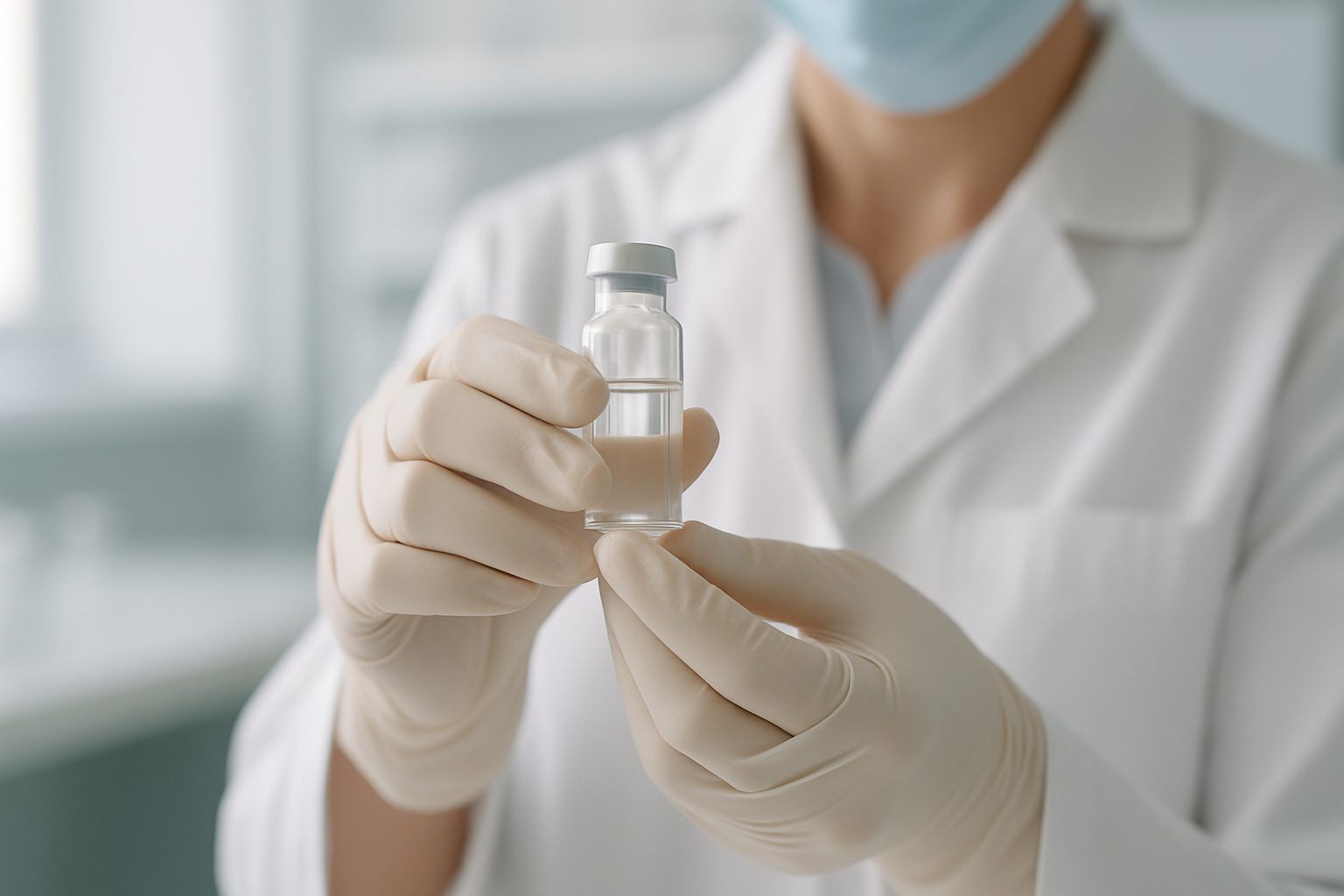
The flight itself is rarely the problem. Aircraft cabins are climate controlled and generally sit in a comfortable range for the entire journey, which is a more stable environment than most people’s kitchens. The temperature risk on travel days lives at the edges: the drive to the airport, waiting at the gate, a delayed aircraft sitting on a hot tarmac, and the journey from the destination airport to wherever you are staying.
So the practical answer is not about the flight. It is about keeping the medication with you, insulated, and out of vehicles at both ends.
Why carried medication is the weak point
Research that put temperature loggers alongside insulin carried by patients found that half of the logs from carried medication showed deviations outside the recommended range. Refrigerated storage at home was worse still, but the carried figure is the relevant one here, and it makes the point: the risk is not the sealed, climate-controlled part of the journey. It is everything around it.
That reframes the whole question. People worry about eight hours at altitude and give no thought to ninety minutes in a car park.
What to use instead of ice packs
An evaporative cooling wallet. The best single answer. These use a water-activated gel and cool by evaporation rather than by freezing, so there is nothing to freeze and nothing security will question. Soak it, and it stays cool for days, rechargeable with tap water anywhere including an airport bathroom.
An insulated medication pouch. Works on its own by slowing temperature change, and works better still with a cooling wallet inside it.
Your own body heat, avoided. Do not carry the medication in a pocket against your body. Bag, not pocket.
The center of your carry-on. In its carton, surrounded by clothing, away from the outside of the bag.
Cabin ice, carefully. Cabin crew will usually provide ice in a sealed bag or cup. Use it only with a towel or clothing as a barrier, never in direct contact, because freezing a peptide product is worse than warming it.
What never to do
Never check it. Cargo holds are not reliably temperature controlled, and checked bags get delayed and lost. This is the rule that matters most and the one most often broken because a carry-on is full.
Never let it touch ice or a frozen pack directly. Contact freezing is a real failure mode and it is invisible afterward.
Never leave it in a car at either end. A parked car is the single hottest place your medication will encounter on a travel day.
Never put it in a hotel freezer to cool it faster on arrival.
Consider this scenario: a patient carefully carries their pen in an insulated pouch through a ten-hour flight, arrives, and leaves the bag in the boot of an airport transfer car for a forty-minute drive in summer heat while sitting in the air-conditioned cabin. The flight was handled well. The transfer was the exposure.
The travel day, start to finish
- Take the medication out of the fridge as late as possible before leaving
- Put it in its carton, inside an insulated pouch or cooling wallet, inside your carry-on
- Keep the bag with you, not in a car boot, not at your feet in the sun by a terminal window
- Declare it at security if asked, and carry your pharmacy label
- Keep the bag in the cabin, under the seat or in an overhead bin, not against an exterior wall if you can help it
- On arrival, get it into refrigeration if your product requires it, or into a cool interior spot if it does not
- Check the appearance before your next injection
Our guide to GLP-1 medications and travel covers documentation, screening, and what to do if something goes wrong mid-trip.
Does it even need to be cold for the flight?
Possibly not, and this is worth establishing before you engineer a solution.
Branded tirzepatide products carry storage instructions that include a room temperature allowance under defined conditions. Compounded tirzepatide carries whatever storage instructions the preparing pharmacy specified, and those are frequently stricter, often assuming continuous refrigeration.
Call your pharmacy and ask specifically: how long can this product be out of refrigeration, and at what temperature. A ten-hour flight may sit comfortably inside that window, in which case an insulated pouch is sufficient and a cooling wallet is a comfort rather than a necessity.
Security and screening
Medically necessary items are generally permitted in carry-on baggage, including medication, needles, and gel packs, in quantities beyond the usual liquid limits. Declaring them at screening is straightforward and rarely takes long.
Carry the pharmacy label with your name on it, and consider a short letter from your provider for international travel. Neither is usually required and both make an awkward conversation shorter.
On arrival
Check the medication before your next injection: clear and colorless with no particles, container intact, no leaks. If anything looks wrong, do not inject and call the pharmacy.
Then sort out storage for the rest of the trip rather than leaving it to chance. Hotel refrigerators vary, so if you use one, keep the medication away from the cooling vent and the freezer compartment, in its carton, and ideally check the temperature. Our guide on storing compounded semaglutide or tirzepatide at home covers placement principles that apply to a hotel fridge just as well.
If the trip crosses your injection day
Do not skip it. Keep your usual weekday and inject at whatever local time is convenient, since clock hours have no practical effect on a once-weekly medication.
If something goes wrong and you do miss a dose, do not take two close together to catch up. Check your product’s guidance or call your pharmacy.
When to call
Call your pharmacy before you fly if you have compounded tirzepatide, if you cannot find your storage instructions, if the trip is long enough to need a refill, or if your destination is very hot.
Call after arrival if the medication was somewhere hot for an extended period, if the appearance changed, or if you suspect any contact freezing.
The short version
The cabin is the safe part. Carry it, insulate it, keep it out of cars at both ends, and never check it. An evaporative cooling wallet solves this for a few pounds and needs no freezer. And find out first whether your product needs cold at all for a journey that length.
If you want a pharmacy that will answer that question specifically, see whether TrimRx is a fit for you and explore tirzepatide treatment options.
This information is for educational purposes and is not medical advice. Consult with a healthcare provider before starting any medication. Individual results may vary.

Transforming Lives, One Step at a Time
Keep reading

Starting Tirzepatide While on the Pill: The First Four Weeks
You have your first box and you take an oral contraceptive. There is a labeled instruction that applies to you, and the mistake almost…
Marathon Training on Tirzepatide When You Can’t Fuel
You have a plan on the fridge and a medication that has made eating feel optional. Those two things are in genuine conflict, and…

Paying Cash for Tirzepatide? Don’t Stretch Your Supply
When every vial comes out of your own pocket, the arithmetic is hard to ignore. If a month’s supply costs what it costs, and…


