How to Travel With Ozempic Without Checking a Bag
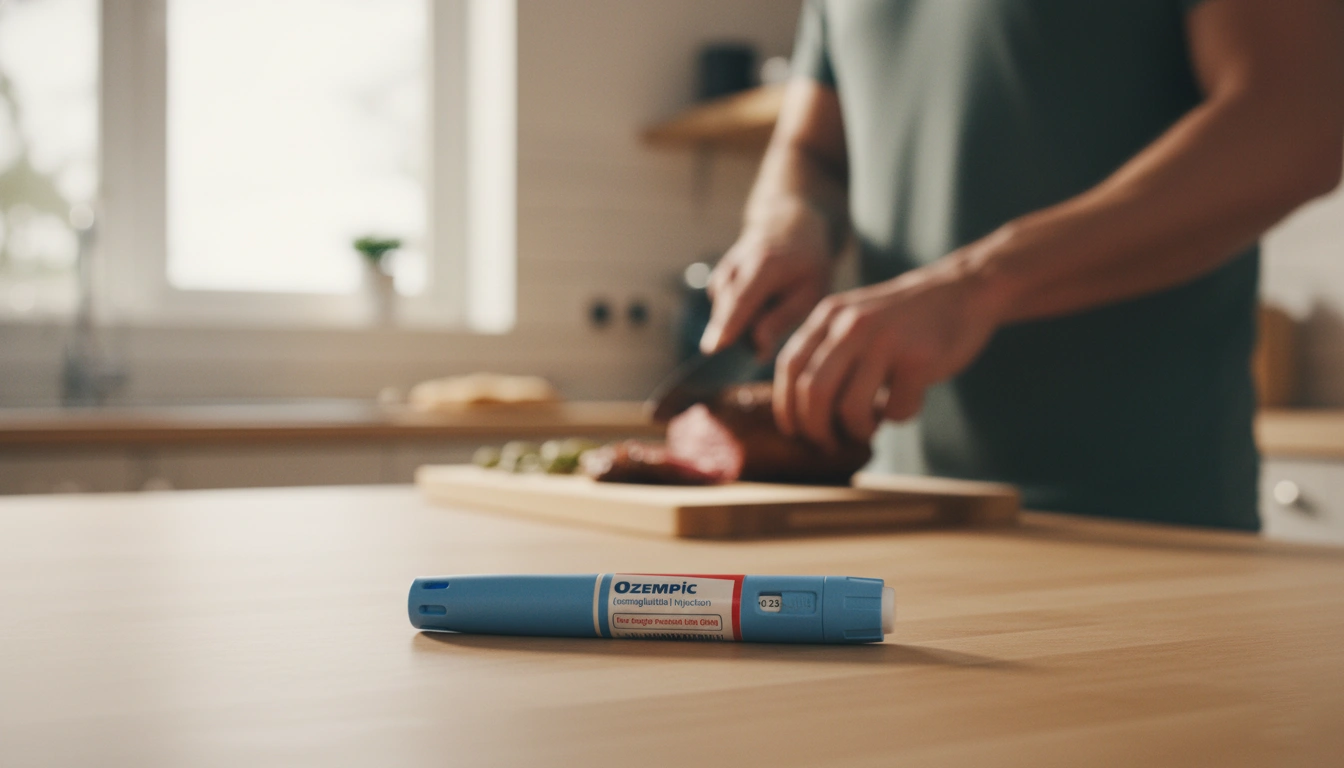
Carry-on is not a compromise here, it is the correct approach. Medication should never go in checked baggage regardless of how much space you have, because cargo holds are not reliably temperature controlled and checked bags get delayed, misrouted, and lost. Traveling carry-on only removes the temptation to split your supply and puts you in the better position by default.
The practical questions are what to bring, how it gets through screening, and whether it stays cold enough. All three are more manageable than people expect.
What to pack
Everything fits in a pouch roughly the size of a paperback:
- Your pen or pens, in their original carton with the pharmacy label attached
- More needles than doses, ideally double, since they weigh nothing and a bent needle abroad is a real problem
- A small travel sharps container
- Alcohol swabs if you use them
- An insulated pouch or evaporative cooling wallet
- A gel pack if you have one and can keep it cool
- Your pharmacy label or receipt, and for international travel a short letter from your provider
The original carton matters more than it looks. It carries your name and prescription details, protects from light, and buffers small temperature swings.
Getting through screening
Medications and medically necessary liquids are generally permitted in carry-on baggage in quantities beyond the usual liquid limits, and that includes injectable medication, needles, and cooling packs. You declare them at the checkpoint and they may be inspected separately.
A few things make this smoother:
Keep it all together in one pouch so you can hand over a single item rather than digging through a bag.
Keep the pharmacy label visible. A prescription label with your name matching your ID answers most questions before they are asked.
Declare it rather than waiting to be asked. “I have injectable medication and a cooling pack” takes three seconds.
Do not put it in a bin unsupervised if you can avoid it. Ask for a separate inspection if the queue allows.
International travel adds a layer, since destination countries have their own rules on bringing in prescription medication and needles. Check the destination’s requirements before you go, and carry a provider letter for anywhere that might ask.
The cold storage question
Research that placed temperature loggers alongside carried medication found deviations outside the recommended range in half of the logs from medication people were carrying with them. That is the useful data point for travel: the carrying is the weak link, not the destination.
Two things reduce that risk substantially. An insulated pouch or evaporative cooling wallet keeps the medication closer to a stable temperature than a bare carton. And keeping the bag out of parked cars and out of direct sun handles the extremes that actually cause damage.
Whether you need active cooling at all depends on your product. Branded semaglutide pens already in use carry a room temperature allowance under defined conditions, so a short trip may need nothing more than insulation. Unopened pens and compounded preparations are stricter. Call your pharmacy and ask specifically about time out of refrigeration for your product.
Our guide to GLP-1 medications and travel covers packing, documentation, and handling problems mid-trip.
If you get forced to gate-check
This is the situation carry-on-only travelers actually run into. The overhead bins fill, the gate agent starts tagging bags, and yours goes into the hold whether you planned it or not.
Take the medication pouch out before you hand the bag over. Every time, without exception. Keep it with you along with your phone and wallet.
Consider this scenario: a patient books carry-on only specifically to keep their medication with them, boards in the last group, is asked to gate-check their roller bag, and hands it over without thinking because the pouch is inside. The bag arrives two days later at a different airport. The plan was right and one thoughtless moment at the jet bridge undid it. Keeping the pouch in a personal item rather than the roller bag prevents this entirely.
Put the medication in the bag that goes under the seat, not the one that goes in the bin.
Space and weight
A month of pens plus needles occupies very little room. If space is genuinely tight, the things to cut are the bulky cooler and the spare cardboard, not the medication or the spare needles.
An evaporative cooling wallet is the highest value item per gram here. It packs flat, needs no freezer, recharges with tap water in any bathroom, and removes the need for a cooler entirely on most trips.
What not to do
Never check it. Not in a locked bag, not with a tracker, not because the pouch is heavy.
Never leave it in a rental car, including in the boot and including for a short stop.
Never leave it in a hotel room in direct sun on a windowsill or balcony table.
Never let it touch ice or a frozen pack directly.
Never split your supply between carry-on and checked baggage as a hedge. Half your supply in the hold is half your supply at risk.
Keeping your schedule
Do not skip a dose because a travel day is complicated. Keep your usual weekday and inject at whatever local time works, since clock hours have no practical effect on a once-weekly medication.
If a dose does get missed, do not take two close together to catch up. Check your product’s guidance or call your pharmacy.
If you are new to travel with this medication and still building your routine generally, our guide to the Ozempic starting dose covers what else the early months typically involve.
On arrival and coming home
Get the medication into appropriate storage promptly. Check the appearance before your next injection: clear and colorless, no particles, container intact, no leaks.
If something looks wrong, or if the medication spent an extended period somewhere hot, do not inject and call the pharmacy. Refrigerating it after the fact does not reverse a temperature excursion.
When to call
Call your pharmacy before you travel if you need a refill timed around the trip, if you have compounded medication and need its storage tolerances, or if you are traveling internationally and want documentation.
Call after the trip if the medication changed appearance, if it was somewhere hot for hours, or if you suspect it froze.
The short version
Carry-on only is the right way to do this. One pouch, in the bag that goes under the seat, with the pharmacy label and more needles than doses. Declare it at screening. Take it out before any gate-check. Keep it out of cars and out of sun at both ends.
If you want a pharmacy and provider who can time refills around your travel, see whether TrimRx is a fit for you and explore semaglutide treatment options.
This information is for educational purposes and is not medical advice. Consult with a healthcare provider before starting any medication. Individual results may vary.

Transforming Lives, One Step at a Time
Keep reading
Ozempic Changed How You and Your Partner Spend Time
Friday night was a place you both liked and a bottle of something. Sunday was a long breakfast. Holidays were planned around restaurants. That…

Partner Says You’re Not Eating Enough on Ozempic?
It has become a thing at dinner. They watch your plate. You feel watched. Something gets said, or pointedly not said, and the meal…
Weekly Client Dinners on Ozempic: A Plan for Recurring Work Meals
Managing one difficult dinner is a matter of ordering well. Managing four a week indefinitely is a different problem, because anything that relies on…


