Why Does My Compounded Tirzepatide Dose Look Smaller Than Last Month?
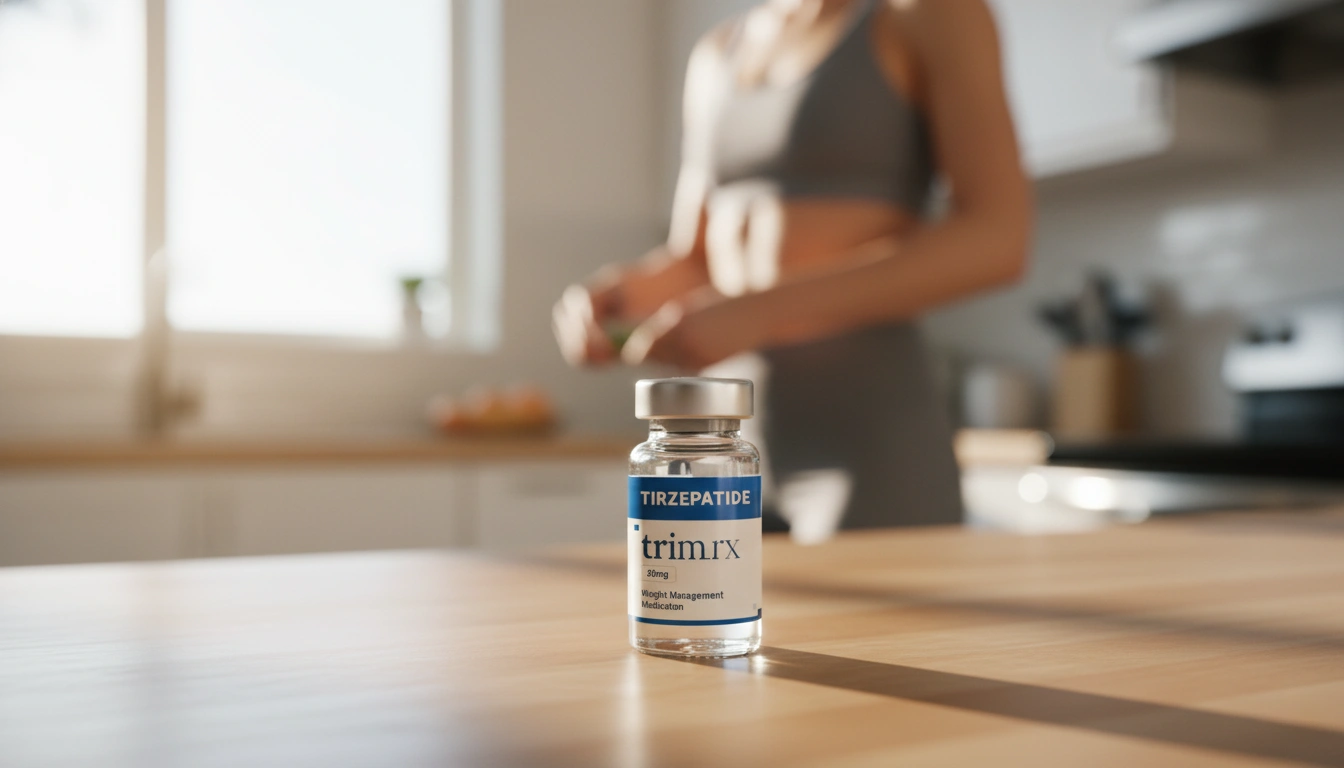
Stop and check the concentration on the label before you inject. The most common explanation is that the pharmacy prepared this fill at a higher concentration, which means the same dose in milligrams now occupies less liquid. That is not an error and it is not a shortchange. But it is also exactly the situation where a dosing mistake happens, because it requires you to change the volume you draw.
If the concentration changed and nobody told you in writing, do not inject. Call the pharmacy.
Why the volume can change without your dose changing
Your dose is a quantity of drug, measured in milligrams. The liquid is just the vehicle carrying it.
Concentration, written as milligrams per milliliter, describes how much drug is dissolved in each milliliter. At a higher concentration, less liquid delivers the same milligram dose. At a lower concentration, more does.
So a smaller-looking dose is consistent with three quite different situations, and you cannot tell them apart by looking:
The concentration went up and your instruction changed accordingly. Correct, and your dose is unchanged.
The concentration went up and you are still drawing the old volume. You are now taking more than prescribed.
The concentration is the same and you are drawing less than before. You are now taking less than prescribed.
The label distinguishes these in about ten seconds. Nothing else does.
The check, before you inject
- Read the concentration on the current vial
- Read the concentration on your previous vial, or your previous paperwork
- Read the written instruction for what volume equals your dose from this vial
- Confirm your prescribed dose in milligrams has not changed
- If any of these do not line up, call the pharmacy before drawing anything
That last step is the one people skip because the vial is in their hand and the dose is due. A missed day is a manageable problem. A dosing error is not.
Why this matters more with vials than pens
A pen speaks only in milligrams and delivers a set dose mechanically. There is no volume to measure and no conversion to get wrong.
A vial hands the measurement to you. A case series in the Journal of the American Pharmacists Association documented adverse drug events from incorrect semaglutide administration, including two tenfold dosing errors, and noted that vials lack the safety features built into prefilled pens, that they allow for large overdoses, and that using syringes not intended for the medication contributes to confusion between milliliters, units, and milligrams.
The same reasoning applies to compounded tirzepatide. Three units of measurement in play, none interchangeable, and a change in concentration is precisely when people mix them up.
Consider this scenario: a patient has been drawing to a familiar mark on their syringe for four months. A new fill arrives at a higher concentration with a new written instruction in the box, which they do not read because they already know what they are doing. They draw to the old mark. They have now taken a meaningfully larger dose than prescribed, and the first sign will be several unpleasant days that they will probably attribute to a bad week.
Other explanations worth ruling out
Your dose actually changed. A step up or down changes the volume. Check whether a recent appointment altered your prescription.
A different pharmacy. Concentrations vary between compounding pharmacies, so a switch almost guarantees a different volume.
A different syringe. If the barrel size or markings changed, the same volume looks different. Confirm what your current syringe’s markings represent.
Ordinary variation in how it looks. A small volume in a syringe is genuinely hard to eyeball, and lighting, angle, and the syringe’s dead space all affect the impression.
That last one is worth naming. If the label and the written instruction both match your previous fill, and you drew to the correct marking, then it looks different rather than being different.
What not to do
Do not add a little extra to make it look right.
Do not draw from two vials to reach a volume that looks familiar.
Do not convert between milligrams and syringe units yourself.
Do not apply the previous vial’s instruction to a new fill.
Do not inject and then call. Call first.
Questions for the pharmacy
- What is the concentration of this fill, and was it different last time?
- Exactly what volume, or which syringe marking, equals my prescribed dose from this vial?
- Has my prescribed dose in milligrams changed?
- Is this the same syringe I had before, and do its markings mean the same thing?
- Can you send that instruction in writing?
A pharmacy that changes a concentration without clearly communicating the new volume is not handling this well, and it is worth noting. Our guide on verifying a compounding pharmacy is safe and legitimate covers what good practice looks like around labeling and instructions.
If you already injected
Do not take a second dose to correct it in either direction.
If you think you took more than prescribed, call your provider the same day and be alert for pronounced nausea, vomiting, and abdominal pain over the following days, since effects from a larger than intended dose can be delayed and can persist. If you think you took less, note it, mention it, and take your next scheduled dose as normal unless told otherwise.
Preventing the repeat
Read the label on every fill, not just the first.
Keep the previous vial’s label or a photograph so you have something to compare against.
Keep the written instruction with the vial rather than in the box you recycle.
Ask to be told in advance if a concentration is changing.
If you have been on compounded tirzepatide for a while and are unclear how it compares with branded presentations in terms of concentration and dosing, our breakdown of compounded tirzepatide versus brand-name Mounjaro covers the differences, and our guide on when to increase your tirzepatide dose covers what a genuine dose change involves.
The short version
A smaller-looking dose usually means a higher concentration, which is normal and requires a new volume. It can also mean an error. The label tells you which in ten seconds, so read it before you draw, and call rather than guess if anything does not line up.
If you want a pharmacy that flags a concentration change before it reaches your door, TrimRx coordinates prescription, pharmacy, and provider access together.
This information is for educational purposes and is not medical advice. Consult with a healthcare provider before starting any medication. Individual results may vary.

Transforming Lives, One Step at a Time
Keep reading

Starting Tirzepatide While on the Pill: The First Four Weeks
You have your first box and you take an oral contraceptive. There is a labeled instruction that applies to you, and the mistake almost…

Marathon Training on Tirzepatide When You Can’t Fuel
You have a plan on the fridge and a medication that has made eating feel optional. Those two things are in genuine conflict, and…

Paying Cash for Tirzepatide? Don’t Stretch Your Supply
When every vial comes out of your own pocket, the arithmetic is hard to ignore. If a month’s supply costs what it costs, and…


