What to Say When Someone Asks If You’re on Ozempic
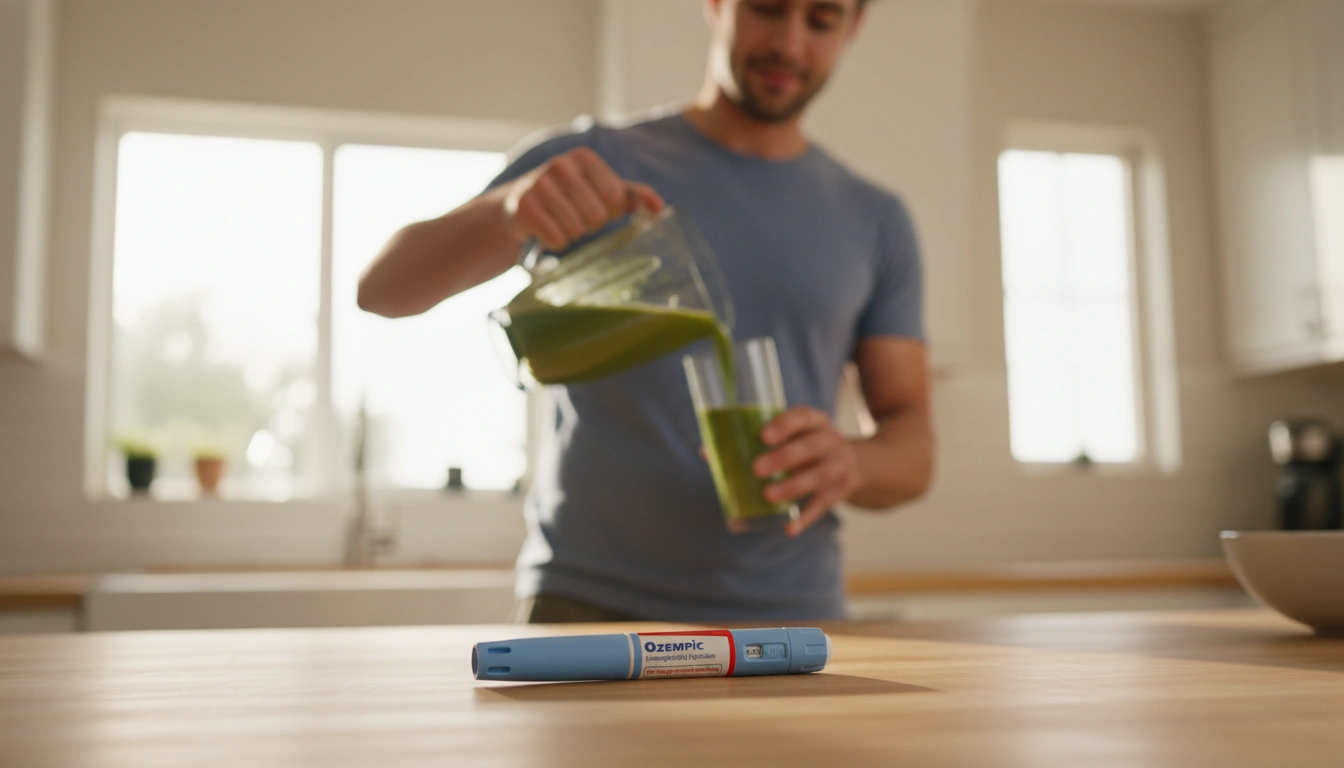
You have three options, none of them obligatory, and it is worth knowing which one you want before you are asked rather than deciding under pressure.
Decline. “I’d rather not talk about my health, but thanks for asking.”
Deflect. “I’ve been working on a few things with my doctor.”
Disclose. “Yes, I am.”
All three are legitimate. The one thing worth avoiding is answering in a way you will regret, and the pressure of a direct question makes that easy to do.
Why deciding in advance matters
Disclosure is not reversible. You can always tell more people later; you cannot tell fewer.
A direct question creates a moment of pressure where saying yes feels easier than deflecting, particularly if the person asking has been kind about it. People frequently disclose in that moment and then find the information travelling further than they intended.
Consider this scenario: a patient is asked directly at a family gathering, says yes because a flat denial felt dishonest and deflecting felt rude, and by the following month three relatives have opinions about it, one has sent an article about side effects, and another has asked whether it is cheating. Nothing about the honest answer was wrong. It simply had consequences that could not be taken back.
Having a line ready removes that pressure.
Lines for each option
Declining:
“I’d rather not get into my medical stuff, but thank you.”
“That’s a bit personal, but I appreciate the interest.”
“I don’t really discuss my health.”
Deflecting:
“I’ve made some changes with my doctor.”
“A few different things, nothing exciting.”
“I’m working on my health generally.”
Disclosing:
“Yes, I am. It’s been useful.”
“Yes, my doctor and I decided it was the right approach.”
Notice the disclosing lines are also short. Saying yes does not commit you to a detailed conversation about doses, cost, or side effects, and a brief answer signals that.
Why the question is asked so often
These medications are widely discussed, which means people ask about them in situations where they would not ask about other prescriptions. Nobody asks whether you are on blood pressure medication.
That difference has a reason, and it is worth naming. A joint international consensus statement published in Nature Medicine on ending the stigma of obesity noted that weight bias is rooted in the misconception that body weight is easily controlled through diet and physical activity, and that weight stigma causes real physical and psychological harm.
The implication behind the question is sometimes that weight should have been managed another way. That is a misconception rather than a reasonable position, and it is not something you have to argue with in the moment.
If the question carries judgment
Some people ask neutrally. Others do not.
You do not have to defend your treatment. If you want a line for the loaded version:
“It’s a medication my doctor prescribed.”
“It’s a medical decision I made with a professional.”
“I’m not really looking for opinions on it.”
That last one is direct and effective. You are allowed to close a topic.
Our guide on how GLP-1 medications affect mental health covers the emotional side of treatment, which judgmental comments can genuinely affect.
If they are asking because they are considering it
Sometimes the question is not curiosity but interest in treatment for themselves, and that is worth recognizing because it changes what is useful.
The helpful response is pointing them toward their own consultation rather than describing your regimen. Doses, responses, and suitability are individual, and your experience is not a template.
Never share your medication. Prescriptions are specific to a person and a point in their titration, and someone starting at a maintenance dose can have a genuinely bad time. Our guide on how online GLP-1 prescriptions work covers the process someone would go through to get their own.
Deciding who to tell
Worth thinking about deliberately rather than case by case.
People who benefit from knowing: anyone providing your medical care, and possibly a partner or someone who would need to know in an emergency.
People it is often easier to tell: those you eat with regularly, where repeated deflection becomes tiring.
People it is often easier not to tell: colleagues, acquaintances, and anyone likely to offer opinions you did not want.
Our guide on how to talk to friends and family about taking Ozempic covers making that decision and having the conversation.
The one place you should always disclose
Medical settings, without exception.
Surgery, sedation, dental procedures, emergency care, and anyone prescribing you anything else all need to know. Our guide on how GLP-1 medications slow digestion covers why it matters clinically.
Privacy at a dinner party is your choice. Privacy from an anesthetist is not.
The short version
Three options, all legitimate: decline, deflect, or disclose. Decide which you want before you are asked, because a direct question creates pressure and disclosure cannot be undone. Keep whichever answer you choose short. You do not have to defend a medical decision to anyone, and the implied judgment behind the question is a misconception rather than a position worth arguing with.
If you want a provider who treats this as part of your care rather than an afterthought, TrimRx includes ongoing clinical access alongside treatment.
This information is for educational purposes and is not medical advice. Consult with a healthcare provider before starting any medication. Individual results may vary.

Transforming Lives, One Step at a Time
Keep reading

Playing in a Tennis League on Ozempic
Joining a tennis league is one of the best things you can do for fitness, friendship, and a bit of friendly competition. Many adults…

Sledding and Ice Skating With the Grandkids on Ozempic
Winter break with grandchildren often means sledding hills, outdoor rinks, and snowball fights in the yard. For many grandparents who have lost weight on…

Hosting a Quinceañera on Ozempic
A quinceañera is one of the biggest days in a family’s life. There is a Mass or blessing, photos, a grand entrance, the court’s…


