Why Does the Scale Jump During Your Period on Semaglutide?
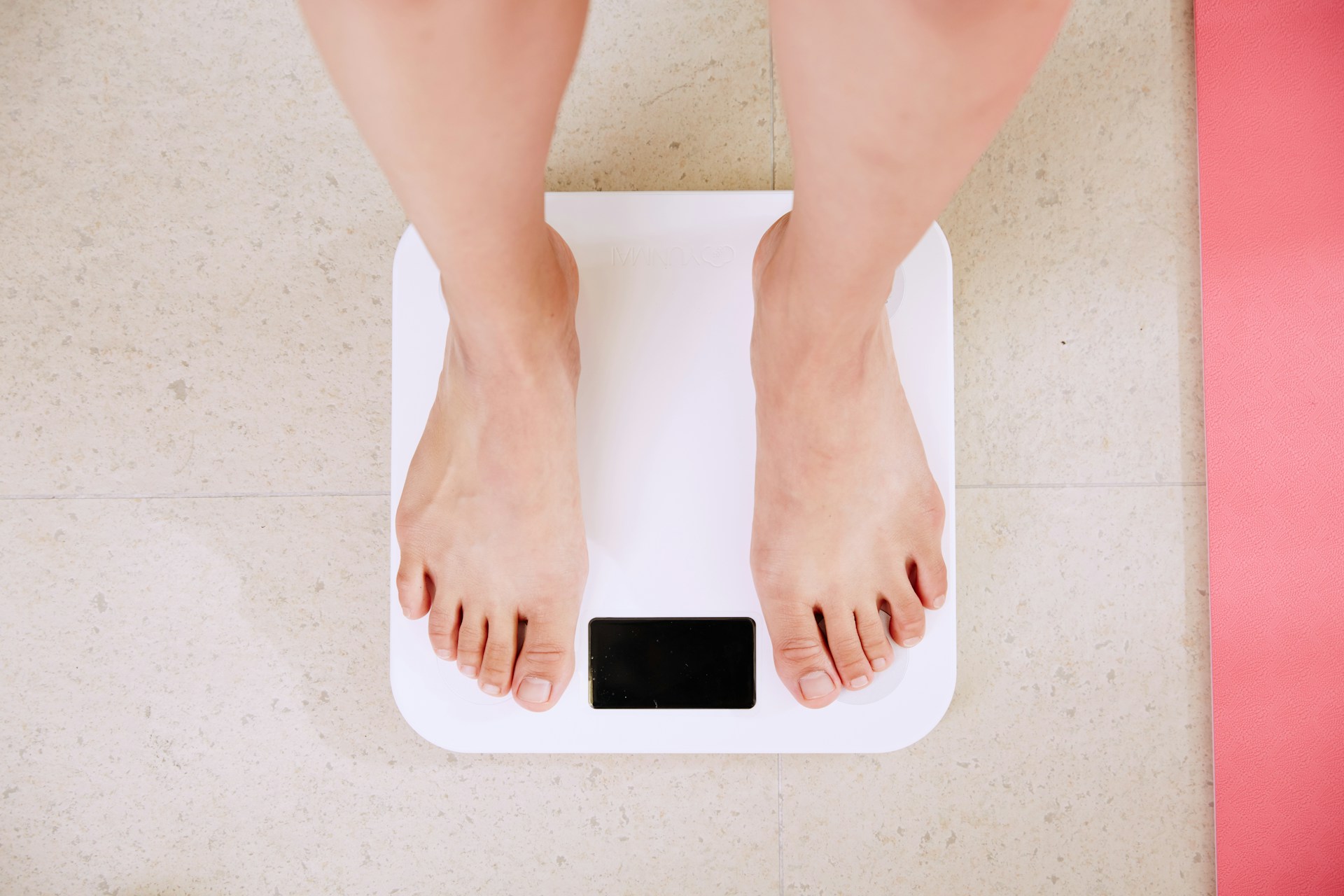
Because of fluid, and it happens to a lot of people regardless of what medication they take. Hormonal fluctuations across the menstrual cycle affect how much water your body holds, and the resulting swing is commonly several pounds.
Fat does not appear and disappear on a monthly schedule. Water does.
On this medication there is a second layer, because slowed gastric emptying means more food and fluid sitting in your digestive tract, and constipation is common and adds to it. Put a cyclical fluid rise on top of that and the scale becomes genuinely uninformative for several days each month.
What is actually moving
Hormonal fluid retention, which for many people peaks in the premenstrual days and resolves once the period is underway or shortly after.
Digestive contents, which vary with what and when you have eaten and with how recently you have had a bowel movement.
Sodium and carbohydrate intake, which frequently change in that window if premenstrual appetite is higher.
Constipation, which is common on this medication and often worse premenstrually.
Consider this scenario: a patient sees a three-pound rise over four days, panics, and cuts her food sharply for a week. The weight resolves on its own by day six as it always does, and she has spent a week underfed for no reason. The restriction did nothing to the fluid, because the fluid was never responding to food.
Track around it, not through it
The practical fix is comparison points rather than more data.
Compare the same point in consecutive cycles. Day one to day one, or premenstrual week to premenstrual week. This removes the cyclical component entirely.
Or weigh weekly and expect one unhelpful week a month, and simply discount it.
Or stop weighing during that window and resume afterward. Losing four data points a month costs you nothing on a measurement this noisy.
Look at the trend across months, not weeks. Progress on this medication is measured over that timescale anyway.
Our guide on tracking your progress on semaglutide or tirzepatide covers what is worth recording.
Use measurements instead
Measurements are far less affected by fluid than weight is, though not entirely immune.
Waist, hips, and chest taken every two to four weeks, in the same places under the same tension, give you a cleaner signal. So do photographs monthly, and how clothes fit.
If you take measurements, take them at a consistent point in your cycle for the same reason you would compare weight that way.
Do not restrict in response
This is the response worth naming, because it is common and it costs you.
Cutting food in response to cyclical fluid does nothing to the fluid and adds real problems. Under-eating is already common on this medication because appetite suppression removes the prompt to eat, and it produces fatigue, feeling cold, hair shedding, and muscle loss.
It is also worse timing than usual. Premenstrual days are frequently when appetite is genuinely higher, so restricting into them tends to produce a restriction and overeating cycle rather than smoother results.
Our guide on portion sizes on semaglutide covers how your nutritional needs change and why adequate intake matters throughout.
What can reduce the swing
Modestly, and none of these eliminate it.
Consistent sodium intake rather than large swings.
Adequate hydration, which counterintuitively helps rather than worsens retention. Thirst is blunted on this medication, so this needs to be deliberate.
Addressing constipation, which is both uncomfortable and a genuine contributor. Fluid on a schedule, fiber increased gradually, and regular movement.
Regular activity, which helps fluid movement.
Consistent eating patterns, rather than restricting and then overeating.
How large a swing is ordinary
People find this reassuring, so it is worth stating.
A cyclical rise of a few pounds is common and unremarkable. Some people see very little; others see more. What matters is whether it resolves, not how large it was at its peak.
The test is simple: does it come back down within a week or so, and does the same thing happen next cycle? A rise that resolves on a predictable schedule is fluid. A rise that does not resolve, and accumulates month over month, is a different question.
That is also why one cycle of data tells you nothing. Two or three cycles show you your own pattern, and once you know it, the monthly rise stops being alarming and becomes something you can simply expect.
When a weight change is not cyclical
Contact your provider if:
- Weight is climbing steadily across months rather than fluctuating within them
- Swelling in your legs, ankles, or feet, particularly with breathlessness
- The swing is much larger than a few pounds
- Weight and measurements have both been static for a sustained period
- Premenstrual symptoms are severe enough to affect your daily life
- Your cycles have become irregular, or you have bleeding between periods
That second one is a different situation from a monthly rise and warrants prompt attention rather than a note in a tracking app.
The hormonal picture generally
Weight loss itself affects hormones, and cycles frequently change during treatment, often becoming more regular. Our guide on GLP-1 medications and hormones covers what changes and what to expect.
If your cycle has changed, the timing of your fluid swing may have shifted with it, which is worth knowing before you conclude your pattern has stopped making sense.
The short version
Cyclical fluid retention, amplified on this medication by slowed transit and constipation. Compare the same point in consecutive cycles, or accept one uninformative week a month, or simply do not weigh during it. Do not cut your food in response to water, particularly in the days when your appetite is genuinely higher.
If you want a provider who reads trends across months rather than reacting to a monthly swing, see whether TrimRx is a fit for you.
This information is for educational purposes and is not medical advice. Consult with a healthcare provider before starting any medication. Individual results may vary.

Transforming Lives, One Step at a Time
Keep reading

What to Do When a Friend Asks You to Get Them Semaglutide
The answer is no, and it is worth being clear rather than vague, because a soft no invites a second ask. “I can’t share…

Does Semaglutide Change PMS Cravings?
Many people report that the pull is weaker, and that the specific foods they used to crave premenstrually have less grip than they did….

Should You Time Your Semaglutide Injection Around Your Cycle?
Not in the way people usually mean. You should not adjust your dose, skip injections, or shift your interval to match phases of your…


