Can You Use HSA for Compounded Semaglutide?

Introduction
Managing the costs of modern weight loss treatments often feels just as overwhelming as the journey itself. If you have been researching GLP-1 medications, you likely know they are effective but can be a significant investment in your health. If you want to see whether this path makes sense for you, you can take the free assessment quiz. Many people who use a Health Savings Account (HSA) or a Flexible Spending Account (FSA) wonder if these pre-tax dollars can be applied to newer options like compounded medications. At TrimRx, we understand that navigating the intersection of clinical care and financial planning is essential for sustainable success. This post covers the eligibility rules for using your HSA or FSA for compounded semaglutide, the documentation you might need, and how to maximize your benefits. Using pre-tax funds can make personalized weight management more accessible while ensuring you stay compliant with IRS guidelines.
Understanding the Basics of HSA and FSA Eligibility
Health Savings Accounts and Flexible Spending Accounts are powerful financial tools designed to help Americans pay for “qualified medical expenses.” These accounts allow you to set aside money before taxes are taken out of your paycheck, effectively giving you a discount on your healthcare costs based on your tax bracket.
The Internal Revenue Service (IRS) defines what counts as a qualified medical expense under Section 213(d) of the tax code. Generally, any expense for the “diagnosis, cure, mitigation, treatment, or prevention of disease” is eligible. Because obesity and its related complications—such as high blood pressure or insulin resistance—are recognized medical conditions, treatments prescribed by a licensed provider often qualify for these funds.
Quick Answer: Yes, you can typically use HSA or FSA funds for compounded semaglutide. Because it is a prescription medication intended to treat a diagnosed medical condition, it generally qualifies as a sanctioned medical expense under IRS guidelines.
What is Compounded Semaglutide?
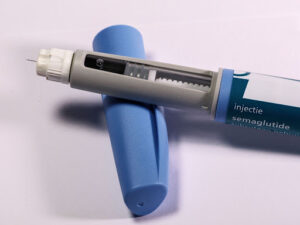
Before diving deeper into the financial logistics, it is important to understand what you are paying for. Semaglutide belongs to a class of medications known as GLP-1 receptor agonists. For a simple explanation of the hormone pathway behind these medications, see how GLP-1 actually works for weight loss. GLP-1 stands for glucagon-like peptide-1, which is a natural hormone your body produces to regulate appetite and blood sugar. These medications mimic that hormone, helping you feel fuller for longer and improving how your body processes energy.
Compounded semaglutide is a version of the medication prepared by a specialized pharmacy to meet the specific needs of an individual patient. While branded medications like Ozempic®, Wegovy®, Mounjaro®, and Zepbound® are FDA-approved for specific uses, compounded medications are not FDA-approved. Instead, they are prepared and shipped by FDA-registered, inspected compounding pharmacies. These pharmacies follow strict state and federal regulations to ensure the quality and consistency of the medication.
Compounding is often used when a patient needs a specific dosage that is not commercially available or when there are national shortages of branded products. Because these are still prescription-strength medications used for medical purposes, they fall under the umbrella of eligible HSA expenses.
Why Compounded Medications Qualify for HSA Use
A common misconception is that a medication must be a major brand name to be eligible for HSA or FSA spending. However, the IRS focuses on the nature of the treatment and the existence of a valid prescription rather than the brand on the label.
To use your HSA or FSA funds for compounded semaglutide, three primary criteria must usually be met:
- The medication must be prescribed by a licensed healthcare provider.
- The medication must be used to treat a specific medical condition (such as obesity, PCOS, or metabolic syndrome).
- The medication must be obtained through a legitimate pharmacy.
As long as your treatment is part of a supervised medical program, the fact that it is “compounded” does not disqualify it. This allows patients to access personalized treatment pathways while still utilizing their hard-earned pre-tax savings.
The Role of Medical Necessity
While many HSA providers allow you to use your debit card at a pharmacy without much friction, some plan administrators require extra proof that the medication is “medically necessary.” This is especially common when medications are used for weight management, which some insurance companies still categorize—incorrectly—as a “lifestyle” or “cosmetic” concern.
A Letter of Medical Necessity (LMN) is a document written by your healthcare provider. It explains your diagnosis, your health history, and why this specific treatment is required for your well-being. If you want a deeper breakdown of the documentation side, our guide on whether your HSA can pay for weight loss injections walks through the same decision points. If you are using our platform, the licensed providers we partner with can often assist in providing the necessary documentation if your plan administrator requests it.
Common qualifying conditions for semaglutide include:
- Obesity: Typically defined as a Body Mass Index (BMI) of 30 or higher.
- Overweight with Comorbidities: A BMI of 27 or higher along with a weight-related health issue like high cholesterol or sleep apnea.
- Insulin Resistance: A condition where your body does not respond properly to insulin, often a precursor to type 2 diabetes.
- Metabolic Syndrome: A cluster of conditions that increase the risk of heart disease and stroke.
Key Takeaway: Documentation is your best friend when using pre-tax funds. Always keep a copy of your prescription, your itemized receipts, and your Letter of Medical Necessity to ensure your HSA or FSA claims are never questioned.
How to Pay for Your Program Using HSA/FSA
There are generally two ways to use your pre-tax funds for your weight loss journey. The method you choose depends on your specific plan’s rules and the payment processing capabilities of the platform you are using.
Using an HSA/FSA Debit Card
Many people receive a dedicated debit card linked directly to their HSA or FSA account. You can often use this card at the time of checkout. When you sign up for a program, you simply enter this card information as your primary payment method.
Note: Sometimes these cards are declined at checkout not because the expense is ineligible, but because the merchant category code (MCC) of the provider isn’t recognized by your bank. If this happens, don’t worry—you can still use the second method.
The Reimbursement Process
If you don’t have a card or if your card is declined, you can pay for your treatment using a standard credit or debit card and then submit a claim for reimbursement.
- Pay for the service: Complete your purchase using your personal funds.
- Download your receipt: Ensure the receipt shows the date, the provider’s name, and the fact that it was for a medical consultation or prescription.
- Submit the claim: Log into your HSA or FSA portal and upload the receipt.
- Receive funds: Your plan administrator will transfer the money from your HSA/FSA directly into your personal bank account.
Navigating the TrimRx Onboarding Process
At TrimRx, we aim to make the transition into a personalized weight loss program as smooth as possible. We focus on a telehealth-first model, which means you can handle everything from your initial assessment to your ongoing check-ins from the comfort of your home.
The first step in our process is a free assessment quiz. This quiz helps the licensed healthcare providers we work with understand your medical history, your goals, and your current health status. If you are a candidate for GLP-1 medications, the provider will issue a prescription for compounded semaglutide or another appropriate medication. Because this process involves a clinical diagnosis and a formal prescription, the costs associated with the program are typically eligible for HSA or FSA reimbursement.
These programs typically cover the doctor consultations, the medication itself, and shipping from the pharmacy. That straightforward structure makes budgeting easier for many patients.
Comparing HSA vs. FSA for Weight Loss
While both accounts offer tax advantages, they have different rules that might affect how you plan your treatment.
| Feature | HSA (Health Savings Account) | FSA (Flexible Spending Account) |
|---|---|---|
| Eligibility | Requires a High Deductible Health Plan (HDHP). | Available through most employers regardless of plan. |
| Ownership | You own the account; it stays with you if you change jobs. | The employer owns the account; you may lose funds if you leave. |
| Rollover | Funds roll over indefinitely; it acts as a long-term savings tool. | “Use it or lose it” rules; most funds expire at year-end. |
| Spending | Can be used for any qualified medical expense at any time. | Usually requires spending by December 31st (or a short grace period). |
If you have an FSA with a balance that is set to expire at the end of the year, starting a weight loss program is a productive way to “spend down” those funds on a service that will provide long-term health benefits.
The Scientific Approach to Weight Loss
It is helpful to remember why you are making this investment. Weight loss is not just about willpower; it is about biology. For many people, the body’s natural hunger signals are out of balance. GLP-1 medications work by targeting the areas of the brain that regulate appetite.
When you use compounded semaglutide as part of a personalized program, you are addressing the underlying metabolic factors that make losing weight so difficult. By combining this medication with healthy lifestyle choices, many patients find they can achieve a level of success that was previously out of reach. If you want a practical nutrition companion to that approach, see the best foods for weight loss.
Because this is a medical intervention that changes your body’s chemistry for the better, the IRS views it as a valid healthcare expense. This is a critical distinction that separates medical weight loss from generic “diet plans” or gym memberships, which are often not HSA-eligible unless specifically prescribed to treat a disease like hypertension.
Frequently Asked Questions About HSA and Compounded Meds
Navigating insurance and tax-advantaged accounts can be confusing. Here are some of the most common questions we hear regarding the use of pre-tax funds for weight management treatments.
Do I need a special prescription to use my HSA?
You do not need a “special” prescription, but you do need a valid one from a licensed healthcare provider. The prescription should be in your name and clearly indicate the medication being used. Most HSA administrators will accept the standard prescription confirmation provided by your pharmacy or telehealth platform as proof of eligibility.
What if my HSA card is declined at checkout?
HSA cards are often restricted by “Merchant Category Codes.” If a telehealth platform is not coded as a “pharmacy” or “medical clinic” in the bank’s system, the card might decline automatically. If this happens, you can simply pay with a personal card and submit the receipt to your HSA provider for a manual reimbursement.
Can I use HSA funds for supplements as well?
Generally, supplements like our GLP-1 Daily Support supplement are only HSA-eligible if a doctor provides a Letter of Medical Necessity stating they are being used to treat a specific deficiency or medical condition.
If you are looking for energy support during weight loss, the Weight Loss Boost supplement may fit that role, but the IRS usually considers vitamins and supplements as general health expenses without an LMN.
Is compounded semaglutide safe if it isn’t FDA-approved?
While the specific “compound” is not FDA-approved, the ingredients used and the pharmacies that prepare them are strictly regulated. Compounding pharmacies must be licensed by their state boards and often register with the FDA as outsourcing facilities. These pharmacies follow high standards to ensure the medication is safe, effective, and sterile for patient use. For a broader look at tolerability, semaglutide side effects and management tips is a helpful companion.
Maximizing Your Savings and Results
Investing in your health is one of the most important decisions you can make. By using your HSA or FSA for compounded semaglutide, you are taking advantage of a system designed to make healthcare more affordable. At TrimRx, we are committed to helping you navigate this journey with transparency and empathy.
Our mission is to bridge the gap between clinical expertise and everyday life. We provide a platform that connects you with the medical supervision and high-quality medications you need, all while fitting into your budget and schedule. Whether you are just starting to look into GLP-1 medications or you are looking for a more personalized, telehealth-driven approach, we are here to support you. If you want a closer look at the intake-to-treatment flow, how to order GLP-1 medications for effective weight loss is a useful next read.
Bottom line: Using your HSA or FSA for a medically supervised weight loss program is a smart financial move that supports your long-term wellness goals. By securing a prescription and maintaining proper documentation, you can confidently use your pre-tax dollars to fund your transformation.
Next Steps for Your Journey
If you are ready to see if you qualify for a personalized program, the first step is simple. You can complete our free online assessment to provide your health history and goals. From there, you will be connected with a provider who can determine if compounded semaglutide or another treatment is the right path for you.
Remember, weight loss is a marathon, not a sprint. Having the right financial and clinical tools in place ensures you can stay the course and achieve the results you deserve.
FAQ
Can I use my HSA for weight loss medication if I am not diabetic?
Yes, HSA funds can be used for weight loss medications as long as they are prescribed to treat a diagnosed medical condition like obesity. The IRS considers the treatment of obesity to be a valid medical expense, regardless of whether you have type 2 diabetes. You should ensure your provider documents your BMI or other weight-related health conditions.
Does an FSA cover the cost of the telehealth consultation?
Yes, most Flexible Spending Accounts cover the cost of medical consultations, including those conducted via telehealth. Since the consultation is a necessary step to receive a prescription and medical supervision, it is considered a qualified medical expense. Always keep your itemized receipt that shows the service provided.
What documentation do I need to save for the IRS?
You should keep your prescription, the itemized receipt from the pharmacy or platform, and a Letter of Medical Necessity if your plan requires one. It is also wise to keep a record of your health progress, such as weight logs or lab results, to show the medication was used for an ongoing medical condition. Most people store these digitally for easy access during tax season.
Can I use my HSA to buy semaglutide for a family member?
You can use your HSA funds to pay for the qualified medical expenses of your spouse or any dependents you claim on your tax return. Even if they are not covered by your specific health insurance plan, their medical expenses remain eligible for your HSA funds. The medication must still be prescribed to that specific family member by a licensed healthcare provider.
Disclaimer: This content is for informational purposes only and does not constitute medical advice. It is not intended to diagnose, treat, cure, or prevent any disease or condition. Individual results may vary. Always consult a qualified healthcare professional before starting any weight loss program or medication.

Transforming Lives, One Step at a Time
Keep reading
Semaglutide vs Tirzepatide: Comparing Weight Loss, Blood Sugar, and Side Effects
Semaglutide and Tirzepatide are one of the most common comparisons in medical weight loss. The two medications share a clear family resemblance. Both are…

How Much Weight Can You Lose on Semaglutide?
How much weight can you lose on semaglutide? The answer varies depending on your starting weight, dosage, treatment duration, and individual response to the…

Hair Shedding Months Into Semaglutide
It shows up in the shower drain first, then on the pillow, then in the brush. By the time most people search this, they…


