How Long Does Compounded Tirzepatide Last in the Fridge?
Introduction
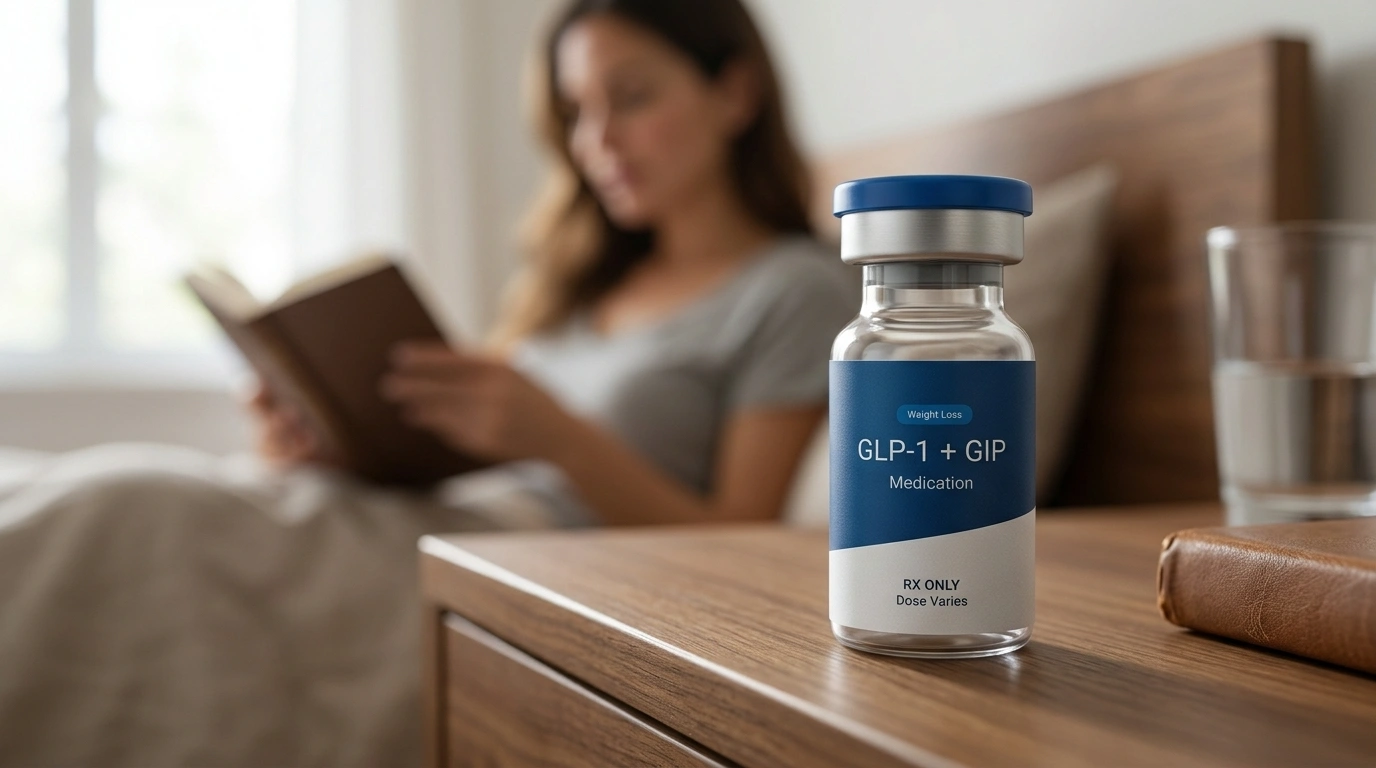
Finding a rhythm with your weight loss journey often involves managing the logistics of your medication. If you have recently started a program or are considering one, you likely have a vial of medication sitting in your refrigerator. A common question many people ask is: how long does compounded tirzepatide last in the fridge? Protecting the integrity of your medication is essential for ensuring that each dose is as effective as the first.
At TrimRx, we believe that understanding the “why” behind your treatment plan is just as important as the treatment itself. Whether you are using a dual-agonist peptide like tirzepatide or another GLP-1 medication, proper storage is the foundation of a successful experience. This post covers everything you need to know about “Beyond Use Dates,” refrigeration requirements, and how to tell if your medication is still safe to use. If you are considering prescription treatment, you can take the free assessment quiz to see whether a personalized program may be right for you.
Quick Answer: Compounded tirzepatide typically lasts in the fridge until the “Beyond Use Date” (BUD) printed on the label, which is often 28 to 56 days from the date it was prepared. Once the vial is punctured with a needle, many pharmacies recommend using the remaining medication within 28 days to prevent contamination.
Understanding the Beyond Use Date (BUD)
When you receive a prescription for a branded medication like Mounjaro® or Zepbound®, you will see a standard expiration date. However, compounded medications use a different system called the Beyond Use Date, or BUD. Because compounded tirzepatide is prepared specifically for you by an FDA-registered, inspected compounding pharmacy, the BUD represents the date after which the medication should not be used.
The BUD is determined by the pharmacy based on stability studies and the specific formulation of the medication. Tirzepatide is a peptide—a short chain of amino acids—that acts as a dual glucose-dependent insulinotropic polypeptide (GIP) and glucagon-like peptide-1 (GLP-1) receptor agonist. In simpler terms, it mimics hormones in your body that regulate hunger and blood sugar. These peptides are fragile and can break down over time, even when refrigerated.
The BUD accounts for two main factors: chemical stability and sterility. Chemical stability refers to whether the tirzepatide molecule remains intact and effective. Sterility refers to the absence of bacteria or other contaminants. Even if the medication is still chemically active, it must be discarded if the sterility can no longer be guaranteed. For a broader explanation, read this guide to how tirzepatide expires in the fridge.
Why Refrigeration Is Non-Negotiable
Refrigeration is the most important factor in maintaining the potency of tirzepatide. Most formulations require storage between 36°F and 46°F (2°C to 8°C). Keeping the medication cold slows down the natural degradation process of the peptide bonds.
If tirzepatide is exposed to heat or light for extended periods, the proteins can “denature.” This means the molecular structure changes, and it can no longer fit into the receptors in your body correctly. When this happens, the medication may not help reduce your appetite or manage your blood sugar as effectively.
Key Storage Locations in Your Fridge:
- The Middle Shelf: This is usually the area with the most consistent temperature.
- Away from the Cooling Element: Placing the vial too close to the back or the top cooling vent could cause it to freeze.
- Avoid the Door: The temperature in the refrigerator door fluctuates every time you open it, which can stress the medication.
For additional guidance, review these tirzepatide storage, travel, and handling recommendations.
Key Takeaway: Proper refrigeration maintains the molecular structure of tirzepatide, ensuring it effectively interacts with your body’s hunger and metabolic receptors.
The 28-Day Rule for Punctured Vials
There is a significant difference between an unopened vial and one that has already been used for a dose. Most compounding pharmacies and healthcare providers follow a “28-day rule” for multi-dose vials. Once you insert a needle into the rubber stopper of the vial, you have introduced a potential path for air and environmental contaminants to enter.
Even though compounded tirzepatide contains preservatives to inhibit the growth of bacteria, these preservatives have a limited lifespan once the seal is broken. For this reason, many pharmacy labels will specify that the vial should be discarded 28 days after the first puncture, even if the BUD is further in the future.
If your specific pharmacy label provides a different timeframe—such as 56 days—you should always follow the instructions provided by the licensed provider and the pharmacy that prepared your medication. Our team at TrimRx works with high-quality pharmacies that provide clear labeling so you never have to guess.
Signs Your Medication Has Spoiled
It is a good habit to inspect your vial before every injection. While the medication might still look normal even if it has lost some potency, there are clear visual cues that it has spoiled or become contaminated.
Visual Red Flags:
- Cloudiness: Tirzepatide should be a clear, colorless liquid. If it looks “milky” or cloudy, do not use it.
- Particulates: If you see tiny flakes, crystals, or “floaties” in the liquid, the proteins may have clumped together or the solution may have become contaminated.
- Color Changes: Any yellowing or brownish tint is a sign of chemical degradation.
- Leaking: If the rubber stopper is damaged or the vial is leaking, the sterility is compromised.
If you notice any of these signs, contact your healthcare provider or the pharmacy immediately. Using compromised medication can be ineffective or, in the case of bacterial contamination, potentially harmful. You can also review these signs of degraded compounded tirzepatide before your next dose.
Myth: If the medication is slightly past its BUD, I can just take a larger dose to make up for the lost potency. Fact: You should never use expired medication or alter your dosage without clinical guidance. An expired peptide may not only be ineffective but could also pose a risk of infection if the sterility has lapsed.
How to Handle Traveling with Tirzepatide
Many patients worry about their medication when they need to travel. Because compounded tirzepatide is sensitive to temperature, you cannot simply toss it into a suitcase.
If you are traveling by plane, always keep your medication in your carry-on luggage. The cargo hold of an airplane can experience extreme temperature shifts—either becoming too hot or actually freezing. Furthermore, keeping it with you ensures it stays in a climate-controlled environment.
For road trips or long flights, use a dedicated insulated medical travel cooler with gel ice packs. Ensure the vial does not directly touch the ice pack, as freezing the medication can ruin it instantly. If the medication does happen to reach room temperature, most formulations can remain stable for a limited window—often up to 21 days—but this varies by pharmacy. Always check your specific medication’s guidelines before assuming it is safe at room temperature. For more detail, see how long compounded tirzepatide can remain at room temperature.
Step-by-Step: Best Practices for Home Storage
To get the most out of your treatment, follow these steps for storing your medication at home:
Step 1: Check the Label Immediately. When your shipment arrives, find the BUD and any specific storage instructions. Some pharmacies may have unique requirements based on their specific formulation.
Step 2: Keep It in the Original Box. Tirzepatide is light-sensitive. Keeping the vial inside its original box or a dark container inside the fridge provides an extra layer of protection against the light that turns on every time you open the refrigerator.
Step 3: Monitor Your Fridge Temperature. If you have an older refrigerator or one that tends to freeze items on certain shelves, consider using a simple fridge thermometer to ensure the temperature stays in the 36°F to 46°F range.
Step 4: Record the Date of First Use. Use a permanent marker to write the date of your first puncture on the vial or the box. This makes it easy to track when the 28-day window (or the pharmacy’s recommended window) began.
What Happens if the Medication Freezes?
If your refrigerator is too cold and your vial of compounded tirzepatide freezes, it must be discarded. Freezing temperatures cause the peptide molecules to break apart permanently. Even if the medication thaws and looks clear again, the chemical structure has been altered, and it will likely be ineffective.
If you find that your medication has frozen, do not attempt to “thaw and use.” Contact your provider through the TrimRx platform to discuss your options for a replacement or how to handle your next scheduled dose. Maintaining a consistent schedule is important, but using damaged medication will not help you reach your goals.
The Science of Peptide Stability
To understand why these rules are so strict, it helps to look at what tirzepatide actually is. Tirzepatide is a synthetic peptide that mimics the GIP and GLP-1 hormones. These hormones are naturally produced in the gut and are responsible for telling the brain you are full, slowing down stomach emptying, and helping the pancreas release the right amount of insulin.
Because it is a protein-based medication, it is susceptible to “proteolysis,” which is the breakdown of proteins into smaller polypeptides or amino acids. Heat, light, and even vigorous shaking can speed up this process. This is why you are often told to gently swirl the vial rather than shaking it if the medication needs mixing.
Bottom line: Tirzepatide is a delicate protein. Maintaining a stable, cold environment is the only way to ensure the peptide remains intact and capable of signaling your body’s metabolic pathways.
Optimizing Your Experience with TrimRx
Choosing a telehealth platform like ours means you have a dedicated team to help you navigate these logistical questions. We provide access to compounded tirzepatide and compounded semaglutide shipped directly from FDA-registered, inspected compounding pharmacies. This ensures that the medication you receive is fresh and has been handled with strict cold-chain protocols from the moment it was prepared until it reaches your door.
Our programs are designed to be comprehensive. This means you aren’t just getting a prescription; you are getting the support needed to manage that prescription safely. From knowing how to store your vial to understanding how to manage potential side effects, we provide the resources you need for a sustainable lifestyle change. If you are ready to explore whether prescription treatment may be appropriate for you, complete a free eligibility assessment.
Managing Your Supply and Refills
Since compounded tirzepatide has a finite lifespan in the fridge, managing your refills is a key part of the process. You want to ensure you have your next vial ready before the current one expires or runs out, but you also don’t want medication sitting in your fridge for months before you use it.
Through the TrimRx platform, the process is streamlined. Because we use a telehealth-first model, your provider can monitor your progress and ensure your next shipment is timed correctly. This reduces the risk of you being left with expired medication or, conversely, missing a dose because you ran out.
If you ever find yourself with two vials, always use the one with the earliest BUD first. This is known as the “First In, First Out” (FIFO) method, a standard practice in both pharmacy and food safety.
When to Consult Your Healthcare Provider
While this guide provides general safety information, your specific health profile may require different considerations. Always consult with a licensed healthcare professional if:
- You accidentally missed a dose because you were unsure if the medication was still good.
- You experienced an unexpected reaction after an injection.
- Your medication was left out of the fridge for more than 24 hours.
- You have questions about the specific BUD on your pharmacy label.
Our providers are available to help you make informed decisions about your treatment. Safety and efficacy go hand-in-hand, and we are committed to helping you achieve both.
Conclusion
The success of your weight loss journey depends on many factors—nutrition, movement, and the integrity of your medication. Compounded tirzepatide is a powerful tool, but it requires careful handling. By keeping your medication refrigerated, respecting the Beyond Use Date, and monitoring for signs of spoilage, you protect your investment in your health.
At TrimRx, our mission is to simplify this process for you. We provide the medical expertise and the high-quality compounded medications you need to make sustainable changes. Whether you are just starting or are looking to optimize your current program, we are here to support every step of your progress.
Key Takeaway: Treat your medication with the same care you treat your health. Consistent refrigeration and attention to the Beyond Use Date are the best ways to ensure your treatment remains effective.
If you are ready to take the next step in your health journey, the best place to start is with our free assessment. This helps our partner providers understand your medical history and goals to determine if a personalized GLP-1 program is the right fit for you.
FAQ
Can I use compounded tirzepatide if it was left out overnight?
If your medication was left at room temperature (typically 68°F to 77°F) overnight, it is usually still safe to use, provided it was not exposed to direct sunlight or extreme heat. Many formulations can remain stable at room temperature for up to 21 days, but you should always confirm this with your pharmacy or provider before your next dose. If the room was very warm or the liquid looks cloudy, it is best to discard it.
What should I do if my compounded tirzepatide arrives warm?
Compounded tirzepatide is shipped in insulated packaging with cold packs to maintain the proper temperature. If your package arrives and the cold packs are completely melted or the vial feels warm to the touch, contact the support team immediately. Do not use the medication until a professional has confirmed it is safe, as heat exposure during shipping can compromise the peptide.
Is the BUD the same as the expiration date on Ozempic® or Wegovy®?
No, the Beyond Use Date (BUD) is specific to compounded medications and is determined by the pharmacy that prepared the individual vial. Branded medications like Ozempic®, Wegovy®, Mounjaro®, or Zepbound® have expiration dates set by the manufacturer based on extensive long-term stability testing of the mass-produced product. Always follow the specific date printed on your unique compounded label rather than comparing it to branded products.
Can I store my tirzepatide in the freezer to make it last longer?
No, you should never freeze compounded tirzepatide. Freezing temperatures will denature the protein, making the medication ineffective. If your medication accidentally freezes, you must discard it and contact your provider for a replacement, as the chemical structure will have been permanently damaged.
Disclaimer: This content is for informational purposes only and does not constitute medical advice. It is not intended to diagnose, treat, cure, or prevent any disease or condition. Individual results may vary. Always consult a qualified healthcare professional before starting any weight loss program or medication.

Transforming Lives, One Step at a Time
Keep reading

Starting Tirzepatide While on the Pill: The First Four Weeks
You have your first box and you take an oral contraceptive. There is a labeled instruction that applies to you, and the mistake almost…
Marathon Training on Tirzepatide When You Can’t Fuel
You have a plan on the fridge and a medication that has made eating feel optional. Those two things are in genuine conflict, and…

Paying Cash for Tirzepatide? Don’t Stretch Your Supply
When every vial comes out of your own pocket, the arithmetic is hard to ignore. If a month’s supply costs what it costs, and…


