How to Split Zepbound Pen: Safety, Risks, and Alternatives
Introduction
Standing in front of the refrigerator with a Zepbound® pen, many individuals find themselves asking if there is a way to make their prescription go further. Whether you are facing a supply shortage or feeling that your current dose is a bit too strong for your system, the idea of splitting a dose can seem like a practical solution. However, the question of whether you can safely split a Zepbound pen is a complex one that involves understanding both the mechanical design of the device and the biological sensitivity of the medication inside.
At TrimRx, we recognize that the desire to manage your dosage often comes from a place of genuine need—whether it is managing costs or minimizing side effects like nausea. This article explores the technical methods often discussed in online communities, the significant medical risks associated with “DIY” dosing, and the safer, medically supervised alternatives available through professional telehealth platforms. Our mission is to provide you with the clinical clarity needed to make informed decisions about your metabolic health while ensuring your journey remains effective and safe. If you are considering a prescription weight loss program, you can complete a free eligibility assessment.
Quick Answer: You cannot safely split a Zepbound pen using the standard autoinjector device provided by the manufacturer. The device is a “fire-and-forget” system designed for a single use. Attempting to manually extract or divide the medication carries high risks of bacterial contamination, loss of potency, and dangerous dosing errors.
Understanding the Design of the Zepbound Pen
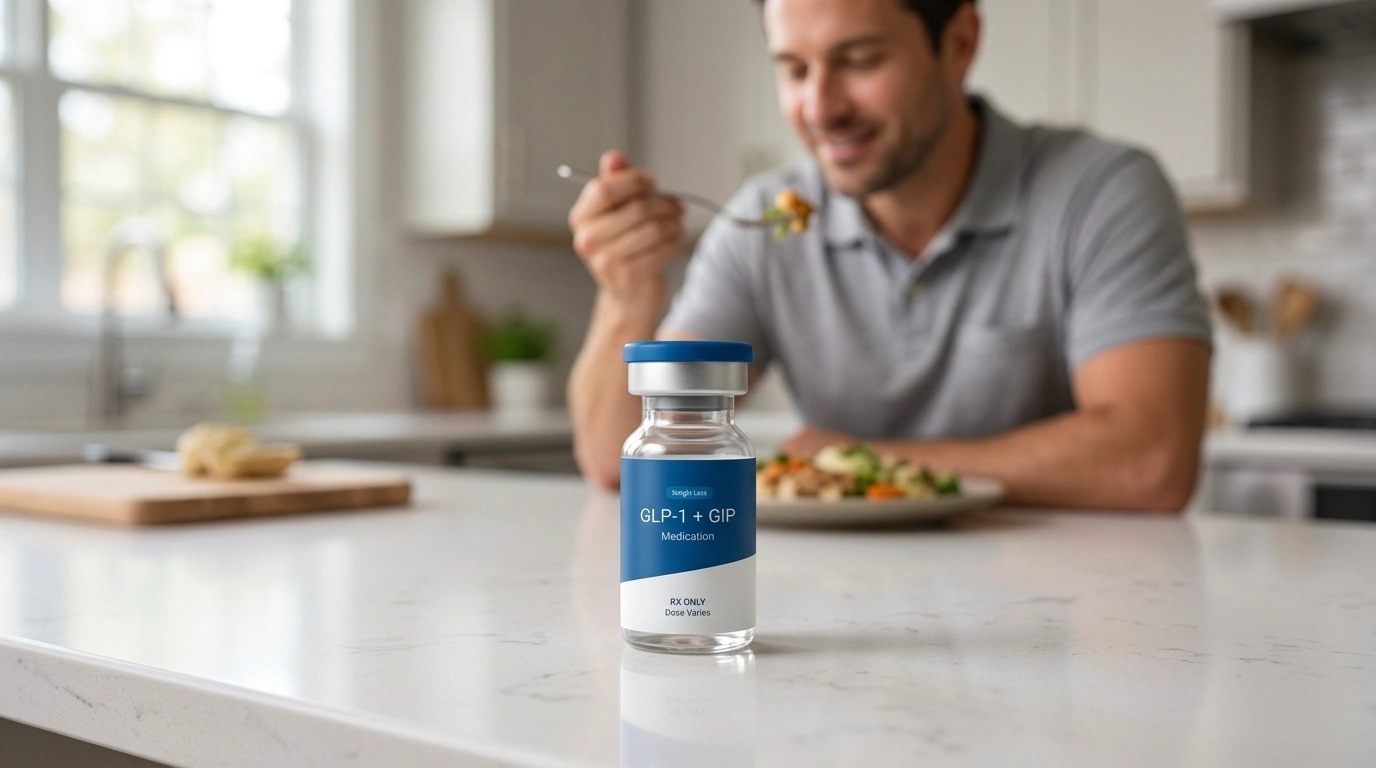
To understand why dose splitting is so difficult, you must first look at the delivery system. Zepbound® is a brand-name medication containing tirzepatide, a dual-acting glucose-dependent insulinotropic polypeptide (GIP) and glucagon-like peptide-1 (GLP-1) receptor agonist. These dual pathways help regulate appetite, slow gastric emptying, and improve insulin sensitivity. For additional background, read this guide to how tirzepatide doses work through GLP-1 and GIP pathways.
In the United States, this medication is primarily distributed in a single-dose autoinjector pen. Unlike some insulin pens that allow you to “dial” a specific number of units, the Zepbound autoinjector is an “all-or-nothing” mechanical device.
The Mechanism of Action
The pen contains a hidden needle and a spring-loaded plunger. Once you unlock the pen and press the purple button, the spring releases, driving the needle into the skin and emptying the entire chamber of medication in seconds. This design is intentional; it is engineered to ensure that every patient receives the exact amount of tirzepatide prescribed by their healthcare provider without the risk of human error during measurement.
The Closed System
Because the device is a closed, pre-filled system, there is no built-in way to stop the flow of medication once it has started. There is also no way to partially discharge the pen or save a portion for later. Once the seal is broken and the needle is deployed, the internal mechanism is spent, and the remaining liquid is no longer protected by the sterile environment of the unused pen.
Why the Question of Dose Splitting Arises
The interest in splitting doses usually stems from three distinct scenarios that many people face during their weight loss journey.
Managing Gastrointestinal Side Effects
Tirzepatide is a potent medication. As individuals move through the standard titration schedule—gradually increasing the dose every four weeks—they may experience side effects such as nausea, fatigue, or indigestion. Some feel that a “middle” dose (for example, 3.75 mg instead of jumping from 2.5 mg to 5 mg) would be easier for their body to handle. This compounded tirzepatide dosing guide explains how titration schedules may be adjusted under provider supervision.
Supply Chain Interruptions
Branded GLP-1 and GIP medications have frequently appeared on the FDA’s drug shortage list. When a patient cannot find their prescribed 5 mg pen but can find a 10 mg pen, they may consider buying the higher dose and attempting to split it into two 5 mg doses to maintain their progress.
Cost Management
Because these medications can be expensive, and higher-dose pens often cost the same as lower-dose pens, individuals may try to “stretch” a high-dose pen over several weeks to reduce their monthly expenses. While this logic is understandable, it overlooks the clinical safety protocols required for injectable medications.
The Technical Process Often Discussed Online
While we strongly advise against it, it is helpful to understand the technical process people use when they talk about “splitting” a pen. This typically involves a method known as “vial transfer.”
In this scenario, a person discharges the entire contents of a single-dose autoinjector into a sterile glass vial. Because the volume of liquid in a Zepbound pen is very small—usually only 0.5 mL—it is extremely difficult to measure out a fraction of that dose accurately with a standard syringe.
To solve this, some individuals add bacteriostatic water (sterile water containing a small amount of benzyl alcohol to inhibit bacterial growth) to the vial to “bulk up” the volume. For instance, if 0.5 mL of medication is mixed with 0.5 mL of bacteriostatic water, the total volume becomes 1.0 mL. The person then attempts to draw up 0.5 mL of that mixture, assuming it contains exactly half of the original dose.
Key Takeaway: Splitting a single-dose autoinjector requires transferring the medication into a secondary vessel and using manual syringes. This process relies heavily on precise math and perfect sterile technique, leaving significant room for dangerous errors.
The Critical Risks of DIY Dose Splitting
While the math of splitting a dose might seem straightforward on paper, the biological and safety risks are substantial. Attempting to manage prescription medication outside of its intended delivery system can lead to several complications.
1. Loss of Sterility and Infection Risk
The most immediate danger is contamination. The Zepbound pen is a closed, sterile system. The moment the medication is discharged into an external vial, it is exposed to the air and any microscopic pathogens on the surfaces of your home.
Unlike multi-dose vials used in clinical settings, the liquid inside a single-use Zepbound pen does not contain the same levels of preservatives intended to keep a solution stable over several weeks. Injecting contaminated medication can lead to:
- Skin infections at the injection site (cellulitis)
- The formation of painful abscesses
- Systemic illness or sepsis
2. Medication Degradation
Tirzepatide is a sensitive peptide molecule. Peptides are fragile chains of amino acids that can break down when exposed to light, heat, or excessive agitation. The process of “firing” the pen into a vial involves a high-pressure spray that can potentially damage the molecular structure of the drug. Furthermore, once the medication is removed from its factory-sealed environment, its shelf life drops significantly. Without the proper preservatives, the medication may lose its potency, meaning the “split” dose might not provide the expected weight loss benefits.
3. Inaccurate Dosing
Accurate dosing is vital for metabolic health. Taking too little may stall your progress and lead to “weight loss plateaus.” Conversely, taking too much—even by a few milligrams—can lead to severe gastrointestinal distress, dehydration, or more serious complications. Household measurements are rarely precise enough to guarantee you are getting an exact dose. If the mixture in the vial is not perfectly homogenized, one injection might contain almost all of the active ingredient while the next contains almost none.
Important: Never attempt to alter your medication delivery method or dosage without the direct supervision and approval of a licensed healthcare provider. DIY dosing changes significantly increase the risk of adverse reactions and treatment failure.
Branded Pen vs. Compounded Vial Comparison
If you are seeking dosing flexibility, it is important to understand the different formats available for tirzepatide.
| Feature | Branded Autoinjector (Zepbound®) | Compounded Tirzepatide (Vial) |
|---|---|---|
| Delivery System | Single-dose, hidden needle | Multi-dose vial and syringe |
| Dose Flexibility | Fixed increments only | Adjustable (with provider guidance) |
| Preservatives | Minimal (single-use intent) | Included (designed for multi-dose) |
| Mechanism | Spring-loaded (all-or-nothing) | Manual draw and injection |
| Risk of Tampering | High (if splitting is attempted) | Low (designed for measurement) |
Safer Alternatives for Flexible Dosing
If you find that the fixed-dose pens are not meeting your needs, there are medically supervised ways to achieve a more personalized experience. We focus on connecting you with licensed providers who can offer professional alternatives to “pen hacking.” You can see if you qualify for a personalized program.
Personalized Titration Schedules
Standard dosing schedules typically involve moving up in dose every four weeks. However, these are guidelines, not laws. If you are experiencing side effects on a specific dose, a licensed healthcare provider may suggest staying at that lower dose for an extra month or two. This allows your body more time to build tolerance. In many cases, individuals continue to lose weight effectively on “starting” doses, and there is no medical requirement to increase the dose if the current one is working.
The Role of Compounded Tirzepatide
One of the most effective ways to address the need for flexible dosing is through compounded tirzepatide. Compounded medications are prepared by specialized pharmacies to meet the specific needs of an individual patient.
What is Compounding?
Compounding occurs when a licensed pharmacist combines or alters ingredients to create a medication tailored to a patient. For those seeking dosing flexibility, compounded tirzepatide often arrives in a multi-dose vial rather than a fixed autoinjector. This overview of compounded tirzepatide administration provides additional context on vials, syringes, and provider-directed dosing.
Why It Solves the Splitting Problem
Because compounded tirzepatide comes in a vial, it is naturally designed to be measured with a syringe. This allows for precise, flexible dosing under the guidance of a healthcare provider. If your provider decides you need a 3.0 mg dose instead of the standard 2.5 mg or 5.0 mg increments, you can accurately measure that amount.
Note: Compounded tirzepatide is not FDA-approved. However, it is prepared and shipped by FDA-registered, inspected compounding pharmacies. These pharmacies must adhere to strict quality and safety standards to ensure the medication is sterile and accurately dosed.
Starting Your Journey with TrimRx
We believe that weight loss should be a supervised, personalized experience rather than a DIY project. Our platform is designed to remove the guesswork and safety risks associated with “splitting” or rationing medication. By joining our program, you gain access to a clinical framework that prioritizes your safety and long-term success.
The Benefits of a Personalized Program
A personalized program offers several advantages over trying to manage branded pens on your own:
- Clinical Oversight: You have access to a team of specialists who can help you manage side effects and adjust your dosage safely.
- Flexible Dosing: Compounded options allow for smaller incremental changes in dosage, helping your body adjust more comfortably.
- Convenience: Our telehealth-first approach means no waiting rooms or in-person visits are required.
- Transparency: No hidden fees—one consistent program regardless of dosage changes.
Step-by-Step: How to Start
Step 1: Take the Assessment. / Complete a free online health quiz to share your medical history, goals, and current health status.
Step 2: Consult with a Provider. / A licensed healthcare professional reviews your profile to determine if a GLP-1 or GIP medication is right for you.
Step 3: Receive Your Program. / If eligible, your personalized treatment plan is created. This includes your prescription, which is filled by a licensed pharmacy.
Step 4: Ongoing Support. / Your medication is shipped directly to your door. You have 24/7 access to our team for any questions about dosing, nutrition, or side effects.
Managing Side Effects Without Splitting Pens
If your primary motivation for wanting to split a dose is to avoid “feeling sick,” there are several evidence-based strategies to help your body process the medication more comfortably without tampering with the device. For more information, review this GLP-1 side effect management guide.
1. Adjust Your Injection Site
Many patients report that injecting into the thigh or the back of the arm results in fewer gastrointestinal side effects compared to injecting into the abdomen. While the medication remains effective regardless of the site, the rate of absorption can vary slightly, which may ease your symptoms.
2. Prioritize Hydration and Electrolytes
GLP-1 and GIP medications can change how your body handles fluids and may decrease your thirst cues. Dehydration often mimics or worsens nausea and fatigue. Aim for consistent water intake and consider adding an electrolyte supplement to maintain energy levels. You can also explore this hydration guide for GLP-1 users.
3. Optimize Your Nutrition
Focus on smaller, more frequent meals rather than three large ones. Prioritizing lean protein helps stabilize blood sugar and protects muscle mass. If you struggle to meet your nutritional goals, we offer supplements like GLP-1 Daily Support or Weight Loss Boost to help bridge the gap. For additional nutrition guidance, read this GLP-1 eating guide.
4. Communicate with Your Provider
If you feel your current dose is unmanageable, your provider can formally reduce your prescribed strength. This is a “clinical” dose reduction—using a lower prescribed strength pen—rather than a “mechanical” dose split using a high-strength pen.
Bottom line: While technical methods for splitting a Zepbound pen exist, they carry significant risks of infection and inaccurate dosing; a supervised, personalized program using compounded medication is a much safer way to achieve dose flexibility.
The Importance of Professional Guidance
The science behind modern weight loss is more advanced than ever, but it still requires a careful, clinical touch. When you attempt to “hack” your medication delivery system by splitting pens, you are essentially acting as your own pharmacist and doctor. This removes the safety net that professional medical supervision provides.
Through our platform, we ensure that every step—from your initial assessment to your ongoing dosage adjustments—is handled by experts. This personalized approach not only keeps you safe but also increases the likelihood of reaching your goals. We provide the structure, the medication, and the support so you can focus on your progress rather than the mechanics of a pen.
Conclusion
The temptation to split a Zepbound pen is understandable in an environment where medication can be hard to find or expensive. However, the risks of bacterial contamination, loss of potency, and dosing errors make it a dangerous path. Successful, sustainable weight loss requires a steady, safe, and scientifically sound approach.
At TrimRx, our mission is to help individuals embrace healthier lifestyles through science, empathy, and a transparent approach to weight loss. We provide the medical expertise and modern technology needed to make your journey sustainable. If you are ready to move away from DIY dosing and toward a professional, medically supervised plan, the first step is to find out if GLP-1 medications are right for you.
Key Takeaway: Sustainable weight loss is a marathon, not a sprint. Prioritizing safety by following professional dosing guidelines ensures that your treatment remains effective and your health remains protected.
Ready to see which personalized program fits your metabolic health goals? Take our free assessment quiz today to get started.
FAQ
Is it safe to split a Zepbound pen if I use a sterile vial?
While using a sterile vial reduces some risk, it does not eliminate the dangers of medication degradation or dosing inaccuracy. The medication in a Zepbound pen is not formulated with the preservatives necessary for multi-dose use, and the high-pressure discharge from the autoinjector can damage the sensitive peptide molecules.
Can I save money by buying a higher-dose pen and splitting it?
While it may seem cost-effective, the potential health risks and the risk of wasting expensive medication through contamination often outweigh the perceived savings. A safer way to manage costs and dosage is to work with a telehealth platform that offers personalized treatment programs designed for your specific needs.
What should I do if my current dose of Zepbound feels too strong?
You should never attempt to split the dose on your own if you are experiencing side effects. Instead, contact your healthcare provider immediately; they can adjust your prescription to a lower manufactured dose or suggest alternative treatment options that may be better tolerated by your body. If you need help determining whether a supervised program may fit your needs, complete a free eligibility assessment.
How is compounded tirzepatide different from splitting a branded pen?
Compounded tirzepatide is prepared by a licensed pharmacist in a sterile, controlled environment and is intended to be dispensed in a vial for multi-dose use. This allows for precise, adjustable dosing using a traditional syringe, which is significantly safer and more reliable than attempting to manually transfer medication from a single-use autoinjector.
Disclaimer: This content is for informational purposes only and does not constitute medical advice. It is not intended to diagnose, treat, cure, or prevent any disease or condition. Individual results may vary. Always consult a qualified healthcare professional before starting any weight loss program or medication.

Transforming Lives, One Step at a Time
Keep reading

Kids’ Birthday Party on Zepbound
If you have young children, birthday parties are a regular part of life: your own child’s, and the steady stream of classmates’ parties most…
Water Aerobics on Zepbound
For people with painful knees, hips, or backs, water aerobics and pool exercise are often the first kind of exercise that feels possible. The…

New Year’s Eve on Zepbound
New Year’s Eve is built around staying up late. There is usually a big dinner or a party spread, drinks through the evening, champagne…


