Can You Take 2 GLP-1 Medications Together?

Introduction
It is common to feel a sense of urgency when you are working toward significant weight loss goals. If one medication is helping you lose weight, it is natural to wonder if adding a second one might double your progress. You may have heard of various medications like Semaglutide or Tirzepatide and felt curious about whether “stacking” them is a viable strategy. At TrimRx, we prioritize your safety and long-term success by providing science-backed guidance on how these treatments function within your body. This article explores the clinical reasons why taking two GLP-1 medications together is generally not recommended and what the potential risks are. We will cover how these medications interact with your receptors, the dangers of overlapping treatments, and how to safely transition between options. Most importantly, we will focus on why a single, personalized treatment plan is the most effective path forward.
If you are considering prescription weight loss treatment, you can complete a free eligibility assessment to help determine whether a personalized program may be appropriate for you.
How GLP-1 Medications Work in the Body
To understand why taking two GLP-1 medications together is problematic, it is important to first understand what they do. GLP-1 stands for glucagon-like peptide-1. This is a hormone your body naturally produces in the gut after you eat. These medications, known as receptor agonists, are designed to mimic that natural hormone.
When you take a GLP-1 medication, it targets specific receptors in your brain and digestive system. In the brain, it signals a feeling of fullness, which helps reduce your overall appetite. In the stomach, it slows down gastric emptying. This means food stays in your stomach longer, making you feel satisfied for an extended period. It also helps the pancreas release the right amount of insulin when your blood sugar is high.
Some newer medications are “dual agonists.” For example, Tirzepatide targets both GLP-1 receptors and GIP (glucose-dependent insulinotropic polypeptide) receptors. While these medications target two different pathways, they are still contained within a single, carefully calibrated dose. Taking two separate GLP-1 medications is a different scenario entirely and can disrupt the delicate balance your body needs to maintain metabolic health.
For additional context, read this guide on how semaglutide and tirzepatide work together in the body.
The Danger of Overloading Your Receptors
Your body has a limited number of GLP-1 receptors. Think of these receptors like parking spaces and the medication like cars. Once every parking space is filled, adding more cars does not help the traffic flow. Instead, it creates a bottleneck.
The concept of receptor saturation explains why more medication does not always lead to more weight loss. Once your receptors are fully occupied by a GLP-1 medication, adding another similar medication will not increase the signals of fullness. Instead, the excess medication circulates in your system without a place to land. This “overflow” is often what leads to a significant increase in side effects rather than an increase in results.
Key Takeaway: Your body can only process a certain amount of GLP-1 stimulation at once. Adding a second medication typically leads to higher toxicity and side effects rather than faster weight loss.
Potential Side Effects of Combining GLP-1 Medications
Taking two GLP-1 medications together can lead to an “overdose” effect. Because both medications are working to slow down your digestion and signal your brain to stop eating, the combined impact can be overwhelming for your gastrointestinal tract.
Common side effects are often amplified to dangerous levels when medications are combined. Many people already experience mild nausea or changes in bowel habits when starting a single medication. When you double the stimulation, these issues can become severe.
For more information about managing treatment-related symptoms, review this guide to common GLP-1 side effects.
- Severe Dehydration: Excessive vomiting and diarrhea can lead to rapid fluid loss.
- Pancreatitis Risk: Overstimulating the pancreas with multiple agonists may increase the risk of inflammation.
- Gastroparesis: This is a condition where the stomach stops moving food altogether, which can be a serious medical emergency.
- Hypoglycemia: If you are taking other medications for blood sugar, combining GLP-1 drugs can cause your blood sugar to drop to unsafe levels.
If you are currently struggling with the effectiveness of your current dose, the answer is usually to adjust the dosage of your single medication under medical supervision rather than adding a second one.
The Clinical Perspective on Stacking Medications
There are currently no clinical trials or medical guidelines that support the use of two different GLP-1 medications at the same time. The FDA-approved branded medications, such as Wegovy®, Ozempic®, Mounjaro®, or Zepbound®, were all studied as “monotherapies.” This means they were tested to work on their own.
Medical providers do not have data on how different molecules, like Semaglutide and Tirzepatide, interact when they are active in the body simultaneously at full dosages. Because these medications have long half-lives—meaning they stay in your system for a week or more—taking them together means your body is constantly under high-intensity stimulation.
For a deeper look at the risks, read what happens when semaglutide and tirzepatide are taken together.
Bottom line: Medical professionals strictly advise against combining GLP-1 medications because there is no evidence of increased benefit, only evidence of increased risk.
Switching vs. Combining: How to Transition Safely
While you should not take two GLP-1 medications at the same time, you might find that your provider wants to switch you from one to another. This is common if you have reached a plateau or if you are experiencing side effects that do not subside.
The process of switching requires a “washout period” or a specific transition schedule. Because these medications stay in your system for quite a while, you cannot simply take one on Monday and the other on Tuesday.
For more background, read about switching from one GLP-1 medication to another.
Step 1: Consult with your healthcare provider. / They will determine if a switch is necessary based on your current progress and health markers.
Step 2: Follow a tapering schedule. / Your provider may have you stop your current medication for a week or two to allow the levels in your blood to drop.
Step 3: Start the new medication at a low dose. / Even if you were on a high dose of your previous medication, you usually need to start the new one at a lower dose to see how your body reacts.
This transition period is the only time two medications might “overlap” in your system, but even then, it is done by carefully lowering one while slowly introducing the other under strict medical oversight.
Why Personalization Matters in Your Weight Loss Journey
At TrimRx, we believe that more is not better; “right” is better. Every metabolic profile is different. Some people respond exceptionally well to Semaglutide, while others find better success with Tirzepatide. The goal of a personalized program is to find the specific molecule and dosage that works for your unique biology.
A personalized approach helps avoid the “guesswork” that leads people to consider unsafe combinations. When you work through our platform, you are connected with licensed providers who review your medical history and health goals. This ensures that the prescription you receive is tailored to you.
If you are ready to discuss your options, you can see if you qualify for a personalized program.
We focus on a comprehensive service model. This includes the initial consultation and ongoing support to monitor how your body is responding. If your progress stalls, your dedicated team of specialists can help adjust your plan safely. This removes the temptation to experiment with dangerous medication combinations.
Managing Plateaus Without Adding More Medication
It is very common to hit a weight loss plateau after several months on a GLP-1 medication. This often leads people to search for ways to “boost” their results, including the idea of taking two medications. However, there are safer and more effective ways to break through a plateau.
Read more about restarting weight loss after a plateau for additional strategies.
Adjusting your lifestyle factors is often the key to restarting weight loss. When the medication helps control your hunger, it provides a window of opportunity to focus on high-quality nutrition and physical activity.
- Protein Intake: Ensure you are eating enough protein to protect your muscle mass as you lose fat.
- Strength Training: Building muscle can help increase your resting metabolic rate.
- Hydration and Fiber: These help manage the digestive side effects of the medication and keep you feeling full.
- Dose Titration: Your provider may increase your dose of the single medication you are already taking, which is the standard clinical approach to a plateau.
Myth: Taking two GLP-1 medications will help me get past a weight loss plateau faster.
Fact: Adding a second GLP-1 medication is more likely to cause severe illness than to break a plateau. Adjusting your current dose or focusing on metabolic health markers is a safer, proven strategy.
Nutrient Support During GLP-1 Treatment
Rather than adding a second prescription medication, many people find that adding targeted supplements can support their journey. When your appetite is significantly reduced, you may not be getting all the essential nutrients your body needs to function at its best.
Supportive supplements are designed to work alongside your medication, not compete with it. For example, we offer GLP-1 Daily Support to help fill nutritional gaps that can occur when your calorie intake drops. These supplements do not interact with your GLP-1 receptors in the same way another medication would.
If you feel your energy levels are low or you want to support your metabolism, our Weight Loss Boost supplement can be an excellent addition to your routine. These products are available for immediate purchase and do not require a prescription. They provide a safe way to enhance your well-being while your primary medication does the heavy lifting of appetite suppression.
The Role of Telehealth in Safe Weight Management
The rise of telehealth has made it easier than ever to access weight loss treatments, but it has also increased the need for clear communication. Because you are not seeing a doctor in a traditional waiting room, you must be transparent about every medication and supplement you are taking.
Our telehealth-first model is designed to provide 24/7 access to specialist support. This means you never have to make a decision about your medication in a vacuum. If you are curious about combining treatments or switching your plan, you can reach out to our team at any time.
Using the TrimRx platform ensures that your progress is tracked by professionals who understand the science of GLP-1 medications. We coordinate your doctor consultations, lab work, and medication delivery from FDA-registered, inspected compounding pharmacies. This closed-loop system reduces the risk of medication errors and ensures you are always taking the safest possible dose for your needs.
Understanding Compounded vs. Branded Medications
As you research GLP-1 options, you will see mentions of branded drugs like Ozempic® or Wegovy®. It is important to understand how these relate to your treatment options. Branded medications are FDA-approved for specific uses, such as type 2 diabetes or chronic weight management.
Compounded Semaglutide and Compounded Tirzepatide are alternatives that can be customized for individual patient needs. While compounded medications are not FDA-approved, they are prepared by licensed pharmacies that are FDA-registered and inspected. This allows for personalized dosing and can often make the medication more accessible through telehealth platforms.
When you use our platform, our partner providers determine which type of medication is appropriate for you. Whether you are prescribed a branded medication to be filled at your local pharmacy or a compounded version shipped to your door, the rule remains the same: you should only be taking one GLP-1 therapy at a time.
What to Do If You Have Already Taken Two Medications
If you have mistakenly taken two different GLP-1 medications or accidentally doubled your dose, do not panic, but do take action. The most important step is to monitor your symptoms closely.
Contact a healthcare professional immediately if you experience severe symptoms. While a single double-dose may just cause a few days of intense nausea, it can occasionally lead to more serious complications.
- Stop taking any further doses until you have spoken with a provider.
- Drink plenty of fluids with electrolytes to prevent dehydration.
- Keep a log of your symptoms, including when they started and their severity.
- Seek emergency care if you have severe abdominal pain, persistent vomiting, or signs of an allergic reaction.
Transparency with your medical team is vital. They are there to help you, not to judge you. Telling them exactly what you took will help them give you the best possible care and get your weight loss journey back on a safe track.
For additional information about medication combinations, review this guide to tirzepatide drug interactions.
The Importance of Long-Term Sustainability
Weight loss is not a race. While it is tempting to try to speed up the process by combining medications, the goal is sustainable health. Taking two GLP-1 medications is not a long-term solution. It is an unsustainable practice that your body cannot tolerate for long.
A successful weight loss journey is built on consistency and safety. By sticking to a single, medically supervised plan, you allow your body to adapt to the changes in your metabolism. This makes it much more likely that you will keep the weight off once you reach your goal.
Our mission is to help you embrace a healthier lifestyle through science and empathy. We provide the tools, the technology, and the clinical expertise to make your journey as smooth as possible. We focus on a transparent approach where you understand exactly why your treatment plan is designed the way it is.
Summary of Key Safety Rules for GLP-1 Use
To ensure you stay on the safest path toward your goals, keep these rules in mind as you navigate your treatment.
- One Agonist at a Time: Never combine two GLP-1 medications unless specifically directed by a provider during a transition phase.
- Follow the Schedule: Only take your medication on the day and at the dose prescribed.
- Report Side Effects: If your current dose feels like “too much” or “not enough,” talk to your provider instead of making your own adjustments.
- Prioritize Nutrition: Use the appetite suppression to focus on nutrient-dense foods rather than just eating less.
By following these guidelines, you maximize the benefits of these medications while minimizing the risk of complications. Your health is the most important factor in your weight loss success.
Conclusion
Taking two GLP-1 medications together is not a safe or effective way to lose weight. The risks of severe side effects, receptor saturation, and metabolic strain far outweigh any perceived benefit of “speeding up” your progress. At TrimRx, we are committed to helping you find the single, personalized program that fits your body’s needs. True, lasting weight loss comes from a combination of the right science-backed medication, personalized medical supervision, and sustainable lifestyle habits. We are here to guide you through every step of that process, ensuring you feel supported and empowered without ever having to compromise your safety.
If you are ready to start a program tailored specifically to your health profile, the best first step is to take the free assessment quiz. This allows a licensed provider to review your history and determine the most effective, single-medication approach for your unique journey.
FAQ
Is it safe to take Ozempic® and Wegovy® at the same time?
No, it is not safe to take both because they contain the same active ingredient, Semaglutide. Taking both would result in a double dose, which significantly increases the risk of severe side effects like extreme nausea, vomiting, and potential kidney or pancreas issues.
Can I mix Semaglutide and Tirzepatide for better results?
You should not mix these two medications. While they work on similar pathways, they are different molecules, and there is no clinical evidence that combining them is safe or more effective. Doing so could lead to receptor overload and dangerous gastrointestinal complications.
What happens if I accidentally take two doses of my GLP-1 medication?
If you take an extra dose, you are likely to experience intensified side effects such as severe nausea, stomach pain, or diarrhea. You should stay hydrated, monitor your symptoms, and contact your healthcare provider immediately for guidance on how to manage the excess medication in your system.
Can I switch from one GLP-1 medication to another?
Yes, you can switch medications, but it must be done under strict medical supervision. Your provider will typically implement a “washout” period or a specific transition schedule to ensure the first medication has sufficiently cleared your system before the new one reaches full strength.
If you are considering a medication change, you can complete a free assessment for personalized guidance.
Disclaimer: This content is for informational purposes only and does not constitute medical advice. It is not intended to diagnose, treat, cure, or prevent any disease or condition. Individual results may vary. Always consult a qualified healthcare professional before starting any weight loss program or medication.

Transforming Lives, One Step at a Time
Keep reading
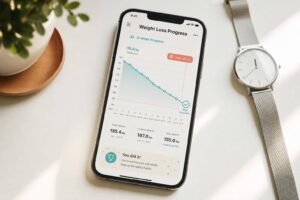
Weight Loss Progress Tracker
Track your weight loss over time, see progress clearly, and stay motivated with simple charts, summaries, and goal-based insights.
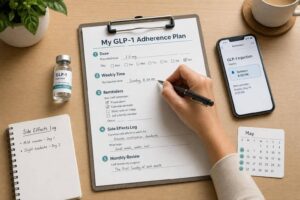
How to Create a Personalized Adherence Plan
Build a one-page GLP-1 adherence plan: record dose, pick a weekly time, set reminders, log side effects, and review monthly.

Weight Loss Medication Dosage Calculator
Estimate weight loss medication doses by weight and drug type, with starting guidance, dose progression info, and a clear medical disclaimer.


