How Long Does Compounded GLP-1 Last?
Introduction
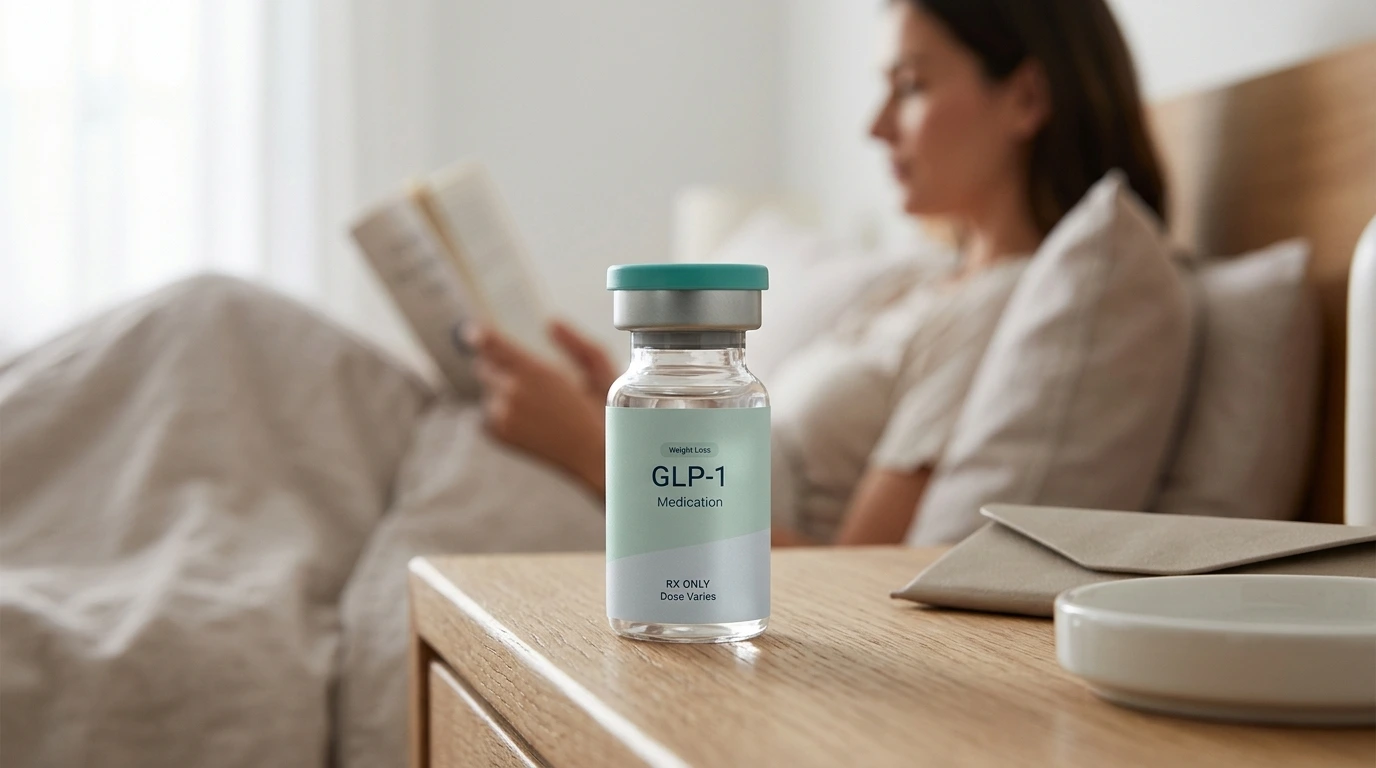
Standing at the refrigerator and looking at a small vial of medication can bring up a lot of questions. You might wonder if the clear liquid inside is still as potent as the day it arrived, or perhaps you are curious about how long a single dose actually stays active in your system to quiet those persistent cravings. When you are committed to a weight loss journey, these details matter. At TrimRx, we believe that understanding the “lifespan” of your medication—both on the shelf and inside your body—is a vital part of staying safe and achieving your goals.
Whether you are using Compounded Semaglutide or Compounded Tirzepatide, the duration of effectiveness is governed by specific pharmaceutical standards and biological processes. This post covers the shelf life of these medications, the science of how long they remain active in your bloodstream, and how to tell if your supply is still safe to use. Understanding these timelines ensures that your personalized program remains effective from the first dose to the last. If you are considering a personalized prescription program, you can take the free assessment quiz to begin the review process.
The Two Meanings of Longevity
When asking how long compounded GLP-1 lasts, we are usually looking for two different answers. The first relates to the physical stability of the medication in the vial, known as the shelf life or beyond-use date. The second relates to the biological half-life, which is how long the medicine stays active in your body after you take it.
Compounded medications are custom-prepared by licensed pharmacists. Because they are created specifically for a patient and often do not contain the same industrial preservatives or specialized delivery pens as branded versions like Ozempic® or Wegovy®, their “expiration” rules are different.
Key Takeaway: “Shelf life” refers to how long the medication remains sterile and potent in the vial, while “half-life” refers to how long the medication suppresses appetite in your body.
Understanding the Beyond-Use Date
In the world of standard pharmacy medications, you are likely used to seeing an expiration date. For compounded medications, we use a term called the Beyond-Use Date (BUD). This is a date determined by the compounding pharmacy based on specific stability studies and professional standards, such as those set by the United States Pharmacopeia (USP). For a deeper look at this topic, review the guide to compounded semaglutide storage and shelf life.
Why the BUD Matters
The BUD is the last date the medication should be used. After this point, the pharmacy cannot guarantee that the medication is still sterile or that the active ingredients haven’t started to break down. Compounded GLP-1 medications are typically “aqueous” (water-based) and are intended for injection. This makes sterility a top priority.
Factors Influencing Shelf Life
Several factors determine how long a vial of compounded medication remains stable:
- The Compounding Environment: Medications prepared in a high-complexity sterile environment may have longer dating than those prepared under different conditions.
- Preservatives: Most multidose vials contain a small amount of a preservative (like benzyl alcohol) to prevent the growth of bacteria after the first time a needle punctures the stopper.
- Storage Conditions: How you handle the medication once it arrives at your home is the most significant factor in how long it actually lasts.
Standard Duration for Compounded Vials
Generally, once a vial of compounded GLP-1 is punctured, it is usually recommended to be used within 28 to 30 days. However, the unopened vial may have a longer BUD, often ranging from 45 to 90 days depending on the specific pharmacy’s testing. You should always follow the specific date printed on your prescription label by the pharmacy we partner with. You can also review why compounded semaglutide is often limited to 28 days after opening.
How Long GLP-1 Stays Active in the Body
The primary reason GLP-1 receptor agonists (medications that mimic the glucagon-like peptide-1 hormone) are so effective for weight loss is their “staying power.” Natural GLP-1 produced by your gut only lasts for a few minutes. Synthetic versions are modified to resist being broken down by enzymes, allowing them to work for days. Learn more about semaglutide half-life and duration to understand how these timelines affect dosing.
The Half-Life of Semaglutide
Semaglutide (the active ingredient in medications like Wegovy® and Ozempic®) has a biological half-life of approximately seven days. A “half-life” is the amount of time it takes for the concentration of a substance in your body to reduce by exactly one-half.
Because it takes about seven days for half the dose to leave your system, a weekly injection schedule creates a “steady state.” By the time you take your next dose, a significant portion of the previous dose is still working. This provides a consistent level of appetite suppression and blood sugar regulation throughout the week.
The Half-Life of Tirzepatide
Tirzepatide (the active ingredient in Mounjaro® and Zepbound®) has a slightly shorter half-life of approximately five days. Despite this slightly shorter duration, it is still administered once weekly. Tirzepatide is unique because it targets two different hormone receptors: GLP-1 and GIP (glucose-dependent insulinotropic polypeptide). This dual action can sometimes result in different experiences of “wear-off” toward the end of the week compared to semaglutide. For more detail, see this guide to tirzepatide longevity and clearance.
Bottom line: Both semaglutide and tirzepatide are designed to last long enough to support a once-weekly dosing schedule, though it takes several weeks of consistent use to reach a stable level in your system.
Comparison of Duration and Dosing
| Medication | Biological Half-Life | Dosing Frequency | Common Format |
|---|---|---|---|
| Compounded Semaglutide | ~7 Days | Once Weekly | Subcutaneous Injection |
| Compounded Tirzepatide | ~5 Days | Once Weekly | Subcutaneous Injection |
| Oral Semaglutide | ~160 Hours | Once Daily | Tablet (requires daily intake due to absorption) |
Proper Storage to Maximize Longevity
If you want your compounded GLP-1 to last as long as the label says it should, you must store it correctly. These medications are proteins, and proteins are fragile. If they get too hot, too cold, or are exposed to too much light, they can “denature,” which means the molecules change shape and stop working.
The Importance of Refrigeration
Most compounded GLP-1 medications must be kept refrigerated. The ideal temperature range is typically between 36°F and 46°F (2°C to 8°C).
- Do Not Freeze: Never store your medication in the freezer or near the cooling element of the fridge. If the medication freezes, the proteins will likely be destroyed, and you must discard the vial.
- Avoid Heat: Leaving the vial on a sunny counter or in a hot car can ruin the medication in a matter of hours.
Light Protection
GLP-1 medications are often light-sensitive. This is why many come in amber-colored vials or why instructions tell you to keep the vial in its original box. Prolonged exposure to UV light can break down the chemical bonds of the medication.
Handling and Travel
When you are moving the vial, avoid vigorous shaking. A gentle swirl is fine if the instructions suggest it, but aggressive shaking can introduce air bubbles or potentially damage the protein structure. If you are traveling, use a small insulated travel cooler with a cold pack, ensuring the vial does not directly touch the ice.
Signs That Your Medication Has Expired or Spoiled
It is important to inspect your medication before every dose. Even if the date on the label hasn’t passed, environmental factors could have compromised the liquid.
What to look for:
- Cloudiness: Compounded semaglutide and tirzepatide should be clear and colorless. If the liquid looks “milky” or cloudy, it may be contaminated or degraded.
- Particulates: If you see small flakes, “strings,” or crystals floating in the liquid, do not use it.
- Color Changes: Any yellowing or brown tint is a sign of oxidation or chemical breakdown.
- The Date: If the calendar has moved past the BUD printed on the vial, the risk of bacterial growth increases significantly.
Note: Using expired or spoiled GLP-1 medication is unlikely to be helpful and could be harmful. If the medication has lost its potency, your appetite may return, and your progress could stall. Always consult your healthcare provider or the pharmacy if you notice changes in the medication’s appearance.
How Long a Single Shipment Lasts
When you start a program through a platform like ours, your medication is typically shipped in quantities meant to last a specific period—usually 30 days. However, because these programs often involve “titration” (gradually increasing the dose), the physical amount of liquid you use each week may change.
The Titration Schedule
Most people start on a low “loading dose” to help the body adjust and minimize side effects like nausea. Every four weeks, the dose typically increases until you reach a “maintenance dose.”
- Month 1: You might use a very small volume each week.
- Month 2 and beyond: As the dose increases, you will use more of the liquid in the vial.
We ensure that your shipments are timed so that you never run out of medication, but it is important to remember that a single vial is usually not intended to sit in your fridge for several months. The program is designed to provide fresh medication as your dosage needs evolve.
Maximizing the “End of the Week”
Some patients notice that the effects of their medication seem to “wear off” on day six or seven of their weekly cycle. This is sometimes called “the return of food noise.” Because the half-life means the concentration is dropping, this is a normal biological occurrence.
To help the medication’s effects last through the full week:
- Stay Hydrated: Dehydration can sometimes be mistaken for hunger.
- Prioritize Protein: Protein helps you feel full longer, supporting the work the GLP-1 is doing.
- Consistent Timing: Try to take your injection on the same day and at roughly the same time each week to maintain a steady level in your bloodstream.
- Supportive Supplements: Some find that using targeted support can help bridge the gap. Our GLP-1 Daily Support supplement is designed to complement the medication’s natural pathways and help maintain a sense of balance throughout the week.
The Long-Term View: How Long Should You Stay on GLP-1?
Beyond the shelf life of a vial, many people ask how long they will need to stay on the medication. Weight loss is a metabolic process, not a one-time event. Clinical research suggests that GLP-1 medications are most effective when used as part of a long-term strategy.
Short-Term vs. Long-Term Use
While some people use the medication for a few months to reach a specific goal, many healthcare providers view GLP-1s as a long-term tool for managing metabolic health. When you stop the medication, the biological half-life dictates that it will be entirely out of your system within a few weeks. Without the medication’s help in regulating insulin and hunger signals, many people find it difficult to maintain their weight loss through willpower alone.
Finding Your “Maintenance”
At TrimRx, our goal is to help you find a sustainable path. This often involves a maintenance phase where the dose may be adjusted to keep you at your goal weight without further loss. We believe in a personalized approach that considers your medical history and long-term health objectives.
How to Get Started with a Fresh Program
If you are concerned about the quality or age of your current medication, or if you are looking for a more reliable way to manage your weight loss journey, a telehealth-based program offers a modern solution. You can complete a free eligibility assessment to see whether a personalized program may be appropriate for you.
The TrimRx Process
Step 1: Complete the Assessment. Take our free online assessment quiz. This helps a licensed provider understand your health history, BMI, and goals.
Step 2: Provider Review. A healthcare professional reviews your information to determine if a GLP-1 medication like Compounded Semaglutide or Compounded Tirzepatide is appropriate for you.
Step 3: Direct Shipping. If prescribed, your medication is prepared by an FDA-registered, inspected compounding pharmacy and shipped directly to your door in temperature-controlled packaging.
Step 4: Ongoing Support. You get 24/7 access to specialized support and a consistent program that adjusts with you as your needs change.
By using a structured platform, you don’t have to worry about doing the “math” on how long your medication will last. We manage the refills and titration schedules so you can focus on your lifestyle changes.
Final Thoughts on Medication Longevity
Understanding how long compounded GLP-1 lasts is about more than just reading a date on a label. It is about respecting the science of how these powerful molecules interact with your body. By keeping your medication cold, checking its clarity, and following a consistent weekly schedule, you ensure that every dose is working as hard as you are.
Key Takeaway: The effectiveness of your weight loss program depends on the integrity of the medication. Treat your vial with care, pay attention to the beyond-use date, and stay consistent with your dosing.
Summary Checklist for Medication Care
- Check the Label: Locate the Beyond-Use Date (BUD) immediately upon arrival.
- Store Cold: Keep the vial in the main body of the refrigerator (not the door).
- Inspect Often: Look for clarity and the absence of particles before every injection.
- Stay Consistent: Inject on the same day every week to maintain the “half-life” steady state.
- Consult Experts: If you have questions about the appearance of your medication, ask a professional before using it.
At TrimRx, we are committed to providing the clinical expertise and high-quality medication access you need for a successful journey. Our personalized approach ensures that you aren’t just getting a prescription, but a science-backed partner in your metabolic health. If you are ready to explore your options, find out if GLP-1 medications are right for you.
FAQ
Does compounded GLP-1 need to be refrigerated?
Yes, compounded GLP-1 medications like semaglutide and tirzepatide are proteins that must be kept at refrigerated temperatures—typically between 36°F and 46°F—to maintain their structure and potency. Exposure to high heat or freezing temperatures can cause the medication to break down and become ineffective. Always store your vial in the refrigerator and avoid leaving it out on counters or in hot environments. For additional guidance, review how to store compounded semaglutide.
What happens if I use it past the beyond-use date?
Using medication past its beyond-use date (BUD) is not recommended because the pharmacy can no longer guarantee the product’s sterility or its full potency. Over time, the active ingredients may degrade, meaning the dose you receive might be weaker than intended, which could stall your weight loss progress. Furthermore, the risk of bacterial contamination in the vial increases once the BUD has passed or if the vial has been punctured for more than 30 days.
How long does it stay in my system after the last dose?
GLP-1 medications have relatively long half-lives; semaglutide stays in your system for several weeks after the last dose, with a half-life of about seven days. It usually takes about five to seven weeks for the medication to be entirely cleared from your body. During this time, you may still feel some level of appetite suppression, but the effects will gradually diminish as the concentration in your blood drops. You can read more about how semaglutide remains active after the last dose.
Can I travel with my medication?
You can travel with your compounded GLP-1, but you must ensure it remains within the required temperature range. Use an insulated travel case with a cold pack, making sure the vial does not come into direct contact with ice, which could freeze and ruin the medication. If you are flying, keep the medication in your carry-on luggage to avoid the extreme temperature fluctuations and pressure changes found in the plane’s cargo hold.
Disclaimer: This content is for informational purposes only and does not constitute medical advice. It is not intended to diagnose, treat, cure, or prevent any disease or condition. Individual results may vary. Always consult a qualified healthcare professional before starting any weight loss program or medication.

Transforming Lives, One Step at a Time
Keep reading
Weight Loss Progress Tracker
Track your weight loss over time, see progress clearly, and stay motivated with simple charts, summaries, and goal-based insights.
How to Create a Personalized Adherence Plan
Build a one-page GLP-1 adherence plan: record dose, pick a weekly time, set reminders, log side effects, and review monthly.

Weight Loss Medication Dosage Calculator
Estimate weight loss medication doses by weight and drug type, with starting guidance, dose progression info, and a clear medical disclaimer.


