Can I Take Two 2.5 Zepbound? Dosing and Safety Guide
Introduction
Standing in front of the refrigerator with two 2.5 mg Zepbound® pens when your prescription has just been moved up to 5 mg is a common situation. Perhaps you have leftover medication from your first month, or maybe a supply shortage has made the 5 mg pens difficult to find. At TrimRx, we understand that navigating the logistics of GLP-1 medications can be just as challenging as the lifestyle changes themselves. This article covers the clinical safety of combining doses, why titration schedules matter, and how to handle supply issues. While the math seems simple—two 2.5 mg doses equal 5 mg—applying this to a clinical setting requires a deeper understanding of safety, pen mechanics, and medical guidance. Using two lower-dose injections to reach a higher prescribed dose is possible under specific medical supervision, but it requires careful execution.
If you are considering a medically supervised weight loss program, you can complete a free eligibility assessment to share your health history and goals with the care team.
The Science of Tirzepatide and Zepbound
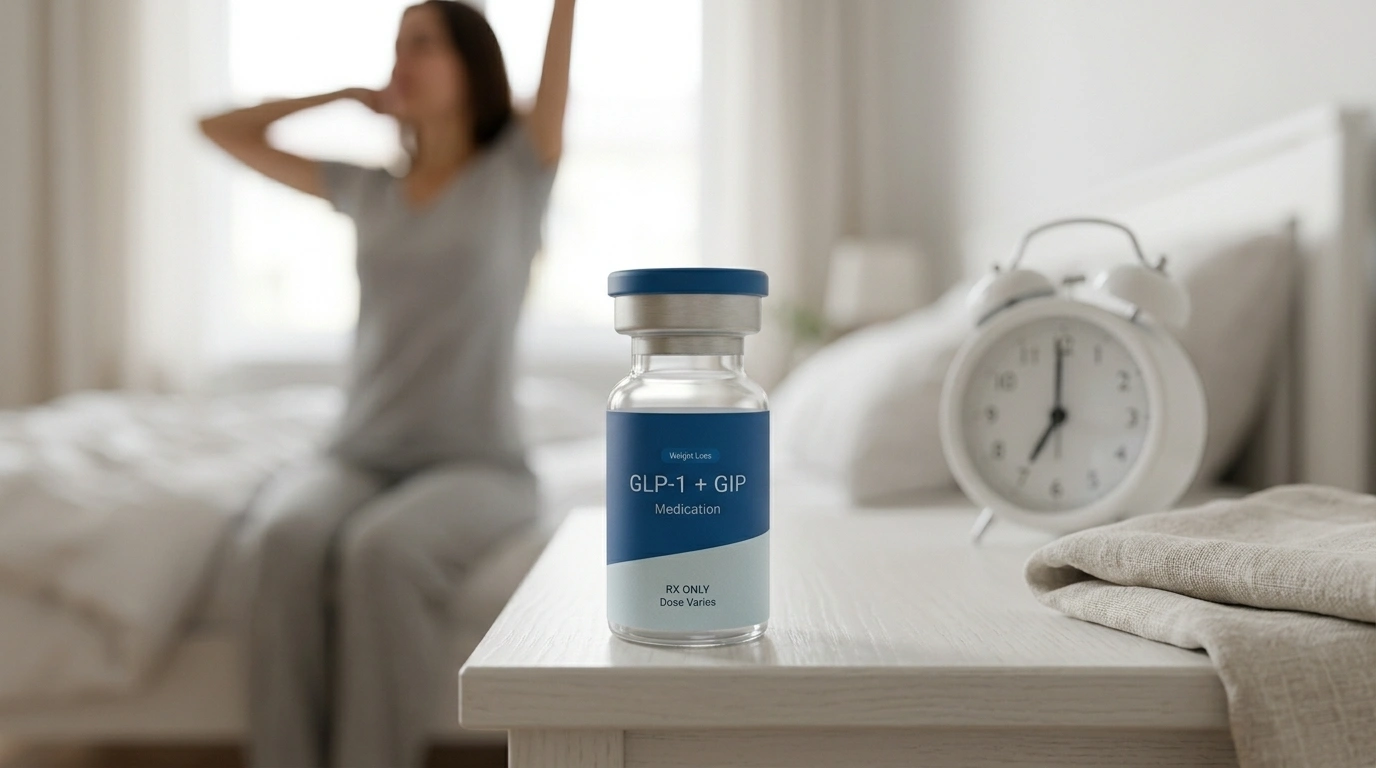
Zepbound® is a branded medication containing the active ingredient tirzepatide. Tirzepatide belongs to a class of medications known as dual agonists. Unlike earlier weight loss medications that targeted a single hormone pathway, tirzepatide mimics two different metabolic hormones in the body: glucagon-like peptide-1 (GLP-1) and glucose-dependent insulinotropic polypeptide (GIP).
GLP-1 is a hormone produced in the gut that signals the brain to feel full and slows down the emptying of the stomach. This helps reduce appetite and makes it easier to maintain a calorie deficit. GIP is another hormone that helps regulate blood sugar and may improve how the body breaks down fat and sugar. By activating both receptors, tirzepatide provides a multi-layered approach to metabolic health.
For a broader explanation of how the medication’s strengths progress, review this detailed tirzepatide dosage guide.
When you begin a program, you are typically prescribed a titration schedule. This means you start at a low dose to allow your body to acclimate to the medication before gradually increasing the strength. This careful progression is designed to minimize side effects while maximizing the therapeutic benefits for weight management.
Key Takeaway: Tirzepatide works by mimicking two natural hormones, GLP-1 and GIP, to help regulate appetite and blood sugar, making it a powerful tool for weight management when used as directed.
Understanding the Standard Dosing Schedule
The journey with tirzepatide almost always begins with a 2.5 mg dose. It is important to note that the 2.5 mg strength is generally considered an “initiation dose” rather than a “maintenance dose.” Its primary purpose is to introduce the medication to your system and prepare your metabolic pathways for higher concentrations.
The standard escalation looks like this:
- Month 1: 2.5 mg once weekly
- Month 2: 5 mg once weekly
- Month 3: 7.5 mg once weekly (optional, based on response)
- Month 4: 10 mg once weekly
Most individuals stay on the 2.5 mg dose for exactly four weeks. After this initial month, a licensed healthcare provider may increase the dose to 5 mg. Following that, the dose may be increased in 2.5 mg increments every four weeks, depending on how the individual responds and how well they tolerate the medication.
For another overview of this progression, see what the different tirzepatide doses mean.
Why the 4-Week Rule Exists
The body needs time to adjust to the slowed gastric emptying and the hormonal changes. Jumping too quickly to a higher dose—such as taking two 2.5 mg pens when you were only prescribed one—can lead to significant gastrointestinal distress. The four-week window allows your digestive system to find a new equilibrium.
Can You Take Two 2.5 mg Injections?
The short answer is that, mathematically, two 2.5 mg doses do equal 5 mg. However, taking two injections instead of one involves practical and clinical considerations that must be discussed with a healthcare provider. You should never decide to double your dose or combine pens without explicit instructions from a medical professional.
If a provider authorizes the use of two 2.5 mg pens to meet a 5 mg requirement—often due to a shortage of the 5 mg supply—there are specific protocols to follow. Each Zepbound® pen is a single-use, pre-filled device. Using two pens means undergoing two separate needle sticks. This increases the importance of proper injection technique and site rotation.
Quick Answer: Yes, you can take two 2.5 mg doses to equal a 5 mg dose, but only if your healthcare provider has already prescribed the 5 mg dose for you and has specifically authorized using two lower-dose pens to fulfill it.
Clinical Supervision is Essential
You should only consider combining doses if your provider has already moved your prescription to the 5 mg level. If you are currently prescribed 2.5 mg and feel that the medication is not working fast enough, taking two doses at once is a significant safety risk. Doubling a dose before your body is ready can lead to severe nausea, vomiting, and dehydration.
If you need help determining whether a prescription program may be appropriate, find out if GLP-1 medications are right for you.
The Problem of Supply and Shortages
The primary reason patients ask about taking two 2.5 mg doses is the recent volatility in the pharmaceutical supply chain. When the 5 mg pens are out of stock at local pharmacies, patients may find themselves with 2.5 mg pens available. In some cases, insurance companies may require a “quantity limit” override to allow a patient to pick up two boxes of the lower dose to satisfy one month of the higher dose.
At TrimRx, we believe in providing a reliable path to treatment. Our platform connects you with licensed providers who can help navigate these supply issues, ensuring your progress is not interrupted by local pharmacy out-of-stocks.
For more context about customized formulations and supply concerns, read what compounded tirzepatide means for weight loss solutions.
Practical Considerations for Dual Injections
If your medical provider has cleared you to use two 2.5 mg pens to reach your 5 mg dose, there are several practical steps to ensure the process is safe and effective.
Step 1: Verify the Prescription
Confirm that your current prescribed dose is 5 mg. Do not attempt to “double up” if you are still in your first month of treatment at the 2.5 mg level.
Step 2: Check the Expiration
Ensure both pens are within their “use-by” date. Using expired medication can result in reduced efficacy or potential safety concerns.
Step 3: Proper Injection Site Rotation
Do not inject both pens into the exact same spot. If you choose the abdomen, place the second injection at least two inches away from the first, or move to a different quadrant of the stomach. This helps prevent skin irritation or the development of hard lumps under the skin, known as lipohypertrophy.
Step 4: Timing the Doses
Both injections should be administered during the same session. Splitting them up by a day or two can lead to inconsistent levels of the medication in your bloodstream, which may decrease the effectiveness and increase side effects.
Step 5: Monitor for Reactions
Since you are using two pens, you are doubling the localized exposure to the injection site. Watch for increased redness, swelling, or itching at the sites.
Managing Potential Side Effects
One of the greatest risks of doubling a dose—especially if done without guidance—is the onset of gastrointestinal side effects. Because GLP-1 and GIP agonists slow down digestion, a sudden increase in the medication can overwhelm the digestive system.
For more information about what to expect, review this guide to tirzepatide side effects and symptom management.
Common side effects of tirzepatide include:
- Nausea and Vomiting: Often worst in the 24–48 hours after an injection.
- Diarrhea or Constipation: Changes in digestion speed can affect bowel habits.
- Abdominal Pain: Usually described as a feeling of intense fullness or bloating.
- Fatigue: A common side effect as the body adjusts to a lower caloric intake.
When transitioning from 2.5 mg to 5 mg, even if using a single 5 mg pen, many people notice a slight uptick in these symptoms. If you are using two 2.5 mg pens, your body is receiving the same 5 mg of active tirzepatide. To manage these effects, stay hydrated and focus on small, bland, protein-rich meals.
Note: If you experience severe abdominal pain, persistent vomiting, or signs of dehydration, contact a healthcare professional immediately.
Why You Should Not Self-Adjust Your Dosage
It can be tempting to take an extra dose if you feel your weight loss has stalled or if you aren’t feeling the “fullness” as strongly as you did in the first week. However, self-adjusting medication is dangerous and can compromise your long-term success.
The titration schedule is a clinical framework. It is based on how the drug was studied in large-scale trials. These trials showed that gradually increasing the dose allowed for the best balance of weight loss and tolerability. Jumping ahead by taking two 2.5 mg pens before your provider moves you to the 5 mg level can lead to acute issues like gallbladder problems or pancreatitis in rare cases.
Key Takeaway: Patience is a critical component of metabolic health. The initiation phase is about biological preparation, not just immediate weight loss.
The Role of Compounded Tirzepatide
For many individuals, the frustration of searching for specific brand-name pen strengths leads them to explore alternatives. This is where compounded tirzepatide becomes a relevant option. Compounded medications are prepared by specialized pharmacies to meet the specific needs of a patient.
At TrimRx, we connect our members with licensed providers who may prescribe compounded tirzepatide when appropriate. These medications are prepared and shipped by FDA-registered and inspected compounding pharmacies.
To compare customized formulations with branded medication, read about the key differences between compounded and brand-name tirzepatide.
Benefits of a compounded approach include:
- Dosage Flexibility: Because compounded tirzepatide often comes in vials, it can be easier to manage specific doses as directed by a provider.
- Reliable Supply: Compounded versions can often be accessed even when brand-name pens like Zepbound® are in short supply.
- Personalization: Each treatment plan is tailored to the individual’s medical history and goals.
Note: Compounded tirzepatide and compounded semaglutide are not FDA-approved. However, they are prepared in facilities that follow strict quality and safety standards.
How to Handle a Missed Dose
If your plan was to take two 2.5 mg pens but you missed your injection day entirely, the timing of your next dose is critical.
For additional guidance, see what to do after missing a weekly GLP-1 injection.
The 4-Day Rule: If it has been 4 days (96 hours) or less since your missed dose, you can take the medication as soon as you remember. If it has been more than 4 days, you should skip the missed dose and wait for your next regularly scheduled day.
The 3-Day Buffer: Never take two doses (or two sets of combined doses) within 3 days (72 hours) of each other. This significantly increases the concentration of the medication in your blood and can lead to severe toxicity or side effects.
The TrimRx Approach to Sustainable Weight Loss
Our mission is to help individuals embrace healthier lifestyles through science, empathy, and a transparent, personalized approach. We provide more than just a prescription; we provide a partnership. When you join our program, you gain access to a dedicated team of specialists and a platform designed for long-term success.
Our programs are fully personalized based on your health profile and goals. We handle the logistics—from doctor consultations to shipping from regulated pharmacies—so you can focus on your health. By choosing a telehealth-first model, we eliminate the need for waiting rooms and in-person visits, making your weight loss journey as seamless as possible.
Next Steps for Your Health Journey
If you are struggling with the logistics of your current medication, or if you are ready to start a medically supervised weight loss program, taking the first step is simple.
- Complete the Assessment: Use our free assessment quiz to share your health history and goals.
- Consult with a Provider: Review your options with a licensed medical professional who can determine the best dosage and medication for you.
- Receive Your Program: Get your personalized treatment plan, including medication shipped directly to your door, along with 24/7 support.
Bottom line: While you can technically take two 2.5 mg Zepbound® pens to equal 5 mg, it must be done with medical approval and proper injection technique to ensure your safety and the medication’s effectiveness.
FAQ
Can I combine two 2.5 mg Zepbound pens to make a 5 mg dose?
Yes, if your healthcare provider has already prescribed the 5 mg dose and has authorized you to use two 2.5 mg pens to meet that requirement. You should never combine doses without a specific instruction from your doctor, as this increases the risk of side effects.
What should I do if I can’t find the 5 mg Zepbound pens?
If there is a shortage of the 5 mg pens, contact your healthcare provider or your telehealth platform. They may be able to authorize using two 2.5 mg pens, switch you to a different pharmacy, or discuss alternative options like compounded tirzepatide.
Will taking two injections at once hurt more?
Using two pens requires two separate needle sticks, which may cause slightly more localized discomfort or bruising. To minimize this, ensure you rotate your injection sites and place the second injection at least two inches away from the first.
Is 2.5 mg of Zepbound enough to lose weight?
For some individuals, the 2.5 mg dose may result in initial weight loss, but it is primarily intended as an initiation dose to prepare your body for higher strengths. Most clinical weight loss results are seen at the 5 mg, 10 mg, and 15 mg maintenance levels.
If you are unsure whether a personalized prescription program is appropriate, you can take the free assessment quiz.
Disclaimer: This content is for informational purposes only and does not constitute medical advice. It is not intended to diagnose, treat, cure, or prevent any disease or condition. Individual results may vary. Always consult a qualified healthcare professional before starting any weight loss program or medication.

Transforming Lives, One Step at a Time
Keep reading

Why Is There a Bruise Where I Injected My Zepbound?
A bruise means a small blood vessel was disturbed under the skin and blood spread into the surrounding tissue. It is one of the…

My Zepbound Pen Won’t Click Past a Certain Dose
Start by checking which device you are holding, because the answer depends entirely on that. Zepbound has commonly been supplied in the United States…

Zepbound Alternatives: Your Options Compared
If Zepbound isn’t the right fit, the main alternative is semaglutide (sold as Wegovy), which produces slightly less weight loss but works similarly, along…


