What Happens If You Take Semaglutide After 28 Days?
Introduction
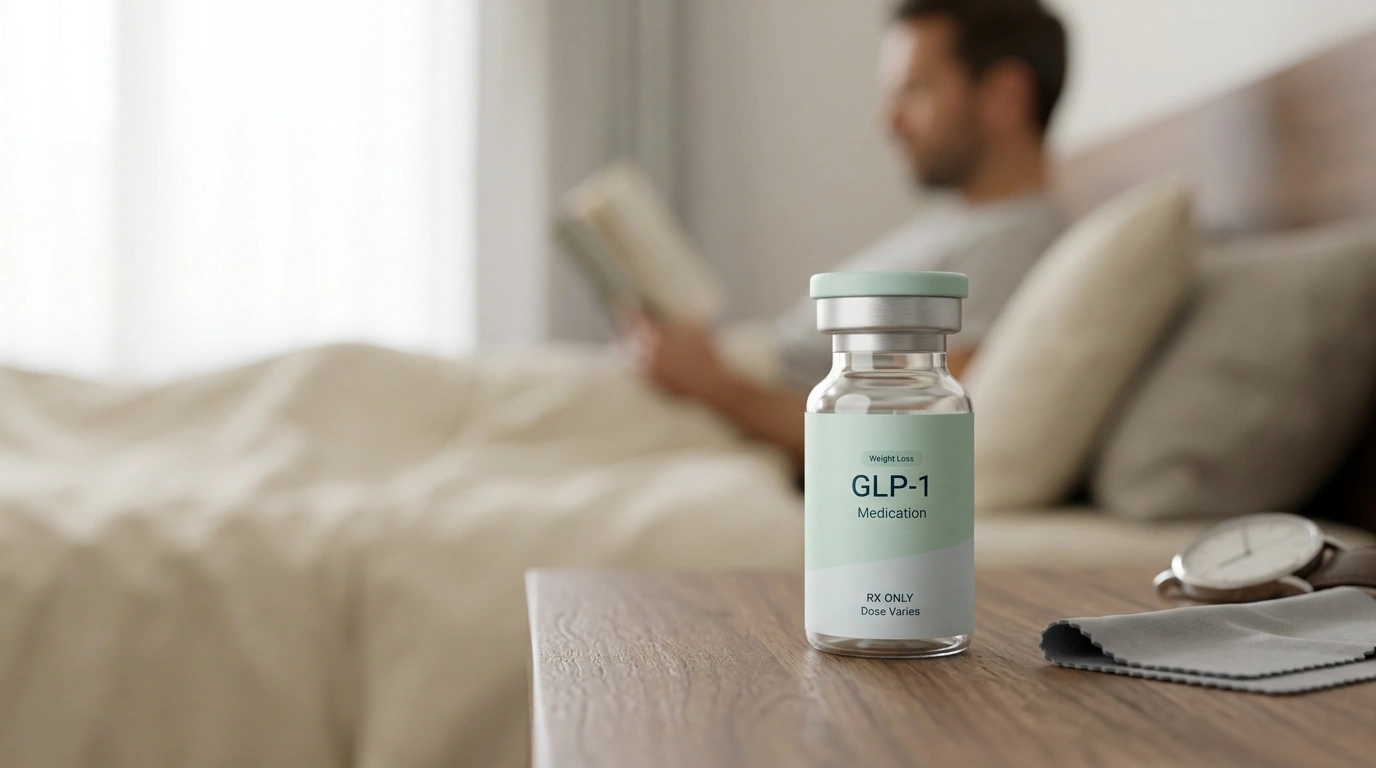
Finding an old medication pen in the back of the refrigerator or realizing your current prescription has been sitting on the counter longer than intended can be a stressful moment. When you are invested in a health journey, the last thing you want is to waste a dose or, worse, compromise your safety. Many people find themselves asking what happens if you take semaglutide after 28 days, especially when dealing with the logistical hurdles of modern weight management. At TrimRx, we prioritize clinical transparency and patient safety, ensuring you have the knowledge needed to handle your medication with confidence. This post covers why those timeframes exist, the risks of using expired or improperly stored peptides, and how to tell if your medication is still safe. Understanding the stability of your treatment is essential for maintaining the progress you have worked so hard to achieve.
Understanding the “28-Day Rule” for Semaglutide
The 28-day window is a common point of confusion for those using GLP-1 medications. This timeframe generally refers to how long certain versions of the medication remain stable and sterile after they have been removed from the refrigerator or after a multi-dose pen has been “activated.”
Semaglutide is a glucagon-like peptide-1 (GLP-1) receptor agonist. In plain English, this means it is a synthetic version of a hormone your body naturally produces to regulate hunger and blood sugar. Because semaglutide is a peptide—essentially a small protein—it is much more fragile than a standard aspirin or allergy tablet. For additional context, review this guide to compounded semaglutide storage and shelf life.
Quick Answer: Taking semaglutide after it has been out of the refrigerator for more than 28 days (for certain brands) or past its “beyond-use date” increases the risk of the medication losing its potency. While it may not become “toxic” immediately, it may fail to control your appetite or blood sugar, and the risk of bacterial contamination rises significantly once preservatives begin to degrade.
Why Timeframes Vary Between Branded Medications
Not all semaglutide products follow the exact same 28-day rule. The manufacturer of each brand-name drug conducts stability testing to determine exactly how long their specific formulation stays safe and effective under different conditions.
Wegovy® and the 28-Day Limit
Wegovy®, which is FDA-approved for chronic weight management, is typically distributed in single-dose pens. These pens should be stored in the refrigerator. However, if a Wegovy® pen is removed from the fridge and kept at room temperature (up to 86°F), it must be used within 28 days. If it is not used within that window, the manufacturer recommends discarding it, even if the liquid looks clear.
Ozempic® and the 56-Day Window
Ozempic®, which is FDA-approved for the treatment of type 2 diabetes but often used off-label for weight management, has a different profile. An Ozempic® pen can actually last up to 56 days after its first use, regardless of whether it is kept in the refrigerator or at room temperature. This is because the multi-dose pen contains specific preservatives designed to keep the liquid sterile for that eight-week period.
Rybelsus® (Oral Semaglutide)
Rybelsus® is the oral tablet version of semaglutide. It does not require refrigeration but is highly sensitive to moisture. These tablets must stay in their original blister packaging until the exact moment of consumption. If a tablet is left out of its packaging for more than a few minutes, it can begin to degrade, though it generally follows a standard expiration date printed on the box rather than a “28-day” countdown.
The Science of Peptide Degradation
To understand why these dates matter, we have to look at the chemistry of the medication. Peptides like semaglutide are chains of amino acids held together by bonds. These bonds are sensitive to three main factors: temperature, light, and time. For more information about how opened medication changes over time, read how long compounded semaglutide is good for once opened.
Protein Denaturation
When semaglutide is exposed to heat or light for too long, the proteins can “denature.” This means they lose their physical shape. In the world of medicine, shape is everything. If the semaglutide molecule loses its shape, it can no longer “lock” into the GLP-1 receptors in your brain and gut. If it can’t lock in, it can’t signal to your body that you are full.
Aggregation
In some cases, old or heat-damaged peptides can undergo “aggregation.” This is when the molecules clump together. Not only does this make the medication ineffective, but these clumps can occasionally trigger an immune response at the injection site, leading to redness, itching, or swelling.
Preservative Breakdown
Most multi-dose vials or pens contain tiny amounts of preservatives like phenol or metacresol. These ingredients prevent bacteria from growing inside the liquid. These preservatives have a limited lifespan. Once you pass the 28-day or 56-day mark (depending on the product), the preservatives may no longer be strong enough to keep the solution sterile.
Key Takeaway: Using semaglutide past its recommended window is a gamble on both effectiveness and safety. A “dead” dose won’t help you reach your goals, and a contaminated dose could cause a preventable infection.
Risks of Using Semaglutide After 28 Days
If you decide to use a pen or vial that has passed its safety window, you may face several issues. While some people report “no side effects,” the clinical risks are well-documented. If you are considering a medically supervised prescription program, you can complete a free eligibility assessment.
1. Reduced Efficacy and “Weight Loss Stalls”
The most common result of using “expired” or degraded semaglutide is that it simply doesn’t work. You may notice your “food noise” returning or your appetite increasing. For those tracking their blood sugar, you might see unexpected spikes. This isn’t because the medication has failed you, but because the active ingredients have broken down into inactive components.
2. Injection Site Infections
Every time a needle enters a multi-dose pen or vial, there is a microscopic chance of introducing bacteria. The preservatives in the medication are designed to kill these bacteria. However, if those preservatives have expired, the bacteria can multiply. Injecting contaminated liquid can lead to:
- Abscesses (pockets of infection)
- Cellulitis (skin infection)
- Severe pain and swelling at the site
3. Allergic Reactions and Sensitivities
As the chemical composition of the drug changes due to breakdown, your body may no longer recognize it as the original medication. This can lead to localized allergic reactions. If you experience hives, extreme swelling, or difficulty breathing, you must seek medical attention immediately.
Compounded Semaglutide and the “Beyond-Use Date”
For many people, weight loss progress is supported through compounded semaglutide. It is important to distinguish this from branded products. Compounded medications are prepared by FDA-registered, inspected compounding pharmacies to meet specific patient needs or to address drug shortages. For a closer look at these timelines, read what happens if you use expired compounded semaglutide.
Unlike branded pens that have a standardized 28 or 56-day shelf life, compounded semaglutide comes with a Beyond-Use Date (BUD).
- What is a BUD? A BUD is the date after which a compounded preparation should not be used. It is determined by the pharmacy based on stability studies and the “sterility limit” of the vial.
- How long is it? Depending on the pharmacy, a BUD for compounded semaglutide is often between 30 and 90 days, provided it is kept refrigerated.
- Where to find it: The BUD will be clearly printed on your prescription label.
Because our platform connects you with licensed providers and high-quality compounding pharmacies, we ensure that every patient receives clear instructions on their specific medication’s lifespan. Our personalized programs are designed to take the guesswork out of these timelines.
How to Tell if Your Semaglutide Has Gone “Bad”
Even if your medication is within the 28-day or 56-day window, it can still spoil if it was left in a hot car or exposed to direct sunlight on a windowsill. Always perform a visual inspection before every injection. You can also review this semaglutide storage, travel, and handling guide for additional storage guidance.
The Visual Checklist
The liquid must be clear.
Semaglutide should look exactly like water. If it appears cloudy, milky, or “hazy,” the proteins have likely denatured or bacteria have begun to grow. Do not use it.
The liquid must be colorless.
Any tint of yellow, brown, or pink is a sign of chemical degradation.
There should be no particles.
If you see tiny “flakes,” “crystals,” or “clumps” floating in the liquid, the medication has aggregated. These particles can clog the needle and cause skin reactions.
It should not be frozen.
If your refrigerator accidentally froze your medication, it is ruined. Freezing destroys the delicate peptide structure of semaglutide. Even if it thaws and looks clear, the molecular structure is likely broken.
Note: If you are ever unsure about the appearance of your medication, consult a healthcare professional before administering the dose.
Proper Storage: Protecting Your Investment
To ensure your medication lasts until its expiration date or BUD, follow these storage best practices:
- Keep it in the dark: Store your pens or vials in their original box. Light is one of the fastest ways to break down a peptide.
- The Fridge Sweet Spot: Store your medication in the middle of the refrigerator. Avoid the door (where temperatures fluctuate) and the very back (where it might freeze).
- Travel Wisely: If you are traveling, use a small insulated medical cooler with a cold pack. Never leave your medication in a checked bag on an airplane, as temperatures in the cargo hold can reach extremes.
What to Do If Your Medication Expires
If you realize your semaglutide has passed the 28-day room-temperature limit or its printed expiration date, follow these steps:
- Do not inject the dose. The risk of a “null” dose or an infection is not worth it.
- Contact your provider. Explain the situation. They can help you determine if you need to skip a dose or if a replacement can be issued.
- Dispose of it safely. Do not throw pens or needles in the regular trash. Use an FDA-cleared sharps container or a heavy-duty plastic container (like a laundry detergent bottle) with a secure lid.
- Review your supply. Check your other pens or vials to ensure they are still within their safe windows.
Starting Fresh with a Personalized Program
Managing weight loss can feel like a full-time job, especially when you are trying to navigate medication shortages, storage rules, and dosage schedules. We believe that the process should be as stress-free as possible. Our platform, TrimRx, provides a telehealth-first approach that connects you with medical professionals who supervise your journey every step of the way.
When you join one of our programs, you aren’t just getting a prescription; you are getting a dedicated support team. This includes:
- Clear guidance on how to store and use your specific medication.
- Access to GLP-1 medications from FDA-registered, inspected compounding pharmacies.
- Unlimited support to answer questions like “I left my pen out, is it still okay?”
By focusing on metabolic health rather than just the number on the scale, we help you build a sustainable lifestyle.
Action Steps for Your Next Dose
If you are currently holding a pen and aren’t sure of its status, here is a quick checklist:
- Check the date: Is it past the manufacturer’s expiration date on the box?
- Check the “open” time: If it’s a branded pen, how many days has it been since the first use or since it left the fridge?
- Check the appearance: Is it clear, colorless, and free of particles?
- Verify storage: Has it been kept between 36°F and 46°F (for unopened pens) or below 86°F (for opened pens)?
If you fail any of these checks, it is time to reach out for a fresh start.
Conclusion
Taking semaglutide after 28 days—or whatever your specific medication’s limit may be—is not recommended by clinical standards. The risks range from the medication simply not working to the potential for serious injection site infections. Your health journey is too important to compromise with degraded or potentially contaminated supplies. At TrimRx, we are committed to providing an empathetic, science-backed environment where you can access personalized treatment without the confusion of traditional pharmacy visits. Our goal is to ensure you have the tools, the medication, and the expert support to reach your goals safely and sustainably.
If you are ready to take the next step in your metabolic health journey with a team that prioritizes your safety and success, we invite you to start with a free assessment quiz.
FAQ
Can I use Ozempic® if it has been out of the fridge for 30 days?
Yes, as long as it has not exceeded 56 days since its first use or since it was removed from the refrigerator. Unlike Wegovy®, which has a 28-day room-temperature limit, Ozempic® is formulated to remain stable at room temperature (up to 86°F) for up to 8 weeks. Always ensure the liquid remains clear and colorless.
What happens if I accidentally inject frozen semaglutide that has thawed?
You should not inject semaglutide that has been frozen. Freezing causes the peptide molecules to break apart or clump together, rendering the medication ineffective. Even if the liquid appears clear after thawing, the internal structure is likely damaged, and it will not provide the intended weight loss or blood sugar benefits.
Is it dangerous to take compounded semaglutide after its Beyond-Use Date?
The primary danger is a significant increase in the risk of bacterial contamination and a loss of potency. Compounded medications do not have the same long-term stability guarantees as mass-produced drugs, so the Beyond-Use Date (BUD) is a firm safety cutoff set by the pharmacist. Using it past this date can lead to infections or “stalled” progress in your treatment. For additional information, see can you use semaglutide after the date printed on the vial.
Why does semaglutide have to be clear and colorless?
The “clear and colorless” requirement is a visual proof of the drug’s integrity. Because semaglutide is a protein-based medication, any cloudiness, change in color, or visible particles indicate that the proteins have begun to clump or break down. This physical change means the drug can no longer interact correctly with your body’s receptors and may be unsafe to inject.
If you need guidance on starting a supervised prescription program, you can complete the free assessment quiz.
Disclaimer: This content is for informational purposes only and does not constitute medical advice. It is not intended to diagnose, treat, cure, or prevent any disease or condition. Individual results may vary. Always consult a qualified healthcare professional before starting any weight loss program or medication.

Transforming Lives, One Step at a Time
Keep reading
Is a Body Composition Scan Worth It While You’re on Semaglutide?
Worth it if it will change something you do, and mostly not if it will not. That is the whole test. A scan that…
Why a Stomach Bug on Semaglutide Can Change Your Kidney Labs
Dehydration is almost always the explanation, and the reason it happens faster on a GLP-1 is that several things stack. You were already drinking…
Gallstones Found on a Scan While on Semaglutide: Do You Have to Stop?
Not automatically. Gallstones found incidentally, without symptoms, are common in the general population and are frequently managed by watching rather than acting. The decision…


