How Many Doses Are in a Zepbound Pen?
Introduction
Starting a medical weight loss journey involves learning many new technical details, from biological mechanisms to the logistics of weekly injections. You may have recently received a prescription for Zepbound® or are researching the process, and one of the most common questions involves the delivery system itself. Understanding exactly how your medication is packaged is essential for ensuring you maintain your schedule and never miss a treatment day.
At TrimRx, we focus on making these details simple and accessible so you can focus on your health goals rather than feeling confused by medical equipment. This post will clarify how many doses are in a Zepbound® pen, the different formats available in the US, and how to manage your supply effectively. Our mission is to provide a transparent, science-backed approach to weight management that removes the guesswork from the process. Understanding your dosing is the first step toward a successful, sustainable outcome.
The Short Answer: Doses per Pen
For most individuals using the standard pre-filled injection system in the United States, there is exactly one dose in each Zepbound® pen. These are designed as single-dose, disposable devices. This means that once you have triggered the injection and the medication has been delivered, the pen is empty and cannot be reused or refilled.
While a single pen contains one dose, the medication is typically dispensed in a carton that contains four individual pens. Since the standard dosing schedule for this medication is once per week, one box usually represents a four-week (one-month) supply. It is a common misconception among new patients that a single pen might contain a full month of medication, but the device is engineered to deliver the entire pre-measured amount in one sitting.
Quick Answer: A standard Zepbound® pen contains one single dose. You will use one entire pen for your weekly injection and then dispose of it in a sharps container.
For a broader look at the device and dosing schedule, read this guide to how many doses are in a Zepbound pen.
Different Delivery Formats for Tirzepatide
While the single-dose pen is the most common format for Zepbound®, there are other ways the medication, known as tirzepatide, may be packaged. The specific format you receive depends on the prescription written by a healthcare provider and the current availability at the pharmacy.
Single-Dose Pens
The standard Zepbound® pen is a “set it and forget it” device. It comes pre-filled with a specific strength—such as 2.5 mg, 5 mg, or up to 15 mg. The needle is already integrated into the device, so you do not need to attach anything. You simply remove the base cap, place the pen against your skin, and unlock and press the button. Because the needle is hidden before and after the injection, this format is often preferred by those who have a fear of needles.
Single-Dose Vials
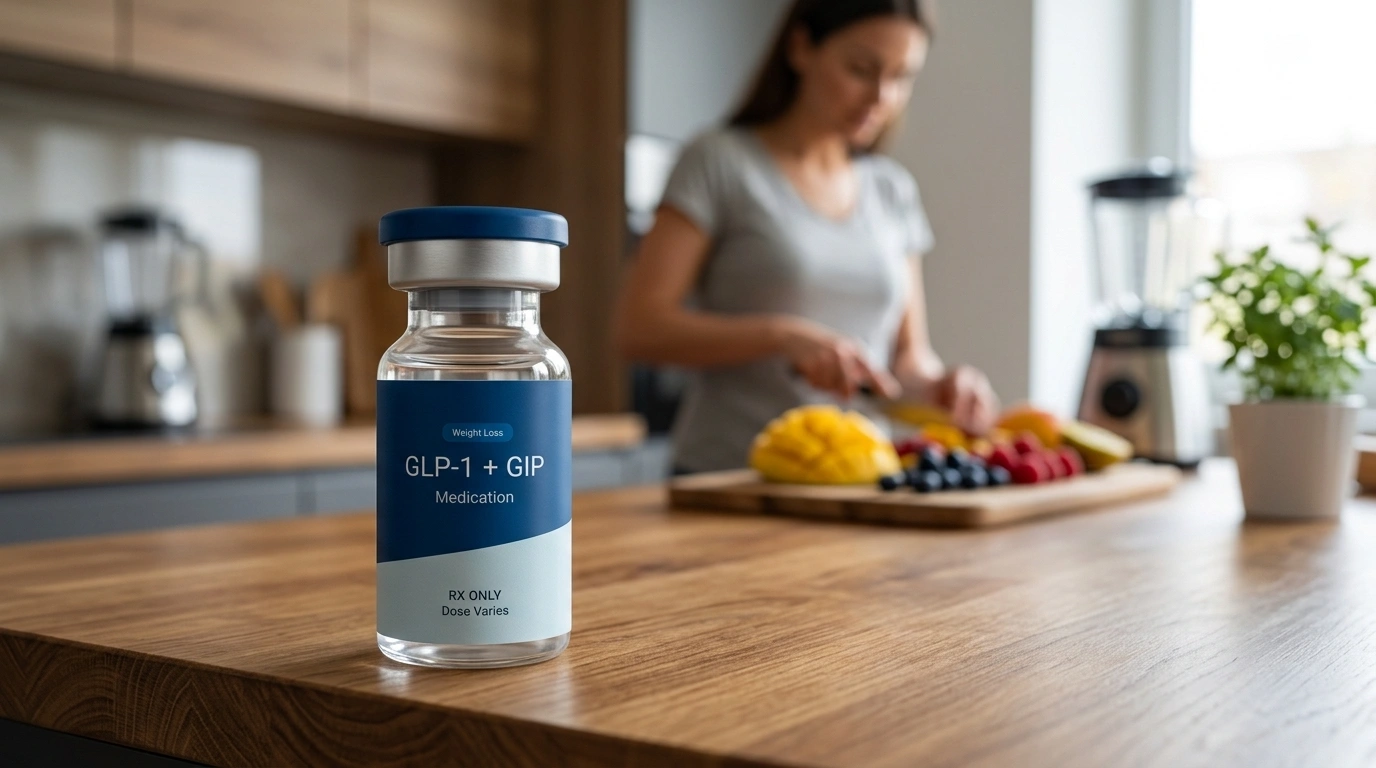
In some instances, the manufacturer may release single-dose vials. These vials contain the same active ingredient, tirzepatide, but require a different administration method. Instead of a pre-filled pen, you would use a traditional syringe and needle to draw the medication out of the vial. Like the pen, each vial contains only one dose. You should never attempt to “split” a vial into multiple doses unless specifically instructed by a medical professional, as the vials are not designed to maintain sterility after the first puncture.
The Multi-Dose KwikPen
In certain markets or specific clinical contexts, a version called the KwikPen may be used. Unlike the standard single-dose pen, the KwikPen is a multi-dose device that typically contains four doses of medication. Users must attach a new, sterile needle for each weekly injection and “dial” the correct dose on the pen’s barrel. While this format is common for other medications, the vast majority of weight loss patients in the US currently utilize the single-dose injector.
For additional context on available strengths and titration, review this tirzepatide dosage guide.
Understanding Your Dosing Schedule
The number of doses you use over time is determined by a process called titration. Because GLP-1 (glucagon-like peptide-1) and GIP (glucose-dependent insulinotropic polypeptide) receptor agonists affect the digestive system, the body needs time to adjust.
- The Loading Phase: Most patients start at a 2.5 mg dose once weekly for the first four weeks. This is not intended for significant weight loss but rather to help your system acclimate to the hormone.
- The Step-Up Process: After the initial four weeks, a provider may increase the dose to 5 mg. This continues in 2.5 mg increments (7.5 mg, 10 mg, 12.5 mg, and 15 mg) as needed based on your progress and how well you tolerate the medication.
- Maintenance: Once you reach an effective dose that provides consistent results without unmanageable side effects, you may stay at that level for an extended period.
Every time your dose increases, the physical pen remains a single-dose device; the only thing that changes is the concentration of the medication inside that single pen.
Key Takeaway: You will always use one full pen per week, regardless of whether your dose is 2.5 mg or 15 mg. Never attempt to use a pen more than once.
You can also review this step-by-step tirzepatide dosing schedule for more information about gradual dose increases.
If you are considering a prescription program, take the free assessment quiz to see whether a personalized approach may be appropriate for you.
How to Properly Use the Single-Dose Pen
Because each pen only contains one dose, it is vital to use it correctly to ensure you receive the full amount of medication. A “misfire” or incorrect technique can lead to a wasted dose, which can disrupt your treatment schedule.
Step 1: Inspect the medication. Check the liquid through the clear window of the pen. It should be clear and colorless or slightly yellow. If it is cloudy, contains particles, or the expiration date has passed, do not use it.
Step 2: Choose and prep the site. Common injection sites include the abdomen (at least two inches from the belly button), the front of the thigh, or the back of the upper arm. Clean the area with an alcohol swab and let it air dry.
Step 3: Remove the cap. Pull the base cap straight off. Do not put the cap back on, as this could damage the hidden needle. Do not touch the needle or the plunger.
Step 4: Place and unlock. Place the clear base flat against your skin at the injection site. Twist the lock ring to the “unlock” position.
Step 5: Press and hold. Press and hold the purple injection button. You will hear a loud click, which signals the start of the injection. Continue holding the pen against your skin until you hear a second click or see the gray plunger in the window. This usually takes about 10 seconds.
Step 6: Dispose safely. Once the injection is complete, lift the pen away and dispose of it immediately in an FDA-cleared sharps container.
For more administration guidance, read this visual guide to self-injecting tirzepatide.
Managing Your Supply and Refills
Since each box of Zepbound® contains four pens (four doses), you effectively have a 28-day supply. Planning your refills is a critical part of the process.
Most pharmacies and telehealth platforms recommend initiating a refill request when you have one or two doses remaining. This provides a buffer in case of pharmacy delays or supply chain issues. It is important to remember that these medications require refrigeration, so they cannot be easily “stocked up” in large quantities without proper storage.
At TrimRx, we emphasize the importance of a consistent supply. Our platform connects you with licensed providers who can help manage your treatment plan and ensure you are moving through your titration schedule at the right pace. If branded medications are unavailable or cost-prohibitive, many patients look into compounded alternatives.
Note: Compounded semaglutide and compounded tirzepatide are prepared by FDA-registered and inspected compounding pharmacies. While they are not FDA-approved like branded Zepbound®, they are often used when branded versions are in short supply.
Storing Your Medication for Maximum Efficacy
The stability of the medication inside the pen depends on temperature control. Because Zepbound® is a protein-based hormone, high heat or freezing temperatures can cause the molecules to break down, making the dose ineffective.
- Refrigeration: Store your pens in their original carton in the refrigerator between 36°F and 46°F.
- Room Temperature: If necessary, a pen can be kept at room temperature (up to 86°F) for up to 21 days. If a pen is left out longer than this, it should be discarded.
- Avoid Light: Keep the pens in their original box to protect them from light, which can also degrade the medication.
- Do Not Freeze: If a pen accidentally freezes, do not use it even after it thaws. Freezing destroys the active compounds.
For more information about handling and storage, explore this Zepbound dosing and administration guide.
The Role of Personalized Weight Loss Programs
Knowing how many doses are in a pen is a practical necessity, but long-term success requires more than just an injection. Metabolic health is a complex puzzle involving nutrition, physical activity, and hormonal balance.
Personalized programs, like those we facilitate through our platform, take your unique health history into account. We believe that weight loss is not a one-size-fits-all journey. For some, the standard Zepbound® or Mounjaro® (tirzepatide) path is ideal. For others, compounded versions or even oral formats may be more appropriate based on their lifestyle and medical needs.
By working with a dedicated team of specialists, you get 24/7 access to support. This is especially helpful if you have questions about your dosing, experience side effects, or aren’t seeing the results you expected. Our programs are designed to be telehealth-first, meaning no waiting rooms and no unnecessary friction—just medical expertise delivered straight to your door.
To explore whether a personalized program may fit your needs, complete a free eligibility assessment.
Enhancing Your Treatment with Targeted Support
While the doses in your Zepbound® pens do the heavy lifting in terms of appetite suppression and blood sugar regulation, you can support your body’s natural pathways through specific supplements.
Many patients find that as they lose weight and eat less, they may miss out on essential nutrients. We offer quick-access supplements like GLP-1 Daily Support and Weight Loss Boost that can be purchased immediately without a clinical assessment. These are designed to complement the biological changes occurring during your weight loss journey, helping to maintain energy levels and support metabolic function.
For energy and metabolic support during weight loss, explore the Weight Loss Boost supplement.
Myth: If I miss a dose, I should use two pens the following week to catch up. Fact: Never “double up” on doses. If you miss a dose and there are at least 3 days (72 hours) until your next scheduled dose, take the missed dose as soon as possible. If fewer than 3 days remain, skip it and wait for your next scheduled injection.
Managing Common Side Effects
Because you are introducing a powerful hormone into your system once a week, you may experience some side effects. These are usually most prominent when you first start the medication or when you move up to a higher dose (a new pen strength).
Commonly reported issues include:
- Nausea and vomiting
- Diarrhea or constipation
- Heartburn or indigestion
- Fatigue
Most of these are mild to moderate and tend to decrease as your body adjusts. To manage these, we recommend staying hydrated and eating smaller, more frequent meals. If you find that side effects are interfering with your daily life, it is crucial to consult a healthcare provider. They may suggest staying at your current dose for an extra month before increasing it again.
For additional education on first-dose experiences and injection concerns, read what to expect with your first dose of tirzepatide.
Why Dosing Accuracy Matters
The single-dose pen design is specifically intended to prevent dosing errors. In the past, when patients had to manually measure medication from vials, the risk of taking too much or too little was significantly higher.
By providing exactly one dose per pen, the manufacturer ensures:
- Safety: You cannot accidentally inject a double dose from the same device.
- Sterility: The needle is used only once and then discarded, preventing infection.
- Consistency: Every weekly injection provides the exact amount of tirzepatide required for your current stage of treatment.
If you ever find that a pen has malfunctioned—for example, if the liquid is still in the window after you have pressed the button—do not attempt to fix it or use a second pen immediately. Contact your pharmacist or provider for guidance on how to handle a potential missed dose due to equipment failure.
Preparing for Your Weight Loss Journey
Understanding the logistics of your medication—like knowing there is one dose per pen and four pens per box—empowers you to take control of your health. It removes the anxiety of the unknown and allows you to establish a routine that fits your life.
At TrimRx, we are committed to being your partner in this transformation. We combine clinical expertise with modern technology to deliver a program that is as unique as you are. Whether you are curious about the science behind GIP/GLP-1 receptors or simply need a reliable way to access weight loss support, we are here to guide you every step of the way.
Sustainable weight loss is about more than just the number on the scale; it is about reclaiming your energy, improving your metabolic markers, and feeling confident in your body. By choosing a structured, medically supervised program, you are giving yourself the best chance at long-term success.
Bottom line: In the US, a Zepbound® pen is a single-use device containing one dose. A standard prescription includes four pens to cover a one-month treatment cycle.
FAQ
Can I save half of a Zepbound pen for later in the week?
No, the Zepbound® pen is a single-dose device designed to deliver the entire amount of medication in one injection. The mechanical parts of the pen lock after use, and the integrated needle is no longer sterile after the first puncture. Attempting to split a dose can result in injury, infection, or receiving an inaccurate amount of medication.
What should I do if I accidentally leave my Zepbound box on the counter?
If your medication was left at room temperature (up to 86°F), it is still safe to use for up to 21 days, provided it was not exposed to extreme heat or direct sunlight. You should place it back in the refrigerator as soon as possible. However, if the medication was left out for more than 21 days or was exposed to temperatures above 86°F, you should contact your pharmacist and dispose of the pens safely.
How many pens are in a standard Zepbound prescription?
A standard monthly prescription of Zepbound® typically contains one carton with four pre-filled, single-dose pens. This is intended to provide one injection per week for four weeks. Some insurance plans or pharmacy programs may allow for a 90-day supply, which would consist of three cartons containing a total of 12 pens.
Is it possible to get tirzepatide in a multi-dose format?
While the standard Zepbound® pen in the US is single-dose, tirzepatide is sometimes available in single-dose vials that require a syringe for administration. Additionally, some patients who use compounded tirzepatide through specialized pharmacies may receive a multi-dose vial that contains enough medication for four or more weeks. Always follow the specific instructions provided by your healthcare professional and the pharmacy that dispensed your medication.
If you are exploring whether a prescription program is appropriate for you, find out if GLP-1 medications may be right for you.
Disclaimer: This content is for informational purposes only and does not constitute medical advice. It is not intended to diagnose, treat, cure, or prevent any disease or condition. Individual results may vary. Always consult a qualified healthcare professional before starting any weight loss program or medication.

Transforming Lives, One Step at a Time
Keep reading

Can You Lower Your Zepbound Dose Without Losing Your Progress?
Often yes, and the honest caveat is that the evidence for dose reduction specifically is thinner than the evidence for stopping. We know a…
Why Is There a Bruise Where I Injected My Zepbound?
A bruise means a small blood vessel was disturbed under the skin and blood spread into the surrounding tissue. It is one of the…
My Zepbound Pen Won’t Click Past a Certain Dose
Start by checking which device you are holding, because the answer depends entirely on that. Zepbound has commonly been supplied in the United States…


