What Does Mounjaro Pen Look Like?
Introduction
Taking the first step toward a healthier lifestyle often begins with a delivery at your doorstep. For many people, opening a box of Mounjaro® for the first time brings a mix of hope and a few technical questions. One of the most common concerns is simply knowing what to look for when you hold the device in your hand. Understanding the physical features of the medication is more than just curiosity; it is a vital part of your safety and confidence.
At TrimRx, we believe that clear information is the best way to support you through the early days of your journey. This article provides a detailed visual guide to the medication pen, its color-coded doses, and how to tell if it has been used correctly. By familiarizing yourself with these visual cues, you can focus less on the device and more on your long-term wellness goals.
Quick Answer: The Mounjaro pen is a 6-inch, cylindrical plastic autoinjector. It features a clear medication window, a purple injection button at the top, and a grey safety cap at the bottom. The label is color-coded based on the dosage strength, ranging from grey for 2.5 mg to orange for 15 mg.
If you are exploring whether a prescription weight-management program may be appropriate for you, you can complete a free eligibility assessment.
The Anatomy of the Mounjaro Pen
The version of Mounjaro® most common in the United States is a single-dose autoinjector. This means the device is designed to be used once and then discarded. The needle is never visible during the preparation phase, which is a significant relief for those who feel uneasy about traditional injections.
The device is roughly six inches long, which is about the size of a thick permanent marker. It is made of durable, high-quality plastic and feels solid in the hand. The main body is primarily white and grey, with a clear section near the bottom where you can see the medication.
The Top: Injection Button and Lock Ring
The very top of the pen features a slightly curved, purple injection button. This is the part you will press to start the medication delivery. Surrounding the base of this button is a clear or translucent “lock ring.”
The lock ring acts as a safety switch to prevent the pen from firing accidentally. It has two distinct icons: a “locked” padlock and an “unlocked” padlock. You must physically twist the ring from the locked position to the unlocked position before the button can be depressed. This tactile feature ensures that the medication is only released when you are intentionally ready to begin the process.
The Middle: The Medication Window
Perhaps the most important visual feature is the clear plastic window located in the lower half of the pen. Before you use the device, this window allows you to inspect the liquid inside.
The medication should always look clear and colorless, or perhaps a very slight yellow. If the window appears cloudy, contains visible floating particles, or shows any signs of leaking, the pen should not be used. After the injection is complete, this window serves a second purpose: a grey plastic plunger will move down to fill the entire clear space. This is your visual confirmation that the dose has been successfully delivered.
For more information about what to expect during administration, review this step-by-step GLP-1 injection guide.
The Bottom: Grey Base Cap and Hidden Needle
The bottom of the pen is protected by a grey, triangle-shaped base cap. This cap keeps the injection site sterile and protects the hidden needle. You should only remove this cap when you are sitting down and ready to perform the injection.
Once the cap is removed, you will see a clear base. The needle itself remains tucked inside this clear base and only emerges for a few seconds when the button is pressed. Because the needle is so thin and the mechanism moves so quickly, many users report that the physical sensation is much milder than they anticipated.
Color-Coding by Dosage Strength
To help prevent medication errors, the manufacturer uses a strictly defined color-coding system. As you progress through your treatment, your licensed provider may increase your dose—a process known as titration. The colors on the pen label and the outer box change with each strength to help you verify you are using the correct one.
| Dosage Strength | Label Color | Primary Use Phase |
|---|---|---|
| 2.5 mg | Grey | Initiation (Month 1) |
| 5 mg | Purple | Step-up Dose |
| 7.5 mg | Green | Intermediate Maintenance |
| 10 mg | Pink | Intermediate Maintenance |
| 12.5 mg | Blue | High Maintenance |
| 15 mg | Orange | Maximum Maintenance |
Visual Verification Steps:
- Compare the color on the box to the color on the pen label.
- Ensure the milligrams (mg) printed in the center of the colored shape match your prescription.
- Check that the outer box contains four pens of the same color.
Key Takeaway: The color-coded system is a safety feature designed to ensure you are on the correct step of your titration schedule. Always double-check the label color before removing the base cap.
If you are unsure whether a prescription program may fit your needs, you can start the assessment process.
Visual Indicators of a Successful Injection
Knowing what the pen looks like after use is just as important as knowing its appearance beforehand. Because the needle retracts automatically, you cannot rely on “seeing the needle” to know the injection is over. Instead, you must look for the grey plunger.
The Before and After Appearance:
- Before: The window is clear, and you can see the liquid medication. The top button is in the locked position, and the grey cap is on.
- During: Once the button is pressed, you will hear a loud click. A second click will follow a few seconds later.
- After: The grey plunger fills the clear window completely. You may see a tiny drop of liquid on the tip of the pen or your skin; this is normal.
If you look at the pen and the window is still clear, the injection did not happen. This usually occurs if the lock ring was not twisted to the “unlocked” position or if the button was not pressed firmly enough. If the grey plunger is visible, the mechanical process is finished, and the pen can be safely placed in a sharps container.
For a closer look at the used device, read what a Mounjaro pen looks like after injection.
Bottom line: A grey plunger filling the medication window is the universal visual signal that a Mounjaro pen is empty and the dose has been delivered.
The Liquid Inside: Quality and Safety
The appearance of the medication itself is a key safety indicator. Even if the pen looks perfect on the outside, you must always inspect the liquid through the clear window.
Signs of High-Quality Medication:
- Completely clear, like water.
- Slightly yellow, which may also be normal.
- Free of any bubbles that do not move when tapped.
- No visible “strings” or floating specks.
Warning Signs:
- Cloudiness or a “milky” appearance.
- Visible particles or flakes.
- The liquid appears dark brown or opaque.
- Frozen crystals or slush inside the window.
If the medication has been frozen or left in direct sunlight for an extended period, it may break down chemically. Even if the pen looks normal, these environmental factors can make the treatment less effective or lead to irritation. Always store your medication in the refrigerator in its original box to protect it from light.
You can also review this guide to compounded tirzepatide storage and shelf life for related storage considerations.
Comparing Branded Pens and Compounded Options
While many people are familiar with the look of the branded autoinjector, there are other ways to access tirzepatide for weight management. Through the TrimRx platform, many individuals are prescribed compounded tirzepatide, which has a very different physical appearance.
The Appearance of Compounded Medication
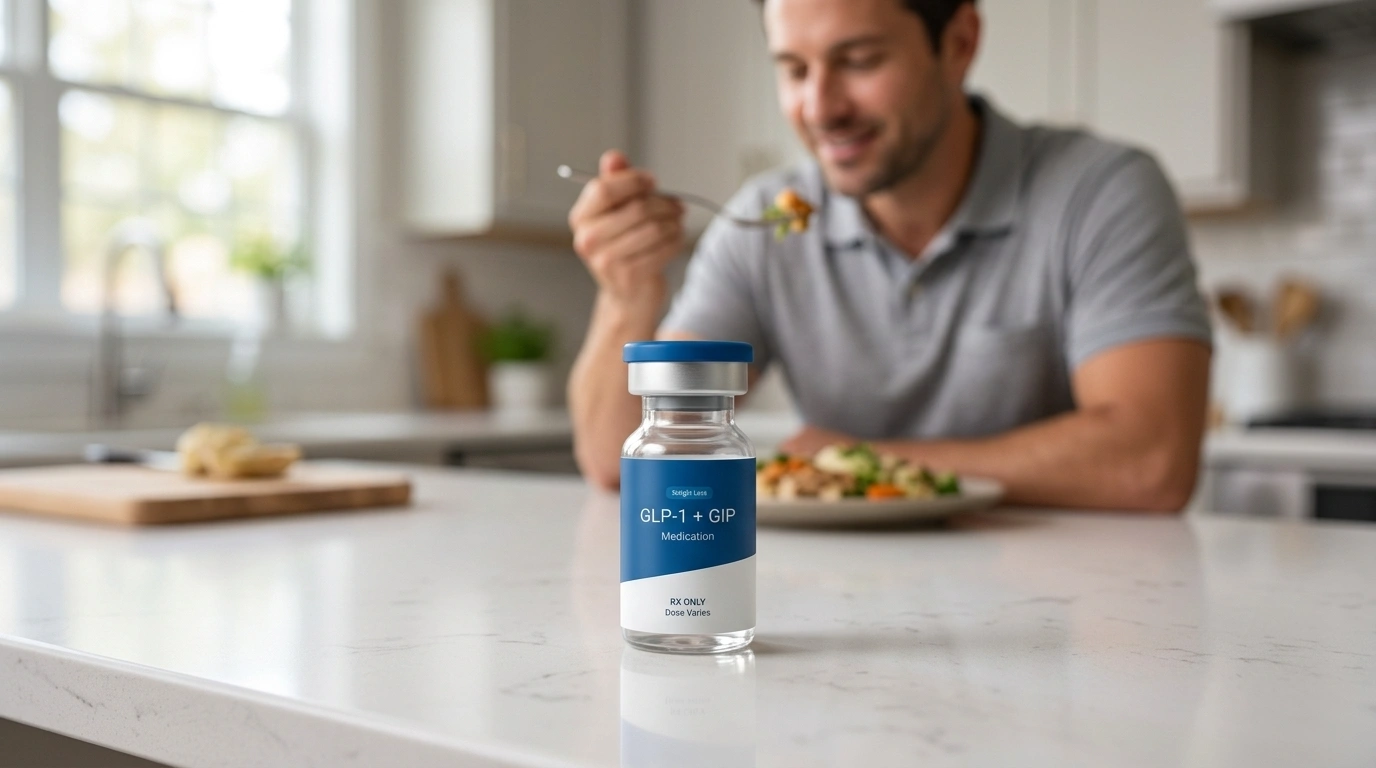
Compounded medication is prepared by FDA-registered, inspected compounding pharmacies. Unlike the single-use plastic pens, compounded options typically arrive in a multi-dose glass vial.
What Compounded Tirzepatide Looks Like:
- The Vial: A small, clear glass bottle with a rubber stopper on top. It usually contains a one-month supply of medication.
- The Syringes: You will use thin, disposable insulin syringes to draw the medication from the vial.
- The Liquid: Much like the branded version, the liquid in the vial should be clear and colorless to slightly yellow.
One advantage of this format is that it allows for highly personalized dosing. While branded pens come in fixed increments, a vial and syringe allow a licensed provider to fine-tune a titration schedule specifically for your body’s response.
Note: Compounded medications are prepared in regulated pharmacies but are not FDA-approved. They contain the same active ingredients as branded versions but offer a different delivery method that some find more flexible.
For a broader comparison of delivery methods, see this guide to GLP-1 injection sites and vial-based injections.
International Variations: The KwikPen
If you are researching the medication online, you may see images of a device that looks different from the American autoinjector. In some countries, such as the UK, Mounjaro® is distributed in a “KwikPen” format.
The KwikPen is a multi-dose device. It looks more like a traditional insulin pen with a dial on the end. Instead of a one-time button press, the user attaches a new needle each week and “dials” the dose. While this format is common internationally, the single-dose autoinjector remains the standard for branded treatment in the U.S. It is important to know which version you have, as the instructions for use are completely different.
How to Prepare for Your First View
When your shipment arrives, we recommend taking a few minutes to sit down and inspect the contents without the pressure of immediately injecting. This “dry run” for your eyes helps reduce anxiety.
A Simple Inspection Checklist:
- Check the Box: Ensure the seal is not broken and the name on the box matches your prescription.
- Verify the Dose: Look at the color-coded triangle and the mg strength.
- Check the Date: Find the expiration date on the side of the pen.
- Inspect the Pen: Ensure the plastic is not cracked and the grey cap is firmly attached.
- Look at the Liquid: Confirm it is clear and free of particles.
If everything looks correct, return the pens to their box and place them in the refrigerator. Keeping them in the original carton is the best way to protect the medication from light, which can degrade the active ingredients over time.
Managing Your Routine with TrimRx
The physical appearance of a pen is just one part of a larger medical program. At TrimRx, we focus on making the entire process—from your first inquiry to your long-term maintenance—transparent and supportive.
Our telehealth-first approach means you do not have to navigate these visual details alone. We provide a platform where you can access licensed providers who understand the nuances of GLP-1 and GLP-1 + GIP medications. These hormones work by signaling to your brain that you are full and slowing the rate at which your stomach empties, helping you manage your appetite more effectively.
We connect you with specialists who can answer your questions about pen mechanics, side effects, or titration schedules. This personalized support is designed to ensure that you feel like a participant in your health, not just a recipient of a package.
If you are considering a provider-guided program, you can see if you qualify for a personalized program.
Step-by-Step: Handling the Device
If you have confirmed that your pen looks exactly as it should, you are ready to follow the administration process. Following these steps ensures the device functions as intended and you receive your full dose.
- Step 1: Wash your hands. Always start with clean hands and a clean injection site, usually the stomach or thigh.
- Step 2: Remove the grey cap. Pull it straight off; do not twist it. Once the cap is off, do not put your fingers near the clear base.
- Step 3: Place and unlock. Press the clear base flat against your skin, then twist the lock ring to the “unlocked” position.
- Step 4: Press and hold. Push the purple button down. You will hear a click. Hold the pen against your skin for up to 10 seconds until you hear a second click.
- Step 5: Verify and dispose. Lift the pen and check for the grey plunger in the window. Place the used pen in a sharps container immediately.
For additional preparation guidance, review this GLP-1 injection safety guide.
Myth: “If I see a tiny drop of liquid on my skin, the injection failed.”
Fact: A small drop of liquid on the skin or the tip of the pen is perfectly normal. The pen is designed to account for this. As long as you heard the second click and see the grey plunger, you received your full dose.
Storage and Light Protection
The way your medication looks can be affected by how you store it. Tirzepatide is a protein-based medication, meaning it is sensitive to both heat and light.
If a pen is left out in the sun, the liquid may begin to break down. While it might not change color immediately, it can lose its potency. This is why the pens are housed in opaque plastic and why they should always be kept in their original paper box when not in use.
If you are traveling, the pen can stay at room temperature, up to 86°F, for up to 21 days. However, it must still be protected from extreme heat and light. If you ever find a pen that has been left in a hot car or near a window, it is best to consult a healthcare professional before using it, as the visual appearance may no longer be a reliable indicator of its safety.
What to Do If the Pen Looks Damaged
While rare, mechanical devices can sometimes have defects. If your pen does not look like the descriptions above, do not attempt to “fix” it.
Common Damage Signs:
- The clear medication window is cracked or leaking liquid.
- The purple button is already depressed or stuck.
- The lock ring will not twist to the “unlocked” position.
- The grey plunger is already visible before you have used the pen.
If you encounter any of these issues, contact your pharmacy or the support team on our platform. Using a damaged device could result in a “wet injection,” where the medication does not enter the skin, or an accidental needle stick. Safety should always come first.
The Science Behind the Design
The appearance of the Mounjaro® pen is a direct result of the science it delivers. Tirzepatide is a “dual agonist,” meaning it mimics two different natural hormones in your body: GLP-1 and GIP. These hormones are proteins, and if they were taken in a standard pill form, your stomach acid would digest them before they could work.
This is why the medication must be injected into the subcutaneous fat layer. The autoinjector design was created specifically to make this delivery method as approachable as possible. By hiding the needle and automating the pressure and timing of the injection, the device removes much of the “human error” that can occur with traditional syringes. The visual cues, like the color-coding and the grey plunger, are there to provide you with immediate feedback that the science is working exactly as it should.
Conclusion
The Mounjaro® pen is a sophisticated tool designed with the user’s comfort and safety in mind. From its 6-inch cylindrical body to its purple injection button and grey safety cap, every feature serves a purpose. The color-coding helps you stay on track with your dose, while the clear window and grey plunger offer peace of mind that the medication has been properly delivered.
We are committed to helping you navigate every aspect of your weight loss journey with clarity and confidence. Whether you are using a branded autoinjector or a personalized compounded vial, the most important factor is having a supportive team and a plan that fits your life.
- Check the color-coded label to verify your dose strength.
- Inspect the liquid for clarity through the medication window.
- Look for the grey plunger as confirmation of a successful injection.
- Store pens in their original box in the refrigerator.
“A weight loss journey is built on small, consistent actions. Understanding your tools is the first step toward mastering your progress.”
If you are ready to take the next step in your health journey, our personalized programs offer medical supervision and guidance based on your information.
Take the free assessment quiz to see which personalized weight-management program may be appropriate for you.
FAQ
What should I do if the medication in the window looks cloudy?
If the liquid inside the pen window appears cloudy, milky, or contains floating particles, do not use the pen. The medication should be clear and colorless or have a very slight yellow tint. Contact your pharmacy or healthcare provider to report the issue and request a replacement, as cloudy medication may be compromised or unsafe.
Why is there a small drop of liquid left on my skin after the injection?
Seeing a small drop of liquid on your skin or the tip of the pen is completely normal and does not mean the injection failed. The autoinjector is designed to deliver the full dose even if a tiny amount remains on the surface. As long as you heard the second click and the grey plunger is visible in the window, you have received your medication.
Can I see the needle in a Mounjaro pen?
The needle is hidden inside the clear base of the pen and is not visible before or after the injection. It only emerges briefly when the purple button is pressed and the device is held against the skin. Once the injection is complete, the needle retracts automatically into the device to prevent accidental injury.
What color is the 5 mg Mounjaro pen?
The 5 mg Mounjaro pen features a purple label and purple accents on the packaging. Each dosage strength has a unique color to help you identify it quickly: 2.5 mg is grey, 5 mg is purple, 7.5 mg is green, 10 mg is pink, 12.5 mg is blue, and 15 mg is orange. Always verify the dose printed on the label matches your current prescription.
If you are considering prescription treatment, complete a free eligibility assessment.
Disclaimer: This content is for informational purposes only and does not constitute medical advice. It is not intended to diagnose, treat, cure, or prevent any disease or condition. Individual results may vary. Always consult a qualified healthcare professional before starting any weight loss program or medication.

Transforming Lives, One Step at a Time
Keep reading
When You and Your Spouse Are Both on Mounjaro
It is increasingly common for both people in a couple to be on the same medication. Sometimes one partner starts and the other follows…
Black Friday Shopping on Mounjaro
For a lot of families, Black Friday is a tradition: lining up before dawn, racing through stores with a list, and shopping until the…

Mounjaro Alternatives: What Else to Consider
If Mounjaro isn’t the right fit, the closest alternatives are other GLP-1 medications, chiefly semaglutide (Ozempic for diabetes, Wegovy for weight), along with a…


