Tirzepatide Cost Barriers for Weight Loss

Tirzepatide, known as Mounjaro (for type 2 diabetes) and Zepbound (for weight loss), is a weekly injectable medication offering significant weight reduction – an average of 21% body weight loss in clinical trials. However, the cost is a major hurdle for many. Here’s what you need to know:
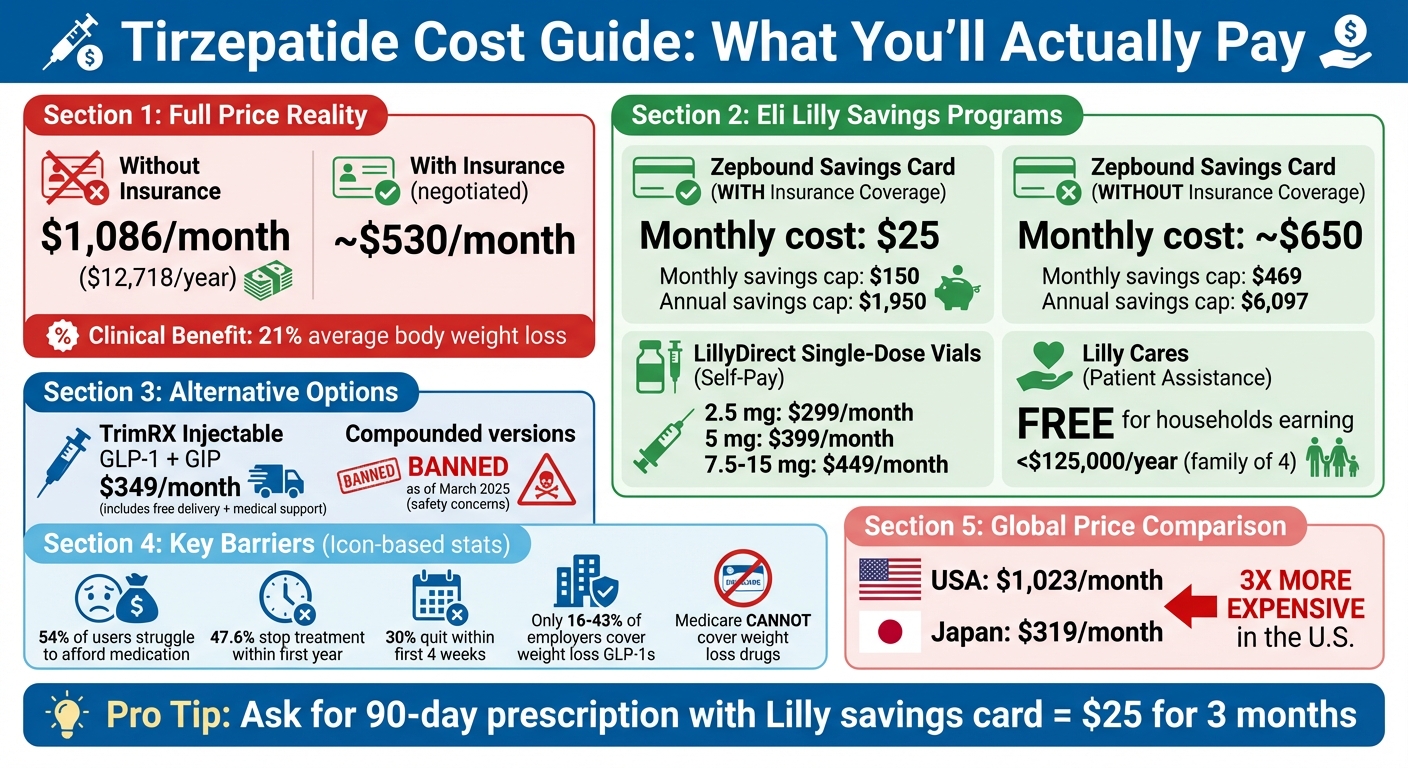
- Cost: Around $1,086/month or $12,718/year without insurance. Discounts through Eli Lilly’s programs can reduce costs to $299–$449/month for single-dose vials.
- Insurance Coverage: Coverage varies widely. Medicare cannot cover weight loss drugs, and only 16%-43% of employers include these drugs in their plans.
- Access Issues: Over 54% of users struggle to afford the medication, with 47.6% stopping treatment within the first year.
- Alternatives: Compounded versions were banned in 2025 due to safety concerns, but programs like TrimRX offer injectable options starting at $349/month.
While tirzepatide is effective, its high cost and insurance limitations make affordability a challenge. Manufacturer savings programs and patient assistance options can help reduce expenses, but many still face barriers to access.
Tirzepatide Cost Breakdown: Pricing Options and Savings Programs 2025
How Much Does Tirzepatide Cost?
Monthly Pricing Breakdown
The monthly cost of tirzepatide, sold under brand names like Mounjaro for diabetes and Zepbound for weight management, ranges from $1,060 to $1,086. If paid entirely out-of-pocket, this adds up to about $12,718 per year. These high prices make it essential to explore potential discounts and savings programs.
For uninsured patients, the full list price applies. However, those with insurance may see reduced costs, with negotiated rebates bringing the price down to around $530 per month. Unfortunately, cash-paying patients typically don’t benefit from these rebates.
To address affordability, Eli Lilly introduced LillyDirect on December 1, 2025, offering lower-cost single-dose vials of Zepbound. Pricing for these vials includes:
- 2.5 mg: $299 per month
- 5 mg: $399 per month
- 7.5 mg to 15 mg: $449 per month
In contrast, pre-filled pens remain priced at approximately $1,086 per month.
How High Prices Limit Access
The steep cost of tirzepatide creates significant barriers for many patients. Over 54% of GLP-1 users report difficulty affording the medication, leading to discontinuation rates of 47.6% within the first year. Alarmingly, over 30% stop within the first four weeks, often before reaching a dose that could support effective weight loss.
"Zepbound carries a list price of roughly $1,086 per month. That price point, and spotty insurance coverage for weight loss drugs in the U.S., have been significant barriers to access for some patients." – CNBC
Pricing disparities also highlight global inequities. In the U.S., tirzepatide is listed at $1,023 per month, compared to just $319 in Japan – more than three times higher. These challenges stress the importance of exploring savings programs and patient assistance options to improve access.
The Cost of Weight Loss: Why Many Skip Life-Changing Medications
Insurance Coverage Problems
Insurance hurdles add to the already high cost of tirzepatide, making it harder for patients to access this medication.
Inconsistent Coverage Policies
Getting insurance to cover tirzepatide for weight loss is a complicated process. Many commercial insurance plans treat weight loss medications as an "optional" benefit, allowing employers to exclude them to save money. Insurers often require prior authorization and step therapy, meaning patients must provide detailed proof of medical necessity and show they’ve tried and failed with cheaper alternatives before approval.
Step therapy creates additional barriers by forcing patients to attempt older medications like metformin or phentermine before tirzepatide is considered. Coverage also depends heavily on the medication’s approved use. For example, Mounjaro, approved for type 2 diabetes, tends to receive better coverage than Zepbound, which is prescribed for obesity. As of 2025, only 16% to 43% of employers included GLP-1 drugs for weight loss in their benefits, with larger companies being more likely to offer this coverage.
Medicare and Medicaid Restrictions
Federal law prohibits Medicare from covering medications prescribed solely for weight loss. While Medicare Part D plans may cover Mounjaro for type 2 diabetes, they cannot include Zepbound for weight management. In April 2025, the Trump Administration announced that Medicare and Medicaid would not cover anti-obesity drugs in 2026, reversing a prior expansion effort.
This has a significant impact on patients. A Cleveland Clinic study tracking 288 adults with overweight or obesity between January 2022 and December 2024 found that 61.0% of Medicare patients and 76.5% of Medicaid patients stopped treatment due to cost or insurance issues, compared to 43.0% of privately insured patients. Medicaid coverage varies widely across states – California offers coverage, while Texas does not.
"If Medicare didn’t cover this drug, which still costs $6,000-$7,000 per year, some people just buy out of pocket because they can afford it. It doesn’t mean that those who can benefit most from this type of drug are able to access those drugs." – David Kim, PhD, Assistant Professor of Medicine and Public Health Sciences, University of Chicago
These restrictions place a heavy financial burden on patients, leading to high copays and deductibles.
High Copays and Deductibles
Even when insurance does cover tirzepatide, patients with high-deductible health plans (HDHPs) often face coinsurance rates of 10–30%, resulting in monthly out-of-pocket costs ranging from $100 to $300 or more. Prior authorization requirements have also skyrocketed – from less than 25% in late 2023 to 83.2% by the third quarter of 2024 for Medicare Part D plans.
Affordability remains a major issue. Only 3% of U.S. consumers say they can afford more than $250 per month for GLP-1 weight loss drugs. On average, patients spend $985 per 1% of weight loss achieved with tirzepatide. These steep costs push many to look for alternatives, such as manufacturer savings programs or paying out of pocket to bypass insurance altogether.
sbb-itb-e2779c3
Manufacturer Programs and Compounded Medications
To help manage the high costs associated with tirzepatide, manufacturers and pharmacists have introduced various programs aimed at reducing expenses. These initiatives can significantly lower monthly costs for eligible individuals.
Eli Lilly Savings Programs
Eli Lilly offers several savings programs tailored to different insurance situations. If your commercial insurance covers Zepbound, the Zepbound Savings Card can reduce your monthly cost to as low as $25 for a 1-month or 3-month prescription. This program includes a monthly savings limit of $150 and an annual cap of $1,950.
If your commercial insurance does not cover Zepbound, the same savings card can lower your out-of-pocket costs to approximately $650 per month, with a monthly cap of $469 and an annual limit of $6,097. It’s important to note that individuals enrolled in Medicare, Medicaid, TRICARE, or the VA are not eligible for these savings cards due to federal regulations.
For those paying entirely out of pocket, Eli Lilly introduced the Zepbound Self Pay Journey Program in early 2025. This program provides single-dose vials through LillyDirect at transparent pricing: $299 per month for the 2.5 mg dose, $399 per month for the 5 mg dose, and $449 per month for higher doses (7.5 mg to 15 mg) if refilled within 45 days of the previous delivery. Without the 45-day refill, prices for higher-dose vials range from $599 to $1,049 per month.
"Zepbound provides savings options even if you don’t have insurance or your insurance doesn’t cover it." – Eli Lilly
Additionally, the Lilly Cares Patient Assistance Program offers Zepbound or Mounjaro at no cost to patients who meet specific income requirements. Typically, this applies to households earning below 400% of the federal poverty level – around $125,000 annually for a family of four in 2024.
While these manufacturer programs provide relief, alternative options have also emerged to address the demand for more affordable solutions.
Compounded Tirzepatide Options
During the FDA-declared tirzepatide shortage, compounded versions prepared by licensed pharmacies became a popular, lower-cost alternative, with prices ranging from $199 to $550 per month. However, these compounded medications lack FDA approval, meaning they haven’t undergone the same rigorous clinical testing as branded options like Mounjaro or Zepbound.
In early 2025, the landscape for compounded tirzepatide shifted dramatically. Once the FDA declared the shortage resolved, 503A pharmacies were ordered to stop dispensing compounded tirzepatide by February 18, 2025, followed by 503B facilities on March 19, 2025. By April 2025, there were 480 reports of adverse events linked to compounded tirzepatide, including 10 deaths potentially tied to compounded GLP-1 receptor agonists.
One major concern with compounded tirzepatide is the risk of dosing errors. Unlike branded medications, which use pre-calibrated single-use pens, compounded versions often require manual measurement with multi-dose vials and syringes. This has led to cases where patients accidentally administered 5 to 20 times the intended dose, contributing to a 1,500% increase in poison control calls in 2023.
For those looking for a more affordable solution with medical oversight, TrimRX offers Injectable GLP-1 + GIP for $349 per month. This option includes personalized dosing, free delivery, and ongoing support, providing a safer and cost-effective alternative compared to compounded versions.
"It’s a buyer-beware market." – Gina Moore, PharmD, MBA, University of Colorado Skaggs School of Pharmacy
Other Ways to Lower Costs
Discount Cards and Patient Assistance Programs
Platforms like GoodRx, SingleCare, WellRx, and Optum Perks can help you save up to 80% on prescriptions at over 60,000 pharmacies across the U.S. These services provide coupons that you can present at the pharmacy counter, and they’re accessible to anyone. It’s also worth comparing prices across different platforms to maximize your savings.
For those who meet certain income criteria, nonprofit organizations such as the Patient Access Network (PAN) Foundation offer financial aid to low-income or uninsured individuals. These Patient Assistance Programs (PAPs) often require proof of U.S. residency and documentation of income. If you’re finding it difficult to afford tirzepatide and don’t qualify for manufacturer savings cards, these programs can be a lifeline.
Pro Tip: If your doctor approves, ask for a 3-month prescription. With the Lilly savings card, you could pay just $25 for a 90-day supply.
Specialized weight loss plans can also help you manage costs beyond these discount options.
TrimRX‘s Affordable Weight Loss Plans
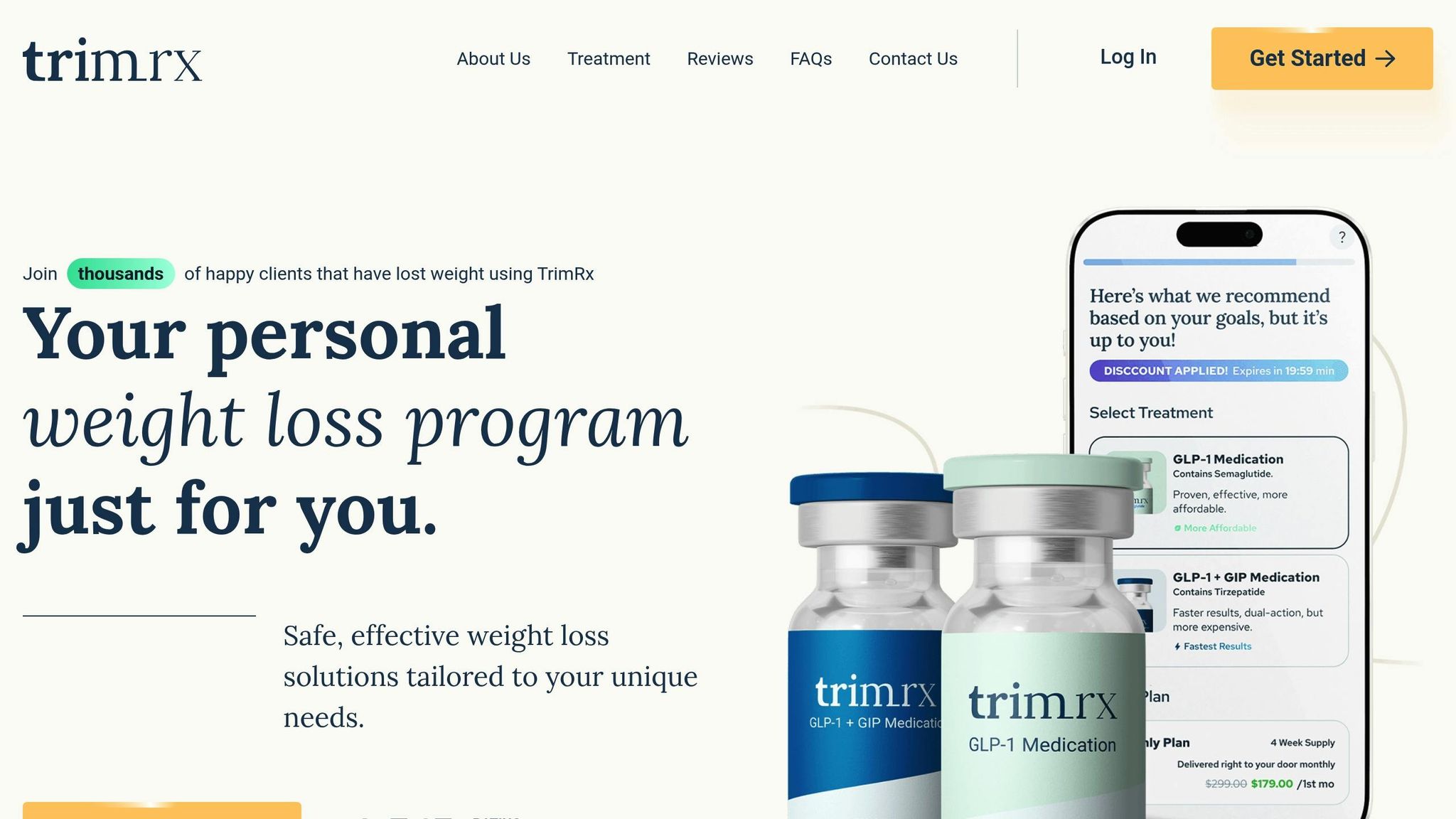
TrimRX offers budget-friendly weight loss plans tailored to individual needs. Their Injectable GLP-1 + GIP plan is available for $349 per month. This plan includes custom dosing, free delivery, and unlimited medical check-ins, making it an accessible option for those seeking effective weight loss solutions.
Additionally, TrimRX provides a GLP-1 Daily Support supplement for $119 per month. This supplement combines Alpha Lipoic Acid, Berberine, Chromium, and a multivitamin blend to support your journey. All TrimRX plans come with personalized consultations, custom prescriptions, and ongoing medical guidance to help you achieve lasting results while keeping costs manageable.
Conclusion
Tirzepatide has shown impressive clinical benefits, but its high cost – exceeding $1,000 per month – remains a major hurdle for most Americans. This steep price tag makes it out of reach for many, especially low-income individuals and minority groups, further widening health disparities.
There are, however, ways to ease the financial burden. Manufacturer savings cards can bring copays down to as little as $25 per month for those with commercial insurance. Programs like LillyDirect now offer single-dose vials starting at $299. Additionally, patient assistance programs and discount cards can provide extra relief for those who qualify.
The high cost often forces people to stop treatment early, compromising long-term health outcomes. In fact, around 50% of adults taking GLP-1 medications struggle to afford them, emphasizing the urgent need for more accessible options.
Services like TrimRX offer a more affordable solution with personalized plans, starting at $349 per month for Injectable GLP-1 + GIP. These plans include custom dosing, free delivery, and ongoing support, making it easier to balance clinical effectiveness with financial accessibility. By combining cost-cutting measures with tailored weight-loss programs, tirzepatide can become a more realistic option for those who need it most.
FAQs
Why is Tirzepatide so costly for weight loss treatments?
Tirzepatide comes with a hefty price tag, and there are a few reasons for that. First, the manufacturing process is quite intricate, which naturally drives up costs. Plus, since it’s a brand-name drug without any generic versions on the market, it commands a premium price. To make matters tougher, insurance plans often provide limited coverage for weight loss medications, leaving many patients to shoulder significant out-of-pocket expenses.
Another factor pushing up the price is the strong demand for Tirzepatide. Its effectiveness in aiding weight loss has made it a sought-after treatment. For those worried about the cost, programs like TrimRX could be worth exploring. They offer personalized plans, including tailored consultations and ongoing support, which might help make managing expenses a bit easier.
What makes it difficult for insurance to cover tirzepatide?
Insurance coverage for tirzepatide presents hurdles, largely because of its steep price, which can drive up premiums for both employers and individuals. Insurers often enforce formulary restrictions or place limits on weight loss medications like tirzepatide, complicating access for patients. For instance, some versions, such as Zepbound, have even been removed from certain insurance formularies due to escalating costs.
As a result, many patients are left to shoulder substantial out-of-pocket expenses, underscoring the importance of finding alternative ways to make treatments like tirzepatide more affordable and easier to obtain.
What are some ways to lower the cost of tirzepatide if you don’t have insurance?
Reducing the cost of tirzepatide without insurance can feel like an uphill battle, but there are a few ways to make it more manageable. For starters, some manufacturers provide self-pay programs or discounts that can help lower the monthly expense. Thanks to recent pricing changes, certain formulations now start at around $299 per month, making them a bit more accessible.
Another avenue worth considering is compounded medications. These are custom-made by specialized pharmacies and may offer a less expensive alternative. That said, they might not meet the same regulatory standards as FDA-approved options. It’s always a good idea to discuss these choices with your healthcare provider to ensure you’re making a safe and cost-effective decision.
Related Blog Posts

Transforming Lives, One Step at a Time
Keep reading

GLP-1 Medications and Mental Health: What to Expect and When to Get Support
Most of what gets written about GLP-1 medications covers the body. Dosing, appetite, nausea, what to eat, what to expect on the scale. Less…

Mons Pubis Fat Loss on GLP-1s: The “Pubic Area” Change Nobody Mentions
One change that surprises people on GLP-1 medications rarely comes up in conversation: the mons pubis, the soft fat pad over the pubic bone,…

How to Adjust Weight Loss Goals on GLP-1 Medications
Adjust weight goals on GLP-1 meds by tracking body composition and labs, optimizing protein, activity, sleep, and working with your provider on dosing.


