Tirzepatide: Dual Action for Weight Loss
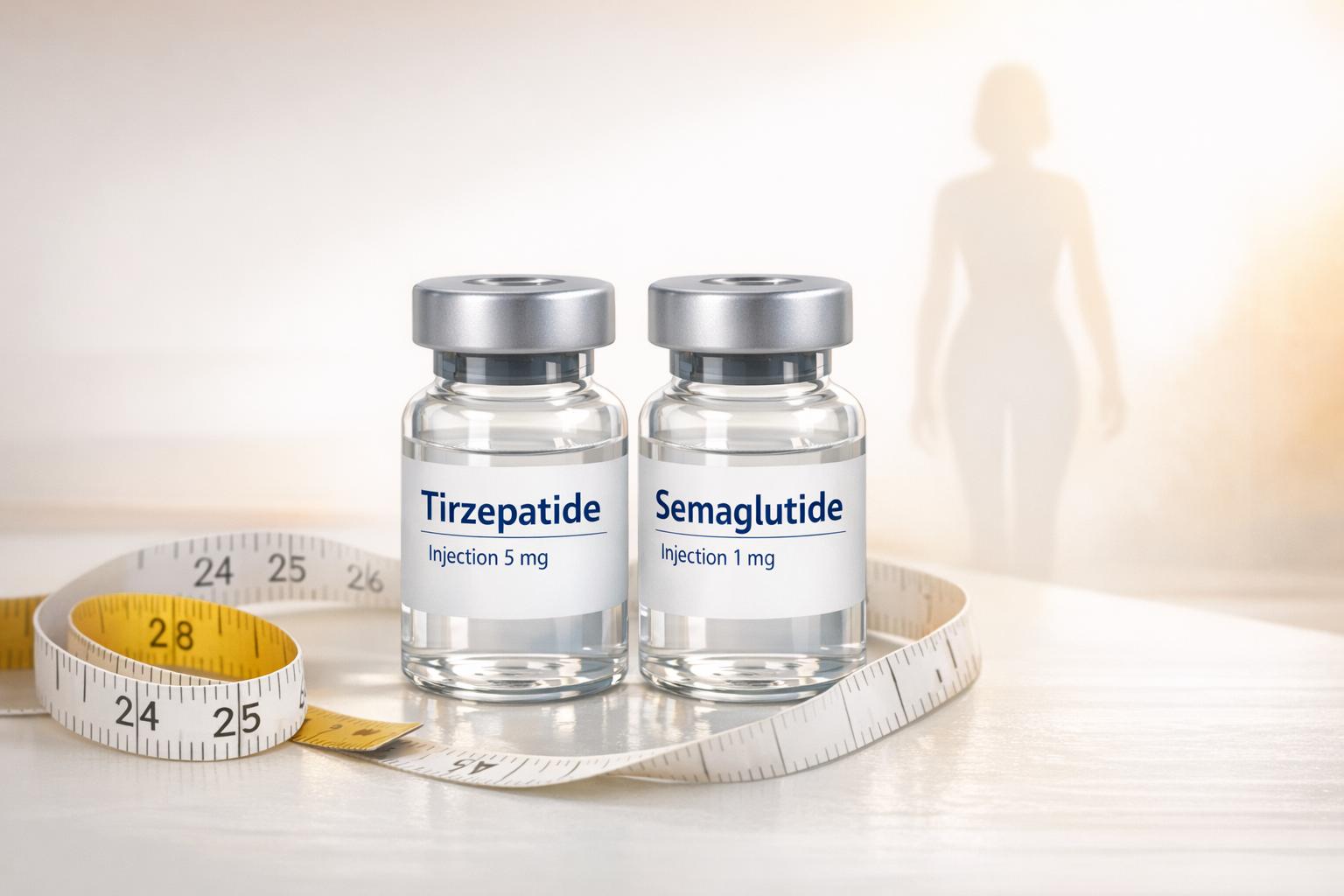
Tirzepatide is a once-weekly injection that delivers significant weight loss by targeting two pathways – GLP-1 and GIP receptors. This dual mechanism reduces appetite, improves insulin sensitivity, and enhances fat loss. Compared to Semaglutide, another weight-loss medication that focuses only on GLP-1 receptors, Tirzepatide consistently achieves better results in clinical trials.
Key Points:
- Weight Loss: Tirzepatide users lose up to 20.9% of their body weight over 72 weeks, compared to 13.7% with Semaglutide.
- Fat Reduction: Tirzepatide reduces 40.1% of visceral fat, while Semaglutide focuses on overall weight loss.
- Side Effects: Both medications cause nausea, vomiting, and diarrhea, but rates are slightly higher with Tirzepatide.
- Cost Efficiency: Tirzepatide is more cost-effective at $985 per 1% weight reduction, compared to Semaglutide’s $1,845.
Quick Comparison:
| Feature | Tirzepatide | Semaglutide |
|---|---|---|
| Weight Loss | 20.9% (up to 50 lbs) | 13.7% (up to 33 lbs) |
| Fat Reduction | 40.1% visceral fat | Focuses on overall weight loss |
| Side Effects | Higher nausea (25–33%) | Lower nausea (16–20%) |
| Cardiovascular Use | Still under study | FDA-approved for heart health |
| Cost Efficiency | $985 per 1% weight reduction | $1,845 per 1% weight reduction |
Tirzepatide offers greater weight loss and fat reduction, while Semaglutide may be preferred for those prioritizing cardiovascular benefits or tolerability. Choosing the right medication depends on your health priorities, side effect tolerance, and budget.
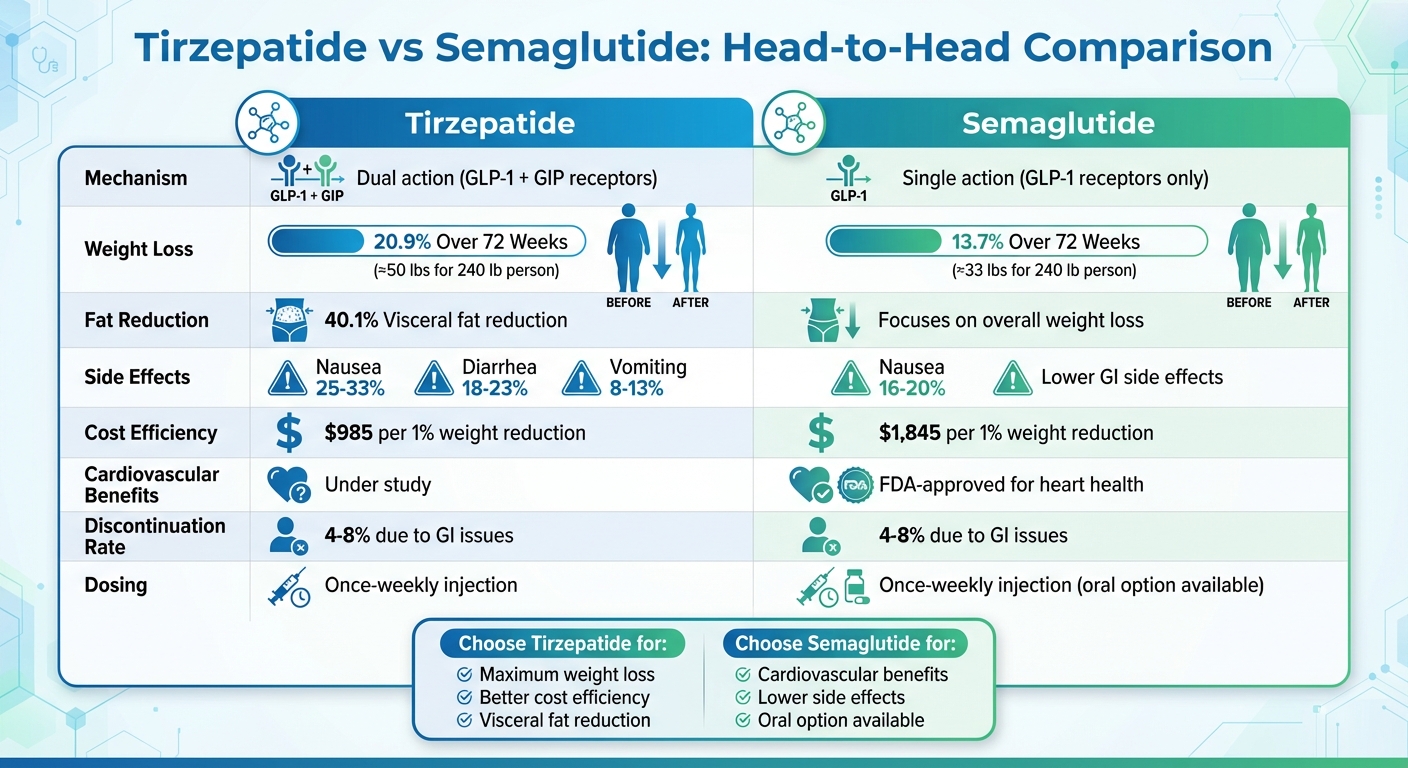
Tirzepatide vs Semaglutide Weight Loss Comparison Chart
1. Tirzepatide
Weight Loss Efficacy
Tirzepatide’s dual-receptor mechanism delivers impressive weight loss outcomes. In the SURMOUNT-1 trial, participants taking the 15 mg dose saw an average weight reduction of 20.9% over 72 weeks, compared to just 3.1% in the placebo group. For context, a person weighing 240 lbs would lose about 50 lbs on average. Additionally, 91% of participants on the 15 mg dose lost at least 5% of their body weight, while 57% achieved a reduction of 20% or more. Notably, 36.2% of participants managed to lose 25% or more of their body weight.
Fat Mass Reduction
Tirzepatide doesn’t just focus on overall weight – it specifically targets fat. A DXA substudy revealed a 33.9% reduction in total body fat mass and an even more striking 40.1% reduction in visceral fat mass – the harmful fat surrounding internal organs. For comparison, the placebo group only experienced an 8.2% fat mass reduction. Participants also saw their fat-to-lean mass ratio drop from 0.93 to 0.70, along with a reduction in waist circumference by 18.4–18.5 cm.
Appetite and Energy Intake Effects
Tirzepatide also works by curbing appetite and reducing calorie intake. Participants consumed approximately 525 fewer calories per day, thanks to reduced hunger and fewer food cravings.
"Tirzepatide effectively reduced drive to eat, as well as food-cue-driven and other-cue-driven eating behavior." – Nature Medicine
This effect is due to tirzepatide’s action on both GIP and GLP-1 receptors, which slows gastric emptying, signals fullness to the brain, and improves insulin sensitivity. These combined effects are particularly helpful for individuals dealing with insulin resistance or prediabetes.
Side Effect Profiles
While tirzepatide shows strong results, it comes with some manageable side effects, primarily gastrointestinal issues. Commonly reported side effects include nausea (25–33%), diarrhea (18–23%), and vomiting (8–13%), mostly during the dose-escalation phase. These effects are generally mild to moderate. Interestingly, activation of GIP receptors in the hindbrain may help reduce the nausea and vomiting often linked to GLP-1 receptor agonists. With a half-life of about 5 days, tirzepatide is conveniently administered as a once-weekly subcutaneous injection.
2. Semaglutide
Weight Loss Efficacy
Semaglutide takes a different approach compared to tirzepatide, focusing solely on the GLP-1 pathway as a selective GLP-1 receptor agonist. According to the SURMOUNT-5 trial published in May 2025, participants on the maximum tolerated dose of Semaglutide (1.7 mg or 2.4 mg) achieved an average weight loss of 13.7% over 72 weeks. While this is a notable result, it doesn’t quite match tirzepatide’s 20.2% reduction in the same trial. To put it into perspective, for someone weighing 240 lbs, this translates to an average loss of 33 lbs with Semaglutide, compared to 48 lbs with tirzepatide. This difference highlights the varying appetite suppression effects between the two treatments.
Appetite and Energy Intake Effects
Semaglutide is effective at curbing appetite and reduces future food intake without impacting fasting satiety. It seems particularly beneficial for those who tend to crave savory and high-fat, non-sweet foods, making it a good fit for individuals struggling with these specific eating habits. However, its appetite suppression is more focused compared to tirzepatide, which tends to reduce cravings across a broader range of food groups.
Side Effect Profiles
The most common side effects of Semaglutide are gastrointestinal in nature. Nausea affects 16–20% of users, with some also experiencing diarrhea and vomiting. These rates are slightly lower than tirzepatide’s nausea incidence of 25–28%. Serious adverse events occurred in 2.8% of participants in the SURPASS-2 study, which is less frequent than the 5.3–7% reported among tirzepatide users. However, 4–8% of patients discontinued Semaglutide due to gastrointestinal discomfort. Both medications are administered as once-weekly subcutaneous injections.
"Obesity treatment is not a one-size-fits-all approach." – Dr. Jorge Moreno, Internal Medicine and Obesity Physician, Yale Medicine
Patient tolerance can vary widely. Some individuals who struggle with Semaglutide’s side effects may find tirzepatide more manageable, and vice versa. Additionally, Semaglutide has FDA approval for reducing major cardiovascular events, such as heart attacks and strokes, in certain populations – a benefit that is still being studied for tirzepatide.
Comparing Semaglutide vs Tirzepatide for Weight Loss in Adults with Obesity: JAMA Study
sbb-itb-e2779c3
Pros and Cons
When considering these two medications, understanding their strengths and weaknesses can help you make an informed decision based on your health priorities, tolerance, and budget.
Tirzepatide stands out for its impressive weight loss results, achieving a 20.2% reduction over 72 weeks compared to Semaglutide’s 13.7%. Its dual-action mechanism enhances its effectiveness and makes it more cost-efficient per percentage of weight lost – $985 per 1% weight reduction versus $1,845 for Semaglutide, according to a 2023 analysis. However, this increased efficacy comes with a trade-off: more pronounced gastrointestinal side effects, especially at the higher 15 mg dose. As Morgan Stewart, PharmD from the University of Texas at Austin, notes:
"Tirzepatide sometimes causes more side effects than semaglutide because it works on two hormones instead of one."
Additionally, Tirzepatide has yet to receive FDA approval for cardiovascular benefits, which are still under study.
Semaglutide, on the other hand, is FDA-approved to reduce the risk of heart attacks and strokes. It tends to be easier on the gastrointestinal system and offers an oral option (Rybelsus) for those who prefer to avoid injections. Wegovy, a version of Semaglutide, is also approved for use in patients as young as 12 years old. However, its weight loss efficacy is lower, and it comes with a higher cost per percentage of weight lost.
Both medications share similar discontinuation rates, with about 4–8% of patients stopping due to gastrointestinal issues. Patient experiences can vary widely, influenced by individual tolerance and health goals.
For those exploring personalized options, TrimRX provides tailored weight loss programs featuring injectable Semaglutide (starting at $199/month) and Tirzepatide (starting at $349/month). These programs include custom dosing, free delivery, and unlimited check-ins to ensure ongoing support.
Conclusion
The main distinction between these two medications lies in how they interact with receptors in the body. Semaglutide focuses on activating GLP-1 receptors, which slows digestion and helps create a sense of fullness. On the other hand, Tirzepatide combines this GLP-1 activation with stimulation of GIP receptors, further enhancing feelings of satiety and improving insulin sensitivity. This dual-action mechanism is why Tirzepatide consistently delivers better weight loss results, as demonstrated in prior clinical trials.
These differences influence clinical decisions. For those with cardiovascular or chronic kidney disease, Semaglutide is often recommended due to its FDA-approved benefits for heart and kidney health. Meanwhile, Tirzepatide’s dual-receptor mechanism makes it a strong option for individuals dealing with obstructive sleep apnea or those aiming for the most significant weight loss. Notably, Tirzepatide has FDA approval for treating moderate-to-severe obstructive sleep apnea in adults with obesity.
Both medications require a similar level of commitment from patients. This includes gradually increasing the dose every four weeks, following a reduced-calorie diet, and engaging in at least 150 minutes of physical activity per week. As Dr. Peminda K. Cabandugama from Cleveland Clinic explains:
"Weight is a set point. What we are doing [with these medications] is bringing that set point down. The weight can still go back up."
Cost is another important consideration. A 2023 analysis revealed that Tirzepatide costs $985 per 1% body weight reduction, compared to $1,845 for Semaglutide, making Tirzepatide the more cost-efficient option. This affordability factor can play a significant role in selecting the right therapy.
For those exploring these options, TrimRX provides personalized dosing plans, with injectable Semaglutide starting at $199 per month and Tirzepatide at $349 per month. They also offer free delivery and unlimited check-ins to support your weight loss journey every step of the way.
FAQs
How does Tirzepatide help with weight loss?
Tirzepatide works by targeting two important receptors in the body: GLP-1 (glucagon-like peptide-1) and GIP (glucose-dependent insulinotropic polypeptide). By activating both, it boosts insulin release, lowers glucagon levels, slows digestion, and promotes a sense of fullness. These combined effects help manage appetite and reduce overall calorie consumption.
What makes Tirzepatide stand out is its ability to act on both receptors at the same time, creating a combined effect that leads to more significant weight loss than medications targeting only GLP-1. Clinical trials have shown that participants can lose between 15% and 20% of their body weight over 72 weeks. On top of that, Tirzepatide enhances blood sugar management, making it especially helpful for people dealing with both type 2 diabetes and obesity.
TrimRX offers customized weight loss plans featuring Tirzepatide. These include personalized consultations, free delivery of medication, and ongoing support to help clients achieve lasting results.
What are the common side effects of Tirzepatide compared to Semaglutide?
Both Tirzepatide and Semaglutide are known to cause gastrointestinal issues like nausea, vomiting, and diarrhea. That said, research indicates that Tirzepatide tends to result in fewer and milder symptoms compared to Semaglutide.
If you’re thinking about incorporating these medications into a weight loss plan, be sure to talk with your healthcare provider. They can help you weigh the potential side effects and choose the option that aligns best with your health goals.
Is Tirzepatide a more affordable option than Semaglutide for weight loss?
A recent short-term cost-effectiveness analysis conducted in the United States revealed that subcutaneous Tirzepatide offers better cost-effectiveness for weight loss compared to subcutaneous Semaglutide. The study found an incremental cost-effectiveness ratio of about $34,212 per quality-adjusted life year (QALY) gained.
This indicates that Tirzepatide could deliver more value for its price when weighing its effectiveness and affordability in supporting weight loss objectives.
Related Blog Posts

Transforming Lives, One Step at a Time
Keep reading

Weight Loss Progress Tracker
Track your weight loss over time, see progress clearly, and stay motivated with simple charts, summaries, and goal-based insights.

How to Create a Personalized Adherence Plan
Build a one-page GLP-1 adherence plan: record dose, pick a weekly time, set reminders, log side effects, and review monthly.

Weight Loss Medication Dosage Calculator
Estimate weight loss medication doses by weight and drug type, with starting guidance, dose progression info, and a clear medical disclaimer.


