Can You Eat Pasta and Still Lose Weight? Our Expert Take
Let's get right to it. The question, is pasta good for weight loss, is one our team hears constantly. It’s a loaded question, tangled up in decades of diet culture, carbohydrate demonization, and genuine confusion. For so many people we work with, pasta represents comfort, family, and pure culinary joy. The idea of giving it up feels like a punishment, a formidable barrier to even starting a weight loss journey. So, we're going to give you the unflinching, science-backed answer you deserve.
Yes, you can absolutely eat pasta and lose weight. But—and this is a significant but—it’s not about unrestricted indulgence. It’s about being smarter than the pasta bowl. It requires a fundamental shift in how you view the food itself: from a forbidden 'cheat meal' to a strategic component of a balanced, sustainable nutritional plan. Our experience in metabolic science and medically-supervised weight loss has shown us that lasting success is never about total deprivation. It's about knowledge, strategy, and biological harmony. This is where the conversation gets truly interesting.
Why Pasta Gets Such a Bad Rap
The vilification of pasta is really a story about the vilification of carbohydrates. For years, low-carb and keto diets have dominated the wellness landscape, painting all carbs with the same broad, villainous brush. Pasta, being a quintessential refined carbohydrate, became public enemy number one. It’s easy to see why. A heaping plate of creamy fettuccine alfredo at a restaurant can easily clock in at over 1,500 calories and a staggering amount of saturated fat and sodium. It’s a caloric sledgehammer.
But is the pasta itself the problem? Or is it the company it keeps? Our team has found that the issue is rarely the noodle itself. It’s the context. It’s the colossal portion sizes that have become normalized. It’s the heavy, cream-laden sauces and the mountains of cheese. It’s the fact that a massive carb load, especially one low in fiber and protein, can spike your blood sugar, leading to an insulin surge and the inevitable energy crash that leaves you craving more simple carbs. It’s a vicious, exhausting cycle.
This cycle is rooted in biology. When you eat refined carbs like traditional white pasta, your body breaks them down into glucose very quickly. Your pancreas releases insulin to shuttle that glucose into your cells for energy. If there's too much glucose at once, insulin works overtime, often leading to a rapid drop in blood sugar. That drop is what your brain interprets as, 'I need more energy, now!' And the easiest source of quick energy? More carbs. This is the biological trap that makes people feel like pasta is 'addictive' or inherently bad for weight loss. It’s not a moral failing; it's a physiological response.
The Glycemic Index: Not All Carbs Are Created Equal
To really understand how to make pasta work for you, we need to talk about something called the glycemic index (GI). The GI is a scale from 0 to 100 that ranks carbohydrate-containing foods by how much they raise your blood sugar levels after eating. High-GI foods are digested and absorbed quickly, causing a rapid spike. Low-GI foods are digested more slowly, leading to a more gradual, sustained release of energy.
Think of it like this: a high-GI food is like a flash fire. It burns hot and fast, then it's gone. A low-GI food is like a slow-burning log, providing steady heat over time. For weight management and overall metabolic health, you want more of those slow-burning logs.
So where does pasta fall? This is where it gets nuanced. You might be surprised to learn that pasta, especially when cooked 'al dente' (firm to the bite), actually has a moderate GI, typically between 45 and 55. That's lower than white bread (around 75) and even potatoes (which can be 80+). Why? The physical structure of pasta, particularly durum wheat semolina, traps the starch granules, slowing down their conversion to sugar. Cooking it al dente preserves this structure even more effectively.
This is a critical piece of the puzzle. It means that a controlled portion of properly cooked pasta won't necessarily send your blood sugar on the wild roller coaster you might expect. It provides a more stable energy source, which is exactly what you want when you're trying to manage hunger and control calorie intake. We can't stress this enough: how you cook it matters. Mushy, overcooked pasta will have a higher GI because the starches have been broken down and are more readily available for digestion.
Portion Distortion: The Real Culprit Behind Pasta Problems
Honestly, if there's one single villain in the pasta story, it's portion size. We've become so accustomed to seeing overflowing bowls of pasta that our perception of a 'normal' serving is completely skewed.
A standard serving size of cooked pasta is one cup. That’s it.
Let that sink in. One cup. For most people, that looks disappointingly small. A typical restaurant portion can be anywhere from three to five cups of pasta—before any sauce, protein, or cheese is even added. That’s the difference between a 200-calorie base and a 1000-calorie base. It’s a catastrophic difference when you’re managing a calorie deficit for weight loss.
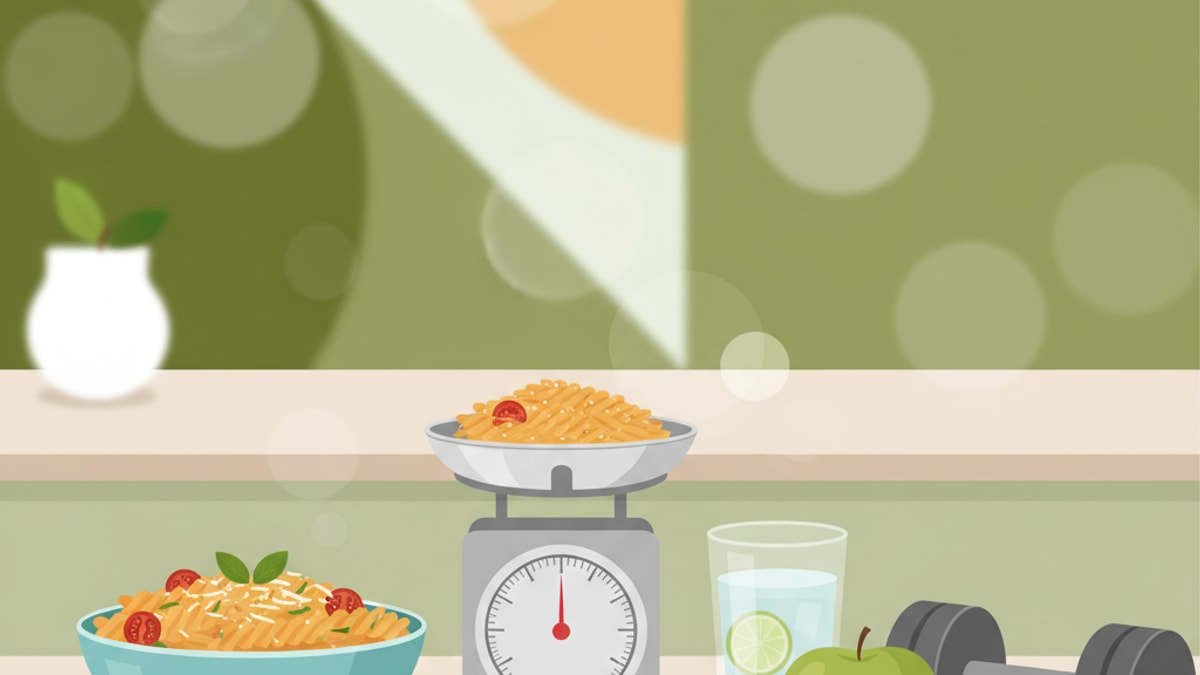
Our team recommends a simple, powerful tool to combat this: a food scale. It might feel tedious at first, but weighing out your dry pasta (a standard serving is about 2 ounces or 56 grams) is a non-negotiable step for taking back control. It removes the guesswork and forces you to confront what a true portion looks like. After a few weeks of measuring, you’ll be able to eyeball a correct portion with much greater accuracy. It's about recalibrating your brain to a new, healthier normal. This isn't about restriction for the sake of it; it's about accuracy and awareness, two cornerstones of any successful weight loss program.
The Science of Satiety: How Pasta Can Keep You Full
The goal of any meal in a weight loss plan shouldn't just be about hitting a calorie number. It needs to keep you full and satisfied. This feeling of fullness is called satiety, and it’s your best friend in preventing overeating and mindless snacking. A meal that leaves you hungry an hour later is a failed meal, no matter how few calories it had.
Can pasta contribute to satiety? Absolutely, but it can’t do it alone. A bowl of plain pasta is a nutritional lightweight. It has carbs for energy, but it's lacking in the two other macronutrient powerhouses of satiety: protein and fiber. Fat also plays a role in slowing digestion and promoting fullness.
This is where we shift from viewing pasta as the main event to seeing it as a vehicle. It’s the canvas, not the entire masterpiece. The secret to a satisfying, weight-loss-friendly pasta meal is to build it intelligently. Your goal should be to overwhelm the pasta with nutrient-dense, high-satiety ingredients.
Start with a lean protein source. Think grilled chicken breast, shrimp, lean ground turkey, or even plant-based options like lentils or chickpeas. Protein is the undisputed king of satiety. It takes longer to digest and has a higher thermic effect of food (meaning your body burns more calories processing it). Next, load up on fiber-rich vegetables. Broccoli, spinach, bell peppers, zucchini, mushrooms, asparagus—the list is endless. Fiber adds bulk to your meal for very few calories and slows down digestion, helping to stabilize blood sugar and keep you feeling full for hours. Finally, add a healthy fat source like a drizzle of olive oil, some avocado, or a sprinkle of nuts. This further enhances satiety and adds a wealth of flavor.
When you build your bowl this way, that one-cup serving of pasta suddenly doesn't look so small anymore. It's part of a large, vibrant, and incredibly filling meal. You're getting the satisfying texture and taste of pasta without the blood sugar crash and subsequent hunger pangs. That's the strategic approach that works.
Building a Smarter Pasta Bowl: Our Team's Blueprint
So, what does this look like in practice? Here’s a simple framework we provide to our patients to help them construct a pasta meal that aligns with their weight loss goals.
- Start with the Base (The Right Portion): Measure out 2 ounces (56g) of dry pasta per person. Cook it al dente. This is your non-negotiable foundation.
- Pick Your Protein (The Satiety Anchor): Aim for 4-6 ounces of a lean protein. This is critical. Don't skip it.
- Grilled chicken or turkey
- Sautéed shrimp or scallops
- Lean ground beef (93/7 or leaner)
- Canned tuna or salmon (in water)
- Legumes like lentils, chickpeas, or white beans
- Load Up on Veggies (The Fiber & Volume): Add at least 1-2 cups of non-starchy vegetables. Sauté them, roast them, or steam them.
- Broccoli florets
- Sliced mushrooms
- Diced bell peppers and onions
- Spinach or kale (wilts down, so use a lot!)
- Zucchini or yellow squash spirals
- Choose a Smart Sauce (The Flavor, Not the Fat): Ditch the heavy cream sauces and jarred sauces loaded with sugar and sodium.
- A simple tomato-based marinara (check labels for added sugar).
- Pesto (use sparingly, as it's calorie-dense).
- A light sauce made with olive oil, garlic, lemon juice, and red pepper flakes.
- Finish with Healthy Fat (The Finisher): A small amount goes a long way for flavor and fullness.
- 1-2 teaspoons of extra virgin olive oil.
- A tablespoon or two of freshly grated Parmesan or Pecorino cheese (intense flavor means you need less).
- A quarter of an avocado, sliced.
By following this blueprint, you transform a potentially problematic meal into a perfectly balanced, macro-friendly dish that actively supports your goals. It’s a complete paradigm shift.
Whole Wheat vs. White Pasta: A Head-to-Head Comparison
Another frequent question is whether switching to whole wheat pasta is necessary. The short answer is that it's a great choice, but it's not the only factor that matters. Whole wheat pasta is made from the entire wheat kernel, which means it retains more fiber, protein, and micronutrients like B vitamins and magnesium compared to refined white pasta. That extra fiber can be a significant advantage for weight loss, as it enhances satiety and can lead to a slightly lower glycemic response.
However, some people genuinely dislike the taste and texture of whole wheat pasta. Our philosophy is that sustainability is paramount. If forcing yourself to eat something you don't enjoy makes you more likely to abandon your healthy eating plan altogether, it's not a winning strategy. A properly portioned and balanced meal with white pasta is far superior to an abandoned diet. Let's be honest, this is crucial.
Here’s a simple breakdown of the differences:
| Feature | White Pasta (Refined) | Whole Wheat Pasta | Our Team's Take |
|---|---|---|---|
| Fiber | Lower (approx. 2.5g per serving) | Higher (approx. 5-6g per serving) | The higher fiber in whole wheat is a clear winner for satiety and digestive health. |
| Protein | Moderate (approx. 7g per serving) | Slightly Higher (approx. 8g per serving) | A minor advantage, but not a game-changer. Your added protein source is more important. |
| Glycemic Index | Moderate | Lower to Moderate | Whole wheat generally has a lower GI, leading to a gentler blood sugar response. |
| Micronutrients | Fewer (enriched with some B vitamins) | More (retains natural vitamins/minerals) | Whole wheat offers a better nutritional profile with more magnesium, manganese, and selenium. |
| Taste & Texture | Soft, smooth, familiar | Nuttier, firmer, grainier | This is purely subjective. Choose the one you'll actually stick with. |
Our recommendation? Give whole wheat pasta an honest try. If you like it, make the switch. If you don't, don't sweat it. Focus instead on the far more impactful variables: your portion size and what you're adding to the bowl.
Beyond the Bowl: How GLP-1 Treatments Change the Equation
Now, this is where the conversation evolves, especially for individuals who have struggled with the biological drivers of overeating. For many, the relentless cycle of cravings and hunger isn't just a matter of willpower; it's a complex interplay of hormones and metabolic signals. This is the specific area our work at TrimrX addresses.
Medically-supervised treatments using GLP-1 agonists like Semaglutide and Tirzepatide introduce a powerful new variable. These are not 'diet pills.' They are advanced medications that work with your body's own hormonal systems to regulate appetite and metabolism. GLP-1 (glucagon-like peptide-1) is a natural hormone your gut releases after you eat. It does several remarkable things:
- It tells your brain you're full. It acts on the appetite centers in your hypothalamus, significantly increasing feelings of satiety.
- It slows down stomach emptying. This means food stays in your stomach longer, contributing to a prolonged sense of fullness and preventing rapid blood sugar spikes.
- It regulates insulin production. It helps your pancreas release the right amount of insulin at the right time.
What does this mean for eating pasta? It can be a complete game-changer. A person on a GLP-1 treatment might find that a small, one-cup portion of pasta is suddenly, genuinely satisfying. The intense, biologically-driven craving for a second or third helping simply isn't there. The medication helps to naturally enforce the portion control that is so crucial for success. It quiets the 'food noise' and allows you to enjoy a meal, recognize your fullness cues, and stop eating when you're satisfied, not uncomfortably stuffed.
This approach, which we've refined over years, allows our patients to build a healthier relationship with all foods, including pasta. It's not about fear or avoidance. It's about putting your body in a state where it can properly regulate its own intake. If you've felt that your biology is working against you in your weight loss efforts, understanding your options is a critical first step. You can see if you're a candidate when you Take Quiz on our site.
Real-World Strategies for Enjoying Pasta Without Guilt
Putting it all together, let's move from theory to practical, actionable advice. Here are some of the top strategies we share with our patients to help them incorporate pasta into their lives sustainably.
- Make Pasta a Weekday Lunch, Not a Late-Night Dinner: Having your carb-heavier meal earlier in the day gives your body more time to use that energy, rather than storing it while you sleep.
- Start Your Meal with a Salad: Beginning with a large green salad dressed in a light vinaigrette can help fill you up with fiber and volume, making you less likely to overeat the main pasta course.
- Use a Smaller Bowl: This simple psychological trick, known as the Delboeuf illusion, can make a smaller portion feel more substantial and satisfying.
- Bulk It Out with 'Veggie Noodles': Try mixing your one-cup serving of pasta with an equal amount of spiralized zucchini ('zoodles'), spaghetti squash, or shirataki noodles. You get a much larger volume of food for a fraction of the calories and carbs.
- Never Eat Straight from the Pot or Box: Always plate your food. This mindful step creates a clear boundary and prevents the mindless overconsumption that can happen when you're not paying attention.
These aren't just tips; they are behavioral shifts. Each one reinforces a more conscious, intentional approach to eating. This is the work that leads to results that don't just last for a few months, but for a lifetime. When you're ready to overhaul your approach with medical and professional guidance, you can Start Your Treatment and connect with our team.
The final verdict on pasta and weight loss is clear: it's not the enemy. The true enemies are misinformation, distorted portions, and a lack of strategy. By understanding the science of carbohydrates, mastering portion control, and building balanced, satisfying meals, you can absolutely keep this beloved comfort food in your life. It’s about treating pasta with respect, not fear, and making it work for your body, not against it.
Frequently Asked Questions
Can I eat pasta every day and still lose weight?
▼
While technically possible with strict portion and calorie control, we don’t recommend it. Nutritional variety is crucial for getting all your essential vitamins and minerals. A balanced diet with diverse food sources is always a more sustainable and healthier approach for long-term weight management.
Is gluten-free pasta better for weight loss?
▼
Not necessarily. Gluten-free pastas are often made from refined corn or rice flour and can have a higher glycemic index and fewer nutrients than durum wheat pasta. Unless you have celiac disease or a gluten sensitivity, there’s no inherent weight loss benefit to choosing gluten-free options.
Does the shape of the pasta matter for portion control?
▼
Yes, it can. Long, thin pastas like spaghetti or angel hair can be easier to overestimate than compact shapes like penne or rotini. We recommend using a food scale for accuracy, regardless of the shape, as it’s the most reliable method for portion control.
What about high-protein or legume-based pastas?
▼
These can be excellent choices. Pastas made from chickpeas, lentils, or edamame are significantly higher in both protein and fiber than traditional pasta. This makes them more satiating and can be a great tool for hitting your protein goals while still enjoying a pasta-like meal.
How do GLP-1 medications like Semaglutide affect how I eat pasta?
▼
GLP-1 treatments work by increasing satiety and slowing digestion. Our patients often find they feel full and satisfied with a much smaller portion of pasta than before. This makes it easier to enjoy the food without overconsuming calories, aligning perfectly with weight loss goals.
Is leftover pasta that has been chilled better for you?
▼
There is some science to this. When pasta is cooked and then cooled, some of its starches convert into ‘resistant starch.’ This type of starch resists digestion, acts more like fiber, and has a lower impact on blood sugar. While not a magic bullet, it can be a small metabolic advantage.
Should I avoid pasta when eating out at restaurants?
▼
Restaurant pasta dishes are notoriously oversized and often loaded with high-calorie sauces. We advise clients to be cautious. You can ask for a half-portion, request the sauce on the side, or plan to take half of the meal home before you even start eating.
What’s the single most important thing to remember when eating pasta for weight loss?
▼
Portion control. Our team agrees that this is the non-negotiable factor. Master the serving size (2 ounces dry, or about 1 cup cooked), and you’ve won more than half the battle.
Does adding olive oil to pasta water do anything?
▼
This is a common kitchen myth. The oil mostly floats on top of the water and doesn’t prevent the pasta from sticking. To prevent sticking, simply use a large pot with plenty of boiling, salted water and stir occasionally.
Can I have a ‘cheat meal’ with a large bowl of pasta?
▼
We prefer to reframe the concept of ‘cheat meals,’ which can foster a guilt-driven cycle. It’s better to incorporate planned, portion-controlled pasta meals into your regular routine. This creates a sustainable lifestyle rather than a pattern of extreme restriction followed by overindulgence.
Is fresh pasta different from dried pasta for weight loss?
▼
Fresh pasta often contains eggs and has a higher moisture content, making it more tender. Nutritionally, the differences are minor once cooked. The same principles of portion control and balanced additions apply equally to both fresh and dried pasta.

Transforming Lives, One Step at a Time
Keep reading

What to Do With a Full Pantry You No Longer Eat From
Sort it into three piles rather than clearing it all out: donate, keep, and discard. The mistake most people make is emptying the whole…

How to Handle a Business Dinner When the Client Orders for the Table
This is the one dining situation where your usual tools do not work. You cannot order a starter as your main, cannot ask for…
How to Handle Group Dinners Where Everyone Shares Plates
Shared dining is generally easier than a fixed plate, not harder, and it is worth going in with that framing. When everyone is taking…


