Is Oatmeal Good for Weight Loss? Our Expert Take
Is Oatmeal Good for Weight Loss? Our Expert Take
It’s the question we hear all the time. In the sprawling landscape of diet advice, oatmeal holds an almost mythical status. It’s wholesome. It’s comforting. It’s what you’re supposed to eat for a healthy start, right? The answer, from our team’s deep experience in metabolic science, is both simpler and far more complex than a simple yes or no.
Let’s be direct. Oatmeal can be a fantastic tool for weight loss. It can also be a well-disguised bowl of sugar that sabotages your best efforts before 9 a.m. The difference isn't in the oats themselves, but in the knowledge you bring to the bowl. It's about understanding the biology of hunger, blood sugar, and satiety. At TrimrX, we're obsessed with these details because they are the foundation of sustainable, medically-assisted weight management. This isn't just about food; it's about how your body responds to it.
The Science of Satiety: Why Oatmeal Can Work
So, what’s the theory behind oatmeal’s stellar reputation? It comes down to one powerhouse ingredient: a type of soluble fiber called beta-glucan. This isn't just generic fiber. It's special.
When you eat oats, this beta-glucan mixes with liquid in your stomach and forms a thick, gel-like substance. Think of it as a natural thickening agent for your meal. This process has a few profound effects. First, it physically slows down how quickly your stomach empties. Your food stays with you longer, which is a primary signal to your brain that you're full and satisfied. This is satiety. It’s the feeling of fullness that prevents you from reaching for a mid-morning snack. We can't stress this enough: managing hunger is half the battle in any weight loss journey.
Second, this slowed digestion has a massive impact on your blood sugar. Instead of a rapid dump of carbohydrates into your system—which causes a spike in blood sugar followed by a crash—oatmeal provides a much more gradual release of energy. A stable blood sugar level is a critical, non-negotiable element of weight management. Why? Because sharp spikes trigger a large release of insulin, the hormone that tells your body to store fat. By keeping blood sugar and insulin levels more stable, you encourage your body to use fat for fuel instead of storing it.
Our experience shows that clients who master blood sugar control see dramatically better results. It’s a foundational principle that underpins everything from dietary choices to the efficacy of advanced treatments like GLP-1 medications. A food that helps you do this naturally is a powerful ally.
Simple, right?
But this is only true if you're choosing the right kind of oats. The way oats are processed radically changes their impact on your body, turning a metabolic superstar into a potential problem.
The Hidden Pitfalls: How Oatmeal Derails Weight Loss
Here’s where good intentions often go completely off the rails. We've seen it countless times with new patients. They come to us frustrated, doing all the 'right' things, yet the scale won't budge. Often, their 'healthy' breakfast is the culprit.
First, there's the Instant Oatmeal Catastrophe. Those convenient little packets are a metabolic nightmare. To make them cook in a minute, the oat groats are heavily steamed and rolled incredibly thin. This process essentially pre-digests the oat, stripping away much of its structural integrity. The result? Your body breaks it down almost as fast as a bowl of sugary cereal. The glycemic index skyrockets, and the blood-sugar-stabilizing benefits we just discussed are completely lost. Worse yet, most are loaded with spoonfuls of sugar, artificial flavors, and sodium. They are, frankly, junk food masquerading as a health product.
Then there’s the Topping Trap. This affects even the best-quality oats. You start with a pristine bowl of steel-cut oats and then proceed to bury it under an avalanche of brown sugar, maple syrup, or a heap of dried fruit. While these might seem like natural sweeteners, your body just sees them as sugar. A couple of tablespoons of maple syrup can add over 100 empty calories and 25 grams of sugar, instantly turning your breakfast into a dessert. It creates the exact insulin spike you were trying to avoid. It’s a classic case of one step forward, two steps back.
Finally, there's Portion Distortion. What does a 'bowl' of oatmeal even mean? A standard serving of dry oats is typically a half-cup. Once cooked, that expands to a pretty satisfying portion. However, many people free-pour their oats, easily ending up with a full cup of dry oats, doubling the calories and carbs from the get-go. Without measuring, it’s incredibly easy to overeat, even with healthy foods.
These seemingly small details collectively transform a weight-loss-friendly meal into a significant barrier to your progress. It's this level of nuance that's often missing from generic diet advice, and it's why a personalized, science-backed approach is so crucial.
A Comparison: Choosing the Right Oat for Your Goals
Not all oats are created equal. Far from it. The form you choose dictates its effect on your body. Understanding the difference is the first step toward making oatmeal work for you, not against you. Our team put together this simple breakdown to clarify things.
| Oat Type | Processing Level | Glycemic Index (GI) | Fiber Integrity | Best For… |
|---|---|---|---|---|
| Steel-Cut Oats | Minimally Processed (Groats cut into pieces) | Low (~55) | Highest | Maximum satiety, best blood sugar control, and a nutty texture. |
| Rolled Oats | Moderately Processed (Groats steamed & rolled flat) | Medium (~59) | High | A good balance of convenience and nutrition. Versatile for cooking and baking. |
| Instant Oats | Heavily Processed (Groats pre-cooked & rolled thin) | High (~79) | Lowest | Convenience only. We strongly advise against them for weight management. |
As you can see, the less processed the oat, the better. Steel-cut oats are, metabolically speaking, the superior choice. They take longer to cook, but the payoff in terms of sustained energy and appetite control is immense. Rolled oats (sometimes called old-fashioned oats) are a decent runner-up and are more practical for many people's busy mornings. We recommend steering clear of instant oats entirely if weight loss is your goal.
Building a Smarter Oatmeal Bowl for Weight Management
Okay, so you’ve chosen steel-cut or rolled oats. Now what? The next step is to build your bowl strategically. Simply eating plain oats is a missed opportunity. To truly optimize your breakfast for weight loss, you need to think like a nutritionist.
Here’s the framework we provide to our patients at TrimrX. It’s built around the concept of Protein, Fat, and Fiber (PFF) to create a meal that keeps you full, energized, and metabolically stable for hours.
1. Prioritize Protein. This is non-negotiable. Oats are primarily a carbohydrate source. Without a significant protein boost, you might find yourself hungry again sooner than you'd like. Protein is the undisputed champion of satiety. We recommend adding a scoop of high-quality, unsweetened protein powder (whey, casein, or a plant-based blend) and stirring it in after cooking. Another excellent option is a large dollop of plain Greek yogurt or skyr. Nuts and seeds also contribute, but a dedicated protein source is key.
2. Incorporate Healthy Fats. Fat has been unfairly villainized for decades. The truth is, healthy fats are essential for hormone production, nutrient absorption, and—you guessed it—satiety. Fat slows down digestion even further than fiber, creating a powerful one-two punch against hunger. Add a tablespoon of chia seeds, ground flaxseed, or a swirl of almond or peanut butter. This small addition makes a huge difference in how long your breakfast will last you.
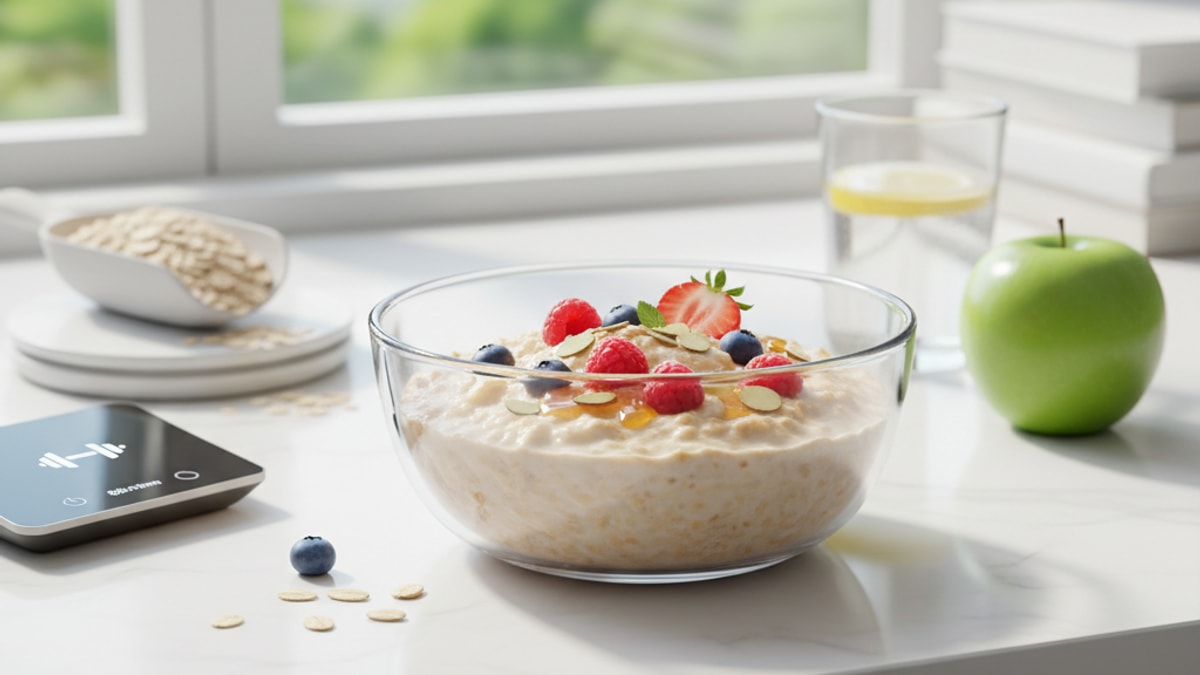
3. Choose Fiber-Rich Add-ins, Not Sugar Bombs. You need flavor and texture, but not from sugar. Fresh or frozen berries (like blueberries or raspberries) are your best friends here. They add sweetness, vitamins, and even more fiber with a minimal impact on blood sugar. A sprinkle of cinnamon is another fantastic choice; it’s been shown to help with blood sugar regulation and adds warmth and flavor without any calories.
A bowl of steel-cut oats made with a scoop of protein powder, a tablespoon of chia seeds, and a handful of blueberries is a completely different meal than a packet of instant oatmeal with brown sugar. One sets you up for a day of success, stable energy, and controlled appetite. The other sets you up for a blood sugar rollercoaster and cravings. The choice is yours.
Oatmeal in a Modern Weight Loss Landscape
Here's the unflinching reality: for many people, diet and exercise alone are a grueling, often losing battle against biology. You can build the perfect bowl of oatmeal every single morning and still struggle to lose weight. Why? Because sustainable weight loss is about more than just what’s on your plate. It involves a complex interplay of hormones, genetics, and metabolic health that has been shaped over years.
This is where the work we do at TrimrX becomes so transformative. We operate at the intersection of lifestyle choices and cutting-edge medical science. When your body's own systems are working against you—when hormones like insulin and glucagon-like peptide-1 (GLP-1) aren't functioning optimally—it can feel like you're trying to swim against a relentless current. No amount of willpower can overcome that biological resistance indefinitely.
This is precisely why GLP-1 medications like Semaglutide and Tirzepatide have become such a pivotal tool in modern weight management. These aren't just appetite suppressants. They are powerful treatments that work with your body's natural systems to restore balance. They help regulate insulin release, slow stomach emptying (much like fiber does, but on a hormonal level), and communicate with the appetite centers in your brain. Essentially, they help your body work for you again, not against you.
Think of it this way: a smart oatmeal breakfast is like putting high-quality fuel in your car. A medically-supervised program using GLP-1s is like getting a full engine tune-up so the car can actually use that fuel efficiently. You need both for optimal performance.
Our most successful patients are those who pair the biological support of their treatment with smart, sustainable lifestyle habits. They use their newfound control over hunger to build a better relationship with food. They learn what it feels like to eat a truly satisfying, blood-sugar-stabilizing meal. And yes, for many of them, that meal is a well-constructed bowl of oatmeal. If you feel like you've perfected your diet but are still stuck, it may be time to look deeper. Find out if a medical approach is right for you and Take Quiz to see if you qualify.
Beyond the Bowl: Other Powerful Breakfasts for Weight Loss
Variety is just as important as quality. Eating the same thing every day can lead to nutrient gaps and sheer boredom, which is a major cause of falling off a plan. While a smart bowl of oatmeal is a great option, it's not the only one. Here are a few other breakfast ideas our team frequently recommends, all built on that same PFF principle.
- Greek Yogurt Parfait: Layer plain, full-fat Greek yogurt with fresh berries and a sprinkle of chopped nuts or seeds. It’s fast, requires no cooking, and is packed with protein and probiotics.
- Scrambled Eggs with Veggies and Avocado: Eggs are a nutritional powerhouse. Scramble two or three with a handful of spinach and top with a quarter of an avocado for a meal rich in protein, healthy fats, and micronutrients.
- High-Quality Protein Smoothie: For those rushed mornings, a smoothie can be a lifesaver. Blend unsweetened almond milk, a scoop of your favorite protein powder, a handful of spinach (you won't taste it), a tablespoon of almond butter, and some frozen berries. It’s a perfectly balanced meal in a glass.
The key takeaway is consistency in principles, not necessarily in specific foods. Whether it's oatmeal, eggs, or yogurt, a breakfast designed to manage hunger and stabilize blood sugar is the right way to start your day.
So, is oatmeal good for weight loss? Our definitive answer is yes—with qualifications. It's not a magic bullet, but a powerful tool when used correctly. Avoid the processed, sugary versions. Choose steel-cut or rolled oats. And most importantly, build a balanced bowl with ample protein and healthy fats. This transforms it from a simple carb source into a strategic meal that supports your goals.
Ultimately, sustainable weight loss is a journey of understanding your own biology and making informed, strategic choices—not just about what you eat, but about the comprehensive support you need to succeed. It's about combining smart nutrition with powerful science. When you're ready to take that next step and align your efforts with a medically-proven approach, we're here to help you Start Your Treatment now.
Frequently Asked Questions
Can I eat oatmeal every day for weight loss?
▼
Yes, you can, provided you’re eating the right kind and preparing it correctly. A daily bowl of steel-cut or rolled oats, fortified with protein and healthy fats, can be a consistent and effective part of a weight loss plan. Variety is still important, so consider rotating it with other protein-rich breakfasts.
Are steel-cut oats really that much better than rolled oats?
▼
From a metabolic standpoint, yes. Steel-cut oats have a lower glycemic index and are digested more slowly, leading to better blood sugar control and longer-lasting satiety. However, rolled oats are still a very good choice and a significant improvement over instant oats.
What about overnight oats for weight loss?
▼
Overnight oats can be a great option. They typically use rolled oats, and the soaking process can help create resistant starch, which is beneficial for gut health and blood sugar. The same rules apply: avoid sugary add-ins and be sure to include protein and healthy fats in your recipe.
How much oatmeal is one serving?
▼
A standard serving size for most types of dry oats is 1/2 cup. This typically cooks up to about 1 to 1.5 cups. We strongly recommend using a measuring cup to ensure you’re not unintentionally overeating.
Does adding fruit to oatmeal make it bad for weight loss?
▼
Not at all, as long as you choose the right fruits. Low-sugar, high-fiber fruits like berries (blueberries, raspberries, strawberries) are excellent choices. Avoid piling on high-sugar fruits like bananas or dried fruits, which are very dense in sugar and calories.
Is granola a healthy alternative to oatmeal?
▼
Generally, no. Most commercial granola is extremely high in sugar, oil, and calories, making it more like a dessert than a healthy breakfast. While it contains oats, the other ingredients often negate any health benefits for weight loss.
Can oatmeal cause weight gain?
▼
Absolutely. If you eat large portions, use instant oatmeal packets, or load your bowl with sugar, syrup, and other high-calorie toppings, oatmeal can easily contribute to weight gain. The preparation and portion size are everything.
What’s the best time of day to eat oatmeal?
▼
Breakfast is the most common and logical time, as it sets your metabolic tone for the day with stable energy. However, a small, savory bowl of oatmeal could also work as a filling lunch. We’d advise against eating a large bowl of carbs right before bed.
Is oatmeal a good food for people on GLP-1 medications like Semaglutide?
▼
Yes, it can be an excellent choice. GLP-1 treatments slow digestion, and a high-fiber food like properly prepared oatmeal complements this effect, enhancing feelings of fullness. It aligns perfectly with the goal of eating smaller, nutrient-dense meals that support stable blood sugar.
How does oatmeal’s beta-glucan fiber specifically help with weight loss?
▼
Beta-glucan helps in two key ways. It forms a gel in the stomach, slowing digestion and promoting a long-lasting feeling of fullness (satiety). It also helps manage the release of sugar into the bloodstream, which prevents the insulin spikes that can signal your body to store fat.
Should I use water or milk to make my oatmeal?
▼
For weight loss, water is the lowest-calorie option. However, using unsweetened almond milk or a bit of regular milk can add creaminess and a small amount of protein and fat. If you’re adding a scoop of protein powder, water is often sufficient.
What are some good savory oatmeal toppings?
▼
Savory oatmeal is a fantastic, often overlooked option. Try topping it with a fried egg, some avocado, sautéed mushrooms, or a sprinkle of cheese and black pepper. This approach naturally boosts the protein and fat content.

Transforming Lives, One Step at a Time
Keep reading

What to Do With a Full Pantry You No Longer Eat From
Sort it into three piles rather than clearing it all out: donate, keep, and discard. The mistake most people make is emptying the whole…

How to Handle a Business Dinner When the Client Orders for the Table
This is the one dining situation where your usual tools do not work. You cannot order a starter as your main, cannot ask for…
How to Handle Group Dinners Where Everyone Shares Plates
Shared dining is generally easier than a fixed plate, not harder, and it is worth going in with that framing. When everyone is taking…


