Are Fruit Smoothies Good for Weight Loss? Our Unfiltered Take
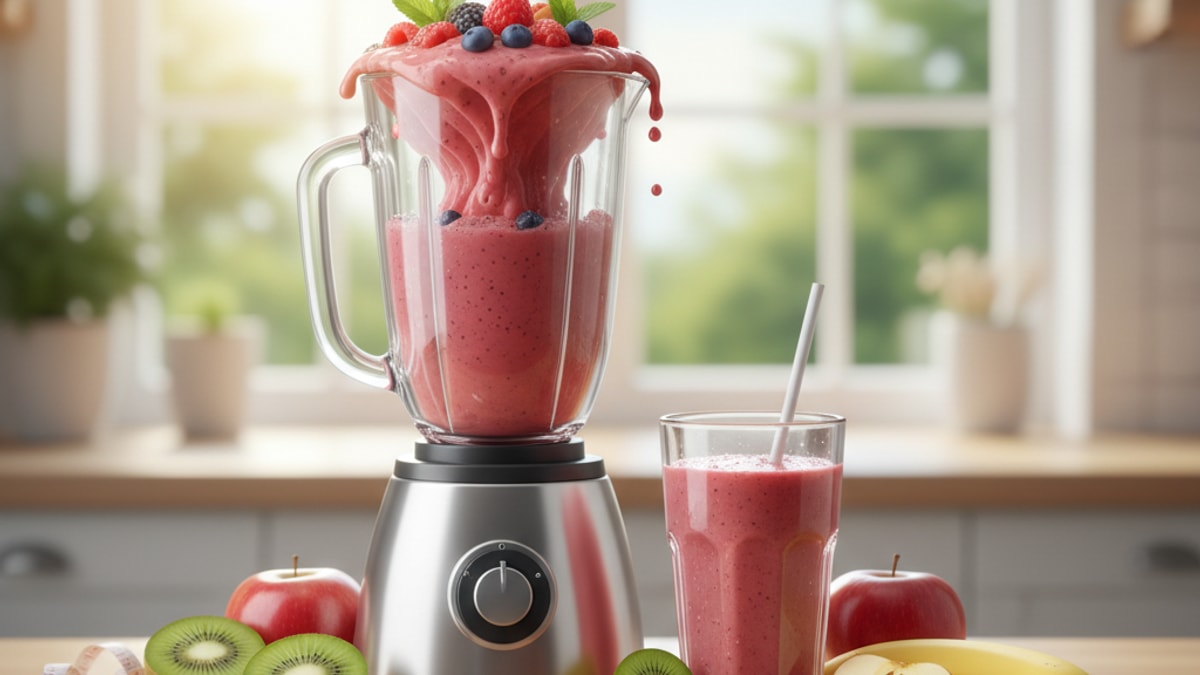
It’s one of the most common images of modern wellness: the vibrant, colorful fruit smoothie. We've all seen it. It's pitched as the ultimate health hack—a quick, delicious way to flood your body with vitamins and start the day right. And if you're on a weight loss journey, it feels like an obvious, almost virtuous choice. You're choosing fruit over a donut, right? That has to be a win.
Honestly, though, this is where so many well-intentioned efforts go off the rails. At TrimrX, our team works with individuals navigating the complex, often frustrating landscape of weight loss every single day. We look beyond the surface-level trends to understand the deep, physiological impact of what you consume. And we can tell you this with absolute certainty: the question of whether fruit smoothies are good for weight loss is far from a simple 'yes' or 'no.' It's a nuanced, critical conversation you need to have if you're serious about results.
The Deceptive Halo of the Healthy Smoothie
Let’s be honest. The appeal is undeniable. In a world of demanding schedules and the relentless pursuit of efficiency, the smoothie is a godsend. It's fast. It's portable. It feels like you’re doing something incredibly good for yourself. You can pack in spinach, berries, and exotic superfoods in minutes. What’s not to love?
This perception creates what we call a 'health halo.' It's a cognitive bias where we over-generalize the healthfulness of one ingredient (like fruit) to the entire meal. Because it contains fruit, we automatically label the entire concoction 'good,' often ignoring what else is lurking in the blender. We’ve seen countless clients who were diligently drinking daily smoothies, utterly baffled as to why the scale wasn't moving—or worse, was creeping up.
The reality is that a smoothie is not the same as eating whole fruit. Not even close. The act of blending dramatically alters the food's structure, and in doing so, it fundamentally changes how your body processes it. This isn't just a minor detail; it's the entire game.
The Calorie Catastrophe: How Your Smoothie Becomes a Milkshake
One of the most insidious issues with smoothies is calorie density. It is astonishingly easy to create a 700-calorie drink without even realizing it. Think about the components.
A large banana? That’s about 120 calories. A cup of mango? Another 100. A half-cup of Greek yogurt adds 100 more. Two tablespoons of almond butter for healthy fats and protein? That's nearly 200 calories right there. A splash of orange juice or a drizzle of honey for sweetness? You've just added a significant sugar and calorie load. Before you know it, your 'light' breakfast has more calories than a bacon, egg, and cheese sandwich. But here's the kicker: it's far less satisfying.
This is a critical point we stress with our patients. You could eat a small banana, a handful of berries, and a small apple for around 200 calories. That volume of whole food would likely feel quite filling. But when you blend those same fruits, you concentrate them into a small volume of liquid that goes down in minutes. You've consumed the calories without triggering the same feelings of fullness.
It's a metabolic trap. Simple, right?
The Sugar Spike and the Satiety Signal Breakdown
This is where the science gets really interesting, and it’s central to the work we do. When you eat a whole apple, your teeth and digestive system have to work to break down the fibrous cell walls of the fruit. This process slows down the absorption of its natural sugars (fructose) into your bloodstream. The fiber makes you feel full, it aids digestion, and it mitigates a dramatic blood sugar spike.
Now, imagine putting that same apple in a high-powered blender. Those blades do the work your body was supposed to do. They obliterate the fiber, essentially pre-digesting the fruit. What you're left with is a rush of liquid sugar that hits your bloodstream like a tidal wave. Your pancreas then scrambles to release insulin to manage this sudden surge. This insulin spike is a formidable enemy of weight loss. It promotes fat storage and, once the sugar is cleared away, often leads to a subsequent energy crash.
And what happens during an energy crash? Your body sends out powerful signals for more quick energy. Cravings. You find yourself reaching for snacks just an hour or two after your supposedly healthy smoothie, and the cycle of overeating begins anew. This isn't a failure of willpower; it's a predictable physiological response to what you consumed.
Your body's hunger and satiety hormones, like ghrelin and leptin, are also thrown for a loop. The physical act of chewing is a powerful signal to your brain that you are eating and that fullness is on the way. Drinking your calories largely bypasses this crucial mechanical cue. Your stomach might be full of liquid, but your brain hasn't fully registered the intake, leaving you feeling unsatisfied and primed to eat more later. For individuals already struggling with weight, whose hormonal signaling may already be dysregulated, this can be catastrophic for their goals. Understanding your unique physiology is the first step, and it's something a simple quiz can start to illuminate.
Building a Better Smoothie: The Non-Negotiable Rules
So, are we saying all smoothies are bad? No, not necessarily. But we are saying that the typical fruit-heavy smoothie is a poor choice for weight loss. If you're going to incorporate smoothies into your plan, you have to be incredibly strategic. Our team's approach is to re-engineer the smoothie from a sugar-delivery system into a balanced, satisfying mini-meal.
Here are the rules we've found deliver actual results:
-
Prioritize Protein. This is non-negotiable. Protein is the undisputed champion of satiety. It digests slowly, helps stabilize blood sugar, and supports lean muscle mass (which is metabolically active tissue). Aim for at least 20-30 grams of protein in your smoothie. This can come from a high-quality, low-sugar protein powder (whey, casein, or a plant-based blend), unflavored Greek yogurt, or even cottage cheese.
-
Focus on Fiber. Since the blender demolishes the fruit's natural fiber, you need to add it back in. This is critical. A tablespoon of chia seeds, ground flaxseed, or psyllium husk can dramatically slow down digestion and sugar absorption. Furthermore, make vegetables the star of the show. A large handful of spinach or kale adds a ton of nutrients and fiber with negligible calories and sugar. The goal should be a 2:1 ratio of veggies to fruit, at minimum.
-
Incorporate Healthy Fats. A small amount of healthy fat further increases satiety. We're talking about a quarter of an avocado (which also adds incredible creaminess), or a single tablespoon of almond butter or seed butter. Portion control is absolutely essential here, as fat is very calorie-dense.
-
Be Ruthless with Fruit. This is where most people go wrong. Stick to one serving of low-glycemic fruit. That means about a half-cup of berries, half a small banana, or a few chunks of a low-sugar fruit. Berries are our top recommendation due to their high fiber and antioxidant content.
-
Choose a Smart Liquid Base. Ditch the fruit juices, which are just liquid sugar. Use unsweetened almond milk, unsweetened coconut milk, or plain water. Simple. That's the key.
By following these principles, you shift the smoothie's macronutrient profile away from being carb-dominant and toward a balanced blend of protein, fiber, and healthy fats. This is the only way it can be a viable tool for weight management.
Smoothie Showdown: The Good vs. The Ugly
Let’s put this into practice. Here’s a side-by-side look at a typical smoothie versus one engineered for weight loss success. The difference is stark.
| Feature | The Typical "Healthy" Smoothie | The TrimrX-Approved Smoothie |
|---|---|---|
| Base | 1 cup Orange Juice | 1 cup Unsweetened Almond Milk |
| Fruit | 1 large Banana, 1 cup Mango | 1/2 cup Mixed Berries (frozen) |
| Protein | 1/2 cup Vanilla Yogurt (sweetened) | 1 scoop Unflavored Whey/Plant Protein |
| Add-ins | 2 tbsp Honey or Maple Syrup | 2 large handfuls Spinach, 1 tbsp Chia Seeds |
| Fat Source | 2 tbsp Peanut Butter | 1/4 Avocado |
| Approx. Calories | ~750 kcal | ~350 kcal |
| Approx. Sugar | ~90g | ~15g |
| Approx. Protein | ~20g | ~30g |
| Satiety Factor | Low (leads to crash & cravings) | High (sustained energy & fullness) |
Looking at this table, the problem becomes crystal clear. The typical smoothie is a dessert masquerading as a health food. The second smoothie, however, is a tool. It provides high-quality nutrition, supports muscle, and is designed to keep you full and satisfied for hours, preventing the snacking and overeating that so often sabotages weight loss efforts.
Beyond the Blender: A Holistic View on Lasting Weight Loss
Here’s the unflinching truth our experience has shown us time and time again: sustainable weight loss is rarely achieved through a single diet hack or 'miracle' food. It's not about finding the perfect smoothie recipe. It's about fundamentally recalibrating your body's relationship with food, hunger, and metabolism.
Smoothies, even the well-built ones, can be a crutch. The real goal is to build habits around eating whole, unprocessed foods. Chewing your food. Experiencing the textures and flavors. Allowing your digestive system to work as it was designed. This mindful approach to eating is a cornerstone of long-term success.
For many, however, this advice can feel infuriatingly insufficient. You might be doing everything 'right'—eating whole foods, exercising, building smart smoothies—and still facing a formidable, unmoving wall. This is often a sign that there are deeper metabolic or hormonal factors at play. It's not your fault. Your body's internal signaling system may be working against you, making you feel constantly hungry and promoting fat storage despite your best efforts.
This is precisely where modern medicine can provide a breakthrough. At TrimrX, we specialize in medically-supervised weight loss programs that utilize advanced treatments like GLP-1 medications (such as Semaglutide and Tirzepatide). These are not magic pills; they are powerful tools that work with your body's own biology. They help regulate insulin, slow digestion, and communicate directly with the hunger centers in your brain to restore a sense of control and satiety. This quiets the constant 'food noise' and allows you to build healthy habits on a foundation of physiological balance, not a constant battle against cravings.
When you combine this medical support with nutritional guidance, the results can be transformative. It allows you to break free from the cycle of trial and error. If this sounds like the support you've been missing, we encourage you to Start Your Treatment Now and learn how a comprehensive, medical approach can change everything.
So, back to the original question: are fruit smoothies good for weight loss? Our professional take is this: used carelessly, they are one of the most effective ways to unknowingly sabotage your progress. They are a high-risk food that demands immense mindfulness and careful construction. Used strategically, as an occasional tool built around protein, fiber, and fat, they can have a place. But they are never, ever the solution by themselves. The real solution lies in understanding your own body, honoring the principles of satiety and blood sugar balance, and seeking expert guidance when your own best efforts are no longer enough.
Frequently Asked Questions
Are green smoothies better for weight loss than fruit smoothies?
▼
Generally, yes. Green smoothies prioritize low-calorie, high-fiber vegetables like spinach and kale over high-sugar fruits. This results in a lower calorie count, less impact on blood sugar, and more nutrients, making them a much smarter choice for a weight loss plan.
Can I lose weight by only drinking smoothies for a week?
▼
While you might see initial weight loss from a ‘smoothie diet’ due to a calorie deficit, we strongly advise against it. This approach is unsustainable, nutritionally incomplete, and can lead to muscle loss. Lasting weight loss requires building healthy habits with whole foods, not short-term liquid diets.
How much sugar is too much in a weight loss smoothie?
▼
Our team recommends keeping the total sugar in your smoothie under 15-20 grams. This is best achieved by using only one serving of low-sugar fruit, like a half-cup of berries, and avoiding all added sweeteners like honey, maple syrup, and fruit juice.
What’s the best protein to add to a smoothie?
▼
Whey isolate, casein, and high-quality plant-based protein powders are excellent choices for boosting satiety. Unflavored Greek yogurt is another fantastic option. The goal is to add 20-30 grams of protein to make the smoothie a truly filling meal replacement.
Why do I feel hungry an hour after drinking a fruit smoothie?
▼
This is a classic sign of a blood sugar crash. A high-sugar, low-fiber, low-protein smoothie causes a rapid spike in blood sugar, followed by a sharp drop. This crash triggers your body’s hormonal hunger signals, creating intense cravings for more quick energy.
Are store-bought smoothies healthy for weight loss?
▼
Almost never. Most commercially prepared smoothies are loaded with fruit juice concentrates, purees, and added sugars, making them extremely high in calories and sugar. We advise treating them like milkshakes and avoiding them if your goal is weight loss.
Can fruit smoothies actually cause weight gain?
▼
Absolutely. Due to their high calorie and sugar content and low satiety factor, drinking fruit smoothies regularly can easily lead to a calorie surplus and subsequent weight gain. It’s one of the most common mistakes we see people make with the best of intentions.
Does blending fruit destroy its nutrients and fiber?
▼
Blending does not destroy most vitamins and minerals. However, it does mechanically obliterate the structure of the dietary fiber. While the fiber is still technically there, its ability to slow digestion and regulate blood sugar is significantly diminished.
Should I have a smoothie before or after a workout?
▼
If you must have one, post-workout is better. A smoothie with a 3:1 or 4:1 ratio of carbs to protein can help replenish glycogen stores and repair muscle. However, a whole food meal is often a better, more satiating choice for recovery.
Is a smoothie a good meal replacement?
▼
A smoothie can only be a good meal replacement if it’s constructed properly. It must contain adequate protein (20-30g), fiber, and healthy fats to provide the satiety and nutrition of a complete meal. A simple fruit-and-juice blend is not a suitable meal replacement.
What are the best low-sugar fruits for a weight loss smoothie?
▼
Our top recommendations are berries—strawberries, blueberries, raspberries, and blackberries. They are packed with fiber and antioxidants and are much lower in sugar than tropical fruits like mango, pineapple, or banana.

Transforming Lives, One Step at a Time
Keep reading

What to Do With a Full Pantry You No Longer Eat From
Sort it into three piles rather than clearing it all out: donate, keep, and discard. The mistake most people make is emptying the whole…

How to Handle a Business Dinner When the Client Orders for the Table
This is the one dining situation where your usual tools do not work. You cannot order a starter as your main, cannot ask for…
How to Handle Group Dinners Where Everyone Shares Plates
Shared dining is generally easier than a fixed plate, not harder, and it is worth going in with that framing. When everyone is taking…


