How Long Can Compounded Tirzepatide Be Out of the Fridge?
Introduction
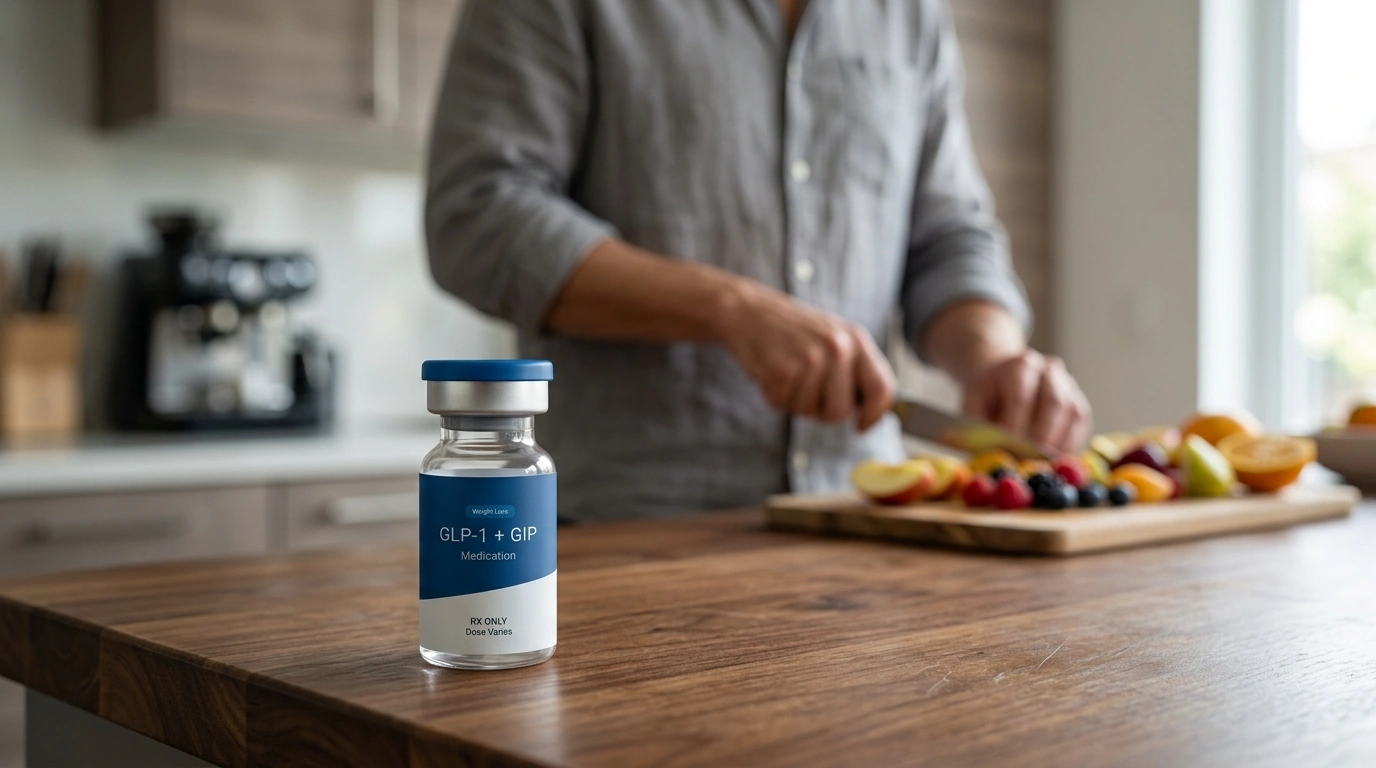
It is a moment many people face: you return home from a long day only to realize your medication vial is still sitting on the kitchen counter instead of in the refrigerator. When you are investing time and effort into a weight loss journey, ensuring your medication remains potent and safe is a top priority. Tirzepatide is a sophisticated peptide medication that requires specific handling to maintain its molecular integrity.
At TrimRx, we understand that managing a new treatment program can feel overwhelming, especially when it comes to the technical details of storage and travel. If you are still early in the process, you can take the free assessment quiz to see whether a personalized program may be a fit for your goals. This article will explain how long compounded tirzepatide can safely remain at room temperature, why refrigeration is necessary, and how you can protect your medication during daily life. By following these guidelines, you can feel confident that every dose is working as intended to support your health goals.
Understanding Tirzepatide and Temperature Sensitivity
Tirzepatide is a dual-acting medication that mimics two natural hormones in the body: glucagon-like peptide-1 (GLP-1) and glucose-dependent insulinotropic polypeptide (GIP). For a deeper look at how this treatment class works, see our guide on what GLP-1 therapy is and how it supports weight loss. These hormones work together to regulate appetite, slow digestion, and improve how your body processes sugar. Because tirzepatide is a peptide—essentially a string of amino acids—it is structurally delicate.
Peptides are held together by chemical bonds that can be broken down by external factors such as heat, light, and vigorous shaking. When these bonds break, the medication undergoes a process called degradation. While degraded medication is not always “toxic,” it loses its ability to bind to the correct receptors in your body. This means the medication may become less effective, potentially stalling your progress or leading to inconsistent results.
How Long Can Compounded Tirzepatide Stay at Room Temperature?
Quick Answer: Most compounded tirzepatide can safely remain at room temperature—typically defined as up to 86°F (30°C)—for up to 21 to 28 days, depending on the specific pharmacy’s formulation. However, it is essential to check the specific instructions provided by your pharmacy, as individual preparations may vary.
If you are deciding whether tirzepatide is the right fit for your plan, our article on should you take tirzepatide for effective weight management can help you think through the bigger picture. While the medication can survive outside the fridge for a limited window, the “cold chain” remains the gold standard for storage. The cold chain refers to the continuous refrigeration of a product from the moment it is manufactured until it is administered. Most healthcare providers recommend keeping the vial in the refrigerator at temperatures between 36°F and 46°F (2°C to 8°C).
If you accidentally leave your vial out for a few hours, there is generally no need to panic. If the room was kept at a standard temperature and the vial was not in direct sunlight, it is likely still safe to use. You should immediately return it to the refrigerator and continue your dosing schedule as prescribed.
The Role of the Compounding Pharmacy
Compounded tirzepatide is prepared by specialized, FDA-registered compounding pharmacies to meet the specific needs of a patient. If you want to understand how medication access works in practice, our post on how to get tirzepatide for weight loss walks through the process in more detail. Unlike branded versions such as Mounjaro® or Zepbound®, which are produced in massive, identical batches by a single manufacturer, compounded medications are often tailored in terms of dosage or combined with other ingredients like Vitamin B12.
Because these pharmacies use different “bases” or preservatives, the stability of the medication can differ from one vial to the next. This is why you will see a Beyond Use Date (BUD) on your prescription label. The BUD is the date after which the medication should no longer be used. This date accounts for the stability of the tirzepatide and the risk of bacterial growth once the vial has been punctured.
Key Takeaway: Always defer to the specific storage label on your medication vial. The pharmacy that prepared your compounded tirzepatide has the most accurate data regarding the stability of that specific batch.
Why Refrigeration is Necessary for Long-Term Storage
Refrigeration slows down the natural breakdown of the tirzepatide molecule and prevents the growth of contaminants. If you are looking for broader education on GLP-1 care, our article on what GLP-1 support is and how it fits into weight loss is a helpful companion read. When you use a multi-dose vial, you are puncturing the rubber stopper with a needle multiple times. Even with proper alcohol swabbing, each puncture introduces a tiny risk of environmental bacteria entering the vial.
Cold temperatures inhibit the reproduction of most bacteria, providing an extra layer of safety for your treatment. Furthermore, consistent cooling ensures that the GIP and GLP-1 receptor agonists remain at peak potency for the duration of your treatment cycle. If the medication is exposed to high heat—such as being left in a hot car or near a stove—it can degrade much faster than the standard 21-day window.
Signs Your Medication May Have Degraded
It is important to visually inspect your medication before every single injection. Tirzepatide should typically appear as a clear, colorless, or slightly yellowish liquid. It should not contain any visible particles, crystals, or cloudiness.
If you notice any of the following, do not use the medication and contact your provider:
- Cloudiness: If the liquid looks “milky” or foggy, it may be contaminated or degraded.
- Particulates: Visible flakes, “strings,” or crystals inside the vial.
- Color Change: A sudden or drastic shift in color that differs from when you first received it.
- Unusual Odor: While you shouldn’t be sniffing the vial closely, a strong or foul smell is a clear sign of bacterial growth.
Bottom line: When in doubt, throw it out. Using degraded medication can lead to ineffective treatment or localized skin reactions at the injection site.
Traveling with Compounded Tirzepatide
Maintaining the proper temperature while traveling requires a bit of planning, but it is entirely manageable. If travel is part of your routine, our article on how to start a weight loss journey that actually lasts offers a helpful mindset reset before you leave home. Whether you are going on a road trip or flying across the country, you should treat your medication with the same care as your passport or wallet.
If you are traveling, follow these steps:
- Use a Medicated Travel Cooler: Small, insulated cases designed specifically for insulin or GLP-1 pens/vials are widely available. They often include gel packs that keep the medication at fridge temperatures for 12–24 hours.
- Avoid Check-In Bags: If you are flying, always keep your tirzepatide in your carry-on luggage. The cargo hold of a plane can experience extreme temperature fluctuations—either freezing or overheating—which can ruin the medication.
- Keep Away from Ice: While you want to keep the vial cool, you do not want it to touch direct ice, as this can cause the medication to freeze. Frozen tirzepatide should never be used, even after it thaws.
- Notify Security: If you are carrying needles or vials, keep them in their original packaging with the prescription label attached. Most security agents are very familiar with injectable medications and will pass them through without issue.
What to Do If Your Medication Gets Too Warm
If you realize your tirzepatide has been out of the fridge for an extended period, start by assessing the environment. Was the room cool? Was the vial in a dark drawer or sitting in a sunlit window? Heat and light are the primary enemies of peptide stability.
If the medication was exposed to temperatures above 86°F for more than a few hours, or if it was left at room temperature for longer than the pharmacy-recommended 21–28 days, its efficacy is likely compromised. In this scenario, we recommend reaching out to your healthcare specialist. They can help determine if the vial is still safe to use or if a replacement is necessary to ensure your weight loss progress stays on track.
At TrimRx, our dedicated team of specialists is available to answer questions like these, ensuring you never feel alone in managing your treatment details. If you want to explore whether a personalized program is appropriate, you can complete the free assessment quiz as a simple next step.
The Danger of Freezing Tirzepatide
Freezing is just as damaging to tirzepatide as excessive heat. If your refrigerator is too cold and the vial begins to show signs of ice crystals, or if it accidentally touches the cooling element in the back of the fridge, the medication may be ruined.
When a peptide freezes, the expansion of water molecules can physically tear the amino acid chains apart. Once these bonds are broken, the medication cannot be “fixed” by thawing it. If you discover your vial has frozen, it must be discarded. To prevent this, place your medication in the middle shelf of the refrigerator or in the butter compartment, which tends to have a more stable, moderate temperature than the very back or the bottom crisper drawers.
Maximizing Your Personalized Program Outcomes
Correct storage is a small but vital part of a successful weight loss program. When you are using compounded tirzepatide as part of a medically supervised plan, you are giving your body a powerful tool to reset its metabolic health. Ensuring that tool is in peak condition is essential for reaching your goals.
Our approach focuses on more than just the medication itself. We believe in a comprehensive model where the medication supports lifestyle changes. If you want added nutritional support while adjusting to GLP-1 treatment, the GLP-1 Daily Support supplement is designed to fit alongside that routine. By keeping your tirzepatide at the right temperature, you ensure that the appetite suppression and metabolic benefits remain consistent week after week.
- Check your fridge temperature regularly with a thermometer.
- Set a weekly reminder to inspect your vial before your dose.
- Always keep the vial in its original carton to protect it from light.
- Keep a spare travel cooler ready for unexpected trips or power outages.
How to Get Started with a Personalized Plan
If you are ready to explore how GLP-1 and GIP medications can fit into your health journey, the process is simple and telehealth-based. Our platform connects you with licensed providers who evaluate your medical history and goals to create a plan that is right for you. There is no need for in-person visits or sitting in crowded waiting rooms.
Everything—from the initial doctor consultation and lab work to the shipping of your medication—is included in one straightforward program. We partner with FDA-registered compounding pharmacies to ensure you receive high-quality preparations that are delivered directly to your door in temperature-controlled packaging. If you are looking for another layer of support during the process, Weight Loss Boost supplement may be a helpful option to explore.
Key Takeaway: Taking the first step is often the hardest part, but having a professional team to guide you through the logistics of storage and administration makes the process much smoother.
Conclusion
Storing your compounded tirzepatide correctly is essential for maintaining its potency and ensuring your weight loss journey remains effective. While the medication is robust enough to handle a few hours at room temperature, it should generally be kept in the refrigerator between 36°F and 46°F. By protecting your vial from extreme heat, light, and freezing, you are protecting your investment in your own health.
TrimRx is committed to providing a transparent and supportive experience for every individual. Our mission is to help you achieve sustainable weight loss through science-backed treatments and modern telehealth convenience. If you are ready to take the next step, you can start with the free assessment quiz and see whether a personalized plan is right for you.
FAQ
What happens if I accidentally use expired compounded tirzepatide?
Using medication past its Beyond Use Date (BUD) primarily carries the risk of reduced effectiveness. Over time, the tirzepatide molecule breaks down, meaning you might not receive the full dose’s benefit, potentially leading to increased hunger or slower weight loss. Additionally, there is a small risk of bacterial contamination in older vials, which could cause a skin reaction at the injection site.
Can I put my tirzepatide back in the fridge after it has reached room temperature?
Yes, if your medication has been out for a short period—such as a few hours or even a day—you should put it back in the refrigerator immediately. Most formulations are stable at room temperature for up to 21–28 days, so returning it to the cold will help preserve the remaining shelf life. If you are unsure whether the timing still falls within a safe window, use the free assessment quiz as a starting point for personalized guidance.
How should I dispose of compounded tirzepatide if it has gone bad?
If your medication has turned cloudy, changed color, or passed its expiration date, it should be disposed of safely. Do not pour the liquid down the drain. Instead, place the vial in a sharps container or a heavy-duty plastic container (like a laundry detergent bottle) to prevent accidental needle sticks or leaks, and follow your local guidelines for medical waste disposal.
Does light affect the stability of tirzepatide?
Yes, tirzepatide is light-sensitive. Prolonged exposure to UV rays or even strong indoor lighting can accelerate the degradation of the peptide bonds. This is why most pharmacies recommend keeping the vial in its original cardboard box or a dark storage bag whenever it is not being actively used for an injection. For broader context on treatment options, you can also read what to eat while on a GLP-1 if you want to see how storage, nutrition, and support fit together.
Disclaimer: This content is for informational purposes only and does not constitute medical advice. It is not intended to diagnose, treat, cure, or prevent any disease or condition. Individual results may vary. Always consult a qualified healthcare professional before starting any weight loss program or medication.

Transforming Lives, One Step at a Time
Keep reading

Starting Tirzepatide While on the Pill: The First Four Weeks
You have your first box and you take an oral contraceptive. There is a labeled instruction that applies to you, and the mistake almost…
Marathon Training on Tirzepatide When You Can’t Fuel
You have a plan on the fridge and a medication that has made eating feel optional. Those two things are in genuine conflict, and…

Paying Cash for Tirzepatide? Don’t Stretch Your Supply
When every vial comes out of your own pocket, the arithmetic is hard to ignore. If a month’s supply costs what it costs, and…


