Can Probiotics Help With Weight Loss? Our Team’s Unfiltered Take
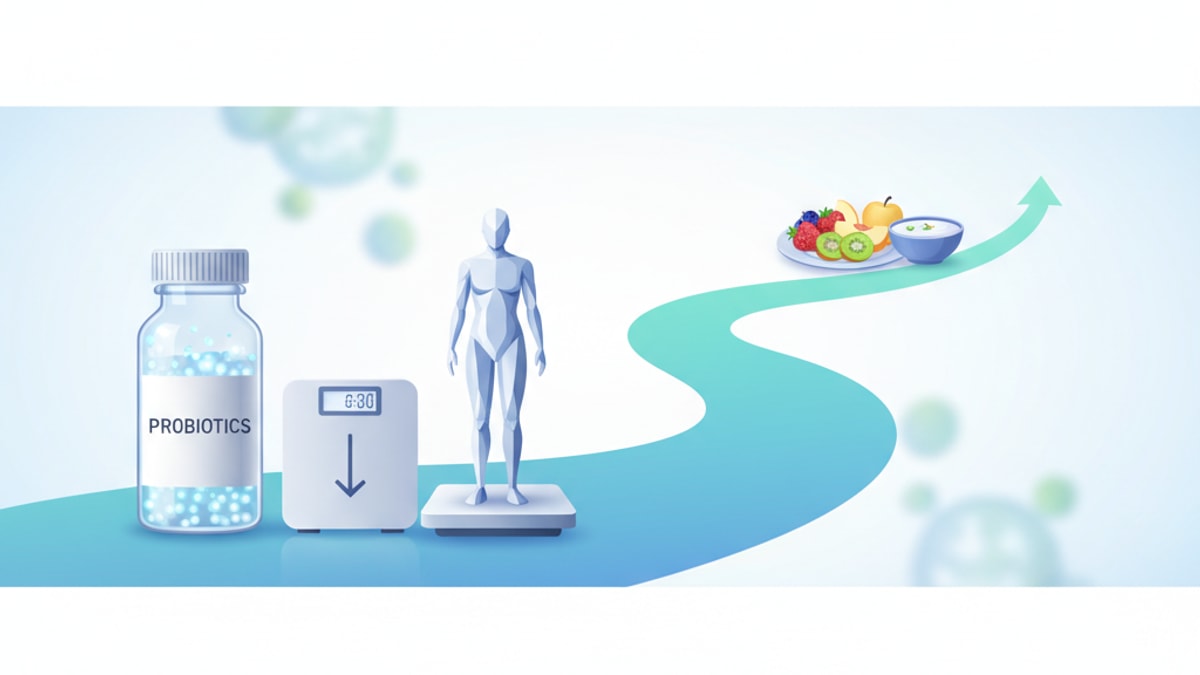
Can Probiotics Help With Weight Loss? The Real Story
The wellness world is buzzing. It seems like every week there's a new 'miracle' supplement promising to solve one of life's most persistent challenges: weight management. Lately, probiotics have been front and center in that conversation. You've probably seen the headlines and the sleekly packaged yogurts promising to balance your gut and melt away pounds. But here's the question we get all the time: can probiotics help with weight loss in a way that’s meaningful and sustainable? It's a fantastic question, and the answer is far more nuanced than a simple yes or no.
Our team at TrimrX works at the forefront of metabolic science and medically-supervised weight loss every single day. We deal in data, clinical results, and the biological realities of how the body manages weight. So, we're going to pull back the curtain on this topic. We'll look at what the science actually says, what our professional experience has shown us, and where probiotics fit into a serious, effective weight loss strategy. Let's be honest, you need clarity, not just more hype.
First, What Exactly Is Your Gut Microbiome?
Before we can even touch on weight loss, we have to talk about the sprawling, complex world living inside your digestive tract. Think of your gut microbiome as a bustling metropolis of trillions of microorganisms—bacteria, viruses, fungi, and other life forms. It’s not just a passive passenger along for the ride; it’s a critical, non-negotiable element of your overall health. This internal ecosystem is so vital that some scientists refer to it as a 'forgotten organ.'
These tiny residents do some heavy lifting. They help you digest food your body can't break down on its own, they produce essential vitamins like B12 and K, they regulate your immune system (a shocking 70% of which is located in your gut), and they even communicate with your brain. The health of this microbial city directly impacts your mood, your immunity, and, you guessed it, your metabolism. When the city is in harmony, with a diverse population of 'good' bacteria thriving, your body functions optimally. But when 'bad' bacteria start to take over, a state called dysbiosis, things can go sideways. Fast. This imbalance has been linked to a whole host of issues, from inflammatory bowel disease to anxiety and, importantly for our discussion, obesity.
It’s a delicate balance. A truly formidable biological system.
The Gut-Weight Connection: How Bacteria Influence Your Body
This is where it gets really interesting. The idea that gut bacteria could influence weight seemed like science fiction not too long ago, but the evidence is now overwhelming. Researchers have found distinct differences between the gut microbiomes of lean individuals and those who are overweight or obese. It's not a coincidence; it's biology at work.
Here's what we've learned about how this connection operates:
-
Energy Extraction: Some gut bacteria are simply better at extracting calories from the food you eat. Two major families of bacteria, the Bacteroidetes and the Firmicutes, dominate the gut. Studies have consistently shown that individuals with obesity tend to have a higher ratio of Firmicutes to Bacteroidetes. In simple terms, their gut bacteria are hyper-efficient at harvesting energy from food and storing it as fat. It's an evolutionary advantage that, in our modern world of abundant food, has become a metabolic liability.
-
Appetite Regulation: Your gut bacteria are little chemical factories, and they play a role in producing hormones that control hunger and satiety. They influence the production of hormones like ghrelin (the 'hunger hormone') and leptin (the 'fullness hormone'). A balanced microbiome helps keep these signals in check, so you feel full when you've eaten enough. An imbalanced one can leave those signals haywire, leading to persistent cravings and overeating. We can't stress this enough: sometimes, that feeling of insatiable hunger isn't just in your head; it's being influenced by your gut.
-
Inflammation: Chronic, low-grade inflammation is a known driver of obesity and metabolic syndrome. Certain 'bad' gut bacteria can produce substances called lipopolysaccharides (LPS) that leak through the gut lining into the bloodstream, triggering a body-wide inflammatory response. This inflammation can disrupt insulin signaling and promote fat storage, creating a vicious cycle that makes weight loss incredibly difficult.
-
Fat Storage: Your microbiome can even influence how and where your body stores fat. It impacts the expression of genes related to fat metabolism. A healthy gut environment encourages your body to burn fat for energy, while an unhealthy one can signal your body to tuck it away in storage, particularly as visceral fat around your organs.
It's a complex, interconnected system. And it highlights why just 'eating less and moving more' can be a frustratingly incomplete piece of advice for so many people.
The Big Question: Do Probiotic Supplements Actually Work?
So, if an unhealthy gut can contribute to weight gain, it stands to reason that adding 'good' bacteria via probiotics should help with weight loss, right? It’s a logical leap. And some research does support it, but with some very important caveats.
The word 'probiotic' is a broad term. It’s like the word 'car.' A Ferrari and a minivan are both cars, but they perform very different functions. The same is true for probiotics. The effects are highly strain-specific.
Some strains have shown modest promise in clinical trials:
- Lactobacillus gasseri: Several studies have suggested this strain can help reduce belly fat and body weight. One notable study found that participants who drank milk fermented with L. gasseri saw an 8.5% reduction in abdominal fat over 12 weeks. That sounds impressive, but the actual weight loss was moderate.
- Bifidobacterium lactis: This family of bacteria, particularly strains like B420, has been linked to improved body composition, reduced waist circumference, and better metabolic health.
- Lactobacillus rhamnosus: Research on this strain has shown that it might help women lose weight and maintain that loss over time, though the same effect wasn't observed in men in the same study.
But here's the reality check our team always provides. The effects seen in these studies are almost always modest. We're talking about a few pounds over several months, not the transformative results most people are looking for. Probiotics are not a magic bullet. They don't erase poor dietary choices or a sedentary lifestyle.
Think of it this way: if your goal is to build a house, probiotics are like making sure you have a top-of-the-line screwdriver. It's a useful tool, and it will certainly help with specific tasks, but it's not the foundation, the framing, or the roof. It's a supporting player, not the lead actor.
How to Choose a Probiotic Wisely
If you're considering adding a probiotic to your routine as part of a broader health strategy (which we think is a great idea for overall wellness), you need to be a savvy consumer. The supplement market is notoriously unregulated, and many products on the shelf are, frankly, useless. Here’s what our experts recommend looking for:
- Strain-Specific Research: Don't just buy a bottle that says 'Probiotic Blend.' Look for products that list the specific strains (e.g., Lactobacillus gasseri SBT2055) that have been studied for the benefits you're seeking.
- CFU Count: CFU stands for 'Colony-Forming Units,' which is the number of viable bacteria in each dose. Look for products with at least 10-20 billion CFUs per serving.
- Third-Party Testing: Reputable brands will have their products tested by an independent third party (like NSF or USP) to verify that what's on the label is actually in the bottle. This is crucial.
- Delivery Mechanism: The bacteria need to survive the harsh acidic environment of your stomach to reach your intestines. Look for delayed-release capsules or other technologies designed to protect the live cultures.
And don't forget food sources! Fermented foods are a fantastic way to get a diverse array of beneficial bacteria.
| Source | Key Probiotic Strains | TrimrX Team Insight |
|---|---|---|
| Supplements | Specific, targeted strains (e.g., L. gasseri) | Good for targeting a specific health goal, but quality varies wildly. We stress the importance of choosing a reputable, third-party tested brand. |
| Yogurt/Kefir | Lactobacillus, Bifidobacterium, Streptococcus | Excellent for daily maintenance. Opt for plain, unsweetened versions to avoid added sugars that can counteract the benefits. Kefir is often more potent. |
| Kimchi/Sauerkraut | Lactobacillus plantarum, Leuconostoc | Fantastic, diverse sources of bacteria plus fiber (a prebiotic). Make sure you're buying unpasteurized versions, as heat kills the live cultures. |
| Prebiotic Foods | Not a probiotic (Fiber that feeds good bacteria) | This is a critical, often overlooked piece. Probiotics need food. Garlic, onions, bananas, and asparagus are all excellent sources of prebiotics. |
The Real Drivers of Weight Loss: A Medical Perspective
Optimizing your gut health is a fantastic long-term strategy for wellness. It's something we encourage for all our patients. But when it comes to achieving significant, life-changing weight loss, especially for those who have struggled for years, we have to be honest about what truly moves the needle.
Probiotics may help you lose a few pounds. A comprehensive medical approach can help you lose 15-20% of your body weight. That's the difference we're talking about.
This is where our work at TrimrX comes in. We utilize advanced, FDA-registered GLP-1 medications like Semaglutide and Tirzepatide. These aren't supplements; they are powerful clinical tools that work with your body's own hormonal systems to achieve profound results. They fundamentally change the game by:
- Regulating Appetite at the Source: GLP-1s work on the appetite centers in your brain, dramatically reducing hunger and cravings. This makes it naturally easier to eat less without feeling deprived or constantly fighting urges.
- Slowing Digestion: They slow down the rate at which your stomach empties, helping you feel fuller for much longer after meals.
- Improving Insulin Sensitivity: These medications help your body use insulin more effectively, which is critical for breaking the cycle of fat storage and metabolic dysfunction.
This approach isn't about guesswork. It's about using cutting-edge biotechnology to address the root biological drivers of weight gain. When you combine this medical foundation with personalized lifestyle coaching on nutrition and exercise, the results are transformative. It's a complete system, not just one isolated tool.
If you've been on the weight loss rollercoaster and feel like you've tried everything, it might be time to explore what a medical approach can do. You can see if you're a candidate by taking our simple Take Quiz. For many of our patients, it’s the first time they’ve felt truly in control of their health journey.
Building a Holistic and Sustainable Plan
So, what's the final verdict on our question: can probiotics help with weight loss? Yes, they can play a supportive role in a much larger, more comprehensive strategy. They can help optimize your gut environment, which may lead to modest improvements in weight and metabolic health over time.
But they are not, and never will be, a primary weight loss solution. Not on their own.
True, sustainable success comes from a multi-pronged attack. It's about building a foundation of healthy habits and, when needed, leveraging the most effective medical tools available. Our experience shows that the most successful patients are the ones who embrace this holistic view. They work on their nutrition, they incorporate joyful movement, they manage their stress, they prioritize sleep, and they use their prescribed treatment as the powerful catalyst that makes it all possible.
Don't put all your hopes in a single pill or yogurt. Instead, think of your health as a complex system that requires a thoughtful, integrated strategy. Probiotics can be a part of that strategy. They can be a component of the 'healthy habits' pillar. But for truly powerful, lasting change, you need to address the core metabolic and hormonal issues head-on.
If you’re ready to stop guessing and start seeing real, clinically-proven results, we're here to help you build that strategy. It's time to get off the supplement carousel and onto a clear, medically-guided path. If that sounds like the change you've been looking for, you can Start Your Treatment with us today.
Your gut health matters. It matters a lot. But it's one piece of an intricate puzzle. By putting all the pieces together—lifestyle, mindset, and advanced medical science—you can finally build the healthy life you deserve. That’s the real secret. It’s not about one magic bullet; it’s about a comprehensive plan.
Frequently Asked Questions
How long does it take for probiotics to have an effect on weight?
▼
The effects of probiotics on weight are typically slow and modest. If a particular strain is going to have an impact, you might notice subtle changes over 8 to 12 weeks. It’s important to remember that this is a long-term supportive measure, not a rapid weight loss solution.
Can I get enough probiotics from food alone?
▼
For general gut health, absolutely. Regularly consuming fermented foods like plain yogurt, kefir, kimchi, and sauerkraut provides a diverse range of beneficial bacteria. For a targeted therapeutic dose of a specific strain, a high-quality supplement is often more practical.
Are there any side effects to taking probiotics?
▼
Probiotics are generally considered safe for most people. When first starting, some individuals may experience mild digestive upset, such as gas or bloating, as their gut microbiome adjusts. These symptoms typically resolve within a few days.
What’s the difference between a probiotic and a prebiotic?
▼
Probiotics are the live beneficial bacteria themselves. Prebiotics are a type of dietary fiber that acts as food for these bacteria, helping them thrive. You need both for a healthy gut ecosystem.
Do probiotics work while taking GLP-1 medications like Semaglutide?
▼
Yes, they can be a great complementary therapy. While Semaglutide works on a hormonal level to control appetite and metabolism, supporting a healthy gut microbiome with probiotics can enhance overall digestive health and wellness, which is beneficial during any weight loss journey.
Will probiotics help me lose belly fat specifically?
▼
Some research, particularly on the strain *Lactobacillus gasseri*, has shown a reduction in abdominal (visceral) fat. However, it’s not possible to ‘spot treat’ fat loss, and any effect would be part of a modest overall reduction in body weight and fat.
Do all yogurts contain effective probiotics?
▼
No. Many yogurts are heat-treated (pasteurized) after fermentation, which kills the live cultures. Look for labels that state ‘live and active cultures.’ Also, be mindful of high sugar content in flavored yogurts, which can be counterproductive.
Can taking probiotics stop me from regaining weight?
▼
Some studies suggest that a healthy gut microbiome may play a role in weight maintenance. While not a standalone solution for preventing weight regain, it can be a helpful component of a long-term healthy lifestyle after reaching your weight loss goals.
Is a higher CFU count always better in a probiotic supplement?
▼
Not necessarily. While a sufficient dose is important (we recommend 10-20 billion CFUs), the specific strains included are more critical than the sheer number. A well-researched strain at a moderate dose is better than a massive dose of an unproven blend.
Can I take probiotics if I have a sensitive stomach or IBS?
▼
Many people with IBS find probiotics helpful, but the wrong strain can sometimes worsen symptoms. It’s best to start with a low dose of a well-researched strain known for digestive health, like *Bifidobacterium infantis*, and consult with a healthcare provider.
Do probiotics help with cravings for sugar and unhealthy foods?
▼
They might, indirectly. By helping to balance appetite-regulating hormones and reducing inflammation, a healthier gut microbiome can contribute to more stable blood sugar and reduced cravings over time. However, the effect is not as direct or powerful as medical treatments like GLP-1s.
Why is gut microbiome diversity so important?
▼
A diverse microbiome is a resilient and healthy one. Different bacterial species perform different jobs, from digesting various fibers to producing unique vitamins. A lack of diversity makes your internal ecosystem more vulnerable to being overtaken by harmful bacteria.

Transforming Lives, One Step at a Time
Keep reading

Obesity and Low Testosterone
**Can obesity cause low testosterone?** Yes. Obesity can lower testosterone, and the relationship often runs in both directions.

Top 6 Best Weight Loss Medications in 2026
Prescription weight loss medication has gone mainstream. What was once a quiet corner of obesity medicine is now one of the most talked-about categories…

Top 8 Best Telehealth for Weight Loss in 2026
Finding the best telehealth for weight loss used to be a time-consuming process that involved hours of research, murky pricing pages, and a fair…


