Pink Salt Weight Loss Recipe: Does It Actually Work?
You’ve seen it scrolling through your social feeds. It’s usually posted with a dramatic before-and-after photo and a caption that promises a simple, almost magical solution to weight loss. The 'pink salt weight loss recipe' has become one of those persistent wellness trends that just won't fade away. It’s alluring. It’s simple. And it promises big results with minimal effort. But we've been in the field of metabolic science and biotechnology for a long time, and our team knows that when something sounds too good to be true, it almost always is.
So, what’s the real story here? Is this pink-hued concoction the secret key to shedding pounds, or is it just another health fad destined for the digital graveyard? We’re going to cut through the noise and give you an unflinching, science-backed look at what this recipe is, what it claims to do, and—most importantly—what it actually does to your body. Let’s get into it.
What Exactly Is This Pink Salt Recipe Everyone's Talking About?
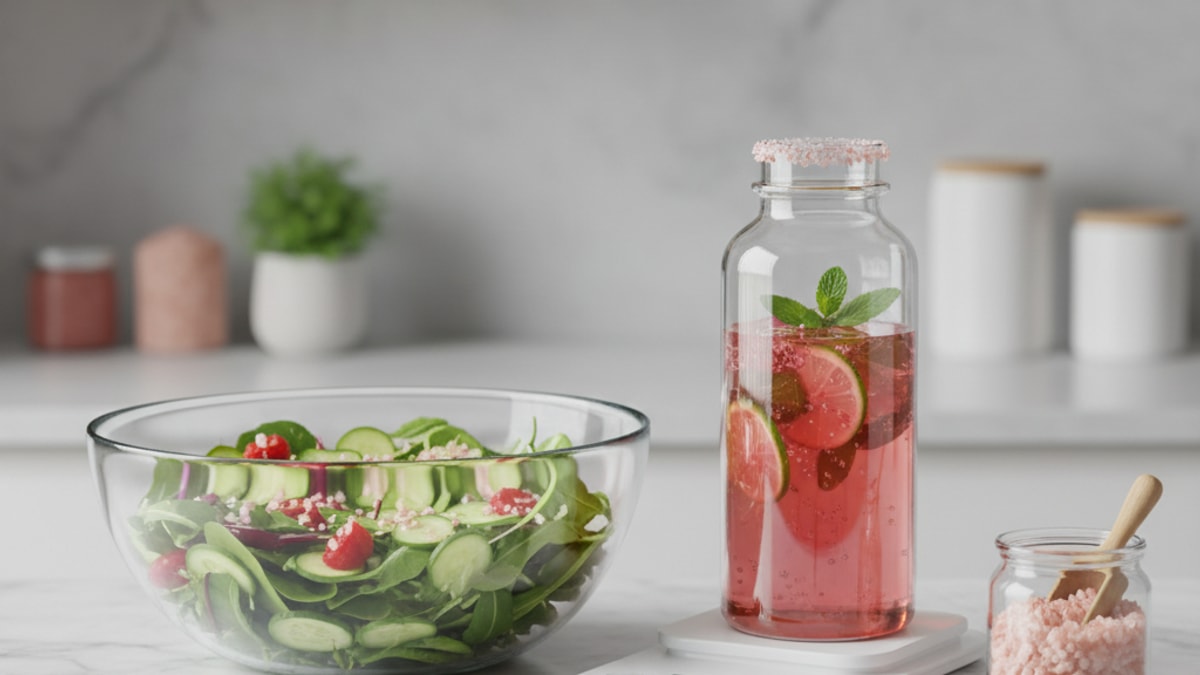
At its core, the recipe is incredibly simple. It typically involves mixing a small amount of Himalayan pink salt (usually a quarter to a half teaspoon) into a glass of warm water, sometimes with a squeeze of fresh lemon juice. Proponents suggest drinking this first thing in the morning on an empty stomach. It's easy to see the appeal. The ingredients are cheap, accessible, and feel 'natural.'
The claims attached to this drink are sprawling. Influencers and wellness bloggers tout it as a miracle elixir that can:
- 'Detoxify' the body by flushing out accumulated toxins.
- Boost metabolism and kickstart the body’s fat-burning processes.
- Improve hydration on a cellular level more effectively than plain water.
- Balance pH levels within the body.
- Reduce bloating and aid digestion.
On the surface, it sounds like a comprehensive wellness tool. A simple morning ritual for a healthier, leaner you. Honestly, though, it’s a masterclass in marketing pseudoscience. These claims tap into our deepest desires for quick fixes and simple solutions to complex biological problems. Our team has found that these viral 'hacks' often gain traction because they offer a sense of control in a world where sustainable weight loss feels like a difficult, often moving-target objective.
The Science (or Lack Thereof) Behind the Claims
This is where the marketing narrative collides with physiological reality. Let's break down the main claims one by one, from our medical and scientific perspective.
First, the idea of 'detoxification.' This is probably the most pervasive and misleading term in the wellness industry. Your body already has a sophisticated, incredibly effective detoxification system: your liver and kidneys. These organs work relentlessly to filter your blood, process nutrients, and excrete waste products. The notion that a glass of salt water can somehow 'flush' unspecified toxins that these organs have missed has absolutely no basis in human biology. Zero. In fact, consuming excessive salt can put more strain on your kidneys, hindering their ability to do their job. It's a solution chasing a problem that doesn't exist in the way it's described.
Next up is the metabolism boost. Will drinking warm lemon salt water rev up your metabolic engine? Not in any meaningful way. Your Basal Metabolic Rate (BMR)—the number of calories your body burns at rest—is governed by complex factors like muscle mass, age, genetics, and hormone function. While staying hydrated is crucial for all bodily functions, including metabolism, the addition of salt and lemon doesn't magically turn water into a fat-burning potion. Any minuscule metabolic increase would be temporary and negligible, certainly not enough to drive actual weight loss.
And what about the weight loss itself? This is the most deceptive claim of all. If you step on the scale after doing a 'salt water flush,' you might indeed see the number go down. But let’s be crystal clear: you haven't lost fat. You've lost water. High concentrations of salt water can have a laxative and diuretic effect, forcing your body to expel water and waste. This is purely a temporary loss of water weight, which will come right back as soon as you rehydrate. It's not sustainable, it's not healthy, and it's definitely not fat loss. We can't stress this enough.
Himalayan Pink Salt vs. Table Salt: Does It Matter?
Much of the recipe's mystique hinges on the use of Himalayan pink salt. It's marketed as a pure, ancient superfood, far superior to plain old table salt. Its beautiful pink color comes from trace minerals like potassium, magnesium, and calcium. Sounds impressive, right?
But here's the reality. Chemically, Himalayan pink salt is about 98% sodium chloride—the exact same compound as regular table salt. That remaining 2% consists of trace minerals. The quantities of these minerals are so infinitesimally small that they offer no significant health benefits. You would get vastly more of these essential minerals from eating a single banana or a handful of almonds than you would from a year's worth of pink salt water. The idea that these trace amounts can somehow unlock weight loss is pure fantasy.
Let’s put it into perspective with a simple comparison.
| Feature | Himalayan Pink Salt | Regular Table Salt |
|---|---|---|
| Composition | ~98% Sodium Chloride, ~2% Trace Minerals | ~99%+ Sodium Chloride |
| Source | Mined from the Khewra Salt Mine in Pakistan | Sourced from salt mines or evaporated seawater |
| Processing | Minimally processed, unrefined | Highly refined, anti-caking agents added |
| Iodine Content | Contains no added iodine | Often fortified with iodine (essential for thyroid) |
| Health Impact | Essentially identical to table salt | Essentially identical to pink salt |
As you can see, the differences are mostly aesthetic and marketing-driven. Choosing pink salt over table salt for this recipe changes nothing about its fundamental effect on your body. It's still just salt water.
The Real Dangers of Relying on 'Hacks' and Fads
Beyond just being ineffective, relying on trends like the pink salt weight loss recipe can be genuinely harmful. Our team at TrimrX works with clients every day who are exhausted from the cycle of trying and failing with these kinds of quick fixes. The psychological toll is immense. When a 'miracle' solution inevitably fails, it can lead to feelings of frustration, guilt, and hopelessness, making the journey toward a healthy weight even more formidable.
Then there are the physical risks. Routinely drinking salt water, especially in higher concentrations, can lead to some serious health issues:
- Dehydration: It sounds counterintuitive, but drinking salt water can actually dehydrate you. Your body has to use its own water reserves to process the excess sodium, pulling water from your cells.
- Electrolyte Imbalance: Sodium is a critical electrolyte, but too much of it can throw your body's delicate balance out of whack, leading to symptoms like dizziness, muscle cramps, and in severe cases, dangerous neurological issues.
- Increased Blood Pressure: For anyone with or at risk for hypertension, a daily dose of extra sodium is a catastrophic idea. It can significantly elevate blood pressure, increasing the risk of heart disease and stroke.
- Kidney Strain: Your kidneys are responsible for filtering out excess sodium. Constantly overloading them can contribute to kidney damage over time.
This isn't just ineffective; it's playing with fire. It’s an unregulated, unscientific practice that completely ignores the complex biology of weight management.
So, What Actually Drives Sustainable Fat Loss?
It's not a secret. It's just not a simple recipe.
Sustainable fat loss—the kind that stays off—is a result of addressing the body's core metabolic and hormonal systems. It’s not about flushing or detoxing. It's about science. The foundational pillar is, and always will be, a consistent caloric deficit. You must expend more energy than you consume. But—and this is a huge but—simply 'eating less and moving more' is a hopelessly simplistic view for many people.
This is because our bodies are hardwired for survival. When you drastically cut calories, your body fights back. Hormones that drive hunger (like ghrelin) surge, while hormones that signal fullness (like leptin and GLP-1) plummet. Your metabolism can slow down as your body tries to conserve energy. This is the biological reality that makes weight loss so incredibly challenging. It's not a lack of willpower; it's a battle against your own physiology.
True success comes from creating that caloric deficit in a way that is manageable and sustainable, without triggering that intense biological backlash. It requires an approach that considers hormonal balance, insulin sensitivity, and the powerful signaling that happens between your gut and your brain. That’s where modern medicine has made a significant, sometimes dramatic, shift.
A Modern, Medically-Guided Approach to Weight Management
Instead of looking for answers in a salt shaker, we've found that the most profound breakthroughs are coming from biotechnology. Specifically, medications like GLP-1 (glucagon-like peptide-1) receptor agonists, such as Semaglutide and Tirzepatide, have completely changed the game. And this isn't a hack; it's advanced science.
GLP-1 is a natural hormone your gut produces after you eat. It sends signals to your brain that you're full, it slows down how quickly your stomach empties, and it helps regulate your blood sugar by influencing insulin production. It's a key player in appetite and metabolism.
Here’s the problem: for many people struggling with their weight, this signaling system isn't working optimally. GLP-1 medications work by mimicking this natural hormone, but they are designed to last much longer in the body. The result? You feel fuller, faster. The constant 'food noise' in your head quiets down. Cravings diminish. This allows you to comfortably eat less without feeling deprived or constantly fighting overwhelming hunger. It makes achieving a caloric deficit feel natural rather than like a daily battle.
This is the fundamental difference between a viral recipe and a medical treatment. One is based on folklore and wishful thinking. The other is based on decades of research into human endocrinology. If you're tired of recipes that don't deliver and are ready to explore a method grounded in science, it might be time to see what a medical approach can do. You can see if you're a candidate by taking our quick Take Quiz.
Why Medical Supervision is Non-Negotiable
Using powerful medications like GLP-1s isn't a DIY endeavor. This is where professional guidance becomes a critical, non-negotiable element of success and safety. A 'prescription' is just the beginning. A true medical weight loss program provides a comprehensive framework for your journey.
At TrimrX, our clinical team doesn't just write a script. We start with a thorough evaluation of your health profile to ensure the treatment is right for you. We tailor the dosage specifically to your needs, starting low and adjusting gradually to maximize effectiveness and minimize side effects. This personalized approach is something you can never get from a one-size-fits-all internet trend.
Furthermore, we understand that medication is a tool, not the entire solution. Our experience shows that the best, most lasting results come from pairing these advanced medications with sustainable lifestyle adjustments. We provide the support and guidance to help you make those changes—in nutrition, activity, and mindset—so that your success continues long-term. You're not just left alone to figure it out. You have a dedicated team behind you.
Choosing a medically supervised path means choosing safety, efficacy, and sustainability over the fleeting and often risky promises of a fad. Ready to move beyond fads and toward real, sustainable results? You can Start Your Treatment with the guidance of medical professionals who understand the science of weight loss.
The allure of a quick fix like the pink salt weight loss recipe is understandable. We all want a straightforward path to our goals. But true, lasting change in your health and weight doesn't come from a recipe. It comes from understanding and working with your body's complex biology. It comes from leveraging proven science and embracing a medically-guided approach that provides powerful tools and expert support. It’s time to trade the salt shaker for science and start a journey that delivers real, sustainable results.
Frequently Asked Questions
Can the pink salt weight loss recipe really detox my body?
▼
No, it cannot. Your body has a highly efficient detoxification system run by your liver and kidneys. The idea of ‘flushing toxins’ with salt water is a myth with no scientific backing; in fact, excess salt can strain these vital organs.
How much weight can you actually lose with the pink salt recipe?
▼
Any weight lost from this recipe is almost exclusively water weight due to the diuretic and laxative effect of salt water. It is not fat loss and will return as soon as you rehydrate. It is not a sustainable or effective method for losing body fat.
Is drinking salt water every day safe?
▼
No, it’s generally not safe or recommended. Daily consumption of excess salt can lead to dehydration, electrolyte imbalances, increased blood pressure, and put a significant strain on your kidneys, posing serious health risks over time.
What’s the difference between pink salt and regular table salt for weight loss?
▼
For weight loss purposes, there is no functional difference. Both are about 98-99% sodium chloride. The trace minerals in pink salt are in such minuscule amounts that they have no impact on metabolism or health, making its choice purely aesthetic.
Will the pink salt recipe help with bloating?
▼
While it might have a temporary laxative effect that can momentarily reduce feelings of fullness, it’s not a real solution for chronic bloating. The high sodium content can actually cause water retention and bloating in the long run for many people.
How do GLP-1 medications like Semaglutide work for weight loss?
▼
GLP-1 medications mimic a natural gut hormone that signals fullness to your brain, slows stomach emptying, and helps regulate blood sugar. This significantly reduces appetite and ‘food noise,’ making it easier to maintain a caloric deficit for effective fat loss.
Are GLP-1 medications a ‘quick fix’ like diet fads?
▼
No, they are a long-term medical treatment. Unlike fads, they address the underlying biology of hunger and metabolism. Our team at TrimrX emphasizes using them as a tool alongside sustainable lifestyle changes for lasting results, not as a temporary fix.
Why is medical supervision so important for weight loss medication?
▼
Medical supervision is crucial for safety and effectiveness. A professional team can properly screen you, prescribe the correct dosage, manage any side effects, and provide the necessary support to pair the medication with healthy habits for long-term success.
Does the pink salt recipe boost metabolism?
▼
No, it does not provide any meaningful or sustained boost to your metabolism. Your metabolic rate is determined by complex factors like muscle mass and hormones, which are not significantly affected by drinking salt water.
What is the main takeaway about the pink salt weight loss trend?
▼
The main takeaway is that it’s an ineffective and potentially unsafe health fad based on pseudoscience. True, sustainable weight loss is achieved through scientifically-backed methods that address your body’s complex biology, not simple recipes.
Can I just add pink salt to my diet for weight loss benefits?
▼
Simply adding more salt to your diet, pink or otherwise, will not cause weight loss and is more likely to be detrimental to your health. It can lead to water retention and increase risks associated with high blood pressure.
What makes the TrimrX program different from just getting a prescription online?
▼
Our program provides comprehensive medical supervision, not just a prescription. We offer personalized dosing, ongoing clinical support, and guidance on integrating lifestyle changes to ensure your treatment is safe, effective, and sustainable for the long term.

Transforming Lives, One Step at a Time
Keep reading

What to Do With a Full Pantry You No Longer Eat From
Sort it into three piles rather than clearing it all out: donate, keep, and discard. The mistake most people make is emptying the whole…

How to Handle a Business Dinner When the Client Orders for the Table
This is the one dining situation where your usual tools do not work. You cannot order a starter as your main, cannot ask for…

How to Handle Group Dinners Where Everyone Shares Plates
Shared dining is generally easier than a fixed plate, not harder, and it is worth going in with that framing. When everyone is taking…


