Protein for Weight Loss: Getting the Right Amount for Real Results
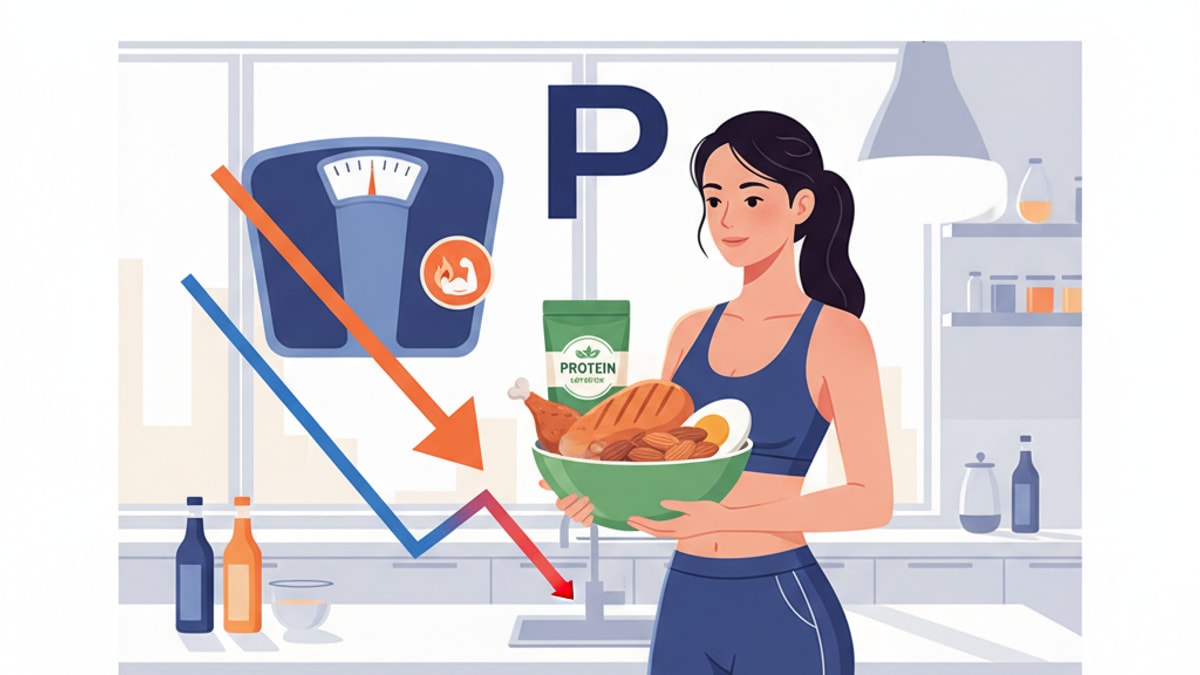
It’s the question we hear constantly. From new patients just starting their journey to seasoned veterans of the diet world, it always comes up: “Exactly how much protein should I eat for weight loss?” It seems like it should be a simple question with a simple answer, a single magic number you can plug into your daily routine. But the truth is a bit more nuanced, and honestly, far more interesting.
Here at TrimrX, our team has guided thousands of patients through medically-supervised weight loss programs, and we've seen firsthand what a dramatic difference the right amount of protein can make. It’s not just about building muscle. It’s a foundational pillar of metabolic health, appetite control, and achieving sustainable results, especially when paired with advanced treatments like GLP-1 medications. So, let's cut through the noise and get to the heart of what truly works.
Why Is Everyone So Obsessed with Protein for Weight Loss?
It’s not just hype. The focus on protein is grounded in some pretty solid science, and our experience shows that understanding the 'why' is crucial for long-term success. When you grasp how this macronutrient works in your body, sticking to your goals becomes infinitely easier. It’s a game-changer.
First, let's talk about satiety. That's the feeling of fullness and satisfaction after a meal. Protein is, by a significant margin, the most satiating macronutrient. Think about it: have you ever tried to overeat on grilled chicken breasts or steak? It's tough. Now think about chips or cookies. Much easier, right? This isn't a failure of willpower; it's biochemistry at work. Protein triggers the release of gut hormones like PYY and GLP-1 (yes, the very same hormone our treatments target) that signal to your brain, “Hey, we’re full down here. You can stop eating now.” This means you naturally feel satisfied on fewer calories, which is the cornerstone of any effective weight loss plan.
Then there’s the Thermic Effect of Food (TEF). Your body actually has to burn calories just to digest and process the food you eat. It’s like a metabolic tax. For fats and carbs, this tax is pretty low, around 0-5%. But for protein? Your body burns a whopping 20-30% of the calories from protein just to break it down. So, if you eat 100 calories from pure protein, you’re only netting about 70-80 of those calories. Over the course of a day, this adds up to a meaningful metabolic advantage without you having to do a single extra minute of cardio. It’s your body working smarter, not harder.
Finally, and we can’t stress this enough, there's muscle preservation. When you’re in a calorie deficit to lose weight, your body is looking for energy. It can get that energy from your fat stores (which is what we want) or from breaking down your precious, metabolically active muscle tissue (which is a catastrophic outcome). A higher protein intake provides the necessary amino acids to protect your muscle mass during weight loss. Why is this so critical? Muscle is your metabolic engine. The more you have, the more calories you burn, even at rest. Losing muscle slows your metabolism, making it harder to lose weight and much, much easier to regain it later. This is the classic 'yo-yo dieting' trap, and adequate protein is your best defense against it.
The Big Question: So, How Much Protein Should I Eat?
Alright, let’s get to the numbers. While there isn't a single universal figure, there’s a professional consensus and a data-backed range that works for the vast majority of people aiming for fat loss.
For active individuals focused on losing weight while preserving muscle, we recommend a target of 1.2 to 1.6 grams of protein per kilogram of body weight (or about 0.5 to 0.7 grams per pound). Some studies go as high as 2.2g/kg for athletes, but for most people, that 1.2-1.6g/kg range is the sweet spot.
Let’s make that practical.
- A 180-pound person (approx. 82 kg): Would aim for roughly 98 to 131 grams of protein per day.
- A 220-pound person (approx. 100 kg): Would aim for roughly 120 to 160 grams of protein per day.
Notice it’s a range, not a rigid number. Where you fall in that range depends on a few factors. If you're very active with resistance training, aiming for the higher end is a good idea. If you're more sedentary, the lower end of the range is likely sufficient. The key is to be consistent. This isn’t about hitting a perfect number every single day; it’s about establishing a new baseline that supports your body's needs during a fat loss phase.
Another method some people prefer is calculating protein as a percentage of total calories. In this model, aiming for 25-35% of your daily calories from protein is a fantastic goal for weight loss. This approach automatically adjusts your protein target as you adjust your total calorie intake. It ensures protein remains a priority, keeping you full and protecting muscle even as your total energy consumption decreases.
Beyond the Numbers: Nuances We've Seen Make a Difference
Calculating your target is the first step. But executing it in the real world, with demanding schedules and competing priorities? That’s where the art and science of this really come together. Our team has found that a few key considerations can make all the difference between struggling and succeeding.
One of the biggest factors is age. As we get older, our bodies become less efficient at processing protein, a phenomenon known as anabolic resistance. This means that individuals over 50 or 60 often need to be on the higher end of the recommended range just to achieve the same muscle-protective benefits as a younger person. It's a non-negotiable part of aging gracefully and maintaining a strong, capable body.
Your starting point matters, too. For individuals with a significant amount of weight to lose, calculating protein based on their goal weight or lean body mass (if known) can be more accurate than using their current total body weight. This prevents the protein target from being excessively high and provides a more realistic and sustainable number to aim for.
And let's be honest, consistency trumps perfection every time. We've seen patients get so hung up on hitting an exact gram count that they burn out. It's far better to consistently hit a 'good enough' number (say, 100 grams) every day than to hit a 'perfect' 132 grams for three days and then fall off the wagon completely. Find a target within the recommended range that feels achievable for your lifestyle. That's the one that will work.
Protein Sources: Does Quality Matter? (Spoiler: It Absolutely Does)
Not all protein is created equal. The source of your protein has a huge impact on its effectiveness. The key differentiator is the amino acid profile. 'Complete' proteins contain all nine of the essential amino acids our bodies can't produce on their own. These are primarily found in animal products.
'Incomplete' proteins, common in plant-based foods, are missing one or more of these essential amino acids. This doesn't make them 'bad'—far from it! It just means that if you're relying on plant-based sources, you need to eat a variety of them (like rice and beans, for example) to create a complete amino acid profile over the course of the day.
Our professional recommendation is to prioritize lean, high-quality sources. They deliver the most protein bang-for-your-buck with fewer associated calories from fat.
Here’s a quick comparison of some excellent choices:
| Protein Source | Serving Size | Protein (g) | Calories (approx.) | Key Benefits |
|---|---|---|---|---|
| Chicken Breast | 4 oz (113g) | 31g | 165 | Extremely lean, versatile, and a fantastic source of complete protein. |
| Salmon | 4 oz (113g) | 25g | 235 | Complete protein plus heart-healthy Omega-3 fatty acids. |
| Greek Yogurt (0%) | 1 cup (227g) | 23g | 130 | High in protein, contains probiotics for gut health. |
| Lentils (Cooked) | 1 cup (198g) | 18g | 230 | Excellent plant-based source, high in fiber for added satiety. |
| Eggs (Large) | 2 eggs | 12g | 155 | Affordable, complete protein, rich in choline for brain health. |
| Whey Protein Isolate | 1 scoop (30g) | 25g | 110 | Fast-digesting, convenient post-workout or to boost a meal's protein. |
Don't get trapped in a chicken-and-broccoli rut. Variety is key for both nutrient diversity and long-term adherence. Mix it up! Salmon, lean beef, eggs, cottage cheese, and high-quality protein powders can all play a role in a healthy, effective plan.
Timing Your Protein Intake: Does It Really Matter?
This is another area rife with myths. You might have heard of the post-workout 'anabolic window' or been told not to eat protein before bed. While there are kernels of truth in some of these ideas, the bigger picture is much simpler.
For weight loss and muscle preservation, the most important thing is hitting your total daily protein goal. That's priority number one.
However, the distribution of that protein throughout the day is a close second. Our experience shows that spreading your protein intake relatively evenly across 3-4 meals is far more effective than back-loading it all into one or two massive meals. Why? Because it helps manage hunger and stabilize blood sugar levels all day long. A breakfast with 30g of protein sets you up for success, preventing that mid-morning energy crash that leads to reaching for sugary snacks. A similar amount at lunch and dinner keeps you satiated and provides a steady supply of amino acids to your muscles.
Think of it like this: your body can only utilize so much protein at one time for muscle protein synthesis. Eating 100 grams in one sitting doesn't provide more benefit than eating 35 grams; the excess is simply oxidized for energy. By spreading it out, you give your body multiple opportunities throughout the day to repair and build tissue, all while keeping hunger at bay. It's a simple, powerful strategy.
Common Protein Pitfalls We Help Our Patients Avoid
Navigating the world of high-protein products can be a minefield. Marketing is powerful, and many products sold under a health halo are anything but. We've seen it all, and we guide our patients to become savvy consumers.
One of the most common traps is the glorified candy bar masquerading as a 'protein bar.' Always read the label. If sugar or high-fructose corn syrup is one of the first few ingredients and the calorie count is over 300, it's likely not your best choice for weight loss. Look for bars with a high protein-to-calorie ratio and minimal added sugars.
Another pitfall is over-reliance on shakes and powders. While supplements can be incredibly convenient and useful, they should supplement a whole-foods diet, not replace it. Whole food sources of protein offer a symphony of other micronutrients, fiber, and compounds that you just can't get from a powder. Use shakes strategically—like after a workout or when you're in a pinch—but don't let them crowd out real, nutrient-dense food.
Finally, don't forget that calories still count. While protein has a metabolic advantage, it's not 'free' food. Adding a bunch of protein to your diet without adjusting your intake of carbs and fats will lead to weight gain, not loss. It has to be part of a structured, calorie-controlled plan. If you're finding it difficult to piece all these elements together, it might be time to stop guessing and start getting expert guidance. When you're ready to build a comprehensive plan that works, you can Start Your Treatment with a team that considers the whole picture.
How Protein Supports Medically-Supervised Weight Loss
This is where everything we've discussed becomes absolutely critical. For our patients at TrimrX using GLP-1 medications like Semaglutide and Tirzepatide, protein isn't just important—it's a non-negotiable part of the treatment's success. These powerful medications are incredibly effective at reducing appetite and promoting weight loss. However, that rapid weight loss can come from both fat and muscle if nutrition isn't properly managed.
A high-protein diet is the single most effective tool we have to ensure that the weight you lose is overwhelmingly fat. By providing your body with a constant supply of amino acids, you signal it to preserve its metabolically active muscle tissue while it sheds fat stores. This leads to a profound change in body composition—not just a lower number on the scale, but a leaner, stronger, and healthier physique.
Furthermore, the satiating effects of protein work in beautiful synergy with GLP-1 medications. The medication helps reduce overall hunger, and the protein-rich meals provide deep, lasting satisfaction, making it easier and more comfortable to adhere to a lower-calorie diet. It's a powerful one-two punch that transforms the weight loss experience from a battle of willpower into a manageable, scientific process.
This is why our approach is always holistic. The medication is a tool, but the sustainable, life-changing results come from combining that tool with expert guidance on nutrition, lifestyle, and behavior. We don't just prescribe a medication; we build a comprehensive strategy around it. Curious if this kind of medically-supervised approach is the right fit for you? Take our quiz to find out more.
Ultimately, figuring out how much protein you need for weight loss is about shifting your perspective. Stop thinking of it as just another rule to follow and start seeing it as the structural foundation of a healthier, leaner body. It's the key to controlling hunger, boosting your metabolism, and ensuring the weight you lose stays off for good. Getting this right isn't just part of the plan; it's the part that makes the entire journey successful and sustainable.
Frequently Asked Questions
Can I eat too much protein on a weight loss diet?
▼
While it’s difficult to do, it is technically possible. Excessively high protein intake can strain the kidneys in individuals with pre-existing conditions. For most healthy people, staying within the recommended 1.2-1.6 g/kg range provides all the benefits without the risks.
Is whey protein necessary for weight loss?
▼
No, it’s not necessary, but it can be a very convenient tool. Whey protein is a high-quality, fast-absorbing protein that is great for post-workout recovery or for easily boosting the protein content of smoothies and meals. Whole food sources should always be your priority, however.
How do I calculate my protein needs if I don’t know my body fat percentage?
▼
That’s perfectly fine! The most straightforward method is to calculate it based on your current body weight or your goal weight. Using grams per pound or kilogram of body weight (e.g., 0.5-0.7 g/lb) is a simple and effective method that doesn’t require knowing your body fat percentage.
Does protein help with belly fat specifically?
▼
You can’t spot-reduce fat from one specific area. However, a high-protein diet promotes overall fat loss, and as your total body fat percentage decreases, you will lose belly fat. Its role in building muscle also improves body composition, which contributes to a leaner-looking midsection.
What are the best plant-based protein sources for weight loss?
▼
Excellent plant-based sources include lentils, chickpeas, black beans, tofu, tempeh, edamame, and quinoa. It’s important to eat a variety of these foods to ensure you’re getting all the essential amino acids your body needs.
Should I eat more protein on workout days?
▼
For simplicity and consistency, our team recommends aiming for the same protein target every day. Your muscles repair and grow for 24-48 hours after a workout, not just immediately afterward. Maintaining a consistent high protein intake ensures they always have the resources they need.
Will eating protein before bed make me gain weight?
▼
No, this is a common myth. As long as it fits within your total daily calorie goals, a protein-rich snack before bed (like Greek yogurt or cottage cheese) can actually be beneficial. It can aid in muscle recovery overnight and help with next-day appetite control.
How does protein intake change when using GLP-1 medications?
▼
When using GLP-1s like Semaglutide, a high protein intake becomes even more critical. We advise our TrimrX patients to aim for the higher end of the recommended range to ensure the significant weight loss they experience comes from fat, not precious muscle mass.
Is it better to get protein from food or shakes?
▼
Whole food should always be the foundation of your diet. Foods like chicken, fish, eggs, and legumes provide protein along with essential vitamins, minerals, and fiber. Protein shakes are best used as a convenient supplement to help you reach your daily goals, not as a primary source.
What’s a simple way to increase my protein intake without a lot of cooking?
▼
Easy, no-cook options are key! Greek yogurt, cottage cheese, hard-boiled eggs, quality protein bars, and pre-cooked chicken strips are great choices. Adding a scoop of unflavored collagen or protein powder to your morning coffee or oatmeal is another simple trick.
Does age affect how much protein I need for weight loss?
▼
Yes, absolutely. As we age, our bodies experience ‘anabolic resistance,’ meaning we need more protein to stimulate muscle growth and preservation. Individuals over 50 should generally aim for the higher end of the recommended protein range to counteract this effect.
Can I lose weight without focusing on protein?
▼
You can lose weight by simply being in a calorie deficit, but it’s not the optimal approach. Without adequate protein, a significant portion of the weight you lose is likely to be muscle, which slows your metabolism and makes long-term weight maintenance much more difficult.

Transforming Lives, One Step at a Time
Keep reading

What to Do With a Full Pantry You No Longer Eat From
Sort it into three piles rather than clearing it all out: donate, keep, and discard. The mistake most people make is emptying the whole…

How to Handle a Business Dinner When the Client Orders for the Table
This is the one dining situation where your usual tools do not work. You cannot order a starter as your main, cannot ask for…
How to Handle Group Dinners Where Everyone Shares Plates
Shared dining is generally easier than a fixed plate, not harder, and it is worth going in with that framing. When everyone is taking…


