Are Rice Cakes a Weight Loss Friend or Foe? Our Team Weighs In
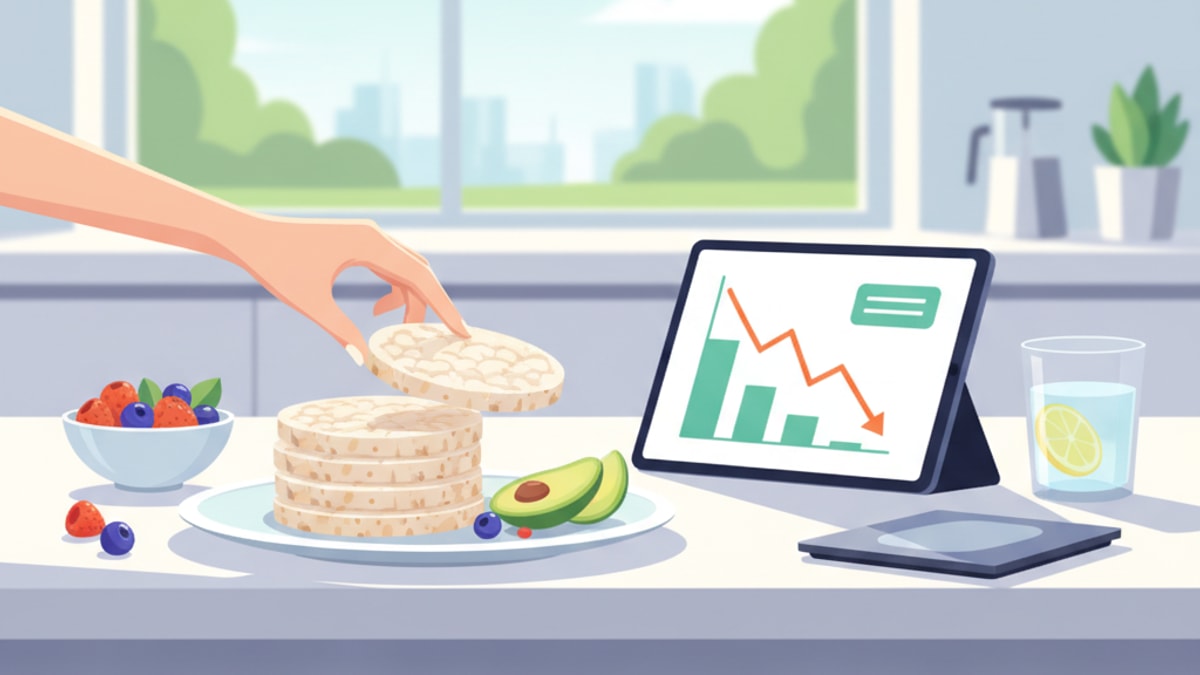
Walk down any 'health food' aisle, and you'll see them. Puffed, round, and stacked in clear plastic sleeves, promising a low-calorie, fat-free crunch. Rice cakes have cemented themselves in the public consciousness as the quintessential diet food. They feel light. They seem harmless. They're the snack you grab when you're trying to be 'good.'
But here at TrimrX, where our entire focus is on the science of metabolic health and sustainable weight loss, we've learned that the most common assumptions are often the most misleading. We've guided countless patients through the complexities of nutrition, hormonal responses, and appetite regulation. And the question, 'are rice cakes good for weight loss?' comes up more often than you'd think. The short answer is complicated. The long answer, however, reveals a lot about how our bodies actually process food—and why your snack choice can either set you up for success or for a cycle of cravings. Let’s get into it.
The Great Rice Cake Illusion: Why We Think They're Healthy
Let's be honest, the appeal is obvious. Two large plain rice cakes have around 70 calories, virtually no fat, and a satisfying crunch that can temporarily trick your brain into thinking you're eating something substantial, like chips or crackers. For someone meticulously counting calories, this looks like a clear win. It's a volume food; you get to eat something that feels big without a significant caloric penalty.
This is classic diet culture logic. It's a math-based approach that prioritizes numbers on a label over the biological response a food triggers in your body. Our team sees this all the time. Patients come to us frustrated because they're eating all the 'right' things—low-fat yogurt, salads with fat-free dressing, and yes, rice cakes—but they're constantly hungry, battling cravings, and not seeing the results they want. The problem isn't their willpower; it's that they've been taught to ignore the most critical, non-negotiable element of sustainable eating: satiety and blood sugar regulation.
A rice cake is, essentially, puffed-up air and refined carbohydrates. There’s very little substance to it. And that lack of substance is precisely where the illusion begins to crumble.
The Blood Sugar Rollercoaster You Didn't Sign Up For
This is where it gets interesting, and where our expertise in metabolic science really comes into play. To understand the problem with rice cakes, you have to understand the Glycemic Index (GI).
The GI is a scale from 0 to 100 that ranks carbohydrate-containing foods by how much they raise your blood glucose levels. Pure glucose is a 100. Foods with a high GI are rapidly digested and cause a significant, sometimes dramatic, spike in blood sugar.
Guess where plain rice cakes land on this scale? The average is around 82. That's higher than table sugar (GI of 65) and even higher than some ice creams. It’s a formidable number.
So, what happens when you eat a high-GI food like a rice cake on an empty stomach? Your body gets a rapid-fire dump of glucose into the bloodstream. Your pancreas then goes into overdrive, releasing a surge of insulin to shuttle that sugar out of your blood and into your cells. This process is fast and often a bit of an overcorrection. The result? A short time later, your blood sugar crashes, leaving you feeling tired, irritable, and—you guessed it—even hungrier than you were before you ate the snack. Your body starts screaming for more quick energy, and you suddenly have an intense craving for more carbs or sugar. It’s a vicious, exhausting cycle.
Our experience shows that managing this blood sugar rollercoaster is one of the single most important factors for successful weight loss. When your blood sugar is stable, your energy is consistent, your mood is better, and you're not fighting off ravenous, biologically-driven hunger pangs. Foods that destabilize it, no matter how low in calories, are working against your ultimate goal.
Nutrient-Poor and Deeply Unsatisfying
Beyond the glycemic issue, there's another glaring problem. Rice cakes are a nutritional ghost town. Let's break it down:
- Protein? Virtually none. Protein is the king of macronutrients for satiety. It helps you feel full and satisfied for longer.
- Fiber? Almost zero. Fiber slows down digestion, helps stabilize blood sugar (the very thing we were just talking about), and contributes significantly to feelings of fullness.
- Healthy Fats? Nope. Healthy fats are also crucial for satiety and hormone regulation.
Without these three key components—protein, fiber, and healthy fats—a snack is just a fleeting moment of flavor and texture. It doesn't provide lasting energy or send the proper signals to your brain that you've been nourished. This is why you can eat two, three, or even four rice cakes and feel like you haven't eaten anything at all an hour later. Your stomach may be momentarily full of air and starch, but your body knows it's been short-changed.
We can't stress this enough: for weight loss to be sustainable, your food choices need to work for you, not against you. They need to keep you full, energized, and mentally clear. A snack that spikes your blood sugar and leaves you hungry 45 minutes later is a formidable foe in this journey.
The Topping Trap: Turning a 'Diet' Food into a Calorie Bomb
Now, some people might argue, "But I don't eat them plain!" And this is where the second part of the problem kicks in. Because a plain rice cake is so bland and unsatisfying, we're compelled to load it up with toppings. This is what we call the 'Topping Trap.'
- Peanut Butter: A fantastic, healthy food! But a standard serving (two tablespoons) is nearly 200 calories. Add that to your 70-calorie rice cakes, and you're suddenly at 270 calories for a snack that still might not keep you full because the base is so insubstantial.
- Jam or Honey: You're adding pure sugar on top of a food that already acts like sugar in your bloodstream. This just makes the blood sugar spike and subsequent crash even more severe.
- Avocado: Another incredibly healthy food. A quarter of an avocado is about 80 calories. It adds healthy fats and some fiber, which is a definite improvement. But again, the caloric total adds up quickly.
- Cream Cheese: A popular choice that adds calories and fat but very little protein or fiber.
The rice cake becomes nothing more than a brittle, nutritionally-void delivery vehicle for other foods. The question then becomes: why use it at all? Why not pair that avocado or peanut butter with something that actually brings its own nutritional value to the party, like a slice of high-fiber whole-grain toast or some crunchy celery sticks?
A Head-to-Head Snack Comparison
Let's put this into a practical, visual context. Our team created this table to show how rice cakes stack up against other common snack options. We've included a 'Satiety Score' based on our professional experience with how these foods impact hunger.
| Snack Option | Approx. Calories | Protein (g) | Fiber (g) | Satiety Score (1-5) | Our Take |
|---|---|---|---|---|---|
| 2 Plain Rice Cakes | 70 | 1.5 | 0.5 | 1 | Low in everything. High GI leads to a quick crash and returning hunger. |
| 2 Rice Cakes + 1 Tbsp Peanut Butter | 165 | 5.5 | 2 | 2.5 | Better, but the base still offers little value. The calorie count is rising. |
| 1 Medium Apple | 95 | 0.5 | 4.5 | 3 | The high fiber and water content provide volume and slow sugar absorption. |
| 1 Medium Apple + 1 Tbsp Peanut Butter | 190 | 4.5 | 6 | 4.5 | An excellent combination of fiber, protein, and healthy fats for lasting energy. |
| 1/2 cup Plain Greek Yogurt (2%) | 80 | 11 | 0 | 4 | A protein powerhouse. Incredibly satiating for its low calorie count. |
| Small Handful of Almonds (~1/4 cup) | 170 | 6 | 3 | 4 | A balanced mix of protein, fiber, and healthy fats that crushes hunger effectively. |
| 1 Hard-Boiled Egg | 75 | 6 | 0 | 3.5 | Simple, portable, and packed with high-quality protein to keep you full. |
Seeing it laid out like this makes the difference stark, doesn't it? The apple with peanut butter has slightly more calories than the rice cakes with peanut butter, but it provides three times the fiber and a much better nutrient profile. It will keep you full for hours, not minutes. That's a smart trade.
A More Strategic Role for Rice Cakes
So, should you banish rice cakes from your pantry forever? Not necessarily. We don't believe in villainizing specific foods. Context is everything. There are a couple of scenarios where a rice cake can be an acceptable, if not optimal, choice.
-
As a Vehicle for Protein: If you use a rice cake as a base for a significant protein source, you can mitigate the blood sugar spike. Think of topping it with a generous scoop of cottage cheese, a slice of smoked salmon, or some mashed chickpeas with lemon and herbs. Here, the protein and fat from the topping will slow down the digestion of the rice cake's carbohydrates, leading to a more stable blood sugar response.
-
For a Quick Pre-Workout Carb Hit: If you're about to engage in intense exercise, your body needs easily accessible glucose for fuel. In this specific context, a fast-digesting carb like a rice cake (perhaps with a thin layer of jam) can provide that quick energy burst without sitting heavily in your stomach. It's a tool for a specific job.
But for general, everyday snacking with the goal of weight loss? Our team's verdict is clear: you can do much, much better. There are countless other options that are more nutritious, more satisfying, and more supportive of your metabolic health.
The TrimrX Approach: Addressing the Root Cause of Hunger
This entire discussion about rice cakes highlights a fundamental truth we champion at TrimrX. Sustainable weight loss isn't about white-knuckling your way through hunger with low-calorie, unsatisfying foods. That's a recipe for failure. It's about fundamentally changing your body's hunger signals and metabolic responses.
This is where modern medicine offers a revolutionary advantage. Our medically-supervised weight loss programs utilize GLP-1 medications like Semaglutide and Tirzepatide. These aren't just appetite suppressants; they work on a deep biological level to address the very issues we've been discussing.
GLP-1s work by mimicking a natural gut hormone that helps regulate your body's response to food. They slow down gastric emptying, which means food stays in your stomach longer, leading to a profound and lasting feeling of fullness. They also directly impact the hunger centers in your brain, quieting the constant 'food noise' and reducing cravings. Critically, they help your pancreas release insulin more effectively in response to food, which prevents those wild blood sugar spikes and crashes caused by high-GI foods. In essence, they create the ideal internal environment for making healthier food choices feel natural and easy, not like a constant battle.
When your body is biologically satisfied and your blood sugar is stable, you no longer need to reach for a rice cake. You can calmly and rationally choose the apple with peanut butter because you're not in the throes of a hunger emergency. It's a complete paradigm shift. This approach, which combines advanced medication with expert guidance on nutrition and lifestyle, is what allows our patients to finally break free from the cycle of dieting and achieve lasting results. If this sounds like the kind of comprehensive support you've been missing, we encourage you to Take Quiz and see if our program is the right fit for you.
Ultimately, the humble rice cake serves as a perfect metaphor for outdated diet advice. It focuses on the surface-level metric of calories while completely ignoring the deeper, more important hormonal and metabolic reactions happening inside your body. True, lasting success comes from understanding and working with your biology, not against it. It's about choosing foods that nourish, satisfy, and stabilize. And sometimes, it's about leveraging the best tools medical science has to offer to give your body the support it truly needs. If you're ready to move beyond the illusion of 'diet foods' and start a real, science-backed journey, it's time to Start Your Treatment now.
Choosing snacks that build you up, not just fill you up, is a small but powerful step. It's a choice that reflects a deeper understanding of health, and it's a cornerstone of the philosophy we practice with our patients every single day. Your body deserves more than just air and starch; it deserves real, satisfying nutrition.
Frequently Asked Questions
Why do I feel even hungrier after eating rice cakes?
▼
This is a common experience due to their high glycemic index. Rice cakes cause a rapid spike in your blood sugar, followed by a crash. That crash triggers strong hunger signals as your body seeks more quick energy, creating a vicious cycle of cravings.
Are brown rice cakes healthier than white rice cakes for weight loss?
▼
While brown rice is generally more nutritious than white rice, the puffing process used to make rice cakes negates most of the benefits. Both brown and white rice cakes have a similarly high glycemic index and lack significant fiber or protein, making them poor choices for satiety.
How many rice cakes can I eat a day for weight loss?
▼
Our team advises against focusing on a specific number. Instead, we recommend shifting your focus to more nutrient-dense snacks. If you do have a rice cake, pair it with a strong source of protein and healthy fat, like cottage cheese or avocado, to blunt the blood sugar response.
Do rice cakes cause belly fat?
▼
No single food directly causes belly fat. However, a diet high in refined, high-glycemic carbohydrates like rice cakes can contribute to insulin resistance and fat storage over time, particularly in the abdominal area. It’s the overall dietary pattern that matters most.
Are flavored rice cakes (like caramel or cheddar) worse for you?
▼
Yes, almost always. Flavored varieties add sugar, sodium, and artificial ingredients without providing any additional nutritional value. This makes the blood sugar spike even more pronounced and works against your health and weight loss goals.
What’s a better low-calorie crunchy snack than rice cakes?
▼
We’ve found that raw vegetables are a fantastic choice. Bell pepper strips, celery sticks, jicama, or cucumber slices offer a satisfying crunch with far more fiber, vitamins, and minerals. Pair them with a protein-rich dip like hummus or Greek yogurt for a truly powerful snack.
How do GLP-1 medications help with cravings for foods like rice cakes?
▼
GLP-1 medications like Semaglutide, which we use in our programs, are incredibly effective at stabilizing blood sugar. By preventing the sharp spikes and crashes that drive cravings for high-carb foods, they help reduce the ‘food noise’ and allow you to make calmer, more rational food choices.
Can rice cakes fit into a keto or low-carb diet?
▼
No, rice cakes are not suitable for a ketogenic diet. They are made almost entirely of carbohydrates. Even on a more moderate low-carb diet, their high glycemic impact and lack of nutritional value make them a very poor choice for the carb allowance you have.
Is there a ‘best’ time of day to eat a rice cake?
▼
If you are going to eat one, the context matters more than the time. The most strategic use would be 30-60 minutes before an intense workout, when your body can immediately use the fast-digesting carbohydrates for energy.
Are corn thins or other puffed grain cakes any different?
▼
Nutritionally, they are very similar. Most puffed grain cakes, whether made from corn, rice, or other grains, undergo a similar manufacturing process that results in a high-glycemic, low-nutrient product. We recommend treating them with the same caution as rice cakes.
What are some truly healthy toppings for a rice cake?
▼
To make a rice cake better, you need to add what it’s missing: protein, fiber, and healthy fat. Good options include smoked salmon with a sprinkle of dill, a generous scoop of plain Greek yogurt with berries, or mashed avocado with a hard-boiled egg on top.

Transforming Lives, One Step at a Time
Keep reading

What to Do With a Full Pantry You No Longer Eat From
Sort it into three piles rather than clearing it all out: donate, keep, and discard. The mistake most people make is emptying the whole…

How to Handle a Business Dinner When the Client Orders for the Table
This is the one dining situation where your usual tools do not work. You cannot order a starter as your main, cannot ask for…
How to Handle Group Dinners Where Everyone Shares Plates
Shared dining is generally easier than a fixed plate, not harder, and it is worth going in with that framing. When everyone is taking…


