Can Weight Loss Truly Reverse Sleep Apnea? Our Expert Take
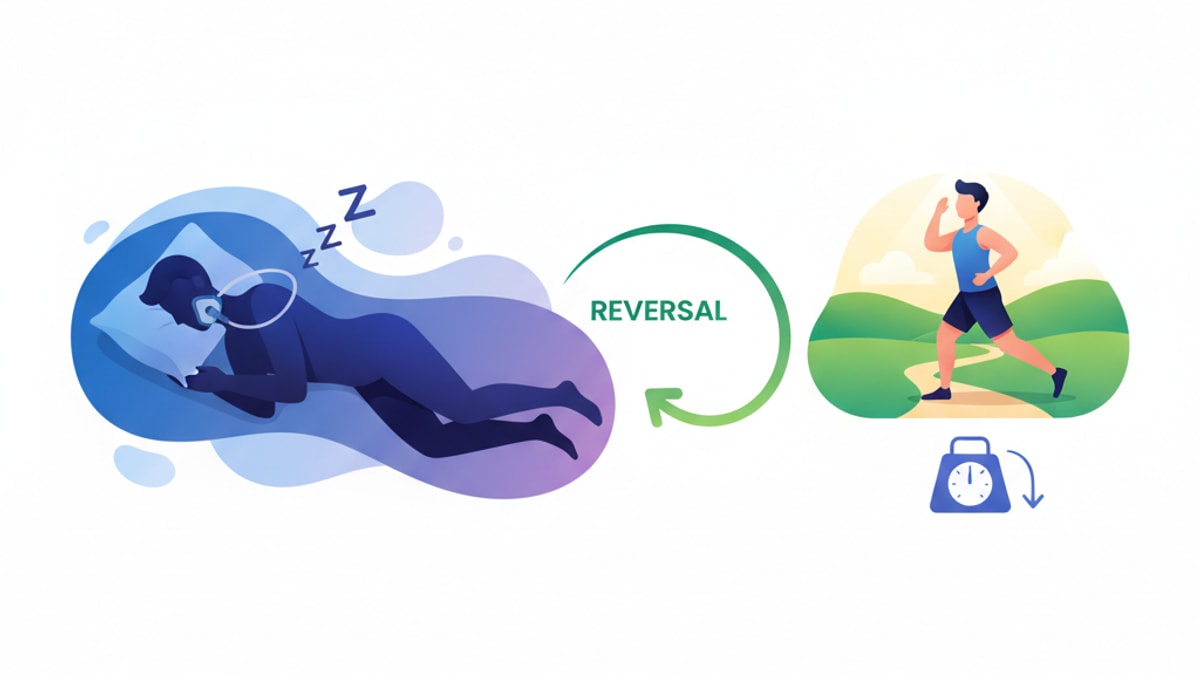
Is Sleep Apnea Reversible with Weight Loss? A Deep Dive from the TrimrX Team
It’s a familiar, frustrating cycle. You go to bed exhausted, hoping for rest, but wake up feeling like you’ve run a marathon. The fatigue is relentless, a fog that clouds your day. Your partner mentions the snoring, the gasps for air, the unsettling pauses in your breathing. You finally get a diagnosis: obstructive sleep apnea (OSA). The solution? Often, it's a CPAP machine—a nightly tether to a humming device that, while effective, feels like a life sentence.
This brings us to the one question our team hears constantly from people struggling with this exact scenario: is sleep apnea reversible with weight loss? It’s a question brimming with hope, and for good reason. The short answer is yes, for a significant number of people, meaningful weight loss can dramatically reduce or even resolve the condition entirely. It's not just a possibility; it's a clinical reality we've witnessed firsthand. But the path to that reversal is nuanced, and it requires a deeper understanding of what’s really happening inside your body.
First, What’s Really Happening During an Apnea Event?
Before we can talk about reversing it, we have to be crystal clear on the mechanics. Obstructive sleep apnea isn't just loud snoring. It's a physiological crisis that happens over and over, sometimes hundreds of times a night. During sleep, the muscles in your upper airway, including your tongue and soft palate, naturally relax. For someone with OSA, these tissues relax so much that they collapse, completely blocking the airway. Think of it like a soft, flexible straw collapsing when you try to drink a thick milkshake.
For a few seconds, or sometimes for more than a minute, you stop breathing. Your brain, starved of oxygen, panics. It sends a jolt of adrenaline through your system to force you to wake up just enough to gasp for air, tighten those muscles, and reopen the airway. You might not even remember these micro-awakenings, but your body does. This relentless cycle of oxygen deprivation and stress hormone spikes prevents you from ever reaching the deep, restorative stages of sleep. It's a nightly battle for air, and it takes a catastrophic toll on your cardiovascular system, your metabolism, and your mental clarity.
The Unmistakable Link: How Excess Weight Fuels Sleep Apnea
So where does weight fit into this picture? It’s the primary antagonist in this story. While not everyone with OSA is overweight, excess body weight is, by an overwhelming margin, the single biggest risk factor. Our experience shows the connection is direct and mechanical.
It works in two destructive ways:
-
Direct Airway Compression: When you gain weight, fat isn't just stored around your waist or hips. It accumulates everywhere, including internally. A critical area is the soft tissue around your throat and at the base of your tongue. These fatty deposits, sometimes called pharyngeal fat, physically narrow the diameter of your airway. When your muscles relax during sleep, this already-narrowed passage is far more likely to collapse completely. It’s simple physics. Less space means a higher chance of obstruction.
-
Compromised Lung Function: Excess weight, particularly around the abdomen, also puts immense pressure on your chest wall and diaphragm. This is a big deal. It reduces your overall lung capacity, meaning there's less air in your lungs to act as a buffer when your airway starts to narrow. This chest compression makes it harder for your respiratory muscles to do their job, compounding the problem and making each apnea event more severe.
This isn't just theory. We've seen patients whose AHI (Apnea-Hypopnea Index—the measure of how many breathing interruptions you have per hour) is directly correlated with their weight. As the pounds increase, so does the AHI. As they decrease, the AHI often follows suit. It's a remarkably consistent pattern.
So, Let’s Get to the Point: Can You Actually Reverse It?
Yes. Let's be unequivocal about this. For many individuals whose OSA is primarily driven by excess weight, losing a significant amount of that weight can lead to a resolution of the condition. We prefer the term "resolution" or "remission" over "cure" because if the weight is regained, the apnea will almost certainly return. But the outcome is the same: a dramatic reduction in symptoms and AHI, often to the point where a CPAP machine is no longer medically necessary.
This is a life-changing prospect.
Achieving this isn't about losing five or ten pounds, though even that can help. The science points to a dose-dependent relationship. The more weight you lose, the greater the improvement. A common benchmark cited in clinical studies is that a 10% loss in body weight can lead to an average AHI reduction of over 25%. For someone with moderate apnea, losing 15-20% of their body weight could be enough to push their AHI down into the normal range (<5 events per hour).
Imagine that. Imagine going from 30 breathing interruptions an hour to just four. The difference in sleep quality, daytime energy, and overall health is profound. We can't stress this enough: it's one of the most powerful interventions available for this condition.
It’s Not Just the Scale: Other Factors We Consider
While weight is the heavyweight champion of risk factors, it's not the only player in the game. A comprehensive approach, which is what our team at TrimrX champions, always considers the full picture. Other factors can contribute to or worsen sleep apnea, and sometimes they explain why a lean person might still have the condition.
These include:
- Anatomy: Some people are simply born with a narrower airway, a large tongue, oversized tonsils, or a recessed jaw. In these cases, weight loss is still beneficial but may not be enough for a complete resolution on its own.
- Age: As we age, we naturally lose muscle tone throughout our body, including in the airway. This can increase the likelihood of collapse during sleep.
- Alcohol and Sedatives: These substances are powerful muscle relaxants. Consuming them, especially close to bedtime, can turn mild snoring into a serious case of obstructive sleep apnea for the night.
- Sleeping Position: Sleeping on your back allows gravity to pull the tongue and soft tissues backward, making obstruction more likely. Many people find their symptoms improve dramatically just by learning to sleep on their side.
Understanding these elements is critical. It helps set realistic expectations and builds a more robust treatment plan. For someone with anatomical issues, for instance, weight loss might be the first, most important step, but it might need to be paired with other therapies.
Comparing Paths to Weight Loss for Apnea Relief
If significant weight loss is the goal, how do you get there? There are several paths, each with its own profile of effectiveness, commitment, and potential challenges. Our team believes in providing clear, unflinching information so people can make the best choice for their health.
Here’s a breakdown of the most common approaches:
| Strategy | Mechanism of Action | Typical Impact on Apnea | Pros | Cons |
|---|---|---|---|---|
| Traditional Diet & Exercise | Calorie deficit created through dietary changes and increased physical activity. | Modest to Good. Can be highly effective if 10-15%+ body weight loss is achieved and maintained. | Empowers lifestyle change, widely accessible, improves overall health metrics. | Very high failure rate for long-term maintenance; slow progress can be discouraging; requires immense self-discipline. |
| Bariatric Surgery | Surgical alteration of the stomach/intestines to restrict food intake and/or nutrient absorption. | Excellent. Often leads to resolution in a majority of patients due to massive, rapid weight loss. | Most effective method for profound weight loss; high rate of apnea resolution. | Invasive major surgery with inherent risks; requires lifelong dietary adjustments; costly and not accessible to all. |
| Medically-Supervised GLP-1s | Using medications like Semaglutide or Tirzepatide to regulate appetite, increase satiety, and improve metabolic function, leading to a calorie deficit. | Very Good to Excellent. Enables significant, sustained weight loss (often 15-20%+) that directly impacts airway compression. | Non-surgical; highly effective for substantial weight loss; supports long-term habit formation by controlling biological hunger cues. | Requires medical supervision; potential for side effects; ongoing cost of medication. |
Looking at this, you can see why we're so optimistic about the role of modern medicine in this fight. For decades, the choice for many was between the often-frustrating path of traditional dieting or the drastic step of surgery. That's a formidable gap.
The New Frontier: How GLP-1 Medications Change the Game
This is where our work at TrimrX becomes so critical. Medically-supervised weight loss using GLP-1 receptor agonists like Semaglutide and Tirzepatide is fundamentally changing the equation for people with weight-related health conditions, especially sleep apnea.
These aren't diet pills. They are sophisticated biologic medications that work with your body's own hormonal systems. They target the GLP-1 receptors in your brain and gut that regulate appetite and blood sugar. The result? The constant 'food noise' quiets down. You feel full and satisfied with smaller portions. Your body's ability to process sugar improves. This powerful biological support makes it dramatically easier to achieve the kind of consistent calorie deficit needed for significant, life-altering weight loss—the exact kind needed to decompress your airway.
Our team has found that this approach bridges the gap perfectly. It provides a level of effectiveness that rivals surgery without the associated risks and recovery time. It empowers patients to finally break through the plateaus and frustrations that made past attempts fail. By tackling the biological drivers of hunger, it allows you to focus on building the sustainable habits needed for long-term success. It's not a shortcut; it's a tool that makes the path clearer and more achievable. If you've struggled to lose the weight needed to impact your health, this could be the breakthrough you've been waiting for. The first step is seeing if you're a candidate, which you can do when you Start Your Treatment.
What Does Apnea Reversal Actually Feel Like?
It feels like getting your life back. It’s not just about ditching the CPAP machine, though that's a huge victory. It's about the cascading series of improvements that follow.
It's waking up before your alarm, feeling genuinely rested for the first time in years. It’s having the mental clarity to focus at work and the energy to play with your kids or grandkids in the evening. It’s the reduction in blood pressure, the improved blood sugar control, and the dramatic decrease in your risk for heart attack and stroke. It's the quiet confidence that comes from taking control of your health in a tangible, measurable way.
But we must be clear: you don't just lose the weight and throw your machine away. Reversal must be confirmed by a physician, typically with a follow-up sleep study. This is a non-negotiable step to ensure it's safe for you to stop CPAP therapy. Once your AHI is consistently in the normal range without the machine, you've reached remission.
The Final Boss: Keeping the Weight Off
This is the part of the conversation that many people overlook, but it's arguably the most important. Reversing sleep apnea with weight loss is an incredible achievement. Keeping it in remission requires vigilance. The same physiology that caused the problem in the first place is still there. If the weight returns, the airway compression and sleep apnea will almost certainly follow.
This is why we focus on a comprehensive, medically-supervised program rather than just a prescription. Sustainable success is built on a foundation of behavioral changes, nutritional education, and ongoing support. Medications like GLP-1s are phenomenally effective at getting the weight off, but the ultimate goal is to use that opportunity to build a new, healthier lifestyle that you can maintain for the rest of your life. It’s about creating a new normal where healthy choices feel natural, not forced.
The journey to reverse sleep apnea is a marathon, not a sprint. But with the right tools, expert guidance, and a clear understanding of the goal, it's a race that you can absolutely win. The reward—quiet, restful nights and energetic, vibrant days—is worth every single step.
Frequently Asked Questions
Is sleep apnea reversible with weight loss completely?
▼
For many people, yes. Significant weight loss can reduce the fatty tissues around the airway to the point where the Apnea-Hypopnea Index (AHI) falls into the normal range, effectively putting the condition into remission. However, it’s a resolution, not a permanent cure; if the weight is regained, the apnea will likely return.
How much weight do I need to lose to reverse my sleep apnea?
▼
It varies, but a common clinical benchmark is a loss of 10-15% of your total body weight. This level of weight loss often leads to a significant reduction in apnea severity. Our team has seen that greater weight loss can lead to even more dramatic improvements.
Can I stop using my CPAP machine as soon as I lose weight?
▼
No, this is extremely important. You should never stop using your CPAP therapy without consulting your doctor. A follow-up sleep study is required to confirm that your AHI has decreased to a safe level before you can be cleared to discontinue treatment.
How long does it take to see sleep apnea improvement with weight loss?
▼
Improvements can begin with even modest weight loss. Many people report reduced snoring and better energy within the first few months of a successful weight loss program. Significant changes in AHI typically correspond with achieving a 10% or greater reduction in body weight.
Can medications like Semaglutide or Tirzepatide directly treat sleep apnea?
▼
These medications are not a direct treatment for the mechanics of sleep apnea. However, they are exceptionally effective for weight loss, which is the primary driver of OSA for many. By helping you lose significant weight, GLP-1s are a powerful tool for indirectly resolving sleep apnea.
Will losing 20 pounds help my sleep apnea?
▼
Absolutely. While it may not be enough for a complete reversal depending on your starting weight and apnea severity, losing 20 pounds can certainly lead to noticeable improvements. It can reduce snoring, lower your AHI, and make your CPAP therapy more comfortable and effective.
What if I lose weight and still have sleep apnea?
▼
This can happen, especially if underlying anatomical issues (like a narrow jaw or large tonsils) are also contributing. In this case, weight loss is still incredibly beneficial for your overall health, but you may need to continue with CPAP or explore other treatment options with your doctor.
Is exercise or diet more important for reversing sleep apnea?
▼
Both are critical for overall health, but from a pure weight loss perspective, diet has a more significant impact on creating a calorie deficit. Our team recommends a combined approach: a structured, nutritious eating plan supported by regular physical activity for the best and most sustainable results.
Can lean people get sleep apnea?
▼
Yes, they can. While excess weight is the number one risk factor, sleep apnea can also be caused by genetics and physical anatomy. A naturally narrow airway, large tonsils, or specific jaw structures can cause obstructions regardless of a person’s weight.
Does my sleeping position affect sleep apnea?
▼
It can have a huge impact. Sleeping on your back allows gravity to pull your tongue and soft tissues down, which can block your airway. Many people with mild to moderate apnea find their symptoms are significantly reduced by sleeping on their side.
Will my snoring go away if I lose weight?
▼
It’s very likely. Snoring is caused by the vibration of tissues in a narrowed airway. As weight loss reduces these tissues and opens up the airway, the vibrations—and therefore the snoring—often decrease dramatically or stop altogether.
How does TrimrX help with sleep apnea?
▼
We help by addressing the root cause for many sufferers: excess weight. Our medically-supervised programs use powerful tools like GLP-1 medications to help you achieve the significant, sustained weight loss necessary to reduce or resolve obstructive sleep apnea and improve your overall health.

Transforming Lives, One Step at a Time
Keep reading

Obesity and Low Testosterone
**Can obesity cause low testosterone?** Yes. Obesity can lower testosterone, and the relationship often runs in both directions.

Top 6 Best Weight Loss Medications in 2026
Prescription weight loss medication has gone mainstream. What was once a quiet corner of obesity medicine is now one of the most talked-about categories…

Top 8 Best Telehealth for Weight Loss in 2026
Finding the best telehealth for weight loss used to be a time-consuming process that involved hours of research, murky pricing pages, and a fair…


