Mounjaro vs Ozempic: Head-to-Head Comparison 2026
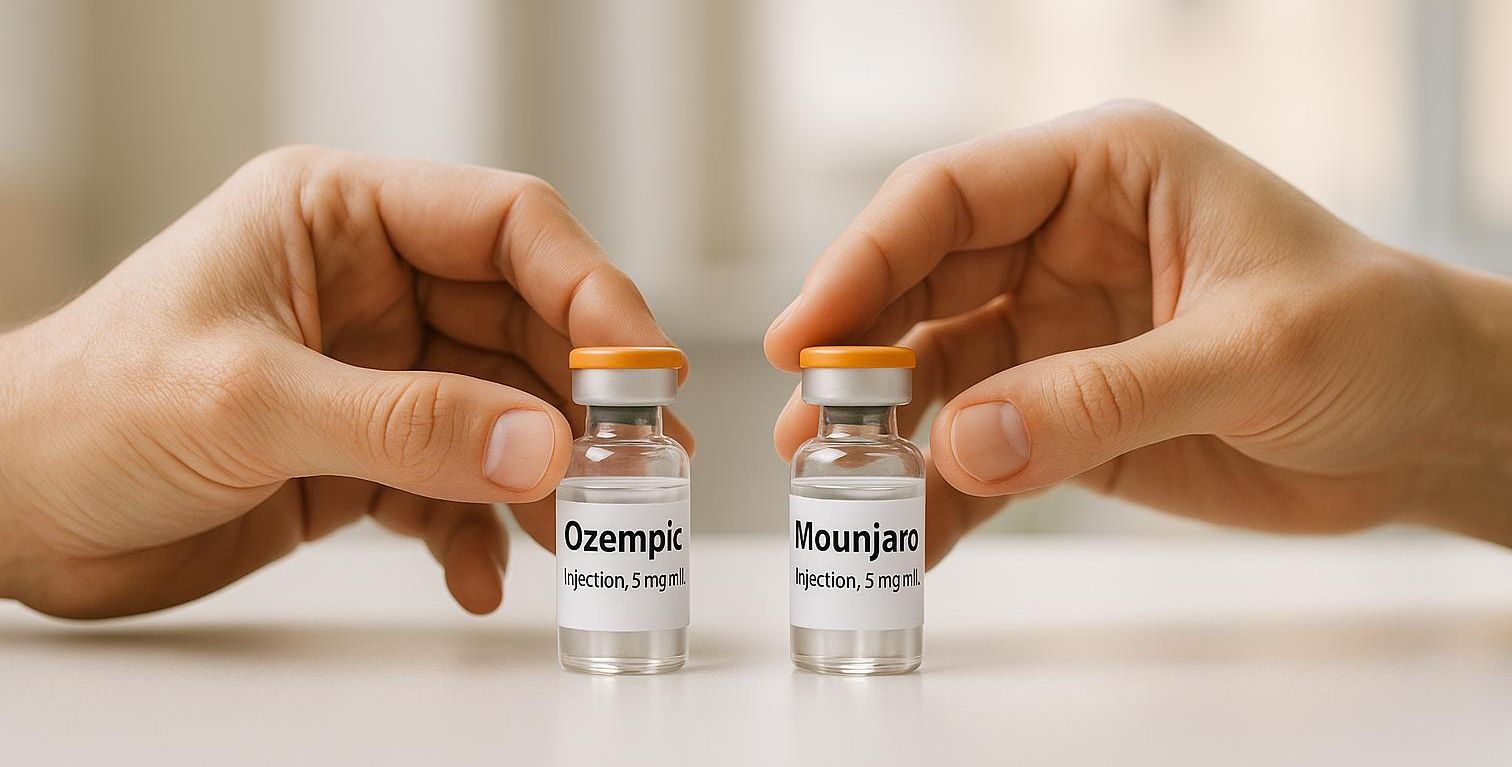
If you’re trying to decide between Mounjaro and Ozempic for weight loss, you’re looking at two of the most effective medications available. Both have generated massive buzz, transformed countless lives, and sparked ongoing debates about which one delivers better results.
Here’s what you need to know right up front: Mounjaro and Ozempic are different medications with different active ingredients, though they work in similar ways. Mounjaro contains tirzepatide and acts on two hormone receptors. Ozempic contains semaglutide and acts on one. Clinical trials show Mounjaro produces higher average weight loss—22.5% versus 14.9%—but both are significantly more effective than traditional diet and exercise alone.
This comparison covers everything from how they work to what they cost, helping you figure out which medication makes sense for your situation.
Key Takeaways: Mounjaro vs Ozempic
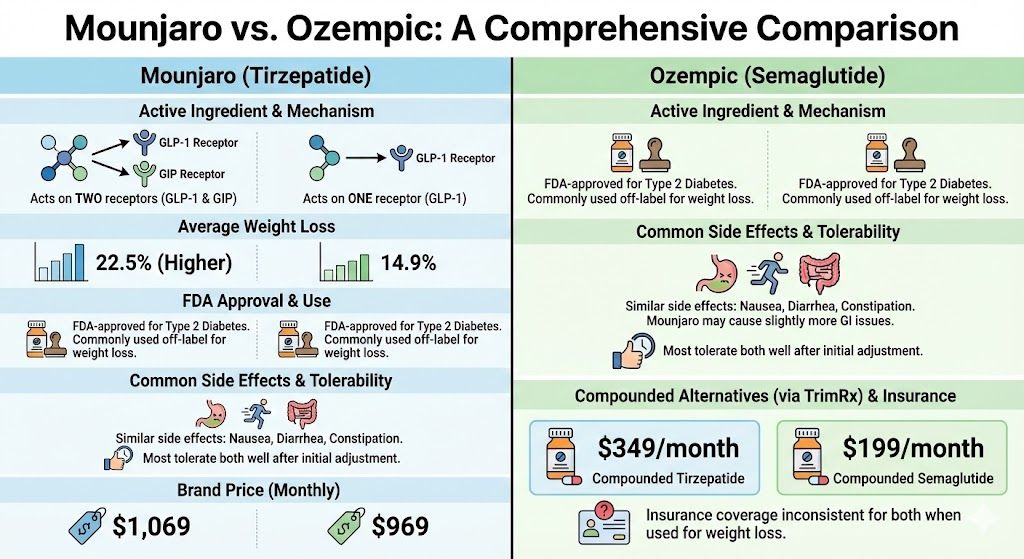
- Mounjaro (tirzepatide) shows higher average weight loss: 22.5% vs 14.9% for Ozempic (semaglutide)
- Mounjaro acts on two receptors (GLP-1 and GIP), Ozempic acts on one (GLP-1)
- Both are FDA-approved for type 2 diabetes, commonly used off-label for weight loss
- Side effects are similar: nausea, diarrhea, constipation, though Mounjaro may cause slightly more GI issues
- Brand prices: Mounjaro $1,069/month, Ozempic $969/month
- Compounded alternatives: tirzepatide $349/month, semaglutide $199/month through TrimRx
- Insurance coverage inconsistent for both when used for weight loss
- Most people tolerate both medications well after initial adjustment period
What Are Mounjaro and Ozempic?
Both medications belong to a class of drugs that mimic hormones your body naturally produces to regulate appetite and blood sugar. They’ve become household names largely because of their dramatic weight loss effects, even though both originally got FDA approval for treating type 2 diabetes.
Ozempic (semaglutide) launched first, approved by the FDA in 2017 for diabetes management. It’s a GLP-1 receptor agonist manufactured by Novo Nordisk. The same company later released the identical medication under the brand name Wegovy specifically for weight loss at slightly higher doses. Ozempic became famous when celebrities and social media users started sharing impressive weight loss results, creating such high demand that supplies became difficult to find.
Mounjaro (tirzepatide) is newer, receiving FDA approval in 2022. Made by Eli Lilly, it’s technically a “dual agonist” because it activates both GLP-1 and GIP receptors rather than just GLP-1 alone. Eli Lilly also markets the same medication as Zepbound for weight loss. Clinical trials showed even higher average weight loss than semaglutide, positioning Mounjaro as the current heavyweight champion of medical weight management.
Both medications require weekly injections that you administer yourself using pre-filled pens. Neither is a pill you swallow, though oral versions are in development.
How They Work: The Science Behind Each Medication
Understanding the mechanisms helps explain why Mounjaro might produce better results, though both work remarkably well.
Ozempic (Semaglutide): Single-Receptor Action
Ozempic mimics GLP-1, a hormone released by your intestines after eating. When you inject semaglutide, it activates GLP-1 receptors throughout your body, triggering several effects:
Your brain receives stronger satiety signals, making you feel full sooner and satisfied with less food. The constant mental preoccupation with food—what many people call “food noise”—often quiets dramatically. Your stomach empties more slowly after meals, keeping you fuller longer. Your pancreas releases insulin more effectively when blood sugar rises, and your liver produces less glucose.
Together, these mechanisms make it significantly easier to eat less without feeling deprived or constantly hungry. Most people naturally reduce their calorie intake by 500-1000 calories daily without conscious effort or willpower battles.
Mounjaro (Tirzepatide): Dual-Receptor Action
Mounjaro works on both GLP-1 receptors (like Ozempic) and adds GIP receptors into the mix. GIP stands for glucose-dependent insulinotropic polypeptide, another gut hormone that influences metabolism.
The dual action appears to create additive benefits. You get all the appetite suppression and blood sugar effects from GLP-1 activation, plus additional metabolic improvements from GIP. The GIP component may enhance insulin secretion, improve how your body processes fat, and provide extra appetite reduction beyond what GLP-1 alone delivers.
Think of it like using two complementary tools instead of one really good tool. The result is typically more weight loss and better blood sugar control, though the tradeoff can be slightly more side effects for some people.
Weight Loss Results: Clinical Trial Comparison
Let’s cut to what most people care about most—how much weight will you actually lose on each medication?
Mounjaro Weight Loss Data (SURMOUNT-1 Trial)
The SURMOUNT-1 trial studied tirzepatide in 2,539 adults with obesity or overweight over 72 weeks. Participants didn’t have diabetes. Results at the highest dose (15 mg) showed:
Average weight loss: 22.5% of body weight
Breaking that down further:
- 96% lost at least 5% of body weight
- 89% lost at least 10% of body weight
- 78% lost at least 15% of body weight
- 63% lost at least 20% of body weight
For a 200-pound person, 22.5% weight loss equals 45 pounds, bringing them to 155 pounds. Even the lower Mounjaro doses (10 mg and 5 mg) produced impressive results—20.9% and 15% average weight loss respectively.
Ozempic Weight Loss Data (STEP-1 Trial)
The STEP-1 trial examined semaglutide at 2.4 mg weekly in 1,961 adults over 68 weeks. Results showed:
Average weight loss: 14.9% of body weight
The breakdown:
- 86.4% lost at least 5% of body weight
- 69.1% lost at least 10% of body weight
- 50.5% lost at least 15% of body weight
- 32% lost at least 20% of body weight
For that same 200-pound person, 14.9% weight loss equals about 30 pounds, reaching 170 pounds.
Head-to-Head Comparison
When you line up the numbers, Mounjaro shows a clear advantage—an average of 7.6 percentage points more weight loss than Ozempic. That’s not a trivial difference. For a 250-pound person, that’s roughly 19 additional pounds lost with Mounjaro compared to Ozempic.
However, both medications produce substantial, clinically significant weight loss that far exceeds what most people achieve through diet and exercise alone. Losing 15% of your body weight improves blood pressure, cholesterol, blood sugar, joint pain, sleep apnea, and overall quality of life regardless of which medication gets you there.
It’s also worth noting that these are averages. Some people respond exceptionally well to Ozempic and lose 20%+ of their weight. Others might lose only 10-12% on Mounjaro. Individual variation means your personal results could differ from trial averages.
For detailed month-by-month expectations on semaglutide, check out our complete guide to semaglutide weight loss results. For tirzepatide timelines, see our tirzepatide weight loss results guide.
Dosing Schedules Compared
Both medications follow gradual dose escalation schedules to minimize side effects, but the timelines differ slightly.
Ozempic Dosing Progression
Weeks 1-4: 0.25 mg weekly (starter dose) Weeks 5-8: 0.5 mg weekly Weeks 9+: 1 mg weekly (standard maintenance) Optional: 2 mg weekly (maximum dose)
Most people reach their maintenance dose within 8-12 weeks. The 2 mg dose isn’t necessary for everyone—many people achieve their goals at 0.5 or 1 mg.
Mounjaro Dosing Progression
Weeks 1-4: 2.5 mg weekly (starter dose) Weeks 5-8: 5 mg weekly Weeks 9-12: 7.5 mg weekly Weeks 13-16: 10 mg weekly Weeks 17-20: 12.5 mg weekly Weeks 21+: 15 mg weekly (maximum dose)
Mounjaro’s titration schedule is longer and involves more dose steps. You won’t reach the maximum dose until around month 5-6, compared to Ozempic where you can hit the top dose within 2-3 months.
This slower escalation with Mounjaro aims to minimize side effects while achieving higher final doses. Not everyone needs to reach 15 mg—your provider might keep you at 10 mg or 12.5 mg if you’re getting good results with manageable side effects.
Side Effects: What to Expect with Each
Since both medications work through similar mechanisms, they cause similar side effects. The main difference is that Mounjaro’s dual action sometimes creates slightly more gastrointestinal issues, though this varies by individual.
Common Side Effects (Both Medications)
Nausea ranks as the most frequent complaint with both drugs. About 20-40% of people experience nausea, especially during the first few weeks at each new dose. It typically peaks shortly after your injection and improves over the following days.
Diarrhea affects roughly 30% of users of both medications. Usually mild and temporary, subsiding as your body adjusts.
Constipation hits about 20-25% of people. The slowed gastric emptying and reduced food intake both contribute. Increasing water and fiber helps.
Reduced appetite is the goal, but sometimes it feels almost too effective. You might have to consciously remind yourself to eat adequate nutrition.
Fatigue and headaches occur in some people during the initial adjustment weeks.
Vomiting happens less frequently (5-10% of users) but can occur if you eat too much too quickly.
Mounjaro-Specific Considerations
Clinical trial data suggests Mounjaro causes gastrointestinal side effects slightly more frequently than Ozempic, likely due to its dual-receptor action. The differences aren’t dramatic, but nausea and diarrhea rates run a few percentage points higher with tirzepatide.
Some people who couldn’t tolerate Mounjaro’s side effects do fine on Ozempic. Conversely, some people who tried Ozempic first and struggled with nausea find Mounjaro more tolerable. There’s no perfect predictor—individual body chemistry matters.
Managing Side Effects
The strategies for minimizing side effects work for both medications:
Start eating smaller, more frequent meals instead of three large ones. Your stomach empties slowly, making big portions uncomfortable.
Avoid fatty, greasy, or spicy foods initially. These often trigger nausea.
Stay well hydrated throughout the day. Aim for 64+ ounces of water.
Take your injection on a day when you can rest if needed—many people prefer Friday or Saturday nights.
Stop eating when you feel satisfied, even if food remains on your plate.
Give it time. Most side effects improve significantly after 2-3 weeks at each dose level.
Serious Side Effects (Both Medications)
Both medications carry small risks of pancreatitis, gallbladder problems, and kidney issues (usually from dehydration). Thyroid tumors appeared in animal studies but haven’t been confirmed in humans.
Don’t use either medication if you have a personal or family history of medullary thyroid cancer or Multiple Endocrine Neoplasia syndrome type 2.
Cost Comparison: Brand-Name and Compounded Options
Here’s where practical reality often trumps clinical superiority. Both medications are expensive at retail prices.
Brand-Name Costs
Mounjaro: $1,069 per month without insurance Ozempic: $969 per month without insurance
That $100 monthly difference might not seem huge, but over a year it’s $1,200. More importantly, both prices are prohibitively expensive for most people without insurance coverage.
Insurance Coverage Reality
Insurance companies treat both medications similarly when prescribed for weight loss—which is to say, they often don’t cover them at all.
For diabetes patients, coverage is typically better. Many plans cover both Mounjaro and Ozempic for type 2 diabetes with copays ranging from $25-$300 monthly, though prior authorization is often required.
For weight loss without diabetes, most insurance plans deny coverage even when doctors prescribe off-label. Some plans with comprehensive prescription coverage might approve Mounjaro or Ozempic, but you’ll likely need extensive documentation of prior weight loss attempts and medical necessity.
Medicare and Medicaid generally exclude weight loss medications by federal regulation, though some state Medicaid programs have begun making exceptions.
Both manufacturers offer savings cards that can reduce copays to $25-$50 monthly if you have commercial insurance. These don’t work with government insurance programs.
Compounded Alternatives
Compounded versions provide the same active ingredients at dramatically lower costs.
TrimRx offers compounded tirzepatide at $349 per month and compounded semaglutide at $199 per month. Both prices include everything—consultations with licensed providers, the medication itself, all injection supplies, shipping, and ongoing medical support. No hidden fees or surprise charges.
Compounded medications use the same active ingredients as brand-name versions, prepared by FDA-registered compounding pharmacies following strict safety standards. They work identically to Mounjaro and Ozempic at a fraction of the cost.
The $150 monthly difference between compounded semaglutide and tirzepatide ($199 vs $349) matters for long-term affordability. Some people start with semaglutide, see excellent results, and stay with it. Others prefer maximizing potential weight loss and choose tirzepatide despite the higher cost.
For information about safety and legitimacy, read our guide on buying semaglutide online safely.
Which Medication Should You Choose?
The “better” medication depends on your priorities, budget, and individual circumstances.
Choose Mounjaro If:
You want maximum weight loss potential. Clinical trials show higher average results with tirzepatide, making it the strongest option if you’re prioritizing total weight loss.
You have type 2 diabetes and your insurance covers Mounjaro. The blood sugar benefits are excellent, and you’ll get weight loss as a bonus.
You tried Ozempic and plateaued. Some people switch from semaglutide to tirzepatide when weight loss stalls, often jump-starting progress again.
Cost isn’t your primary concern. Whether through good insurance or compounded options, you can manage the higher price point.
Choose Ozempic If:
You want excellent results at a lower cost. Semaglutide produces substantial weight loss—14.9% average—at $150/month less than tirzepatide in compounded form.
You’re concerned about side effects. While both cause similar issues, semaglutide shows slightly lower rates of gastrointestinal problems in clinical trials.
Your insurance covers Ozempic but not Mounjaro. Take what your plan will cover.
You tried Mounjaro and couldn’t tolerate it. Some people who struggle with tirzepatide’s side effects do fine on semaglutide.
Consider Your Options
Many people start with semaglutide given its lower cost and excellent effectiveness. If results are good and side effects manageable, there’s no compelling reason to switch. If weight loss plateaus or you want to maximize results, tirzepatide becomes a logical next step.
Some providers suggest trying semaglutide first, then reassessing after 6-8 months. This approach lets you see how well you respond to GLP-1 medications before committing to the more expensive tirzepatide option.
How to Access Mounjaro or Ozempic
Getting prescribed either medication has become easier through telehealth, though traditional routes still work.
Traditional Healthcare Path
Schedule an appointment with your primary care doctor or an endocrinologist. They’ll evaluate your BMI, health conditions, and weight loss history. If they prescribe, you’ll navigate insurance authorization and fill at a pharmacy.
This works well if you have established care with a physician comfortable prescribing these medications. Insurance battles can be frustrating, and many doctors remain hesitant about prescribing expensive weight loss drugs.
Telehealth Path
Platforms specializing in weight management streamline the process considerably. Through TrimRx, here’s what happens:
Complete an online medical questionnaire covering health history, current medications, and weight loss goals. Takes 10-15 minutes.
Get evaluated by a licensed provider via telehealth. Typically hear back within 24-48 hours.
Receive medication at home if approved. Compounded tirzepatide or semaglutide ships directly with all supplies and instructions.
Start treatment with ongoing support. Monthly follow-ups track progress and adjust dosing.
Everything happens remotely with no in-person visits required. Learn more about accessing weight loss prescriptions through telehealth.
Comparing to Other Weight Loss Options
Understanding where Mounjaro and Ozempic fit in the broader landscape helps contextualize their benefits.
Mounjaro/Ozempic vs Wegovy/Zepbound
Wegovy and Zepbound are the same medications as Ozempic and Mounjaro respectively, just marketed specifically for weight loss rather than diabetes. Wegovy contains semaglutide at up to 2.4 mg weekly (slightly higher than Ozempic’s 2 mg max). Zepbound contains tirzepatide at the same doses as Mounjaro.
For detailed comparison of Ozempic versus Wegovy specifically, see our Wegovy vs Ozempic guide.
GLP-1s vs Traditional Weight Loss Medications
Older options like phentermine, orlistat, or naltrexone-bupropion typically produce 5-10% weight loss compared to 15-22% with GLP-1 medications. The newer drugs represent a genuine breakthrough in obesity treatment, offering results that approach bariatric surgery outcomes without requiring invasive procedures.
For a comprehensive overview, check our comparison of all weight loss medications.
GLP-1s vs Bariatric Surgery
Weight loss with Mounjaro often rivals gastric bypass results (20-25% weight loss) without surgery risks, recovery time, or permanent anatomical changes. Some people who aren’t surgical candidates or prefer avoiding surgery find GLP-1 medications provide a viable alternative.
Maximizing Your Results on Either Medication
While both medications work even without major lifestyle changes, certain strategies optimize outcomes.
Prioritize protein intake. Aim for 0.7-1 gram per pound of your goal body weight. Adequate protein preserves muscle mass during weight loss. When appetite drops dramatically, many people naturally reduce protein consumption—resist this tendency.
Stay consistent with injections. Take your dose the same day each week without skipping. Consistency maintains stable medication levels.
Incorporate strength training. While cardio burns calories, resistance training preserves muscle and maintains metabolic rate. Even two 30-minute sessions weekly make a difference.
Track beyond the scale. Take measurements, progress photos, and note how clothes fit. Body composition sometimes changes without dramatic scale movement.
Get adequate sleep. Poor sleep disrupts hunger hormones and slows weight loss. Aim for 7-9 hours nightly.
Stay hydrated. Adequate water intake supports metabolism and helps manage side effects. Target 64+ ounces daily.
Work with your provider. Regular follow-ups allow for dose optimization, side effect management, and ongoing support.
Frequently Asked Questions
Which is more effective for weight loss, Mounjaro or Ozempic?
Mounjaro shows higher average weight loss in clinical trials—22.5% compared to 14.9% for Ozempic at maximum doses. This makes Mounjaro objectively more effective on average. However, both produce substantial results that dramatically exceed traditional diet and exercise. Individual responses vary, and some people achieve excellent outcomes with either medication.
Is Mounjaro worth the extra cost compared to Ozempic?
That depends on your budget and goals. Mounjaro produces roughly 50% more weight loss than Ozempic in clinical trials, but costs about 75% more in compounded form ($349 vs $199 monthly through TrimRx). If maximizing weight loss is your priority and you can afford the difference, Mounjaro is worth considering. If budget matters or you achieve good results with semaglutide, Ozempic makes excellent sense.
Can I switch from Ozempic to Mounjaro?
Yes, switching is common. Some people start with Ozempic, see good results, then switch to Mounjaro if weight loss plateaus or they want to maximize results. Your provider can guide the transition, typically starting Mounjaro at a low dose even if you’re on high-dose Ozempic, then titrating up.
Do Mounjaro and Ozempic have the same side effects?
They cause very similar side effects since both affect gut hormones—primarily nausea, diarrhea, constipation, and reduced appetite. Clinical trials suggest Mounjaro causes slightly higher rates of gastrointestinal issues, likely due to its dual-receptor action, but the differences aren’t dramatic. Some people tolerate one better than the other for reasons that vary individually.
How long does it take to see results with Mounjaro vs Ozempic?
Both follow similar timelines. You’ll notice reduced appetite within 1-2 weeks. Visible weight loss typically starts around week 4-8. More substantial results accumulate over months, with maximum weight loss usually occurring around month 14-18. Mounjaro’s longer titration schedule (5-6 months to reach maximum dose) means you might reach peak effectiveness slightly later than with Ozempic.
Will insurance cover Mounjaro or Ozempic for weight loss?
Coverage varies dramatically by plan. For type 2 diabetes patients, many insurance plans cover both medications with copays ranging from $25-$300 monthly. For weight loss without diabetes, most plans deny coverage regardless of FDA approval status. Medicare and Medicaid generally exclude weight loss medications. Check your specific plan’s formulary and coverage policies.
Can I use Mounjaro if I don’t have diabetes?
Yes, doctors can prescribe Mounjaro off-label for weight loss in people without diabetes, just as they do with Ozempic. The FDA approval is for diabetes, but off-label prescribing for weight management is legal and increasingly common. However, insurance likely won’t cover it for this use, making compounded alternatives more practical for most people.
What happens if I stop taking Mounjaro or Ozempic?
Most people regain significant weight—often 50-80% of what they lost—within 6-12 months after stopping either medication. These drugs don’t permanently change your metabolism or appetite regulation. Think of them like blood pressure medications—they work while you’re taking them, but the underlying condition requires ongoing management. Many people stay on maintenance doses indefinitely.
Which medication has fewer side effects?
Clinical trials show slightly lower rates of gastrointestinal side effects with Ozempic compared to Mounjaro, though both cause similar issues. Individual tolerance varies—some people who struggled with one medication do fine on the other. Neither is dramatically “easier” on side effects. Most people on either medication experience side effects that improve significantly after the first few weeks.
Is compounded tirzepatide or semaglutide as effective as brand-name?
Compounded versions contain the same active ingredients as brand-name Mounjaro and Ozempic, prepared by FDA-registered compounding pharmacies. When sourced from reputable providers, they work identically. The main differences are price and that compounded versions don’t come in branded pen devices. TrimRx provides compounded options at dramatically lower costs while maintaining quality and effectiveness.
Making Your Decision
Both Mounjaro and Ozempic represent breakthrough medications for weight management, producing results that seemed impossible a decade ago. Mounjaro shows higher average weight loss in clinical trials, making it the more potent option if you’re prioritizing maximum results. Ozempic delivers excellent weight loss at a lower price point, making it more accessible for long-term use.
For many people, the decision comes down to cost and accessibility rather than effectiveness differences. Both medications work remarkably well when used consistently with appropriate medical oversight.
TrimRx offers compounded tirzepatide at $349 monthly and compounded semaglutide at $199 monthly, providing affordable access to these life-changing medications with comprehensive support throughout your weight loss journey. Get started with a simple online consultation and begin achieving the results you’ve been working toward.

Transforming Lives, One Step at a Time
Keep reading

Construction Work in Summer on a GLP-1
Summer on a job site means early starts, heavy physical work, direct sun or hot interiors, and lunch from a cooler or the back…

Colonoscopy Prep on a GLP-1
If you are on a GLP-1 and have a colonoscopy, upper endoscopy, or any procedure with sedation coming up, the single most important step…

Clergy and Community Meals on a GLP-1
For pastors, priests, rabbis, imams, chaplains, and other community leaders, food is part of the work. Potlucks, fellowship dinners, holiday meals, funeral receptions, and…


