Does Semaglutide Make You Tired? Fatigue Causes and Solutions

If you’re taking semaglutide or considering starting it, you might be wondering whether the medication will leave you feeling exhausted. Maybe you’ve heard people mention tiredness as a side effect, or perhaps you’re already experiencing fatigue yourself and wondering if it’s related to the medication or something else entirely.
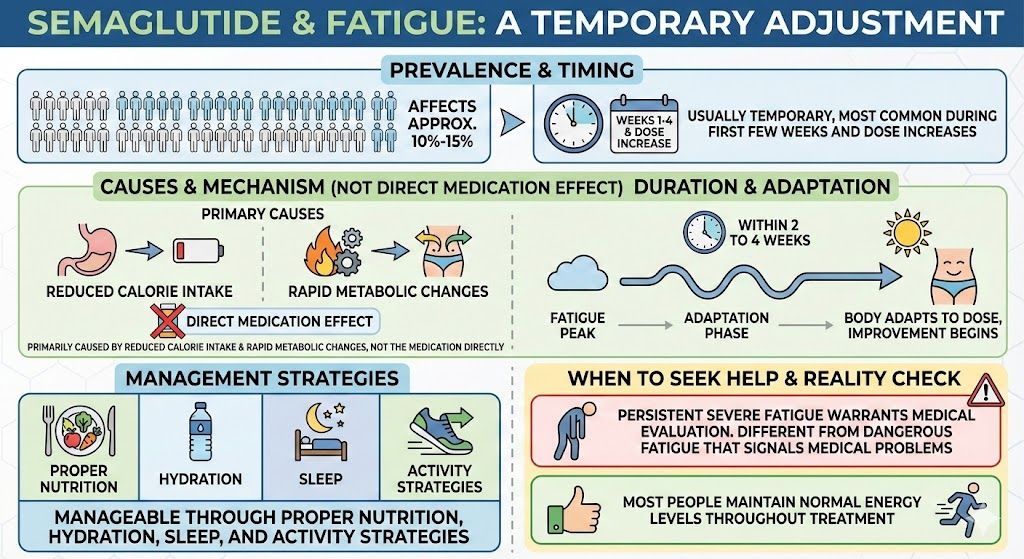
Here’s what you need to know: fatigue does affect roughly 10% to 15% of people taking semaglutide, though it’s less common than gastrointestinal side effects like nausea. The tiredness isn’t usually a direct effect of the medication itself but rather a result of the rapid changes happening in your body. Dramatically reduced calorie intake, rapid weight loss, possible dehydration, metabolic adjustments, and changes in blood sugar levels all contribute to feelings of tiredness, particularly during the first few weeks of treatment and when increasing doses.
This guide explores everything about semaglutide-related fatigue: why it happens, when to expect it, how to distinguish normal adjustment fatigue from concerning tiredness, and most importantly, proven strategies to maintain your energy levels throughout treatment.
Key Takeaways: Semaglutide and Fatigue
- Fatigue affects approximately 10% to 15% of people taking semaglutide
- Usually temporary, most common during first few weeks and dose increases
- Primarily caused by reduced calorie intake and rapid metabolic changes, not the medication directly
- Often improves within 2 to 4 weeks as your body adapts to each dose
- Manageable through proper nutrition, hydration, sleep, and activity strategies
- Persistent severe fatigue warrants medical evaluation
- Different from dangerous fatigue that signals medical problems
- Most people maintain normal energy levels throughout treatment
Understanding Why Semaglutide Can Cause Tiredness
Before jumping to solutions, understanding the mechanisms behind semaglutide-related fatigue helps you address the root causes effectively.
Drastically Reduced Calorie Intake
The primary reason people feel tired on semaglutide is suddenly eating far fewer calories than their body is accustomed to. Semaglutide’s powerful appetite suppression often causes people to drop from consuming 2,000 to 3,000 calories daily to eating 1,000 to 1,500 calories or even less.
Your body needs energy to function. Calories are literally fuel. When you suddenly cut that fuel supply by 40% to 50%, your body initially struggles to adapt. It takes time for your metabolism to adjust to operating efficiently on fewer calories.
Think of it like a car engine designed to run on a full tank suddenly getting only half a tank. It still runs, but the transition period involves adjustments. Your body goes through similar metabolic recalibration.
This calorie-related fatigue typically hits hardest during the first few weeks of treatment and when you increase doses, because those are the times when appetite suppression strengthens and calorie intake drops most dramatically.
Inadequate Protein Consumption
When appetite disappears and food becomes uninteresting, many people naturally gravitate toward simple carbohydrates because they’re easier to consume. Crackers, toast, and plain pasta go down easier than chicken breast or fish when you’re not hungry.
However, inadequate protein intake leads to muscle loss during weight loss, and muscle loss directly impacts energy levels. Your muscles are metabolically active tissue that supports overall vitality. Losing them makes you feel weaker and more tired.
Additionally, protein plays crucial roles in numerous body functions beyond just muscle maintenance. Insufficient protein affects hormone production, immune function, and countless metabolic processes that influence energy.
Dehydration
Many people don’t drink enough water while taking semaglutide. When you’re eating less, you’re also getting less fluid from food. When nausea is an issue, you might avoid drinking because it makes you feel uncomfortably full.
Even mild dehydration (losing just 1% to 2% of body water) causes noticeable fatigue, difficulty concentrating, and reduced physical performance. Dehydration also worsens other semaglutide side effects like nausea and constipation, creating a cascade that amplifies tiredness.
Rapid Weight Loss Metabolic Adjustments
When you lose weight quickly, your body undergoes significant metabolic changes. Your thyroid function may temporarily shift. Hormone levels fluctuate. Your body is essentially recalibrating countless systems to operate at a new weight and with different nutritional input.
These adjustments require energy and can leave you feeling fatigued while they’re happening. This is particularly noticeable during periods of rapid weight loss, typically months 2 through 6 of treatment when you’re losing 2 to 4 pounds weekly or more.
Blood Sugar Changes
For people with diabetes or insulin resistance, starting semaglutide often causes blood sugar levels to drop significantly. While this is therapeutically beneficial, the transition from high blood sugar to normal levels can cause temporary fatigue as your body adapts to operating with healthier glucose levels.
Even people without diabetes might experience blood sugar fluctuations as their eating patterns change dramatically. Going many hours without eating because you’re simply not hungry can cause blood sugar dips that manifest as tiredness.
Sleep Disruptions
Some people experience sleep disturbances on semaglutide, though this isn’t widely reported. Changes in digestive patterns, occasional acid reflux at night, or simply the physical discomfort of adjusting to the medication can disrupt sleep quality.
Poor sleep obviously leads to daytime fatigue. Even if you’re in bed for 8 hours, if the quality is poor, you’ll feel tired during the day.
Nutrient Deficiencies
Eating dramatically less food means consuming fewer vitamins and minerals. Over time, deficiencies in iron, vitamin B12, vitamin D, or other nutrients can develop, contributing to fatigue.
This is more of a long-term concern than an immediate cause of early fatigue, but it’s worth considering if tiredness persists or worsens after several months of treatment.
For comprehensive information about all side effects beyond just fatigue, see our complete guide to semaglutide side effects.
When Fatigue Typically Occurs During Treatment
Understanding the timeline helps you recognize normal fatigue patterns versus concerning tiredness.
First Few Weeks: Adjustment Fatigue
The first 2 to 4 weeks of starting semaglutide often bring noticeable fatigue. Your body is encountering significant appetite suppression for the first time. You’re eating considerably less than usual. Your metabolism hasn’t yet adapted to operating on reduced calories.
This early fatigue typically manifests as feeling more tired than usual in the afternoon, lacking motivation to exercise even though you’re physically capable, needing more sleep than usual, or feeling like everything requires more effort.
The good news is that this adjustment fatigue usually improves substantially within 3 to 4 weeks as your body adapts. By week 4, most people report energy levels returning closer to normal or even improving beyond baseline as they lose weight and health markers improve.
Dose Increase Periods
Each time you increase your semaglutide dose, you might experience a temporary return of fatigue. The stronger appetite suppression at higher doses often means eating even less for a few days, creating another period of metabolic adjustment.
This dose-increase fatigue follows a similar pattern to initial fatigue: worst in the first week after increasing, gradual improvement over weeks 2 and 3, return to normal energy by week 4 at the new dose.
The fatigue with dose increases is often milder than initial treatment fatigue because your body has already adapted to some degree during earlier months.
Rapid Weight Loss Phases
During periods when you’re losing weight most rapidly, typically months 3 through 7 when you’re at higher doses, some people experience waves of fatigue. You might feel great for a week or two, then have a few days of tiredness, then feel good again.
This fluctuating pattern often correlates with particularly rapid weight loss. Your body is working hard to mobilize fat stores, rebuild metabolically active tissue, and recalibrate countless systems. This internal work consumes energy even when you’re sitting still.
Long-Term: Usually Improved Energy
Interestingly, most people who stick with semaglutide long-term report improved energy levels compared to before treatment. Once you’ve lost significant weight and your body has fully adapted to your maintenance dose, the metabolic benefits of weight loss typically outweigh any medication-related tiredness.
Improved sleep from reduced sleep apnea, better blood sugar control, reduced joint pain allowing more activity, improved cardiovascular fitness, and better overall health all contribute to higher energy levels despite eating less food.
For detailed information about what to expect throughout your entire treatment journey, see our complete guide to semaglutide weight loss results month by month.
Normal Fatigue vs Concerning Tiredness
Not all fatigue is created equal. Distinguishing between normal adjustment fatigue and concerning tiredness that requires medical attention matters.
Normal Adjustment Fatigue
This type of tiredness is expected and manageable. You feel more tired than usual, particularly in the afternoon, but you can still complete daily activities and work. Sleep at night refreshes you somewhat, even if you still feel tired the next day. The fatigue improves gradually over weeks. You can increase energy through rest, better nutrition, or hydration. Exercise, while harder to motivate for, is still physically possible and often helps.
This normal fatigue is annoying but not alarming. It’s your body saying “I’m working hard to adjust to major changes, please give me some grace and support.”
Concerning Fatigue That Warrants Evaluation
Some types of tiredness signal potential problems requiring medical attention. Seek evaluation if you experience severe fatigue that prevents you from working or completing necessary daily tasks. Fatigue that worsens progressively rather than improving over time. Extreme weakness where even basic activities like climbing stairs or lifting light objects feels impossible.
Fatigue accompanied by other concerning symptoms like chest pain, severe shortness of breath, fainting or near-fainting episodes, confusion or difficulty thinking clearly, yellowing of skin or eyes, or dark urine. Fatigue with signs of anemia like pale skin, rapid heartbeat, or dizziness when standing.
This type of fatigue might indicate dehydration requiring treatment, electrolyte imbalances, severe nutritional deficiencies, thyroid dysfunction, kidney or liver problems, or other medical conditions requiring evaluation.
If you’re unsure whether your fatigue falls into normal or concerning categories, err on the side of caution and contact your healthcare provider.
Proven Strategies to Combat Semaglutide Fatigue
If you’re experiencing tiredness on semaglutide, these evidence-based strategies help restore and maintain energy.
Prioritize Adequate Protein
This is single most important nutritional strategy for maintaining energy. Aim for at least 0.7 to 1 gram of protein per pound of your goal body weight daily. If your goal weight is 150 pounds, target 105 to 150 grams of protein daily.
Focus on high-quality protein sources that you can manage despite reduced appetite. Greek yogurt (15 to 20 grams protein per cup), cottage cheese (25 grams per cup), eggs (6 grams per egg), lean meats like chicken breast (25 to 30 grams per 4 oz), fish like salmon or tuna (25 grams per 4 oz), protein shakes and powders (20 to 30 grams per serving typically), and protein bars as convenient options (15 to 20 grams typically).
Spread protein throughout the day rather than trying to consume it all at once. Having 20 to 30 grams at each meal is more achievable than trying to eat 100 grams in one sitting when you’re not hungry.
Stay Consistently Hydrated
Dehydration is easily addressed but commonly overlooked. Drink at least 64 ounces of water daily, more if you’re physically active or live in hot climates. Aim for 80 to 100 ounces if you’re experiencing fatigue.
Carry a water bottle everywhere and sip consistently throughout the day. Set phone reminders if you frequently forget to drink. Add electrolyte packets or tablets to your water occasionally, especially if you’re sweating from exercise or hot weather.
Monitor your urine color. Pale yellow indicates good hydration. Dark yellow or amber suggests you need more fluids.
Don’t Eat Too Little
While semaglutide dramatically reduces appetite, eating too few calories backfires. Going below 1,000 to 1,200 calories daily for extended periods slows metabolism and causes fatigue, nutrient deficiencies, and muscle loss.
Even when you’re not hungry, aim to consume at least 1,200 calories daily for women or 1,500 for men. Choose nutrient-dense foods that pack calories and nutrition into smaller volumes. Nuts and nut butters, avocados, olive oil, full-fat dairy if you tolerate it, smoothies that combine multiple nutritious ingredients, and protein-rich meals help you meet calorie minimums without feeling overstuffed.
Time Your Eating Strategically
Having some protein and complex carbohydrates in the morning helps stabilize energy throughout the day. Even if you’re not hungry, try to eat something within an hour or two of waking.
A protein-rich breakfast like eggs, Greek yogurt, or a protein smoothie provides sustained energy better than skipping breakfast entirely or eating only simple carbs like toast.
Include Complex Carbohydrates
While protein deserves priority, don’t eliminate carbohydrates entirely. Your brain runs primarily on glucose. Complex carbs like oatmeal, brown rice, quinoa, sweet potatoes, whole grain bread, beans and lentils, and vegetables provide steady energy without blood sugar spikes.
Aim for at least 100 to 130 grams of carbohydrates daily, choosing mostly complex carbs over simple sugars.
Consider Strategic Caffeine Use
Moderate caffeine can help combat fatigue when used strategically. A morning cup of coffee or tea, or a small amount of caffeine in the early afternoon when energy dips, provides a helpful boost.
However, avoid excessive caffeine or consuming it late in the day, as this disrupts sleep and creates a vicious cycle of fatigue. Limit intake to 200 to 300 mg daily (about 2 to 3 cups of coffee) and cut off caffeine by 2 PM.
Maintain Physical Activity
This seems counterintuitive when you’re tired, but regular physical activity actually improves energy levels. Exercise increases mitochondrial function (your cells’ energy powerhouses), improves sleep quality, boosts mood through endorphin release, and enhances overall metabolic efficiency.
Start with gentle activity if you’re very fatigued. Even 15 to 20 minute walks daily help. As energy improves, gradually increase duration and intensity.
Resistance training particularly matters because it preserves muscle mass during weight loss, and maintaining muscle directly supports energy levels.
Optimize Sleep Quality
Prioritize getting 7 to 9 hours of quality sleep nightly. Maintain consistent sleep and wake times, even on weekends. Create a cool, dark, quiet sleeping environment. Avoid screens for at least an hour before bed. Consider supplements like magnesium glycinate (300 to 400 mg) before bed if you struggle with sleep quality.
Good sleep is non-negotiable for maintaining energy during the metabolic stress of rapid weight loss.
Check and Address Nutrient Deficiencies
Consider asking your provider to check levels of vitamin B12, vitamin D, iron/ferritin, and thyroid hormones if fatigue persists despite other interventions.
Consider taking a high-quality multivitamin to cover nutritional bases when eating less food. B-complex vitamins support energy metabolism. Vitamin D deficiency is extremely common and causes fatigue. Iron deficiency leads to anemia and severe tiredness, particularly in premenopausal women.
Addressing deficiencies can dramatically improve energy within days to weeks.
Does Semaglutide Fatigue Go Away?
The question everyone asks: will the tiredness eventually resolve?
For most people, yes. Fatigue typically improves substantially within 3 to 4 weeks at each dose level as your body adapts. The tiredness that felt overwhelming during your first few weeks on semaglutide usually becomes minimal or absent by week 4 or 5.
Similarly, fatigue that resurfaces when you increase doses typically resolves within 2 to 3 weeks at the new level. Your metabolism becomes more efficient at operating on reduced calories. Your body completes major metabolic recalibrations. You learn strategies to maintain energy despite eating less.
Many people report that their energy levels after several months on semaglutide at a stable dose actually exceed their pre-treatment baseline. Weight loss improves numerous factors that contribute to energy including better sleep quality, reduced joint pain, improved cardiovascular fitness, better blood sugar control, reduced inflammation, and improved mental health.
However, a small percentage of people experience persistent fatigue throughout treatment despite implementing all recommended strategies. For this group, the fatigue either means accepting ongoing tiredness as a trade-off for weight loss benefits or discontinuing semaglutide in favor of alternative approaches.
The good news is that persistent severe fatigue is uncommon. Most people who stick with treatment through initial adjustment periods find that energy normalizes or improves beyond baseline.
Comparing Semaglutide to Other Weight Loss Medications
Understanding how semaglutide’s fatigue profile compares to alternatives provides useful context.
Semaglutide vs Tirzepatide
Tirzepatide causes fatigue at similar rates to semaglutide, affecting roughly 10% to 15% of users. The mechanisms are identical: reduced calorie intake, rapid weight loss, and metabolic adjustments. Some people report feeling slightly more tired on tirzepatide due to its somewhat stronger appetite suppression and faster weight loss, but the difference is modest.
For comprehensive comparison, see our Mounjaro vs Ozempic guide.
Semaglutide vs Phentermine
Phentermine, an older stimulant-based weight loss medication, creates the opposite effect. It often causes increased energy, jitteriness, and difficulty sleeping due to its stimulant properties. While this might sound appealing if you’re tired, the trade-offs include anxiety, elevated heart rate, sleep problems, and potential for dependency.
Semaglutide’s fatigue is usually temporary and manageable. Phentermine’s stimulant effects persist throughout treatment and can cause other problems.
Semaglutide vs Liraglutide
Liraglutide (Saxenda) is another GLP-1 medication like semaglutide but requires daily injections. Fatigue rates are similar, around 10% to 15%. The daily dosing versus weekly doesn’t meaningfully affect fatigue patterns.
Semaglutide vs Traditional Dieting
Interestingly, fatigue rates with traditional calorie-restricted diets are similar or higher than with semaglutide. When people cut calories through willpower alone without medication support, fatigue is a common complaint.
The difference is that with semaglutide, you’re eating less because you’re genuinely not hungry, whereas traditional dieting involves fighting hunger constantly. That mental battle itself is exhausting. Semaglutide potentially makes the calorie reduction less mentally taxing, even if some physical fatigue occurs.
Special Considerations for Different Groups
Certain groups need to pay particular attention to fatigue management on semaglutide.
People with Diabetes
Those using semaglutide for diabetes management need to be especially attentive to blood sugar levels. Low blood sugar (hypoglycemia) causes profound fatigue, shakiness, confusion, and other symptoms.
If you’re taking semaglutide along with other diabetes medications, particularly insulin or sulfonylureas, work closely with your provider to adjust doses of other medications downward to prevent hypoglycemia. Check blood sugar regularly, especially if you feel unusually tired.
Physically Active Individuals
Athletes or people who exercise regularly might notice more fatigue on semaglutide because they’re combining high energy expenditure from activity with reduced calorie intake. This creates a larger energy deficit.
Active individuals need to be particularly diligent about consuming adequate calories, prioritizing protein (aim for 1 gram per pound of body weight or more), timing carbohydrates around workouts for energy, and monitoring performance metrics to ensure fatigue isn’t impairing training.
You might need to reduce workout intensity or volume temporarily during adjustment periods when fatigue is strongest.
Older Adults
Older individuals sometimes experience more fatigue on semaglutide because their metabolic flexibility (ability to adapt to different fuel sources) may be reduced compared to younger people. Additionally, age-related muscle loss (sarcopenia) means preserving muscle during weight loss is even more critical.
Older adults should be especially focused on adequate protein intake, resistance training to preserve muscle, monitoring for nutrient deficiencies, and slower dose escalation if needed.
People with Existing Chronic Fatigue
If you already struggle with chronic fatigue syndrome, fibromyalgia, or other conditions causing baseline tiredness, adding semaglutide can be challenging. The metabolic stress of rapid weight loss might exacerbate existing fatigue.
Work closely with your provider. Consider slower dose escalation. Be even more meticulous about nutrition, hydration, and sleep. The potential benefits of weight loss might significantly improve your underlying condition over time, but the initial months could be difficult.
When to Contact Your Healthcare Provider
While most fatigue is normal and manageable, certain situations warrant medical consultation.
Contact your provider if fatigue is severe enough to prevent working or completing necessary daily activities. Fatigue progressively worsens rather than improving over time. You experience extreme weakness affecting physical capabilities. Fatigue accompanies concerning symptoms like chest pain, severe shortness of breath, fainting episodes, confusion, or other neurological changes.
You have signs of severe dehydration like decreased urination, extreme thirst, or dizziness. You suspect nutrient deficiencies based on other symptoms like hair loss, brittle nails, or pale skin. Fatigue persists for more than 4 to 6 weeks at a stable dose despite implementing all recommended strategies.
Your provider can evaluate for underlying causes requiring treatment, run bloodwork to check for deficiencies or metabolic issues, adjust your semaglutide dose if needed, and provide additional support and strategies.
Long-Term Energy Considerations
Looking beyond initial adjustment periods, what do energy levels look like during long-term semaglutide use?
After 6 to 12 months on semaglutide at a stable maintenance dose, most people report energy levels that meet or exceed their pre-treatment baseline. The metabolic benefits of weight loss typically outweigh any lingering medication effects.
Improved sleep quality from reduced sleep apnea and better breathing is common. Reduced joint pain allows more comfortable movement and activity. Better cardiovascular fitness from weight loss and increased activity. Improved mental health and reduced depression, which often sap energy. Better blood sugar control in people with diabetes or prediabetes. Reduced inflammation throughout the body.
These improvements often create a positive cycle where increased energy enables more activity, which further improves fitness and energy capacity, leading to even more activity and better outcomes.
However, maintaining energy long-term requires ongoing attention to nutrition, particularly protein intake, adequate hydration, regular physical activity, quality sleep, and periodic assessment for nutrient deficiencies.
Think of semaglutide treatment as requiring new habits around energy maintenance. You’re operating your body at a new weight with different nutritional input. Building sustainable habits that support energy becomes crucial for long-term success.
For information about what happens after you’ve achieved weight loss goals, including energy considerations, see our guide to how long semaglutide stays in your system.
Frequently Asked Questions
Does semaglutide make you tired?
Yes, semaglutide causes fatigue in approximately 10% to 15% of people. However, the tiredness is usually temporary and most common during the first few weeks of treatment and when increasing doses. It typically results from reduced calorie intake and rapid metabolic changes rather than being a direct medication effect. Most people find that fatigue improves within 3 to 4 weeks as their body adapts to each dose level.
Why does semaglutide cause fatigue?
Semaglutide-related fatigue primarily occurs due to dramatically reduced calorie intake as appetite suppresses, rapid weight loss causing metabolic adjustments, possible dehydration from eating and drinking less, inadequate protein consumption leading to muscle loss, blood sugar changes particularly in people with diabetes, and possible sleep disruptions. The medication doesn’t directly cause fatigue so much as the dramatic changes it creates in eating patterns and metabolism lead to temporary tiredness.
How long does semaglutide fatigue last?
For most people, fatigue improves significantly within 3 to 4 weeks at each dose level. It’s typically worst during the first week of starting treatment or after dose increases, then gradually improves over the following weeks. Some people experience waves of fatigue during rapid weight loss phases (months 3 through 7), but this usually resolves within days to weeks. After several months at a stable maintenance dose, most people report energy levels returning to normal or better than baseline.
What can I do to reduce fatigue on semaglutide?
Effective strategies include prioritizing protein intake (0.7 to 1 gram per pound of goal body weight daily), staying well hydrated (64 to 80 ounces of water daily), consuming at least 1,200 to 1,500 calories daily despite reduced appetite, including complex carbohydrates for sustained energy, maintaining regular physical activity even when tired, optimizing sleep quality (7 to 9 hours nightly), checking for and addressing nutrient deficiencies, and using moderate caffeine strategically if needed.
Is extreme fatigue on semaglutide dangerous?
Extreme fatigue that prevents daily functioning warrants medical evaluation. While most semaglutide fatigue is uncomfortable but not dangerous, severe tiredness can signal problems like severe dehydration, electrolyte imbalances, nutrient deficiencies, thyroid issues, or other medical conditions requiring treatment. Contact your healthcare provider if fatigue is severe, worsens progressively, prevents work or daily activities, or accompanies concerning symptoms like chest pain, confusion, or fainting.
Does everyone experience fatigue on semaglutide?
No, most people don’t experience significant fatigue. Studies show only 10% to 15% of people report fatigue as a notable side effect. Many people maintain normal energy levels throughout treatment, and some actually report improved energy compared to before starting medication, particularly after several months when weight loss benefits accumulate.
Will my energy levels improve over time on semaglutide?
Yes, for most people energy levels improve substantially after the initial adjustment period. Within 3 to 4 weeks at each dose, fatigue typically resolves or becomes minimal. Long-term users often report better energy than before treatment due to benefits of weight loss including improved sleep, reduced joint pain, better fitness, and improved metabolic health. The key is implementing proper nutrition, hydration, and activity strategies during the adjustment period.
Can I exercise while feeling fatigued on semaglutide?
Yes, though you might need to modify your routine during peak fatigue periods. Gentle activity like walking often helps improve energy levels rather than worsening them. You may need to reduce workout intensity, shorten workout duration, or focus on lighter activity during the first few weeks on semaglutide or after dose increases. As energy improves, gradually return to your normal exercise routine. Exercise helps maintain energy long-term by preserving muscle and improving metabolic efficiency.
Should I stop taking semaglutide if I feel too tired?
Don’t stop without consulting your healthcare provider. Most fatigue is temporary and improves with strategies like better nutrition and hydration. Your provider can evaluate whether your fatigue is normal adjustment tiredness or signals a problem requiring intervention. They might suggest staying at your current dose longer, implementing specific energy-boosting strategies, checking for deficiencies, or in some cases adjusting or discontinuing the medication. Many people who initially felt tired end up with great energy once they adapt.
How does semaglutide fatigue compare to other weight loss medications?
Semaglutide causes fatigue at similar rates to other GLP-1 medications like tirzepatide or liraglutide (10% to 15% of users). In contrast, stimulant-based medications like phentermine cause increased energy and jitteriness rather than fatigue but come with different side effects. Traditional calorie-restricted diets without medication support often cause similar or higher rates of fatigue due to constantly fighting hunger, whereas semaglutide’s appetite suppression potentially makes the calorie reduction less mentally exhausting.
Managing Energy Successfully on Semaglutide
Fatigue on semaglutide is real but usually manageable and temporary. For most people, the tiredness peaks during initial adjustment weeks and after dose increases, then improves substantially within 3 to 4 weeks. Understanding that this fatigue results primarily from reduced calorie intake and rapid metabolic changes rather than direct medication toxicity helps you address it effectively through proper nutrition, hydration, and lifestyle strategies.
The key to maintaining energy involves prioritizing protein to preserve muscle mass, consuming adequate calories despite reduced appetite (at least 1,200 to 1,500 daily), staying consistently well hydrated, maintaining regular physical activity even when motivation is low, optimizing sleep quality, and addressing any nutrient deficiencies that develop.
Most people who stick with semaglutide through initial fatigue periods discover that their long-term energy levels meet or exceed their pre-treatment baseline once they’ve lost significant weight and their body has fully adapted. The metabolic and physical benefits of weight loss typically outweigh any lingering medication-related effects.
Whether you’re using brand-name semaglutide or more affordable compounded semaglutide at $199 monthly through TrimRx, the fatigue patterns and management strategies remain the same. Get started with comprehensive medical support and guidance on maintaining energy throughout your weight loss journey, ensuring you can function optimally while achieving your health goals.

Transforming Lives, One Step at a Time
Keep reading

Best GLP-1 for Weight Loss in 2026
Choosing the best GLP-1 medication for weight loss in 2026 depends on your weight loss goals, medical history, budget, and how your body responds…

Construction Work in Summer on a GLP-1
Summer on a job site means early starts, heavy physical work, direct sun or hot interiors, and lunch from a cooler or the back…

Colonoscopy Prep on a GLP-1
If you are on a GLP-1 and have a colonoscopy, upper endoscopy, or any procedure with sedation coming up, the single most important step…


