Can You Drink Alcohol on Ozempic? Safety Guidelines Explained
If you’re taking Ozempic and wondering whether you can still enjoy a glass of wine with dinner or a beer at social events, you’re not alone. This question comes up constantly because Ozempic’s prescribing information doesn’t explicitly forbid alcohol, yet many people report that drinking feels different or causes problems on the medication.
Here’s the straightforward answer: Ozempic doesn’t have an absolute contraindication with alcohol, meaning you’re not medically forbidden from drinking. However, alcohol can worsen Ozempic’s side effects, particularly nausea and gastrointestinal distress. For people with diabetes, alcohol increases the risk of dangerous low blood sugar. Additionally, alcohol contains empty calories that can significantly undermine your weight loss efforts. While moderate drinking might be manageable for some people, many find that alcohol tolerance changes dramatically on Ozempic, and what used to feel like one or two drinks can now cause significant problems.
This guide explains everything you need to know about alcohol and Ozempic: the specific risks, how drinking affects weight loss, practical guidelines for safer consumption if you choose to drink, when you should avoid alcohol entirely, and what to expect if you do drink.
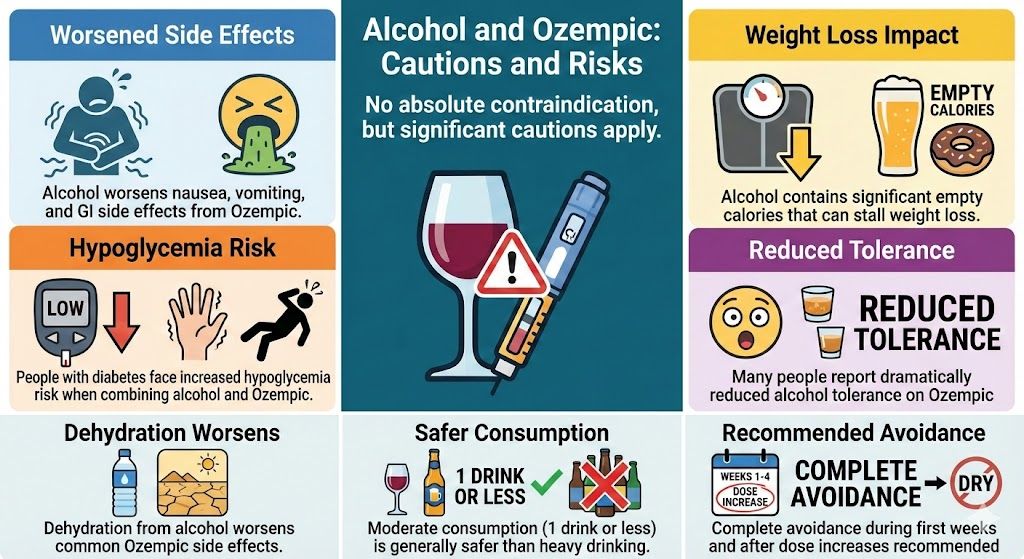
Key Takeaways: Alcohol and Ozempic
- No absolute contraindication, but significant cautions apply
- Alcohol worsens nausea, vomiting, and GI side effects from Ozempic
- People with diabetes face increased hypoglycemia risk when combining alcohol and Ozempic
- Alcohol contains significant empty calories that can stall weight loss
- Many people report dramatically reduced alcohol tolerance on Ozempic
- Dehydration from alcohol worsens common Ozempic side effects
- Moderate consumption (1 drink or less) is generally safer than heavy drinking
- Complete avoidance during first weeks and after dose increases recommended
The Direct Answer: What the Medical Evidence Says
There is no direct pharmacological interaction between semaglutide (Ozempic) and alcohol. The medications don’t interact at the molecular level in ways that create dangerous compounds or toxic effects. Ozempic’s prescribing information doesn’t list alcohol as a contraindication.
However, this technical lack of direct interaction doesn’t mean drinking is without consequences. The relationship between Ozempic and alcohol is more nuanced than a simple yes or no answer.
The real concerns involve how alcohol affects your body in ways that compound or worsen Ozempic’s effects. Slowed gastric emptying from Ozempic can trap alcohol in your stomach longer, potentially intensifying its effects. Alcohol can trigger or worsen the nausea and vomiting that already affect many Ozempic users. For people with diabetes, the combination of Ozempic’s glucose-lowering effects and alcohol’s impact on blood sugar creates hypoglycemia risk.
Most healthcare providers advise caution with alcohol rather than absolute prohibition. The distinction matters: you’re not risking a dangerous drug interaction, but you are risking worse side effects and undermining your treatment goals.
For comprehensive information about all aspects of Ozempic treatment, see our complete guide to Ozempic for weight loss.
Why Alcohol Can Be Problematic on Ozempic
Understanding the specific issues helps you make informed decisions about drinking.
Worsened Nausea and Vomiting
Nausea already affects 30% to 44% of people taking Ozempic. Alcohol is itself a stomach irritant that commonly causes nausea even in people not taking medications. When you combine Ozempic’s slowed gastric emptying with alcohol consumption, you create a perfect storm for severe nausea.
Alcohol sits in your slowed stomach longer than usual, increasing irritation to your stomach lining. The combination of medication-induced nausea plus alcohol-induced nausea can become overwhelming. Many people report that alcohol they previously tolerated well now makes them feel terrible for hours or even the entire next day.
Vomiting is particularly concerning because severe vomiting can lead to dehydration, electrolyte imbalances, and inability to keep down medications or food. Some people who drink on Ozempic experience vomiting severe enough to require medical attention.
Dramatically Reduced Alcohol Tolerance
This is one of the most commonly reported effects. People who used to comfortably drink two or three glasses of wine now feel intoxicated after half a glass. Beer drinkers who could handle several beers find that one makes them feel drunk.
The mechanism likely involves slowed gastric emptying. Alcohol absorption happens primarily in your small intestine, not your stomach. When alcohol sits in your stomach longer before reaching your intestines, the absorption pattern changes. You might absorb it more gradually (reducing peak blood alcohol initially) but then experience a delayed surge as it eventually moves through.
Additionally, when you’re eating significantly less food on Ozempic, you’re drinking on a more empty stomach than you’re accustomed to, which intensifies alcohol’s effects.
The changed tolerance can be dangerous. If you drink assuming your usual tolerance and then experience unexpectedly strong effects, you risk impaired judgment, unsafe behavior, and accidents.
Hypoglycemia Risk for People with Diabetes
This is the most serious concern, particularly for people using Ozempic to manage type 2 diabetes. Alcohol affects blood sugar in complex ways. Initially, alcohol can cause blood sugar to rise because many alcoholic drinks contain carbohydrates. However, several hours after drinking, alcohol can cause blood sugar to drop significantly.
The mechanism involves your liver. Normally, your liver releases stored glucose to maintain blood sugar levels between meals and overnight. Alcohol temporarily disrupts this process because your liver prioritizes metabolizing alcohol over releasing glucose. The result can be dangerous hypoglycemia, particularly overnight after evening drinking.
Ozempic already lowers blood sugar. When combined with alcohol’s delayed glucose-lowering effect, the risk of hypoglycemia increases substantially. Symptoms of hypoglycemia include shakiness, sweating, confusion, dizziness, rapid heartbeat, and in severe cases, loss of consciousness or seizures.
If you have diabetes and take Ozempic along with other glucose-lowering medications (insulin, sulfonylureas), the hypoglycemia risk is even higher.
Empty Calories Undermining Weight Loss
Alcohol provides roughly 7 calories per gram, nearly as much as fat (9 calories per gram) and significantly more than carbohydrates or protein (4 calories per gram each). These are empty calories providing no nutritional value.
A standard glass of wine contains about 120 to 150 calories. A regular beer contains 150 to 200 calories. Mixed drinks with sugary mixers can contain 300 to 500 calories or more. If you’re drinking 2 to 3 drinks several times weekly, you’re consuming an additional 1,000 to 2,000 calories weekly from alcohol alone.
When Ozempic is helping you create a caloric deficit for weight loss, adding back hundreds of empty calories from alcohol can significantly slow or stall your progress. Many people wonder why their weight loss has plateaued without realizing that alcohol is the culprit.
Dehydration Worsening Side Effects
Alcohol is a diuretic, meaning it causes your body to lose more fluid than you consume. Dehydration is already a concern on Ozempic because reduced food intake means less fluid from food, and nausea sometimes makes people avoid drinking fluids.
Dehydration worsens nearly every Ozempic side effect including nausea, constipation, fatigue, headaches, and dizziness. The combination of Ozempic-related dehydration plus alcohol-related dehydration can leave you feeling terrible.
Impaired Judgment About Eating
Alcohol lowers inhibitions and impairs judgment. While Ozempic suppresses appetite, alcohol can override those signals and lead to poor food choices. Many people report that drinking leads to overeating foods they’d normally avoid, completely undermining their diet efforts.
The “drunk munchies” become particularly problematic when combined with reduced impulse control. You might order pizza or fast food you wouldn’t consider sober, consuming a meal’s worth of calories on top of the alcohol calories.
How Alcohol Affects Your Weight Loss Goals
Beyond the caloric impact, alcohol affects weight loss through multiple mechanisms.
Direct Caloric Load
As mentioned, alcohol is calorie-dense. A single night of drinking 3 to 4 drinks can add 500 to 1,000 calories to your weekly total. Over months, this significantly impacts results. If you’re aiming to lose 1 to 2 pounds weekly (requiring a deficit of 500 to 1,000 calories daily), adding back 1,500 to 2,000 calories weekly from alcohol alone can cut your weight loss rate in half.
Disrupted Fat Burning
Your body prioritizes metabolizing alcohol over burning fat because alcohol is essentially a toxin that your body wants to eliminate. When you drink, fat burning stops until the alcohol is processed, which can take several hours depending on the amount consumed.
This metabolic prioritization means that even if you maintain your overall caloric deficit, the composition of weight loss might shift. You might lose more muscle and less fat than if you weren’t drinking.
Sleep Disruption
Alcohol significantly disrupts sleep quality, even when it initially makes you feel drowsy. Poor sleep affects weight loss through multiple pathways including increased hunger hormones (ghrelin), decreased satiety hormones (leptin), increased cravings for high-calorie foods, reduced motivation for physical activity, and disrupted metabolic function.
Water Retention and Inflammation
Alcohol causes inflammation and can lead to temporary water retention, which might mask fat loss on the scale. You might be losing fat but not seeing it reflected in your weight due to inflammation and fluid shifts.
Reduced Exercise Performance
Hangovers obviously impair workout ability, but even without a full hangover, alcohol consumption reduces exercise performance for 24 to 48 hours through dehydration, disrupted sleep, reduced muscle recovery, and depleted glycogen stores.
Safe Drinking Guidelines If You Choose to Drink
If you decide to drink while taking Ozempic, these guidelines minimize risks.
Wait Until You’ve Adapted
Avoid alcohol entirely during your first 3 to 4 weeks on Ozempic and for the first 1 to 2 weeks after each dose increase. These are periods when side effects are worst and adding alcohol significantly increases the likelihood of severe nausea or vomiting.
Once you’ve adapted to a stable dose and side effects have settled, you can consider very moderate drinking.
Start with Minimal Amounts
Don’t assume your usual tolerance applies. Start with half a drink or one small drink and wait 30 to 60 minutes to see how you feel before considering more. Many people are shocked by how much more intoxicated they feel from amounts they previously handled easily.
Drink Slowly
Sip your drink over 60 to 90 minutes rather than finishing it quickly. This gives your body time to process the alcohol gradually and helps you recognize if you’re having an adverse reaction before consuming too much.
Eat Before and While Drinking
Never drink on an empty stomach while taking Ozempic. Have a meal containing protein and complex carbohydrates before drinking. Continue eating small amounts of food while drinking if possible. This slows alcohol absorption and helps prevent hypoglycemia.
Choose Lower-Calorie Options
If you’re drinking for weight loss, be strategic about choices. Light beer (100 calories) instead of regular beer (150 to 200 calories). Wine spritzer (half wine, half sparkling water) instead of full glass of wine. Spirits with zero-calorie mixers (vodka soda, gin and tonic made with diet tonic) instead of sugary cocktails. Avoid frozen drinks, margaritas, and sweet mixed drinks that can contain 400+ calories each.
Hydrate Aggressively
Drink at least one full glass of water for every alcoholic drink. Alternate alcoholic drinks with water. Drink a large glass of water before bed. Have water readily available throughout the next day. This aggressive hydration helps prevent dehydration-related side effects.
Monitor Blood Sugar If You Have Diabetes
Check your blood sugar before drinking, 1 to 2 hours after starting drinking, before bed, and potentially during the night (set an alarm for 2 to 3 AM). Be prepared to treat low blood sugar with fast-acting carbohydrates (juice, glucose tablets). Consider reducing insulin or other glucose-lowering medication doses on drinking days after consulting your provider.
Set Strict Limits
Decide in advance how much you’ll drink and stick to it. One drink maximum is safest for most people on Ozempic. Two drinks is the absolute maximum you should consider, and only if you tolerated one drink well on previous occasions. Never exceed two drinks in one sitting while taking Ozempic.
Have a Plan for Problems
Make sure someone with you knows you’re on Ozempic and might be more sensitive to alcohol. Have anti-nausea medication available if you have a prescription. Know how to recognize and treat hypoglycemia if you have diabetes. Don’t drive or operate machinery after drinking on Ozempic until you understand how it affects you.
When You Should Avoid Alcohol Entirely
Certain situations warrant complete abstinence from alcohol while taking Ozempic.
You Have Diabetes
If you’re using Ozempic for diabetes management and also take other glucose-lowering medications (especially insulin or sulfonylureas), the hypoglycemia risk from alcohol is significant enough that many endocrinologists recommend complete avoidance or extreme moderation (one drink maximum on rare occasions).
The risk-benefit calculation doesn’t favor drinking when you face potential severe hypoglycemia, which can be dangerous or even life-threatening.
You Experience Severe Nausea on Ozempic
If you’re already struggling with significant nausea as a side effect, adding alcohol will almost certainly make it worse. Wait until nausea has resolved before considering alcohol.
You’re in Your First Month of Treatment
During initial adjustment weeks, your body is dealing with significant changes. Side effects are strongest during this period. Adding alcohol creates unnecessary risk of severe reactions.
You’re Actively Increasing Doses
Each dose increase brings a temporary return of side effects. Avoid alcohol for 1 to 2 weeks after each increase until side effects settle.
You Have a History of Alcohol Use Disorder
If you’ve struggled with alcohol dependence or abuse in the past, the changed tolerance and reduced desire to drink that many people experience on Ozempic might actually be beneficial. Some people report that Ozempic helps reduce alcohol cravings. If this describes your experience, embrace it rather than pushing to continue drinking.
You Have Liver Disease
Both Ozempic and alcohol affect liver function. If you have existing liver disease (fatty liver, hepatitis, cirrhosis), adding alcohol to Ozempic treatment is not advisable without explicit guidance from your hepatologist.
You’re Taking Other Medications That Interact with Alcohol
If you take medications that also carry warnings about alcohol (many diabetes medications, some psychiatric medications, certain pain medications), the combined risk might be significant enough to warrant avoidance.
Your Weight Loss Has Stalled
If you’ve hit a plateau despite following your diet plan, eliminating alcohol entirely for 4 to 6 weeks helps determine whether it’s the culprit. Many people are surprised by how much their weight loss accelerates when they cut out alcohol completely.
What People Actually Experience: Common Reports
Understanding real-world experiences helps set realistic expectations.
“Alcohol Makes Me Sick Now”
This is the most common report. People who previously tolerated alcohol well find that even small amounts now cause significant nausea, sometimes lasting hours or into the next day. The nausea is often worse than typical hangovers used to feel.
“I Get Drunk Much Faster”
Feeling intoxicated after half a drink or one drink is extremely common. People report feeling dizzy, impaired, and out of control after amounts they previously handled easily.
“The Hangover Is Terrible”
Even modest drinking often produces disproportionately severe next-day effects. Headaches, nausea, fatigue, and dehydration symptoms feel worse and last longer than pre-Ozempic hangovers.
“I Just Don’t Want Alcohol Anymore”
Many people spontaneously lose interest in drinking. Alcohol doesn’t appeal the way it used to. Some people describe this as a relief, particularly if they were trying to moderate drinking before Ozempic. Others find it strange that something they enjoyed now feels unappealing.
“I Drank and Lost Control of My Eating”
The combination of impaired judgment from alcohol plus Ozempic’s side effects wearing off temporarily leads many people to overeat in ways they regret. The alcohol seems to override Ozempic’s appetite suppression.
“It’s Not Worth the Calories”
People focused on weight loss often decide that alcohol’s empty calories aren’t worth it when they’re being so intentional about food choices. The realization that one cocktail equals the calories in a full meal makes it easier to skip drinking.
Practical Strategies for Social Situations
Navigating social events where drinking is common can be challenging when you’re avoiding or limiting alcohol.
Have a Non-Alcoholic Drink in Your Hand
Holding a glass of sparkling water with lime, diet soda, or non-alcoholic beer prevents people from offering you drinks or questioning why you’re not drinking. Most people don’t notice or care what’s actually in your glass.
Prepare a Simple Explanation
If people ask why you’re not drinking, simple responses work well like “I’m on a medication that doesn’t mix well with alcohol,” “I’m focusing on my health right now,” or “I’m taking a break from drinking.” Most people won’t press further.
Be the Designated Driver
Volunteering to drive gives you a built-in excuse that people respect and appreciate.
Suggest Non-Drinking Activities
When making plans, propose activities that don’t center on alcohol like coffee dates, walks, fitness classes, or meals at restaurants where drinks aren’t the focus.
Own Your Choice Confidently
You don’t need to justify or apologize for not drinking or limiting your intake. Confident statements like “I’m good with water, thanks” or “I’m just having one tonight” shut down most questioning.
For information about other lifestyle considerations on Ozempic, see our complete side effects guide.
Comparing Alcohol Effects Across GLP-1 Medications
If you’re considering different GLP-1 medications, understanding how alcohol interactions compare might be relevant.
Ozempic vs Mounjaro/Zepbound
Tirzepatide (Mounjaro/Zepbound) also slows gastric emptying like semaglutide, so alcohol concerns are similar. Some people anecdotally report that tirzepatide causes more severe nausea with alcohol, possibly due to its dual GLP-1/GIP mechanism creating stronger GI effects. However, individual responses vary tremendously.
For detailed comparison, see our Mounjaro vs Ozempic guide.
Ozempic vs Saxenda
Liraglutide (Saxenda) has similar alcohol considerations to semaglutide. The daily dosing versus weekly doesn’t meaningfully change how alcohol interacts since both medications work continuously.
All GLP-1 Medications Share Similar Concerns
The fundamental issue is slowed gastric emptying, which all GLP-1 medications cause. Don’t assume switching medications will allow you to tolerate alcohol better. The same cautions apply across the class.
Long-Term Perspective: Life on Ozempic and Alcohol
After months or years on Ozempic, how do people integrate (or not integrate) alcohol into their lives?
Many People Naturally Drink Less
Long-term users often report that they simply don’t drink much anymore, not because they’re forcing themselves to abstain but because they genuinely don’t desire it. The reduced appeal of alcohol becomes a stable pattern.
Some Find a New Moderate Pattern
Others settle into very moderate drinking patterns. They might have one glass of wine with dinner once or twice weekly, amounts they tolerate well without problems. This moderate pattern often represents significantly less drinking than pre-Ozempic.
Occasional Social Drinking Works for Some
Some people avoid alcohol completely most of the time but have one or two drinks at special occasions or celebrations. They’re strategic about when they choose to drink, planning around medication timing and ensuring they have strategies in place to manage potential side effects.
Complete Abstinence Becomes Preferable for Many
A significant percentage of long-term Ozempic users decide that complete abstinence works best for them. The combination of adverse effects, empty calories, and interference with weight loss goals makes drinking not worth it.
Interestingly, many people in this category report that they don’t miss alcohol after the initial adjustment. The weight loss and health benefits feel more rewarding than drinking ever did.
Frequently Asked Questions
Can you drink alcohol while taking Ozempic?
There is no absolute contraindication between Ozempic and alcohol, meaning you’re not medically forbidden from drinking. However, alcohol can significantly worsen Ozempic’s side effects, particularly nausea and vomiting. For people with diabetes, alcohol increases the risk of dangerous hypoglycemia. Additionally, alcohol’s empty calories can undermine weight loss. While moderate drinking might be manageable for some people, many find alcohol tolerance changes dramatically on Ozempic, making even small amounts problematic.
How does Ozempic affect alcohol tolerance?
Most people experience dramatically reduced alcohol tolerance on Ozempic. Amounts that were previously comfortable often cause unexpectedly strong intoxication. This likely occurs because Ozempic slows gastric emptying, changing how quickly alcohol moves from your stomach to your small intestine where absorption happens. Additionally, eating significantly less food means drinking on a more empty stomach than you’re accustomed to, which intensifies alcohol’s effects.
Will drinking alcohol prevent weight loss on Ozempic?
Alcohol can significantly slow or stall weight loss for several reasons. Alcohol contains approximately 7 calories per gram (nearly as much as fat), providing empty calories without nutrition. Your body prioritizes metabolizing alcohol over burning fat. Alcohol disrupts sleep quality, which affects weight loss hormones. Drinking often leads to poor food choices and overeating. Many people find their weight loss accelerates when they eliminate alcohol completely.
Can you drink wine on Ozempic?
Wine isn’t specifically prohibited on Ozempic, but the same cautions apply as with any alcohol. A standard glass of wine contains 120 to 150 calories and can worsen nausea and other GI side effects. If you choose to drink wine on Ozempic, limit intake to one small glass, drink it slowly with food, stay very well hydrated, and avoid drinking during your first few weeks of treatment or after dose increases when side effects are worst.
Does Ozempic make hangovers worse?
Yes, most people report significantly worse hangover symptoms when drinking on Ozempic. Even moderate amounts of alcohol can produce severe next-day nausea, headaches, fatigue, and dehydration that feel worse and last longer than pre-Ozempic hangovers. The combination of alcohol’s effects plus Ozempic’s ongoing side effects creates particularly miserable mornings after drinking.
What happens if you drink alcohol on Ozempic for diabetes?
The primary concern for people with diabetes is increased hypoglycemia risk. Alcohol can cause delayed low blood sugar several hours after drinking because it interferes with your liver’s glucose production. When combined with Ozempic’s glucose-lowering effects (and potentially other diabetes medications), this creates significant hypoglycemia risk. If you have diabetes and choose to drink, monitor blood sugar closely, eat food with drinks, limit intake strictly, and know how to recognize and treat low blood sugar.
How long should you wait to drink alcohol after starting Ozempic?
Avoid alcohol entirely during your first 3 to 4 weeks on Ozempic while your body adapts and side effects are strongest. Also avoid drinking for 1 to 2 weeks after each dose increase. Once you’ve been at a stable dose for several weeks and side effects have settled, you can consider very moderate drinking if desired. Many providers recommend waiting at least one month before introducing any alcohol.
Can you drink beer on Ozempic?
Beer isn’t specifically contraindicated, but it contains significant calories (150 to 200+ per regular beer) and can worsen GI side effects. Beer’s carbonation sometimes worsens bloating and discomfort. If you choose to drink beer on Ozempic, light beer provides fewer calories (around 100 per bottle), limit to one beer maximum, drink slowly with food, and stay well hydrated with water.
Why do I not want alcohol on Ozempic?
Many people spontaneously lose interest in alcohol while taking Ozempic. The exact mechanism isn’t fully understood, but theories include changes in reward pathways in the brain from GLP-1 activation, association of alcohol with nausea making it unappealing, and increased awareness of calories making alcohol feel like a waste. Many people find this reduced desire helpful, particularly if they were trying to moderate drinking before starting Ozempic.
Is it safe to have one drink on Ozempic?
One drink is generally safer than multiple drinks, but risks still exist. Even one drink can cause significant nausea in susceptible individuals, produce unexpectedly strong intoxication due to changed tolerance, and contribute empty calories that slow weight loss. If you choose to have one drink, do so only after adapting to a stable dose, drink slowly with food, stay hydrated, and be prepared for potentially stronger effects than you experienced before Ozempic.
Making an Informed Decision About Alcohol and Ozempic
The relationship between Ozempic and alcohol isn’t about a simple yes or no answer but rather understanding the specific risks and making informed decisions based on your individual circumstances, health status, and goals. While there’s no direct pharmacological interaction making alcohol absolutely prohibited, the practical realities of worsened side effects, increased hypoglycemia risk for people with diabetes, empty calories undermining weight loss, and dramatically changed tolerance mean that alcohol consumption on Ozempic requires serious consideration and often significant moderation or elimination.
Many people find that their relationship with alcohol naturally changes on Ozempic. The reduced desire to drink, combined with awareness of how it affects their weight loss goals and how unpleasant the side effects can be, leads them toward minimal consumption or complete abstinence without feeling deprived. Others find they can manage very moderate occasional drinking with careful planning and awareness.
The key is honest assessment of whether alcohol serves your health and weight loss goals, respect for the genuine risks particularly if you have diabetes, willingness to start with minimal amounts if you choose to drink, and preparedness to eliminate alcohol entirely if it causes problems or stalls your progress.
Whether you’re using brand-name Ozempic or more affordable compounded semaglutide at $199 monthly through TrimRx, understanding how alcohol affects your treatment helps you make choices aligned with your health priorities. Get started with comprehensive medical support and guidance on managing all lifestyle factors, including alcohol consumption, throughout your weight loss journey for the best possible outcomes.

Transforming Lives, One Step at a Time
Keep reading
Playing in a Tennis League on Ozempic
Joining a tennis league is one of the best things you can do for fitness, friendship, and a bit of friendly competition. Many adults…

Sledding and Ice Skating With the Grandkids on Ozempic
Winter break with grandchildren often means sledding hills, outdoor rinks, and snowball fights in the yard. For many grandparents who have lost weight on…

Hosting a Quinceañera on Ozempic
A quinceañera is one of the biggest days in a family’s life. There is a Mass or blessing, photos, a grand entrance, the court’s…


