How to Maximize Weight Loss on Ozempic: Expert Tips and Strategies

You started Ozempic several weeks ago and you’re losing weight, but you wonder if you could be getting better results. Some people seem to lose weight rapidly on the medication while your progress feels slower. You’re following the basics but suspect there are optimization strategies you’re missing that could accelerate your results without compromising your health.
Here’s what you need to know: while Ozempic provides powerful appetite suppression that makes weight loss significantly easier, your results depend heavily on how you leverage the medication. People who lose the most weight combine Ozempic with strategic protein intake (targeting 100+ grams daily), progressive resistance training to preserve muscle mass, optimized sleep (7-9 hours nightly), stress management techniques, proper hydration (64+ ounces daily), and systematic tracking that allows continuous optimization. The medication creates the opportunity, but your daily choices determine whether you achieve average or exceptional results.
This guide provides comprehensive strategies for maximizing weight loss on Ozempic, covering diet optimization beyond basic advice, exercise programming specifically for GLP-1 medication users, lifestyle factors that dramatically impact results, dose timing and optimization, measurement and tracking systems, psychological strategies for long-term success, and troubleshooting approaches when progress stalls.
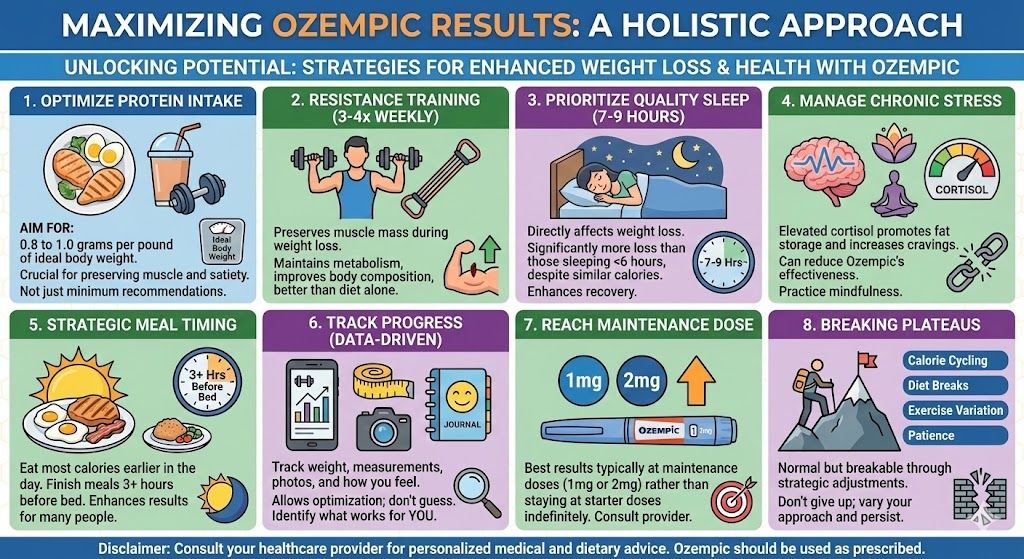
Key Takeaways: Maximizing Ozempic Results
- Protein intake is the single most important dietary factor, with optimal results occurring at 0.8 to 1.0 grams per pound of ideal body weight rather than minimum recommendations.
- Resistance training 3 to 4 times weekly preserves muscle mass during weight loss, maintaining metabolism and creating a more favorable body composition than diet alone.
- Sleep quality directly affects weight loss, with people getting 7 to 9 hours of quality sleep losing significantly more weight than those sleeping less than 6 hours despite similar calorie intake.
- Stress management matters because elevated cortisol from chronic stress promotes fat storage, increases cravings, and can reduce Ozempic’s effectiveness.
- Strategic meal timing, eating most calories earlier in the day and finishing meals 3+ hours before bed, enhances results for many people.
- Tracking weight, measurements, photos, and how you feel allows data-driven optimization rather than guessing what works for your body.
- Most people achieve best results at maintenance doses (1mg or 2mg for semaglutide) rather than staying at starter doses indefinitely.
- Plateaus are normal but breakable through strategic adjustments including calorie cycling, diet breaks, exercise variations, and patience.
Optimizing Your Diet Beyond the Basics
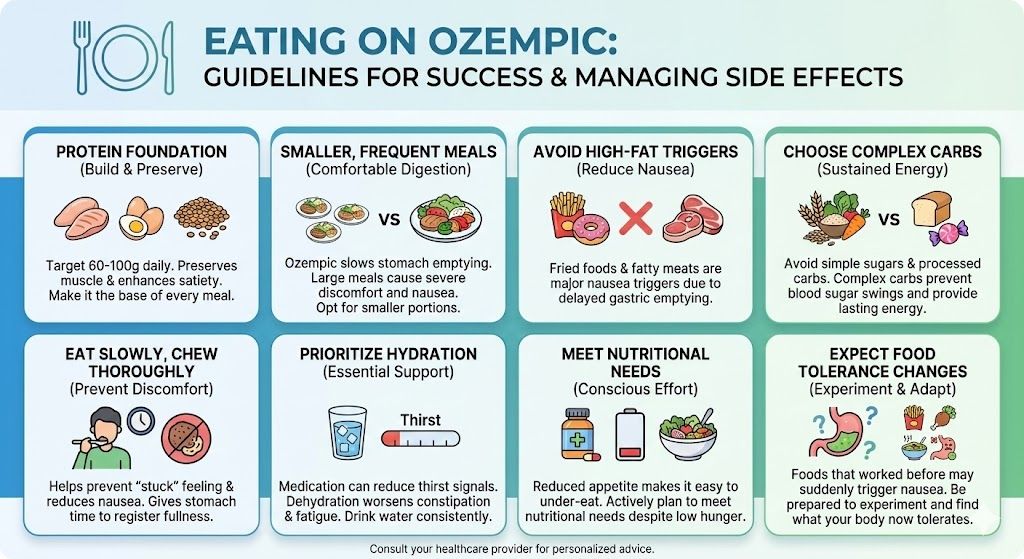
Most people understand they need to eat high protein and avoid fatty foods on Ozempic. Here’s how to take your nutrition to the next level.
Protein Timing and Distribution
While total daily protein matters most, distribution affects muscle preservation and satiety. Aim for at least 25 to 30 grams of protein at each main meal. This threshold optimizes muscle protein synthesis, the process by which your body builds and maintains muscle tissue.
Eating protein first at each meal enhances satiety and ensures you consume adequate protein before feeling too full. Make it a rule: eat your protein source before touching carbohydrates or vegetables on your plate.
Consider increasing protein on strength training days. Some evidence suggests that 100 to 120 grams on workout days (versus 80 to 100 grams on rest days) supports better recovery and muscle maintenance.
Carbohydrate Cycling
Some people benefit from varying carbohydrate intake rather than eating the same amount daily. Higher carbohydrate intake (150+ grams) on strength training days provides energy for workouts and supports recovery. Lower carbohydrate intake (under 100 grams) on rest days maintains calorie deficit while supporting fat burning.
A weekly pattern might look like:
- Monday (strength training): 150g carbs
- Tuesday (rest): 80g carbs
- Wednesday (strength training): 150g carbs
- Thursday (rest): 80g carbs
- Friday (strength training): 150g carbs
- Saturday (cardio): 100g carbs
- Sunday (rest): 80g carbs
This approach averages out to appropriate weekly calorie and carbohydrate intake while potentially optimizing body composition.
Strategic Diet Breaks
Paradoxically, taking planned breaks from calorie restriction can improve long-term results. Extended calorie deficits (12+ weeks) lead to metabolic adaptation where your body becomes more efficient, burning fewer calories at rest.
Consider a 1 to 2 week diet break every 10 to 12 weeks where you increase calories to maintenance level (add 300-500 calories to your weight loss intake). Maintain high protein and continue exercise. This brief break can reverse some metabolic adaptation and make subsequent calorie restriction more effective.
During diet breaks, expect to gain 2 to 4 pounds, mostly water weight from increased carbohydrate and salt intake. This is normal and will come off quickly when you resume calorie restriction.
Nutrient Timing Around Exercise
Pre-workout nutrition (1-2 hours before): Focus on easily digestible carbohydrates with moderate protein. Examples include a banana with protein powder, Greek yogurt with berries, or oatmeal with protein powder mixed in. This provides energy without sitting heavily in your stomach.
Post-workout nutrition (within 2 hours after): Prioritize protein (25-40 grams) with some carbohydrates to replenish glycogen. A protein shake with a banana, chicken breast with sweet potato, or Greek yogurt with granola all work well.
Intermittent Fasting Considerations
While not necessary, some people successfully combine Ozempic with intermittent fasting. The medication’s appetite suppression makes fasting easier than without medication.
If you try intermittent fasting, use a moderate approach like 16:8 (16 hours fasting, 8 hour eating window) rather than extreme protocols. Ensure you’re still meeting protein and calorie minimums within your eating window.
One caution: some people find that Ozempic already creates natural appetite suppression similar to intermittent fasting. Adding structured fasting on top might lead to chronic under-eating. Monitor your total intake carefully.
Calorie Cycling
Similar to carbohydrate cycling, some people benefit from varying daily calorie intake rather than eating the exact same amount every day.
A simple approach involves higher calorie days (maintenance or slightly above) 1 to 2 days weekly, with lower calorie days the remaining days. The weekly average still creates appropriate deficit.
For example, if your target is 1,400 calories daily (9,800 weekly):
- Monday-Friday: 1,300 calories (6,500 total)
- Saturday-Sunday: 1,650 calories (3,300 total)
- Weekly total: 9,800 calories (same as 1,400 daily)
This approach can improve diet adherence by providing more flexibility on weekends while maintaining the overall deficit needed for weight loss.
Exercise Strategies for Maximum Results
Exercise isn’t required for weight loss on Ozempic, but strategic training dramatically improves body composition and long-term success.
Why Resistance Training Is Critical
During weight loss, your body loses both fat and muscle. Without intervention, roughly 25% of weight lost comes from muscle tissue. This muscle loss slows your metabolism, reduces strength and function, and creates a “skinny fat” appearance where you’ve lost weight but lack muscle definition.
Resistance training combined with adequate protein shifts this ratio dramatically. Studies show that people who strength train during weight loss can preserve 90% or more of their muscle mass, meaning nearly all weight lost comes from fat.
This muscle preservation maintains metabolic rate, improves body composition (you look better at any given weight), enhances strength and physical function, and makes long-term weight maintenance easier.
Optimal Resistance Training Program
Frequency: 3 to 4 sessions weekly provides optimal results without excessive recovery demands. More than 4 sessions weekly doesn’t improve results proportionally and can lead to overtraining, especially when in a calorie deficit.
Exercise selection: Focus on compound movements that work multiple muscle groups simultaneously. Squats, deadlifts, bench press, rows, overhead press, and pull-ups provide maximum benefit per exercise.
Volume: 3 to 4 sets per exercise, 8 to 12 repetitions per set works well for most people. This rep range builds both strength and muscle endurance.
Progressive overload: Gradually increase weight, reps, or sets over time. If you performed 3 sets of 10 reps with 20-pound dumbbells last week, try 3 sets of 12 reps or 3 sets of 10 reps with 22.5-pound dumbbells this week.
Rest periods: 60 to 90 seconds between sets for most exercises, up to 2 to 3 minutes for very heavy compound movements.
Sample weekly program:
- Monday: Upper body (chest, back, shoulders, arms)
- Wednesday: Lower body (legs, glutes)
- Friday: Full body
- Sunday: Upper body (different exercises than Monday)
Cardiovascular Exercise Approach
Cardio burns additional calories and improves cardiovascular health but should be secondary to resistance training for body composition purposes.
Moderate-intensity steady-state cardio: 30 to 45 minutes of walking, cycling, swimming, or elliptical at a pace where you can hold a conversation burns calories without excessive fatigue. Include 2 to 4 sessions weekly.
High-intensity interval training (HIIT): Short bursts of very high effort alternated with recovery periods burns significant calories in less time. Example: 30 seconds hard cycling followed by 90 seconds easy, repeated 10 times. Include 1 to 2 HIIT sessions weekly maximum, as it’s more demanding on recovery.
Walking: Don’t underestimate daily walking. Aim for 7,000 to 10,000 steps daily through a combination of structured walks and general movement. Walking burns calories without creating significant fatigue or hunger.
Exercise Timing Relative to Injection Day
Your energy and appetite vary throughout your weekly injection cycle. Many people feel most energetic and capable of intense training toward the end of the week (days 5-7) as medication levels decline slightly.
Consider scheduling your most demanding workouts on days 5 to 7 of your cycle when energy is higher. Lighter sessions or rest can fall on days 1 to 3 when appetite suppression and potential side effects are strongest.
Recovery and Rest Days
When eating in a calorie deficit, recovery capacity is reduced compared to maintenance or surplus calorie intake. Plan at least 3 rest days weekly from structured exercise (though remaining active with walking and daily movement).
Signs you need additional rest include persistent fatigue, declining workout performance over multiple sessions, increased resting heart rate, sleep disruption, and increased irritability. When these occur, add an extra rest day or reduce workout intensity.
Addressing Low Energy for Exercise
If you struggle with energy for workouts on Ozempic, ensure you’re eating adequate total calories (not excessively restricting), consuming carbohydrates around workout times, staying well-hydrated, getting adequate sleep, and potentially timing workouts for when you naturally have more energy.
Our guide to managing fatigue on semaglutide provides additional strategies if low energy persists.
Sleep Optimization for Weight Loss
Sleep quality dramatically affects weight loss results, yet most people overlook this factor entirely.
The Sleep-Weight Loss Connection
Research consistently shows that inadequate sleep (less than 6 hours nightly) significantly impairs weight loss even with identical calorie intake. Poor sleep increases hunger hormones (ghrelin), decreases satiety hormones (leptin), reduces insulin sensitivity, increases cortisol (stress hormone that promotes fat storage), impairs decision-making around food choices, and reduces physical activity through fatigue.
One study found that people sleeping 5.5 hours nightly lost 55% less fat than those sleeping 8.5 hours despite identical calorie intake. The short sleepers lost more muscle and less fat, exactly the opposite of what you want.
Optimal Sleep Duration
Target 7 to 9 hours of actual sleep nightly. Most people need 8 to 9 hours in bed to achieve 7 to 8 hours of actual sleep after accounting for time to fall asleep and brief awakenings.
Consistency matters more than occasionally sleeping long on weekends. Going to bed and waking at similar times daily (within 30 minutes) improves sleep quality and metabolic regulation.
Sleep Quality Strategies
Keep your bedroom cool (65-68°F is optimal for most people). Cool temperatures facilitate the drop in core body temperature necessary for sleep initiation and maintenance.
Make your bedroom completely dark. Use blackout curtains or an eye mask. Even small amounts of light can disrupt sleep quality. Cover or remove electronic devices with lights.
Reduce noise or use white noise. Consistent background noise masks disruptive sounds without being stimulating itself.
Limit blue light exposure 1 to 2 hours before bed. Phones, tablets, computers, and televisions emit blue light that suppresses melatonin production. Use blue light filtering apps or glasses, or better yet, avoid screens entirely before bed.
Avoid caffeine after 2 PM. Caffeine has a half-life of 5 to 6 hours, meaning half the caffeine from a 2 PM coffee is still in your system at 8 PM. Individual sensitivity varies, so some people need to cut off earlier.
Limit alcohol, which impairs sleep quality despite making you feel sleepy initially. Alcohol disrupts REM sleep and causes fragmented sleep with frequent awakenings.
Finish eating 3 hours before bed. Lying down with food in your stomach (which empties slowly on Ozempic) can cause reflux and discomfort that disrupts sleep.
Sleep Supplements to Consider
Magnesium (200-400mg in the evening) promotes relaxation and sleep quality. Magnesium glycinate is well-absorbed and less likely to cause digestive upset than other forms.
Melatonin (0.5-3mg) 30 to 60 minutes before bed can help with sleep onset, though it’s more effective for circadian rhythm issues than chronic insomnia.
L-theanine (200-400mg) promotes relaxation without sedation and may improve sleep quality.
Consult your healthcare provider before adding sleep supplements, especially if you take other medications.
Stress Management and Cortisol Control
Chronic stress significantly impairs weight loss through hormonal mechanisms.
How Stress Affects Weight Loss
Elevated cortisol (the primary stress hormone) promotes visceral fat storage (belly fat), increases cravings for high-calorie comfort foods, impairs insulin sensitivity, causes water retention that masks fat loss on the scale, disrupts sleep quality, and reduces motivation for healthy behaviors.
People under chronic stress lose weight more slowly than those with lower stress levels despite similar diet and exercise adherence.
Stress Assessment
Signs of chronic stress include difficulty falling or staying asleep, persistent fatigue despite adequate rest, increased irritability or mood swings, cravings for sweets or comfort foods, difficulty concentrating, frequent headaches or muscle tension, and digestive issues.
If several of these apply, stress management should be a priority alongside diet and exercise.
Effective Stress Management Techniques
Regular meditation or mindfulness practice: Even 10 minutes daily of meditation, deep breathing, or mindfulness exercises reduces cortisol and improves stress resilience. Apps like Headspace, Calm, or Insight Timer provide guided sessions.
Progressive muscle relaxation: Systematically tensing and relaxing muscle groups reduces physical tension and promotes relaxation. This technique is particularly effective before bed.
Regular physical activity: Exercise itself is a stress reliever. The resistance training and walking you’re doing for weight loss double as stress management.
Time in nature: Regular exposure to natural environments reduces cortisol and improves mood. Even 20 minutes daily in a park or natural setting helps.
Social connection: Regular interaction with supportive friends and family buffers against stress. Isolation increases stress and cortisol.
Therapy or counseling: If stress is severe or stems from specific issues, professional support from a therapist can be extremely valuable.
Time management and boundary setting: Often stress comes from overcommitment. Learning to say no and protecting your time reduces stress more effectively than any relaxation technique.
Cortisol-Aware Eating
Very low calorie intake (under 1,000 calories) increases cortisol as your body perceives starvation. This is another reason to avoid excessive calorie restriction.
Skipping meals or going many hours without eating also raises cortisol. Regular, planned meals prevent this stress response.
Adequate protein and carbohydrates (as opposed to very low carb diets) help moderate cortisol levels during weight loss.
Hydration Strategies
Proper hydration affects weight loss through multiple mechanisms, yet many people on Ozempic become chronically dehydrated.
Why Hydration Matters More on Ozempic
The medication can reduce thirst signals, making you less aware when you need water. Dehydration worsens constipation (already common on Ozempic), impairs physical performance during exercise, causes fatigue that feels like low energy, concentrates urine potentially contributing to kidney stones, and can actually slow weight loss through various metabolic effects.
Optimal Hydration Targets
Aim for at least 64 ounces (8 cups) daily as a baseline. Active individuals, people in hot climates, or those experiencing constipation should target 80 to 100+ ounces.
Monitor urine color: pale yellow indicates adequate hydration, while dark yellow or amber suggests you need more water.
Strategic Hydration Timing
Drink 16 to 20 ounces upon waking to rehydrate after sleep. This also helps with morning alertness.
Drink 8 to 16 ounces 30 minutes before meals. This pre-meal hydration can enhance satiety and prevent overeating (though with Ozempic’s appetite suppression, this is less critical).
Sip water consistently throughout the day rather than chugging large amounts irregularly. Keep a water bottle with you constantly.
Drink 20 to 32 ounces during and after exercise to replace fluids lost through sweat.
Beyond Plain Water
Herbal tea, green tea, and black coffee (in moderation) contribute to hydration. These count toward your fluid total.
Adding electrolytes (sodium, potassium, magnesium) can improve hydration status, especially if you exercise regularly or follow a lower-carb approach that naturally depletes electrolytes. Sugar-free electrolyte powders or tablets work well.
Water-rich foods like cucumbers, celery, watermelon, lettuce, and broths contribute to overall hydration.
Avoid excessive diet soda or artificially sweetened beverages. While they provide fluids, they don’t offer the pure hydration benefits of water and may affect gut bacteria and taste preferences.
Dose Optimization and Medication Strategies
Working with your healthcare provider to optimize your Ozempic dose maximizes results.
Titration Schedule Matters
The standard titration schedule starts at 0.25mg weekly for 4 weeks, increases to 0.5mg weekly, with potential further increases to 1mg or 2mg based on response and tolerance. Our complete semaglutide dosing guide covers this progression in detail.
Many people achieve best results at 1mg or 2mg weekly rather than staying at 0.5mg indefinitely. If weight loss has stalled at 0.5mg and you’re tolerating the medication well, discuss increasing with your provider.
Conversely, if side effects are severe at a particular dose, staying at a lower dose longer or even reducing temporarily allows better tolerance before advancing.
Timing of Injection
While you can inject Ozempic at any time on your scheduled day, some people notice that injection timing affects when they experience peak appetite suppression and potential side effects.
Experimenting with morning versus evening injection might help optimize when you experience strongest effects. For instance, if you struggle most with evening eating, an evening injection might time peak effects to when you need them most.
Consistency Is Critical
Take your weekly injection on the same day each week. Consistency maintains stable medication levels and predictable effects. If you frequently miss or delay doses, you won’t achieve optimal results.
Set multiple reminders: phone alarms, calendar notifications, or linking injection day to a weekly routine (like Sunday meal prep or Saturday morning).
Considering Higher Doses
Some people benefit from doses above 2mg weekly, though this exceeds FDA labeling for Ozempic. Wegovy (semaglutide specifically approved for weight loss) includes a 2.4mg weekly dose.
If you’ve titrated to 2mg weekly and results are still suboptimal despite excellent adherence to diet and exercise, discuss whether higher doses might be appropriate with your healthcare provider.
Alternative: Switching to Tirzepatide
If you’re not achieving desired results on semaglutide despite optimization efforts, consider switching to tirzepatide (Mounjaro/Zepbound). Clinical trials showed superior weight loss with tirzepatide compared to semaglutide (22.5% versus 14.9% average total body weight loss).
Our comparison of Ozempic versus Mounjaro details differences between these medications. Compounded tirzepatide at $349 monthly through TrimRx provides an affordable alternative to brand-name options.
Tracking and Measurement Systems
Systematic tracking allows data-driven optimization rather than guessing what works.
Weight Tracking Best Practices
Weigh yourself daily at the same time (ideally morning, after bathroom, before eating or drinking). Daily weights fluctuate significantly due to water retention, food in digestive system, hormonal cycles, and other factors. Single measurements are nearly meaningless.
Calculate weekly averages by adding all seven daily weights and dividing by seven. Compare weekly averages rather than individual daily weights. This smooths out fluctuations and reveals true trends.
Expect fluctuations of 2 to 4 pounds day-to-day, even when consistently losing fat. Women may see larger fluctuations related to menstrual cycles, with 3 to 7 pounds of water retention possible during certain phases.
Focus on the trend over weeks and months rather than daily changes. A downward trending line with fluctuations is normal and expected.
Body Measurements
Take measurements every 2 to 4 weeks in addition to weight:
- Neck circumference
- Chest (at nipple line)
- Waist (at narrowest point)
- Hips (at widest point)
- Thighs (mid-thigh)
- Arms (mid-bicep)
Measurements often continue decreasing during weight plateaus, revealing fat loss that the scale doesn’t show. You can lose fat and inches while weight stays stable if you’re simultaneously building muscle or retaining water.
Progress Photos
Take photos every 2 to 4 weeks in consistent lighting, clothing, and poses. Front, side, and back views provide comprehensive documentation.
Photos reveal changes that you don’t notice in the mirror from daily exposure. Comparing photos from 8 weeks ago to today often shows dramatic differences that seemed gradual day-to-day.
Body Composition Testing
If available, body composition analysis (DEXA scan, BodPod, or bioelectrical impedance) every 8 to 12 weeks provides data on fat mass versus lean mass. This reveals whether you’re losing primarily fat (optimal) or losing significant muscle along with fat (problematic).
Home bioelectrical impedance scales aren’t highly accurate but can show trends over time if used consistently.
Non-Scale Victories
Track improvements beyond numbers: how clothing fits, energy levels throughout the day, physical performance (strength, endurance, stamina), sleep quality, mood and mental clarity, digestive function, and reduction in medications or health issues.
These qualitative improvements often precede or occur without numerical changes on the scale but represent genuine health improvements.
Food and Exercise Logging
Use apps like MyFitnessPal, Cronometer, or Lose It to log food intake. Even logging 4 to 5 days per week provides valuable data about actual consumption versus perceived consumption.
Log workouts including exercises performed, weights used, reps and sets completed, and how you felt. This allows progressive overload tracking and reveals patterns between training and results.
Analyzing Data for Optimization
Review all tracking data monthly. Look for patterns: weeks when weight loss was better or worse, dietary patterns that correlate with better results, exercise frequency and weight loss rate relationships, sleep duration and loss rate connections, and any obvious factors that impair progress.
Adjust your approach based on findings. If data shows you lose better when eating more carbohydrates around workouts, adjust meal timing accordingly. If sleep under 7 hours correlates with stalled weight, prioritize sleep improvement.
Breaking Through Plateaus
Weight loss plateaus are normal but can be overcome with strategic adjustments.
Understanding True Plateaus
A true plateau is 3 to 4 weeks without any weight or measurement change despite consistent adherence to your plan. Shorter periods aren’t true plateaus, just normal fluctuation.
Many perceived plateaus are actually water retention masking fat loss. If you’ve started new exercises, increased training intensity, eating more carbohydrates or sodium, or are in a certain menstrual phase, water retention can hide fat loss for 1 to 3 weeks.
First Step: Verify Adherence
Before making changes, verify you’re actually following your plan. Use a food scale for one week to ensure portion sizes haven’t crept up. Track every bite, taste, and beverage honestly. Assess whether you’re meeting protein targets daily. Confirm you’re exercising as planned.
Often “plateaus” break simply by tightening adherence that had gradually loosened.
Calorie Adjustment
If you’ve lost significant weight (20+ pounds), your calorie needs have decreased. Recalculate your target and reduce by 100 to 150 calories.
Alternatively, you might be eating too little. If you’re consistently under 1,200 calories, metabolic adaptation might be occurring. Paradoxically, eating slightly more (adding 100-200 calories from protein) can restart progress.
Diet Break Strategy
Take a 1 to 2 week break at maintenance calories. This reverses some metabolic adaptation and often leads to renewed progress when you return to deficit.
During the break, maintain high protein and continue exercise. Don’t view this as giving up but as a strategic intervention.
Exercise Variation
If you’ve been doing the same workouts for months, your body has adapted. Change exercise selection, rep ranges, or workout structure. If you’ve been doing mostly cardio, add resistance training. If you’ve been training 3 days weekly, try 4 days.
New stimuli force adaptation and can restart progress.
Refeed Day Strategy
Some people break plateaus by implementing one higher-carbohydrate, higher-calorie day weekly (at or slightly above maintenance) while keeping other days in deficit.
This periodic increase can improve leptin levels and thyroid function, potentially overcoming metabolic adaptation while still maintaining an overall weekly deficit.
Stress and Sleep Assessment
Often plateaus correlate with increased life stress or worsened sleep. Address these factors before making drastic diet changes.
A week of prioritizing 8+ hours of sleep and implementing stress management techniques sometimes breaks plateaus without any diet or exercise changes.
Patience and Perspective
Sometimes plateaus simply require patience. If you’re confident in your adherence, give it another 1 to 2 weeks before changing anything. Many plateaus break on their own.
Remember that weight loss isn’t linear. Successful long-term weight loss includes multiple plateaus. They’re normal, not failures.
When to Increase Medication Dose
If you’ve optimized diet, exercise, sleep, and stress, and you’ve been at the same dose for several months with stalled progress, discuss dose increase with your provider. Moving from 0.5mg to 1mg or from 1mg to 2mg can restart progress.
Psychological and Behavioral Strategies
Mindset and behavior patterns significantly impact long-term success.
Setting Realistic Expectations
Optimal weight loss rate is 1 to 2 pounds weekly, or 4 to 8 pounds monthly. This means losing 50 pounds takes 6 to 12 months, not 6 to 12 weeks.
Expecting faster progress sets you up for disappointment and potentially dangerous practices like extreme calorie restriction.
Clinical trials of semaglutide showed average weight loss of 14.9% total body weight over 68 weeks. For a 220-pound person, that’s 33 pounds over about 16 months. These aren’t fast results, but they’re sustainable and health-improving.
Process Goals vs Outcome Goals
Outcome goals focus on results: “lose 50 pounds” or “reach 150 pounds.” These are important for direction but are partially out of your direct control.
Process goals focus on behaviors: “eat 100g protein daily,” “strength train 4 times weekly,” “sleep 8 hours nightly.” These are entirely in your control and directly lead to outcome goals.
Focus primarily on process goals. If you consistently achieve process goals, outcome goals follow naturally.
Dealing with Social Situations
Social eating challenges increase during weight loss. Strategies include eating a protein-rich snack before events to reduce hunger, bringing a healthy dish to share at gatherings, planning your order before arriving at restaurants, and being honest when asked about not eating much (“I’m working with my doctor on a health plan” shuts down most questioning).
Remember that you don’t owe anyone explanations about your eating choices.
Handling Setbacks
Occasional overeating or missed workouts happen to everyone. One day doesn’t erase weeks of progress. The next meal is an opportunity to return to your plan.
Avoid the “I already messed up today, might as well keep going” trap. One meal off plan is minor, a whole day significantly more impactful, and a whole weekend even more so.
Building Sustainable Habits
Focus on building habits that you can maintain indefinitely rather than following restrictive rules you’ll eventually abandon. Can you realistically eat 100g protein daily for years? Probably. Can you avoid all carbohydrates forever? Probably not.
Your weight loss approach should be a template for long-term maintenance with minor adjustments, not a temporary extreme protocol.
Addressing Emotional Eating
Ozempic reduces physical hunger but doesn’t eliminate emotional eating triggers. If you’ve historically eaten in response to stress, boredom, sadness, or other emotions, those patterns might persist even with reduced appetite.
Identify non-food responses to emotions: taking a walk when stressed, calling a friend when lonely, engaging in a hobby when bored. Build these alternatives before you need them.
Celebrating Non-Scale Victories
Acknowledge improvements beyond weight: fitting into smaller clothes, increased energy, better sleep, improved lab values (cholesterol, blood sugar, blood pressure), enhanced physical performance, and improved mood.
These victories represent genuine health improvements and sustain motivation during plateaus.
Common Mistakes That Limit Results
Avoiding these errors optimizes your outcomes.
Mistake 1: Inadequate Protein Intake
This is the single most common and impactful mistake. People eating 40 to 60 grams daily when they need 80 to 100+ grams lose excessive muscle, slow their metabolism, and achieve worse body composition.
Track protein specifically for one week every month to verify you’re hitting targets consistently, not just occasionally.
Mistake 2: Excessive Calorie Restriction
Eating under 1,000 calories might produce faster initial weight loss but leads to muscle loss, metabolic slowdown, nutrient deficiencies, intense hunger when the diet breaks, and unsustainable approaches that end in regain.
More isn’t always better. A moderate deficit sustained consistently beats aggressive restriction followed by abandonment.
Mistake 3: No Resistance Training
People who lose weight through diet alone lose significant muscle mass. This creates a slower metabolism, worse body composition, and difficulty maintaining weight loss.
You don’t need to become a bodybuilder, but 3 to 4 resistance training sessions weekly dramatically improves results.
Mistake 4: Ignoring Sleep
Treating sleep as optional or sacrificing sleep for other activities directly impairs weight loss. Poor sleep increases hunger, reduces willpower around food choices, decreases fat loss, and increases muscle loss during weight loss.
Prioritize sleep as seriously as diet and exercise.
Mistake 5: Staying at Starter Doses
Some people stay at 0.25mg or 0.5mg weekly indefinitely despite suboptimal results because they fear side effects at higher doses. While you should titrate carefully and respect your body’s tolerance, most people need 1mg or 2mg for maximum results.
If you’ve been at 0.5mg for 4+ months with stalled progress and minimal side effects, discuss dose increase with your provider.
Mistake 6: Inconsistent Adherence
Being perfect Monday through Friday but completely off-plan Saturday and Sunday creates only a small weekly deficit. If you eat 1,300 calories for five days (6,500 calories) but 2,500 calories on the weekend (5,000 calories), your weekly average is 1,643 calories. That’s fine if that’s your plan, but problematic if you think you’re averaging 1,300 daily.
Weekend consistency matters as much as weekday adherence.
Mistake 7: Comparing Your Results to Others
Individual variation is enormous. Factors affecting weight loss rate include starting weight, age, gender, metabolic rate, insulin resistance level, stress and sleep patterns, medication dose and duration, adherence consistency, genetics, and prior dieting history.
Someone losing 3 pounds weekly doesn’t mean you should too. Focus on your own steady progress, not someone else’s rate.
Mistake 8: Not Adjusting as You Progress
What worked at 250 pounds doesn’t work the same at 200 pounds. Calorie needs decrease, exercise might need modification, and strategies require adjustment.
Reassess your entire approach every 20 pounds of weight loss or every 3 months, whichever comes first.
Mistake 9: Neglecting Measurements Beyond Weight
The scale doesn’t tell the complete story. If you’re building muscle while losing fat, weight might not change even though you’re making excellent progress in body composition.
Take measurements and photos regularly to capture progress the scale misses.
Mistake 10: Giving Up Too Soon
Meaningful weight loss takes months, not weeks. Starting Ozempic in January and expecting to reach your goal by March isn’t realistic.
Commit to at least 6 to 12 months of consistent effort before evaluating the medication’s effectiveness for you.
Supplement Optimization
While food should be your primary nutrition source, certain supplements can support optimal results.
Essential Supplements
Protein powder helps meet daily protein targets when solid food is difficult. Whey, casein, or plant-based proteins all work. Choose options with minimal added sugars (under 5g per serving).
Multivitamin provides insurance against micronutrient deficiencies when eating less food overall. A basic daily multivitamin is sufficient, megadoses aren’t necessary or beneficial.
Vitamin D (2,000-4,000 IU daily) if you’re not getting regular sun exposure. Deficiency is common and affects immune function, mood, bone health, and potentially weight loss.
Omega-3 fatty acids (1,000-2,000mg combined EPA/DHA daily) support cardiovascular health, reduce inflammation, and may aid weight loss. Fish oil or algae-based options work.
Performance-Enhancing Supplements
Creatine monohydrate (5g daily) is the most studied performance supplement. It improves strength training performance, helps preserve muscle during calorie restriction, and has cognitive benefits. It causes some people to retain 2 to 4 pounds of water, which is normal and beneficial.
Caffeine (200-400mg pre-workout) improves exercise performance and increases calorie burn. If you’re already drinking coffee, you’re getting this benefit. Be mindful of timing (no caffeine after 2 PM to protect sleep).
Beta-alanine (3-5g daily) can improve high-intensity exercise performance. It causes harmless tingling in some people.
Fat Loss Supplements
Most fat loss supplements have minimal effects or don’t work at all. Green tea extract, L-carnitine, and CLA have modest or no effects in research. Save your money and focus on optimizing diet, exercise, and sleep instead.
Gut Health Supplements
Probiotics might help with digestive issues on Ozempic, though evidence is mixed. A general probiotic with multiple bacterial strains is reasonable to try if you’re experiencing digestive discomfort.
Fiber supplements like psyllium husk can help prevent constipation, though getting fiber from whole foods is preferable.
What to Avoid
Avoid proprietary blends with undisclosed ingredient amounts, anything promising rapid fat loss (it’s either unsafe or doesn’t work), products with stimulants beyond caffeine (many have safety concerns), and MLM (multi-level marketing) products that are overpriced and overhyped.
Frequently Asked Questions
How fast should I expect to lose weight on Ozempic?
Optimal weight loss rate on Ozempic is 1 to 2 pounds weekly, or approximately 4 to 8 pounds monthly. Clinical trials showed average total body weight loss of 14.9% over 68 weeks (about 16 months), meaning a 220-pound person lost roughly 33 pounds over that timeframe. Initial weight loss is often faster (2 to 4 pounds weekly in the first month) as you lose water weight along with fat. Loss then typically settles to 1 to 2 pounds weekly. Losing faster than 2 pounds weekly consistently risks excessive muscle loss and metabolic slowdown. If you’re losing significantly slower than 1 pound weekly despite good adherence, consider whether your dose needs adjustment, whether you’re tracking intake accurately, and whether you’re meeting protein targets and including resistance training. Individual variation is significant based on starting weight, age, gender, metabolic rate, and other factors.
Can I maximize weight loss without exercise on Ozempic?
Yes, you can lose weight on Ozempic without exercise through diet alone, as the medication works primarily through appetite suppression. However, results will be suboptimal compared to combining medication with exercise. People who don’t exercise during weight loss lose significant muscle mass (approximately 25% of weight lost without intervention), experience more metabolic slowdown, achieve worse body composition (higher body fat percentage at goal weight), and have more difficulty maintaining weight loss long-term. Even modest resistance training (3 sessions weekly) combined with adequate protein preserves muscle mass, maintains metabolic rate, and dramatically improves how you look and feel at your goal weight. If exercise is genuinely not possible due to medical limitations, focus intensively on adequate protein intake (100+ grams daily) to minimize muscle loss through nutrition.
What’s the most important factor for maximizing weight loss on Ozempic?
Adequate protein intake (80 to 120 grams daily depending on body size) is the single most important factor for maximizing quality weight loss on Ozempic. Protein preserves muscle mass during calorie restriction, enhances satiety and medication effectiveness, supports metabolic rate, aids recovery from exercise, and improves body composition at goal weight. People who meet protein targets while using Ozempic achieve dramatically better results than those who don’t, even with similar total calorie intake. Beyond protein, the next most critical factors are appropriate calorie deficit (not too aggressive), resistance training 3 to 4 times weekly, adequate sleep (7 to 9 hours nightly), and consistent adherence over months. No single perfect food or specific diet plan matters more than these fundamental factors.
Should I increase my Ozempic dose if weight loss has slowed?
If weight loss has slowed or stalled, first verify that you’re consistently following your diet and exercise plan, meeting protein targets daily, eating appropriate total calories (recalculated for your current weight), sleeping adequately, managing stress, and have been following your current plan consistently for at least 4 to 6 weeks. Many perceived plateaus are actually adherence issues or normal fluctuations. If you’ve verified excellent adherence for several weeks and have been at the same dose for 3+ months with genuinely stalled progress, discuss dose increase with your healthcare provider. Most people achieve optimal results at maintenance doses (1mg or 2mg weekly for semaglutide) rather than staying at starter doses (0.25mg or 0.5mg) indefinitely. However, dose increases should be gradual following the standard titration schedule to minimize side effects. Never increase doses without provider guidance.
How do I know if I’m losing muscle along with fat?
Signs of excessive muscle loss include declining strength (weights you previously lifted feel much heavier), increased fatigue beyond expected calorie restriction effects, loose skin that seems disproportionate to weight lost, weight loss much faster than 2 pounds weekly consistently, protein intake below 60 to 80 grams daily, and no resistance training in your program. To preserve muscle while losing weight, consume adequate protein (0.8 to 1.0g per pound of ideal body weight), perform resistance training 3 to 4 times weekly, avoid excessive calorie restriction (stay above 1,200 calories for most people), and lose weight at 1 to 2 pounds weekly rather than faster. If available, body composition testing (DEXA scan, BodPod) every 8 to 12 weeks reveals exactly how much muscle versus fat you’re losing, allowing adjustments if needed. Maintaining or building strength during weight loss is a good indicator you’re preserving muscle successfully.
Is it normal for weight loss to slow down after the first few months?
Yes, slowing weight loss is completely normal and expected after initial months. Several factors contribute: initial water weight loss in the first 4 to 8 weeks makes early loss appear faster, as your body gets smaller your calorie needs decrease so the same intake creates smaller deficit, metabolic adaptation occurs where your body becomes more efficient at lower calorie levels, and motivation and adherence often decrease slightly as novelty wears off. This is why recalculating calorie targets every 15 to 20 pounds of loss is important, maintaining consistency becomes increasingly critical as time goes on, and periodic diet breaks can help counter metabolic adaptation. Expect average loss of 1 to 2 pounds weekly to continue if you’re following your plan consistently and adjusting calorie targets appropriately as weight decreases. If loss stops completely for more than 3 to 4 weeks despite verified adherence, consider dose adjustment with your provider.
Can stress really prevent weight loss even on Ozempic?
Yes, chronic stress significantly impairs weight loss even when using Ozempic and following a good diet and exercise plan. Elevated cortisol from chronic stress promotes visceral fat storage (especially belly fat), increases insulin resistance making fat loss more difficult, causes water retention that masks fat loss on the scale, disrupts sleep quality which independently impairs weight loss, increases cravings for high-calorie comfort foods, and can reduce the medication’s effectiveness. Research shows people with higher stress levels lose weight more slowly than lower-stress individuals despite similar calorie intake. Address stress through regular meditation or mindfulness practice, adequate sleep (7 to 9 hours nightly), regular exercise (which you’re already doing for weight loss), time in nature, strong social connections, professional counseling if needed, and boundary setting to reduce overcommitment. Managing stress is as important as diet and exercise for optimal results.
Should I take a break from my diet while on Ozempic?
Strategic diet breaks can actually improve long-term results. Consider taking a 1 to 2 week break at maintenance calories (300 to 500 calories above your weight loss intake) every 10 to 12 weeks of continuous calorie restriction. During breaks, maintain high protein intake, continue your exercise program, and monitor weight without stressing about temporary gains. Benefits include reversing some metabolic adaptation that occurs during extended calorie restriction, providing a psychological break that improves long-term adherence, allowing social flexibility for events or holidays, and often leading to renewed progress when you resume calorie restriction. Expect to gain 2 to 4 pounds during a diet break, mostly water weight from increased carbohydrate and sodium intake. This comes off quickly (within a week) when resuming calorie restriction. Diet breaks are strategic interventions, not “cheating” or giving up.
What should I do if I’m not losing weight despite doing everything right?
First, verify you’re actually “doing everything right” by tracking food intake with a food scale for one full week to ensure portions haven’t crept up, logging every bite, taste, and beverage honestly, confirming you’re meeting protein targets daily (80 to 100+ grams), checking that you’re exercising as planned, and assessing sleep quality and duration. Often “plateaus” break by tightening adherence that had loosened gradually. If adherence is truly excellent for 4+ weeks with no progress, consider whether you need to recalculate calorie targets based on current weight (reduce by 100 to 150 calories), whether you’re paradoxically eating too little (under 1,200 calories can slow metabolism), whether stress or inadequate sleep are interfering, or whether dose increase might be appropriate. Sometimes patience is required, as true plateaus can last 3 to 4 weeks before breaking naturally.
How important is meal timing for weight loss on Ozempic?
Meal timing is less critical than total daily calories and macronutrients, but strategic timing can optimize results for some people. Front-loading calories toward earlier in the day (larger breakfast and lunch, lighter dinner) works well for many people because appetite is often better earlier in the day on Ozempic, eating more when active (daytime) versus inactive (evening) may improve metabolism, and finishing meals 3+ hours before bed prevents discomfort from delayed gastric emptying. Eating protein at every meal (rather than loading it all into one meal) optimizes muscle protein synthesis. Timing carbohydrates around workouts (before and after exercise) provides energy and supports recovery. However, if different timing works better for your schedule and preferences, that’s fine. Consistency and total intake matter more than specific meal timing. Experiment to find what timing pattern works best for your lifestyle and body.
Maximizing Your Ozempic Investment
Ozempic provides powerful appetite suppression that makes weight loss significantly easier than diet and willpower alone, but the medication is a tool, not a magic solution. The difference between average and exceptional results comes down to how effectively you leverage the opportunity the medication provides.
People who achieve the best results treat Ozempic as the foundation of a comprehensive program that includes strategic nutrition with adequate protein at every meal, progressive resistance training that preserves muscle mass, optimized sleep and stress management, systematic tracking that allows continuous optimization, and realistic timelines that accept slower progress as normal and sustainable.
The medication creates a window where appetite suppression makes behavior change easier than it would be otherwise. Use this window to build sustainable habits around nutrition, exercise, sleep, and stress management. These habits will serve you long-term, even if you eventually discontinue medication.
Remember that Ozempic supports weight loss, but maintaining that loss requires ongoing effort. Research shows significant weight regain when semaglutide is discontinued. Our guide to stopping Ozempic and managing weight covers long-term maintenance strategies.
Whether you’re using brand-name Ozempic or compounded semaglutide at $199 monthly through TrimRx, these optimization strategies maximize your investment in treatment. For those not achieving desired results on semaglutide, compounded tirzepatide at $349 monthly offers an alternative with potentially superior weight loss results using the same fundamental optimization principles.
Get started with comprehensive medical support, detailed optimization guidance, and convenient online access to GLP-1 treatment that includes ongoing support throughout your weight loss journey. Combining effective medication with strategic optimization creates the ideal conditions for achieving and maintaining your healthiest weight.

Transforming Lives, One Step at a Time
Keep reading

Playing in a Tennis League on Ozempic
Joining a tennis league is one of the best things you can do for fitness, friendship, and a bit of friendly competition. Many adults…

Sledding and Ice Skating With the Grandkids on Ozempic
Winter break with grandchildren often means sledding hills, outdoor rinks, and snowball fights in the yard. For many grandparents who have lost weight on…

Hosting a Quinceañera on Ozempic
A quinceañera is one of the biggest days in a family’s life. There is a Mass or blessing, photos, a grand entrance, the court’s…


