Foods to Avoid on Ozempic: Complete List and Meal Planning Tips
You started Ozempic a few weeks ago, and suddenly foods you’ve eaten your entire life are causing severe nausea, bloating, or hours of uncomfortable fullness. A meal that would have been perfectly fine before now leaves you feeling miserable. You’re trying to figure out which foods are safe and which to avoid, but everyone seems to have different triggers.
Here’s what you need to know: certain categories of foods consistently cause problems for most people on Ozempic due to how the medication slows gastric emptying and affects digestion. High-fat foods are the most common culprits, triggering nausea and discomfort in the majority of users. Fried foods, fatty meats, cream-based dishes, and rich desserts sit heavily in your stomach for hours because they naturally digest slowly, and Ozempic makes this even worse. Simple sugars, alcohol, very spicy foods, and carbonated beverages also commonly cause issues, though individual tolerance varies more with these categories.
This guide provides a complete reference for foods to avoid on Ozempic, organized by category with specific examples, explanations of why each category is problematic, better alternatives that satisfy similar cravings, meal planning strategies that avoid trigger foods, and guidance on individual tolerance testing. By the end, you’ll know exactly which foods to minimize or eliminate and how to build satisfying meals around foods that work with your medication.
Key Takeaways: Foods to Avoid on Ozempic
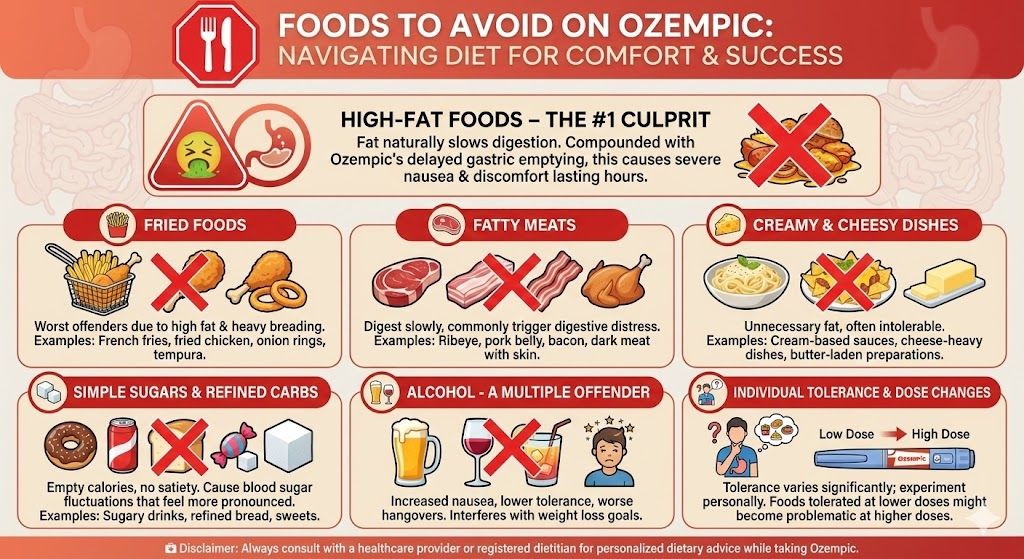
- High-fat foods are the number one category to avoid, as fat naturally slows digestion and combines with Ozempic’s delayed gastric emptying to cause severe nausea and discomfort lasting hours.
- Fried foods including French fries, fried chicken, onion rings, and tempura are among the worst offenders due to their high fat content and heavy breading.
- Fatty cuts of meat like ribeye steak, pork belly, bacon, and dark meat poultry with skin digest slowly and commonly trigger digestive distress.
- Cream-based sauces, cheese-heavy dishes, and butter-laden preparations add unnecessary fat that most people cannot tolerate well on Ozempic.
- Simple sugars and refined carbohydrates provide empty calories without satiety, causing blood sugar fluctuations that feel more pronounced on the medication.
- Alcohol causes multiple problems including increased nausea, lower tolerance than before medication, worse hangovers, and interference with weight loss goals.
- Individual tolerance varies significantly, so what triggers severe nausea in one person might be perfectly tolerable for another, requiring personal experimentation.
- The same foods you tolerated fine at lower doses might become problematic as you increase to higher doses of Ozempic.
Understanding Why Certain Foods Are Problematic
Before diving into specific foods, it’s important to understand the mechanisms that make certain foods more difficult to tolerate on Ozempic.
Delayed Gastric Emptying
Semaglutide, the active ingredient in Ozempic, significantly slows the rate at which food moves from your stomach into your small intestine. This delayed gastric emptying is a primary mechanism for the medication’s effectiveness in weight loss, creating prolonged feelings of fullness that reduce overall food intake.
However, this slower emptying means food sits in your stomach much longer than it would without the medication. Meals that would typically empty from your stomach in 2 to 3 hours might take 5 to 6 hours or more on Ozempic.
Certain foods naturally digest more slowly even without medication. High-fat foods, for instance, take longer to break down and empty from the stomach compared to proteins or carbohydrates. When you combine naturally slow-digesting foods with medication-induced delayed emptying, you get compounding effects that create uncomfortable, prolonged fullness and nausea.
Fat and Digestion
Fat is the macronutrient that slows digestion most significantly. When fat enters your small intestine, it triggers release of hormones that actually slow gastric emptying further as a natural feedback mechanism. Your body does this to give itself adequate time to digest and absorb fat.
On Ozempic, your stomach is already emptying slowly. Adding high-fat foods compounds this effect dramatically. The fat sits in your stomach, continues triggering slowed emptying, and creates a cycle where you feel uncomfortably full for many hours after eating.
Fat is also the macronutrient most strongly associated with nausea. The sensation of fat coating your mouth and throat, combined with the heavy feeling in your stomach, frequently triggers nausea responses.
Blood Sugar Regulation
Ozempic improves blood sugar regulation by increasing insulin secretion when glucose is present and suppressing glucagon (a hormone that raises blood sugar). This enhanced glucose control is beneficial, but it also means that eating patterns causing blood sugar spikes and crashes become more noticeable.
Simple sugars cause rapid blood sugar elevation followed by a crash. On Ozempic, these fluctuations can feel more dramatic, with energy crashes, increased hunger, and general discomfort being more pronounced than they were before medication.
Individual Variation in Tolerance
While certain foods cause problems for most people, individual tolerance varies significantly. Factors affecting your specific tolerance include your dose level (higher doses often mean lower tolerance), how long you’ve been on the medication (tolerance sometimes improves with time), your individual digestive system characteristics, and your body composition and metabolism.
This means you need to test foods individually to determine your personal triggers rather than assuming you’ll react exactly like someone else.
High-Fat Foods: The Primary Category to Avoid
Fat content is the single most important factor determining whether a food will cause problems on Ozempic.
Why Fat Is the Main Culprit
Fat takes longest to digest of all macronutrients, naturally slowing gastric emptying even without medication. Fat triggers hormonal signals that further slow stomach emptying. The texture and mouthfeel of fatty foods can trigger nausea. Fat provides 9 calories per gram (versus 4 for protein and carbs), making it easy to overconsume calories from fatty foods.
Fried Foods
Fried foods combine high fat content with breading or batter, creating particularly problematic meals.
Specific items to avoid:
- French fries and other fried potatoes (curly fries, tater tots, hash browns)
- Fried chicken, whether fast-food or restaurant-style
- Chicken tenders or nuggets with breading
- Fish and chips or any battered and fried fish
- Onion rings
- Mozzarella sticks
- Fried appetizers (egg rolls, wontons, samosas)
- Tempura vegetables or proteins
- Corn dogs
- Fried desserts (funnel cake, fried ice cream, fried Oreos)
- Any “crispy” menu items at restaurants (usually means fried)
Why they’re problematic: The combination of oil absorbed during frying plus breading creates extremely high fat content. A single serving of French fries can contain 15 to 25 grams of fat, while fried chicken can contain 20 to 40+ grams depending on size. This fat sits in your stomach for hours, commonly causing severe nausea.
Fatty Meats
Not all proteins are created equal. Fatty cuts of meat are much harder to tolerate than lean options.
Specific items to avoid or minimize:
- Ribeye steak, T-bone, or other heavily marbled cuts
- Prime rib
- Pork belly or fatty pork shoulder
- Bacon (both pork and turkey versions are high in fat)
- Sausages (breakfast sausage, Italian sausage, bratwurst)
- Hot dogs
- Salami, pepperoni, and fatty lunch meats
- Duck or goose
- Dark meat chicken with skin (thighs, drumsticks with skin)
- Ground beef that’s not lean (anything above 85% lean)
- Lamb chops or fatty cuts of lamb
- Beef brisket with substantial fat cap
- Deli meats with visible fat marbling
Why they’re problematic: These meats can contain 15 to 30+ grams of fat per serving, with much of it saturated fat that’s particularly slow to digest. Even moderate portions commonly trigger nausea and prolonged fullness.
Cream-Based and Cheese-Heavy Dishes
Dairy fat is as problematic as meat fat, especially in concentrated forms like cream and cheese.
Specific items to avoid:
- Alfredo sauce or any cream-based pasta sauce
- Cream-based soups (clam chowder, cream of mushroom, lobster bisque)
- Creamy salad dressings (ranch, blue cheese, Caesar, thousand island)
- Cheese sauces and queso dips
- Macaroni and cheese (especially homemade with heavy cream)
- Cheese-heavy casseroles
- Lasagna with excessive cheese layers
- Grilled cheese sandwiches with multiple cheese slices
- Quesadillas loaded with cheese
- Pizza with extra cheese or stuffed crust
- Cheesecake and cream-based desserts
- Ice cream (especially full-fat premium varieties)
- Heavy cream in coffee (more than 1 tablespoon)
Why they’re problematic: Heavy cream contains 50 grams of fat per half-cup. Cheese varies but typically contains 8 to 10 grams of fat per ounce. Cream-based dishes can easily contain 30 to 60+ grams of fat per serving, virtually guaranteeing digestive distress.
High-Fat Cooking Methods and Additions
It’s not just the base ingredients but how they’re prepared that matters.
Cooking methods to avoid:
- Deep frying
- Pan frying in excessive oil or butter
- Sautéing in large amounts of fat
- Dishes “swimming” in oil or butter
Additions that add excessive fat:
- Butter on vegetables (more than 1 teaspoon)
- Olive oil used liberally rather than measured (1 tablespoon contains 14g fat)
- Mayonnaise-based preparations
- Cream or half-and-half added to dishes
- Hollandaise and other butter-based sauces
- Aioli and other oil-based condiments
Better Alternatives to High-Fat Foods
For fried foods, choose grilled, baked, roasted, or air-fried versions. Grilled chicken instead of fried chicken. Baked fish instead of fish and chips. Roasted potatoes instead of French fries.
For fatty meats, choose lean cuts: chicken breast, turkey breast, pork tenderloin, sirloin or tenderloin beef cuts, white fish, shrimp and other seafood, and 93% lean or leaner ground beef.
For cream-based dishes, choose tomato-based or broth-based alternatives: marinara instead of Alfredo, broth-based soups instead of cream soups, and vinaigrette dressings instead of creamy dressings.
For high-fat preparations, use minimal-fat cooking methods: grilling, baking, steaming, poaching, or using small measured amounts of oil (1 teaspoon) rather than pouring freely.
Simple Sugars and Refined Carbohydrates
While these don’t necessarily cause nausea like fats do, they interfere with weight loss and can cause uncomfortable blood sugar fluctuations.
Why Simple Sugars Are Problematic
Simple sugars cause rapid blood sugar spikes followed by crashes. They provide calories without satiety, leaving you hungry again quickly. They don’t support muscle preservation during weight loss. Blood sugar fluctuations feel more pronounced on Ozempic due to the medication’s effects on glucose regulation.
Candy and Sweets
Specific items to avoid or minimize:
- Candy bars and chocolate (with exceptions for small amounts of dark chocolate)
- Gummy candies and fruit snacks
- Hard candies and lollipops
- Licorice
- Caramels and toffees
- Marshmallows
- Candy-coated items (M&Ms, Skittles, etc.)
- Sweet breakfast pastries (donuts, danishes, muffins, scones)
- Cookies, especially packaged varieties
- Cakes and cupcakes with frosting
- Brownies and blondies
- Candy-based desserts
Why they’re problematic: These provide concentrated sugar with minimal nutritional value. A single candy bar might contain 30 to 40 grams of sugar (120 to 160 calories from sugar alone) without any protein or fiber to moderate blood sugar response.
Sugary Beverages
Liquid sugars are particularly problematic because they don’t trigger satiety signals.
Specific items to avoid:
- Regular soda (12 oz can contains 39g sugar)
- Sweetened iced tea and lemonade
- Fruit juice, including “natural” juices (8 oz orange juice has 24g sugar)
- Sweetened coffee drinks (flavored lattes, mochas, frappuccinos)
- Energy drinks with sugar
- Sports drinks (unless using for intense exercise)
- Sweetened protein shakes
- Flavored milk drinks
- Smoothies with added sugars or juice base
- Sweet alcoholic beverages (margaritas, daiquiris, sweet wines)
Why they’re problematic: Liquid calories don’t register satiety like solid food, making it easy to consume 200 to 600 calories from beverages without feeling satisfied. The rapid sugar absorption causes pronounced blood sugar spikes.
Refined Carbohydrates
White and refined grains cause faster blood sugar elevation than whole grain alternatives.
Specific items to minimize:
- White bread and white rolls
- Regular pasta (not whole wheat)
- White rice
- Crackers made with refined flour
- Pretzels
- Bagels made with refined flour
- Most breakfast cereals with added sugar
- Pastries and croissants
- Pizza crust (especially thick crust)
- Flour tortillas (white flour)
- Instant oatmeal with added sugars
- Pancakes and waffles made with refined flour
Why they’re problematic: These digest quickly, causing rapid blood sugar elevation without providing sustained energy or significant fiber. They’re easy to overconsume and provide minimal nutrition relative to calories.
Better Alternatives to Simple Sugars
For sweets cravings, choose fresh fruit, Greek yogurt with berries, small amount of dark chocolate (70%+ cocoa), or protein-based treats.
For beverages, choose water, unsweetened tea or coffee, sparkling water, or very small amounts of juice diluted with water.
For carbohydrates, choose whole grain bread, brown rice, quinoa, whole wheat pasta, oatmeal (plain), sweet potatoes, and legumes.
Alcohol: Multiple Problems on Ozempic
Alcohol deserves special attention because it causes several distinct issues on Ozempic beyond just empty calories.
Why Alcohol Is Problematic
Alcohol provides 7 calories per gram (almost as much as fat) without nutritional value. It lowers inhibitions around food choices, often leading to overeating. Many people report significantly lower alcohol tolerance on Ozempic, getting intoxicated faster. Hangovers are often worse on the medication. Alcohol can worsen nausea and digestive issues. It interferes with blood sugar regulation.
Our complete guide to alcohol and Ozempic covers this topic comprehensively.
Specific Alcoholic Beverages to Avoid or Minimize
High-calorie or sugary drinks:
- Sweet mixed drinks (margaritas, daiquiris, piña coladas)
- Flavored liqueurs
- Sweet wines (dessert wines, many white zinfandels)
- Creamy drinks (White Russian, Mudslide)
- Frozen alcoholic drinks
- Most cocktails with juice or soda mixers
High-volume drinks:
- Large servings of any alcohol
- Multiple drinks in one sitting
- All-you-can-drink situations
Why they’re problematic: A single margarita can contain 300 to 500+ calories, mostly from sugar and alcohol. The sugar causes blood sugar fluctuations, alcohol impairs judgment leading to poor food choices, and the combination commonly triggers nausea.
If You Choose to Drink
If you decide to consume alcohol despite the issues, choose lower-calorie, lower-sugar options:
- Spirits with zero-calorie mixers (vodka with soda water and lime)
- Light beer in moderation
- Dry wine in small amounts (4 to 5 oz serving)
- Limit to 1 drink maximum
- Never drink on an empty stomach (have protein-rich food first)
- Drink plenty of water alongside alcohol
- Avoid drinking in the first 2 to 3 days after your weekly injection when side effects are typically strongest
When to Avoid Alcohol Completely
Skip alcohol entirely if you’re experiencing significant nausea or digestive issues, in the first 4 to 8 weeks of starting Ozempic or after dose increases, when you’re already struggling to meet calorie and protein targets, if you have a history of problematic alcohol use, or on days when you need to make good food decisions (social events, restaurants, etc.).
Foods That May Cause Individual Problems
These categories cause problems for some people but not others, requiring personal tolerance testing.
Very Spicy Foods
Spices can stimulate gastric acid production, and combined with delayed emptying, this can cause heartburn and indigestion in some people.
Foods that might be problematic:
- Very hot curry dishes
- Extremely spicy Mexican food (hot salsas, jalapeños, habaneros)
- Spicy Szechuan or Thai dishes
- Hot wings or buffalo sauce
- Wasabi in large amounts
- Spicy peppers (ghost peppers, scotch bonnets)
- Dishes with cayenne or chili powder in large amounts
Individual variation: Many people tolerate moderate spice levels fine and only have problems with extreme heat. Others find that even mild spice triggers discomfort. Test your tolerance with progressively spicier foods rather than jumping to extreme heat.
If spicy food causes problems: Reduce spice levels gradually, use herbs for flavor instead of hot peppers, add cooling elements like yogurt or avocado, and avoid spicy food in the first few days after your injection.
Carbonated Beverages
Carbonation can cause bloating and discomfort when your stomach is emptying slowly.
Potentially problematic beverages:
- Soda (both regular and diet)
- Sparkling water and seltzer
- Carbonated energy drinks
- Beer (which combines carbonation with alcohol)
- Champagne and sparkling wines
- Kombucha
Individual variation: Some people tolerate carbonation without issues, while others find it causes significant bloating and discomfort. The gas has nowhere to go when your stomach is emptying slowly.
If carbonation causes problems: Switch to flat water, still wine instead of sparkling, flat soft drinks if you must have them, and herbal tea or coffee instead of carbonated beverages.
High-Fiber Foods in Large Amounts
Fiber is generally beneficial and helps prevent constipation (common on Ozempic), but very large amounts combined with slow gastric emptying can cause bloating and discomfort.
Foods that might be problematic in large amounts:
- Raw cruciferous vegetables (broccoli, cauliflower, Brussels sprouts) in large servings
- Beans and legumes in very large portions
- High-fiber cereals (over 10g fiber per serving)
- Large amounts of bran or wheat germ
- Multiple servings of high-fiber foods in one meal
Individual variation: Most people tolerate moderate fiber (25 to 30g daily) well. Problems typically occur only with very large amounts in a single meal or rapid increases in fiber intake.
If high-fiber foods cause problems: Increase fiber gradually over weeks, cook vegetables rather than eating them raw, start with smaller portions of beans and legumes, and spread fiber intake across multiple meals rather than concentrating it.
Acidic Foods
Some people find that acidic foods trigger heartburn or acid reflux, which can be worse with delayed gastric emptying.
Potentially problematic foods:
- Citrus fruits in large amounts (oranges, grapefruits, lemons)
- Tomatoes and tomato sauce
- Vinegar-based foods
- Pickled items
- Very acidic coffee
Individual variation: Most people tolerate these fine, especially in moderate amounts. Problems are more common in people who already had acid reflux issues before starting Ozempic.
If acidic foods cause problems: Limit portion sizes of acidic foods, avoid eating acidic foods close to bedtime, combine acidic foods with other foods rather than eating them alone, and consider antacids if heartburn is persistent.
Dairy Products
Some people experience increased lactose intolerance symptoms on Ozempic.
Potentially problematic dairy:
- Milk (especially whole milk)
- Ice cream
- Soft cheeses
- Yogurt (especially sweetened varieties)
- Cream-based anything
Individual variation: Many people tolerate dairy fine, especially fermented dairy like yogurt and hard cheeses. Those with lactose intolerance may find symptoms worse on Ozempic.
If dairy causes problems: Try lactose-free alternatives, choose fermented dairy (yogurt, kefir, hard cheeses) which are lower in lactose, use lactase enzyme supplements before consuming dairy, or switch to plant-based alternatives.
Restaurant and Fast Food Challenges
Eating out presents special challenges because you have less control over ingredients and preparation methods.
Fast Food Items to Avoid
Most fast food combines multiple problematic categories: high fat, refined carbs, excessive sodium.
Specific items to avoid:
- Burgers with cheese, bacon, or special sauces
- Fried chicken sandwiches
- Any “crispy” menu items
- French fries, onion rings, or fried sides
- Milkshakes and ice cream desserts
- Breakfast sandwiches with sausage or bacon
- Nachos with cheese sauce
- Pizza (especially stuffed crust or extra cheese)
- Fried tacos or chalupas
- Any “value meals” or “combo meals” (typically huge portions)
Better fast food choices (when you must eat fast food):
- Grilled chicken sandwich (request no mayo)
- Salad with grilled chicken and light dressing
- Grilled nuggets (not fried)
- Burrito bowl (skip cheese, sour cream, limit rice)
- Egg white breakfast sandwich
- Grilled chicken wrap
Restaurant Hidden Fat Sources
Restaurant food typically contains much more fat than home-cooked versions of the same dishes.
Watch for:
- Dishes described as “crispy,” “creamy,” “rich,” “buttery,” or “decadent”
- Anything pan-seared or sautéed (likely cooked in lots of butter/oil)
- Sauces on the side often contain cream or butter
- Vegetables that taste unusually good (probably swimming in butter)
- Even “healthy” options may have hidden fats
Restaurant Strategies
Request modifications: grilled instead of fried, sauce on the side, extra vegetables instead of fries, dressing on the side, no butter on preparation, and a to-go box delivered with the meal.
Choose carefully: look for words like “grilled,” “baked,” “steamed,” “roasted,” or “broiled” rather than “fried,” “crispy,” “creamy,” or “buttered.”
Plan ahead: review menus online before going to restaurants, decide what you’ll order in advance, and look up nutrition information when available.
Processed and Ultra-Processed Foods
Beyond specific nutrients, processing level affects how foods impact your results.
Why Ultra-Processed Foods Are Problematic
Ultra-processed foods are engineered to be hyper-palatable, making it easy to overeat them despite Ozempic’s appetite suppression. They typically contain combinations of sugar, fat, and salt that maximize cravings. They provide minimal nutrition relative to calories. Many contain additives and preservatives that may affect metabolism or gut health. They rarely contain adequate protein.
Specific Ultra-Processed Foods to Avoid
Packaged snacks:
- Chips (potato, corn, tortilla)
- Cheese puffs and similar snacks
- Packaged cookies and crackers
- Candy bars
- Snack cakes
- Granola bars with added sugars
- Most protein bars (check ingredients)
Frozen convenience meals:
- Most frozen dinners and entrees
- Frozen pizza
- Frozen fried foods
- Hot Pockets and similar items
- Many frozen breakfast items
Highly processed meats:
- Spam and similar canned meats
- Many deli meats with long ingredient lists
- Meat with added sugars or fillers
- Processed cheese products
- Imitation crab and similar items
Better Alternatives
Choose whole foods or minimally processed options:
- Fresh fruits and vegetables
- Plain meats and fish
- Whole grains in their natural form
- Simple preparations with few ingredients
- Home-cooked meals where you control ingredients
When convenience is necessary, choose least-processed options:
- Rotisserie chicken (plain)
- Pre-cut vegetables without added sauces
- Canned beans (low sodium)
- Frozen vegetables (no sauce)
- Simple frozen fish or chicken (not breaded)
Building Meals Around Safe Foods
Knowing what to avoid is only half the equation. Here’s how to build satisfying meals that work well on Ozempic.
The Protein-First Plate Structure
Start every meal with protein as the foundation:
- 4 to 6 oz lean protein (chicken breast, fish, turkey, lean beef)
- Add non-starchy vegetables (as much as desired)
- Include a moderate portion of complex carbohydrates (1/2 to 3/4 cup)
- Add minimal healthy fat (1 teaspoon oil or small avocado portion)
This structure ensures adequate protein while avoiding the fat excess that causes problems.
Sample Safe Meal Ideas
Breakfast options:
- Scrambled eggs (2 eggs) with vegetables and 1 slice whole grain toast
- Greek yogurt parfait with berries and small amount of nuts
- Oatmeal made with water or low-fat milk, protein powder mixed in, topped with berries
- Egg white omelet with vegetables and small amount of cheese, side of fruit
Lunch options:
- Grilled chicken breast over large salad with vegetables and light vinaigrette
- Turkey and avocado lettuce wraps with vegetable sides
- Chicken vegetable soup (broth-based) with side salad
- Tuna salad (made with Greek yogurt) on whole grain bread with vegetables
Dinner options:
- Baked fish with roasted vegetables and quinoa
- Grilled chicken breast with steamed broccoli and sweet potato
- Turkey meatballs with marinara sauce over zucchini noodles
- Lean beef stir-fry with vegetables over brown rice (moderate portion)
Snack options:
- Hard-boiled eggs
- Greek yogurt
- Apple with tablespoon of almond butter
- Cottage cheese with berries
- Turkey or chicken slices with vegetables
- Protein shake
Meal Prepping Safe Foods
Preparing foods in advance makes avoiding problematic foods much easier.
Prep strategies:
- Grill or bake multiple chicken breasts for the week
- Hard-boil a dozen eggs for grab-and-go protein
- Pre-chop vegetables for easy addition to any meal
- Cook a large batch of quinoa or brown rice
- Prepare turkey meatballs in bulk
- Portion out Greek yogurt into individual containers
- Make broth-based soups in large batches
Having safe foods readily available prevents reaching for problematic convenience foods when you’re busy or low appetite makes cooking unappealing.
Testing Your Individual Tolerance
While general guidelines help, determining your specific triggers requires systematic testing.
How to Test Food Tolerance
Test one potentially problematic food at a time. Eat the test food in a moderate portion, not a large amount. Eat it with other known safe foods, not by itself. Monitor symptoms for 4 to 6 hours after eating. Note any nausea, bloating, discomfort, or prolonged fullness.
Wait at least 2 days before testing another questionable food, ensuring symptoms from the previous test have resolved completely.
Keeping a Food Symptom Diary
Track what you ate, portion sizes, when you ate (relative to your weekly injection), symptoms experienced, severity of symptoms (mild, moderate, severe), and duration of symptoms.
After several weeks, patterns emerge showing your personal triggers clearly.
Factors Affecting Tolerance
Your tolerance may vary based on dose level (higher doses often mean lower tolerance for problematic foods), days since injection (days 1 to 3 typically worst tolerance), what else you ate in the meal (fat combined with other slow-digesting foods is worse than fat alone), portion size (small amounts might be fine while larger portions cause problems), and your current stress and sleep status (poor sleep and high stress reduce tolerance).
Retest Periodically
Tolerance can change over time. Foods that caused severe problems in month 1 might be tolerable in month 6 as your body adjusts. Retest previously problematic foods every few months to see if tolerance has improved.
Special Dietary Approaches on Ozempic
Different diet frameworks require adjusting avoidance strategies.
Low-Carb or Keto Adaptations
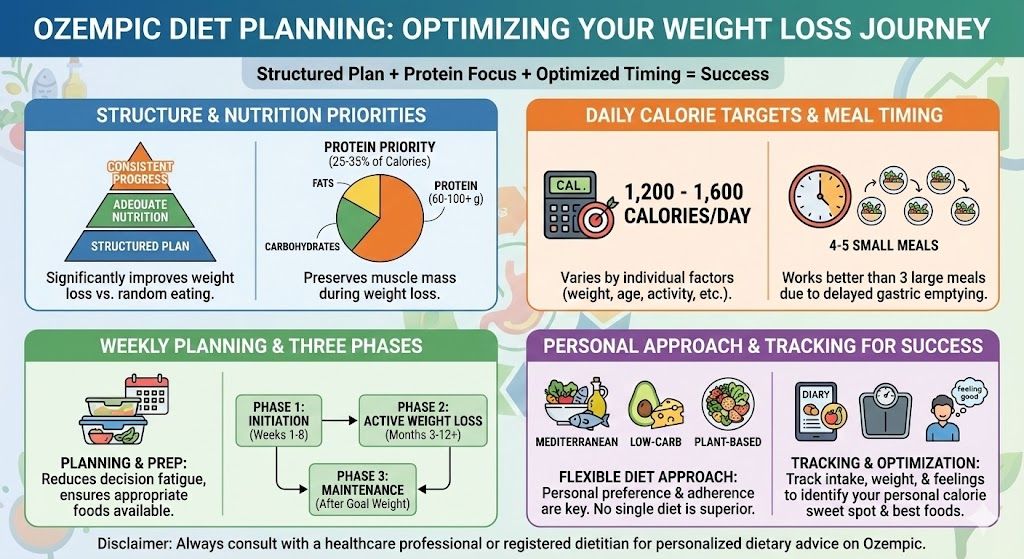
Low-carb and keto diets typically emphasize higher fat intake, which conflicts with Ozempic tolerance. Adaptations needed include keeping fats moderate (30 to 35% of calories) rather than high (60%+ typical in keto), choosing lean proteins rather than fatty cuts, getting fat from sources like avocado and nuts rather than butter and cream, and focusing on non-starchy vegetables for volume.
Even on low-carb approaches, avoid the high-fat foods listed above. You can follow lower carb intake without excessive fat.
Plant-Based Adaptations
Plant-based eating can work well on Ozempic with attention to protein and avoiding high-fat plant foods.
Watch for: excessive nuts and seeds (easy to overeat), coconut-based dishes (coconut milk and cream are high fat), fried tofu or tempeh, avocado in large amounts (more than 1/2 avocado), and plant-based cheeses (often as fatty as dairy cheese).
Focus on: legumes as protein source, tofu and tempeh prepared without excessive oil, quinoa and other whole grains, vegetables in abundance, and moderate amounts of nuts and seeds.
Mediterranean Diet Adaptations
Traditional Mediterranean diet uses olive oil liberally, which needs modification on Ozempic.
Adaptations needed: measure olive oil carefully (1 to 2 teaspoons per meal maximum), emphasize fish and lean proteins, include legumes regularly, eat plenty of vegetables, and enjoy moderate whole grains.
The Mediterranean approach works well on Ozempic when you control oil portions rather than using it freely.
What to Do When You Accidentally Eat Trigger Foods
Despite best efforts, you’ll occasionally eat something that causes problems.
Immediate Management Strategies
If you realize you’ve eaten a problematic food and are starting to feel uncomfortable, try walking or light movement (helps digestion), sipping water or herbal tea slowly, sitting upright rather than lying down, applying a cool compress to your forehead if nauseous, taking deep, slow breaths, and avoiding eating anything else until symptoms pass.
Don’t force yourself to vomit. While nausea is uncomfortable, vomiting isn’t necessary and can cause other issues.
When to Seek Medical Help
Most reactions to problematic foods resolve within several hours. Seek medical attention if you experience severe vomiting that won’t stop, inability to keep down even water, severe abdominal pain (not just discomfort), signs of dehydration (dark urine, dizziness, rapid heartbeat), or symptoms lasting more than 12 hours.
Learning from Mistakes
Document what you ate, how much you consumed, what symptoms occurred, and how long they lasted. This information helps you avoid that trigger in the future and identify patterns you might not otherwise notice.
Preventing Future Incidents
Once you’ve identified a trigger food, consider it off-limits or eat only very small amounts. Some foods might be tolerable in tiny quantities but problematic in normal portions.
When trying new foods, start with small amounts rather than a full serving. This limits potential discomfort if the food turns out to be problematic.
Frequently Asked Questions
What is the worst food to eat on Ozempic?
Fried foods are consistently the worst category to eat on Ozempic due to their extremely high fat content from absorbed cooking oil plus breading. Deep-fried items like French fries, fried chicken, fish and chips, and fried appetizers combine fat with refined carbohydrates and often excessive sodium, creating the perfect storm for severe nausea, prolonged uncomfortable fullness, and digestive distress lasting many hours. A single serving of fried chicken can contain 30 to 50 grams of fat that sits in your slowly emptying stomach, triggering nausea in most people. Other strong contenders for worst foods include fatty cuts of meat (ribeye, pork belly, bacon), cream-based pasta sauces, and cheese-heavy dishes. If you must have something similar, choose grilled, baked, or air-fried versions instead, which provide similar taste with dramatically less fat.
Can I ever eat my favorite foods again on Ozempic?
Yes, most people can eventually eat favorite foods again, though often in much smaller portions and with modifications. Your tolerance typically improves after several months on medication as your body adjusts. Foods that caused severe nausea in month 1 might be tolerable in small amounts by month 6. The key is moderation and modification. If you love pizza, try thin crust with light cheese instead of deep dish with extra cheese. If you love burgers, order them without cheese and bacon, or eat half. If you love ice cream, have 2 to 3 bites rather than a full serving. Many people find their preferences naturally shift on Ozempic. Foods you once loved might not taste as appealing, making it easier to avoid them. Focus on building a sustainable eating pattern rather than completely eliminating all foods you enjoy, as overly restrictive approaches often backfire long-term.
Do I need to avoid all fat on Ozempic?
No, you don’t need to avoid all fat on Ozempic. Moderate amounts of healthy fats are important for hormone production, nutrient absorption, and overall health. The key is choosing the right fats in appropriate amounts. Healthy fats in small portions are generally well-tolerated: a quarter to half avocado, 1 tablespoon of olive oil measured (not poured freely), a tablespoon of nut butter, or a small handful of nuts. What you need to avoid are excessive fats and particularly problematic fat sources like fried foods, fatty meats, cream-based dishes, and heavy cheese preparations. Target around 20 to 30% of your calories from fat (approximately 30 to 50 grams daily on a 1,400-calorie diet), focusing on sources like olive oil, avocado, nuts, seeds, and fatty fish. The problems occur when fat intake exceeds this moderate level or comes from fried and heavily processed sources.
Why do foods I ate fine before Ozempic now make me sick?
Ozempic dramatically slows gastric emptying, meaning food stays in your stomach much longer than it did before medication. Foods that would naturally empty from your stomach in 2 to 3 hours might take 5 to 6 hours or longer on Ozempic. High-fat foods naturally digest slowly even without medication. When you combine naturally slow-digesting foods with medication-induced delayed emptying, the compounding effect creates prolonged, uncomfortable fullness and nausea. Additionally, Ozempic affects hunger and satiety hormones and changes how your body responds to certain foods, making some foods that were previously fine suddenly trigger discomfort. Your taste preferences and food reward responses also change on the medication, potentially making rich or heavy foods less appealing. This is why lighter, easily digestible foods (lean proteins, vegetables, moderate complex carbs) work better on Ozempic than heavy, fatty, or rich foods that your body handled fine before starting treatment.
Will I be able to tolerate more foods if I increase my Ozempic dose?
Actually, the opposite typically occurs. Higher doses of Ozempic usually mean lower tolerance for problematic foods, not higher. As you increase from 0.25mg to 0.5mg to 1mg to 2mg, gastric emptying slows even more, and appetite suppression intensifies. Foods you tolerated adequately at lower doses might become problematic at higher doses. This is why you might need to restrict your diet more carefully as you titrate up. Temporarily after dose increases, stick to your safest, most easily tolerated foods (lean proteins, well-cooked vegetables, simple carbs) until your body adjusts to the new dose level, typically 2 to 3 weeks. After this adjustment period, you might find your tolerance improves somewhat at the new dose level, but it probably won’t return to what it was at lower doses. Planning your diet around the foods you tolerate at higher doses sets you up for better long-term adherence.
Can I eat fast food on Ozempic if I choose carefully?
Yes, you can eat fast food occasionally if you make careful selections, though it’s not ideal for frequent consumption. Choose grilled proteins instead of fried (grilled chicken sandwich, not crispy chicken), skip cheese, bacon, and mayo, request vegetables as sides instead of fries, avoid cream-based or cheese-heavy items, order smaller sizes, and drink water instead of soda. Better fast food choices include grilled chicken salads with light dressing, grilled chicken sandwiches (plain), burrito bowls (skip cheese, sour cream, and go easy on rice), egg white breakfast sandwiches, and grilled nuggets (not breaded and fried). Even with careful ordering, fast food is typically higher in sodium and lower in nutrition than home-prepared meals. If you eat fast food, monitor your reaction and adjust future orders based on what you tolerate. Many people find that following a structured Ozempic diet plan with meal preparation reduces reliance on fast food significantly.
Are there any foods that help reduce nausea on Ozempic?
Yes, certain foods can help settle your stomach and reduce nausea when you’re experiencing discomfort. Bland, easily digestible foods work best: plain crackers (saltines, graham crackers), toast (preferably whole grain), plain rice or quinoa, bananas, applesauce, plain Greek yogurt, and chicken broth or vegetable broth. Ginger has natural anti-nausea properties, so ginger tea, ginger candies, or small amounts of fresh ginger in food may help. Cold foods are often better tolerated than hot foods when nausea is present, so chilled protein shakes, cold fruit, or Greek yogurt straight from the refrigerator work well. Small, frequent sips of clear liquids (water, herbal tea, clear broth) help prevent dehydration without overwhelming your stomach. Avoid eating anything if nausea is severe; wait until it subsides somewhat before introducing bland foods in small amounts. Our complete guide to managing Ozempic nausea provides comprehensive strategies.
How long after eating trigger foods will I feel sick?
The timing varies by individual and the specific food, but most people experience symptoms within 30 minutes to 2 hours after eating problematic foods. High-fat foods typically cause symptoms that begin 1 to 2 hours after eating and can persist for 4 to 8 hours or more. Very fatty or large meals might cause discomfort lasting into the next day. Simple sugars might cause issues more quickly (within 30 minutes to 1 hour) as blood sugar spikes and crashes. Spicy foods might cause immediate discomfort in your mouth and stomach. The prolonged duration of symptoms is due to delayed gastric emptying. The problematic food sits in your stomach for many hours, continuously causing discomfort. This is why even small portions of trigger foods can cause such prolonged problems. If you accidentally eat a trigger food, symptoms typically peak within 2 to 4 hours and gradually resolve over 4 to 8 hours, though severe reactions might last longer.
Should I avoid fatty foods even on days when I feel fine?
Yes, it’s best to consistently avoid high-fat foods throughout your weekly injection cycle, even on days when you feel fine and have good appetite. While your appetite and side effects vary throughout the week (typically worst days 1 to 3 after injection, better days 5 to 7), the delayed gastric emptying effect remains constant. Eating fatty foods on “good days” still causes delayed digestion and can trigger symptoms even if you feel fine initially. Building consistent eating patterns around well-tolerated foods is more effective than varying your diet based on how you feel day-to-day. Additionally, weight loss results are better when you maintain consistent food quality throughout the week rather than eating very carefully some days and less carefully other days. If you’re going to indulge occasionally in less-than-ideal foods, doing so in very small portions on days 5 to 7 of your injection cycle when symptoms are mildest is least likely to cause problems.
Can food intolerances get better as I continue on Ozempic?
Yes, food tolerance often improves somewhat after several months on Ozempic as your body adjusts to the medication. Many people find that foods causing severe nausea in the first 2 to 3 months become more tolerable by month 6, especially if they’ve maintained the same dose level for an extended period. However, tolerance improvement is typically partial rather than complete. A food that made you extremely sick in month 1 might be tolerable in very small amounts by month 6, but large portions might still cause problems. Tolerance also tends to decrease again with dose increases. Each time you increase from 0.5mg to 1mg or 1mg to 2mg, expect a temporary reduction in what you tolerate, with gradual improvement over the following weeks at the new dose. Periodically retesting previously problematic foods in small amounts allows you to identify when your tolerance has improved, potentially expanding your food options over time while maintaining overall dietary quality that supports your weight loss goals.
Building a Sustainable Approach Around Food Avoidance
Understanding which foods to avoid on Ozempic is essential for both managing side effects and maximizing weight loss results. High-fat foods consistently cause the most problems due to delayed gastric emptying, making fried foods, fatty meats, cream-based dishes, and cheese-heavy preparations the primary categories to minimize or eliminate.
However, successfully navigating Ozempic eating isn’t just about elimination. It’s about building a positive eating pattern around foods that work well with the medication: lean proteins that preserve muscle mass, non-starchy vegetables that provide nutrients and volume, moderate complex carbohydrates for sustained energy, and small amounts of healthy fats for essential functions.
Your specific triggers will likely differ somewhat from others using the medication. Systematic tolerance testing helps identify your personal problematic foods rather than assuming you’ll react exactly like someone else. What causes severe nausea for one person might be perfectly tolerable for another.
The goal isn’t perfection or complete elimination of all favorite foods forever. It’s finding a sustainable middle ground where you eat primarily foods that work well with Ozempic while occasionally including small amounts of less-than-ideal foods without derailing your progress or causing miserable side effects.
Remember that food preferences often shift naturally on Ozempic. Many people find that heavy, rich foods they once craved simply don’t appeal anymore. The medication provides an opportunity to build healthier eating patterns that support long-term success, even beyond medication use.
Whether you’re using brand-name Ozempic or compounded semaglutide at $199 monthly through TrimRx, understanding which foods to avoid and which to emphasize dramatically improves your experience and results. For those considering tirzepatide as an alternative, these same food avoidance principles apply, with compounded tirzepatide at $349 monthly following similar dietary guidelines.
Get started with comprehensive medical support, detailed nutritional guidance including specific food recommendations, and convenient online access to GLP-1 treatment. Knowing what to eat on Ozempic is just as important as knowing what to avoid. Together, these strategies create the optimal dietary framework for achieving and maintaining your weight loss goals while minimizing uncomfortable side effects throughout your treatment journey.

Transforming Lives, One Step at a Time
Keep reading

Regained Weight After Stopping Ozempic? Don’t Restart at Your Old Dose
No. Whatever else you do, do not pick up where you left off. Tolerance to a GLP-1 is not assumed to persist through a…
Eating Less Than Ever on Ozempic but the Scale Won’t Move
Whatever else is true here, the answer is not to eat less. That needs saying first, because it is the direction this situation pushes…

Two Months on the Same Ozempic Dose With No Change: Is It Working?
Two months is long enough. Under four weeks is noise, four to eight weeks is a maybe, and eight weeks of a genuinely flat…


