Ozempic Weight Loss Results: What to Expect Month by Month

You’re considering Ozempic or you’ve just started, and you want to know what’s realistic. How much weight will you actually lose? When will you start seeing results? What does the journey look like from month one through month twelve and beyond?
These are the right questions to ask. Setting accurate expectations helps you stay motivated during the slower early weeks, recognize normal progress when it happens, and avoid disappointment from unrealistic timelines. The transformation photos and dramatic stories you see online represent real results, but they don’t tell you about the gradual process that produces them.
Here’s the realistic picture: Most patients lose between 10% and 15% of their body weight over the course of treatment, with clinical trials showing an average of 14.9% weight loss at 68 weeks. But this doesn’t happen overnight. The first month brings minimal change. Meaningful results typically emerge between months two and four. The most significant progress occurs between months four and nine. And maintaining those results requires ongoing commitment.
This guide covers:
- What clinical trials actually show about semaglutide weight loss
- A realistic month-by-month timeline from start through year one
- How the dosing schedule affects your results
- Factors that influence how much weight you’ll lose
- What to expect at each stage of treatment
- How to maximize your results
- What happens when you stop taking the medication
- Setting appropriate expectations for your situation
Key Takeaways
- Clinical trials show 14.9% average weight loss over 68 weeks (about 16 months) with semaglutide 2.4mg weekly
- Month one produces minimal results (typically 2-4 pounds) as you start at the lowest dose
- Months two through four bring accelerating weight loss as doses increase, often 1-2 pounds per week
- Months four through nine typically show the most dramatic progress, with consistent weekly losses
- Months nine through twelve see weight loss gradually slowing as you approach a new equilibrium
- Individual results vary significantly based on starting weight, dose, diet, activity, and metabolic factors
- Higher starting weights generally mean more pounds lost but similar percentage losses across weight ranges
- Lifestyle factors matter enormously as patients who combine medication with diet and exercise changes see better results
- Stopping medication typically leads to weight regain with studies showing about two-thirds of lost weight returning within a year
- Long-term treatment is usually necessary to maintain results, making sustainable cost an important factor
What Clinical Trials Tell Us About Semaglutide Results
Before diving into month-by-month expectations, understanding what large-scale clinical research shows provides important context for your own journey.
The STEP Trial Program
The most comprehensive data on semaglutide for weight loss comes from the STEP (Semaglutide Treatment Effect in People with Obesity) clinical trial program. These trials enrolled thousands of participants and studied semaglutide 2.4mg weekly (the dose used in Wegovy, slightly higher than Ozempic’s maximum 2mg dose) in people with obesity or overweight with weight-related conditions.
STEP 1, the landmark trial, enrolled over 1,900 adults with BMI of 30 or higher (or 27+ with weight-related conditions) who did not have diabetes. Participants received either semaglutide or placebo, along with lifestyle intervention counseling. After 68 weeks (approximately 16 months), the semaglutide group lost an average of 14.9% of their starting body weight, compared to 2.4% in the placebo group.
To put that in concrete terms: A person starting at 220 pounds would lose approximately 33 pounds on average. Someone starting at 180 pounds would lose about 27 pounds. These are averages, meaning some patients lost more and some lost less, but they provide a realistic benchmark for what the medication can achieve.
Distribution of Results
Averages tell only part of the story. The distribution of results in clinical trials shows meaningful variation. In STEP 1, approximately one-third of participants lost 20% or more of their body weight, which is a remarkable result. About 86% of participants lost at least 5% of their body weight (the threshold considered clinically meaningful). And roughly 69% lost at least 10%.
This means most people who take semaglutide and stick with it will see significant results. But it also means not everyone achieves the dramatic transformations highlighted in media coverage. If you lose 10% of your body weight, you’re in the successful majority even if you haven’t matched the most impressive outcomes.
Comparison to Other Approaches
Semaglutide’s results significantly exceed what most people achieve through other means. Intensive lifestyle interventions (structured diet and exercise programs with professional support) typically produce 5-7% weight loss. Previous weight loss medications like phentermine or orlistat achieve around 5-10%. Even bariatric surgery, while producing larger initial losses, has comparable long-term outcomes for many patients.
The 14.9% average with semaglutide represents a genuine advancement in non-surgical weight loss treatment. Understanding this context helps you appreciate what the medication can realistically accomplish while recognizing it’s not a miracle that works equally for everyone.
The Dosing Schedule and How It Affects Results
Your weight loss timeline is directly tied to the dosing schedule. Understanding how dosing works explains why results unfold gradually rather than all at once.
Standard Titration Protocol
Semaglutide treatment doesn’t start at full dose. The standard protocol involves gradual increases over several months to minimize side effects and help your body adjust.
The typical schedule looks like this: You start at 0.25mg weekly for four weeks. This is a sub-therapeutic dose, meaning it’s not expected to produce significant weight loss. Its purpose is getting your body accustomed to the medication. Then you increase to 0.5mg weekly for four weeks, where you may begin noticing appetite changes and modest weight loss. Next comes 1mg weekly for four weeks, where weight loss typically accelerates. Then 1.7mg weekly for four weeks, continuing the progression. Finally, you reach 2.4mg weekly (or 2mg for Ozempic), the maintenance dose where maximum effect occurs.
This means you don’t reach the full effective dose until approximately month four or five of treatment. Expecting significant results in month one or two misunderstands how the medication is designed to work.
Why Slow Titration Matters
The gradual approach isn’t arbitrary. Semaglutide causes gastrointestinal side effects in many patients, particularly nausea, and starting at high doses would make these effects more severe and harder to tolerate. Many patients would likely discontinue treatment if they experienced full-dose side effects immediately.
By starting low and increasing gradually, your body has time to adapt. Most patients find side effects manageable when introduced slowly, even if they would have been intolerable at full dose from the start. The trade-off is slower initial results, but better long-term adherence and ultimately better outcomes.
Dose Response Relationship
Higher doses generally produce greater weight loss, though with diminishing returns. The jump from 0.25mg to 0.5mg makes a noticeable difference. The increase from 1mg to 2.4mg adds additional benefit but less dramatically than the earlier increases.
Some patients achieve good results at lower doses and don’t need to reach the maximum. Others require the full 2.4mg (or 2mg for Ozempic) to see optimal effects. Your provider will help you find the right dose based on your response, tolerability, and goals.
Month-by-Month Timeline: What to Realistically Expect
Now let’s walk through what typically happens at each stage of treatment. Remember that individual experiences vary, but this provides a general framework for expectations.
Month One (Weeks 1-4): The Adjustment Phase
Dose: 0.25mg weekly
Typical weight loss: 2-4 pounds
What’s happening: Your body is adjusting to a new medication. The 0.25mg dose is too low to produce significant metabolic effects, but you may notice some appetite changes. Many patients experience mild nausea or other gastrointestinal symptoms that typically improve over the first few weeks.
What to focus on: This month is about tolerability, not results. Focus on taking your medication consistently, managing any side effects, and beginning to establish the dietary habits that will support your weight loss. Don’t get discouraged by minimal scale movement.
Common experience: Some patients feel almost nothing at this dose and wonder if the medication is working. Others notice decreased appetite even at this low level. Both experiences are normal. A few pounds of weight loss is typical and appropriate at this stage.
Month Two (Weeks 5-8): Early Progress
Dose: 0.5mg weekly
Typical weight loss: 4-6 additional pounds (6-10 total)
What’s happening: The doubled dose begins producing noticeable effects. Appetite suppression becomes more apparent for most patients. You may find yourself satisfied with smaller portions, less interested in snacking, and able to stop eating when full rather than finishing everything on your plate.
What to focus on: Pay attention to your hunger and fullness cues. The medication is helping you recognize satiety, but you still need to respond to those signals appropriately. This is when dietary changes start becoming easier because you’re not fighting constant hunger.
Common experience: Many patients describe month two as when they first “feel” the medication working. Food thoughts become less intrusive. Cravings diminish. The struggle that characterized previous diet attempts starts to ease. Scale progress becomes more consistent, though still modest compared to what’s coming.
Month Three (Weeks 9-12): Building Momentum
Dose: 1mg weekly
Typical weight loss: 5-8 additional pounds (11-18 total)
What’s happening: At 1mg, you’re reaching therapeutically significant levels. Weight loss accelerates for most patients. The appetite suppression effect is now firmly established. Side effects from earlier dose increases have typically stabilized.
What to focus on: This is a good time to evaluate your eating patterns. What’s working? What habits are you developing? Use the appetite suppression to establish sustainable dietary changes rather than just eating less of the same foods. Consider incorporating more protein and vegetables, which support weight loss and help you feel satisfied.
Common experience: Month three often brings a psychological shift. You’re now clearly losing weight at a meaningful rate. Clothes fit differently. Other people may start noticing. The medication feels like it’s “really working.” This boost in motivation can help reinforce positive behaviors.
Month Four (Weeks 13-16): Acceleration
Dose: 1.7mg weekly (if using Wegovy protocol) or continuing at 1mg with potential increase to 2mg (Ozempic)
Typical weight loss: 6-10 additional pounds (17-28 total)
What’s happening: You’re approaching maximum therapeutic doses. Weight loss is typically at its most rapid during this period. Your body has fully adjusted to the medication, side effects have stabilized, and the metabolic effects are in full force.
What to focus on: Maximize this high-response period by supporting the medication with good habits. Adequate protein intake helps preserve muscle mass during weight loss. Regular physical activity, even just walking, enhances results. Stay hydrated and maintain consistent eating patterns.
Common experience: Month four through month six often represents the “sweet spot” of treatment. Patients frequently report losing 1-2 pounds per week consistently. The difference from your starting weight becomes substantial. Energy levels often improve as excess weight decreases.
Months Five and Six (Weeks 17-24): Peak Progress
Dose: 2mg-2.4mg weekly (maintenance dose)
Typical weight loss: 8-12 additional pounds (25-40 total)
What’s happening: You’ve reached maintenance dosing and your body is responding maximally to the medication. This is typically when the most dramatic progress occurs. Many patients lose a significant portion of their total weight during these months.
What to focus on: Continue supporting your progress with lifestyle factors. This is also a good time to address any persistent side effects with your provider and ensure your overall health is being monitored. Some patients benefit from bloodwork to check various health markers that should be improving with weight loss.
Common experience: By the end of month six, many patients have lost 15-20% of their starting weight or more. This is transformative for most people. Health markers like blood pressure, blood sugar, and cholesterol often show significant improvement. The visual and physical changes are now obvious to everyone.
Months Seven Through Nine (Weeks 25-36): Continued Progress
Dose: Maintenance dose continuing
Typical weight loss: 6-10 additional pounds (31-50 total)
What’s happening: Weight loss continues but typically begins to slow compared to the previous months. This is normal and expected. Your body is approaching a new equilibrium point, and the rate of loss naturally decreases as you get further from your starting weight.
What to focus on: Don’t be alarmed by slowing progress. Losing half a pound to one pound per week is still excellent progress at this stage. Focus on building habits that will sustain your results long-term. This is also when exercise becomes increasingly valuable, both for continued weight loss and for overall health.
Common experience: Some patients feel frustrated when their rapid early progress slows. Understanding that this is the normal trajectory helps manage expectations. You’re still losing weight and improving health; the pace has simply moderated. Plateaus may occur but typically resolve with continued adherence.
Months Ten Through Twelve (Weeks 37-52): Approaching Equilibrium
Dose: Maintenance dose continuing
Typical weight loss: 3-6 additional pounds (34-56 total)
What’s happening: Weight loss continues to slow as you approach what may be your body’s new stable weight on medication. Some patients reach a plateau where weight stabilizes; others continue losing slowly. Both patterns are normal.
What to focus on: Shift your mindset from “losing weight” to “maintaining results and optimizing health.” The habits you’ve built over the past year are now your lifestyle, not a temporary diet. Consider whether any adjustments to diet or activity could help you reach additional goals.
Common experience: By month twelve, most patients have achieved the majority of their weight loss. The average of 14.9% from clinical trials reflects approximately this timepoint. Some patients exceed this significantly; others fall somewhat short. Regardless of the exact number, patients who’ve adhered to treatment have typically experienced meaningful, health-improving weight loss.
Beyond Year One: Long-Term Maintenance
After the first year, the focus shifts to maintenance. Continued medication is typically necessary to sustain results, as research shows weight regain occurs when treatment stops. The goal becomes maintaining your achieved weight loss while continuing to optimize health through lifestyle factors.
Weight may fluctuate somewhat but should remain substantially below your starting point with continued treatment. Annual check-ins with your provider help ensure the medication remains appropriate and effective for your situation.
Factors That Influence Your Results
Understanding what affects outcomes helps you set appropriate expectations and optimize your own results.
Starting Weight
Patients with higher starting weights typically lose more absolute pounds but similar percentages of body weight. Someone starting at 300 pounds might lose 45-50 pounds (15%), while someone starting at 200 pounds might lose 28-30 pounds (14-15%). The percentage loss is comparable, but the absolute numbers differ.
This means you shouldn’t compare your pound-for-pound results to someone with a very different starting weight. Percentage of body weight lost is the more meaningful metric for comparison.
Adherence to Medication
Consistency matters enormously. Missing doses, skipping weeks, or stopping and restarting treatment reduces effectiveness. The medication works best when taken reliably every week as prescribed. If you’re having trouble with adherence due to side effects, cost, or other factors, discuss this with your provider rather than simply becoming inconsistent.
Dietary Changes
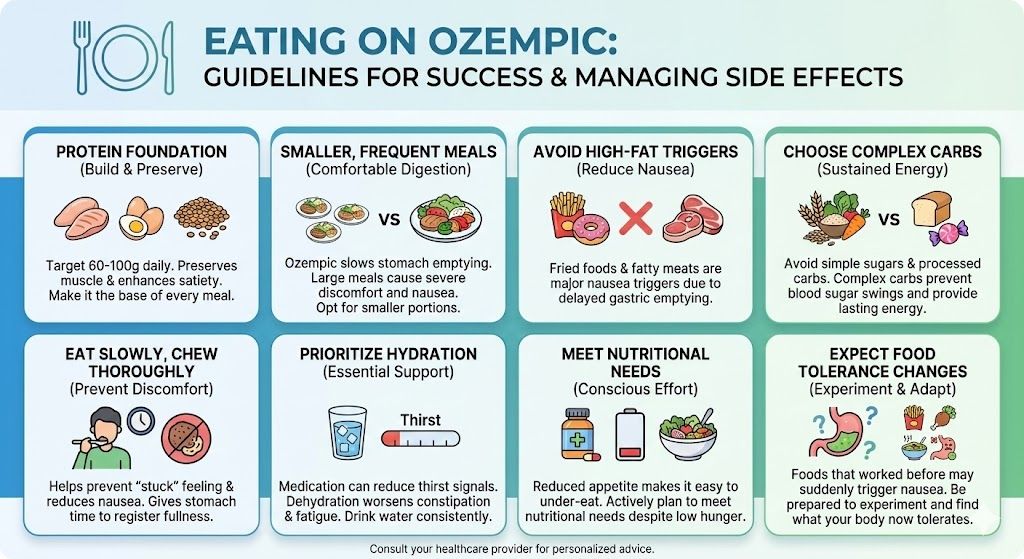
The medication reduces appetite and makes it easier to eat less, but what you eat still matters. Patients who use the appetite suppression to improve their diet quality (more protein, more vegetables, fewer processed foods, reduced sugar) typically see better results than those who simply eat smaller amounts of the same foods.
Protein intake is particularly important. Adequate protein helps preserve muscle mass during weight loss, which supports metabolism and physical function. Aim for protein at each meal and consider tracking intake if you’re unsure whether you’re getting enough.
Physical Activity
Exercise enhances weight loss and provides benefits beyond the scale. Patients who incorporate regular physical activity, even moderate walking, typically lose more weight and maintain better body composition than those who rely on medication alone. Exercise also improves cardiovascular health, mood, and energy levels.
You don’t need to become an athlete. Consistent moderate activity makes a meaningful difference. Find something sustainable that you can maintain long-term.
Individual Metabolic Factors
Some people simply respond better to semaglutide than others due to individual biological variation. Factors like genetics, hormonal status, gut microbiome composition, and metabolic history all play roles that we don’t fully understand. Two people following identical protocols may see different results.
This isn’t fair, but it’s reality. If your results are somewhat below average despite good adherence and habits, it doesn’t mean you’re doing something wrong. It may simply mean your individual response is different.
Age and Other Demographics
Older patients sometimes lose weight more slowly than younger patients, though this isn’t universal. Men and women may respond somewhat differently, with some studies suggesting slightly better absolute weight loss in men but similar percentage losses. These factors matter less than adherence and lifestyle, but they contribute to the variation in outcomes.
Previous Weight Loss History
Patients with extensive yo-yo dieting histories or very long-standing obesity sometimes respond differently than those with shorter weight gain histories. Previous extreme dieting may have affected metabolic function in ways that influence response to medication. That said, semaglutide helps many patients who have struggled with every previous approach.
Maximizing Your Results
While you can’t control every factor, you can optimize the variables within your influence.
Follow the Dosing Protocol
Take your medication consistently, on the same day each week, at the dose prescribed. Don’t skip doses to save money or because you’re not seeing results fast enough. Don’t try to accelerate the titration schedule. The protocol exists for good reasons, and following it gives you the best chance of success.
Prioritize Protein
During weight loss, your body can break down muscle along with fat if protein intake is inadequate. This is counterproductive since muscle mass supports metabolism and physical function. Aim for 0.7-1 gram of protein per pound of your goal body weight, distributed across your meals.
Protein also helps you feel satisfied on fewer calories. When appetite is suppressed and you’re eating less overall, making those calories count becomes important.
Stay Hydrated
Adequate water intake supports metabolism, helps manage side effects (particularly constipation), and can help with appetite management. Many people mistake thirst for hunger. Aim for at least 64 ounces of water daily, more if you’re active or in hot weather.
Eat Mindfully
The medication helps you feel full sooner and stay satisfied longer, but you have to pay attention to those signals. Eating slowly, putting down utensils between bites, and stopping when satisfied (rather than when the plate is empty) helps you take full advantage of the appetite effects.
Move Your Body
You don’t need intense workouts, but regular movement helps. Walking is excellent and accessible for most people. Aim for 150 minutes of moderate activity per week, broken up however works for your schedule. Add resistance training if possible to help preserve muscle mass.
Get Adequate Sleep
Sleep affects hunger hormones, willpower, and metabolic function. Chronic sleep deprivation can undermine weight loss efforts regardless of medication. Aim for 7-9 hours per night and address any sleep disorders that may be affecting quality.
Manage Stress
Chronic stress elevates cortisol, which can promote fat storage and trigger emotional eating. While medication helps with physical hunger, it doesn’t eliminate stress eating entirely. Finding healthy stress management strategies supports your weight loss efforts.
Track Progress Beyond the Scale
Weight fluctuates daily due to water retention, digestive contents, and other factors unrelated to fat loss. Taking measurements (waist, hips, etc.), noting how clothes fit, and tracking energy levels provides a more complete picture of progress than scale weight alone.
What Happens When You Stop Taking Semaglutide
An important question many patients don’t consider initially: what happens after?
The Research on Discontinuation
The STEP 4 trial specifically studied what happens when patients stop semaglutide. Participants who discontinued the medication after successful weight loss regained approximately two-thirds of their lost weight within one year. Those who continued medication maintained their results.
This finding is significant. It suggests that for most people, semaglutide manages obesity rather than curing it. Stopping treatment typically leads to weight regain, similar to how stopping blood pressure medication typically leads to blood pressure increasing again.
Why Weight Regain Occurs
Obesity is a chronic condition with biological drivers. The hormonal and metabolic changes that promote weight gain don’t disappear just because you’ve lost weight. When you stop the medication, appetite typically returns to pre-treatment levels, and the drive to regain lost weight reasserts itself.
This isn’t willpower failure. It’s biology. Your body perceives weight loss as a threat and activates multiple systems to restore the lost weight. Semaglutide suppresses these systems; removing it allows them to function again.
Planning for Long-Term Treatment
Understanding the maintenance reality should inform your treatment planning. If you view semaglutide as a short-term intervention you’ll eventually stop, you’re likely setting yourself up for disappointment when weight returns. If you view it as ongoing management of a chronic condition (similar to medications for diabetes, hypertension, or high cholesterol), your expectations align better with reality.
This makes sustainable cost an important consideration. Affording treatment for a few months is different from affording it indefinitely. At $199/month through platforms like TrimRx, long-term treatment costs approximately $2,400 per year. This is a meaningful expense but potentially manageable as an ongoing health investment.
For detailed pricing information, see our guide on compounded semaglutide costs.
Attempting to Transition Off Medication
Some patients do want to try discontinuing semaglutide after achieving their goals. If you pursue this path, do it gradually and with realistic expectations. Taper your dose slowly rather than stopping abruptly. Intensify your focus on diet and exercise habits that might partially compensate. Monitor your weight closely and be prepared to restart medication if regain begins.
Some patients maintain a portion of their weight loss after stopping; others regain completely. There’s no reliable way to predict which category you’ll fall into without trying.
Realistic Expectations by Starting Weight
To make this more concrete, here’s what results might look like for patients at different starting weights, based on achieving approximately 15% weight loss.
Starting at 180 Pounds
Expected weight loss: 25-30 pounds
Likely end weight: 150-155 pounds
Monthly trajectory: Approximately 2-3 pounds lost per month on average, with faster loss in the middle months and slower at the beginning and end
Starting at 220 Pounds
Expected weight loss: 30-35 pounds
Likely end weight: 185-190 pounds
Monthly trajectory: Approximately 3-4 pounds lost per month on average, with the same pattern of slower early progress, faster middle months, and gradual slowing toward the end
Starting at 260 Pounds
Expected weight loss: 35-42 pounds
Likely end weight: 218-225 pounds
Monthly trajectory: Approximately 3-4 pounds lost per month on average, potentially slightly faster given the higher starting weight
Starting at 300 Pounds
Expected weight loss: 42-50 pounds
Likely end weight: 250-258 pounds
Monthly trajectory: Approximately 4-5 pounds lost per month on average, with potentially more dramatic early losses as the higher starting weight creates larger caloric deficits
These are approximations based on average results. Your individual outcome may be higher or lower based on the factors discussed earlier.
Health Improvements Beyond Weight Loss
While most people focus on the scale, semaglutide produces health benefits that extend beyond pounds lost.
Metabolic Improvements
Blood sugar levels typically improve significantly, even in patients without diabetes. Insulin sensitivity increases. For patients with prediabetes, treatment may prevent or delay progression to Type 2 diabetes. For those with diabetes, medication needs often decrease.
Cholesterol profiles typically improve, with reductions in LDL (bad cholesterol) and triglycerides and increases in HDL (good cholesterol). These changes reduce cardiovascular risk independent of weight loss itself.
Blood Pressure Reductions
Weight loss from semaglutide is associated with meaningful blood pressure reductions. Many patients on blood pressure medications are able to reduce their doses or discontinue them entirely. Even patients not on medication often see readings improve from concerning levels to healthier ranges.
Cardiovascular Benefits
The SELECT trial demonstrated that semaglutide reduces the risk of major cardiovascular events (heart attack, stroke, and cardiovascular death) in patients with established heart disease. This benefit appears to extend beyond what would be expected from weight loss alone, suggesting direct cardiovascular protective effects.
Sleep Apnea Improvement
Obstructive sleep apnea is closely linked to excess weight. Many patients find their sleep apnea improves or resolves with weight loss, sometimes allowing them to discontinue CPAP therapy. Sleep quality improvements contribute to better daytime energy and overall wellbeing.
Joint Pain Relief
Excess weight stresses joints, particularly in the knees, hips, and lower back. Weight loss reduces this mechanical stress, often providing significant pain relief for patients with osteoarthritis or chronic joint issues. Some patients become more physically active as pain decreases, creating a positive cycle.
Quality of Life
Beyond specific health markers, patients consistently report improved quality of life: better energy, improved mobility, increased confidence, reduced health anxiety, and greater ability to participate in activities they’d avoided due to weight. These subjective improvements often matter as much as objective health metrics.
Frequently Asked Questions
How much weight can I realistically expect to lose on Ozempic?
Clinical trials show average weight loss of 14.9% of body weight over approximately 68 weeks (16 months) with semaglutide. For most people, this translates to losing between 10% and 15% of starting weight. Someone beginning at 200 pounds might lose 20-30 pounds; someone starting at 250 pounds might lose 25-38 pounds. Individual results vary significantly based on adherence, lifestyle factors, and personal biology. About a third of patients in trials lost 20% or more of their body weight, while some lost less than 10%. The medication reliably produces meaningful weight loss for most users, though exact amounts are unpredictable for any individual.
When will I start seeing results from Ozempic?
Most patients notice minimal weight loss during the first month because you start at a very low dose (0.25mg) that isn’t therapeutically effective for weight loss. This dose is for adjusting to the medication and minimizing side effects. Meaningful weight loss typically begins in month two as doses increase, with results accelerating through months three and four. By month two, most patients have lost 5-10 pounds. By month four, when you reach higher doses, weekly losses of 1-2 pounds become common. The most dramatic visible changes usually occur between months four and eight. Don’t get discouraged by slow early progress; it’s expected and doesn’t predict your ultimate results.
Why did my weight loss slow down after the first few months?
Weight loss naturally slows as you progress for several reasons. First, as you weigh less, your body requires fewer calories, so the same caloric deficit produces smaller losses. Second, your body adapts to the medication somewhat over time, though effects remain significant. Third, you may be approaching your body’s new equilibrium point on medication. This slowing is completely normal and doesn’t mean the medication has stopped working or that you’ve done something wrong. Patients who continue treatment typically maintain their weight loss even as active losing slows. A plateau or slower loss in later months is actually the expected pattern, not a failure.
How does Ozempic weight loss compare to Mounjaro?
Tirzepatide (Mounjaro/Zepbound) produces somewhat greater weight loss than semaglutide (Ozempic/Wegovy) in head-to-head studies. Clinical trials show average weight loss of approximately 22.5% with tirzepatide compared to 14.9% with semaglutide. This makes tirzepatide the more effective medication for pure weight loss, though both produce clinically meaningful results. The choice between them involves other factors beyond efficacy, including cost, availability, tolerability, and individual response. Some patients do better on one medication than the other for reasons we don’t fully understand. For more information on tirzepatide, see our guide on Mounjaro costs.
Will I gain the weight back if I stop taking Ozempic?
Research indicates that most patients regain a significant portion of lost weight after stopping semaglutide. The STEP 4 trial showed patients regained approximately two-thirds of their lost weight within one year of discontinuing treatment. This happens because obesity is a chronic condition with biological drivers that don’t disappear after weight loss. Stopping the medication removes the appetite suppression and metabolic effects that produced the loss. This doesn’t mean treatment is pointless; it means semaglutide typically requires ongoing use to maintain results, similar to medications for other chronic conditions like hypertension or diabetes. Planning for long-term treatment is more realistic than expecting to stop after reaching a goal weight.
What can I do to maximize my weight loss on Ozempic?
Several factors within your control can optimize results. Take your medication consistently, on the same day each week, following the prescribed dosing schedule. Prioritize protein intake (aim for 0.7-1 gram per pound of goal body weight daily) to preserve muscle mass. Stay well hydrated. Use the appetite suppression to improve your diet quality, not just eat less of the same foods. Incorporate regular physical activity, even just walking 30 minutes daily. Get adequate sleep (7-9 hours nightly). Manage stress through healthy coping strategies. Track your progress through multiple metrics beyond just scale weight. Most importantly, view this as a long-term lifestyle change supported by medication rather than a quick fix.
How much weight should I lose per week on Ozempic?
Weekly weight loss varies significantly throughout treatment. During month one at the starting dose, you might lose half a pound per week or less. During the peak response period (months four through six at maintenance doses), 1-2 pounds per week is common. As you progress and approach your body’s new equilibrium, losses often slow to half a pound per week or less. Overall, averaging 1 pound per week across your treatment duration (yielding roughly 50 pounds over a year) would place you among the better responders. But weight doesn’t drop linearly. Expect faster weeks and slower weeks, occasional plateaus, and natural fluctuation. Weekly weigh-ins can be misleading; monthly or longer trends are more meaningful.
Does Ozempic work for everyone?
Semaglutide produces meaningful weight loss for most people who take it consistently, but results vary significantly. In clinical trials, about 86% of participants lost at least 5% of their body weight, and about 69% lost at least 10%. This means a small minority (around 14%) didn’t achieve even the minimal clinically meaningful threshold despite taking the medication. Factors that predict better response aren’t fully understood, but adherence, lifestyle factors, and individual biology all play roles. If you’ve been taking semaglutide consistently for several months without meaningful results, discuss this with your provider. A different medication or approach might work better for your individual situation.
At what dose does Ozempic work best for weight loss?
Weight loss generally increases with higher doses, though with diminishing returns. The 2.4mg dose used in Wegovy produces better average results than lower doses. However, some patients achieve excellent results at lower doses like 1mg or 1.7mg and don’t benefit significantly from further increases. Others need the full 2.4mg dose for optimal effects. Your provider will help you find the right dose based on your response, side effect tolerance, and goals. If you’re on a lower dose and not seeing expected results, discussing a dose increase is reasonable. If you’re tolerating a lower dose well and seeing good results, there may be no need to go higher.
How do I know if Ozempic is working for me?
Signs that semaglutide is working include decreased appetite and food cravings, feeling satisfied with smaller portions, reduced “food noise” (constant thoughts about eating), weight loss over time (even if gradual), improved energy levels, and improvements in health markers like blood sugar or blood pressure. The medication’s effects on appetite typically become noticeable before significant scale changes occur, so pay attention to how you’re feeling about food in the early weeks. If you’ve been on treatment for three or more months at adequate doses and have noticed no changes in appetite or weight, the medication may not be working optimally for you and warrants discussion with your provider.
Is the weight loss from Ozempic permanent?
Weight loss from semaglutide is maintained as long as you continue treatment. When treatment stops, most patients regain weight because the biological factors driving obesity reassert themselves. This doesn’t mean the weight loss is “fake” or the medication doesn’t work; it means obesity is a chronic condition requiring ongoing management. Think of it like blood pressure medication: it controls the condition while you take it, but stopping allows the condition to return. For weight loss to be “permanent” in any meaningful sense, ongoing treatment or exceptional lifestyle commitment (which is difficult for most people) is required. Planning for long-term medication use aligns expectations with reality.
Taking the Next Step
Understanding what to expect from semaglutide treatment helps you approach it with realistic expectations and appropriate patience. The first month won’t produce dramatic results, but months four through nine typically will. Most patients lose 10-15% of their body weight with consistent treatment, and the health benefits extend well beyond the number on the scale.
Success requires commitment: consistent medication use, dietary improvements, regular physical activity, and a long-term perspective. The medication makes these changes easier by reducing appetite and food preoccupation, but it works best as a tool supporting broader lifestyle changes rather than a standalone solution.
Ready to start your weight loss journey? TrimRx offers consultations with licensed providers and compounded semaglutide at $199/month, making long-term treatment sustainable and accessible. See if you qualify today.

Transforming Lives, One Step at a Time
Keep reading

What “Ozempic Vulva” Really Is and Why Weight Loss Changes It
If you’ve noticed that your vulva looks different after losing weight on a GLP-1 medication, you’re not imagining it, and you’re not alone. “Ozempic…

Ozempic Alternatives: Your Options Compared
If Ozempic isn’t the right fit, whether because of cost, side effects, availability, or results, you have real alternatives. The closest ones are other…

Ozempic vs Wegovy: Same Drug, Different Purpose
Here’s the fact that surprises most people: Ozempic and Wegovy are the same medication (semaglutide), just sold under different brand names, at different doses,…


