Ozempic Plateau: How to Break Through Weight Loss Stalls

The scale was moving. Every week brought progress, sometimes dramatic, sometimes steady. Then it stopped. You’re still taking your medication, still following the same routine that produced results, but the number won’t budge. It’s been two weeks. Then three. Now you’re wondering if something’s wrong.
Welcome to the plateau, one of the most frustrating experiences in weight loss. Plateaus happen to nearly everyone taking semaglutide at some point, and they’re a common reason patients feel discouraged or wonder if the medication stopped working. The good news: plateaus are usually temporary, often explainable, and frequently breakable with the right adjustments.
Here’s the important context: Not every weight stall is a true plateau. Normal weight fluctuation, water retention, and measurement timing can create apparent stalls that resolve on their own. Understanding the difference between a temporary pause and a genuine plateau helps you respond appropriately rather than panicking or making unnecessary changes.
This guide covers:
- What actually constitutes a plateau versus normal fluctuation
- Why plateaus happen physiologically
- How long a stall needs to last before it’s concerning
- Dietary strategies to restart weight loss
- The role of exercise in breaking through stalls
- When dose adjustments might help
- Medical factors that can cause plateaus
- Realistic expectations about continued weight loss
- When a plateau might actually be your new equilibrium
Key Takeaways
- True plateaus last four or more weeks with no weight change despite consistent effort; shorter stalls are often normal fluctuation
- Plateaus are physiologically normal as your body adapts to lower weight and recalibrates energy expenditure
- Metabolic adaptation is the primary cause, with your body burning fewer calories as you weigh less
- Dietary drift is a common culprit, as portions slowly creep up or food choices relax over time
- Increasing physical activity can create additional caloric deficit to restart progress
- Dose optimization may help if you’re not yet at maximum dose and have stalled for extended periods
- Protein intake becomes more important during plateaus to preserve muscle and maintain metabolic rate
- Some plateaus indicate equilibrium, meaning your body has reached its new stable weight on medication
- Patience is often the best response since many plateaus resolve spontaneously within a few weeks
- Breaking plateaus rarely requires dramatic changes; small, sustainable adjustments are more effective
What Is a True Plateau?
Before troubleshooting, you need to determine whether you’re actually experiencing a plateau or something else entirely.
Defining a Real Plateau
A true weight loss plateau meets specific criteria:
Duration: The stall has lasted four weeks or longer. Shorter periods of stable weight are common and usually resolve without intervention.
Consistency: Your weight hasn’t changed meaningfully despite maintained effort. A pound up one week and down the next isn’t a plateau; it’s fluctuation.
Adherence: You’ve been taking your medication consistently and haven’t significantly changed your eating or activity patterns.
Context: The stall represents a break from previous progress. If you never lost weight consistently, you may have a different issue (see our guide on Ozempic not working).
If all four criteria apply, you’re likely experiencing a genuine plateau. If any don’t apply, the situation may resolve on its own or require different troubleshooting.
Normal Fluctuation vs. Plateau
Weight naturally fluctuates by several pounds day to day based on factors unrelated to fat loss:
Water retention: Sodium intake, carbohydrate consumption, hormonal cycles, hydration status, and even weather can cause your body to hold more or less water. This can mask fat loss or create apparent gains that aren’t real.
Digestive contents: The weight of food and beverages in your digestive system varies throughout the day and between days. A large meal the night before weigh-in affects the number.
Timing of weighing: Weight varies throughout the day. Morning weight after using the bathroom is typically lowest. Weighing at different times creates inconsistent data.
Hormonal cycles: For women, weight can fluctuate significantly (3-7 pounds or more) throughout the menstrual cycle due to water retention.
Exercise effects: New exercise routines can cause temporary water retention as muscles recover, sometimes masking fat loss for several weeks.
Because of these factors, a week or even two with no scale movement doesn’t indicate a plateau. It may simply reflect normal variation that will resolve as you continue.
How to Assess Accurately
To distinguish plateaus from fluctuation:
Weigh consistently: Same time, same conditions (morning, after bathroom, before eating), same scale. Inconsistent weighing creates unreliable data.
Use weekly averages: Rather than comparing single weigh-ins, weigh daily and calculate weekly averages. This smooths out daily fluctuation and reveals true trends.
Track multiple metrics: Waist circumference, how clothes fit, and progress photos can show changes when the scale doesn’t. Sometimes body composition shifts (losing fat while gaining muscle) without weight change.
Look at four-week trends: Compare your average weight this month to your average last month. This timeframe is long enough to see through fluctuation.
If your four-week average is unchanged despite consistent effort, you have a plateau worth addressing.
Why Plateaus Happen
Understanding the physiology behind plateaus helps you respond effectively rather than reacting with frustration.
Metabolic Adaptation
The primary driver of plateaus is metabolic adaptation. As you lose weight, your body requires fewer calories to function. A person who weighed 250 pounds burns more calories simply existing than the same person at 200 pounds.
This creates a mathematical problem: The caloric deficit that produced weight loss at your starting weight becomes smaller or disappears entirely at your lower weight. If you were eating 1,800 calories when your body needed 2,400 (600 calorie deficit), you might now be eating 1,800 when your body needs 2,000 (only 200 calorie deficit). Weight loss slows dramatically or stops.
Your metabolism also adapts beyond simple size reduction. Research shows the body becomes more efficient during weight loss, burning fewer calories than would be predicted by size alone. This “adaptive thermogenesis” is the body’s attempt to defend against what it perceives as starvation.
Hormonal Changes
Weight loss affects hormones that regulate hunger and metabolism:
Leptin: This satiety hormone decreases as fat mass decreases, potentially increasing hunger even while on semaglutide.
Ghrelin: This hunger hormone may increase during weight loss, counteracting some of the appetite suppression from medication.
Thyroid hormones: Prolonged caloric restriction can reduce thyroid hormone production, slowing metabolism.
Cortisol: Stress from dieting can elevate cortisol, which promotes fat retention and water retention.
These hormonal shifts can make continued weight loss more difficult even when medication adherence remains consistent.
Body Composition Changes
As you lose weight, you inevitably lose some muscle mass along with fat. Muscle tissue burns more calories at rest than fat tissue. Each pound of muscle lost reduces your daily caloric expenditure.
Patients who don’t prioritize protein intake or include resistance training lose proportionally more muscle, accelerating metabolic slowdown and increasing plateau likelihood.
Behavioral Drift
Often underappreciated, gradual behavioral changes contribute to many plateaus:
Portion creep: Portions slowly increase as your new way of eating becomes normalized. What started as a half-cup of rice becomes three-quarters.
Calorie creep: Small additions accumulate. An extra splash of oil here, a few more bites there, finishing kids’ leftovers. These can add hundreds of daily calories without conscious awareness.
Reduced vigilance: Early in treatment, you paid close attention to hunger and fullness cues. Over time, eating becomes more automatic and less mindful.
Activity reduction: Some patients unconsciously reduce non-exercise activity (taking elevators instead of stairs, sitting more) as weight loss makes activity feel less urgent.
These behavioral drifts are subtle but can eliminate the caloric deficit needed for continued weight loss.
Medication Tolerance
Some patients wonder if their body has become “tolerant” to semaglutide, reducing its effectiveness over time. The evidence for true pharmacological tolerance is limited. More commonly, the perception of reduced effectiveness reflects:
- Reduced relative impact as appetite normalizes
- Behavioral adaptation to appetite suppression (eating more despite reduced hunger)
- Metabolic adaptation making the same caloric intake less effective
- Comparison to rapid early weight loss, which naturally slows
The medication likely continues working; the context has changed.
Timeline Expectations: When Plateaus Typically Occur
Plateaus don’t occur randomly throughout treatment. They tend to cluster at certain phases.
Early Treatment (Months 1-3)
True plateaus are uncommon in early treatment because you’re still increasing doses and the medication hasn’t reached full effect. Slow progress during this phase usually reflects the gradual titration rather than a plateau.
If weight stalls during early treatment, patience is typically the appropriate response. The medication is still ramping up.
Peak Weight Loss Phase (Months 4-8)
During the most active weight loss period, short stalls are normal but extended plateaus are less common. Weight loss should be fairly consistent, though not necessarily linear week to week.
A genuine month-long plateau during this phase warrants investigation and intervention, as something is likely limiting your progress.
Later Treatment (Months 9-15)
Plateaus become more common as treatment progresses. The factors described above (metabolic adaptation, reduced caloric deficit, behavioral drift) accumulate over time.
Plateaus in this phase are often more stubborn and may require more significant intervention to break through.
Post-Maximum Weight Loss (Month 15+)
Eventually, most patients reach a new equilibrium where weight stabilizes. This isn’t technically a plateau; it’s the end point of what the medication can achieve for you.
Distinguishing between a breakable plateau and a new equilibrium requires honest assessment of whether additional intervention could reasonably produce further loss, or whether you’ve reached a sustainable maintenance weight.
Strategies to Break Through Plateaus
When you’ve confirmed a genuine plateau, these strategies can restart progress.
Strategy 1: Dietary Audit and Reset
The most common plateau breaker is addressing dietary drift you may not have noticed.
Track intake meticulously: For one to two weeks, track every bite and sip using a food tracking app. Weigh and measure portions rather than estimating. This reveals calorie creep that’s accumulated over time.
Compare to earlier intake: If you tracked when weight was dropping, compare current intake to what worked before. Often the difference is larger than expected.
Reset portions: Consciously reduce portions back to earlier levels. Using smaller plates, pre-portioning meals, and avoiding eating from packages helps.
Reduce calorie-dense foods: Identify high-calorie items that may have increased. Fats, oils, nuts, cheese, and caloric beverages are common culprits.
Recommit to satiety awareness: Return to the mindful eating practices that helped early in treatment. Eat slowly, stop at satisfaction rather than fullness, and avoid eating past appetite.
For many patients, a dietary audit alone reveals enough issues to restart progress without any other changes.
Strategy 2: Increase Protein Intake
Protein serves multiple functions during weight loss plateaus:
Preserves muscle mass: Adequate protein prevents muscle loss that slows metabolism.
Increases thermic effect: Protein requires more energy to digest than carbs or fat, slightly boosting metabolism.
Enhances satiety: Protein keeps you fuller longer, helping maintain reduced caloric intake.
Supports metabolic rate: Higher protein diets are associated with better metabolic rate preservation during weight loss.
Aim for 0.7-1 gram of protein per pound of goal body weight daily. If you’re targeting 170 pounds, that’s 120-170 grams of protein daily, distributed across meals.
If your current protein intake is significantly below this, increasing it may help break your plateau.
Strategy 3: Add or Intensify Exercise
Exercise creates additional caloric deficit and offers benefits beyond calories burned:
Additional calorie expenditure: Any activity burns calories, creating or expanding your deficit.
Preserves muscle mass: Resistance training is particularly valuable for maintaining muscle during weight loss.
Improves insulin sensitivity: Exercise enhances metabolic function independent of calories burned.
Counteracts adaptive thermogenesis: Regular activity may partially offset the metabolic slowdown from weight loss.
If you’re not currently exercising, adding moderate activity (150 minutes per week of walking, swimming, or similar) can restart progress.
If you’re already exercising, consider:
- Increasing duration or frequency
- Adding resistance training if you haven’t
- Increasing intensity (intervals, inclines, heavier weights)
- Varying your routine to challenge your body differently
Exercise alone rarely breaks plateaus if diet hasn’t been addressed, but combined with dietary changes, it’s often effective.
Strategy 4: Address Sleep and Stress
These factors affect weight loss more than commonly recognized:
Sleep deprivation:
- Increases hunger hormones
- Reduces willpower and impulse control
- Impairs metabolic function
- Promotes fat storage
If you’re sleeping under seven hours nightly or have poor sleep quality, addressing this may help break your plateau. Sleep apnea in particular can impair weight loss and often improves with weight reduction, creating a positive cycle once addressed.
Chronic stress:
- Elevates cortisol, promoting fat storage
- Can trigger emotional eating
- May cause water retention
- Impairs sleep quality
Stress management techniques (exercise, meditation, therapy, leisure activities) can support weight loss even when the connection isn’t obvious.
Strategy 5: Discuss Dose Optimization
If you’re not at the maximum dose, increasing may help restart progress.
When to consider dose increase:
- You’ve been at current dose for 8+ weeks with stalled progress
- You’re tolerating the current dose without significant side effects
- You haven’t yet reached 2mg (Ozempic) or 2.4mg (Wegovy)
- Appetite suppression seems to have diminished
Some patients simply need higher doses for optimal response. If you’ve plateaued at 1mg, increasing to 1.7mg or 2mg may produce additional weight loss.
Discuss this option with your provider. They can assess whether dose increase is appropriate for your situation.
Strategy 6: Consider Medication Timing or Administration
While less commonly discussed, these factors can sometimes affect response:
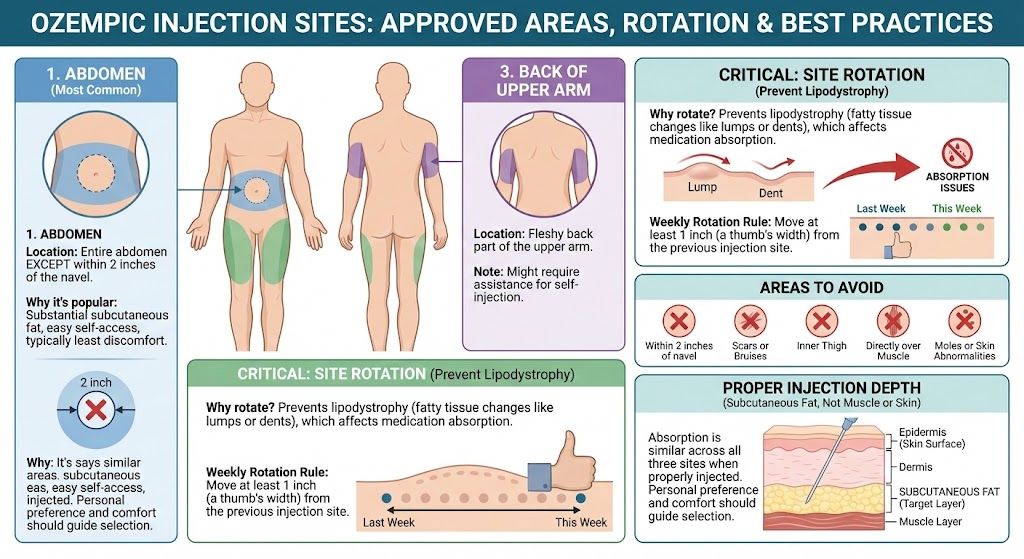
Injection site: Rotating between abdomen, thigh, and upper arm as recommended. Some patients find one site produces slightly different absorption.
Timing consistency: Taking the injection on the same day and time each week ensures steady blood levels.
Proper storage: Ensuring medication is stored correctly (refrigerated before first use, then at room temperature for up to 56 days, protected from light and heat).
These factors rarely cause plateaus by themselves, but addressing them eliminates potential issues.
Strategy 7: Strategic Calorie Cycling
Some patients and practitioners advocate for calorie cycling to break plateaus:
Refeed days: Occasional higher-calorie days (particularly higher carbohydrate) may help reset hormones like leptin that affect hunger and metabolism.
Diet breaks: Short periods (one to two weeks) of eating at maintenance rather than deficit may reduce metabolic adaptation and psychological burnout.
The evidence for these approaches is mixed, but some patients find them helpful. They work best when carefully structured rather than treated as license to overeat.
Strategy 8: Medical Evaluation
If plateaus persist despite addressing the factors above, medical evaluation may reveal underlying issues:
Thyroid function: Hypothyroidism can cause or exacerbate plateaus. If not recently tested, request thyroid panel.
Medication review: Other medications you take may affect weight. Your provider can assess whether any adjustments are possible.
Hormonal assessment: For women, conditions like PCOS can affect weight loss. Addressing underlying hormonal issues may help.
Metabolic testing: Some providers offer metabolic rate testing to determine actual caloric needs, enabling more precise deficit calculation.
Breaking Plateaus: What Doesn’t Work
Some commonly suggested approaches are ineffective or counterproductive:
Severe Calorie Restriction
Dramatically cutting calories rarely breaks plateaus and often backfires:
- Increases muscle loss, further slowing metabolism
- Triggers stronger hunger hormones
- Causes nutrient deficiencies
- Is unsustainable, leading to rebound eating
- May worsen metabolic adaptation
Moderate, sustainable deficit is more effective than extreme restriction.
Skipping Medication Doses
Some patients try skipping doses thinking “reset” will help. This doesn’t work:
- Interrupts steady blood levels
- Doesn’t address underlying plateau causes
- May actually reduce effectiveness
- Wastes medication and money
Consistent medication adherence is essential regardless of plateau status.
Excessive Exercise Without Recovery
Ramping up exercise dramatically, particularly without adequate rest:
- Increases cortisol, potentially promoting fat retention
- Causes inflammation and water retention
- Risks injury that could sideline you entirely
- Burns out motivation
Moderate, consistent exercise increases are more effective than sudden intense regimens.
Weight Loss Supplements
No supplement has reliable evidence for breaking semaglutide plateaus. Many are ineffective or potentially harmful. Save your money and focus on proven strategies.
Waiting Indefinitely
While patience is important for short stalls, waiting months without any intervention allows behavioral drift to compound and metabolism to adapt further. If a plateau extends beyond six weeks despite consistent effort, active intervention is warranted.
When Plateau Means Equilibrium
Not every plateau can or should be broken. Sometimes your body has reached its new stable weight on medication.
Recognizing Equilibrium
Several signs suggest you’ve reached equilibrium rather than a breakable plateau:
You’ve achieved significant loss: If you’ve lost 15-20% or more of starting weight, you may be at what the medication can achieve for you.
Time on treatment: After 12-18 months, additional weight loss becomes increasingly unlikely regardless of intervention.
Extensive troubleshooting: If you’ve genuinely optimized diet, exercise, sleep, and medication dose without progress, further loss may not be realistic.
Health markers are good: If blood sugar, blood pressure, cholesterol, and other metrics have normalized, you’ve achieved significant health benefit even if you wanted to lose more weight.
Accepting Equilibrium
If equilibrium applies to you, shifting focus from weight loss to maintenance serves you better:
Reframe success: Losing 15% of body weight and maintaining it is a genuine success, even if you hoped for more.
Optimize health: Focus on fitness, strength, metabolic health, and quality of life rather than scale numbers.
Maintain habits: The behaviors that brought you here are now maintenance behaviors. Continue them to preserve your results.
Appreciate improvements: Catalog the ways your life has improved (mobility, energy, health markers, clothing fit, confidence) beyond the number on the scale.
Trying to force additional loss when your body has reached equilibrium leads to frustration and potentially to counterproductive behaviors.
When to Consider Alternatives
If you’ve reached equilibrium but your weight remains significantly elevated with health consequences, discussing alternatives with your provider is appropriate:
Tirzepatide: This medication produces greater average weight loss and may work for patients who’ve maximized semaglutide response. See our guide on Mounjaro costs.
Combination approaches: Adding another medication or intervention may produce additional loss for some patients.
Bariatric surgery: For patients with severe obesity who’ve optimized medication response, surgical options may be appropriate.
These conversations are best had with your provider who knows your complete situation.
Preventing Future Plateaus
Once you break through a plateau, these practices help prevent recurrence:
Maintain Dietary Awareness
Don’t return to unconscious eating after breaking a plateau:
- Continue periodic food tracking (even one week per month helps)
- Weigh and measure portions occasionally to recalibrate
- Stay mindful of portion creep and calorie drift
- Maintain protein priorities
Keep Moving
Activity protects against metabolic slowdown:
- Maintain consistent exercise routine
- Include resistance training for muscle preservation
- Stay active in daily life (steps, stairs, movement breaks)
- Vary your routine to continue challenging your body
Monitor Consistently
Regular monitoring catches issues before they become entrenched:
- Continue consistent weekly weigh-ins
- Track monthly averages
- Take periodic measurements and photos
- Notice when trends shift
Adjust Proactively
When you notice a slowdown beginning:
- Address it immediately rather than waiting for a full plateau
- Small adjustments are easier than recovering from extended stalls
- Brief dietary “reset” weeks can prevent full plateaus
Maintain Sleep and Stress Management
These factors continue mattering throughout treatment:
- Prioritize seven to nine hours of sleep
- Address sleep disorders promptly
- Maintain stress management practices
- Recognize when stress is affecting eating or weight
Frequently Asked Questions
How long does an Ozempic plateau typically last?
The duration varies significantly. Short stalls (one to three weeks) usually resolve spontaneously as weight fluctuation normalizes. True plateaus can last four to eight weeks before breaking through with appropriate intervention, sometimes longer. Plateaus extending beyond eight weeks despite active troubleshooting may indicate equilibrium rather than a temporary stall, particularly if you’ve already lost significant weight. The key factor is whether intervention produces progress. If adjustments restart weight loss, it was a breakable plateau. If extensive optimization doesn’t help, you may have reached your body’s new stable weight on medication.
Is it normal to plateau on Ozempic?
Yes, plateaus are a normal part of weight loss for most patients. Nearly everyone experiences at least one significant stall during treatment. Plateaus occur because your body adapts to lower weight (burning fewer calories), behavioral drift reduces your caloric deficit over time, and hormonal changes make continued loss more difficult. Understanding that plateaus are expected helps you respond with appropriate troubleshooting rather than discouragement. The patients who achieve the best long-term results are those who view plateaus as challenges to address rather than failures.
Why did my weight loss stop even though I’m still taking Ozempic?
Several factors can cause weight loss to stop despite consistent medication: metabolic adaptation (your body burns fewer calories at lower weight), unconscious portion increases or dietary changes, reduced physical activity, hormonal changes that increase hunger or reduce metabolism, reaching a dose that’s no longer optimal for your current weight, or simply reaching your body’s new equilibrium on medication. The medication continues working (suppressing appetite through the same mechanisms), but the context has changed. Identifying which factor applies to you determines the appropriate response.
Should I increase my dose if I’ve plateaued?
Dose increase may help if you’re not at maximum dose, have been at your current dose for eight or more weeks, are tolerating the medication well, and have genuinely plateaued rather than experiencing temporary fluctuation. However, dose increase isn’t always the answer. If dietary drift or reduced activity is the issue, increasing dose without addressing those factors may produce temporary improvement that stalls again. Address lifestyle factors first, then discuss dose optimization with your provider if needed. Some patients benefit from dose increase; others find it doesn’t help their plateau.
Can eating too little cause a plateau?
Yes, paradoxically. Severe caloric restriction can cause metabolic slowdown that stalls weight loss. When calories drop too low, the body compensates by reducing energy expenditure, conserving fat stores, and increasing hunger hormones. Muscle loss accelerates, further slowing metabolism. Additionally, very low-calorie diets are unsustainable, often followed by rebound eating that erases any progress. Moderate, sustainable deficits (typically 500-750 calories below maintenance) produce better long-term results than extreme restriction. If you’ve been eating very little and have plateaued, slightly increasing calories while focusing on protein may actually restart progress.
How can I tell if I’ve hit my body’s weight set point?
Distinguishing a breakable plateau from your body’s new equilibrium involves several factors. Signs suggesting equilibrium include: you’ve lost 15-20% or more of starting weight (achieving average or above-average results), you’ve been on treatment for 12-18 months, you’ve genuinely optimized diet, exercise, and medication dose, and extended troubleshooting hasn’t produced progress. Signs suggesting a breakable plateau include: you’re earlier in treatment, you haven’t tried all optimization strategies, you’ve lost less than expected based on clinical data, or you can identify specific factors (dietary drift, reduced activity) that may be limiting progress. Your provider can help assess which situation applies.
Will adding exercise break my plateau?
Exercise can help break plateaus, but it works best combined with dietary optimization. Exercise alone rarely overcomes a plateau if dietary issues haven’t been addressed. That said, adding or intensifying activity creates additional caloric deficit, preserves muscle mass (maintaining metabolism), and provides metabolic benefits beyond calories burned. If you’re not currently exercising, starting moderate activity (30 minutes of walking daily) can restart progress. If you’re already active, increasing intensity, adding resistance training, or varying your routine may help. Exercise is most effective as part of a comprehensive approach that includes dietary attention.
Is my body becoming resistant to Ozempic?
True pharmacological resistance to semaglutide hasn’t been demonstrated in research. The medication continues activating GLP-1 receptors and affecting appetite pathways. What feels like “resistance” usually reflects other factors: metabolic adaptation to lower weight, behavioral normalization of appetite suppression (eating more despite reduced hunger), comparison to rapid early weight loss (which naturally slows), or reaching the limits of what the medication can achieve for your individual biology. The medication isn’t working less; the context has changed. Addressing contextual factors (diet, activity, dose) typically produces better results than concluding the medication stopped working.
How do I know if I should switch medications after a plateau?
Switching medications makes sense after you’ve exhausted optimization strategies with your current medication. Before switching, ensure you’ve: given adequate time at therapeutic doses (six or more months), reached maximum dose if tolerated, genuinely optimized diet and exercise, addressed medical factors, and confirmed the plateau isn’t just normal fluctuation. If after all this you’ve lost less than 10% of starting weight or remain significantly above healthy weight, switching to tirzepatide (which works through different mechanisms and produces greater average weight loss) may help. Discuss this option with your provider, who can assess whether switching is appropriate for your situation.
Are weight loss plateaus longer or shorter on Ozempic compared to dieting alone?
Plateaus on semaglutide tend to be more manageable than plateaus from diet alone. The medication continues suppressing appetite and affecting metabolism even during plateaus, providing ongoing support that diet-only approaches lack. Additionally, semaglutide may partially counteract some of the hormonal changes that make plateaus difficult to break. However, plateaus still occur because the underlying physiology (metabolic adaptation, reduced caloric needs at lower weight) applies regardless of medication. The difference is that semaglutide gives you tools to address plateaus (dose optimization, maintained appetite suppression) that diet alone doesn’t provide.
Can stress cause a weight loss plateau on Ozempic?
Yes, stress can contribute to plateaus through several mechanisms. Chronic stress elevates cortisol, which promotes fat storage (particularly abdominal fat) and water retention, potentially masking fat loss or even causing slight gains. Stress can trigger emotional eating that overrides the medication’s appetite suppression. Stress impairs sleep quality, which affects hunger hormones and metabolism. And stress may reduce motivation for exercise and healthy eating. If you’re experiencing significant life stress and have hit a plateau, addressing stress through management techniques, therapy, exercise, or lifestyle changes may help restart progress. This is an often-overlooked factor in stubborn plateaus.
Moving Forward
Plateaus are frustrating but rarely permanent. Most patients who hit plateaus can break through them with appropriate strategies. The key is accurate diagnosis (is this truly a plateau or normal fluctuation?), systematic troubleshooting (addressing diet, activity, and dose), and patience (giving interventions time to work).
For some patients, a plateau represents reaching the limits of what semaglutide can achieve for their individual biology. This isn’t failure; it’s reaching a new, healthier equilibrium. The appropriate response is maintenance rather than frustration.
If you’ve plateaued and aren’t sure how to proceed, discussing your situation with your healthcare provider ensures you’re making decisions based on complete information and appropriate medical guidance.
Ready to optimize your weight loss journey? TrimRx offers consultations with licensed providers who can help you troubleshoot plateaus and maximize your results with compounded semaglutide at $199/month.

Transforming Lives, One Step at a Time
Keep reading

What “Ozempic Vulva” Really Is and Why Weight Loss Changes It
If you’ve noticed that your vulva looks different after losing weight on a GLP-1 medication, you’re not imagining it, and you’re not alone. “Ozempic…

Ozempic Alternatives: Your Options Compared
If Ozempic isn’t the right fit, whether because of cost, side effects, availability, or results, you have real alternatives. The closest ones are other…

Ozempic vs Wegovy: Same Drug, Different Purpose
Here’s the fact that surprises most people: Ozempic and Wegovy are the same medication (semaglutide), just sold under different brand names, at different doses,…


