Semaglutide for Men: Dosing, Results and Special Considerations

Weight loss medications have traditionally been marketed toward women, but the reality is that men face obesity at nearly equal rates and often struggle just as much with weight management. If you’re a man considering semaglutide, you might be wondering whether the results you’ve heard about apply to you specifically, or whether there are male-specific factors you should understand.
The straightforward answer: Semaglutide works extremely well for men. In some respects, men may actually see advantages due to body composition differences that favor faster initial results and greater loss of the visceral fat that poses the highest health risk. Beyond weight loss, the medication addresses several conditions that disproportionately affect men with obesity, including low testosterone, cardiovascular disease, sleep apnea, and erectile dysfunction.
Yet men remain underrepresented both in seeking weight loss treatment and in discussions about it. This guide addresses semaglutide specifically from a male perspective, covering what the research shows about results in men, how weight loss affects testosterone and other male-specific health concerns, and practical considerations for men starting treatment.
This guide covers:
- How semaglutide works and standard dosing (same for men and women)
- Weight loss results in men specifically
- Body composition changes and visceral fat reduction
- Effects on testosterone and male hormones
- Cardiovascular benefits (particularly relevant given men’s higher baseline risk)
- Improvements in erectile dysfunction, sleep apnea, and other conditions
- Side effects and tolerability in men
- Fertility considerations
- Practical aspects of treatment for men
Key Takeaways
- Semaglutide dosing is identical for men and women, following the same titration schedule to reach maintenance doses
- Men often lose weight faster initially due to higher baseline metabolic rates and muscle mass, though total percentage loss is similar long-term
- Visceral fat (belly fat) responds particularly well, which is significant since men typically carry more weight in this metabolically dangerous pattern
- Testosterone levels often improve substantially with weight loss, as obesity is a major cause of low testosterone in men
- Cardiovascular benefits are especially relevant for men, who have higher baseline risk of heart disease
- Erectile dysfunction frequently improves through multiple mechanisms including weight loss, improved blood flow, and testosterone recovery
- Sleep apnea often improves or resolves, with some men able to discontinue CPAP therapy
- Side effects are similar to those in women, primarily gastrointestinal, though some male-specific considerations exist
- Fertility effects require consideration for men planning to conceive, though concerns are less urgent than for women
- Men are often undertreated for obesity, making awareness of effective options particularly important
How Semaglutide Works: The Basics
Before exploring male-specific considerations, understanding how semaglutide works provides necessary context.
Mechanism of Action
Semaglutide is a GLP-1 (glucagon-like peptide-1) receptor agonist. GLP-1 is a hormone naturally produced in the gut after eating. Semaglutide mimics and amplifies this hormone’s effects:
Appetite reduction: GLP-1 acts on brain regions controlling hunger and satiety. Patients experience genuinely reduced hunger, not just willpower-based restriction.
Slowed gastric emptying: Food stays in the stomach longer, prolonging fullness after meals.
Improved satiety signaling: You feel satisfied with less food and stay satisfied longer.
Metabolic effects: GLP-1 improves insulin sensitivity and glucose metabolism, independent of weight loss.
These mechanisms work identically in men and women. The fundamental biology of appetite regulation doesn’t differ between sexes in ways that affect medication response.
Standard Dosing Protocol
Semaglutide dosing follows a gradual titration schedule, identical for men and women:
| Weeks | Dose | Purpose |
| Weeks 1-4 | 0.25mg weekly | Initial adjustment |
| Weeks 5-8 | 0.5mg weekly | First therapeutic level |
| Weeks 9-12 | 1.0mg weekly | Increasing effect |
| Weeks 13-16 | 1.7mg weekly | Approaching full effect |
| Week 17+ | 2.4mg weekly | Maintenance dose |
This gradual increase allows the body to adjust and minimizes gastrointestinal side effects. Men don’t require different doses despite typically having larger body mass. The medication’s effects relate to receptor activation rather than body size.
Some patients find optimal results at doses below the maximum. If you achieve your goals and tolerate the medication well at 1.0mg or 1.7mg, staying at that dose is reasonable. Conversely, if you’re not seeing adequate response, progressing to maximum dose (if tolerated) produces greater effect.
Weight Loss Results in Men
Men can expect substantial weight loss with semaglutide, with some patterns that may differ from women.
What the Clinical Data Shows
Clinical trials include both men and women, and results are generally reported as combined averages:
STEP 1 trial (semaglutide 2.4mg): 14.9% average body weight loss over 68 weeks.
Distribution of results:
- 86% lost at least 5% of body weight
- 69% lost at least 10%
- 50% lost at least 15%
- 32% lost at least 20%
Subgroup analyses examining men specifically show similar percentage weight loss to women, though absolute pounds lost may be higher due to greater starting weights.
Why Men May See Faster Initial Results
Several factors may produce faster early weight loss in men:
Higher baseline metabolic rate: Men typically burn more calories at rest due to greater muscle mass. A given caloric deficit produces faster weight loss.
More visceral fat: Men typically store fat viscerally (around organs in the midsection) rather than subcutaneously (under the skin). Visceral fat is more metabolically active and often mobilizes faster with caloric restriction.
Greater initial water loss: Men typically have higher carbohydrate stores, which hold water. Initial dietary changes often produce significant water loss alongside fat loss.
Less complex hormonal cycling: Women’s menstrual cycles create water retention fluctuations that can mask fat loss on the scale. Men’s weight loss trajectory is often more linear.
These factors may produce more dramatic early results, particularly in the first few months. However, long-term percentage loss tends to equalize between sexes.
Translating Results to Pounds
For men at various starting weights, using the 15% average:
Starting at 220 pounds:
- Average expected loss: 33 pounds
- End weight: 187 pounds
- High responder (20%+): Could reach 176 pounds or lower
Starting at 250 pounds:
- Average expected loss: 37-38 pounds
- End weight: 212-213 pounds
- High responder: Could reach 200 pounds or lower
Starting at 280 pounds:
- Average expected loss: 42 pounds
- End weight: 238 pounds
- High responder: Could reach 224 pounds or lower
Starting at 300 pounds:
- Average expected loss: 45 pounds
- End weight: 255 pounds
- High responder: Could reach 240 pounds or lower
These are approximations based on average results. Individual outcomes vary based on adherence, dose achieved, dietary response, and personal biology.
Timeline Expectations
Men can expect weight loss to follow this general pattern:
Month 1: Initial weight loss, typically 4-8 pounds. Appetite changes becoming noticeable. Starting dose means modest medication effect.
Months 2-3: Accelerating loss as doses increase. Cumulative loss typically 12-20 pounds. Visible changes beginning.
Months 4-6: Peak weight loss phase at maintenance doses. Cumulative loss often 25-40 pounds. Clear visible transformation.
Months 6-12: Continued loss, gradually slowing. Cumulative loss typically 35-50+ pounds for average responders.
Beyond 12 months: Approaching new equilibrium. Focus shifts to maintenance.
For detailed month-by-month information, see our guide on Ozempic weight loss results.
Body Composition Considerations
For men, body composition changes with semaglutide are particularly relevant.
Visceral Fat Reduction
Men typically accumulate fat in the visceral compartment, around organs in the midsection. This “apple-shaped” or “beer belly” pattern differs from the “pear-shaped” subcutaneous fat distribution more common in women.
Visceral fat matters for several reasons:
Higher metabolic risk: Visceral fat is strongly associated with insulin resistance, Type 2 diabetes, cardiovascular disease, and fatty liver disease.
Inflammatory activity: Visceral fat releases inflammatory substances that contribute to systemic metabolic dysfunction.
Responsiveness to intervention: The good news is that visceral fat often responds more readily to weight loss than subcutaneous fat.
Studies show semaglutide produces significant reductions in visceral fat, often disproportionate to total weight loss. This means the metabolic benefits may exceed what raw weight loss numbers suggest.
Waist circumference: Tracking waist measurement provides a proxy for visceral fat changes. Many men see disproportionate reductions in waist size relative to scale weight.
Muscle Mass Preservation
A concern with any weight loss is losing muscle along with fat. This matters for:
Metabolic rate: Muscle burns more calories at rest. Losing muscle slows metabolism and makes weight maintenance harder.
Functional capacity: Strength and physical function depend on muscle mass.
Body composition quality: Losing 40 pounds of fat and muscle produces different results than losing 35 pounds of mostly fat.
Men typically have more muscle mass to preserve, making this consideration particularly relevant.
Strategies to preserve muscle:
Protein intake: Aim for 0.7-1 gram of protein per pound of goal body weight daily. For a man targeting 200 pounds, this means 140-200 grams of protein daily. Distribute across meals for optimal utilization.
Resistance training: Lifting weights or performing resistance exercises signals the body to preserve muscle even during caloric deficit. Two to three sessions weekly provides meaningful protection.
Adequate calories: Very severe caloric restriction accelerates muscle loss. The appetite reduction from semaglutide naturally produces a moderate deficit that supports fat loss while preserving muscle.
Rate of loss: Extremely rapid weight loss (more than 2-3 pounds weekly sustained) may indicate excessive muscle loss. If you’re losing faster than expected, ensuring adequate protein and exercise becomes more important.
Body Recomposition
Some men experience favorable body recomposition, particularly if combining semaglutide with resistance training:
Definition: Losing fat while maintaining or even gaining muscle, producing improved body composition even if total weight loss is modest.
Signs of recomposition:
- Waist measurement decreasing faster than scale weight
- Clothes fitting better despite modest scale changes
- Visible muscle definition appearing
- Strength maintaining or improving during weight loss
Who experiences this: Most common in men who are new to resistance training or returning after a break. The combination of caloric deficit (promoting fat loss) with training stimulus (promoting muscle preservation or gain) can produce simultaneous changes.
Testosterone and Male Hormones
One of the most significant benefits of weight loss for men is improved testosterone levels.
The Obesity-Testosterone Connection
Obesity and low testosterone have a bidirectional relationship:
Obesity lowers testosterone: Fat tissue contains an enzyme (aromatase) that converts testosterone to estrogen. More fat means more conversion, leaving less testosterone available. Additionally, obesity affects the hypothalamic-pituitary signals that regulate testosterone production.
Low testosterone promotes obesity: Testosterone supports muscle mass, which maintains metabolic rate. Low testosterone makes muscle maintenance harder and fat accumulation easier, creating a vicious cycle.
Prevalence: Studies suggest 30-50% of obese men have low testosterone levels. This isn’t primarily a problem of aging; it’s a metabolic consequence of excess weight.
What Weight Loss Does for Testosterone
Substantial weight loss typically produces significant testosterone recovery:
Magnitude of improvement: Research shows testosterone increases of 50-150 ng/dL or more with significant weight loss. For a man with testosterone of 300 ng/dL (low-normal), this could mean reaching 400-450 ng/dL or higher.
Threshold effects: Some studies suggest testosterone improvement accelerates after certain weight loss thresholds (10-15%), though benefits begin earlier.
Symptom improvement: Many men report improvements in energy, mood, libido, and mental clarity that parallel testosterone recovery.
Reduction of TRT needs: Some men on testosterone replacement therapy (TRT) can reduce doses or discontinue entirely as natural production recovers with weight loss.
Important Considerations
Testosterone testing: If you suspect low testosterone, get tested before starting semaglutide to establish baseline. Retest after 6-12 months of treatment to assess improvement.
Not a direct testosterone effect: Semaglutide doesn’t directly raise testosterone. The improvement comes through weight loss and metabolic improvement. If you don’t lose weight, you won’t see testosterone benefits.
Severe hypogonadism: Men with very low testosterone due to primary testicular failure or other specific causes may not see full recovery with weight loss alone. These men may still benefit from combination of weight loss plus TRT.
Fertility implications: If planning to conceive, understand that TRT suppresses sperm production while weight loss generally doesn’t have this effect. See the fertility section below.
Other Hormonal Effects
Beyond testosterone, weight loss affects other hormones relevant to men:
Estrogen: Decreases as fat-based conversion declines. The testosterone-to-estrogen ratio improves.
Insulin: Levels decrease as insulin sensitivity improves. This has wide-ranging metabolic benefits.
Cortisol: May normalize if previously elevated due to metabolic stress.
Growth hormone: May improve with weight loss, though effects are variable.
Cardiovascular Benefits
Men have higher baseline cardiovascular risk than women, making the cardiovascular benefits of semaglutide particularly relevant.
Men’s Cardiovascular Risk Profile
Several factors create elevated cardiovascular risk in men:
Earlier onset: Men develop heart disease approximately 10 years earlier than women on average.
Higher rates: Until advanced age, men have significantly higher rates of heart attack and cardiovascular death.
Risk factor clustering: Obesity in men often comes with hypertension, dyslipidemia, and insulin resistance, compounding risk.
Visceral fat contribution: The visceral fat pattern common in men is particularly associated with cardiovascular disease.
What Semaglutide Provides
Clinical trials demonstrate significant cardiovascular benefits:
Event reduction: The SELECT trial showed 20% reduction in major cardiovascular events (heart attack, stroke, cardiovascular death) with semaglutide in patients with obesity and established heart disease.
Blood pressure improvement: Typically 4-6 mmHg reduction in systolic blood pressure, often bringing elevated readings into normal range.
Lipid improvements: Triglycerides often decrease substantially. LDL cholesterol may decrease modestly.
Inflammatory markers: C-reactive protein and other inflammation indicators typically decrease.
Who Benefits Most
For men, cardiovascular benefits are particularly important for:
Established heart disease: Men with prior heart attack, stroke, or documented atherosclerosis have the strongest evidence for benefit.
Multiple risk factors: Men with diabetes, hypertension, high cholesterol, and obesity face compounded risk that semaglutide helps address comprehensively.
Family history: Men with strong family history of premature heart disease may particularly benefit from aggressive risk reduction.
Age considerations: Middle-aged and older men, whose cardiovascular risk is highest, stand to benefit most from risk reduction.
Erectile Dysfunction and Sexual Health
Erectile dysfunction (ED) affects a substantial proportion of men with obesity, and semaglutide can help through multiple pathways.
The Obesity-ED Connection
Several mechanisms link obesity to erectile dysfunction:
Vascular impairment: ED is often an early sign of cardiovascular disease. The same processes affecting coronary arteries affect penile blood flow.
Low testosterone: As discussed above, obesity lowers testosterone, which is necessary for normal sexual function.
Psychological factors: Weight-related body image issues and reduced confidence can contribute to sexual dysfunction.
Comorbidities: Conditions associated with obesity (diabetes, hypertension, sleep apnea) independently contribute to ED.
How Weight Loss Helps
Substantial weight loss addresses multiple ED mechanisms:
Improved blood flow: As cardiovascular function improves, so does penile blood flow. Many men report improved erectile quality with weight loss.
Testosterone recovery: Rising testosterone supports libido and erectile function.
Reduced medication needs: Some men on blood pressure medications (which can cause ED) can reduce or discontinue them as pressure normalizes.
Improved confidence: Weight loss often improves body image and self-confidence, addressing psychological components.
Diabetes improvement: Better glucose control reduces diabetes-related vascular damage that contributes to ED.
Research Evidence
Studies specifically examining weight loss and erectile function show:
Improvement rates: A significant proportion of men with obesity-related ED report improvement or resolution with substantial weight loss.
Magnitude: Research suggests weight loss of 10% or more is associated with meaningful improvement in erectile function scores.
Complementary to medications: Weight loss can improve response to ED medications (Viagra, Cialis) in men who were previously poor responders.
What to Expect
Timeline: Erectile improvements may lag behind weight loss. While some men notice changes within months, full effect may take 6-12 months as testosterone recovers and vascular function improves.
Not guaranteed: Men with severe or long-standing ED, particularly from advanced diabetes or vascular disease, may see limited improvement. Other treatments may remain necessary.
Concurrent medications: If you’re taking ED medications, discuss with your provider whether dosing might eventually be reduced as function improves.
Sleep Apnea
Obstructive sleep apnea (OSA) is extremely common in men with obesity, and weight loss often produces dramatic improvement.
The Sleep Apnea-Obesity Connection
Excess weight contributes to sleep apnea through several mechanisms:
Airway compression: Fat deposits in the neck and around the airway increase pressure that collapses the airway during sleep.
Reduced lung capacity: Abdominal obesity restricts lung expansion, contributing to reduced oxygen levels.
Hormonal effects: Obesity-related hormonal changes may affect airway muscle tone.
Prevalence: An estimated 70-80% of people with sleep apnea are overweight or obese. Among men with severe obesity, sleep apnea prevalence may exceed 90%.
How Weight Loss Helps
Weight loss produces significant sleep apnea improvement:
Reduced severity: Apnea-hypopnea index (AHI, the measure of sleep apnea severity) typically decreases substantially with weight loss.
CPAP discontinuation: Many patients are able to reduce CPAP pressure or discontinue CPAP entirely after significant weight loss.
Improved sleep quality: Even if some apnea remains, severity reduction often improves sleep quality and daytime alertness.
Expected Results
Magnitude: Studies suggest every 10% of body weight lost reduces AHI by approximately 25-30% on average.
Resolution potential: Some men with mild-to-moderate sleep apnea achieve complete resolution with significant weight loss. Those with severe apnea usually see improvement but may not fully resolve.
Timeline: Sleep improvements may begin relatively quickly (within weeks to months) as weight decreases, though full effect correlates with maximum weight loss.
Practical Considerations
Reevaluation: If you use CPAP, discuss with your sleep medicine provider about reevaluating your needs after significant weight loss. Pressure settings may need adjustment, or you may no longer need treatment.
Don’t stop prematurely: Continue CPAP as directed until properly reevaluated. Sleep apnea affects cardiovascular health, and maintaining treatment until improvement is confirmed is important.
Synergistic benefits: Improved sleep from treated or resolved sleep apnea can improve appetite regulation, potentially enhancing weight loss itself.
Other Health Benefits Relevant to Men
Several other conditions common in men with obesity often improve with semaglutide treatment.
Fatty Liver Disease
Non-alcoholic fatty liver disease (NAFLD) affects a large proportion of men with obesity:
Prevalence: Estimated at 70%+ among obese adults.
Progression risk: Can progress to NASH (non-alcoholic steatohepatitis), fibrosis, and cirrhosis.
Response to weight loss: Substantial improvement with 10%+ weight loss. Semaglutide specifically has shown liver benefits in clinical trials.
Joint Pain and Mobility
Excess weight stresses joints, particularly weight-bearing joints:
Knee pain: Often improves substantially with weight loss, as mechanical load decreases.
Back pain: Frequently improves as abdominal weight decreases.
Physical function: Easier movement and improved exercise capacity.
Gout
Gout is more common in men and is associated with obesity:
Relationship: Obesity increases uric acid levels, which contribute to gout attacks.
Improvement: Weight loss often reduces gout attack frequency and severity.
Note: Very rapid weight loss can temporarily increase uric acid and trigger attacks. The gradual weight loss with semaglutide is less likely to do this than crash dieting.
Mental Health
While not male-specific, weight loss often improves psychological wellbeing:
Energy and motivation: Many men report improved energy levels.
Confidence: Weight loss frequently improves self-image and confidence.
Mood: Some studies suggest improvement in depressive symptoms with weight loss.
Side Effects in Men
Side effects of semaglutide are generally similar in men and women, with a few male-specific considerations.
Common Side Effects
The primary side effects are gastrointestinal:
Nausea: Affects 20-40% of patients, usually improving over weeks as the body adjusts.
Diarrhea and constipation: Both common, sometimes alternating.
Decreased appetite: Both a side effect and the intended mechanism.
Vomiting: Less common but occurs in some patients.
These effects are managed through:
- Following the gradual dose titration
- Eating smaller meals
- Avoiding fatty, greasy foods
- Staying hydrated
- Eating slowly
Male-Specific Considerations
Hair loss: Some patients experience temporary hair thinning during rapid weight loss. This affects men too, though it may be less noticeable in men with existing male-pattern baldness. The hair loss is typically telogen effluvium (stress-related shedding) rather than permanent, and usually resolves as weight stabilizes.
Gynecomastia considerations: Men with obesity sometimes have gynecomastia (enlarged breast tissue) related to high estrogen and low testosterone. As weight loss shifts hormone balance, this tissue may or may not decrease. Persistent gynecomastia after weight loss may require other evaluation.
Gallbladder issues: Weight loss increases gallstone risk in both sexes. Men are not immune to this complication. Symptoms of gallbladder problems (right upper abdominal pain, particularly after fatty meals) should prompt medical evaluation.
Rare But Serious Risks
Pancreatitis: Occurs in a small percentage of patients regardless of sex. Severe abdominal pain radiating to the back requires immediate medical attention.
Thyroid concerns: Animal studies showed increased thyroid tumors; human risk is uncertain. The medication is contraindicated with personal or family history of medullary thyroid carcinoma or MEN2 syndrome.
Fertility Considerations for Men
If you’re planning to have children, understanding how semaglutide might affect fertility is important.
Current Evidence
Unlike women (where semaglutide must be stopped before pregnancy due to fetal risk), the fertility picture for men is less clear:
Limited direct data: Studies haven’t extensively examined semaglutide’s effects on male fertility specifically.
Weight loss benefits: Obesity impairs sperm production and quality. Weight loss generally improves male fertility parameters.
Testosterone improvement: Rising testosterone with weight loss typically supports, rather than harms, fertility.
What This Means Practically
No clear contraindication: Unlike in women, there’s no established reason men must stop semaglutide before attempting to conceive.
Theoretical considerations: Some researchers have raised theoretical concerns about GLP-1 effects on reproductive hormones, but clinical evidence of harm is lacking.
Individual assessment: If you’re actively trying to conceive and have concerns, discuss with your provider. Most would likely not recommend stopping treatment based on current evidence, but individual circumstances vary.
Monitoring option: Men concerned about fertility can have semen analysis before and during treatment to assess any changes.
Contrast With Testosterone Replacement
This differs importantly from testosterone replacement therapy (TRT):
TRT suppresses fertility: Exogenous testosterone signals the body to stop producing its own, which reduces sperm production significantly. Men on TRT are often functionally infertile.
Weight loss improves fertility: Losing weight typically improves testosterone without suppressing sperm production, making it a preferred approach for men with obesity-related low testosterone who want to maintain fertility.
If you’re on TRT and planning children, this is an important consideration that semaglutide might help address by improving natural testosterone production through weight loss.
Practical Aspects for Men
Several practical considerations are worth addressing for men starting semaglutide.
Getting Started
Eligibility: Standard criteria apply regardless of sex:
- BMI 30 or higher, OR
- BMI 27 or higher with a weight-related condition (hypertension, diabetes, sleep apnea, etc.)
Accessing treatment: Options include:
- Primary care physicians
- Endocrinologists or obesity medicine specialists
- Telehealth platforms like TrimRx
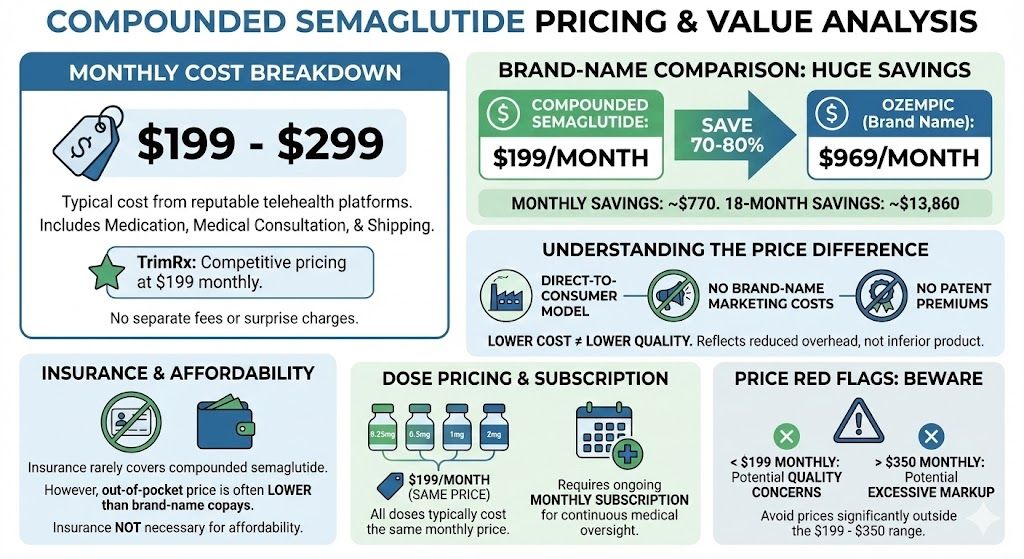
Cost considerations:
- Brand-name Ozempic/Wegovy: $349/month through manufacturer cash-pay programs
- Compounded semaglutide: $199/month through TrimRx
For detailed cost information, see our guide on compounded semaglutide costs.
Self-Injection
Many men are initially hesitant about self-injection. In practice:
It’s simpler than expected: The needles are very small (similar to insulin needles). Most patients describe minimal discomfort.
Technique: Inject into the abdomen, thigh, or upper arm. Rotate sites weekly.
Timing: Once weekly, same day each week. Many patients find a routine (e.g., Sunday evening) helps ensure consistency.
Resources: Manufacturer websites and platforms like TrimRx provide detailed injection guidance.
Integrating With Male Lifestyle
Alcohol: Semaglutide doesn’t directly interact with alcohol, but the appetite effects may change your relationship with drinking. Many patients find they desire less alcohol. If you drink heavily, be aware that rapid reduction combined with dietary changes can affect tolerance.
Exercise: Continue or begin exercise routines. The medication doesn’t impair physical performance. Resistance training is particularly valuable for muscle preservation.
Dietary protein: Men often need more total protein due to larger body mass. Prioritize protein intake to support muscle maintenance during weight loss.
Social eating: Business meals, social gatherings, and sports watching often involve large quantities of food. The appetite reduction makes it easier to eat less in these settings without feeling deprived.
Monitoring Progress
Weight tracking: Weekly weigh-ins at consistent times (same day, morning, after bathroom) provide reliable data.
Waist circumference: Track monthly. For men, this metric often shows dramatic improvement and reflects the visceral fat loss that carries significant health benefits.
Lab work: Periodic monitoring of HbA1c, fasting glucose, lipids, and liver enzymes helps track metabolic improvement. If you have baseline testosterone testing, repeat after 6-12 months of treatment.
Blood pressure: Monitor regularly, especially if on blood pressure medication that might need adjustment.
When Men Struggle
If results are disappointing:
Assess adherence: Are you taking every dose consistently?
Evaluate dose: Are you at the maximum dose, or did side effects limit titration?
Consider dietary factors: Even with reduced appetite, food choices matter. High-calorie beverages, alcohol, and calorie-dense foods can offset appetite reduction.
Review medications: Some medications (certain antidepressants, antipsychotics, steroids) promote weight gain and may counteract semaglutide effects.
Give adequate time: Men sometimes expect faster results based on early progress. If the rate of loss has slowed, this is often normal progression rather than medication failure.
For plateau management strategies, see our guide on breaking through Ozempic plateaus.
Frequently Asked Questions
Is semaglutide dosing different for men than women?
No, semaglutide dosing is identical for men and women. The medication follows the same titration schedule regardless of sex: starting at 0.25mg weekly and increasing to the maintenance dose of 2.4mg over approximately four months. Despite men typically being larger, the dose isn’t adjusted for body size. The medication works through receptor activation rather than requiring a concentration based on body mass. Some men (like some women) may find optimal results at lower doses, while others need the maximum for best effect.
Do men lose more weight on semaglutide than women?
Men often lose weight faster initially, but total percentage loss over time is similar between sexes. The faster initial loss in men relates to higher baseline metabolic rates, more visceral fat (which mobilizes readily), and absence of menstrual cycle water fluctuations that can mask fat loss in women. Long-term trials show similar percentage weight loss (approximately 15% on average) for men and women. In absolute pounds, men often lose more simply because they typically start heavier.
Will semaglutide increase my testosterone levels?
Semaglutide itself doesn’t directly increase testosterone, but the weight loss it produces often leads to significant testosterone improvement. Obesity lowers testosterone through several mechanisms, including increased conversion to estrogen in fat tissue. As weight decreases, these effects reverse, and testosterone typically rises. Men commonly see increases of 50-150 ng/dL or more with substantial weight loss. Some men on testosterone replacement therapy are able to reduce or discontinue TRT as natural production recovers.
Can semaglutide help with erectile dysfunction?
For many men, yes. Erectile dysfunction in men with obesity often relates to vascular impairment, low testosterone, and comorbidities like diabetes and hypertension. Weight loss addresses multiple ED mechanisms: improving blood flow, raising testosterone, reducing blood pressure medication needs (some of which cause ED), and improving glucose control. Many men report improved erectile quality with substantial weight loss. The effect may take 6-12 months to fully manifest as underlying factors improve.
Is semaglutide safe if I’m trying to have children?
Current evidence doesn’t suggest men need to stop semaglutide when trying to conceive, unlike women who must stop the medication before pregnancy. Weight loss generally improves male fertility by raising testosterone and improving sperm quality. No clear evidence indicates semaglutide harms male fertility, though specific studies are limited. If you have concerns, discuss with your provider; some men opt for semen analysis before and during treatment for reassurance. This contrasts with testosterone replacement therapy, which does impair fertility and typically must be stopped when trying to conceive.
Will I lose muscle mass on semaglutide?
Some muscle loss typically occurs with any significant weight loss, but it can be minimized. Men may be particularly concerned given typically higher baseline muscle mass. Key strategies to preserve muscle include: consuming adequate protein (0.7-1 gram per pound of goal body weight daily), performing resistance training 2-3 times weekly, avoiding extremely rapid weight loss, and maintaining adequate caloric intake rather than severely restricting. The gradual weight loss produced by semaglutide (versus crash dieting) naturally supports better muscle preservation.
Do men have different side effects than women on semaglutide?
The side effect profile is similar between sexes, with gastrointestinal effects (nausea, diarrhea, constipation) being most common. Men experience these at roughly equivalent rates to women. Male-specific considerations are minor: hair thinning during rapid weight loss may be less noticeable in men with existing baldness; changes in gynecomastia (enlarged breast tissue sometimes seen in obese men) are possible as hormones shift. Gallbladder complications, while affecting both sexes, are worth monitoring. Overall, men tolerate the medication similarly to women.
How does weight loss from semaglutide affect sleep apnea?
Sleep apnea often improves dramatically with weight loss. Since sleep apnea is caused largely by excess weight compressing the airway, reducing that weight relieves the mechanical cause. Studies suggest approximately 25-30% reduction in apnea severity for every 10% of body weight lost. Many men are able to reduce CPAP pressure or discontinue CPAP entirely after significant weight loss. If you use CPAP, continue treatment until properly reevaluated by your sleep medicine provider after reaching a stable lower weight.
Can I drink alcohol while taking semaglutide?
There’s no direct drug interaction between semaglutide and alcohol. However, many patients find their desire for alcohol decreases along with appetite generally. Alcohol provides empty calories that can slow weight loss. Additionally, drinking may impair food choice decisions. From a practical standpoint, moderate alcohol consumption is fine, but be aware that the medication may change your tolerance, and cutting back often helps with weight loss results. Heavy drinking should be discussed with your provider regardless.
Why don’t more men seek treatment for obesity?
Men are statistically less likely to seek weight loss treatment despite having similar obesity rates to women. Contributing factors may include: cultural expectations that men should handle problems independently, less social pressure on male appearance (despite similar health consequences), weight loss being traditionally marketed toward women, reluctance to discuss health concerns, and perhaps unawareness that effective treatments exist. The reality is that obesity carries the same health risks for men and that effective treatments like semaglutide work extremely well in men. Awareness of options can help overcome these barriers.
Taking the Next Step
Semaglutide offers men a highly effective tool for addressing obesity and its numerous associated health consequences. From cardiovascular protection to testosterone recovery, from erectile function improvement to sleep apnea resolution, the benefits extend well beyond the number on the scale.
Men are often underrepresented in conversations about weight loss treatment, but the need is equally real and the results equally impressive. If you’ve struggled with weight, experienced low energy or low testosterone, or developed conditions like sleep apnea or diabetes, semaglutide deserves serious consideration.
The medication works. The clinical evidence is robust. And for men specifically, addressing obesity can restore aspects of health and vitality that you may not have realized were connected to weight.
Ready to explore whether semaglutide is right for you? TrimRx offers consultations with licensed providers who can evaluate your eligibility and prescribe compounded semaglutide at $199/month for qualifying patients.

Transforming Lives, One Step at a Time
Keep reading

Hair Shedding Months Into Semaglutide
It shows up in the shower drain first, then on the pillow, then in the brush. By the time most people search this, they…

Vision Changes on Semaglutide: What to Know
Three different things get bundled together under this question, and they carry very different levels of urgency. Separating them is most of the work….

High-Altitude Hiking on Semaglutide
You have a trip booked and an appetite that already does not work the way it used to. The worry is reasonable, and there…


