Is a Stationary Bike Good for Weight Loss? Our Unfiltered Take
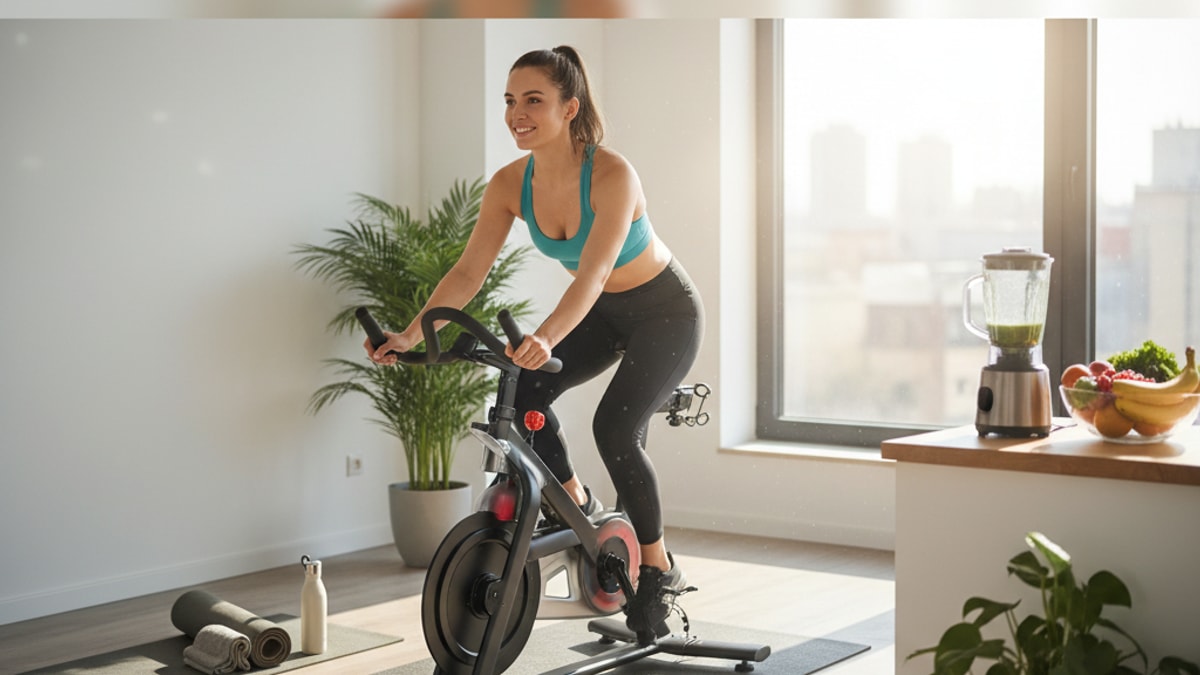
So, Is a Stationary Bike Actually Good for Weight Loss?
Let’s get right to it. It’s the question that lands thousands of exercise bikes in living rooms and basements every year: is a stationary bike good for weight loss? The short answer is yes. Absolutely. But the honest, more useful answer is a bit more nuanced. It’s a resounding yes, but only when it's part of a bigger, smarter strategy.
We’ve seen countless people invest in high-quality equipment, full of motivation, only to see it become a very expensive coat rack a few months later. Why? Because they believed the machine itself was the solution. The reality is that a stationary bike is a tool—a fantastic, effective, and incredibly convenient tool—but its power is only unlocked when you have the right strategy driving it. It’s not just about pedaling; it’s about purpose, consistency, and how that physical effort fits into your overall health journey, especially when paired with a modern medical approach.
It’s More Than Just Burning Calories
Everyone fixates on the calorie deficit. And they’re not wrong. Weight loss fundamentally boils down to expending more energy than you consume. A vigorous 30-minute session on a stationary bike can certainly torch a significant number of calories, contributing directly to that deficit. It's simple math.
But that’s a one-dimensional view of a multi-faceted process. Our clinical team can't stress this enough: focusing solely on calories misses the most profound benefits of cycling. The true magic happens in the background, deep within your body’s metabolic machinery. Regular cardiovascular exercise, like cycling, is a game-changer for insulin sensitivity. When your cells are more responsive to insulin, your body becomes far more efficient at managing blood sugar and using energy, rather than storing it as fat. This is a critical, non-negotiable element of sustainable weight management, and it’s an area where treatments we specialize in, like GLP-1 medications, also provide powerful support. When you combine improved metabolic function from exercise with a targeted medical treatment, the results can be transformative.
Beyond that, think about what a stationary bike doesn’t do. It doesn’t pound your joints. For individuals carrying extra weight or dealing with knee or hip issues, running can be a painful, sometimes impossible, ordeal. A stationary bike offers a low-impact alternative that lets you elevate your heart rate and build endurance without the associated orthopedic stress. This accessibility is huge. It removes a major barrier to entry, making consistent exercise a realistic goal instead of a dreaded, painful chore. We've found that the best exercise is, quite simply, the one you'll actually do.
HIIT vs. Steady-State: Finding the Right Gear for Your Goals
Once you’re on the bike, you have choices. Do you go for a long, steady ride while catching up on a show, or do you push through short, breathless sprints? This is the core debate between Low-Intensity Steady-State (LISS) and High-Intensity Interval Training (HIIT). Both are powerful, but they serve slightly different purposes. Our experience shows that the most successful, long-term plans often incorporate a blend of both.
LISS is your foundational work. It’s riding at a consistent, conversational pace for an extended period—say, 30 to 60 minutes. It’s fantastic for building your aerobic base, improving heart health, and burning fat for fuel. It’s also mentally easier to approach on days when your energy is low.
HIIT, on the other hand, is about intensity. It involves short bursts of all-out effort (like sprinting for 30 seconds) followed by brief recovery periods (like pedaling slowly for 60 seconds). This approach is incredibly efficient at burning calories in a short amount of time and can significantly boost your metabolism for hours after you’re done, a phenomenon known as the 'afterburn effect' or EPOC (Excess Post-exercise Oxygen Consumption). It's a formidable tool.
Here’s how they stack up:
| Feature | High-Intensity Interval Training (HIIT) | Low-Intensity Steady-State (LISS) |
|---|---|---|
| Duration | Short (15-25 minutes) | Longer (30-60+ minutes) |
| Intensity | All-out effort followed by recovery | Consistent, moderate pace (60-70% max heart rate) |
| Primary Benefit | Maximum calorie burn in minimum time, metabolic boost | Builds aerobic endurance, primarily uses fat for fuel |
| Best For | Time-crunched days, breaking through plateaus | Building a fitness base, recovery days, stress reduction |
| Mental Effort | High; requires significant focus and grit | Low; can be done while watching TV or listening to a podcast |
| Joint Impact | Low (on a bike), but high physiological stress | Very low; ideal for beginners or those with joint concerns |
So which is better? It’s the wrong question. We recommend our clients think of it like a balanced diet. You wouldn’t eat just one type of food. Similarly, your workout routine shouldn't rely on just one protocol. A great week might include two HIIT sessions to challenge your system and two or three LISS sessions to build your base and aid recovery. This approach (which we've refined over years) delivers real results without leading to the burnout we so often see with HIIT-only plans.
The Stationary Bike's Role in a Modern, Medically-Guided Plan
This is where the conversation shifts from just 'exercise' to 'strategy'. At TrimrX, we see physical activity not as a standalone solution, but as a powerful amplifier for a comprehensive, medically-supervised weight loss program. For our patients leveraging GLP-1 treatments like Semaglutide and Tirzepatide, the stationary bike becomes an indispensable partner.
Here’s how it all connects. GLP-1 medications are incredibly effective at helping regulate appetite and improve how the body processes sugar. They tackle the biological drivers of weight gain head-on. This creates a window of opportunity. With your appetite managed and your body’s hormonal signaling optimized, you finally have the headspace and physical readiness to build lasting, healthy habits. That’s where the bike comes in.
While the medication works on your internal biochemistry, the cycling works on your physical structure and engine. Every session helps you achieve several critical goals:
- Preserving and Building Muscle: When you're in a calorie deficit, your body can lose both fat and muscle. Exercise, especially with some resistance on the bike, sends a powerful signal to your body to preserve lean muscle mass. This is vital, because muscle is metabolically active tissue. The more you have, the more calories you burn at rest. We can't overstate how important this is for preventing weight regain.
- Boosting Cardiovascular Health: Weight loss isn’t just about aesthetics; it’s about reducing the risk of chronic disease. Regular cycling strengthens your heart, improves circulation, and can help lower blood pressure and cholesterol. It’s a direct investment in a longer, healthier life.
- Establishing a Keystone Habit: The act of consistently getting on the bike builds discipline and proves to yourself that you can stick to a commitment. This positive momentum often spills over into other areas, like making healthier food choices. It becomes a 'keystone habit' that supports your entire journey.
When you combine the metabolic advantages of a GLP-1 treatment with the physical benefits of cycling, you create a powerful synergy. One makes the other more effective. It's an integrated approach that addresses both the biology and the behavior behind weight management. If you're curious whether this kind of comprehensive plan is the right fit for you, you can easily find out. It only takes a few minutes when you Take Quiz on our site.
Common Mistakes We See People Make (And How to Fix Them)
Our team has consulted with thousands of individuals on their weight loss journeys, and we see the same patterns and pitfalls time and again. When it comes to the stationary bike, a few common mistakes can derail even the best intentions.
First is the 'all or nothing' trap. Someone gets a new bike, they're fired up, and they immediately try to do a grueling 60-minute session every single day. What happens? After a week, they’re exhausted, sore, and completely burnt out. The bike starts gathering dust. The fix is simple: start slow. Seriously. Three 20-minute sessions in your first week is a massive win. Consistency trumps intensity, especially at the beginning.
Another huge one is ignoring the resistance knob. We see people pedaling furiously, their legs spinning like a cartoon character, but with zero resistance. While you are moving, you're not engaging your muscles effectively. You're missing out on the muscle-building, metabolism-boosting benefits. The goal isn't just to move your legs in a circle; it's to push against a force. Always add enough resistance so that you feel a solid connection with the pedals. It should feel like you're pushing through water, not just air.
And then there’s the biggest miscalculation of all: trying to out-exercise a poor diet. A hard 30-minute ride might burn 300 calories. That's a fantastic effort. But that deficit can be erased in about 90 seconds with a couple of handfuls of chips or a sugary soda. Let's be honest, this is crucial. Exercise is a partner to your nutrition, not a 'get out of jail free' card. You simply cannot pedal your way out of consistently poor food choices. It’s a foundational truth our clinicians reinforce daily, and it’s why an integrated plan that addresses both diet and exercise is the only way to achieve lasting success.
Your Practical Setup for Success
Getting results isn’t just about the 'what'; it’s about the 'how'. Setting yourself up for success is a critical, often-overlooked step. A few small adjustments can make the difference between a habit that sticks and one that fades.
First, make sure your bike is set up correctly. This is non-negotiable. An improperly adjusted bike is uncomfortable at best and can lead to injury at worst. Your seat height should be set so that when your pedal is at the bottom of its rotation, your knee has a slight bend (about 25-35 degrees). Your handlebars should be positioned so you can maintain a neutral spine without hunching over. Take 15 minutes to watch a tutorial and get this right. Your body will thank you.
Next, create your space and your ritual. Don't stick the bike in a dark, cluttered corner of the basement. If possible, put it somewhere you enjoy being, maybe near a window or in front of a TV. Have your workout clothes, water bottle, and headphones ready to go. Reduce the friction. The easier it is to get started, the more likely you are to do it. We've found this small step has a dramatic impact on consistency.
And finally, track your progress beyond the scale. The number on the scale can fluctuate for dozens of reasons. Don't let it be your only measure of success. Pay attention to other victories. Are you able to ride for longer? Can you handle more resistance? Do you have more energy during the day? Do your clothes fit better? These are the real indicators of progress. Celebrate them. When you're ready to pair this powerful habit with a clinical strategy designed for you, you can Start Your Treatment and get a plan tailored to your unique biology and goals.
The bike is an incredible ally on your weight loss journey. It's reliable, it's effective, and it's waiting for you. The real question isn't whether the bike is good for weight loss—it is. The more important question is, what's your complete strategy going to be?
Frequently Asked Questions
How long should I ride a stationary bike to lose weight?
▼
For sustainable weight loss, our team recommends aiming for 150-300 minutes of moderate-intensity cycling per week. You can break this up into 30-60 minute sessions, 4-5 days a week. Consistency is far more important than the length of any single session.
Is 30 minutes a day on a stationary bike enough to see results?
▼
Yes, 30 minutes a day is absolutely enough to see significant results, provided you are consistent and pair it with a supportive diet. A focused 30-minute session can improve cardiovascular health, burn a substantial number of calories, and boost your metabolism.
Can I lose belly fat just by riding a stationary bike?
▼
You can’t ‘spot reduce’ fat from a specific area like the belly. However, riding a stationary bike is an excellent way to burn overall body fat. As your total body fat percentage decreases, you will see a reduction in belly fat as well.
Which is better for weight loss: a treadmill or a stationary bike?
▼
Both are fantastic tools. The bike is lower-impact, making it a better choice for those with joint pain. The best one is ultimately the one you enjoy more and will use most consistently, as that’s the key to long-term success.
Should I use a stationary bike in the morning or evening?
▼
The best time to work out is whenever you can consistently fit it into your schedule. Some studies suggest morning workouts can help regulate appetite for the day, but the most significant factor is simply getting the workout done, regardless of the time.
Do I need a fancy bike with a screen and classes?
▼
No, you don’t. While interactive classes can be highly motivating for some, a basic, sturdy stationary bike is all you need to get a phenomenal workout. The key is your effort and consistency, not the technology.
How much resistance should I use on the bike?
▼
You should always use enough resistance to feel a solid connection with the pedals—it shouldn’t feel like you’re spinning freely. A good rule of thumb is to use a level that challenges you but still allows you to maintain good form and complete your workout.
Is it better to go fast with low resistance or slow with high resistance?
▼
A combination is best. High-resistance, slower-cadence work helps build strength, while lower-resistance, faster-cadence intervals improve cardiovascular fitness. Varying your approach will give you the most well-rounded benefits.
Can cycling on a stationary bike build leg muscle?
▼
Yes, especially when you use higher levels of resistance. While it won’t produce the same results as heavy weightlifting, it will definitely tone and strengthen your glutes, quads, hamstrings, and calves, which helps boost your overall metabolism.
How does stationary biking complement a program like TrimrX?
▼
It’s a perfect complement. While our GLP-1 treatments help manage appetite and metabolic function, cycling helps preserve lean muscle, boosts cardiovascular health, and builds sustainable habits. This integrated approach addresses both the biological and behavioral sides of weight loss.
What should I eat after riding a stationary bike?
▼
After a workout, it’s a good idea to have a small meal or snack containing both protein and carbohydrates within an hour or two. This helps replenish your energy stores and repair muscle tissue. A protein shake or Greek yogurt with berries are great options.
How do I stay motivated to use my stationary bike?
▼
Find ways to make it enjoyable! Listen to motivating podcasts or music, watch your favorite show, or try a virtual cycling app. Setting small, achievable goals and tracking your progress can also provide a powerful sense of accomplishment.

Transforming Lives, One Step at a Time
Keep reading
Top 5 Best Weight Loss Programs for Beginners in 2026
Starting a weight loss journey means sorting through GLP-1 medication ads, apps that gamify your groceries, and online weight management programs promising a doctor…

What to Do With a Full Pantry You No Longer Eat From
Sort it into three piles rather than clearing it all out: donate, keep, and discard. The mistake most people make is emptying the whole…

How to Handle a Business Dinner When the Client Orders for the Table
This is the one dining situation where your usual tools do not work. You cannot order a starter as your main, cannot ask for…


