Is a Rowing Machine Good for Weight Loss? Our Unvarnished Take
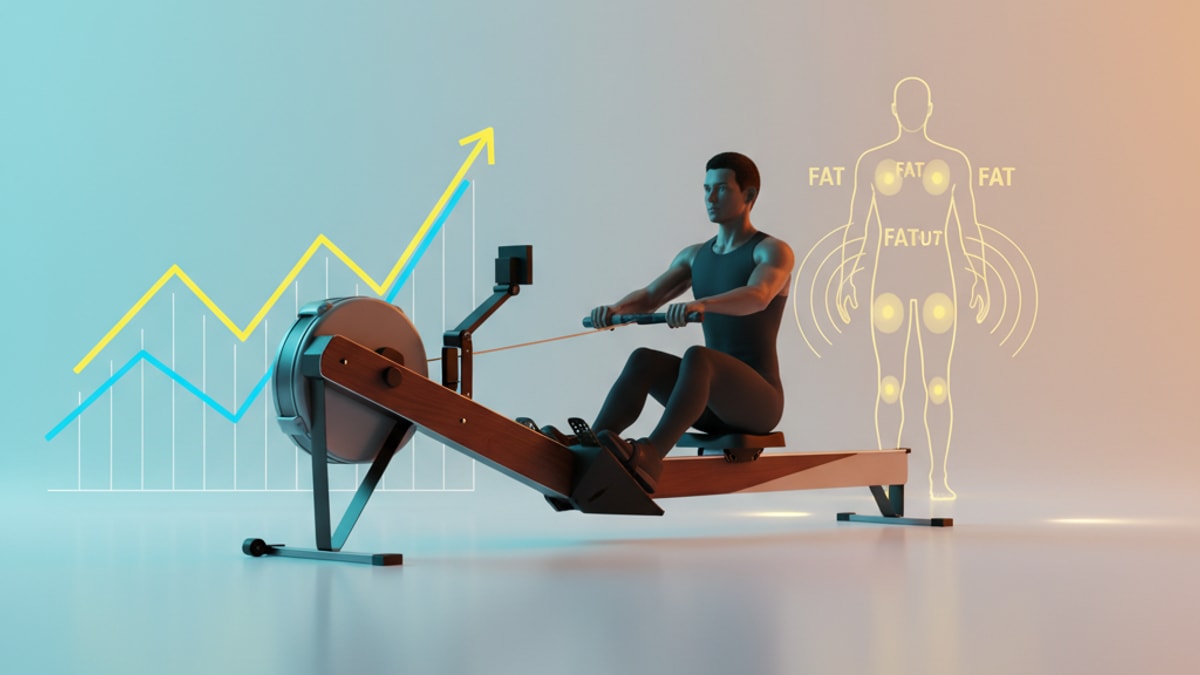
Walk into any gym, and you’ll see the usual suspects. A long line of treadmills, a cluster of ellipticals, and a sea of stationary bikes. But tucked away, often with a dedicated following, is the rowing machine. For years, it was the domain of serious athletes and crew teams. Now? It’s front and center in the conversation about effective, sustainable weight loss. And for good reason.
The question our team at TrimrX gets asked constantly is a simple one: is a rowing machine good for weight loss? The short answer is yes. An emphatic yes. But the real answer, the one that leads to actual, lasting results, is far more nuanced. It’s not just about using the machine; it’s about understanding why it works and how it fits into a comprehensive health strategy. It’s about pairing a powerful tool with an intelligent plan.
So, Why Does Everyone Suddenly Love Rowing?
Let’s be honest. The fitness world is full of trends. One year it’s one thing, the next it’s another. But the rowing machine’s rise isn’t just a fad. It’s a recognition of its profound efficiency. Unlike running, which is primarily a lower-body workout, or cycling, which also heavily favors the legs, rowing is a genuine full-body movement. One single, fluid stroke engages an estimated 86% of your muscles.
Think about that for a second. Your quads, hamstrings, and glutes explode to drive the movement. Your core has to remain braced and solid to transfer that power. And your back, shoulders, and arms fire to finish the pull. It’s a symphony of muscular engagement. This is critical, and it’s something we can’t stress enough: when more muscles are working, your body demands more oxygen and burns more fuel. It’s comprehensive.
That’s the key. You're not just doing cardio. You're not just doing resistance training. You're doing both simultaneously. This dual-action nature is what makes the rower such a formidable tool in the fight for a healthier body composition. Our experience shows that workouts combining cardiovascular stress with muscular engagement consistently yield better, more sustainable weight loss results than cardio alone.
The Unflinching Math: Calorie Burn and Metabolic Impact
Weight loss ultimately boils down to a calorie deficit. You have to burn more than you consume. It's a simple, and sometimes frustrating, law of thermodynamics. So, how does the rower stack up? Exceptionally well.
Depending on your weight and the intensity of your workout, a 30-minute rowing session can burn anywhere from 250 to over 500 calories. An hour of vigorous rowing can easily torch 600-1000 calories. Those numbers are impressive, putting it on par with, or even ahead of, high-impact running without the associated joint stress. But the calorie burn during the workout is only half the story.
This is where it gets interesting. Because rowing is so intense and involves so many muscle groups, it creates a significant 'afterburn' effect. The scientific term is Excess Post-exercise Oxygen Consumption (EPOC). In simple terms, after a tough rowing session, your body has to work overtime to recover—repairing muscle fibers, replenishing energy stores, and returning to a state of rest. This recovery process requires energy, which means your metabolism stays elevated, burning additional calories for hours after you've stepped off the machine. We've seen it work time and time again. It means you’re burning calories long after you’ve stopped.
High-Intensity Interval Training (HIIT) on a rower is particularly effective for maximizing EPOC. A workout involving short bursts of all-out effort followed by brief recovery periods sends your metabolic rate soaring. This is a strategy our team often recommends for time-crunched individuals who need the most bang for their buck.
It's Not Just About Calories—It's About Building a Better Engine
A weight loss journey focused solely on calorie burning is a journey destined for a plateau. You can’t just burn your way to a healthy body. You have to build one. This is where rowing truly shines and distinguishes itself from other forms of cardio.
First, it’s remarkably low-impact. The fluid motion means there’s no jarring pounding on your ankles, knees, or hips. This is a critical, non-negotiable element for sustainability. If your chosen exercise leaves you sore and injured, you won’t do it consistently. And consistency is everything. We’ve found that clients who choose low-impact exercises are far more likely to adhere to their fitness plans long-term. Simple, right?
Second, rowing builds functional muscle. While it won't make you look like a bodybuilder, it will develop lean muscle across your entire posterior chain (the muscles on the backside of your body), your core, and your upper body. Why does this matter for weight loss? Because muscle is metabolically active tissue. The more lean muscle you have, the more calories your body burns at rest. Building muscle is like upgrading your body’s engine. A bigger, more powerful engine burns more fuel even when it’s just idling. This fundamental shift in body composition is the secret to keeping weight off for good.
Rower vs. The Usual Suspects: A Head-to-Head Breakdown
How does the rower really stack up against the treadmill or stationary bike? Each has its place, but their strengths and weaknesses are distinct. Here's what we've learned from guiding countless patients on their fitness journeys:
| Feature | Rowing Machine | Treadmill (Running) | Stationary Bike |
|---|---|---|---|
| Muscles Worked | Full Body (86% of muscles) | Primarily Lower Body, Core | Primarily Lower Body (Quads, Hamstrings) |
| Calorie Burn | Very High | High | Moderate to High |
| Impact on Joints | Very Low | High | Very Low |
| Skill Requirement | Moderate (Form is key) | Low (Natural movement) | Low |
| Best For | Combined strength & cardio, efficiency | Pure cardio endurance, accessibility | Low-impact cardio, joint recovery |
Our professional observation? For pure, time-efficient, and joint-friendly weight loss, the rower is incredibly hard to beat. The treadmill offers a fantastic cardiovascular workout but can be punishing on the joints over time. The bike is excellent for low-impact cardio but doesn't offer the same upper-body and core engagement. The rower provides the best of all worlds: a high-intensity burn, muscle-building stimulus, and joint-friendly movement pattern.
The TrimrX Approach: Where Rowing Meets Medical Science
Here’s the unvarnished truth: exercise alone is often not enough for significant, lasting weight loss, especially for those facing biological hurdles like insulin resistance or hormonal imbalances. It's a powerful tool, but it's one part of a much larger, more complex system. At TrimrX, our expertise lies in addressing the biological side of the equation.
We specialize in medically-supervised weight loss programs that utilize advanced GLP-1 medications like Semaglutide and Tirzepatide. These treatments work by targeting the underlying biology of appetite and metabolism, helping your body regulate hunger and use energy more efficiently. They fundamentally change the game, making it easier to achieve the necessary calorie deficit for weight loss without the constant, draining battle against hunger.
So where does rowing fit in? It's the perfect partner. We mean this sincerely: the synergy is remarkable. While our medical treatments help manage appetite and optimize your metabolism, rowing provides the physical stimulus to reshape your body. It helps ensure that the weight you lose is primarily fat, not precious, metabolism-boosting muscle. In fact, rowing helps you build muscle while the medication makes the fat loss easier. This approach—which we've refined over years—delivers real results. It’s a one-two punch that tackles weight loss from both a biological and a physical angle.
This combination is formidable. We guide our patients to use rowing not as a punishment for what they ate, but as a proactive way to build a stronger, more resilient, and metabolically healthier body for the future. If you're wondering if a medically-guided approach is right for you, you can Take Quiz to see if you're a candidate. It's the first step toward a truly integrated strategy.
We See These Rowing Mistakes All the Time
Like any skilled movement, there's a right way and a wrong way to row. Just jumping on and pulling as hard as you can is a recipe for an ineffective workout and potential injury. Our team often coaches clients away from these common pitfalls:
-
The 'All Arms' Pull: This is the most frequent mistake. The user yanks the handle with their arms first, putting immense strain on their shoulders and lower back. The power of the rowing stroke should come from your legs. Think of it as a leg press first. The sequence is critical: Legs, then Core, then Arms. On the recovery, it’s the reverse: Arms, then Core, then Legs.
-
The Hunched Back: People often round their spine, looking like a shrimp, to get a few extra inches on their reach. This is incredibly dangerous for your lower back. The key is to pivot from the hips, keeping your core engaged and your back straight. Think 'proud chest' throughout the entire movement.
-
Setting the Damper Too High: It's tempting to crank the damper (the lever on the side of the fan cage) up to 10, thinking 'harder is better'. It's not. The damper is not a resistance setting; it mimics the drag of water. Rowing with it too high is like trying to row a heavy, slow barge. It fatigues your muscles before you can get a good cardiovascular workout. For most workouts, we recommend a setting between 3 and 5. This allows you to focus on power and speed, which is what really drives the calorie burn.
Correcting these small issues transforms the rower from a clunky, awkward machine into a smooth, powerful, and incredibly effective fitness tool.
Your First Month on the Rower: A Blueprint for Real Results
Ready to get started? Consistency is your north star. We recommend starting with 3-4 sessions per week, focusing on form before you chase intensity. A great starting point is to mix steady-state sessions with one or two interval workouts.
-
Steady-State Days (2-3 times per week):
- Goal: Build your aerobic base.
- Workout: Row for 20-30 minutes at a comfortable, conversational pace. You should be able to speak in short sentences. Focus entirely on maintaining perfect form with every single stroke. This is your foundation.
-
Interval Day (1-2 times per week):
- Goal: Boost your metabolism and cardiovascular fitness.
- Workout: After a 5-minute warm-up, perform 1 minute of hard, fast rowing followed by 1 minute of slow, easy recovery rowing. Repeat this cycle 8-10 times. Finish with a 5-minute cool-down.
As you get fitter, you can increase the duration of your steady-state rows or increase the intensity and number of your intervals. But this simple blueprint is more than enough to kickstart your journey and begin seeing a significant, sometimes dramatic shift in your body composition and energy levels.
Ultimately, the rowing machine is far more than just 'good' for weight loss. It is an exceptionally powerful, efficient, and intelligent tool. It builds muscle, torches calories, and protects your joints in a way few other machines can. But a tool is only as good as the strategy it’s part of. When you combine the physical power of rowing with a solid nutritional plan and, for many, the biological support of a medical weight loss program, the results are no longer just possible. They become predictable. When you're ready to build that comprehensive strategy and pair powerful tools like rowing with a medically-backed plan, you can Start Your Treatment Now. It’s about building a sustainable system for a healthier you.
Frequently Asked Questions
How long should I row to lose weight?
▼
We recommend aiming for 150 minutes of moderate-intensity rowing per week, broken into 30-40 minute sessions. Consistency is more important than the length of any single workout, especially when you’re starting out.
Is rowing better than running for belly fat?
▼
You can’t spot-reduce fat from one area. However, rowing’s combination of high-calorie burn and muscle building makes it extremely effective for reducing overall body fat, which will include belly fat. Its full-body nature helps create a larger calorie deficit than many other exercises.
Can I lose weight just by rowing?
▼
While rowing is a fantastic tool for burning calories and building muscle, sustainable weight loss requires a holistic approach. It must be paired with a sensible diet creating a calorie deficit. For many, integrating it with a medical program like ours at TrimrX provides the most effective and lasting results.
What’s a good 20-minute rowing workout for fat loss?
▼
A great 20-minute HIIT workout is a 5-minute warm-up, followed by 10 rounds of 40 seconds of high-intensity rowing and 20 seconds of rest. Finish with a 5-minute cool-down. This maximizes the ‘afterburn’ effect (EPOC).
Will rowing make me bulky?
▼
This is a common myth, especially among women. Rowing builds lean, athletic muscle, not bulky mass. To become bulky requires a very specific, high-volume weightlifting regimen and a significant calorie surplus, which is the opposite of a weight loss plan.
How often should I row each week for weight loss?
▼
Our team suggests starting with 3 to 4 times per week. This allows your body adequate time to recover and adapt between sessions, which is crucial for preventing injury and building muscle. Listen to your body and prioritize rest.
Is a water rower better than an air rower for weight loss?
▼
From a weight loss perspective, both are equally effective. The difference is primarily in the feel and sound. Air rowers provide resistance based on how hard you pull, while water rowers offer a smoother, more consistent resistance that mimics real water. The best one is the one you’ll use consistently.
What damper setting is best for fat loss?
▼
Contrary to popular belief, a higher damper setting isn’t better. We advise our clients to use a damper setting between 3 and 5. This allows you to generate power and speed, which elevates your heart rate and maximizes calorie burn, without prematurely fatiguing your muscles.
Can I row every day to lose weight faster?
▼
We generally don’t recommend rowing every single day, especially at high intensity. Your body needs rest to repair muscle tissue and prevent burnout or overuse injuries. Incorporating 1-2 active recovery or full rest days is a smarter long-term strategy.
How does rowing complement a medical weight loss program like TrimrX?
▼
It’s the perfect complement. While our GLP-1 treatments help regulate appetite and metabolism to facilitate fat loss, rowing builds and preserves lean muscle. This ensures you’re improving your body composition and boosting your resting metabolic rate for more sustainable, long-term success.
Does rowing build a lot of muscle?
▼
Rowing is excellent for building functional, lean muscle across your entire body, particularly in the legs, back, and core. It won’t lead to bodybuilder-style hypertrophy, but it will create a toned, athletic physique and increase your overall metabolic rate.
What’s more important for weight loss: rowing intensity or duration?
▼
Both play a role, but for most people, consistency is the most critical factor. A mix is ideal: a few longer, steady-state sessions to build an aerobic base and one or two shorter, high-intensity interval sessions to spike your metabolism.

Transforming Lives, One Step at a Time
Keep reading

Obesity and Low Testosterone
**Can obesity cause low testosterone?** Yes. Obesity can lower testosterone, and the relationship often runs in both directions.

Top 6 Best Weight Loss Medications in 2026
Prescription weight loss medication has gone mainstream. What was once a quiet corner of obesity medicine is now one of the most talked-about categories…

Top 8 Best Telehealth for Weight Loss in 2026
Finding the best telehealth for weight loss used to be a time-consuming process that involved hours of research, murky pricing pages, and a fair…


